The Best Fluffy Pancakes recipe you will fall in love with. Full of tips and tricks to help you make the best pancakes.

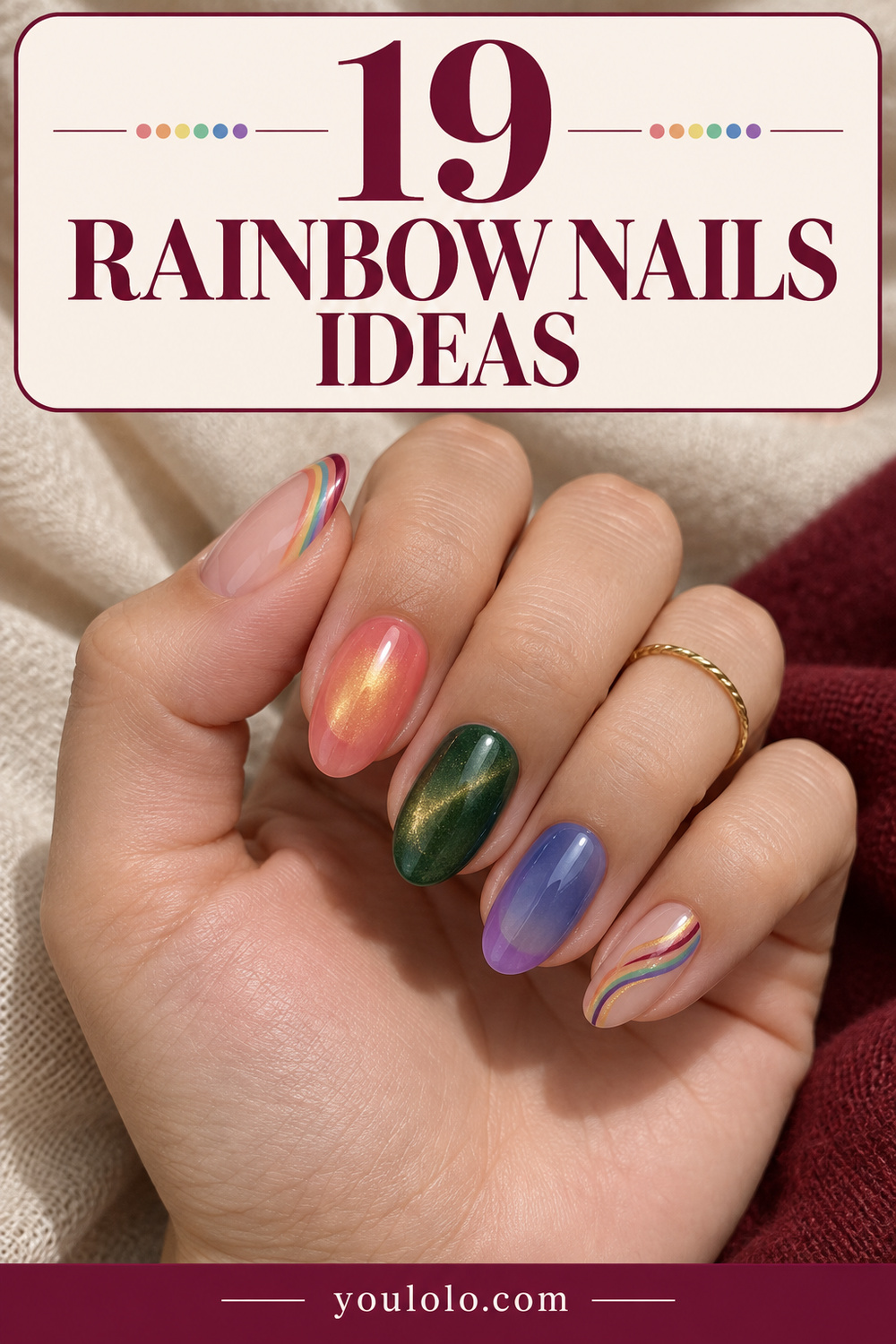
Rainbow Nails do not need cartoon clouds, chunky glitter, or every bright color packed onto every finger. The versions that look most current treat color the way a good outfit does: one clear focal point, a little breathing room, and shades that share the same mood. A whisper-thin spectrum at the tips can feel almost neutral; a jewel-toned skittle can look as polished as five carefully chosen rings.
I built this collection as a color story rather than a list of novelty designs. It moves from sheer, barely-there placements into glassy jellies, soft-focus blends, dark contrast, and earthy tones. Every manicure is based on a technique a nail artist can actually execute, and every idea includes the small detail—opacity, scale, placement, or finish—that keeps multiple colors looking deliberate.
The three decisions that make many colors look chic
First, control the saturation. Colors do not have to be pale, but they should feel as if they belong in the same room. Pair dusty shades with dusty shades, jewel tones with jewel tones, or translucent color with translucent color. One neon next to four muted hues usually looks accidental.
Second, choose one placement language. If the art lives on the tips, keep it on the tips. If every nail is a solid color, let the finish and shape provide the repetition. Negative space is especially helpful because a sheer nude base visually connects colors that would otherwise compete.
Finally, repeat the finish. A consistent glassy shine, pearl veil, matte surface, or velvet reflection makes five different colors read as a collection. That is why the Rainbow Nails below feel wearable even when the palette is bold.
1. Whisper-Thin Rainbow Micro French
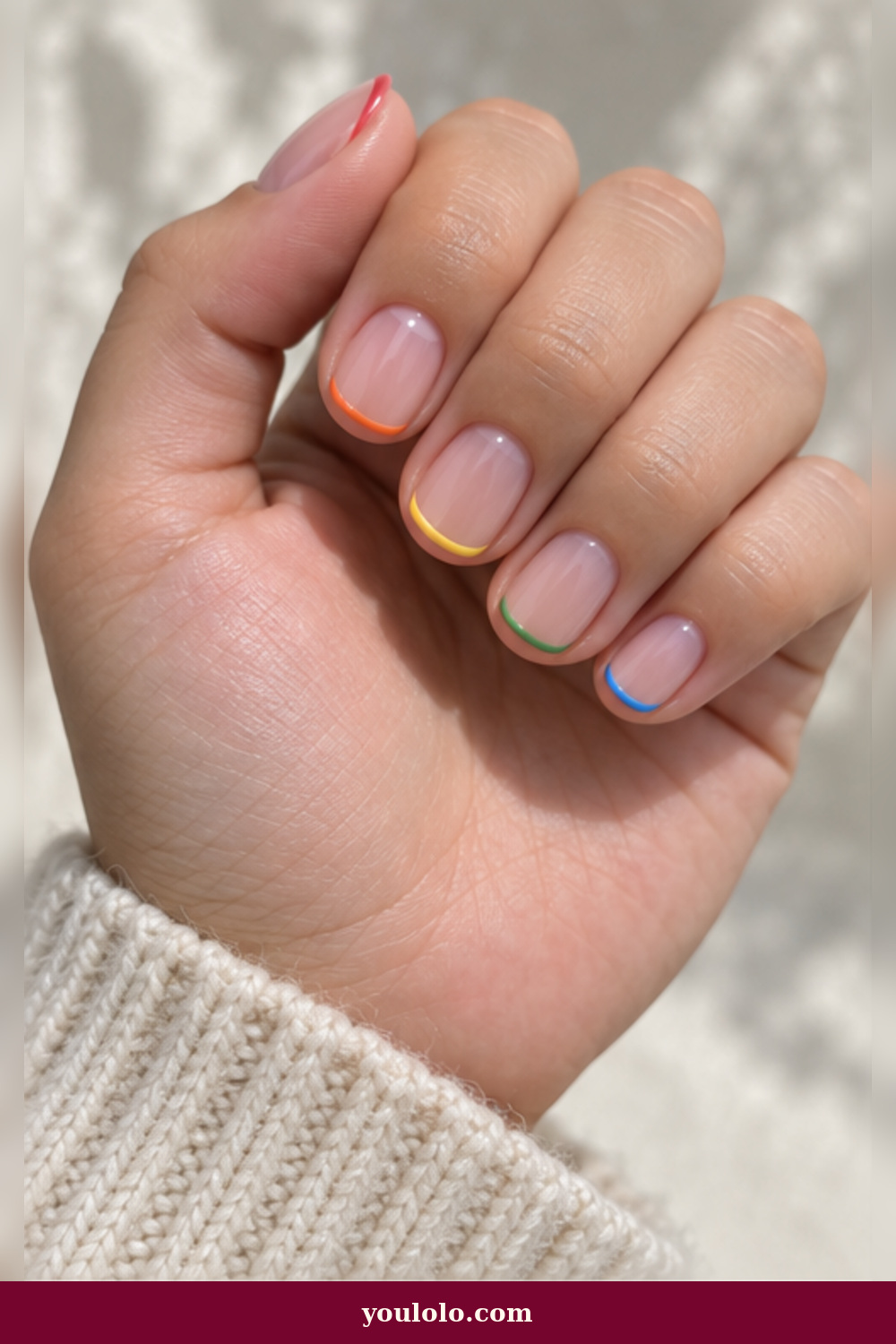
A micro-French is the easiest way to wear the whole spectrum without letting color take over. Each tip gets one muted shade, while the sheer blush base keeps the eye moving across a clean, familiar shape. I would ask for a line no thicker than a fine eyeliner stroke. On short squoval nails, that restraint is precisely what makes the manicure look tailored rather than playful.
2. Pastel Aura Spectrum
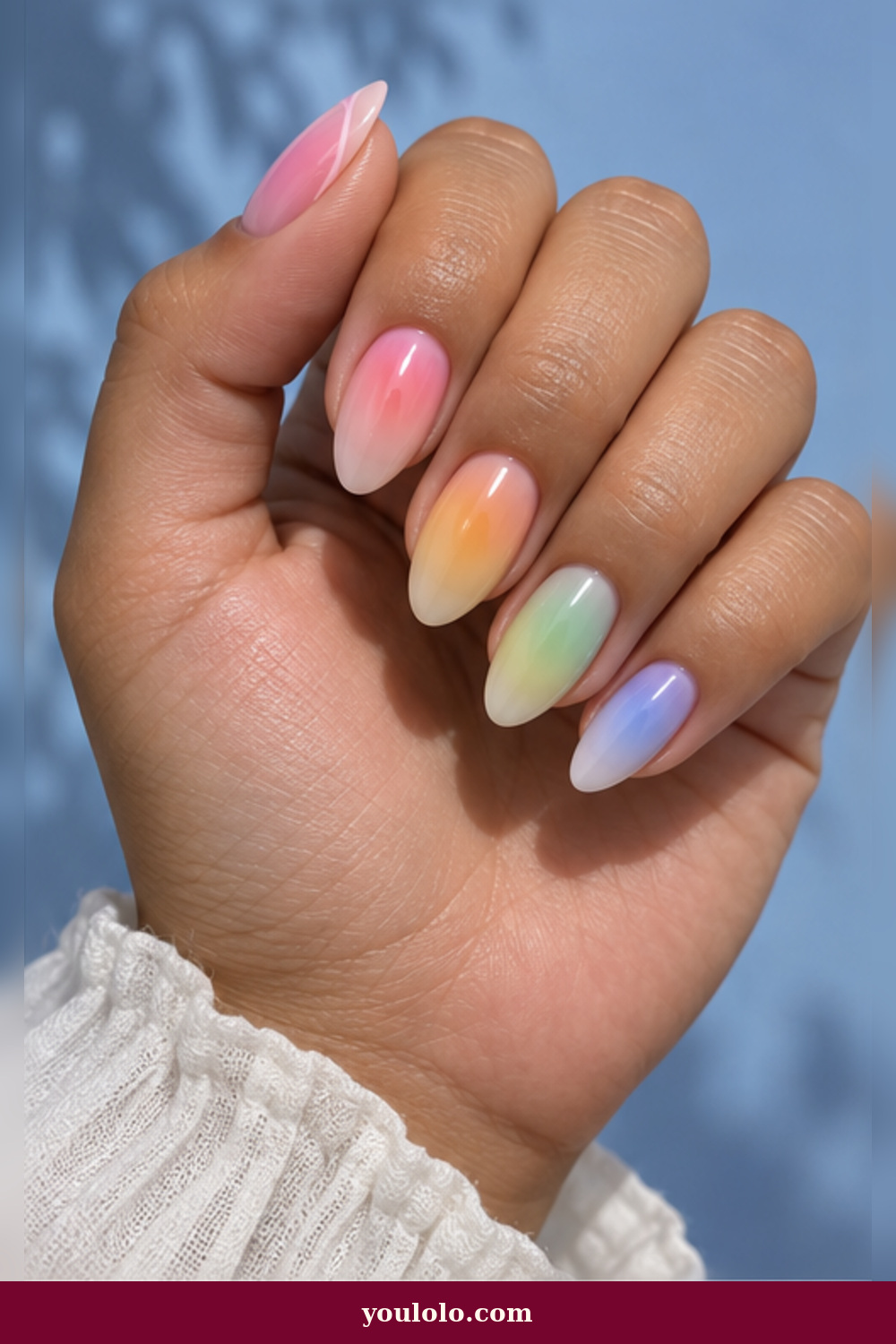
This aura set turns rainbow color into light instead of stripes. Pink, peach, lemon, mint, and lilac bloom softly from a milky center, with no hard edge between shades. The almond shape gives the blend room to stretch. Keep the base translucent and the colors slightly desaturated; if every hue is at full strength, the beautiful cloudy effect disappears.
3. Glossy Jelly Skittle
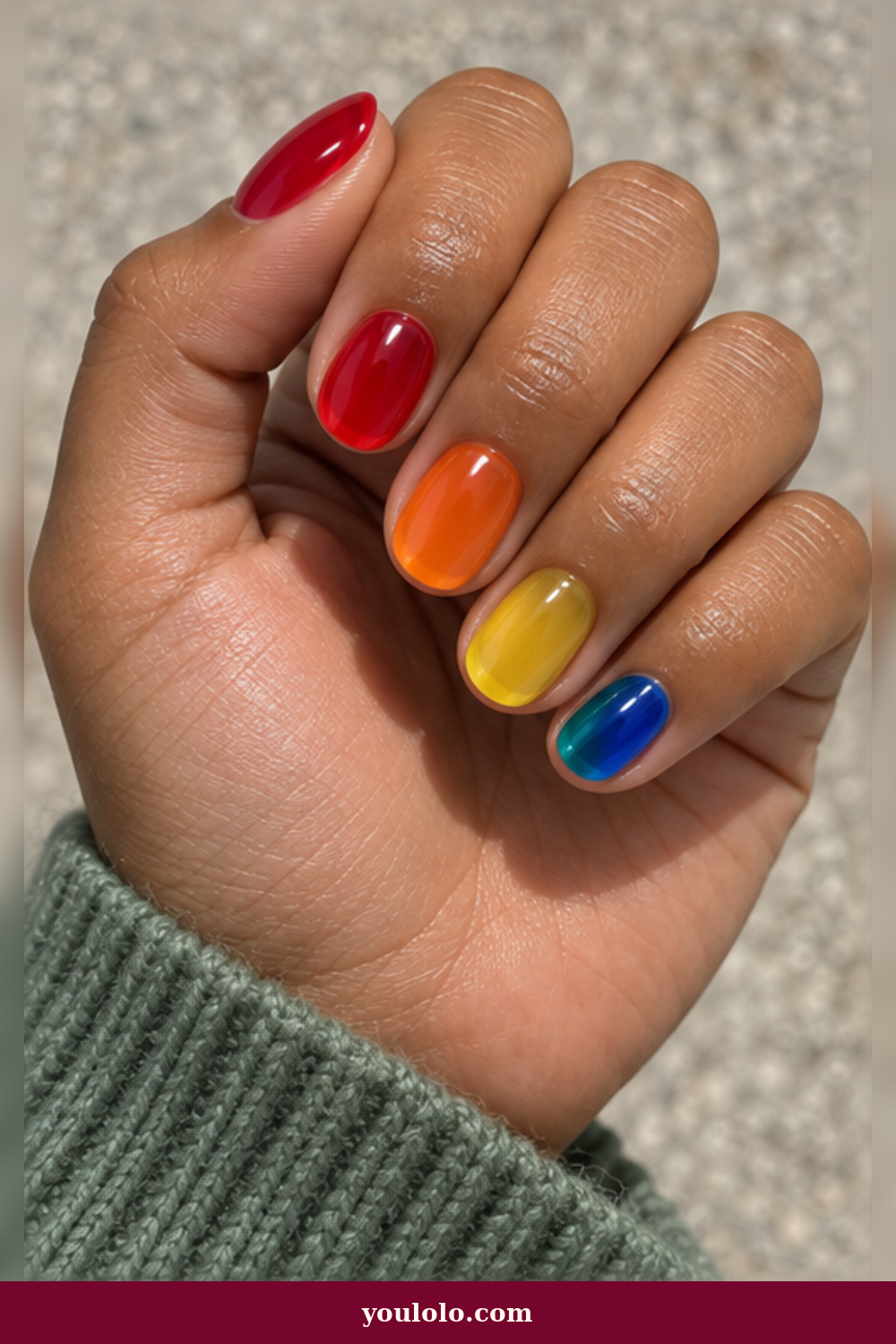
Jelly polish makes a classic skittle manicure feel lighter and more dimensional. Cherry, tangerine, lemon, emerald, and cobalt appear transparent at the edges, almost like colored glass. One shade per nail is enough—there is no need for added art. Two or three thin coats create more depth than one opaque layer, and a high-gloss top coat is essential.
4. Fine Rainbow Ribbon Lines
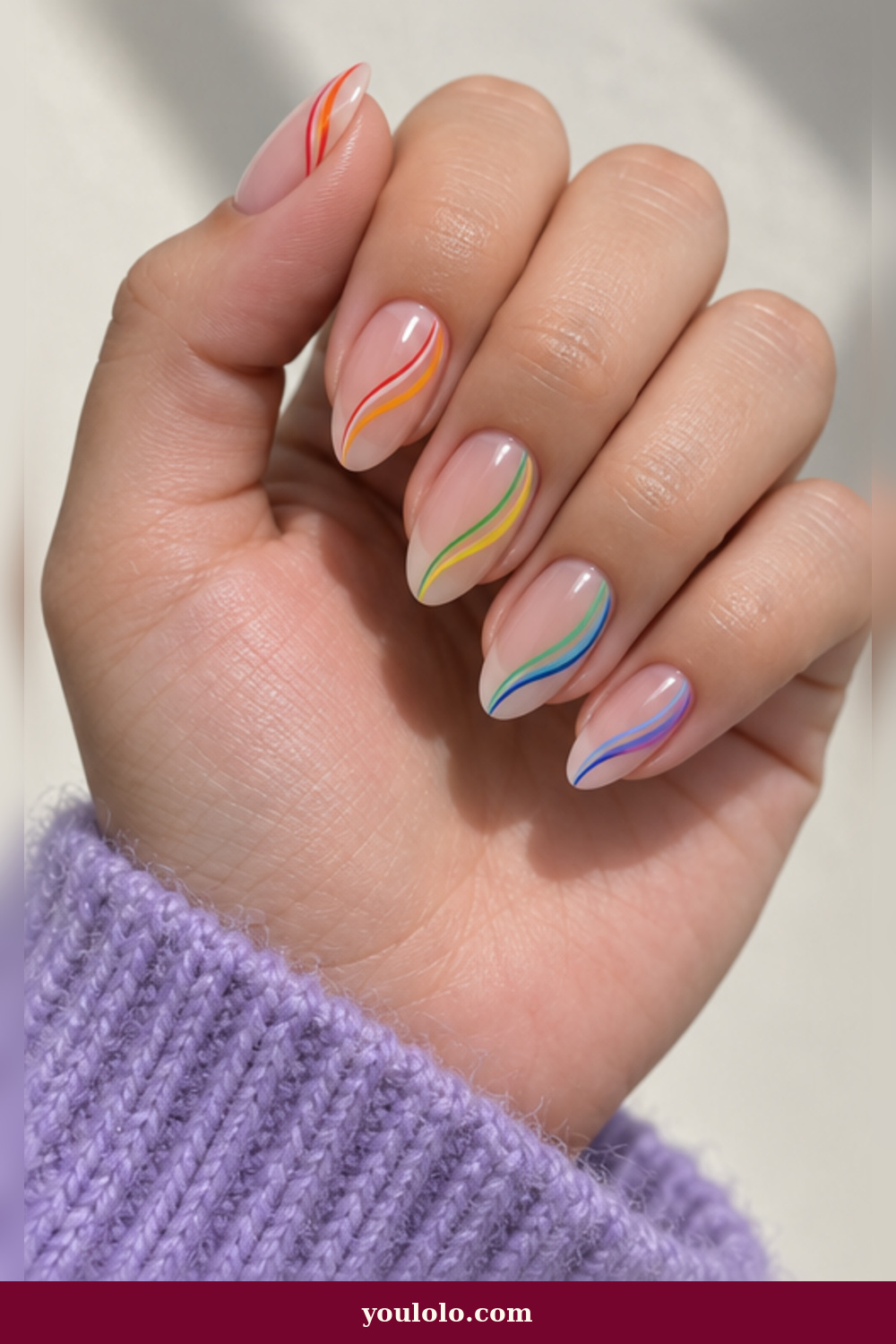
Instead of drawing a literal rainbow, this design lets paired color lines curve along one side of each nail. The exposed nude base provides breathing room, while changing the ribbon colors from finger to finger creates rhythm. It works best on medium almond nails, where the line can follow the silhouette. Ask your artist to leave the center open so the result stays airy.
5. Smoked Diagonal Color Blocks
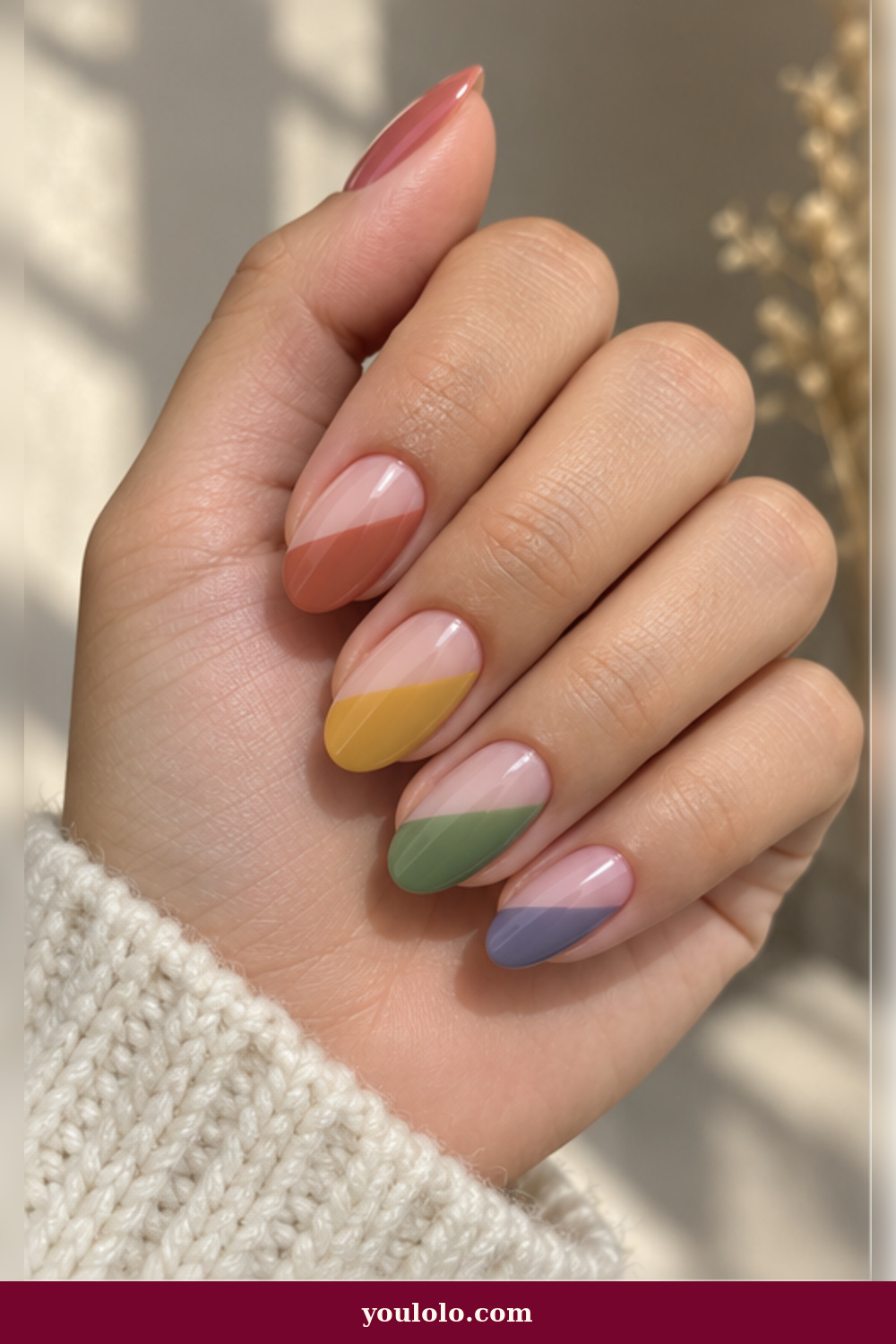
Brick, ochre, sage, and smoky violet feel more like an interiors palette than a pack of markers. A diagonal block across each nail makes those softened shades look graphic, while the nude half keeps the set balanced. The angles should repeat at roughly the same height. That small bit of consistency is what turns five different colors into one considered manicure.
6. Tiny Gem-Dot Cuticles
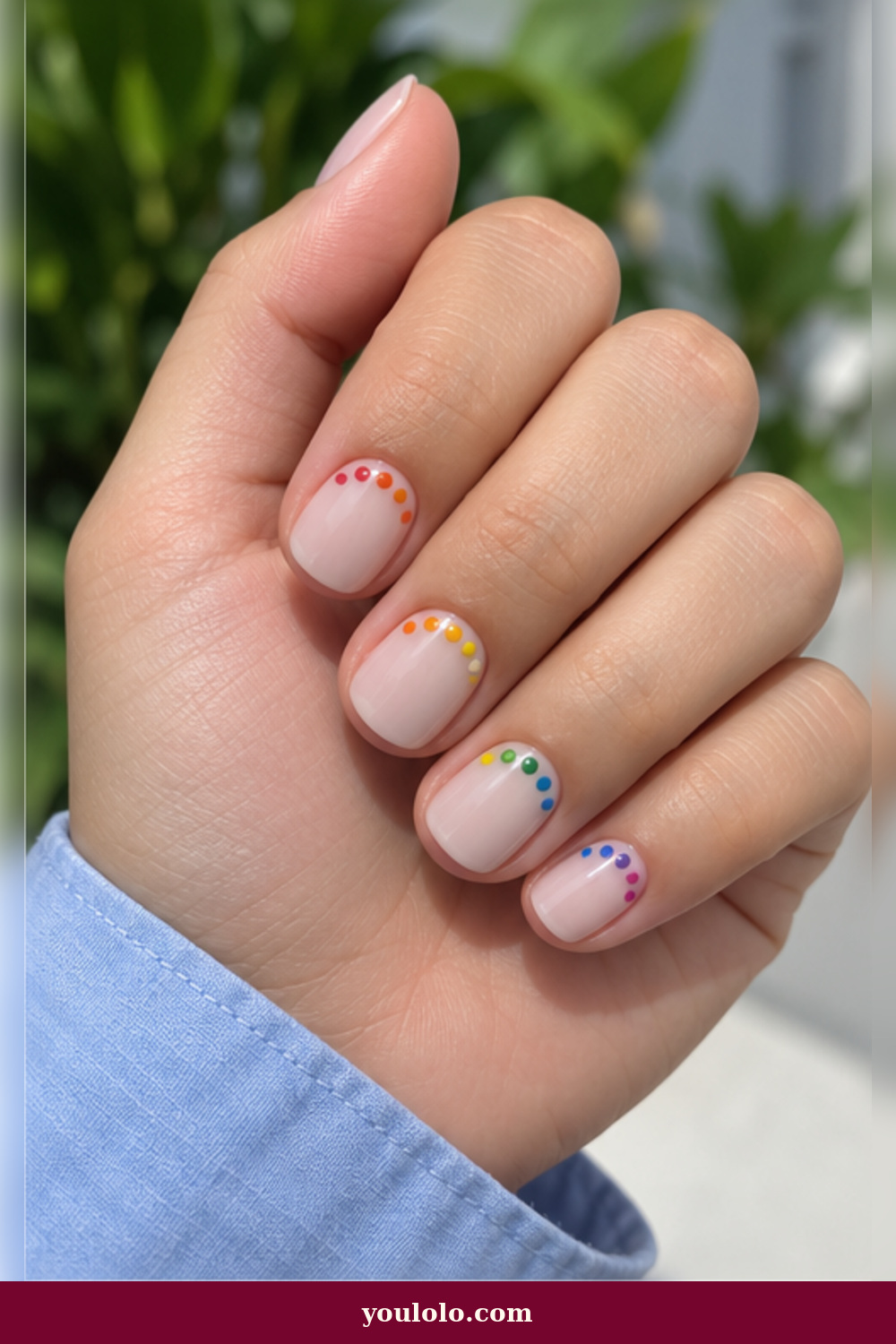
A curved row of miniature colored dots is a jewelry-like alternative to a full rainbow tip. The dots sit close to the cuticle over a milky beige base, so the design is visible without making the nail feel crowded. Choose flat micro-gems or tiny painted dots rather than bulky stones. The placement also grows out gracefully because the open base disguises the new nail.
7. Pearl Stained-Glass Accents
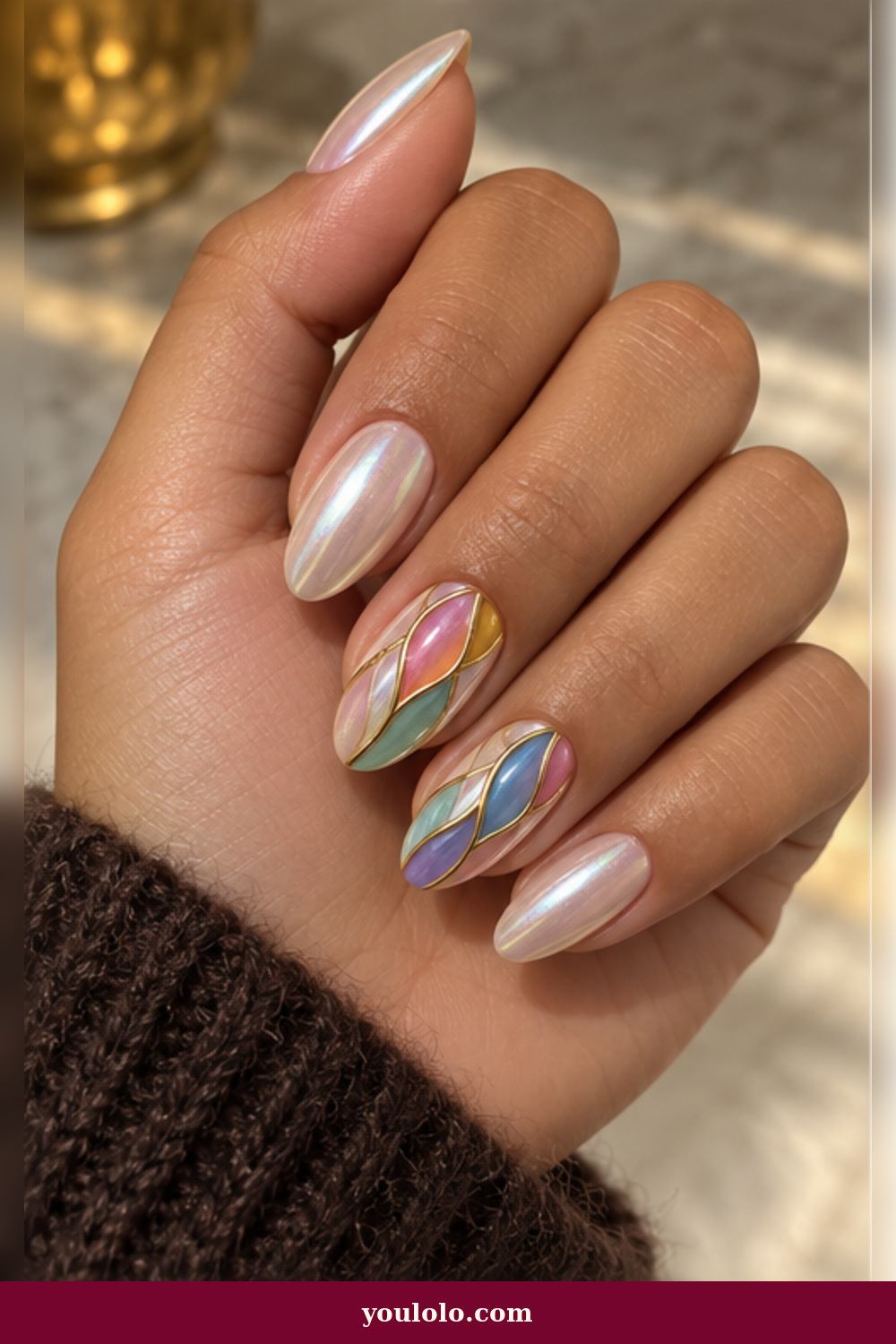
Pearl glaze and stained-glass color make an unexpectedly elegant pair. Here, slim gold outlines divide translucent rose, teal, blue, and lilac panes on two accent nails; the others carry a soft pearly wash. Limiting the detailed pattern is important. It lets the metallic lines read as fine jewelry and keeps this more intricate salon design from becoming visually heavy.
8. Sorbet Two-Tone Fade
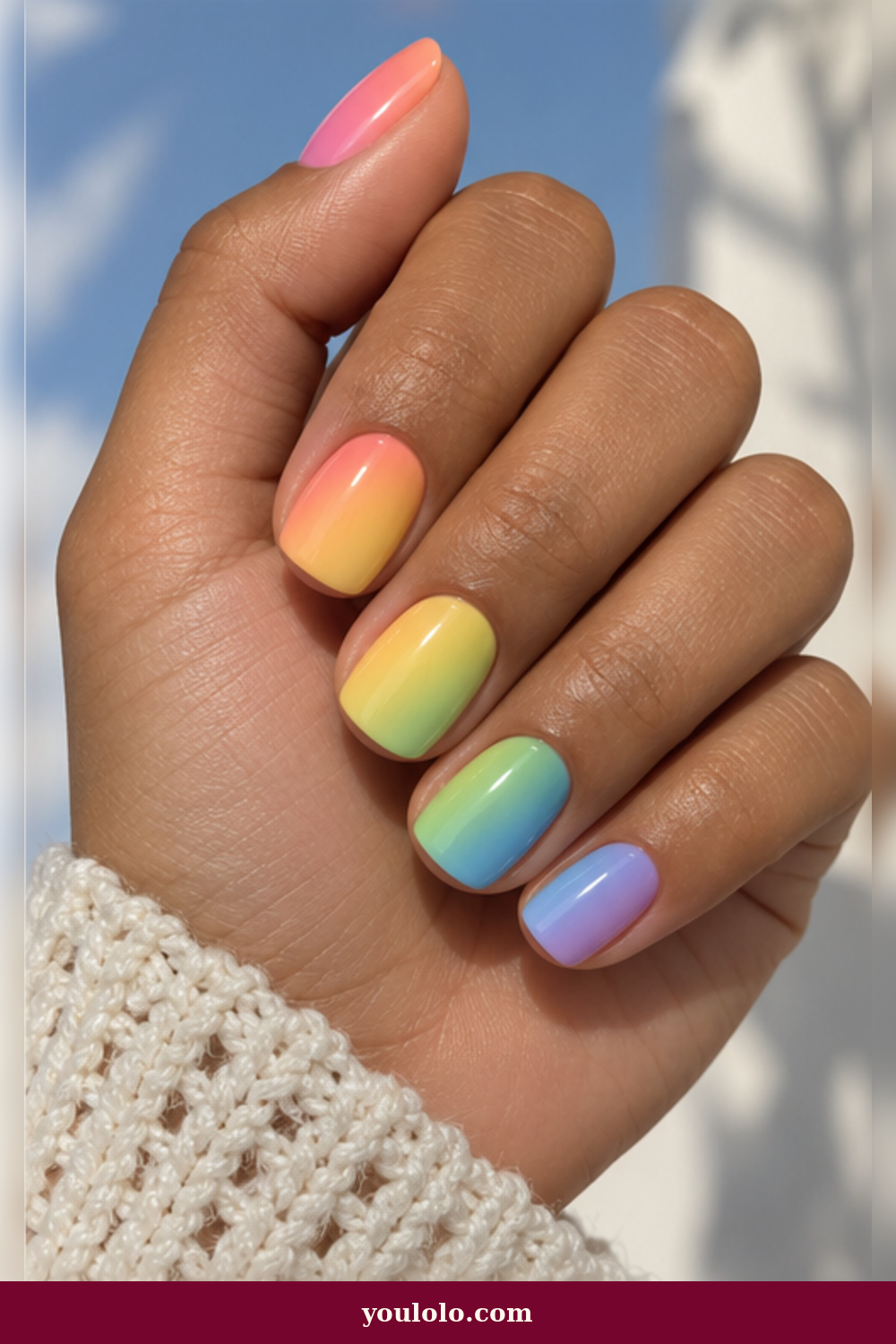
Every nail blends only two neighboring colors—coral into peach, yellow into green, aqua into lilac—rather than squeezing a full spectrum onto one small surface. The sequence creates a rainbow when the hand is viewed as a whole. This is a useful trick for shorter nails. Request a seamless airbrushed transition and a shiny finish that smooths the colors into one soft wash.
9. Black With Rainbow Chrome Edges
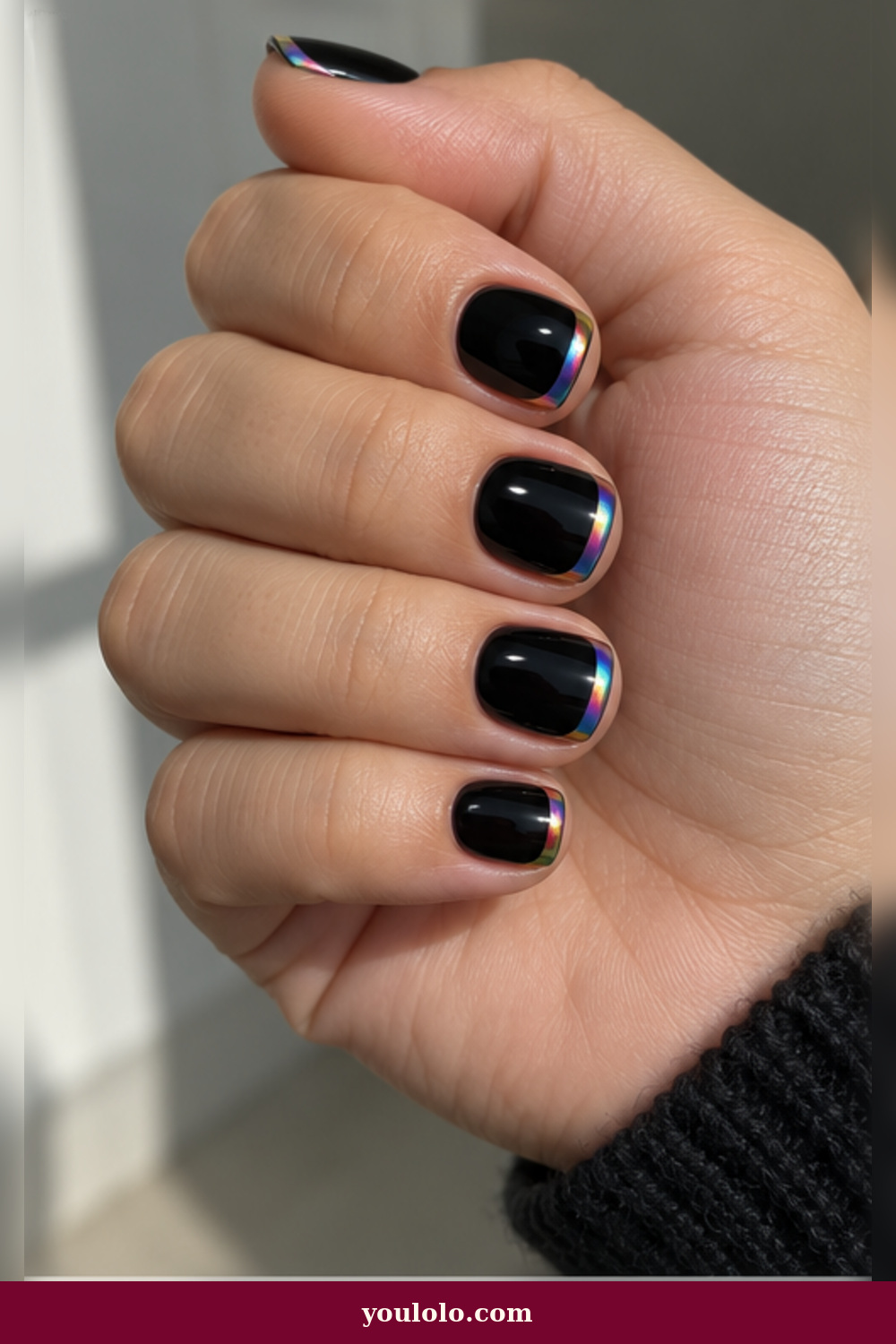
Glossy black gives a hairline rainbow edge real impact. The color sits only along the free edge, shifting from warm to cool across the hand, while the dark base makes every sliver look electric. This is one of the moodiest options here and an excellent evening manicure. Keep the nails short and the chrome line narrow so it feels sleek rather than theatrical.
10. Jewel-Tone Velvet Cat-Eye

Magnetic polish supplies movement without extra embellishment. Ruby, amber, emerald, sapphire, and amethyst each carry the same narrow velvet beam, so the finish unifies five strong colors. A darker base gives these shades depth, but the magnetic line should remain crisp. Turn your hand under light before leaving the salon to check that every reflection runs in the same direction.
11. Modern Rainbow Half-Moons
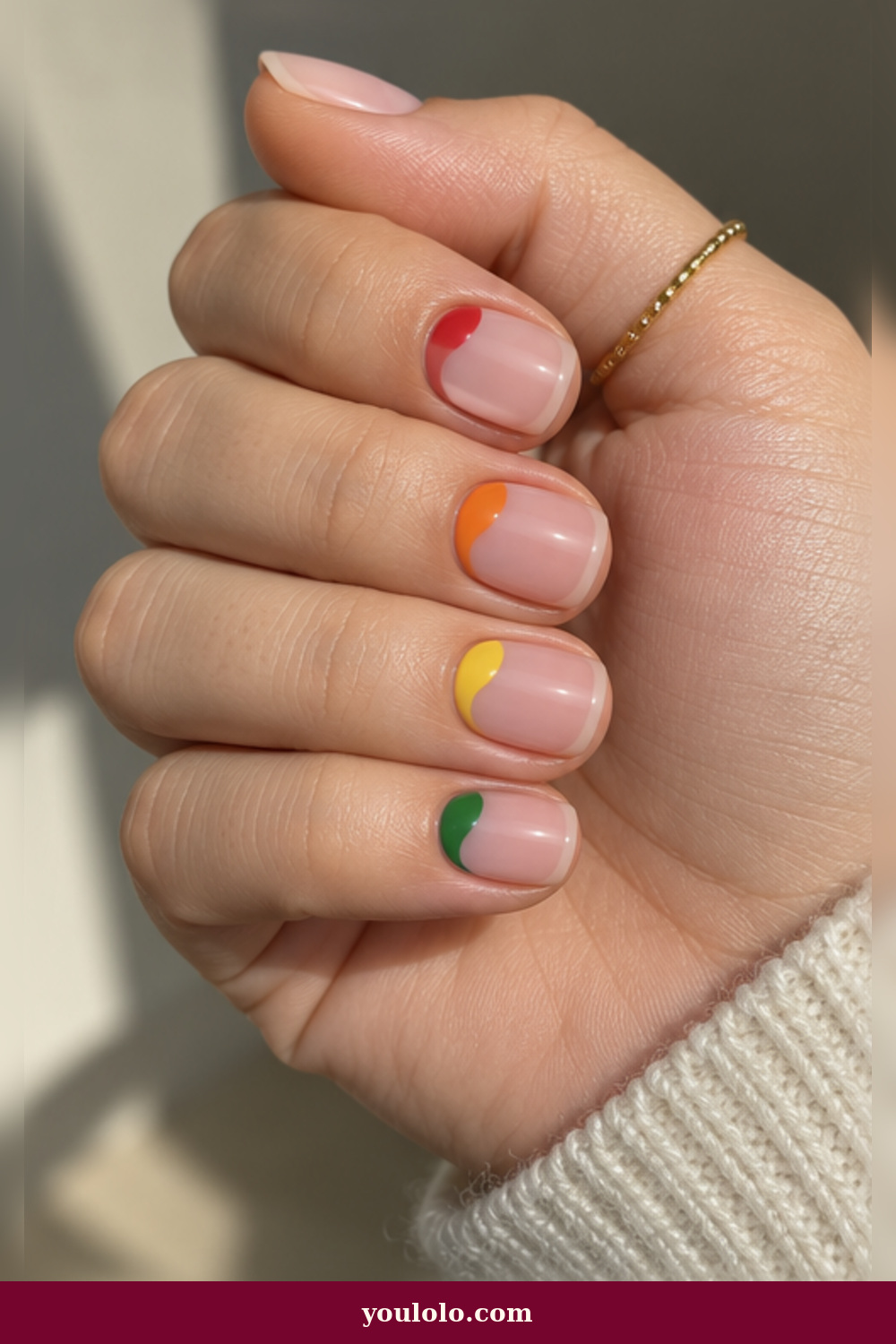
Colored half-moons at the cuticle feel graphic and a little retro, yet the sheer pink base keeps them modern. Because the arcs repeat in the same size, the design looks organized even though each nail changes shade. This placement is particularly flattering on short round nails. A matte color block with a glossy clear base would add another quiet layer of contrast.
12. Espresso Rainbow Side French
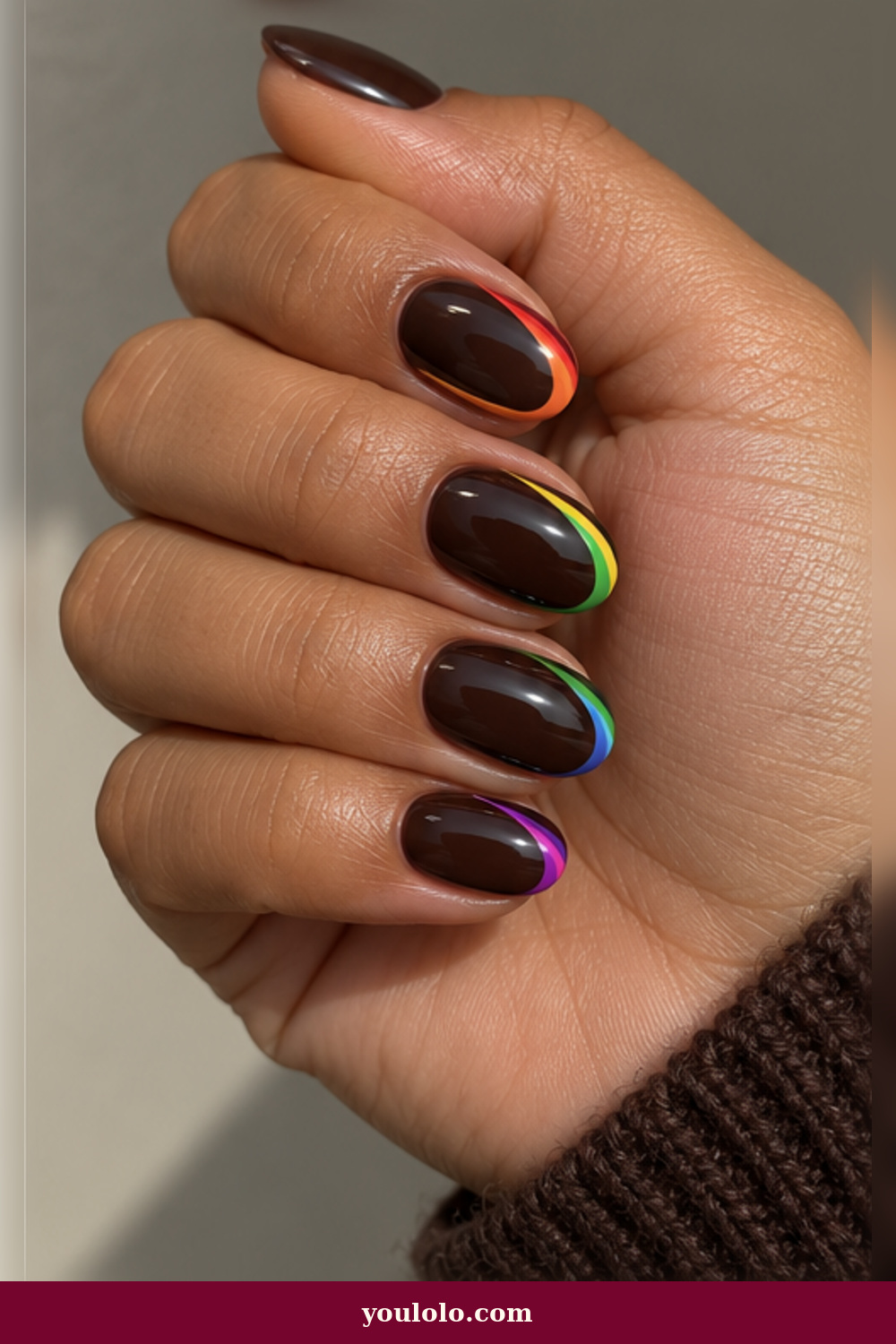
Deep espresso is an elegant anchor for saturated color. Rather than tracing the full tip, slim rainbow arcs hug one side of each oval nail, making the placement feel unexpected and lengthening. The brown needs to be glossy and almost black in low light. Against it, even a very narrow line of red, orange, green, blue, or violet reads clearly.
13. Clear Glass Rainbow Streamers
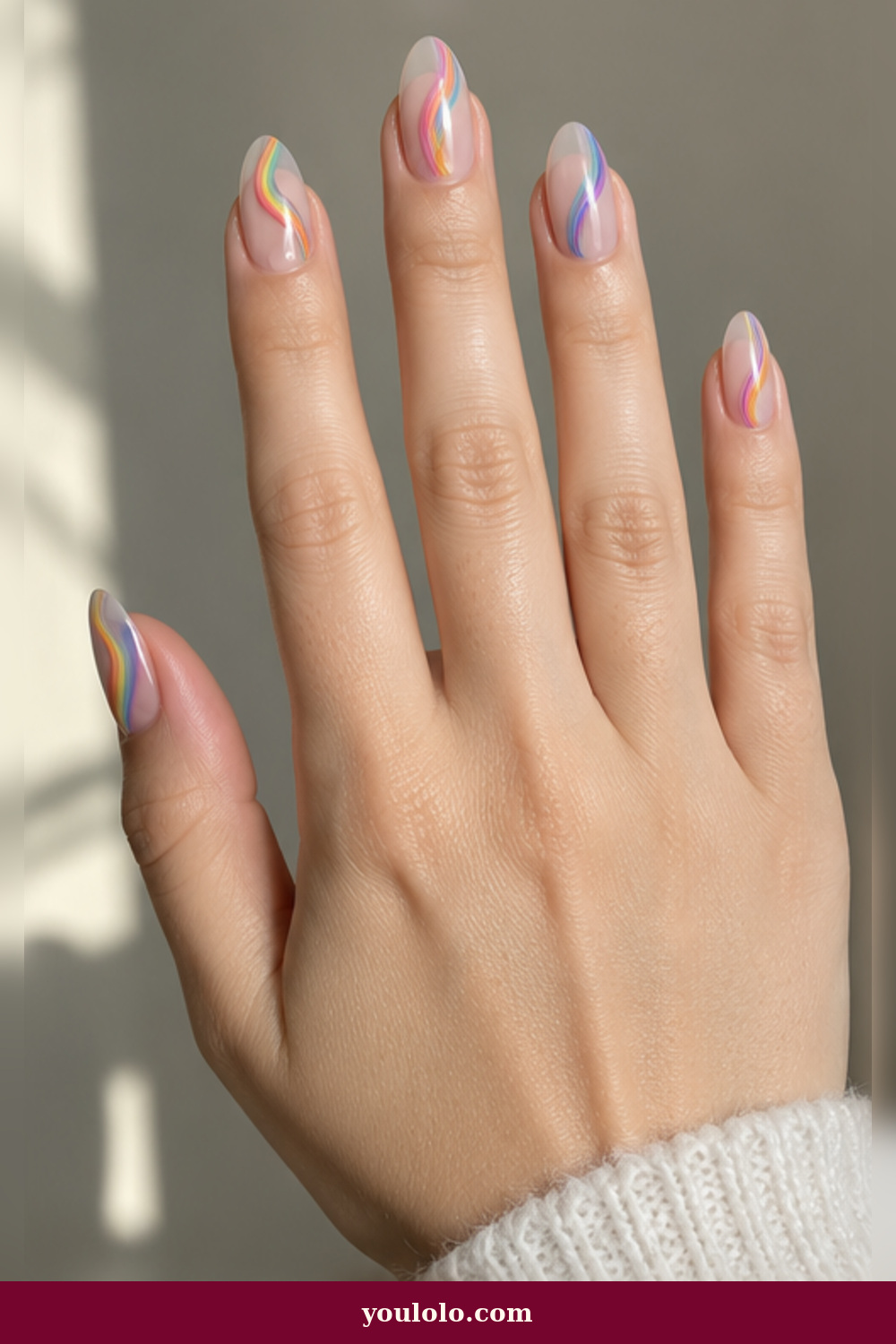
Long, translucent ribbons running from base to tip create movement while leaving plenty of clear nail visible. The lines should vary slightly, as if they are floating, but never cross so often that the design becomes tangled. A builder-gel overlay can keep the surface perfectly smooth. This version has a light, liquid quality that looks especially beautiful on oval or almond nails.
14. Rainbow Microstones on Milk
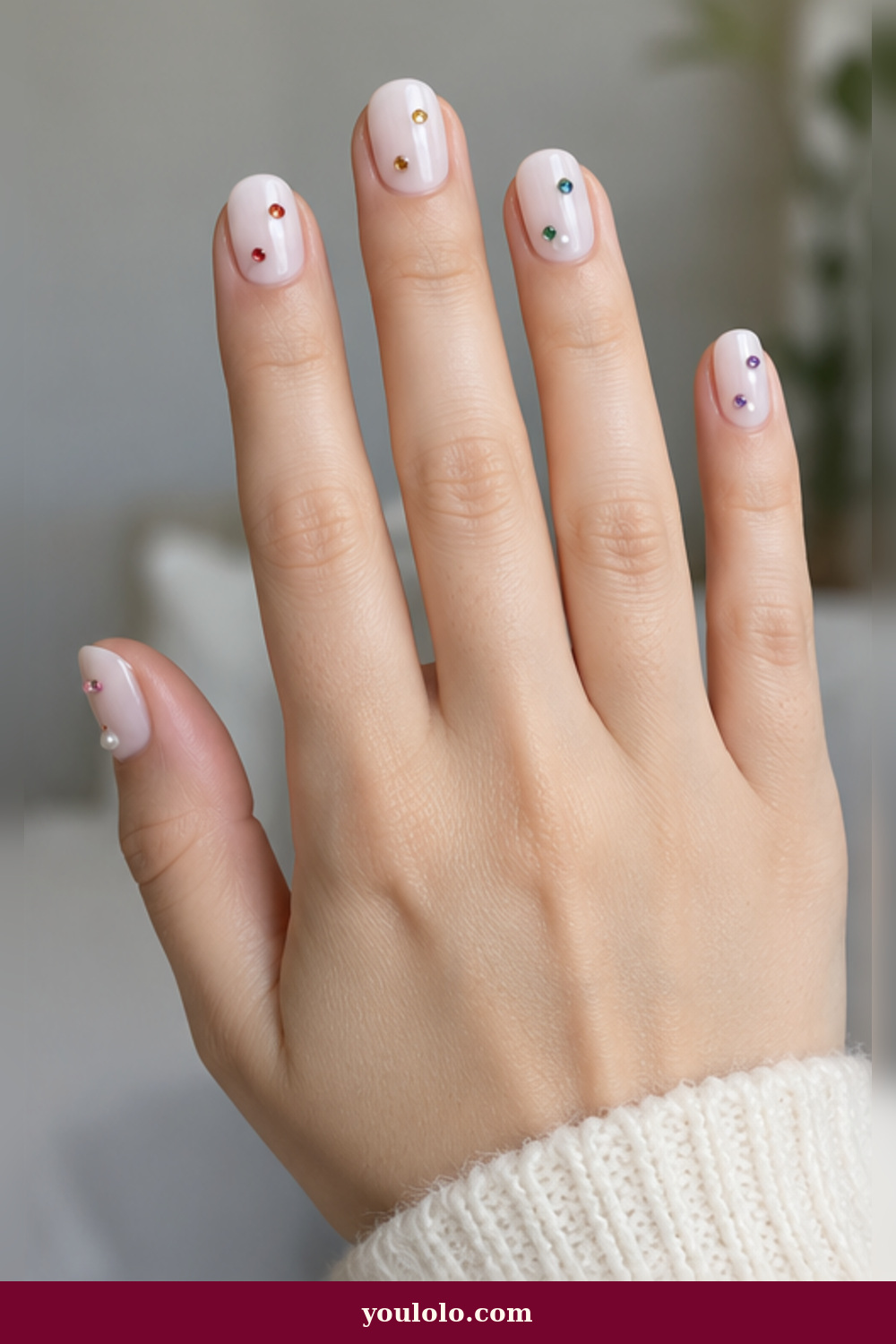
A scattering of tiny colored stones can look refined when the scale stays miniature. Over a milky white base, one or two gems per nail resemble pinpoints of colored light rather than costume jewelry. Mix in a few small pearls to soften the sparkle. Ask for flat-backed crystals and a secure gel border around each one so the manicure remains comfortable in everyday life.
15. Pearl Blooming-Gel Clouds
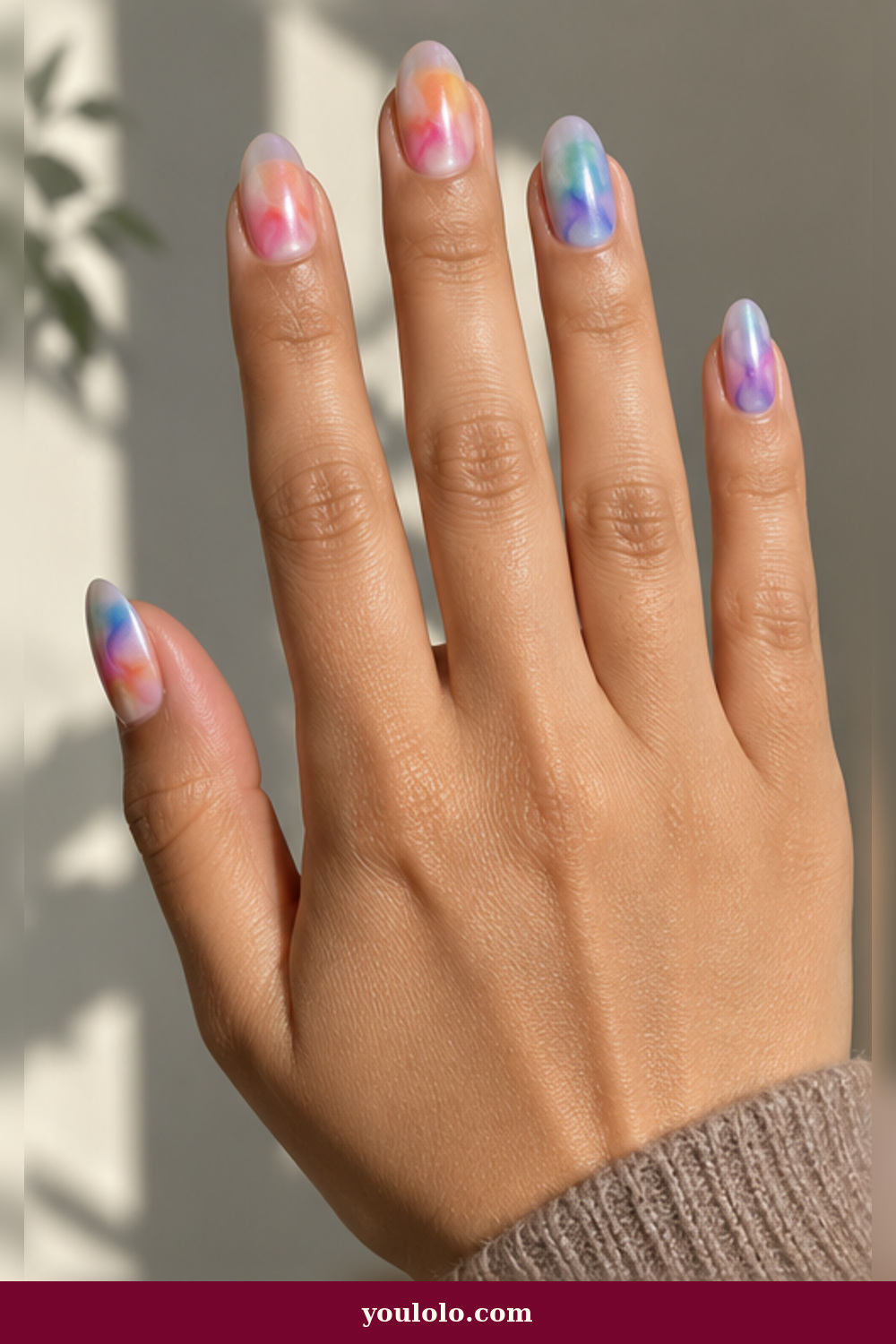
Blooming gel diffuses pink, apricot, aqua, and violet into cloud-like pools, then a sheer pearl glaze pulls the colors together. The pattern should stay soft and irregular; a perfectly repeated swirl would lose the organic effect. This is a lovely choice if you like aura nails but want more movement. Thin layers keep the finish luminous instead of thick or muddy.
16. Earth-Spectrum Skittle
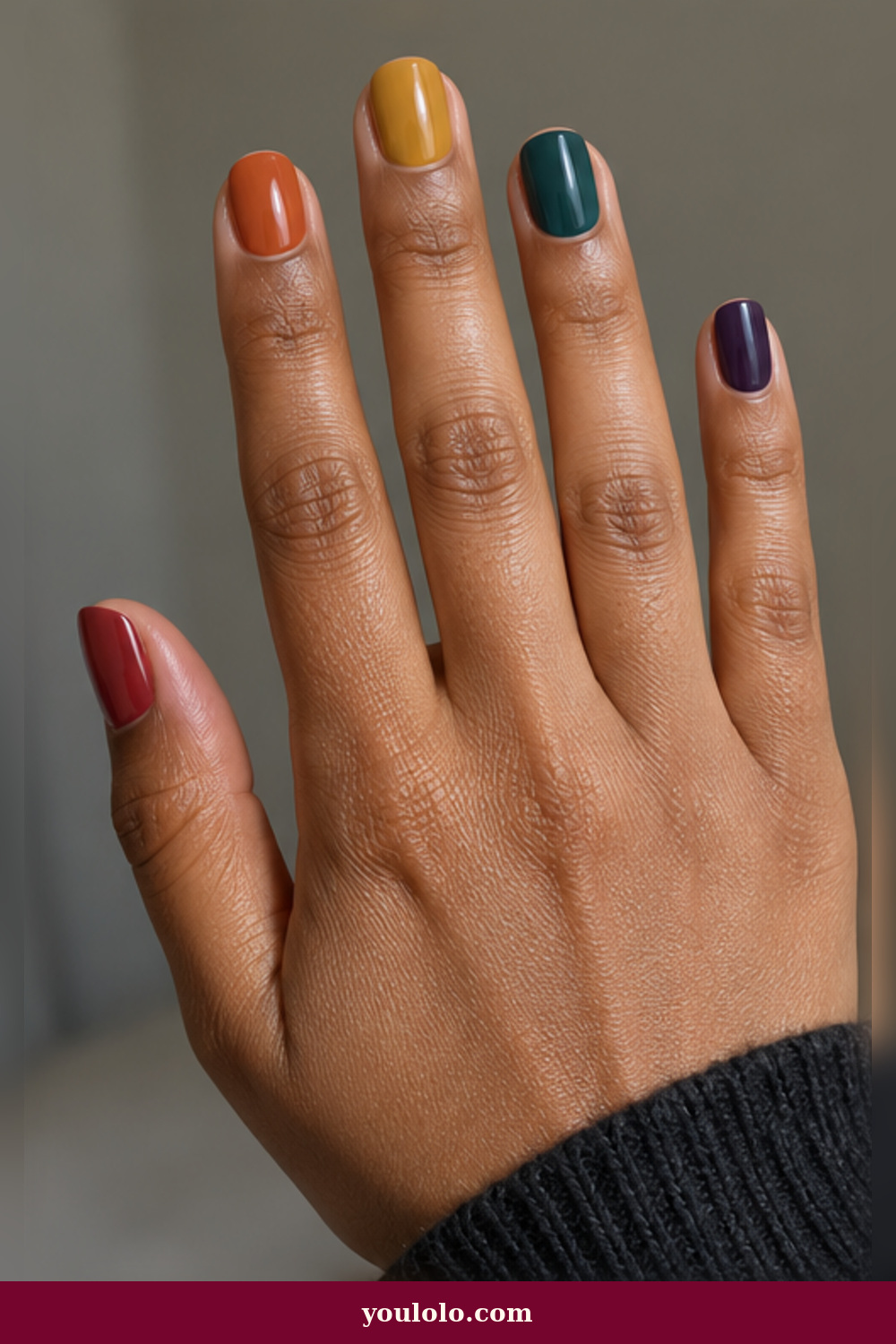
A rainbow does not have to be bright. Brick red, ochre, deep teal, moss, and aubergine form a grounded spectrum that works beautifully with neutral wardrobes and gold jewelry. Uniform short squoval nails and one glossy finish make the palette feel intentional. If a standard rainbow feels too summery, this muted color story is the easiest way to carry the idea into fall.
17. Double-Arc Rainbow French
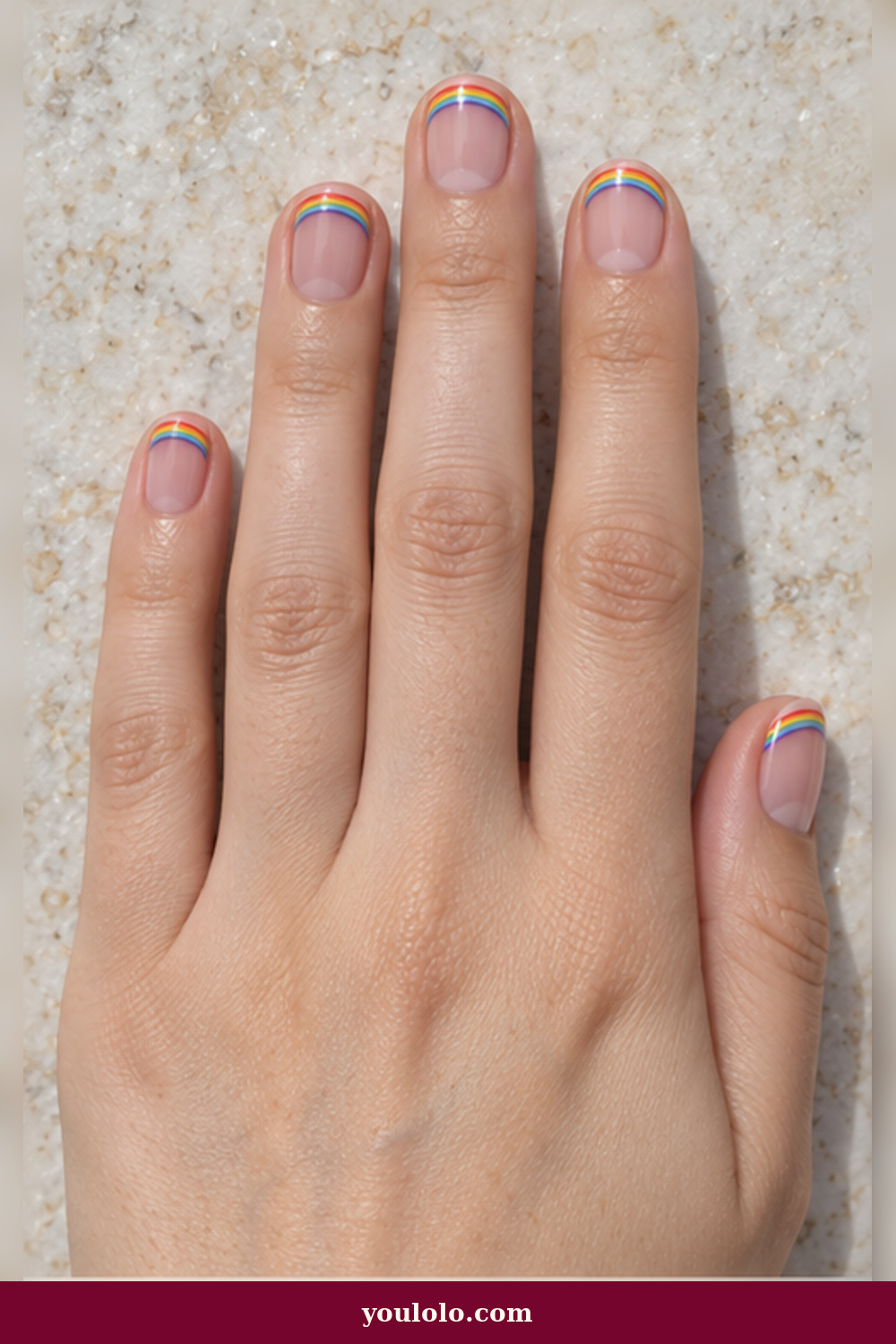
Two fine arcs at the tip create a little more structure than a single micro-French without covering the nude base. The gap between the lines is as important as the color itself, so ask for consistent spacing and slender bands. This design reads clearly on short nails and can be adapted to any palette. Softer primary shades keep it polished for day-to-day wear.
18. Muted Mosaic Accent Nails
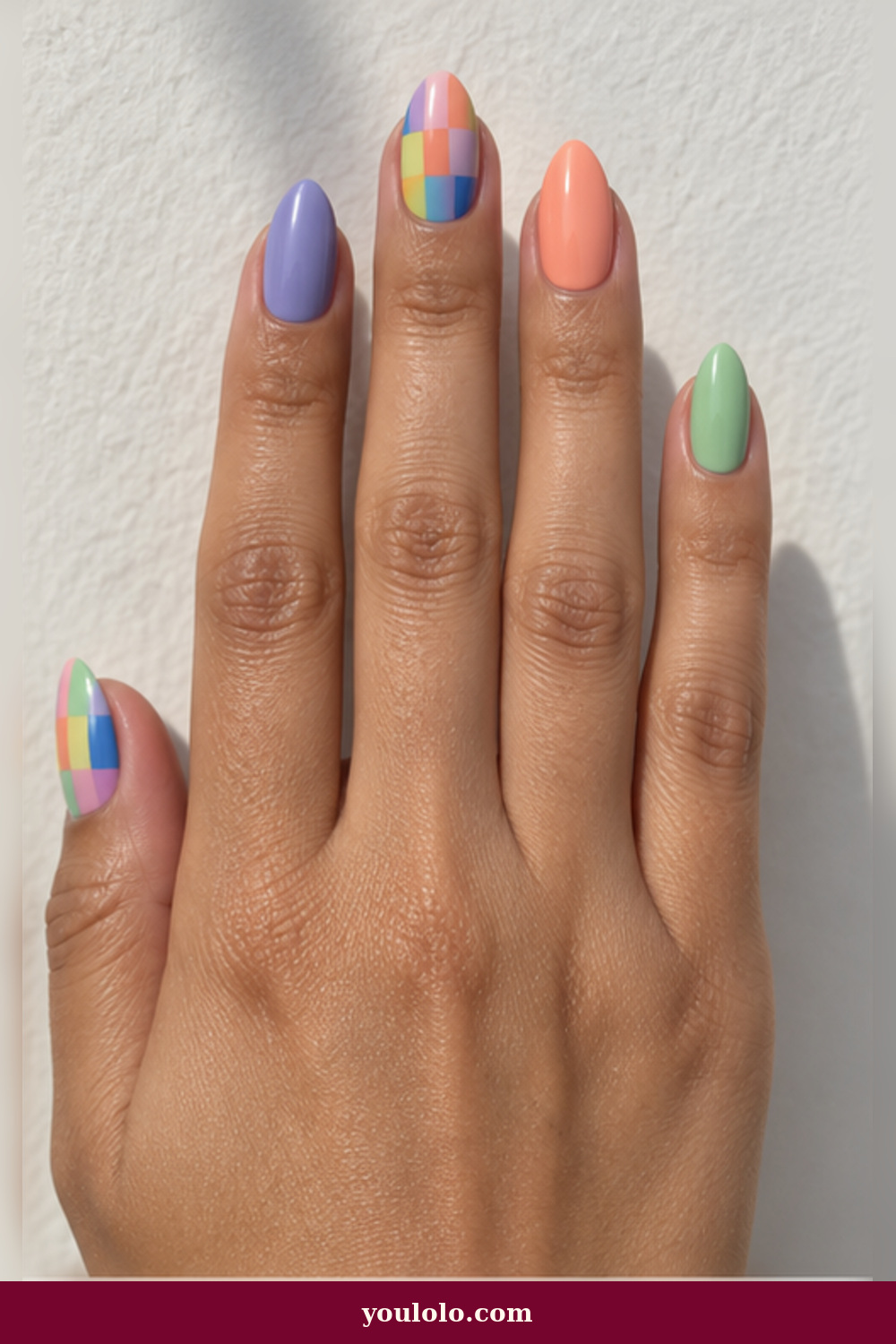
Small blocks of lavender, coral, mint, and blue make a modern mosaic on two accent nails, while the remaining nails each borrow one solid shade. Repeating the palette rather than the pattern gives the hand visual order. The shapes should be clean and intentionally unequal—not a tiny checkerboard. A medium oval silhouette softens the geometry and makes the set easier to wear.
19. Off-Center Rainbow Pinstripes
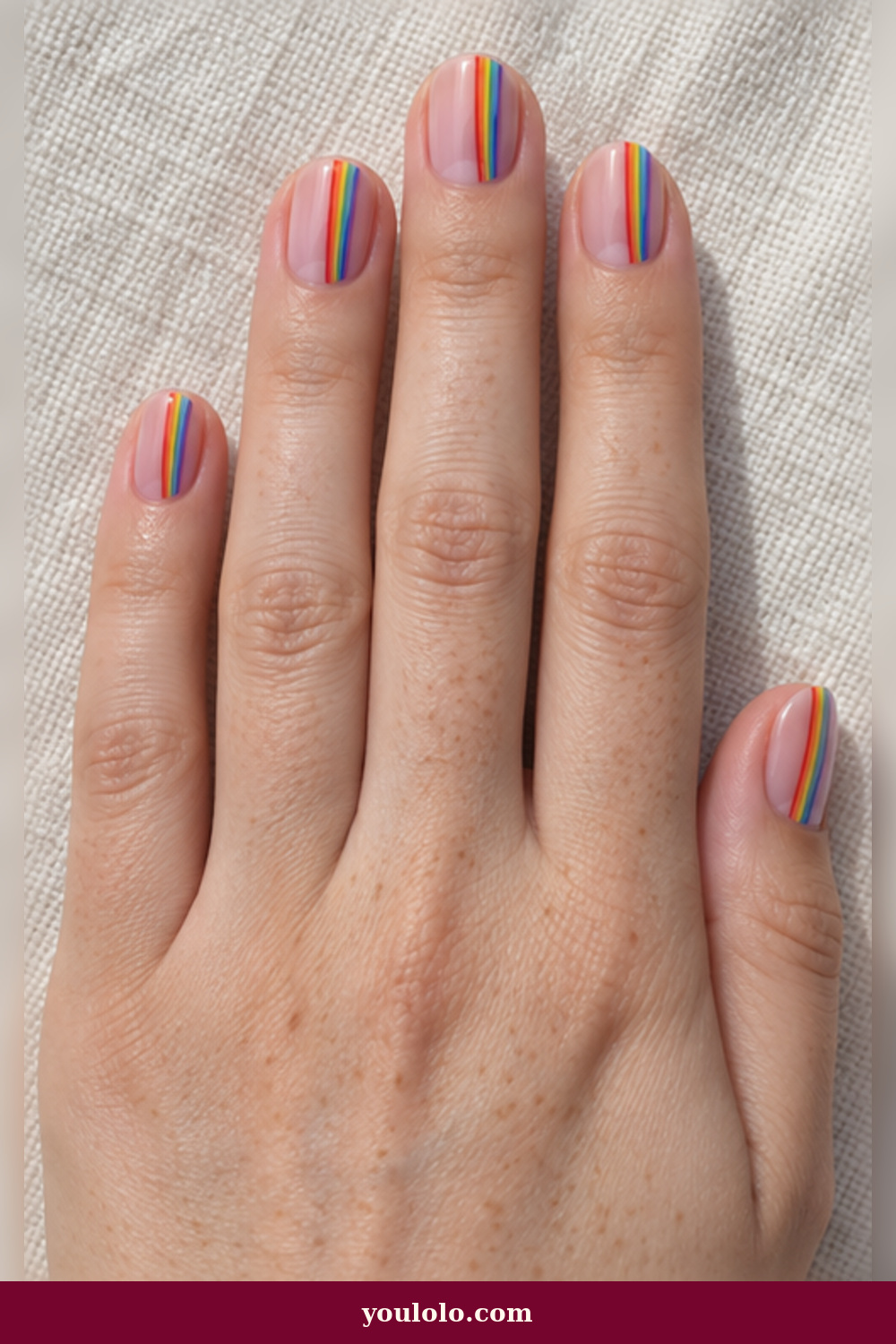
One slim vertical spectrum placed slightly off-center is surprisingly flattering. It draws the eye along the nail, creates length, and leaves most of the sheer pink base untouched. The look depends on precise linework: the bands should be narrow, parallel, and identical across all five nails. On short ovals, it is crisp enough to feel graphic but still wonderfully minimal.
How I would choose a palette before the appointment
Start with the clothes and jewelry you wear most. Cream, denim, gray, and camel make muted rainbow tips, earthy skittles, and pastel aura blends easy to repeat. Silver jewelry works beautifully with icy jelly shades, black bases, and holographic edges; gold warms up sorbet fades, stained-glass details, and autumnal color stories. If you save a reference, also save a photo of the opacity you like. “Blue” is not enough information when one version is a transparent cobalt jelly and another is an opaque dusty slate.
For a shorter appointment, choose a skittle set, micro-French, half-moon, or dot placement. Blooming gel, smooth aura blends, and precise stained-glass work need more time. The most successful Rainbow Nails are not necessarily the most detailed ones. They are the sets where color, placement, shape, and finish all make the same quiet argument.