The Best Fluffy Pancakes recipe you will fall in love with. Full of tips and tricks to help you make the best pancakes.


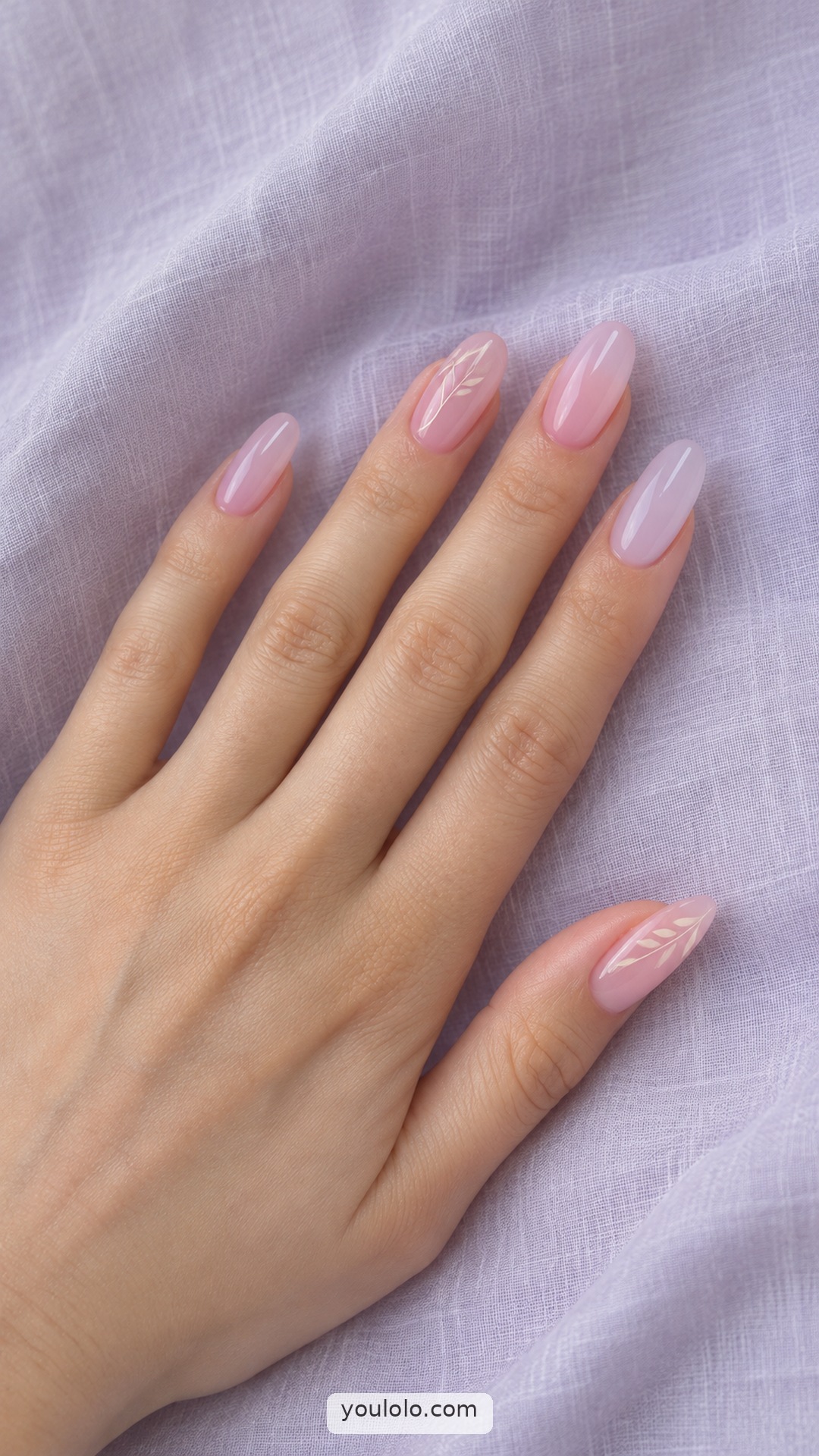
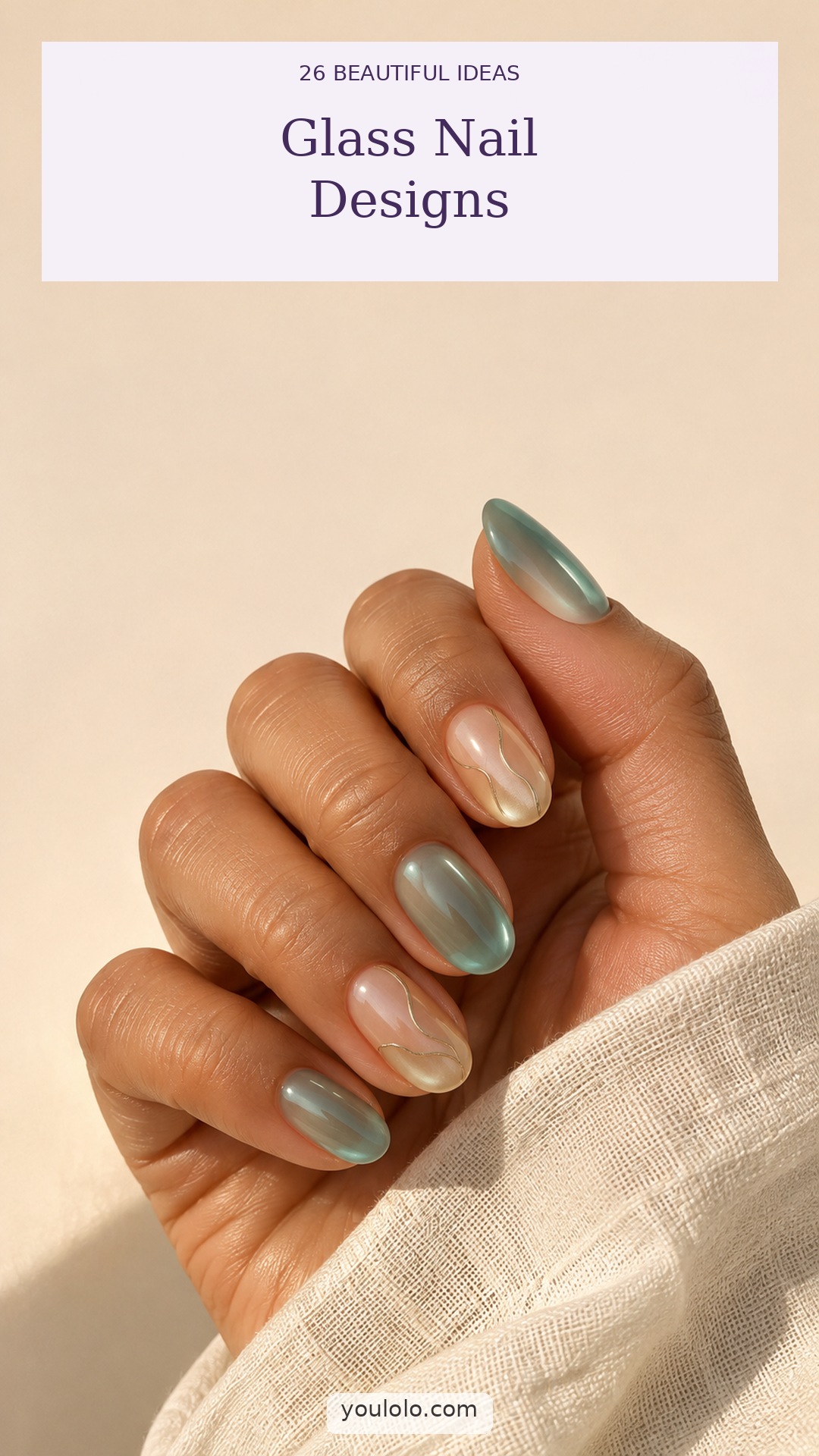
Glass nail designs make transparency part of the decoration. A rose tint, a clear French edge or a small painted leaf can look entirely different when light passes through the color instead of stopping at an opaque surface. These 26 ideas explore that effect through wearable lengths, varied palettes and carefully spaced details. Some are almost bare; others use richer jelly color or a restrained reflective accent. Choose the amount of depth and artwork you enjoy, then adapt the shape to the length you actually like wearing.
How to choose glass nail designs for your style
Begin with transparency, not the color name. A pale pink can look milky, clear, pearly or completely opaque depending on the product and number of layers. Decide whether you want to see a suggestion of the natural nail beneath the polish, a softly blurred base or a deeper tinted surface. That decision will have more influence on the finished effect than choosing between two similar pink shades.
Next, choose the kind of detail you want to notice. Fine lines keep the transparent base visible, while a small foil fragment introduces a separate reflective point. A painted flower creates a recognizable subject. Combining all three can quickly reduce the open space that makes this style appealing. Select one main feature, then let the rest of the manicure support it.
Short oval and rounded nails can show glassy depth without needing extensions. On a compact nail, keep the border narrow and place an accent slightly off center. A medium almond shape provides more room for flowing lines and translucent French tips. If you shorten a reference, reduce the amount of decoration before making every mark smaller; a simple readable motif usually works better than a crowded miniature.
Consider the undertone of the base alongside your preferred clothing colors. A warm peach tint works differently with honey foil than a cool rose tint does with silver. Neither pairing is automatically better. Compare a small sample under ordinary daylight and indoor light, especially when the finish includes pearl or iridescence. A still photograph captures one lighting condition rather than every possible reflection.
For more translucent inspiration, explore our winter jelly nail ideas. If you prefer a gentler neutral base, these everyday neutral nail ideas offer another useful direction. Choose references for their specific finish or shape rather than trying to combine every detail from several sets.
1. Rosewater Glass
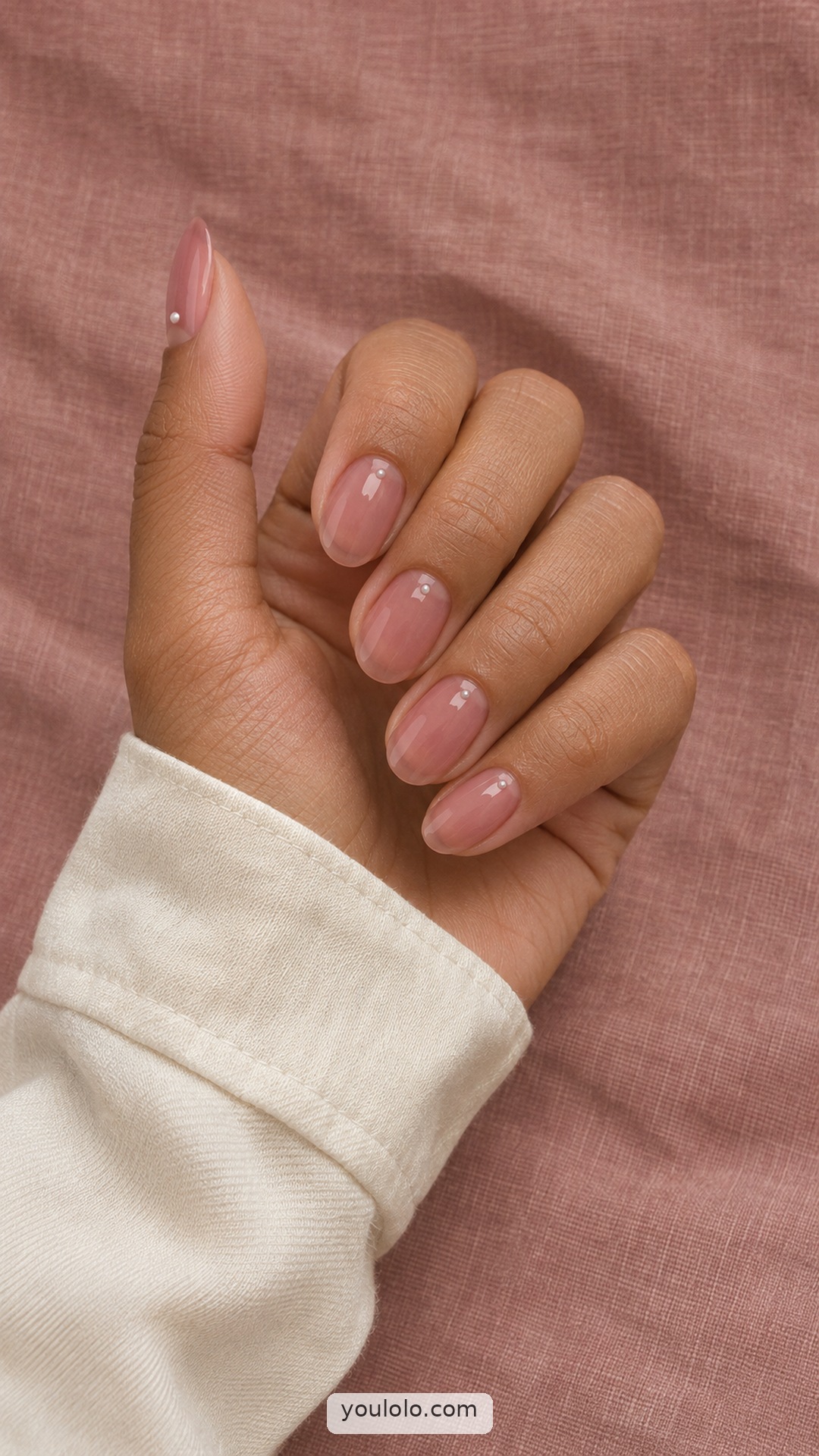
Rose jelly polish gives these short oval nails a softly tinted finish with a smooth, glassy surface. The color stays light enough to suggest the natural nail underneath, while a tiny pale dot adds a restrained accent near the base. Rounded edges keep the manicure compact and easy to pair with everyday clothing. Most of the interest comes from the clear shine and gentle pink depth, making this a useful reference when you want something polished without elaborate patterns or a strong color contrast. These glass nail designs offer a quiet starting point for a barely tinted manicure.
Make it yours: Choose a sheer rose shade rather than an opaque pink if you want this transparent effect. Build color gradually according to the polish instructions, and keep the tiny accent dot small enough that the glassy surface remains the focus.
2. Mint Prism Edge
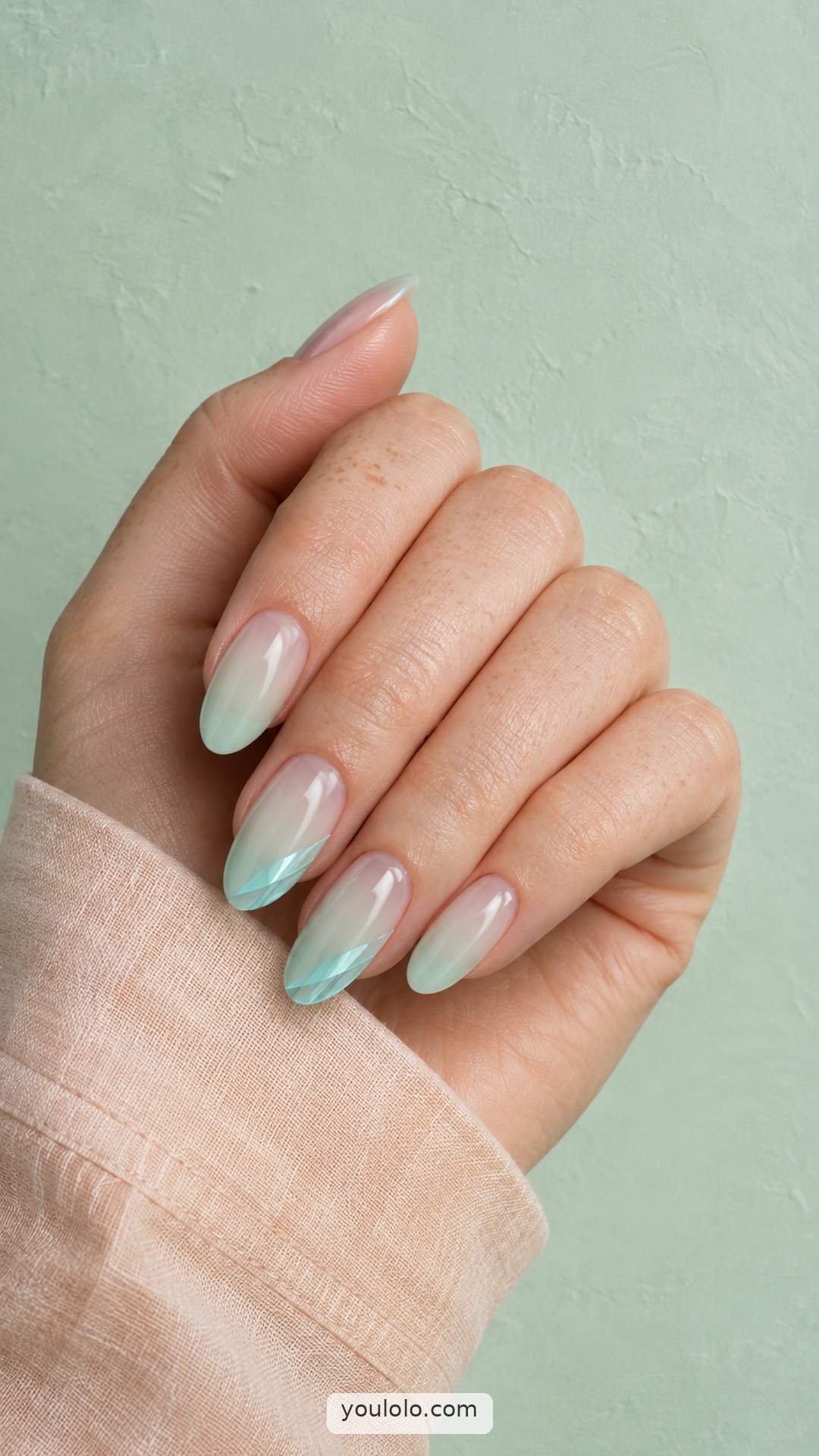
Mint and aqua create a cool, translucent effect across these almond nails. The color is concentrated toward the tips, with angled prism-like patches adding a little definition to selected edges. A softer nude area remains visible near the base, giving the manicure a light, open quality. Smooth reflections emphasize the glossy finish without hiding the delicate color changes. This is a subtle way to wear green nails, especially if you prefer a sheer design to a completely opaque mint manicure.
Make it yours: Keep the aqua shapes thin and slightly translucent so they blend with the mint instead of looking like heavy blocks. Ask for the color to remain light near the cuticle, with the clearest definition reserved for the tips.
3. Amber Windowpanes
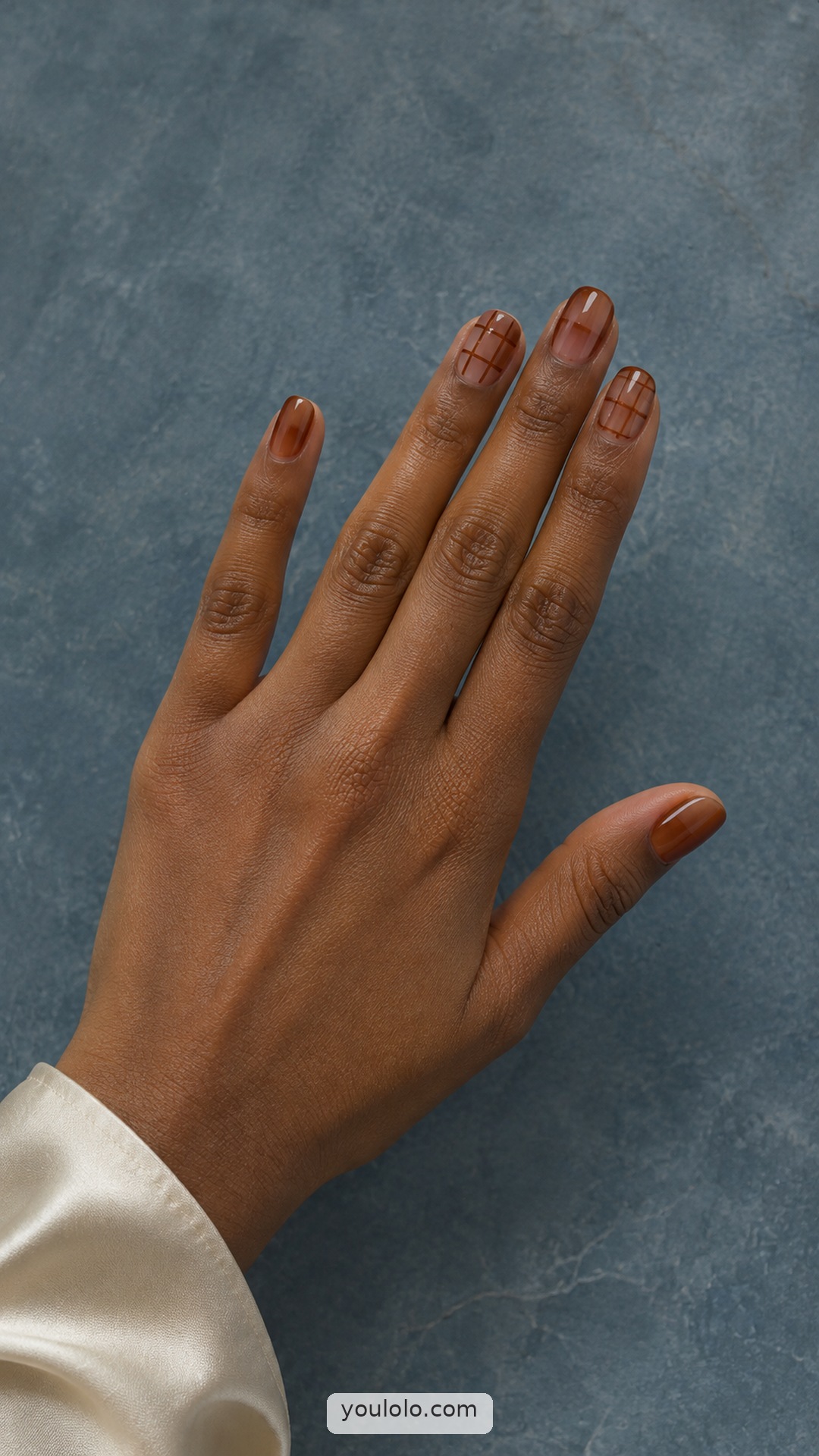
Amber polish lends these short nails a warm, glass-like depth, while fine caramel lines turn two accents into small windowpane designs. The surrounding nails stay plain, allowing the grid to stand out without covering the whole hand. A compact squoval shape gives the straight lines a tidy frame. The deeper amber color still catches the light around the edges, keeping the finish from looking flat. This combination works well when you want a geometric detail in a warm, restrained palette.
Make it yours: Paint the windowpane pattern on only two nails and keep the lines finer than the spaces between them. Use a slightly darker caramel shade for definition, leaving enough amber visible to preserve the transparent character of the base.
4. Lilac Veil Petals
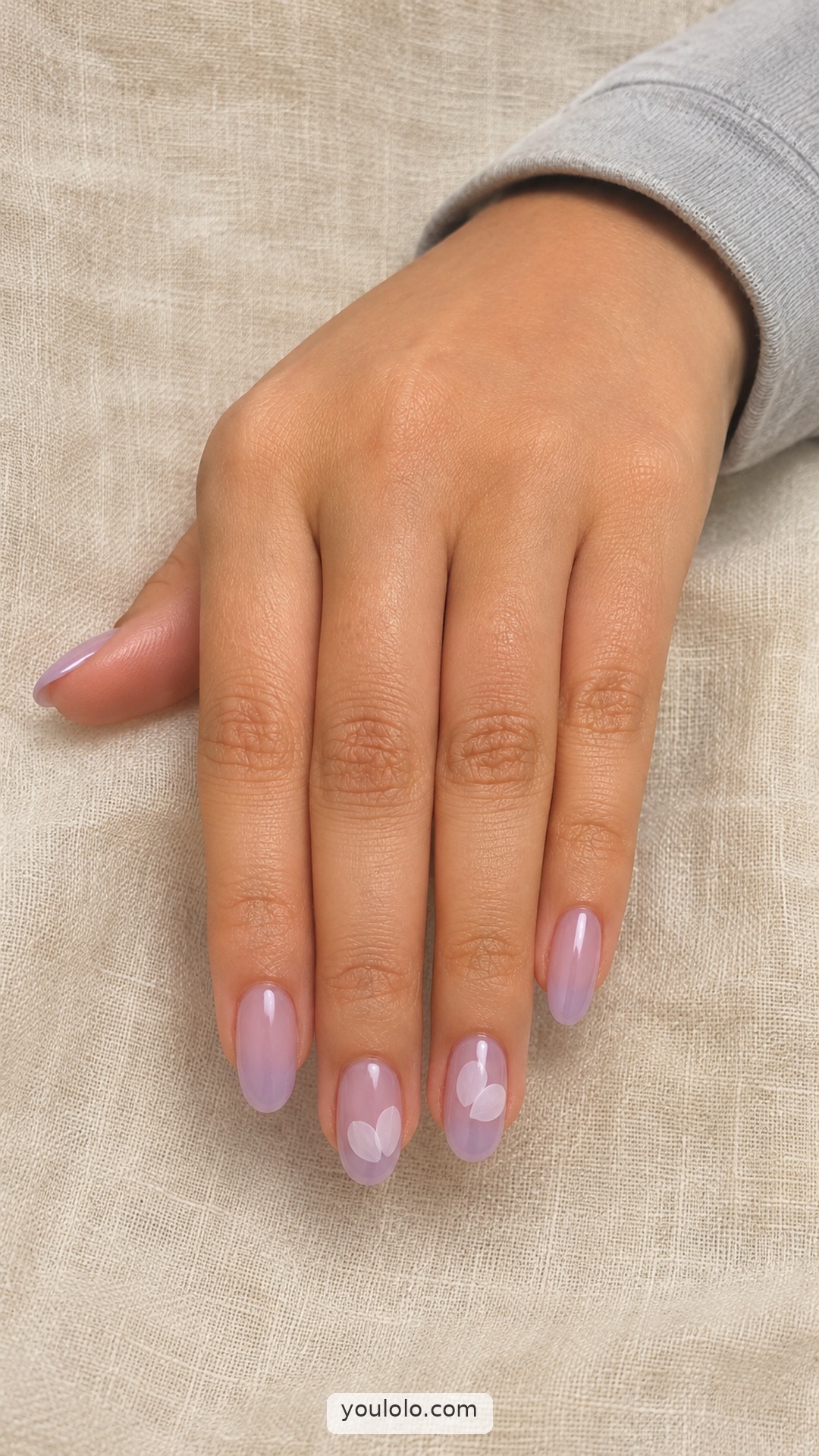
Translucent lilac makes a gentle backdrop for pale petal silhouettes on two nails. The floral shapes sit beneath a smooth glossy finish, giving the artwork a soft, layered appearance rather than a heavily outlined look. The remaining nails stay simple, with the purple tint providing the connection across the hand. Oval tips follow the rounded petals and keep the design delicate. This is a quiet floral option for anyone who enjoys lilac nails but prefers an airy, sheer finish to dense opaque color.
Make it yours: Keep the white petals thin and softly defined, with plenty of lilac visible around them. If your nails are shorter, reduce the number of petals rather than filling the whole surface; the open space helps the design stay delicate.
5. Clear Gold Drift
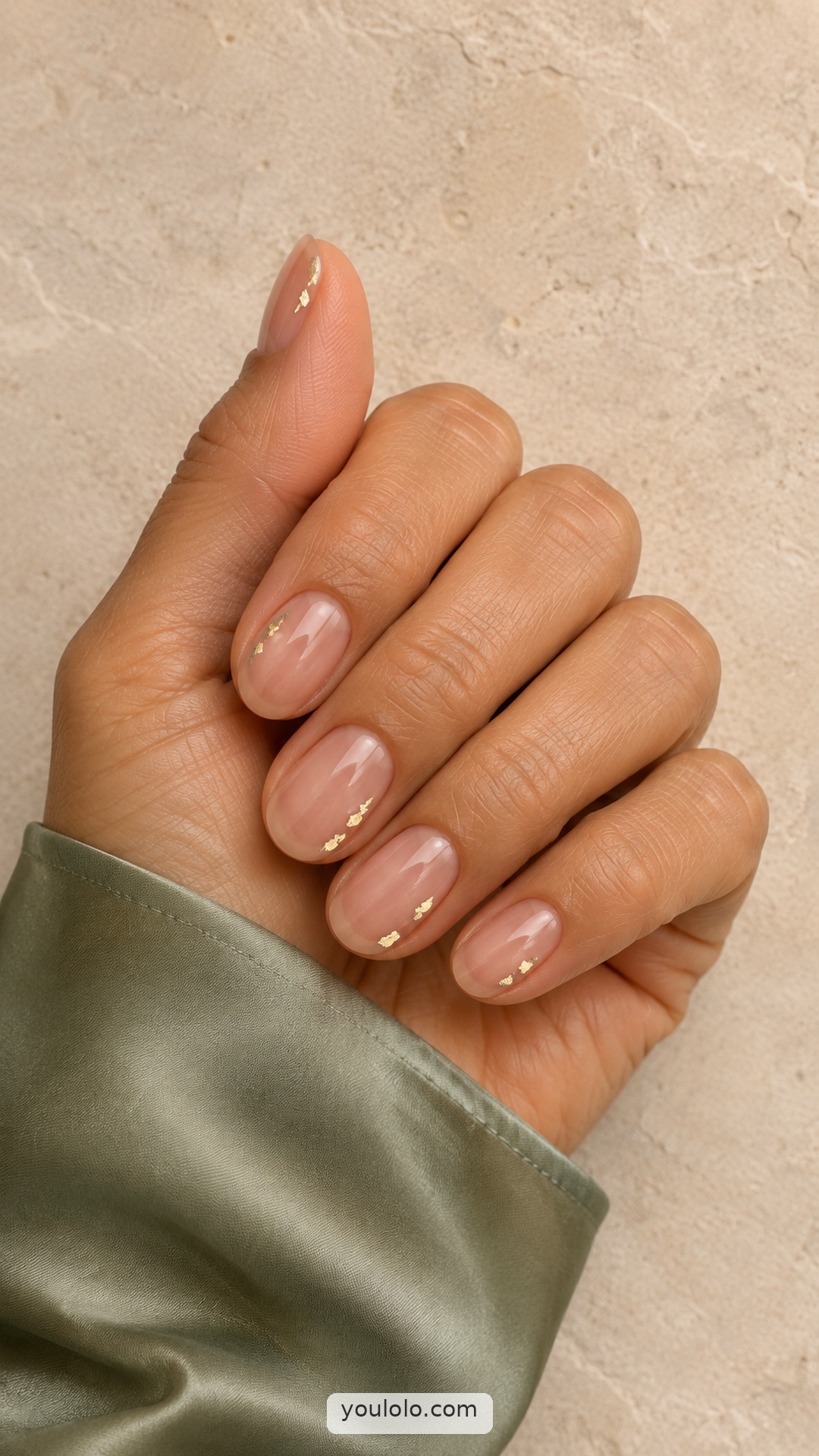
Tiny gold fragments add warmth to an otherwise understated nude glass manicure. The foil sits mainly near the side edges, leaving the center of each rounded nail clear and glossy. The uneven shapes feel lighter than a solid metallic stripe, and their sparse placement keeps the look delicate. Natural pink tones show through the base, so the manicure remains soft despite the reflective detail. This is an elegant option when you want a small touch of gold without an entirely metallic nail.
Make it yours: Use only a few small foil pieces at a time, arranging them away from the center. Ensure they sit flat within the finish prescribed by your chosen nail system, so the final surface stays smooth rather than raised.
6. Icy Blue Contours

Ice blue gives this manicure a cool, polished mood, while slender navy curves add definition along the edges. The pale color looks soft against the glossy surface, and the darker outlines follow the almond shape without filling the nail. Keeping the palette to two related blues makes the design cohesive even where the contour placement varies. Most of the nail remains light, letting the curved accents stand out. It is a neat alternative to a traditional blue French tip with a slightly more graphic finish.
Make it yours: Use a very fine liner brush for the navy contour and keep the line close to the side edge. Leave the center pale and open; a narrow curve creates enough contrast without turning the design into a heavy border.
7. Peach Glass Ribbons

Fine ivory ribbons add movement to this peach glass manicure without covering its softly translucent base. The flowing lines sit on two accent nails, while the others stay plain and glossy. A short oval shape keeps the detail compact, and the warm peach tone makes the pattern feel gentle rather than graphic. The curved lines also follow the rounded tips, giving the whole set a consistent rhythm. It is an easy direction to adapt when you want a neutral manicure with a little hand-painted detail. For glass nail designs with linework, the open space matters as much as the painted ribbon.
Make it yours: Sketch the direction of each ribbon before adding neighboring lines. Leave uneven gaps between them instead of making a tight stripe pattern, and keep the other nails plain so the peach base remains a visible part of the design.
8. Emerald Waterlight
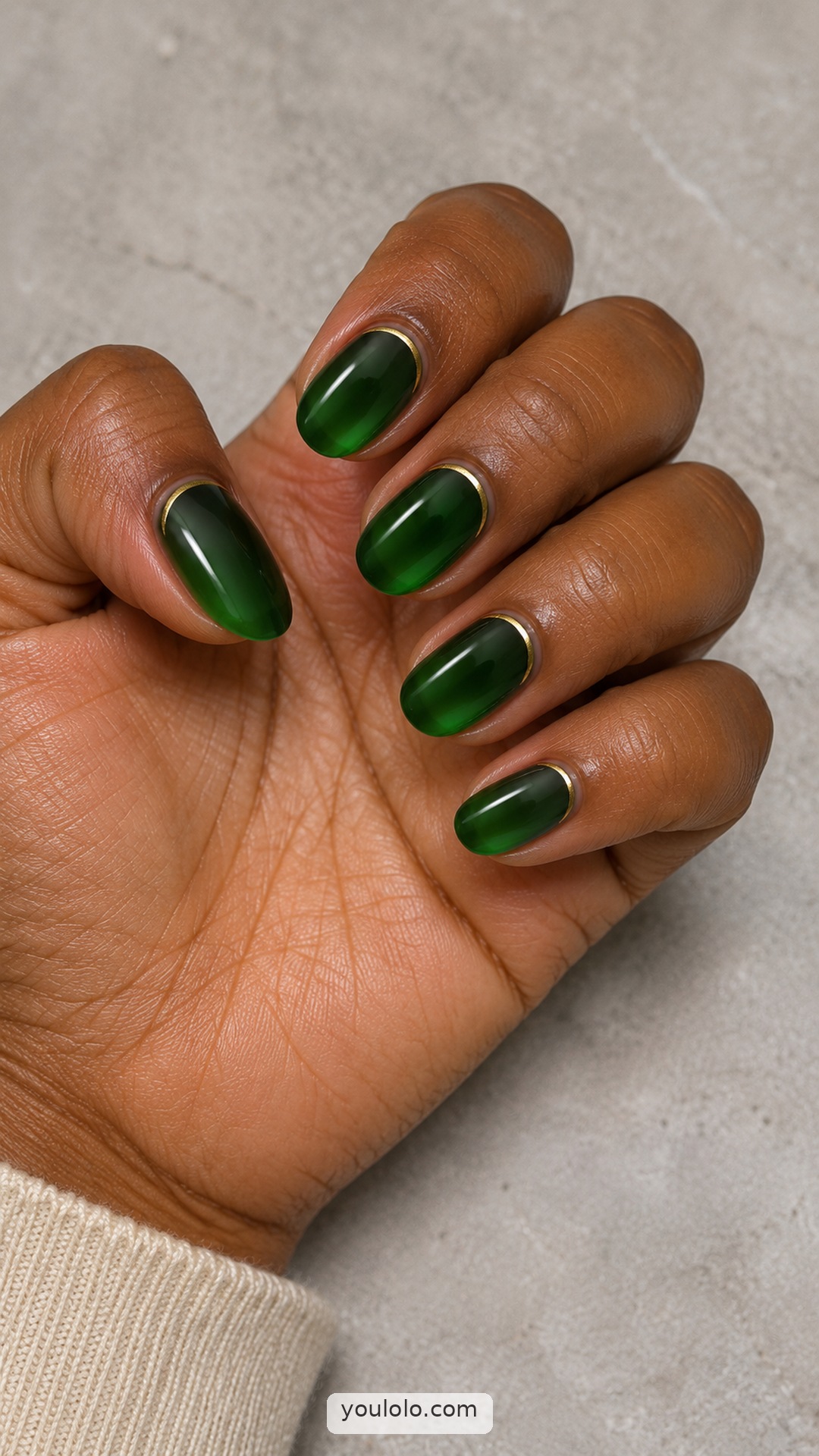
Deep emerald gives these glassy nails a rich bottle-green appearance, with lighter areas showing through the translucent color. Fine gold crescents near the bases introduce a quiet warm contrast without adding a large motif. The oval shape and smooth surface keep the emphasis on color depth rather than pattern. This version feels dressier than a pale jelly manicure but still uses the same idea of light passing through sheer layers. It would pair naturally with cream, charcoal, or other simple shades that let the green stand out.
Make it yours: Ask for translucent green layers rather than a fully opaque emerald finish. Keep any gold crescent narrow and close to the base, leaving the center free so the lighter and darker areas of the glass effect remain visible.
9. Blush Crystal French

Transparent lilac tips give this pink French manicure a delicate cool edge. A fine silver line defines the curved boundary without turning it into a heavy metallic stripe. The sheer pink base keeps the nail beds looking light, while the almond shape makes the tinted tips feel tapered and soft. This is a subtle way to introduce color into a French design when solid pastel tips feel too opaque. The interest comes from the contrast between the gentle pink base and the faint violet finish.
Make it yours: Keep the lilac tip translucent enough for light to pass through the free edge. Trace the silver smile line with a very fine brush, checking that its width stays consistent as it curves toward the sides of each nail.
10. Smoky Quartz Wisps
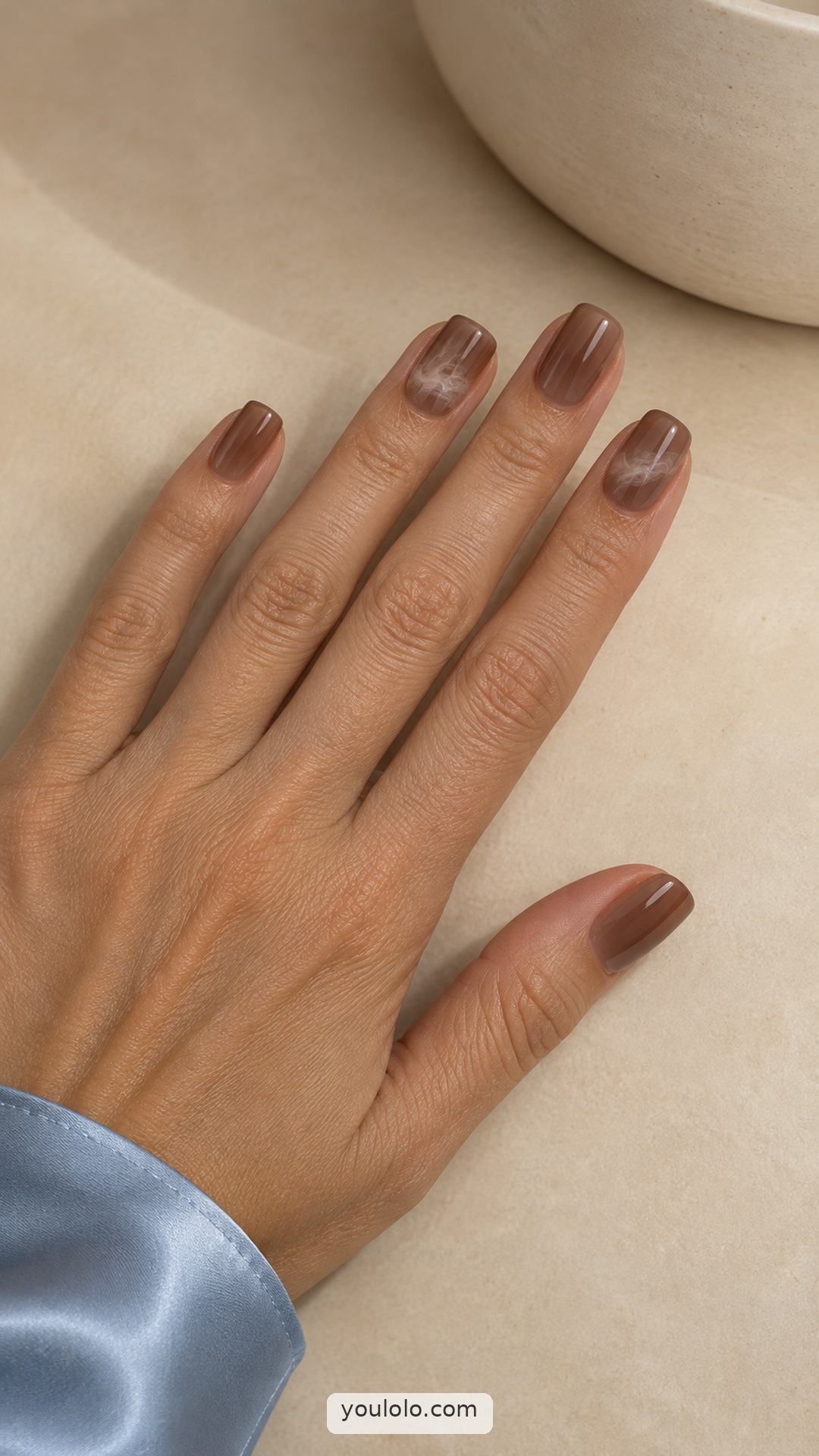
Smoky brown jelly polish creates a soft quartz effect on these short squared nails. Two accents carry pale cloudy wisps, with the remaining nails left clear of pattern to show the translucent color. The cream marks vary in density, which helps them resemble mineral veining rather than evenly spaced stripes. A compact shape keeps the deeper palette understated and wearable. This design offers a quieter alternative to bold marble nail art, especially if you prefer warm neutrals with only a little contrast.
Make it yours: Use a light touch for the cream wisps and avoid outlining every cloud. A few thinner marks beside one broader veil will create more depth than equal stripes, while plain brown nails help the pattern stay restrained.
11. Cherry Glass Hearts
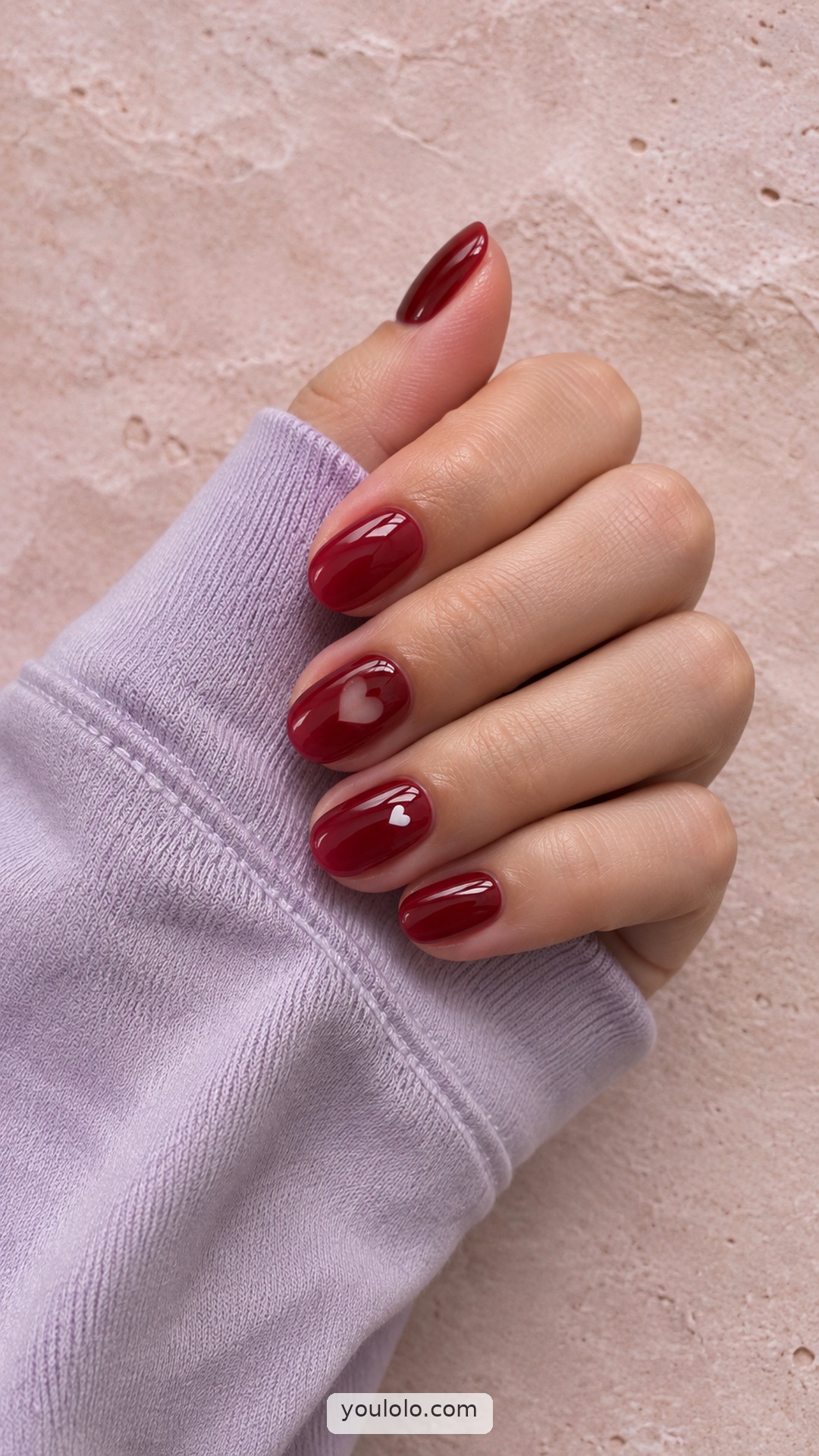
Glossy cherry red gives this heart manicure its main impact, with just two small accents breaking up the color. One heart is a pale clear-looking window in the red, while another is a tiny painted white shape. The difference keeps the motif from feeling repeated too literally. Short oval nails make the set compact, and the smooth surface adds depth to the red. This would suit someone who likes a playful detail but still wants most of the manicure to read as a simple cherry shade.
Make it yours: Keep both hearts small and give them clear space around the edges. Plan the negative-space heart before applying the red, then use a fine brush to refine its outline so the two lobes remain distinct at this scale.
12. Champagne Opal Veil
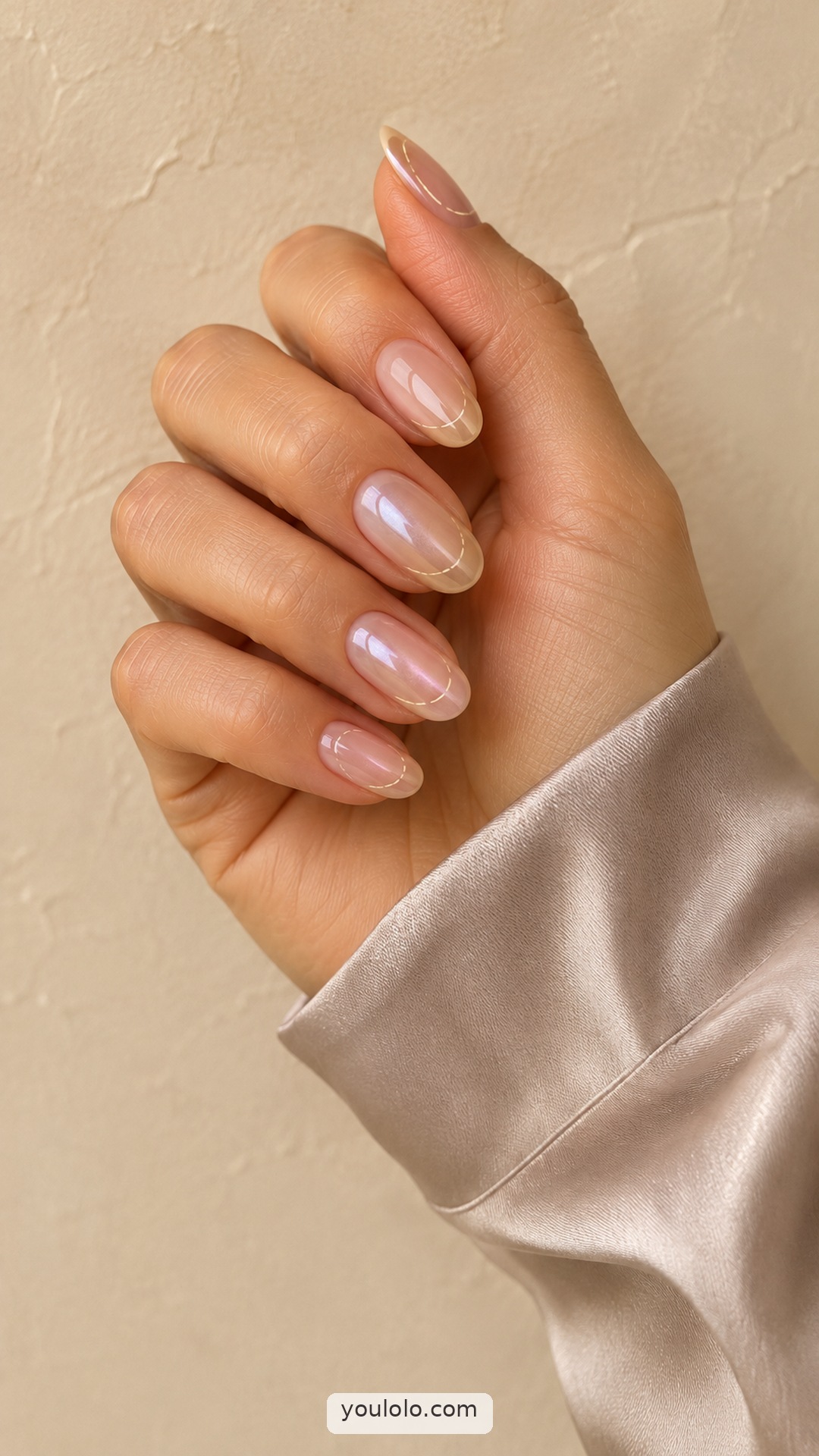
Sheer champagne polish gives these oval nails a warm, glassy base, while pearly opal reflections add a delicate change of color. Fine ivory arcs follow selected edges without forming a heavy outline. The transparent finish keeps the look light, even where the sheen catches pink or lilac tones. This is a polished choice for anyone who wants more detail than plain nude nails but prefers a restrained palette, with the shape and surface doing most of the visual work. This is a softer direction for glass nail designs when you prefer pearl to bold foil.
Make it yours: Keep the champagne layer sheer and use the opal effect sparingly so the base remains visible. Add only a few fine ivory arcs, leaving gaps between them rather than tracing every nail all the way around.
13. Periwinkle Dew Drops
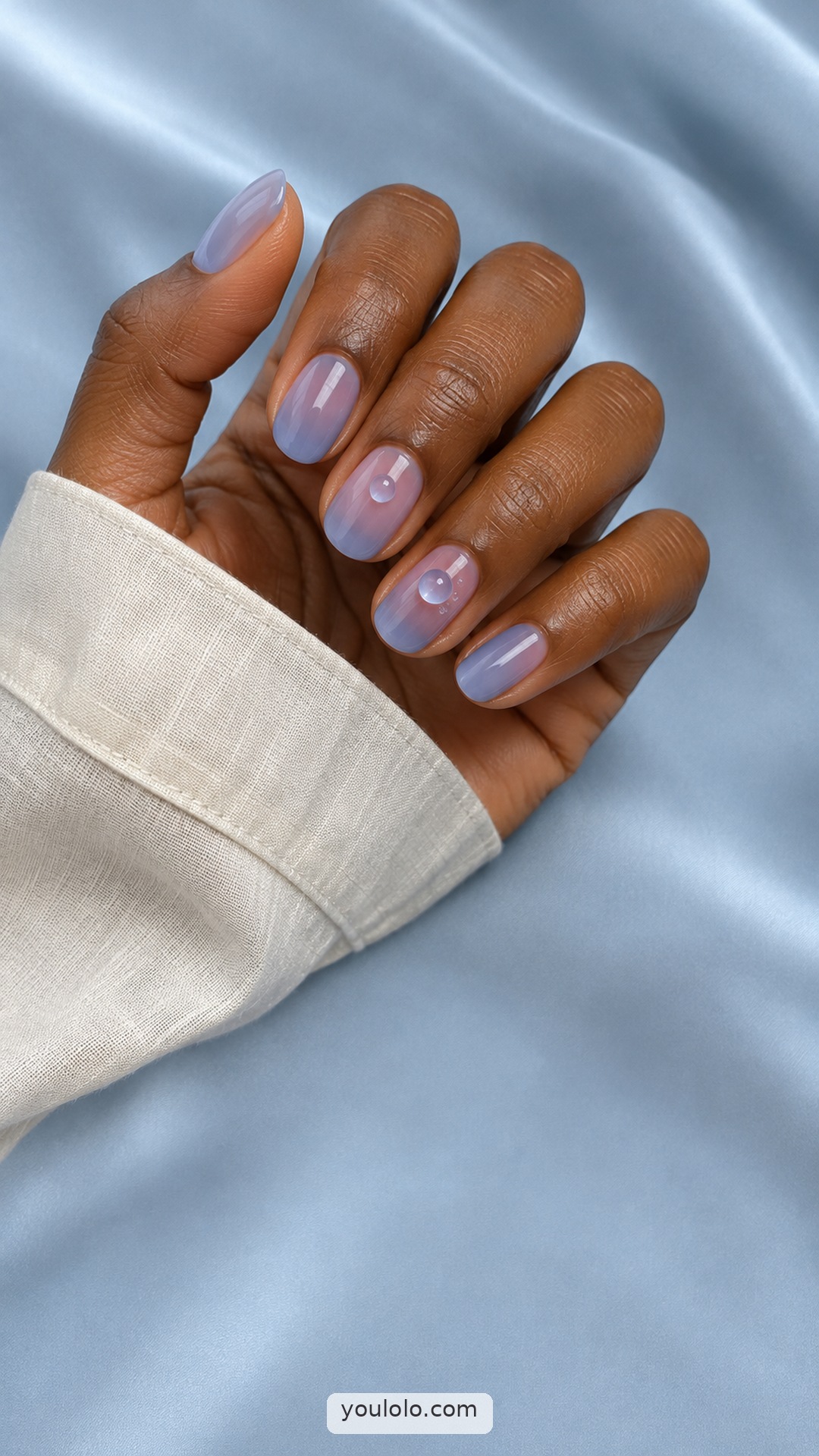
A translucent periwinkle tint gives these short rounded nails a cool, watery appearance. Small clear raised drops on two accents add another layer of reflection without introducing a new color or a busy painted pattern. The remaining nails stay smooth, making the dew-like details easier to notice. This set balances a playful surface effect with a simple silhouette, and the light blue-violet shade feels especially fresh against cream, silver, or soft gray clothing and accessories in a simple everyday outfit.
Make it yours: Limit the clear raised details to a few small drops on two nails, leaving enough space between them to show the base. For a flatter version, ask for painted highlights that suggest droplets without adding texture.
14. Mauve Glass Grid
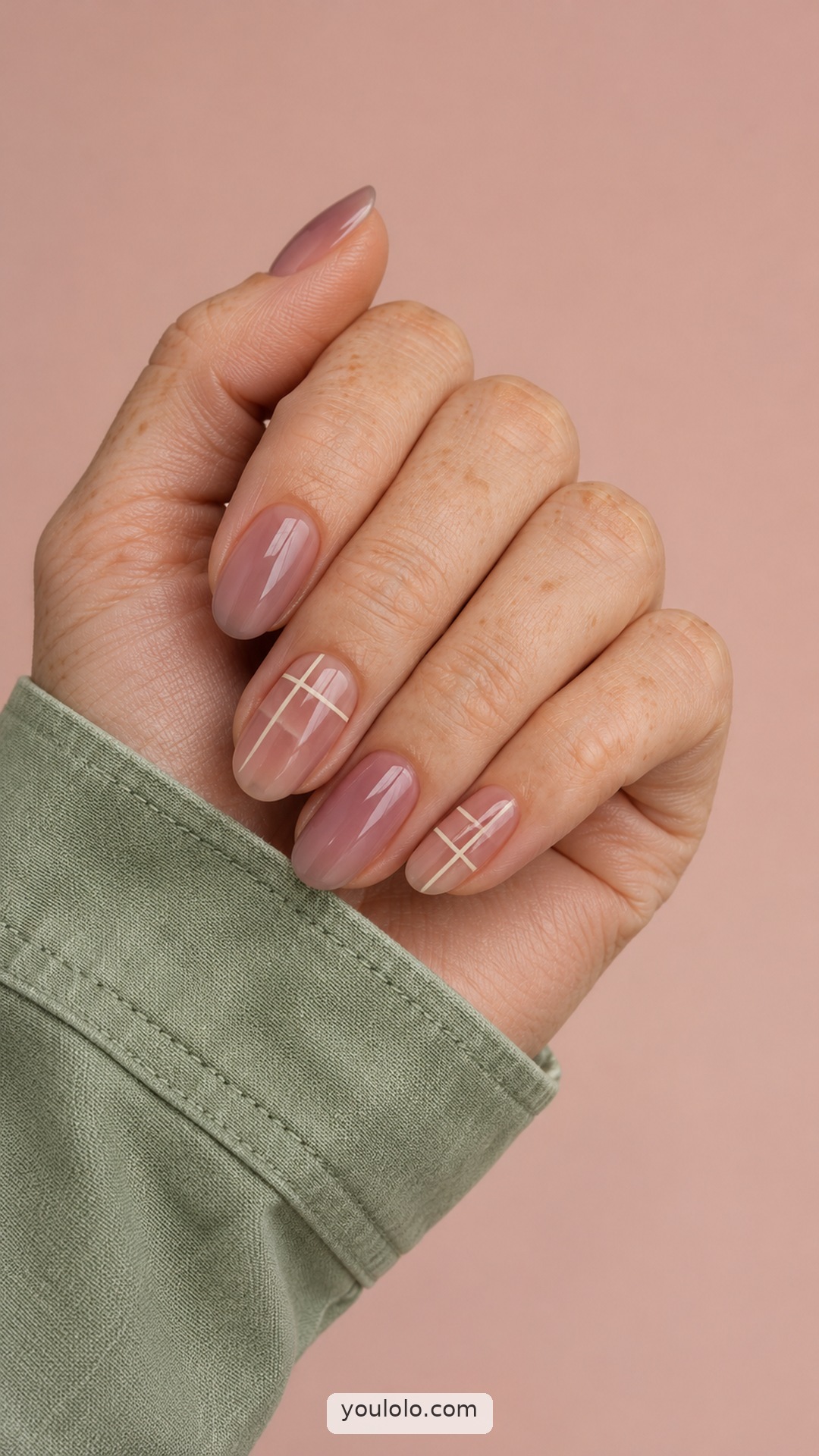
Translucent mauve polish creates a soft background for fine ivory grid lines on two oval nails. The lines sit asymmetrically, leaving open areas that preserve the glassy effect instead of turning the accents into dense checks. Solid mauve nails between the patterned ones make the set feel calm and cohesive. It is a useful design when you want something graphic but gentle, with a color that reads as a dressed-up neutral rather than a bold statement shade on the hand.
Make it yours: Use a fine liner and keep the grid slightly off center. Two or three crossing lines are enough for each accent; leave a broad sheer area visible so the pattern does not overwhelm the translucent mauve base.
15. Pistachio Clear Crescents
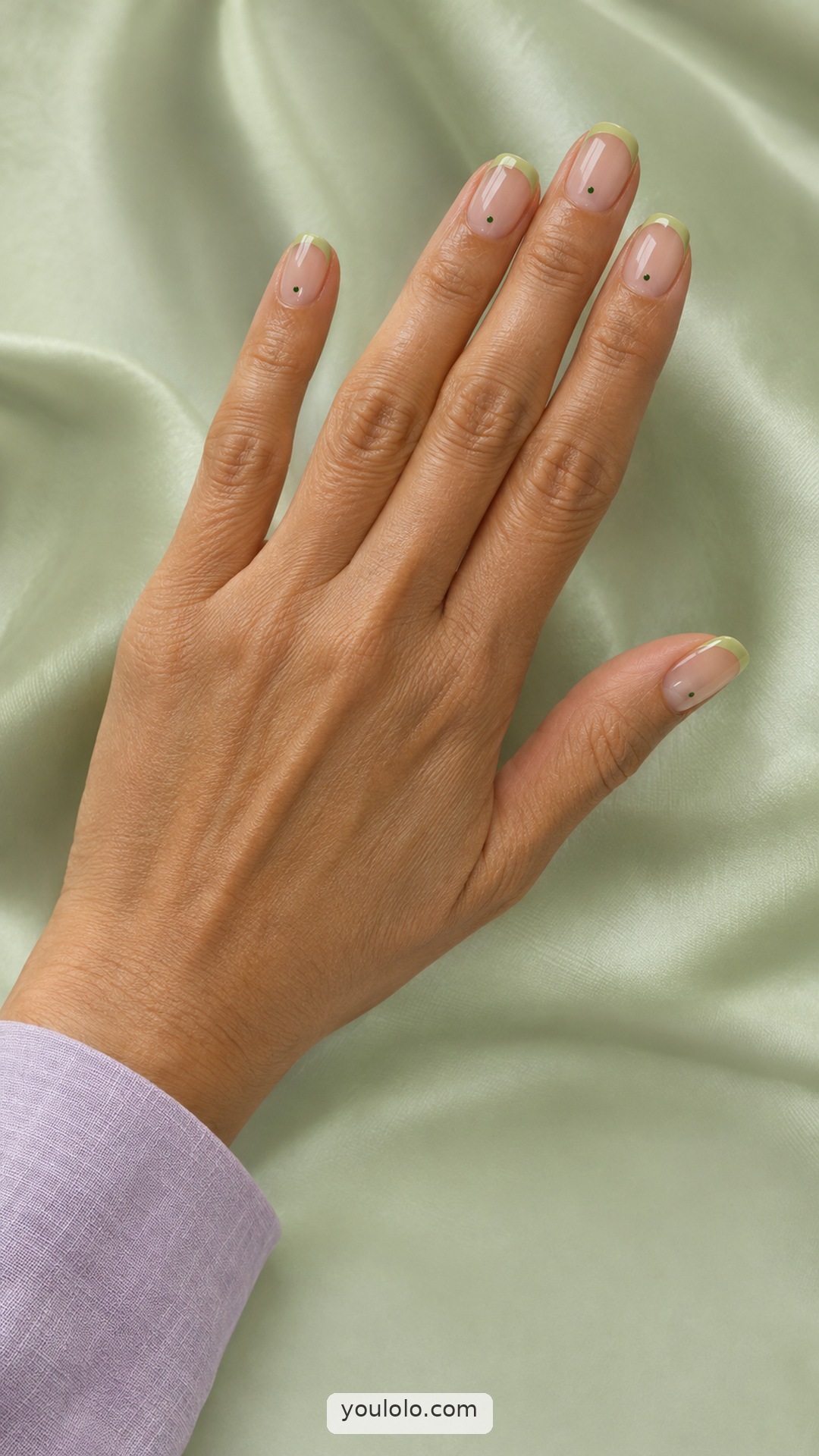
Transparent pistachio tips add a pale green edge to these short squoval nails, while the nude centers keep the manicure light. Tiny dark green dots provide a small point of contrast against the sheer base. The softly curved tips echo a French manicure, but their jelly finish makes the boundaries feel gentler than an opaque stripe. This is a fresh way to wear green on shorter nails when you want a little color without committing to a fully painted set.
Make it yours: Keep the pistachio tips thin enough for the nude nail bed to remain the main area. Use a very small dotting tool for the green accents, and place each dot with enough space around it to stay distinct.
16. Copper Glass Leaves

Warm copper jelly polish gives these almond nails a rich tinted-glass look. Two clearer accents carry fine dark brown leaf sprigs, allowing the botanical lines to show through the glossy finish without competing with the surrounding color. The medium length leaves room for slender stems while keeping the nail shape graceful. This earthy palette is a good alternative to bright floral art, especially if you enjoy warm neutrals and want a design that pairs easily with cream, camel, chocolate, or olive.
Make it yours: Keep the leaf sprigs narrow and leave clear space on either side of each stem. Match the drawing to a dark brown within the copper color family, then keep the other nails plain for a balanced finish.
17. Lavender Frost Edges

Sheer lavender gives these short oval nails a quiet tint, while fine silver-white shimmer gathers at the tips. The frosted edge fades gradually into the glossy base, leaving the nail bed visible instead of turning the whole surface metallic. That contrast between clarity and sparkle keeps the manicure delicate. The rounded outline also suits the soft gradient, with no hard French boundary to interrupt it. Choose this idea when you want a little shine while retaining the lightness of a translucent glass finish.
Make it yours: Ask for the shimmer to stay concentrated at the free edge and become sparse toward the middle. A fine particle size will preserve the soft frosted effect better than large glitter pieces spread across the nail.
18. Aqua Ribbon Glass
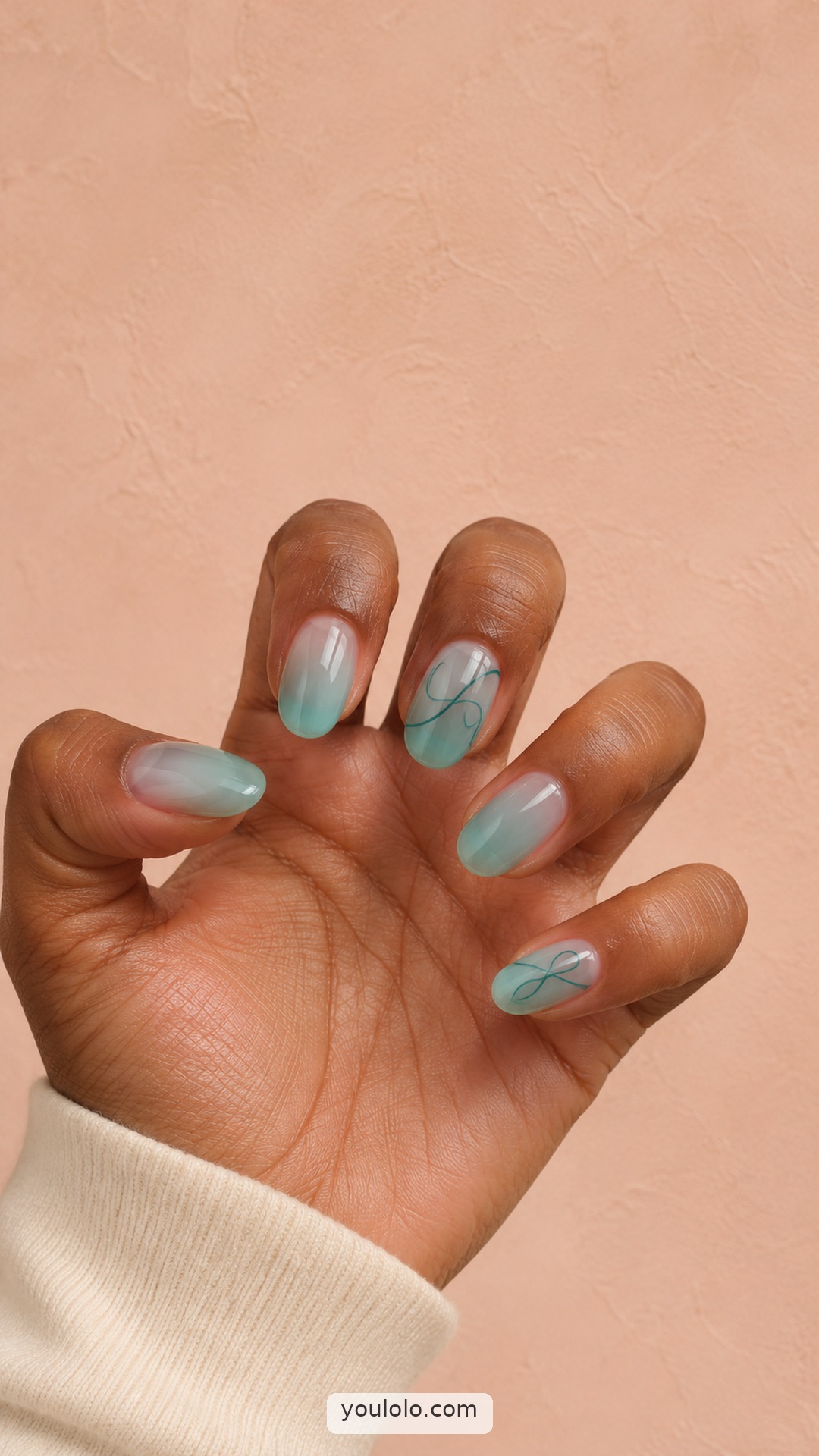
Transparent aqua creates a watery base for two fine teal ribbon accents. The looping lines travel across the nail without filling it, so the clear color remains the main feature. Plain aqua nails give the artwork room to stand out and keep the set from feeling overly patterned. Medium oval shaping complements the curves, while a smooth glossy finish makes the layers look crisp. This is a restrained way to add movement to glass nails without adding foil, stones, or several competing colors.
Make it yours: Keep the teal line thin enough to see the aqua around every curve. Ask for just one loose loop per accent rather than a dense spiral, and compare both accents together before adding any extra marks.
19. Nude Glass Halo
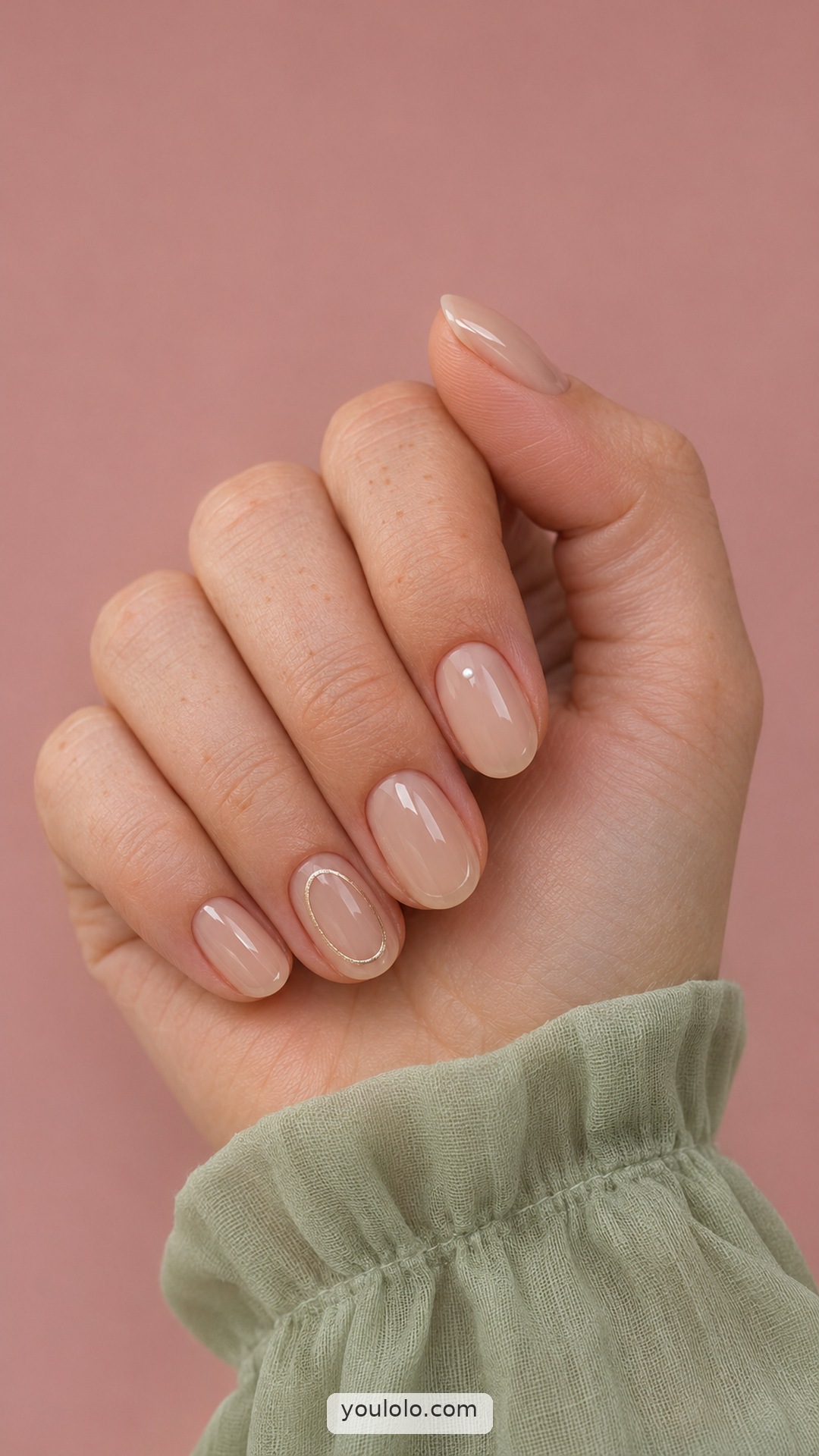
A nude beige glass base keeps this short manicure close to a minimal look. One fine champagne oval creates a halo-like accent, while a tiny white dot on a neighboring nail adds a second point of interest. The details are deliberately small, allowing the glossy translucent color to show through. Rounded tips reinforce the gentle shapes and help the set feel consistent. This idea works when you want subtle decorative marks that remain easy to appreciate up close without making every nail a statement. Neutral glass nail designs can still feel detailed with a small, carefully placed outline.
Make it yours: Choose a champagne outline that contrasts gently with the nude base rather than disappearing into it. Keep the oval slim and the white dot tiny, leaving clear space around both so they feel intentional and balanced.
20. Berry Clear Marble

Translucent berry gives this manicure a deeper glass effect, with pale rose wisps drifting through selected nails. The marbling stays sparse, allowing the rich jelly color to remain visible between each soft line. The plain nails provide a quieter pause and make the layered accents easier to read. Medium almond tips give the wisps space to stretch without needing an extreme length. This is a good direction when you like dark pink polish but want a finish with more depth than an opaque solid.
Make it yours: Ask for a sheer berry base and a few fine rose wisps instead of dense white marbling. Leave large areas untouched so the color keeps its translucent depth, and use the plain nails to check that the overall shade stays consistent.
21. Pearl Glass Petals
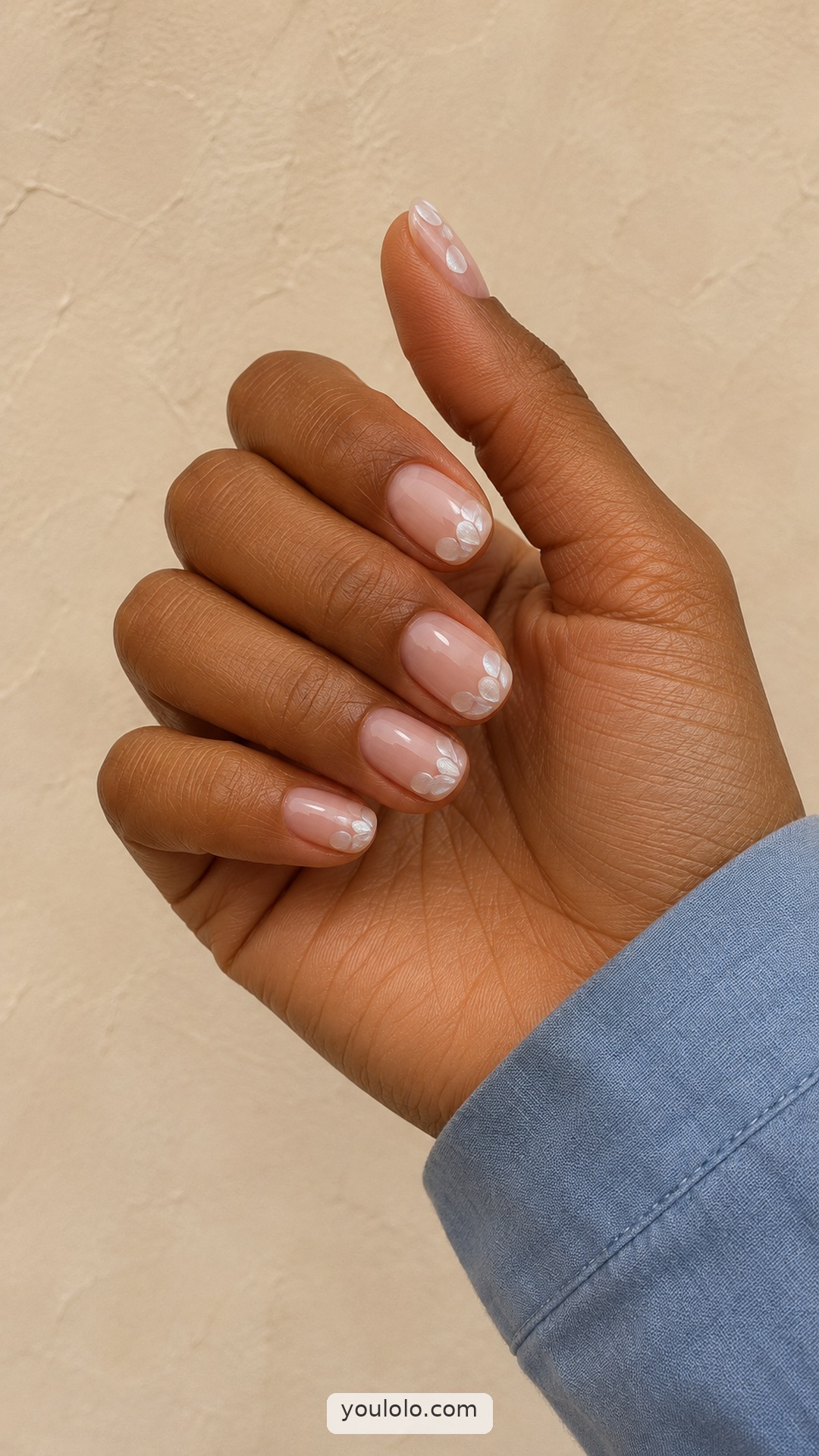
Milky nude transparency gives these short oval nails a soft, polished base. Tiny pearlescent petals sit near two side edges, creating a floral suggestion without a full bouquet or raised embellishments. Their flat painted finish lets the surface remain smooth, while the rest of the nails stay quietly glossy. Keeping the petals off center leaves more of the glass-like base visible. This is a subtle floral direction for someone who enjoys small details and prefers a neutral manicure to a colorful pattern.
Make it yours: Request flat painted petals rather than sculpted decorations, and keep each cluster close to one side. Leave the center of the nail mostly clear so the pearly detail does not overwhelm the transparent milky base.
22. Slate Blue Windows
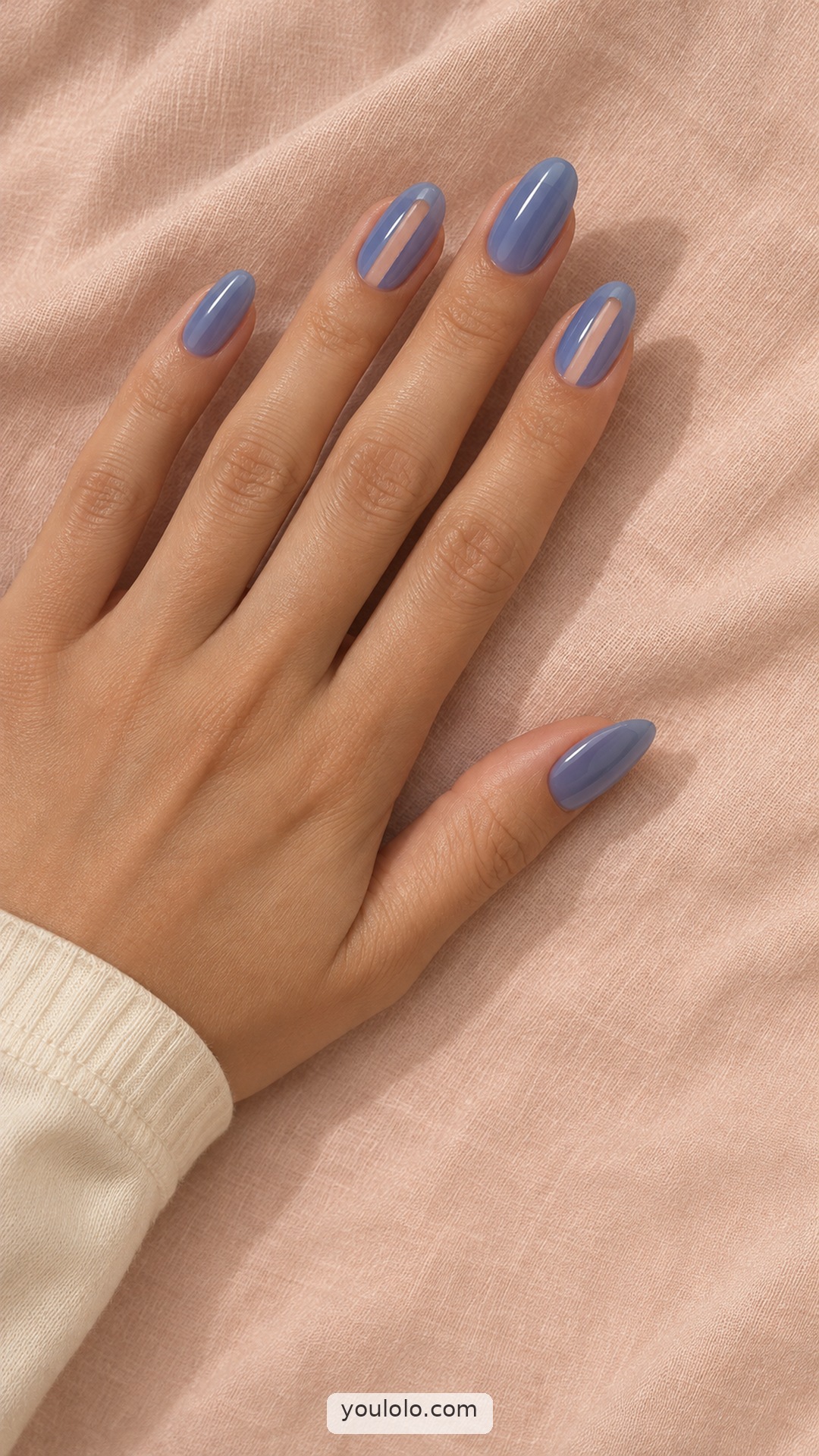
Slate blue gives these glossy oval nails a cool, muted color, while two narrow transparent windows break up the surface. The clear strips run along the nail length, adding a graphic detail without introducing a second polish shade. The remaining nails stay plain, which makes the negative space easy to see. Against peach linen, the blue reads softly rather than starkly. This is a simple way to bring structure to a glass-inspired manicure while keeping the overall arrangement calm and uncluttered.
Make it yours: Plan the width of both clear windows before applying color. Keep them narrow and similar in scale, then leave the surrounding nails plain so the transparent detail remains easy to notice from a normal viewing distance.
23. Apricot Honey Swirl
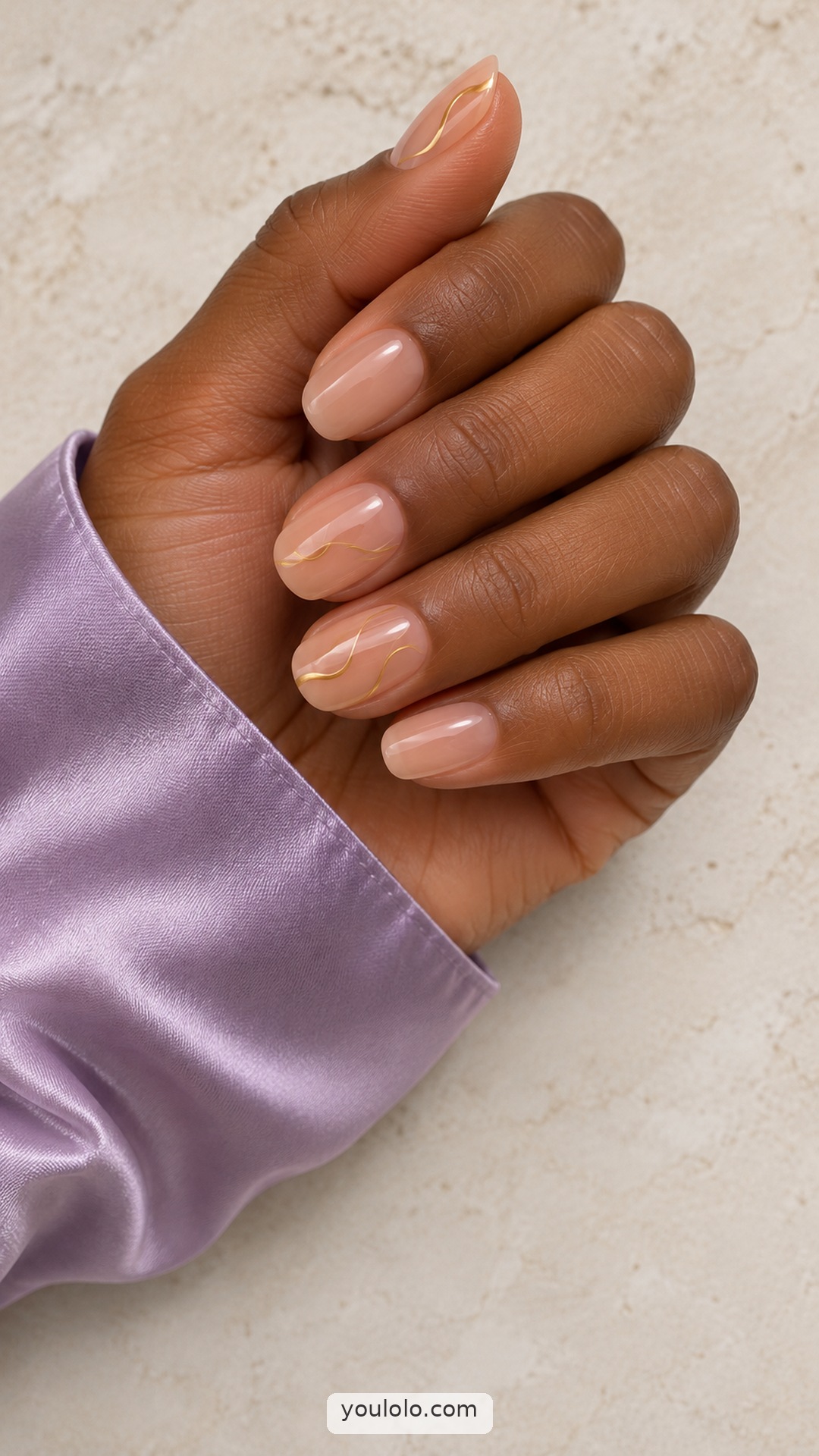
Transparent apricot brings warmth to these short squoval nails, with fine honey-gold lines tracing loose curves across three of them. Two plain jelly nails give the decorative lines room to stand out. The gloss keeps the finish smooth and lets the soft base color remain visible beneath the narrow metallic details. A lilac satin cuff creates an unexpected but gentle contrast with the apricot. The result feels considered without relying on long extensions or a complicated pattern across every nail.
Make it yours: Keep the gold lines slender and let each curve follow a slightly different path. Preserve two undecorated nails so the apricot base remains part of the design instead of becoming only a background for metallic artwork.
24. Jade Glass Sprigs

Light jade forms a soft translucent base for two carefully painted fern sprigs. The deep green leaves sit along slender stems, while the other almond nails remain free of artwork. This limited placement keeps the botanical detail delicate and allows the glossy pale color to show around it. The natural hand texture and woven cuff add warmth to the cool green palette. A matching plaster background supports the color without competing with the small leaves, making the manicure feel quiet and cohesive. Botanical glass nail designs work best when the sheer base remains visible beside the sprig.
Make it yours: Ask for a fine central stem with small separated leaf strokes rather than a solid green silhouette. Leave visible jade around both sides of each fern, and keep the other nails plain to balance the detailed accents.
25. Cocoa Clear French

Smoky cocoa tips add a soft edge to an otherwise transparent nude manicure. A thin cream line follows each rounded tip, separating the sheer base from the tinted French section without making the contrast harsh. The short length keeps the design compact, while the glossy finish adds a clean reflection along each nail. A dusty blue knit cuff and ivory silk background show how comfortably the brown shade pairs with cooler colors. This version of French nails works through subtle tonal changes and precise edges.
Make it yours: Keep the cocoa section shallow on short nails so it does not overwhelm the nude base. Use a very fine cream border of consistent thickness, following the natural curve of each nail rather than drawing a straight band.
26. Pink Ice Fragments
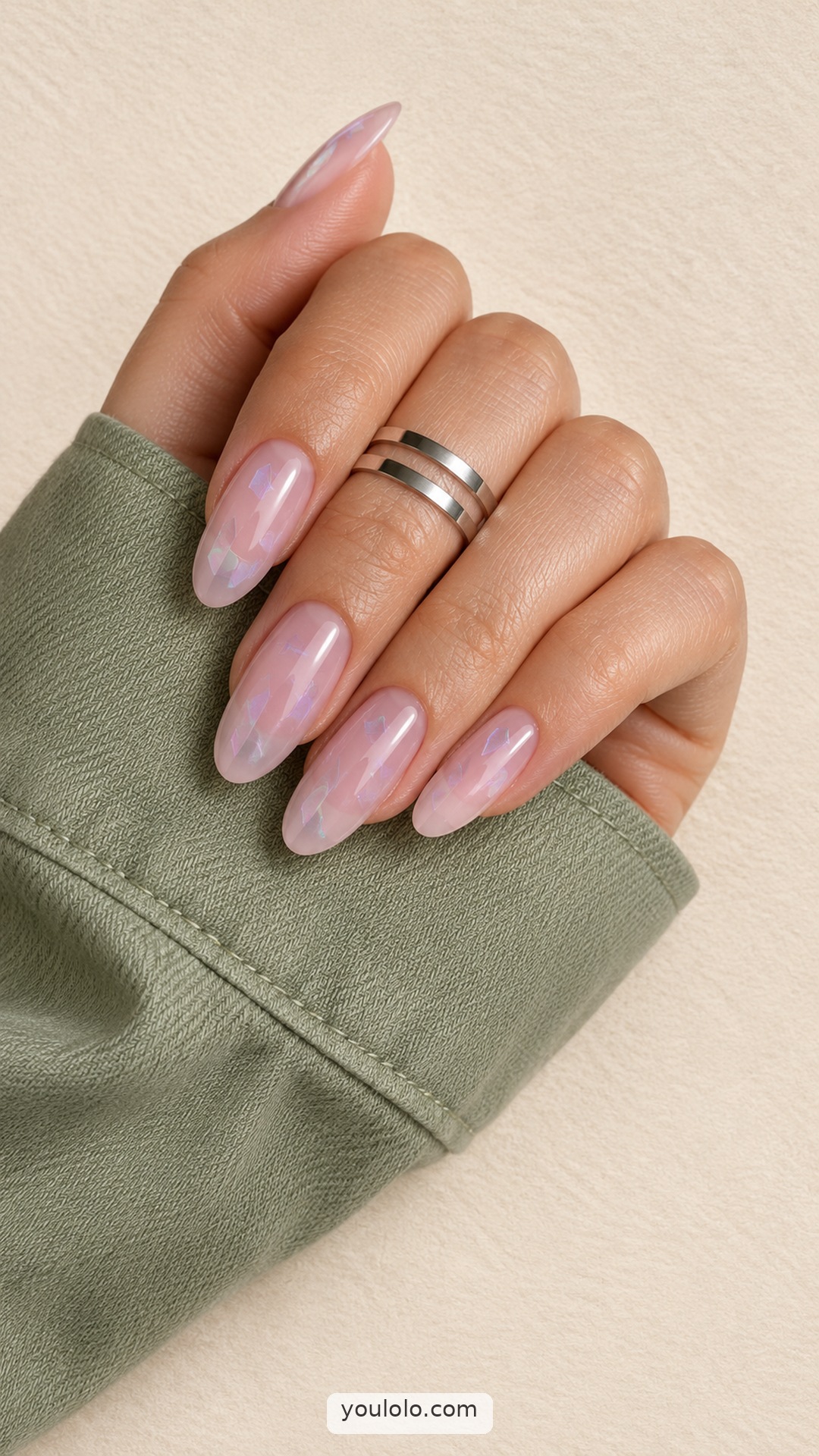
Pale pink glass nails catch faint lilac reflections from small iridescent fragments beneath the smooth surface. The pieces are scattered rather than packed together, leaving broad areas of translucent pink visible between them. Medium oval tips soften the angular accents and give the manicure a gentle silhouette. With a sage cuff and an ivory textured background, the delicate pink stays the main color. The effect depends on restrained placement: the embedded fragments add changing reflections without turning the nails into a heavily embellished design.
Make it yours: Choose thin, small fragments and leave generous gaps between them. Keep the surface smooth and the amount of inlay similar across the hand; a few pieces placed carefully can create more definition than a dense layer.
A practical guide to glass nail designs
Separate the base from the decoration
When preparing an appointment reference, describe the base and artwork separately. For example, ask for a sheer rose base with a narrow ivory leaf, rather than simply requesting pink glass nails. Explain which part matters most if the exact product is unavailable. Your artist can then preserve the balance of transparency and detail while choosing a suitable technique for the products they use.
Keep reflective accents in proportion
A foil piece can appear larger once it catches the light. Start with fewer fragments than you think you need, particularly on short nails. Place them near an edge or in a loose diagonal path instead of scattering the same number everywhere. The clear space between the fragments helps the underlying color remain visible and makes each reflective detail feel intentional.
Understand the difference between glass and chrome
In this collection, glass describes a translucent, glossy visual effect. Chrome usually emphasizes a more mirror-like surface. Some designs combine pearly reflections with a clear-looking base, so the categories can overlap visually. Use the photograph to explain the balance you want: transparent depth, a soft veil of reflection or a stronger metallic highlight. A name alone may mean different things to different artists.
Plan a simpler home-practice version
Choose a sheer color you already know how to apply and practice one small accent on a separate tip. A single curved line or a few tiny dots make a useful first attempt. Follow the directions for the actual product system, including its application and drying or curing requirements. Do not assume that a technique shown with one type of polish transfers unchanged to another.
Check the design at normal viewing distance
Close-up photographs reveal details that may be almost invisible when you hold your hand naturally. Before adding more artwork, step back and look at the overall set. If the accents disappear, increase their contrast slightly rather than multiplying them. If they dominate, make the line finer or remove a secondary mark. The manicure should still feel balanced outside a close-up image.
Frequently asked questions
Can glass nail designs work on short nails?
Yes. A transparent tint, narrow French border or single fine accent can fit a short nail well. Keep the open base visible and avoid adding several small motifs to the same surface. The glossy depth does not depend on long extensions.
Do glass nails have to be completely clear?
No. The designs here range from barely tinted pink to richer amber, emerald and berry. The shared feature is a sense of translucent depth with a smooth glossy surface. Choose the coverage you prefer rather than treating complete transparency as a requirement.
Are jelly nails and glass nails the same thing?
The terms often describe overlapping visual effects. Jelly usually suggests a translucent wash of color, while glass can also describe clear edges, layered reflections or embedded-looking accents. Tell your artist which specific feature you want, because the labels alone do not specify one exact technique.
How do I keep detailed glass nail designs from looking crowded?
Limit the detailed artwork to one or two nails and repeat a supporting color elsewhere. Leave visible clear or sheer space around the accents. If several details compete, remove one decorative element before changing the entire palette.
Which finish should I choose if I dislike glitter?
Try a plain jelly tint, a fine painted contour or a transparent French tip. You can keep the glossy surface without foil, pearl or glitter particles. The rosewater, peach ribbon and cocoa French directions are useful starting points for a quieter interpretation.
Will the manicure look identical in every photograph?
No. Translucent color and reflective accents respond to lighting, viewing angle and the surface underneath. Compare a real polish sample when possible, and use these images to communicate the intended palette, shape and distribution of detail rather than an identical reflection.
For another perspective on this theme, explore BeautyCoded’s glass nail designs collection. Use the examples above to discuss your preferred palette, length and amount of detail with your nail artist.
Save this collection for your next manicure.