
The Best Fluffy Pancakes recipe you will fall in love with. Full of tips and tricks to help you make the best pancakes.

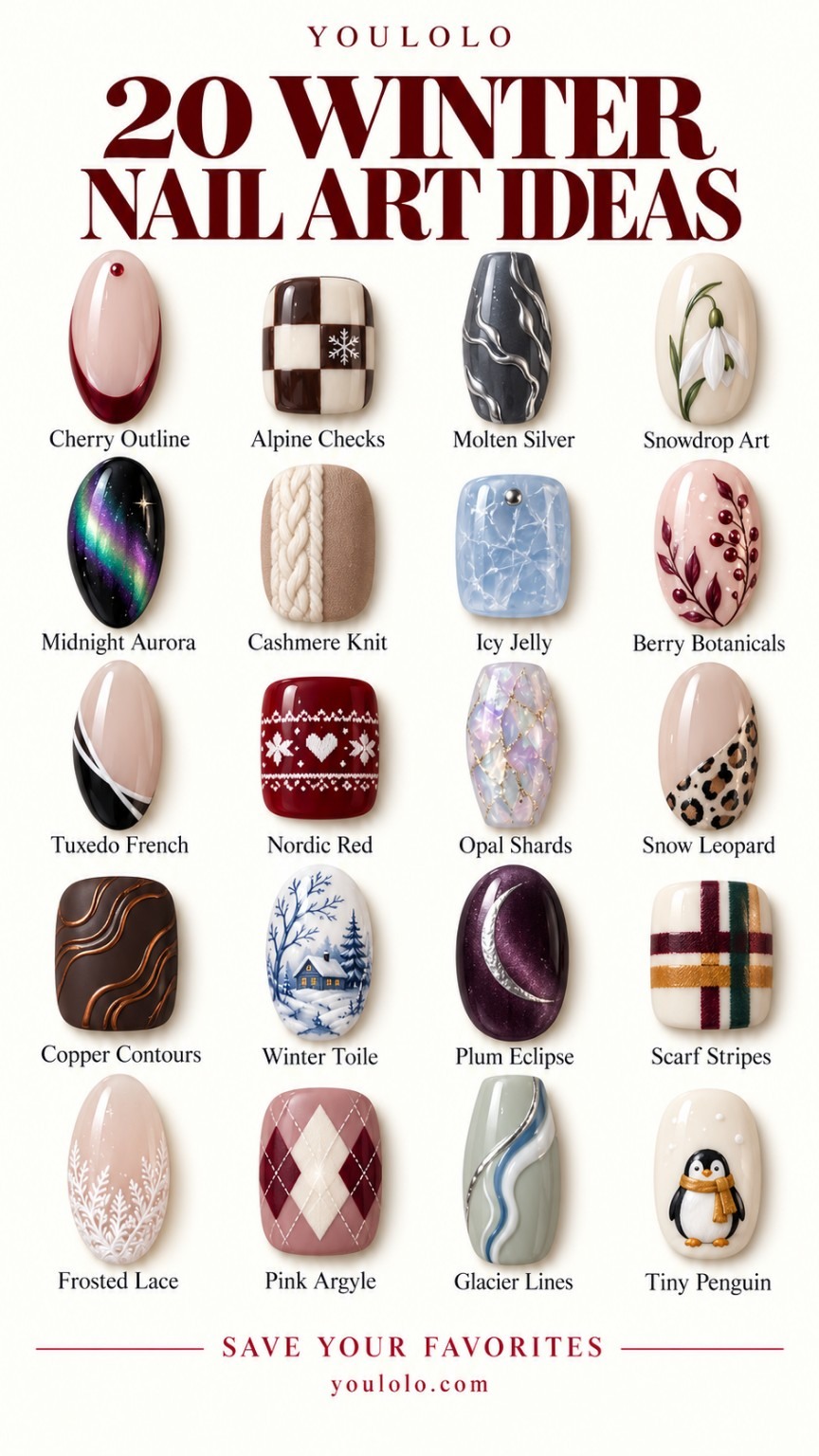
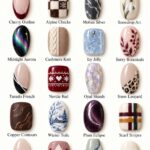
The best part of choosing winter nail art is deciding which version of the season you want to wear. It might be the soft texture of a cashmere sweater, the glassy blue of ice, or a tiny snowy cottage painted on one nail. This collection brings together 20 distinct designs, with a full manicure interpretation of each one.
Use the overview above to choose your favorite, then scroll to its close-up. Each design includes a salon brief and a suggestion for adapting the artwork to your nail shape. You do not need every finger covered in detail: many of these looks work beautifully with one or two accent nails.
Find your winter manicure mood
- Quiet and delicate: Cherry Outline, Snowdrop Art and Frosted Lace.
- Cozy patterns: Alpine Checks, Cashmere Knit, Nordic Red, Scarf Stripes and Pink Argyle.
- Light-catching finishes: Molten Silver, Midnight Aurora, Icy Jelly, Opal Shards and Plum Eclipse.
- Small works of art: Berry Botanicals, Winter Toile and Tiny Penguin.
- Graphic details: Tuxedo French, Snow Leopard, Copper Contours and Glacier Lines.
1. Cherry Outline
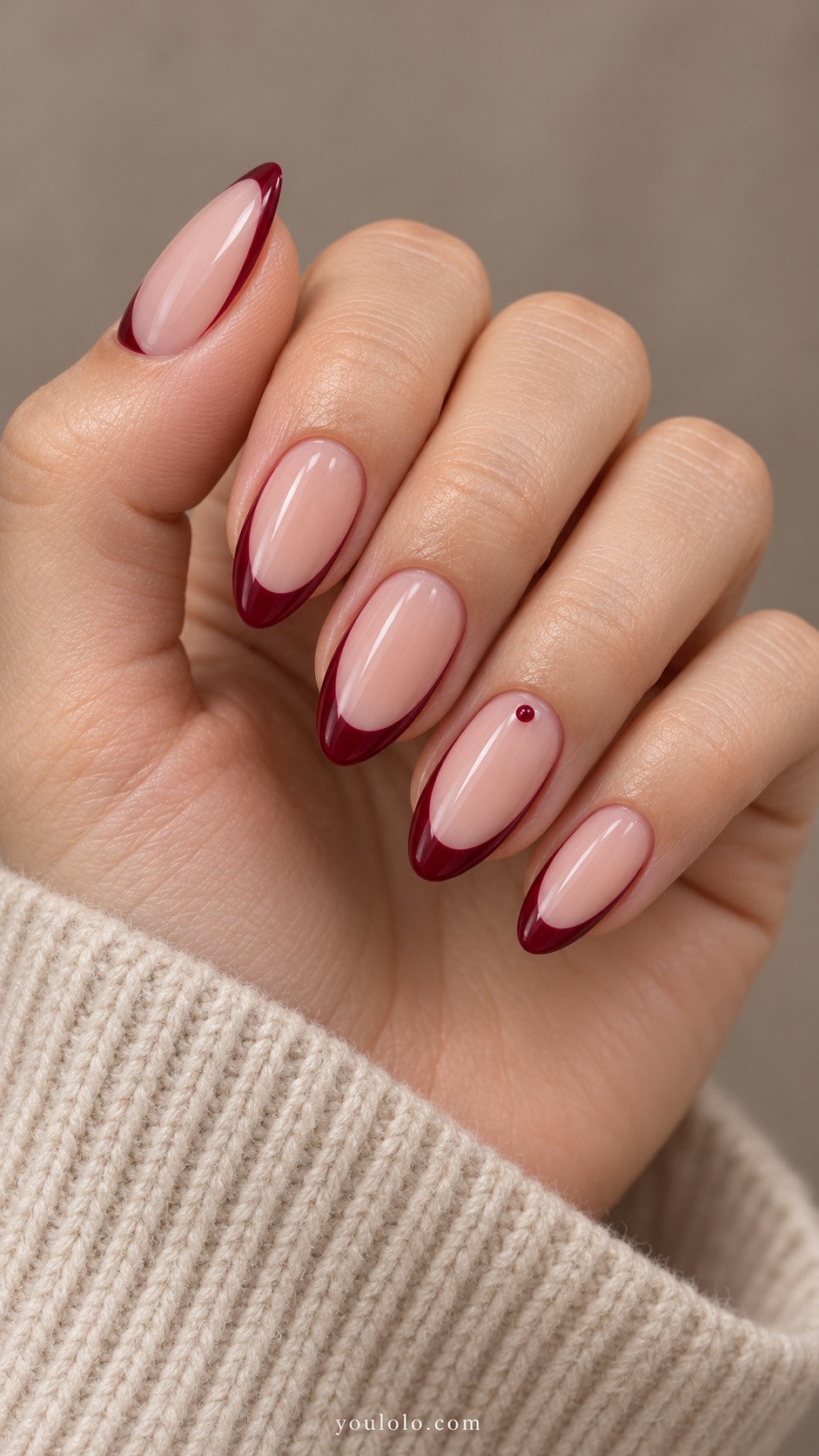
A cherry-red outline gives a sheer blush manicure a crisp edge without covering the whole nail. The color follows the sides into a curved tip, leaving a generous pale center. A tiny berry-colored dot adds a second point of interest. This is the quietest design in the collection: it brings winter’s rich red palette into a manicure that still feels light and open.
Ask your nail artist: Ask for a sheer blush base, a narrow cherry outline that joins the French edge, and a small matching dot accent. Keep the outline balanced on both sides.
Shape and short-nail adaptation: Medium almond nails give the curved border room to taper. For short ovals, use a finer outline and omit the dot if the nail looks crowded.
2. Alpine Checks

Chocolate and ivory checks have the warmth of a winter café, while a miniature snowflake makes the seasonal reference specific. Large squares are important here: a dense checkerboard would compete with the small motif. Use patterned accent nails with solid companions so the design has pauses. The dark-and-light contrast works especially well when the edges of each block are clean.
Ask your nail artist: Request chocolate-and-ivory checkerboard accents with one fine white snowflake inside a dark square. Match the solid nails to the two checkerboard colors.
Shape and short-nail adaptation: Short soft squares echo the geometry. On narrow nails, reduce the number of checks instead of squeezing smaller blocks into the same space.
3. Molten Silver
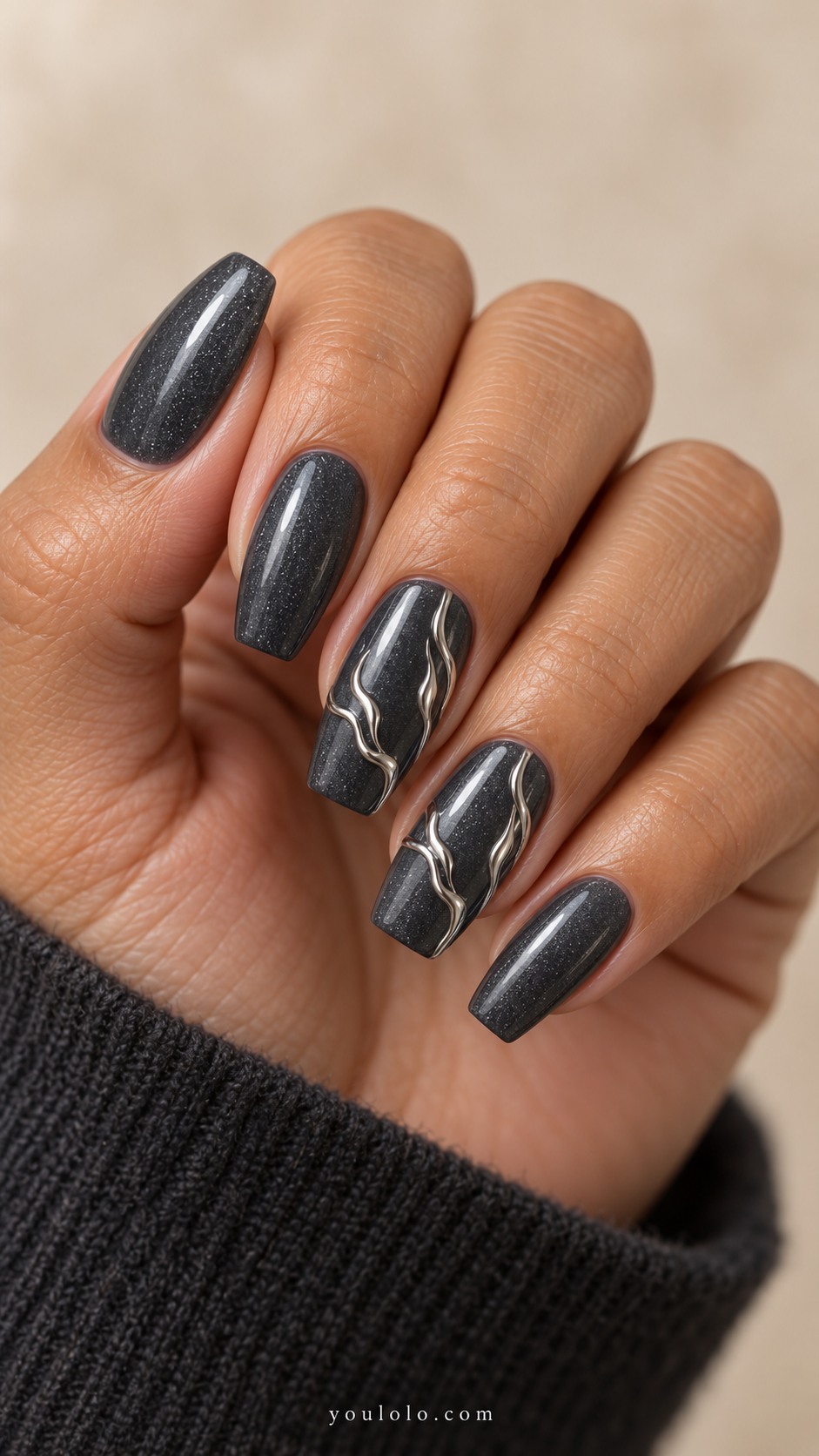
Silver lines over smoky charcoal suggest streams of melted metal. Their irregular paths make this feel more organic than a striped manicure: the curves can change direction, taper, and leave different amounts of dark space on each nail. The charcoal background should remain visible. That contrast is what makes the metallic detail look deliberate rather than turning the entire set into silver chrome.
Ask your nail artist: Ask for a charcoal shimmer base with slender, flowing silver-chrome lines. If using raised gel, keep the relief low and the edges rounded.
Shape and short-nail adaptation: Medium coffin nails provide a long canvas. For shorter nails, one silver curve per accent nail will preserve the same effect.
4. Snowdrop Art

A small white snowdrop gives winter floral nails a distinct identity. The bowed green stem and hanging petals matter more than adding lots of flowers. An ivory background lets the green outline define the white bloom, while plain companion nails make the tiny painting easier to appreciate. Choose this design when you want a botanical manicure that feels gentle rather than festive.
Ask your nail artist: Bring the reference and request a small drooping snowdrop with a fine green stem and separate white petals. Keep the flower inside the nail’s outline.
Shape and short-nail adaptation: Oval nails suit the downward curve of the flower. One bloom is enough on a short nail; a longer nail can accommodate a slender leaf beside it.
5. Midnight Aurora
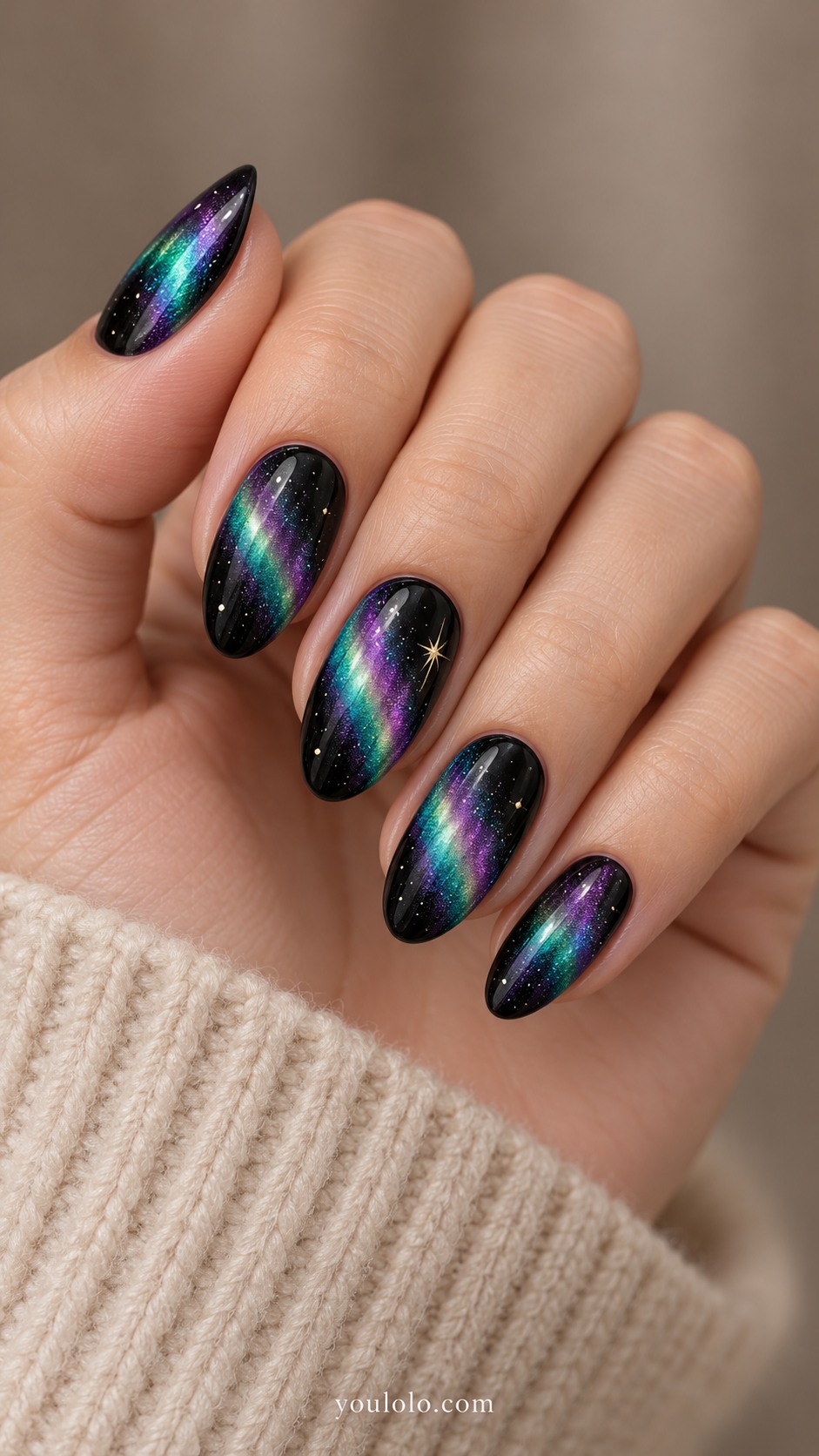
Green, teal and violet light moves across a black base like an aurora. The attraction is the luminous band, so the star details should stay sparse. A small gold star gives the eye somewhere to land without competing with the shifting color. This is the boldest dark design in the collection, particularly against a plain sleeve that lets the manicure supply the color.
Ask your nail artist: Ask your nail artist for a dark base and an aurora-like magnetic or layered shimmer effect in green and violet. Keep star accents small and widely spaced.
Shape and short-nail adaptation: Almond nails give the diagonal glow a graceful route. On short nails, prioritize one luminous band rather than multiple effects on every finger.
6. Cashmere Knit

An ivory cable pattern against matte taupe translates a familiar sweater detail into nail art. The raised section is most effective when it occupies only part of the surface: the quiet taupe beside it makes the cable readable. This design is about texture rather than sparkle. It is a good option for someone who wants a neutral winter manicure with a detail worth looking at closely.
Ask your nail artist: Request low-profile ivory cable-knit accents on a matte taupe base. Specify sculpted nail-art texture, with no bulky ridges around the cuticle or sidewalls.
Shape and short-nail adaptation: Short rounded squares suit the compact cable. If you prefer a smooth finish, ask for a painted cable illusion instead of raised texture.
7. Icy Jelly

A translucent blue base and fine white branching lines create an ice-like effect without relying on snowflakes. The lines should be uneven, with delicate intersections and plenty of transparent space between them. A tiny silver dot adds a restrained metallic accent. The final surface looks glassy; the apparent cracks are part of the artwork, not actual cracks in the coating.
Ask your nail artist: Ask for pale blue jelly color, fine irregular white ice lines, and one tiny silver accent. Keep the top surface smooth and the blue visibly translucent.
Shape and short-nail adaptation: Short squoval nails make this an approachable everyday shape. Avoid thick white lines, which would turn the delicate ice effect into a bold marble pattern.
8. Berry Botanicals

Burgundy leaves and round berries look particularly rich over a soft pink base. Fine stems connect the details, giving the design movement instead of scattering unrelated dots across the nail. A few decorated nails are enough; smaller berry accents can tie the rest of the set together. This is a useful alternative to bright red-and-green holiday motifs when you want a winter palette without a Christmas theme.
Ask your nail artist: Request slender wine-colored branches, pointed leaves and small round berry details on a translucent pink base. Leave open space between the stems.
Shape and short-nail adaptation: Medium ovals give the branches room to curve. For short nails, ask for one small sprig positioned along an edge.
9. Tuxedo French

An angled black tip and two fine white curves make a familiar French manicure feel graphic. The nude area is just as important as the black: it prevents the diagonal from overwhelming the nail. Keep the white lines close enough to read as a pair, with a clear gap between them. The result pairs naturally with simple black, cream or gray outfits.
Ask your nail artist: Ask for a sheer nude base, asymmetric black French tips and two thin white lines that follow the diagonal edge. Maintain a consistent direction across the set.
Shape and short-nail adaptation: Medium almond nails emphasize the sweep. On short nails, lower the black section so the nude center remains generous.
10. Nordic Red

White geometric bands, little hearts and snowflakes bring a knitted-sweater mood to a rich red manicure. Unlike the Cashmere Knit design, this version is flat artwork: the detail comes from repetition and contrast. Put the busiest pattern on one or two nails, then use plain red to let it stand out. The arrangement feels cheerful without requiring ornaments or oversized decoration.
Ask your nail artist: Request fine white Nordic-style motifs over deep red, using dotted bands and small hearts or snowflakes. Ask for a smooth painted finish.
Shape and short-nail adaptation: Short soft squares give horizontal bands a tidy edge. Keep each band simple if the nail plate is narrow.
11. Opal Shards
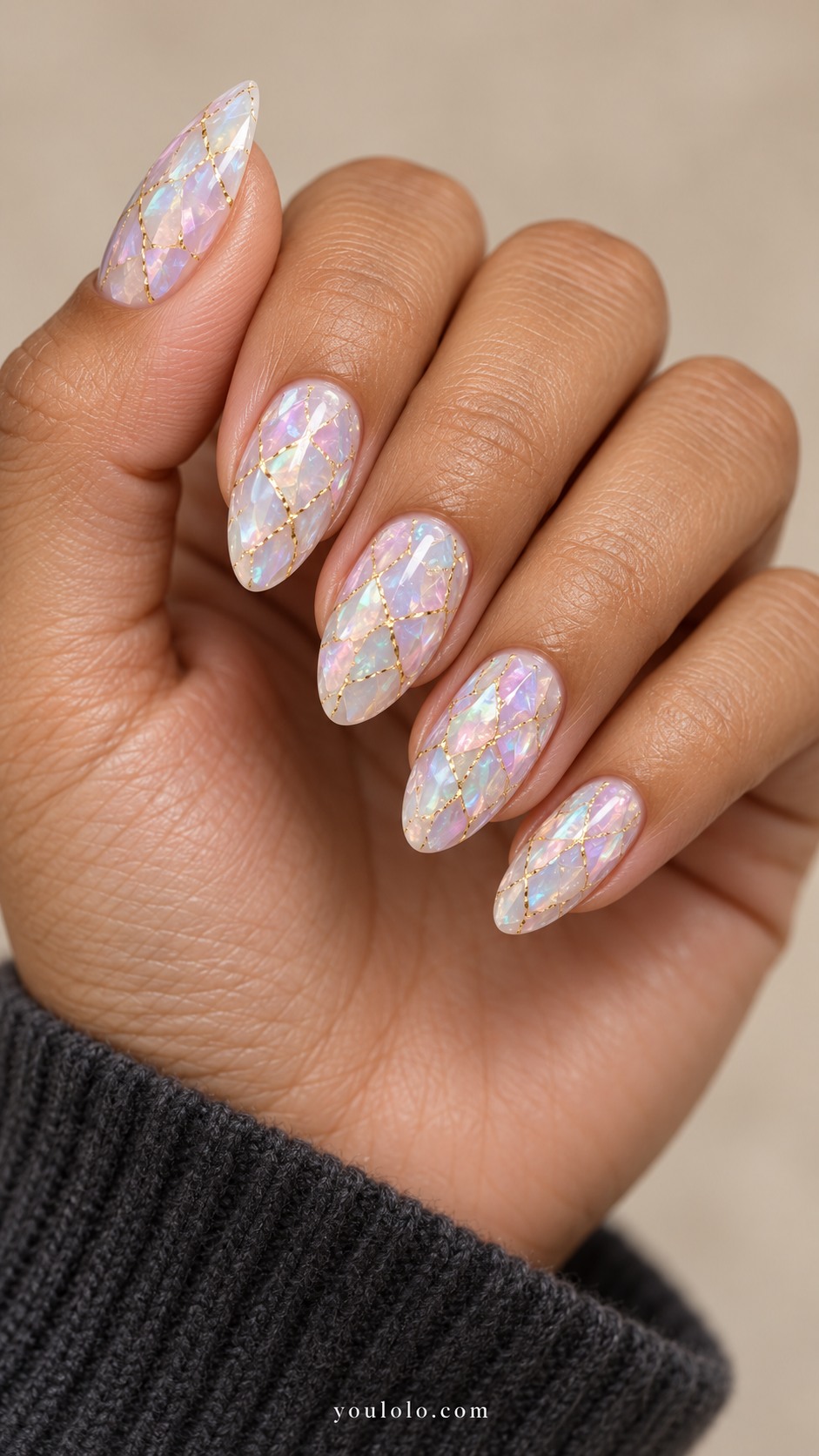
Pastel opal pieces bring a softer kind of shine than a full chrome finish. Lilac, mint and pale pink fragments sit against a milky base, with fine gold seams defining their irregular shapes. The pieces should look embedded, not piled on top. This is an expressive choice for someone who likes detail but would rather stay in a light, airy palette.
Ask your nail artist: Ask for an opalescent foil or film mosaic sealed beneath a smooth topcoat, with very fine gold divisions. Avoid thick metallic borders that hide the pastel pieces.
Shape and short-nail adaptation: Almond nails show the mosaic beautifully. Shorter nails need fewer, slightly larger fragments so the colors remain legible.
12. Snow Leopard

Leopard spots become lighter and more wintry when they sit on a cream diagonal tip. Tan centers keep the print warm, and irregular black outlines give it character. The bare-looking nude base stops the pattern from feeling heavy. Let the rosettes vary in size and shape; a perfectly repeated dot pattern would lose the animal-print effect.
Ask your nail artist: Request a diagonal cream French area with tan and black leopard markings, leaving the upper nail nude. Keep the border clean and the spots irregular.
Shape and short-nail adaptation: Medium almond nails offer room for the diagonal. For short nails, use a smaller printed corner rather than trying to fit a full field of spots.
13. Copper Contours
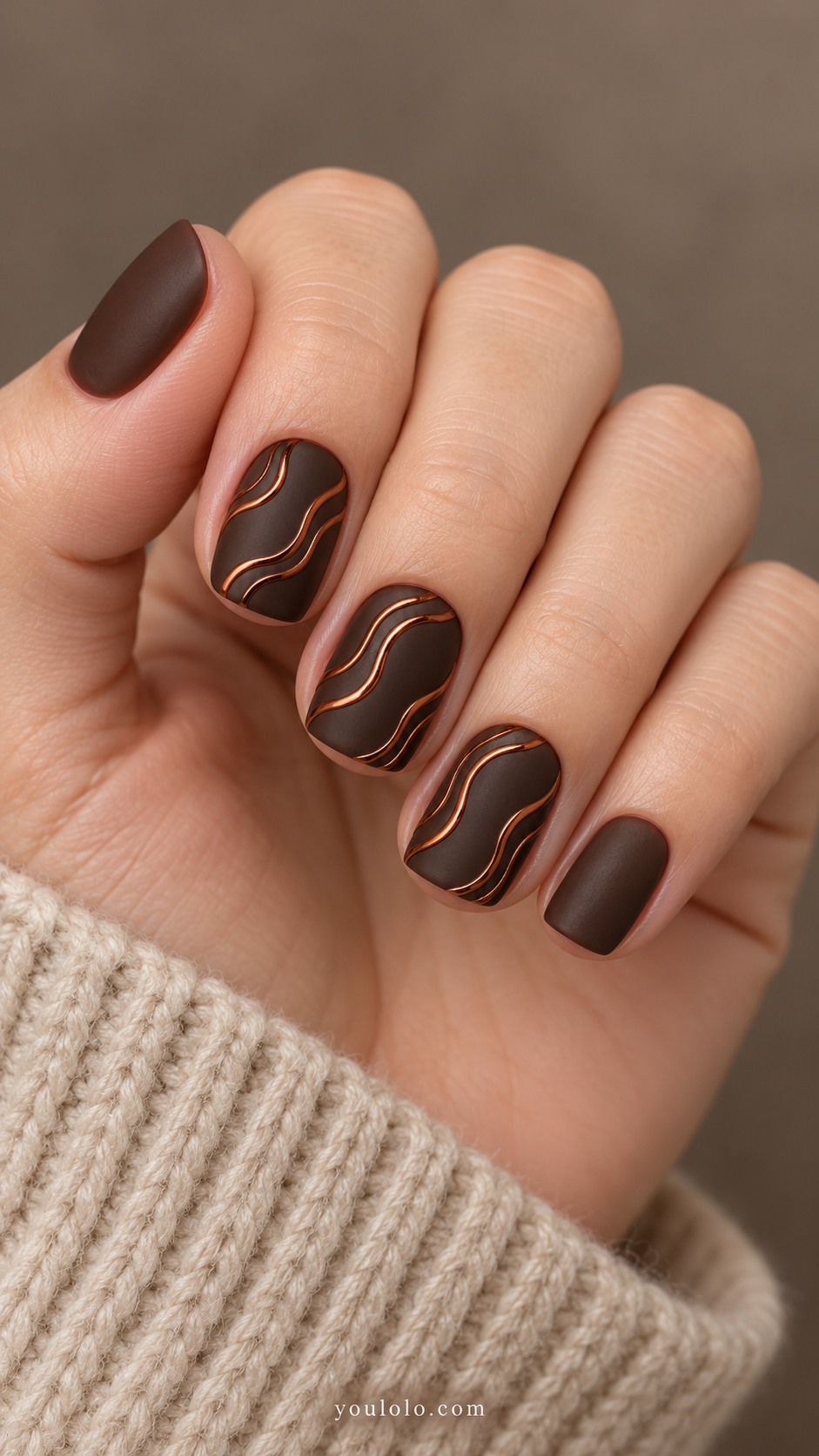
Warm copper curves against matte chocolate create depth with a very limited palette. The lines wander like contours on a map, with changing gaps between them. Their shine stands out because the surrounding brown is subdued. This is an appealing direction if icy silver does not suit the mood you want: the manicure feels wintry through its warmth and texture instead.
Ask your nail artist: Ask for a matte chocolate base with a few thin copper-chrome waves on accent nails. Keep any raised linework shallow and leave broad areas of brown visible.
Shape and short-nail adaptation: Rounded squares make the organic lines feel balanced. On short nails, two well-placed curves can be more effective than a dense network.
14. Winter Toile

A tiny blue-and-white winter scene is the storytelling design of this collection. A snow-covered cottage, a pine and bare branches create the setting, while small warm windows provide the only bright contrast. Spread the scene across accent nails rather than repeating a full landscape on every finger. The surrounding ivory gives the miniature painting room to breathe.
Ask your nail artist: Request one detailed cottage scene with blue snow shadows and tiny warm windows, then simpler blue tree or branch accents. Bring the reference so the artist can plan the scale.
Shape and short-nail adaptation: Medium ovals offer space for the cottage. On short nails, keep only a tree silhouette or use a small detailed decal for the focal image.
15. Plum Eclipse
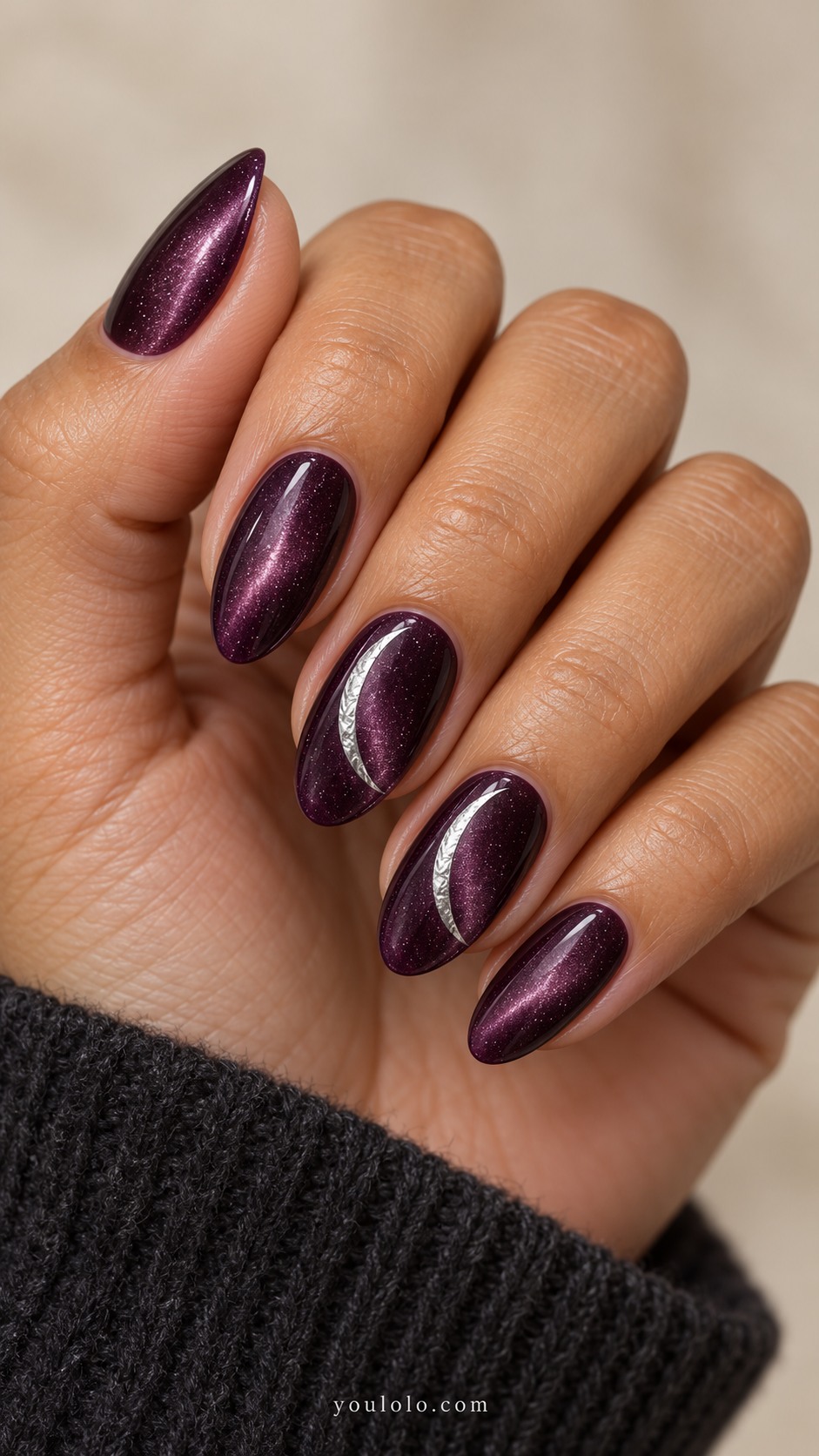
A silver crescent curves around a luminous plum center, giving the nail an eclipse-like composition. The base should remain deep enough for the silver to look bright and precise. A cat-eye glow can add depth without filling the design with glitter. Keep the crescent narrow: the open plum area is what gives this manicure its moody, spacious appearance.
Ask your nail artist: Ask for dark plum magnetic shimmer with slender silver crescent accents. Position each crescent to follow the side of the nail rather than placing a thick ring in the center.
Shape and short-nail adaptation: Almond nails echo the lunar curve. Short ovals can use one smaller crescent on an accent nail with plain plum companions.
16. Scarf Stripes

Burgundy, forest green and mustard bands cross over ivory like the pattern on a favorite scarf. The appeal is in the uneven spacing: move the intersection away from the center so the nail does not look like a neatly wrapped present. Keep the bands flat and clearly defined. A small shared palette makes the pattern feel coordinated even when the placement changes between nails.
Ask your nail artist: Request offset intersecting bands in burgundy, forest green and mustard on ivory. Specify painted stripes with clean edges, not actual fabric texture.
Shape and short-nail adaptation: Short soft squares suit the straight lines. Choose one broad band and a few finer ones if your nails have limited width.
17. Frosted Lace

White fern-like branches rise from a blush base like frost gathering along a window. The airy spaces between the twigs are crucial; the pattern should not become a solid white tip. Tiny dots add a snowfall effect, while the clear-looking upper half keeps the manicure delicate. This is one of the most understated ways to wear detailed winter artwork.
Ask your nail artist: Ask for fine white frost branches concentrated toward the tips, with a translucent blush base and a few tiny dots. Keep the linework light and separate.
Shape and short-nail adaptation: Almond nails extend the branching shapes naturally. On short nails, decorate only the lower edge and let the upper portion stay almost bare.
18. Pink Argyle
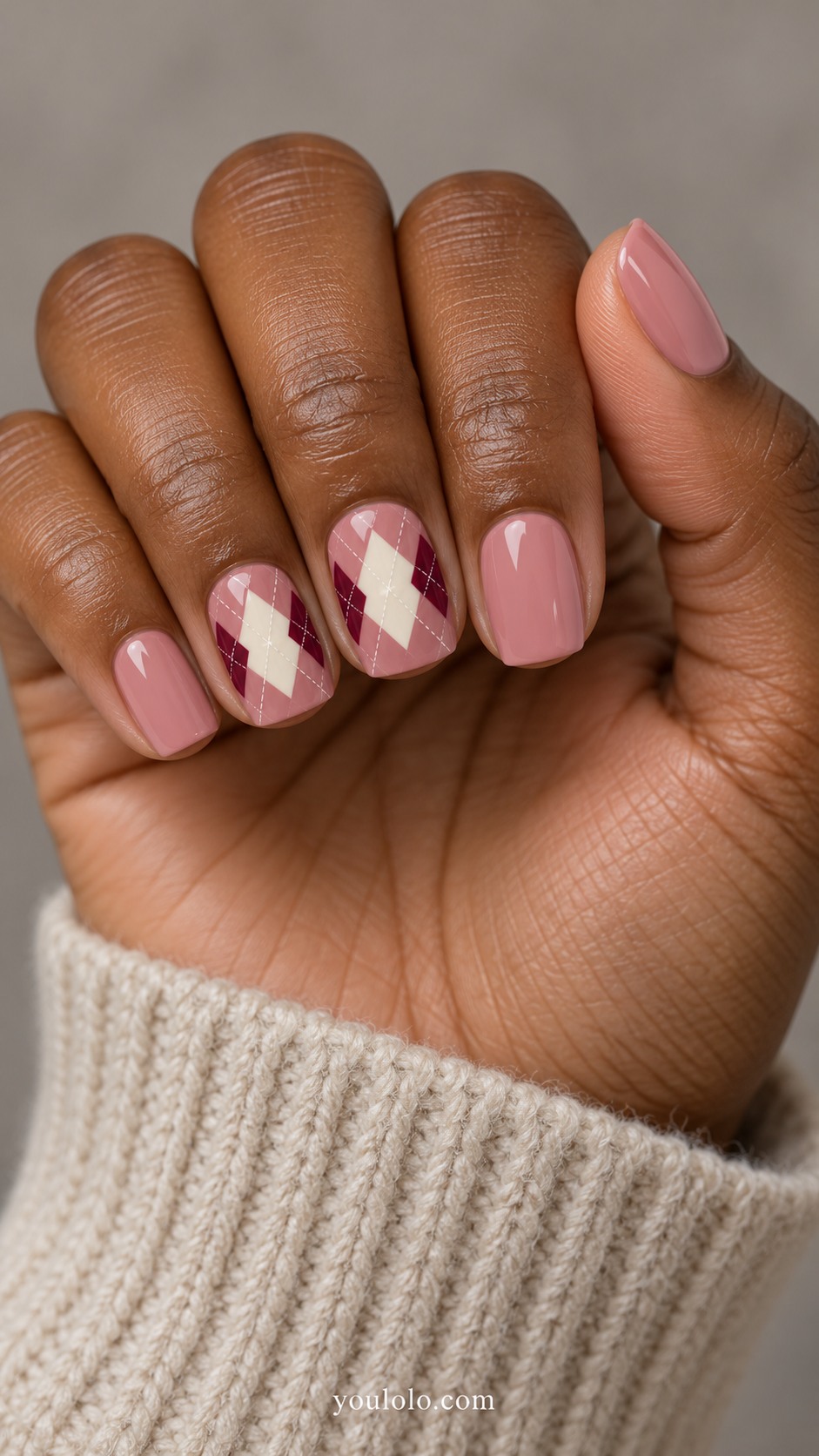
Dusty pink, burgundy and ivory bring a softer color story to the diamond pattern. The white diagonal lines connect the shapes and distinguish argyle from a simple row of diamonds. Use a restrained number of patterned nails so those fine lines remain a detail you notice. Solid dusty rose companions make the set feel polished and easy to coordinate with winter clothing.
Ask your nail artist: Request ivory and burgundy diamonds over dusty rose, crossed by very thin white diagonal lines. Keep the design smooth and painted, without a woven texture.
Shape and short-nail adaptation: Short soft squares frame the central diamond well. On narrow nails, use one central diamond rather than compressing several across the width.
19. Glacier Lines
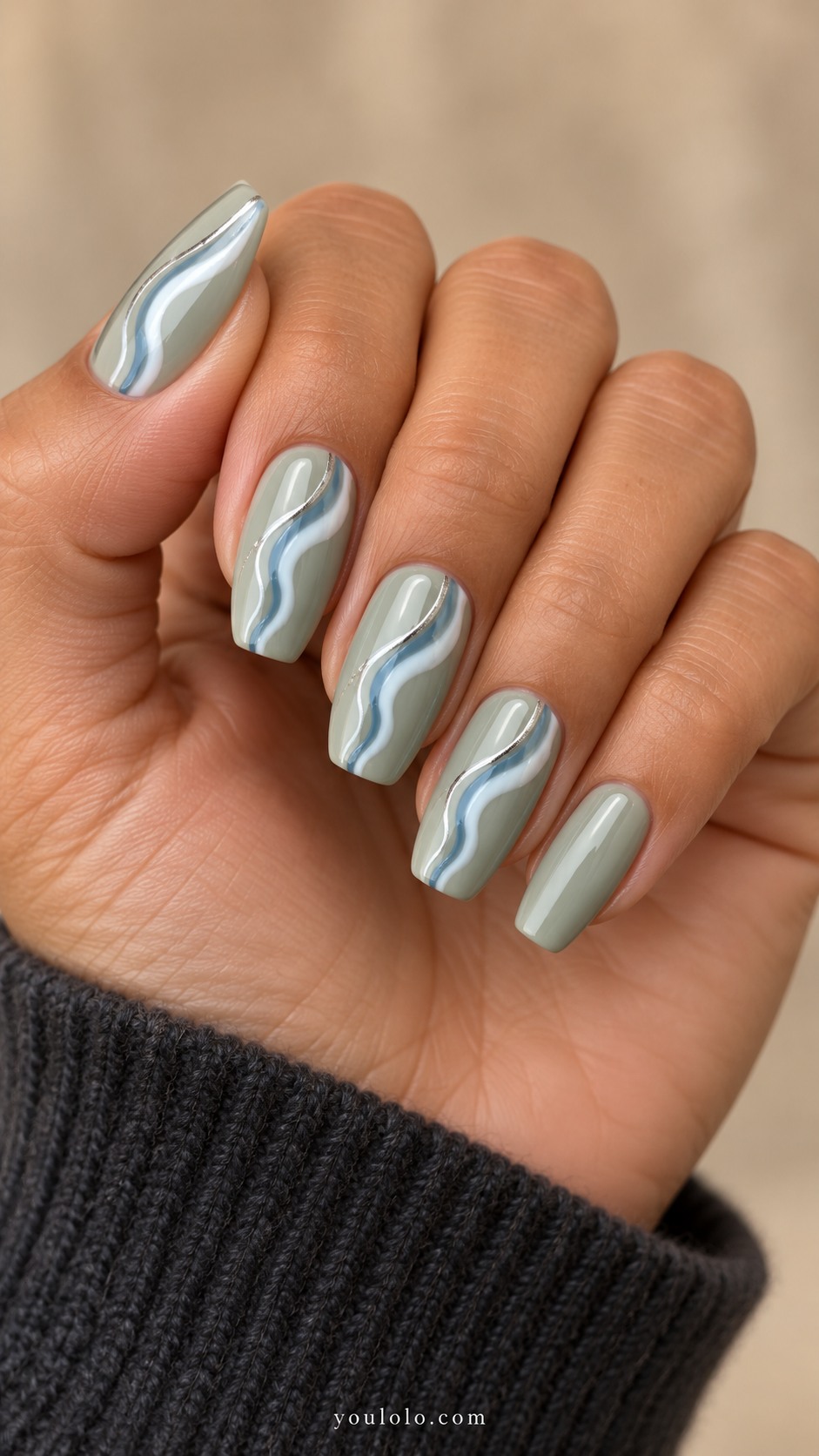
A pale blue and white ribbon runs through muted sage-gray, with a fine silver edge catching the light. The cool colors suggest ice without using a literal winter motif. Keep the curve fluid rather than perfectly symmetrical. A few accent nails carrying the ribbon will create continuity, while the plain background color supplies a quiet contrast.
Ask your nail artist: Ask for a sage-gray base and narrow flowing blue-and-white ribbons, edged on one side with fine silver chrome. Keep the layers visually distinct.
Shape and short-nail adaptation: Medium coffin nails give the S-curve room to travel. Short squovals can carry a single shallow curve instead of a full S.
20. Tiny Penguin
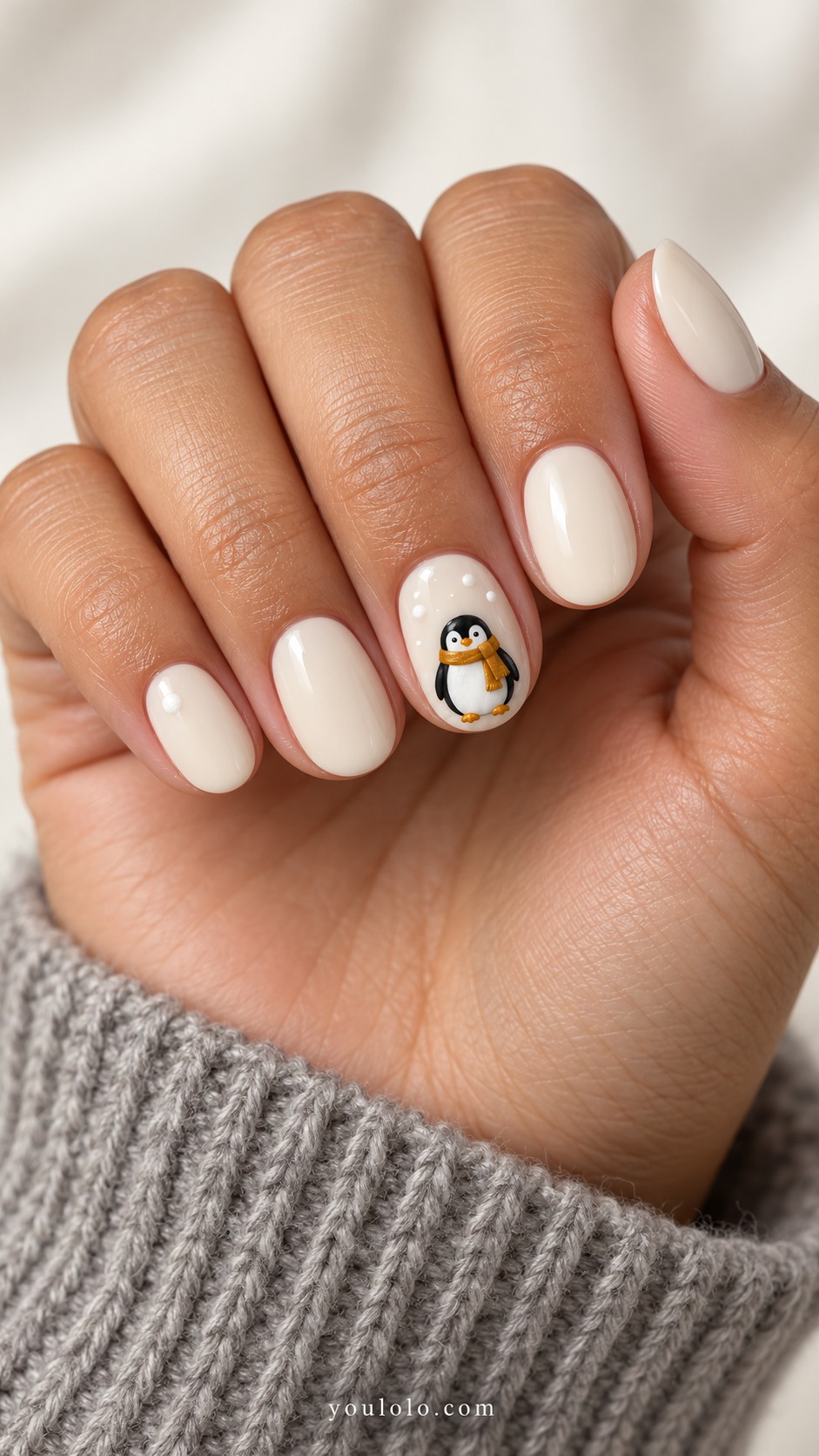
A miniature penguin in a mustard scarf adds personality without turning the whole manicure into a cartoon scene. The cream base provides contrast for its black silhouette and white belly. Small snow dots reinforce the winter mood, while plain companion nails keep the character as the clear focal point. The charm comes from a few recognizable details, not from making the figure bulky.
Ask your nail artist: Request one small painted penguin with a black-and-white body, tiny yellow details and a mustard scarf. Keep it flat or very low profile, with only a few snow dots nearby.
Shape and short-nail adaptation: Short oval nails are a natural match for the rounded character. If space is tight, simplify the scarf and feet rather than enlarging the figure beyond the nail.
How to turn one reference nail into a full set
Start with the focal detail, then choose companion nails that repeat its background color or one small element. For Winter Toile, that means a cottage accent, simpler trees or branches, and ivory nails. For Tiny Penguin, it means one character and a few snow dots. This keeps a detailed design readable at the scale of a real hand.
If you prefer matching art on every nail, choose a repeating pattern such as Tuxedo French or Snow Leopard. Ask the artist to adjust the motif to each nail’s width rather than stretching an identical design across all five fingers.
Choose the finish before your appointment
| Finish | Designs to consider | What to clarify |
|---|---|---|
| Smooth painted art | Alpine Checks, Nordic Red, Winter Toile, Pink Argyle | How detailed the artwork can be at your chosen length |
| Low-profile texture | Cashmere Knit, Molten Silver, Copper Contours | Whether you want a raised effect or a flat painted interpretation |
| Magnetic or reflective color | Midnight Aurora, Plum Eclipse | The base shade and the direction of the light-catching band |
| Translucent or embedded detail | Icy Jelly, Opal Shards | How sheer the base should remain and how smooth the finished surface should feel |
Winter nail art questions
Which designs work best on short nails?
Alpine Checks, Icy Jelly, Nordic Red, Scarf Stripes and Pink Argyle are shown with compact shapes. The key is to simplify the number of details as the available space gets smaller. One clear snowflake or diamond will read better than several crowded motifs.
Can winter nails work without Christmas symbols?
Yes. This collection uses frost, knit patterns, winter scenery, deep colors and icy finishes. Cherry Outline, Copper Contours and Glacier Lines have no literal holiday imagery at all, so they can fit comfortably into a January or February manicure.
Do I need long extensions for detailed nail art?
No, but intricate pictures need enough room to remain recognizable. If you keep your nails short, choose a single simplified flower, tree or character. For the cottage scene, discuss whether a detailed decal or a smaller painted element will suit the available space.
How do I make a bold design more understated?
Keep its signature detail on one nail and use the background color on the others. A single aurora accent, penguin or silver crescent can carry the idea without repeating it across the whole hand.
What should I send to my nail artist?
Send the close-up of your chosen design, your preferred length and shape, and whether you want smooth or raised art. Mention the number of accent nails you want. Ask the artist to confirm the time and cost for that level of detail before the appointment.
Save your favorite close-up: choose one main design and one simpler alternative. That gives your nail artist a clear starting point and an option if the original motif needs adapting to your nails.

[…] If you want to compare these detailed looks with softer seasonal patterns, browse our winter nail art ideas. […]
[…] If you want to compare these detailed looks with softer seasonal patterns, browse our winter nail art ideas. […]
[…] another take on the palette, browse our winter nail art ideas and compare the shapes and finishes before choosing your […]
[…] another take on the palette, browse our winter nail art ideas and compare the shapes and finishes before choosing your […]
[…] another take on the palette, browse our winter nail art ideas and compare the shapes and finishes before choosing your […]
[…] comparing styles? Browse our winter nail art ideas for another way to approach the shape, color and […]
[…] another take on the palette, browse our winter nail art collection and compare the shapes and finishes before choosing your […]
[…] another take on the palette, browse our winter nail art ideas and compare the shapes and finishes before choosing your […]
[…] For another direction to compare, browse our winter nail art ideas. […]
[…] comparing styles? Browse our winter nail art ideas for another way to approach the shape, color and […]
[…] comparing styles? Browse our winter nail art ideas for another way to approach the shape, color and […]