The Best Fluffy Pancakes recipe you will fall in love with. Full of tips and tricks to help you make the best pancakes.


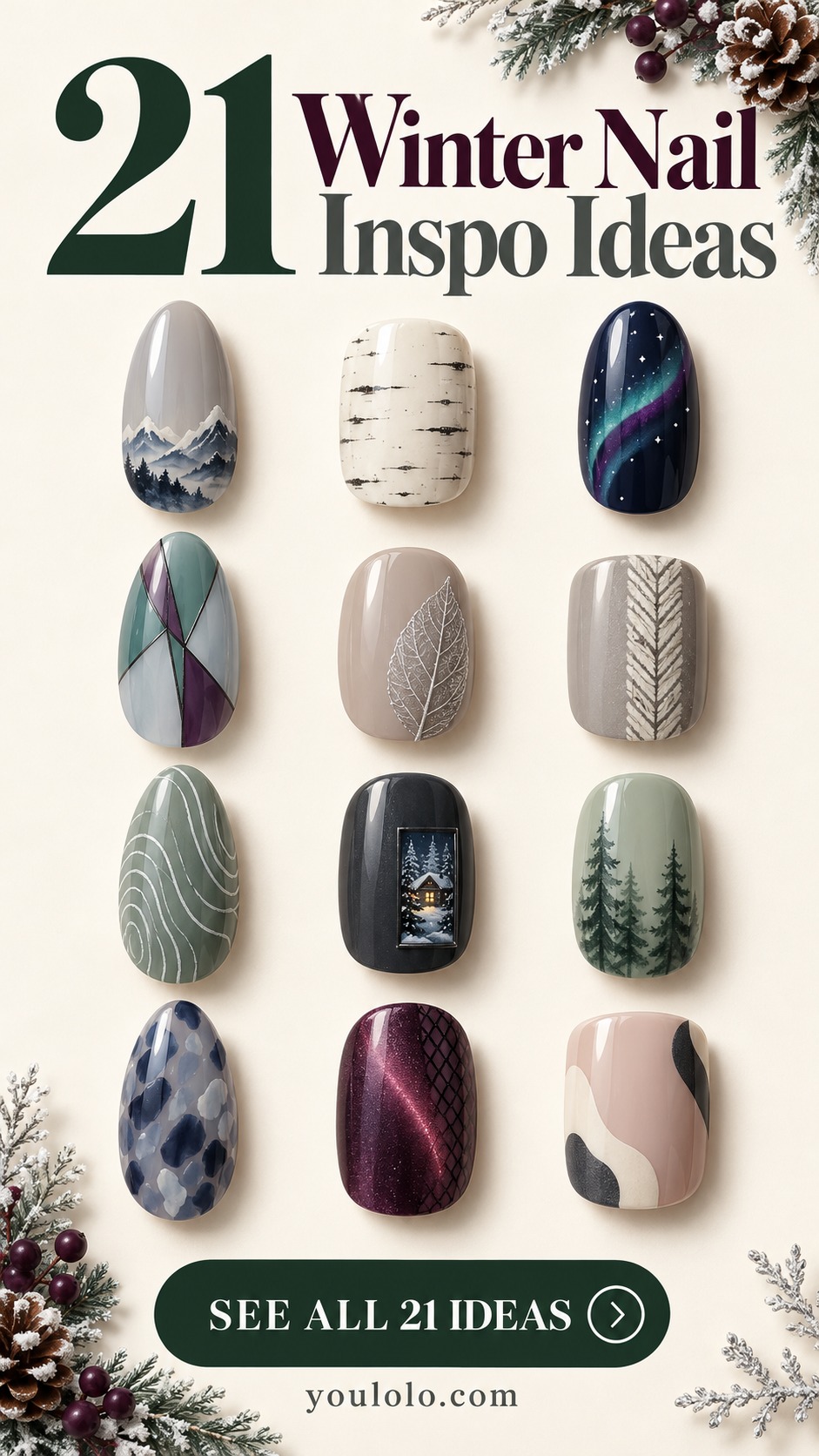
Winter nails inspo is most useful when it gives you an idea you have not already saved ten times. For this collection, I looked beyond the usual single snowflake and built the designs around small landscapes, textile patterns, mineral shapes, and quiet winter-night details. The aim is to offer a different starting point for your next manicure.
These twenty-one ideas include a snowy mountain edge, a miniature window scene, fine herringbone, cool tortoise patterns, and painted color ribbons. Some are more detailed than others, but each keeps the artwork within a clear palette. You can choose a simple accent or a more expressive set without needing every finger to carry the same pattern.
When you browse, separate the idea from the exact length in the image. A landscape can become one small horizon on a short nail. A dense textile pattern can be reduced to a single panel. A color combination can be kept even if you decide to leave out the artwork. I would save the reference that makes you pause, then decide which part you actually want to wear: the linework, the contrast, the finish, or the little scene. Tell your artist that priority before adding more details. A design often becomes stronger when the main idea is clear and the supporting nails give it room to be seen.
Turn Winter Nails Inspo into a Wearable Set
Choose one visual idea and decide where it belongs on the hand. Detailed miniature artwork usually works best on one or two accents, while simple lines can be repeated. Keep the supporting colors connected to the accent. If the reference feels crowded at your length, remove elements before shrinking everything.
1. Snowy Mountain Silhouette

A thin mountain ridge gives two gray accents a little landscape without filling the nail. Keep the layers simple and let the tips carry most of the painting. The surrounding sheer base makes the scene feel light instead of like a dense illustration.
2. Birch Bark Lines

Short irregular marks suggest birch bark on a cream background. Avoid evenly spaced stripes; the natural variation is what makes the pattern recognizable. Use two accents and leave the other nails plain so the small dark strokes do not overwhelm the set.
3. Aurora Ribbon Sky

Teal and violet ribbons can suggest an aurora through painted color rather than added light effects. Keep their edges soft and leave plenty of navy visible. A few tiny dots are enough for the sky; large stars would compete with the flowing shapes.
4. Winter Stained Glass

Muted translucent panels give a stained-glass idea a softer winter palette. Keep the dividing lines narrow and use the pattern on two accents. Teal supporting nails make the different colors feel connected without repeating the whole mosaic across the hand.
5. Silver Leaf Skeleton
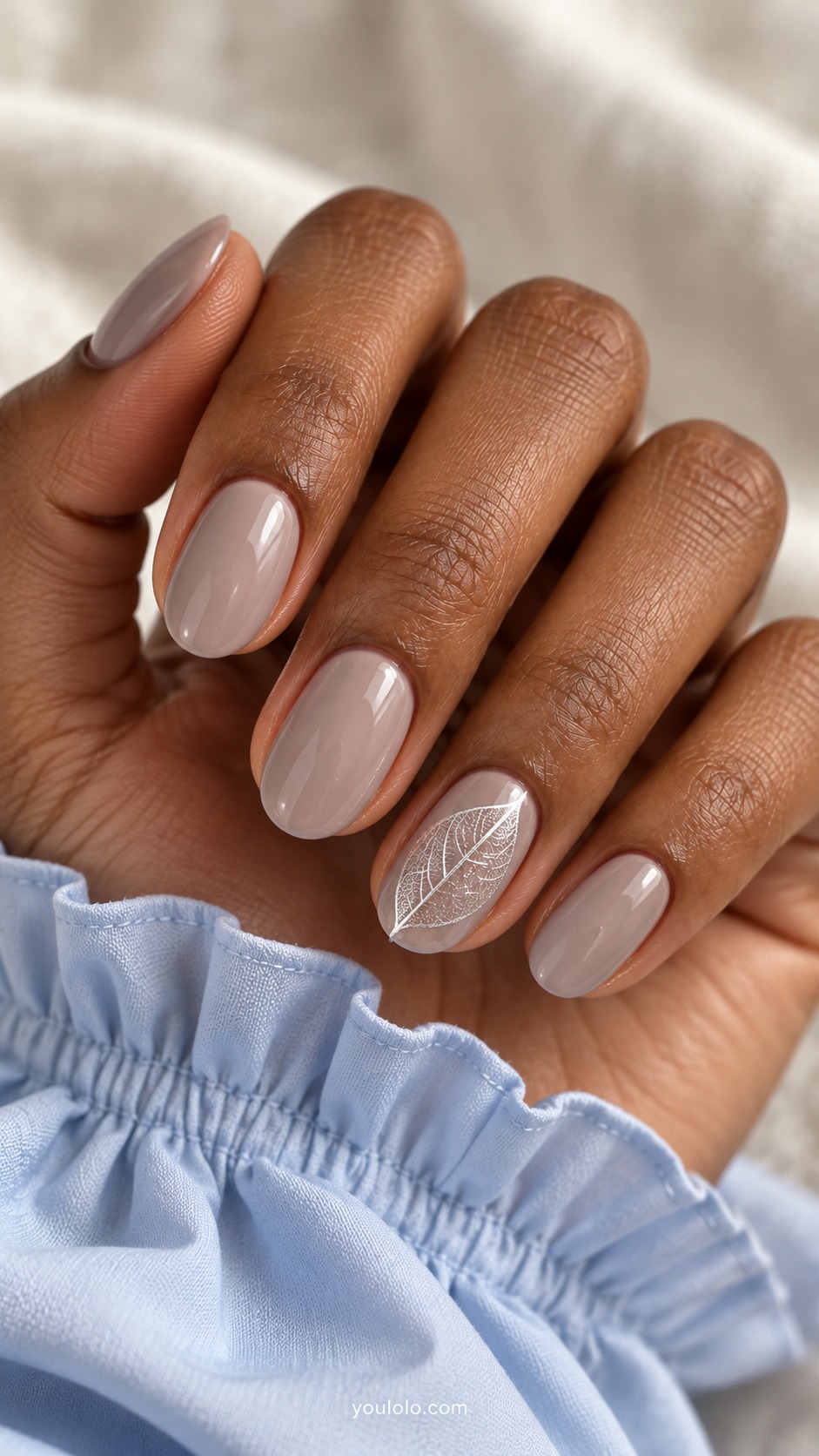
A silver leaf skeleton brings detail to a quiet taupe set. Keep the central vein and outer shape clear, then add only a few fine branches inside. The design needs enough empty base around it to remain delicate at a short nail length.
6. Herringbone Wool Print

One herringbone accent gives neutral nails a tailored fabric detail. Keep the chevrons small but not so dense that they blur together. Ivory and charcoal create the pattern while the gray-beige supporting nails soften its overall contrast.
7. Frozen Pond Ripples

Fine irregular ripples give green-gray polish an icy-water feeling. Leave space between the lines and use only two accent nails. The pattern should remain slightly organic, with no need for perfectly centered circles or additional winter symbols.

8. Night Train Window
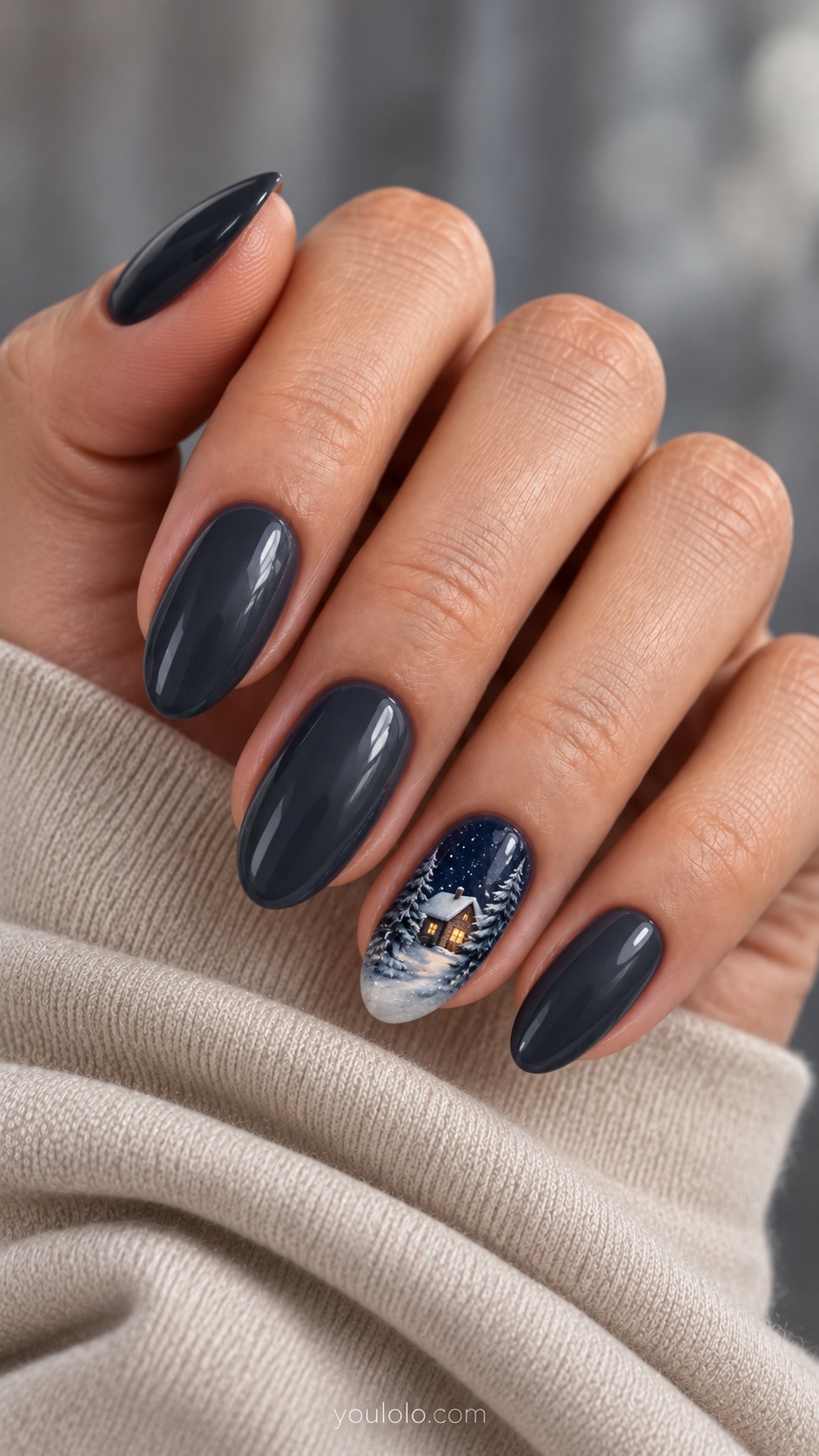
A tiny snowy window scene makes one charcoal nail a miniature illustration. Keep the rectangle simple and limit the landscape to a few clear shapes. A small warm light adds contrast, but it should remain a detail rather than dominate the entire scene.
9. Pine Shadow Layers
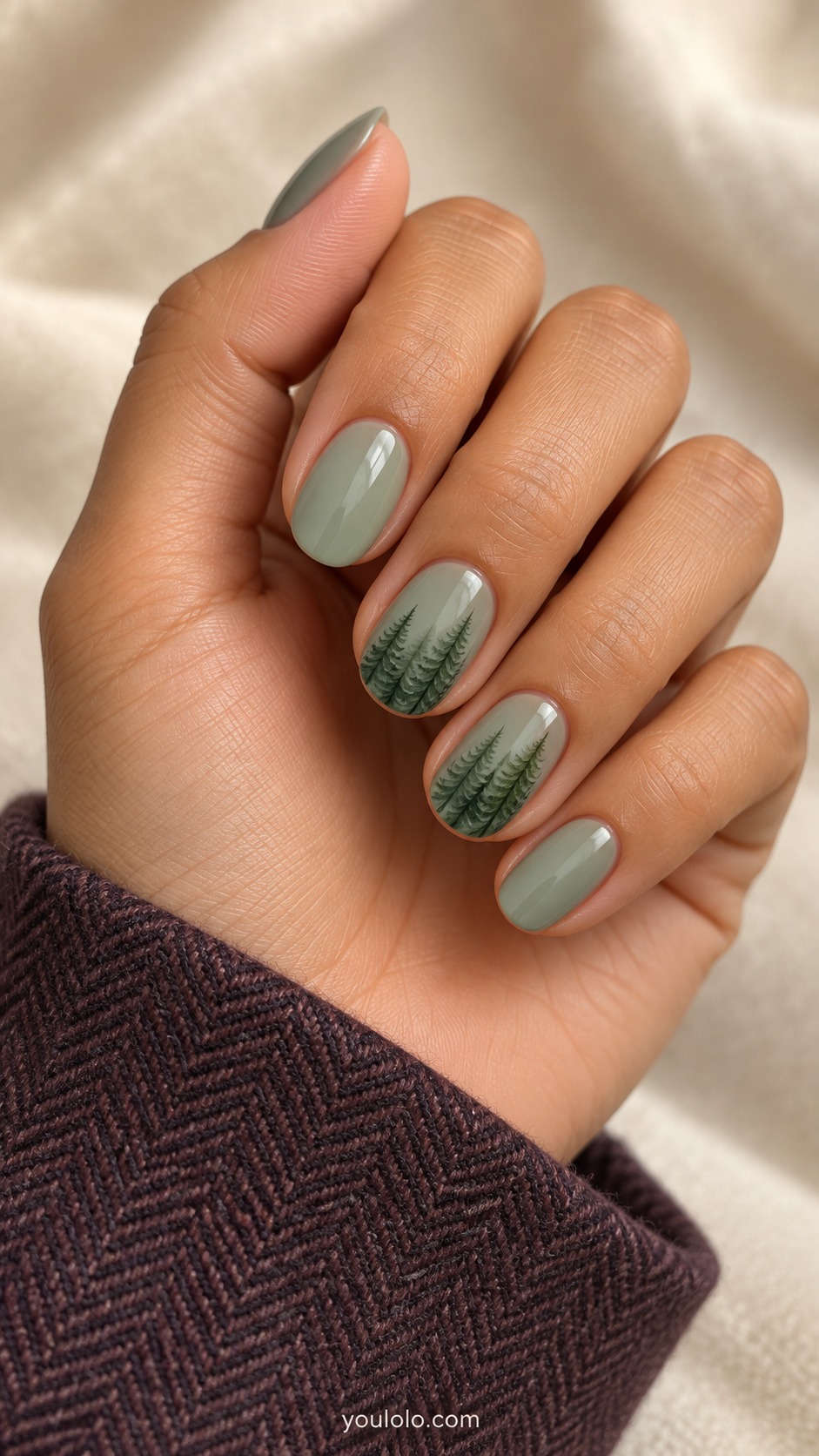
Layered pine silhouettes add depth to milky sage. Use two related greens and keep the trees fine enough that the base remains visible between them. This design needs no ornaments; the quiet forest shapes are the seasonal detail.
10. Ice Blue Tortoise

Blue-gray tortoise patches offer an unusual version of a familiar print. Keep some areas translucent and let the navy shapes vary naturally. Two patterned accents are enough, with plain slate-blue nails giving the eye a place to rest.
11. Plum Velvet with Fine Net

A fine black net adds structure to plum velvet polish. Keep the mesh on one accent so the magnetic finish can still be appreciated on the other nails. The lines should be thin and evenly spaced, with no bulky embellishment over them.
12. Snowy Abstract Cutouts

Organic cream and charcoal shapes turn a nude manicure into a small abstract composition. Leave generous areas of bare-looking base between the forms. The outlines do not need to match from nail to nail, but the same palette should connect the hand.
13. Celestial Compass
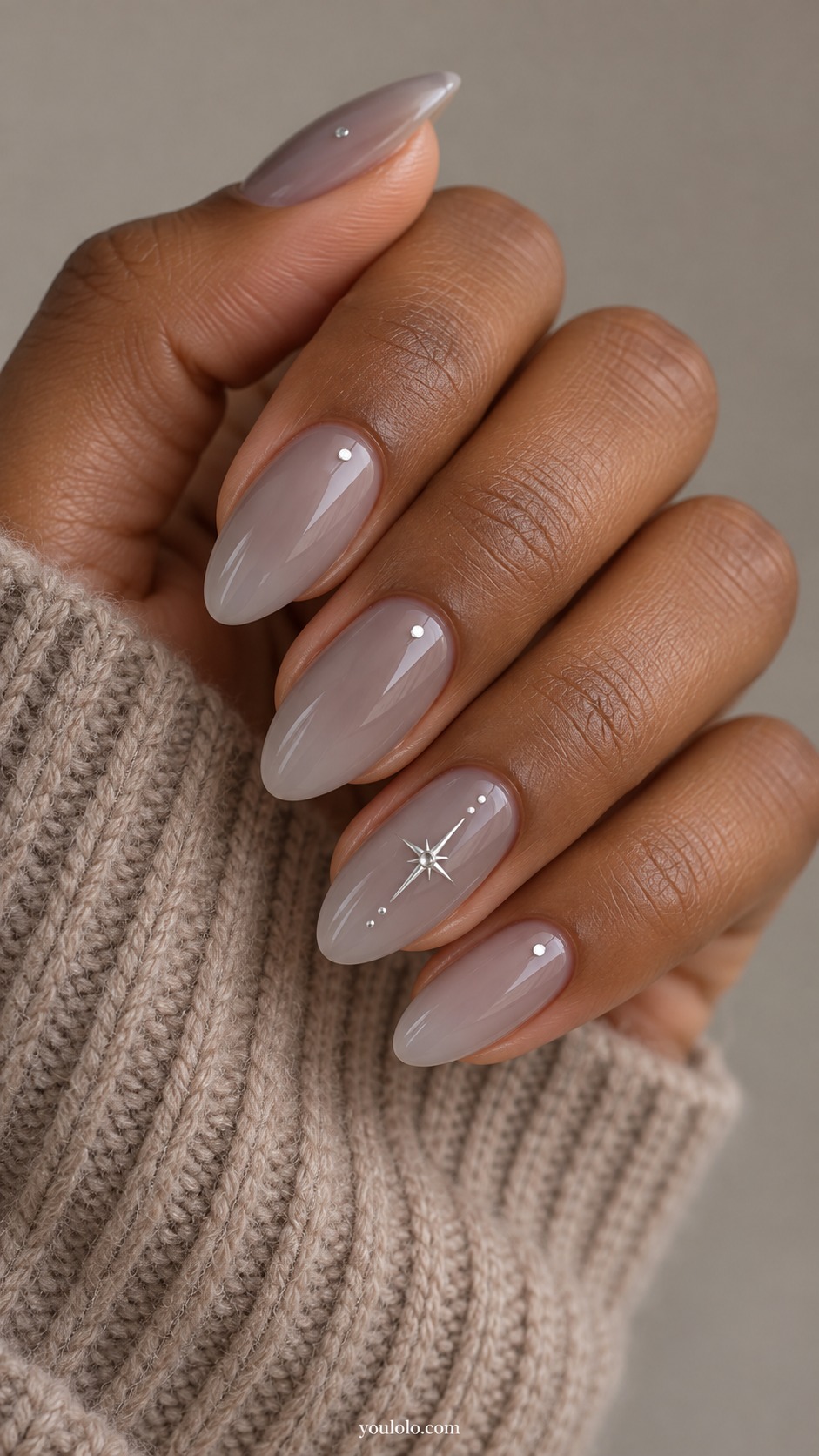
One fine compass-like star gives smoky gray a clear focal point. Keep the four main directions slender and leave space around them. Small single dots on the supporting nails repeat the silver without creating a second competing motif.
14. Frosted Geometric Prism

A small prism made from intersecting silver lines adds a crisp detail to milky lavender. Keep the geometry on one nail and avoid too many intersections. The pale base should show through each section, making the accent feel light rather than solid.
15. Winter Watercolor Wash
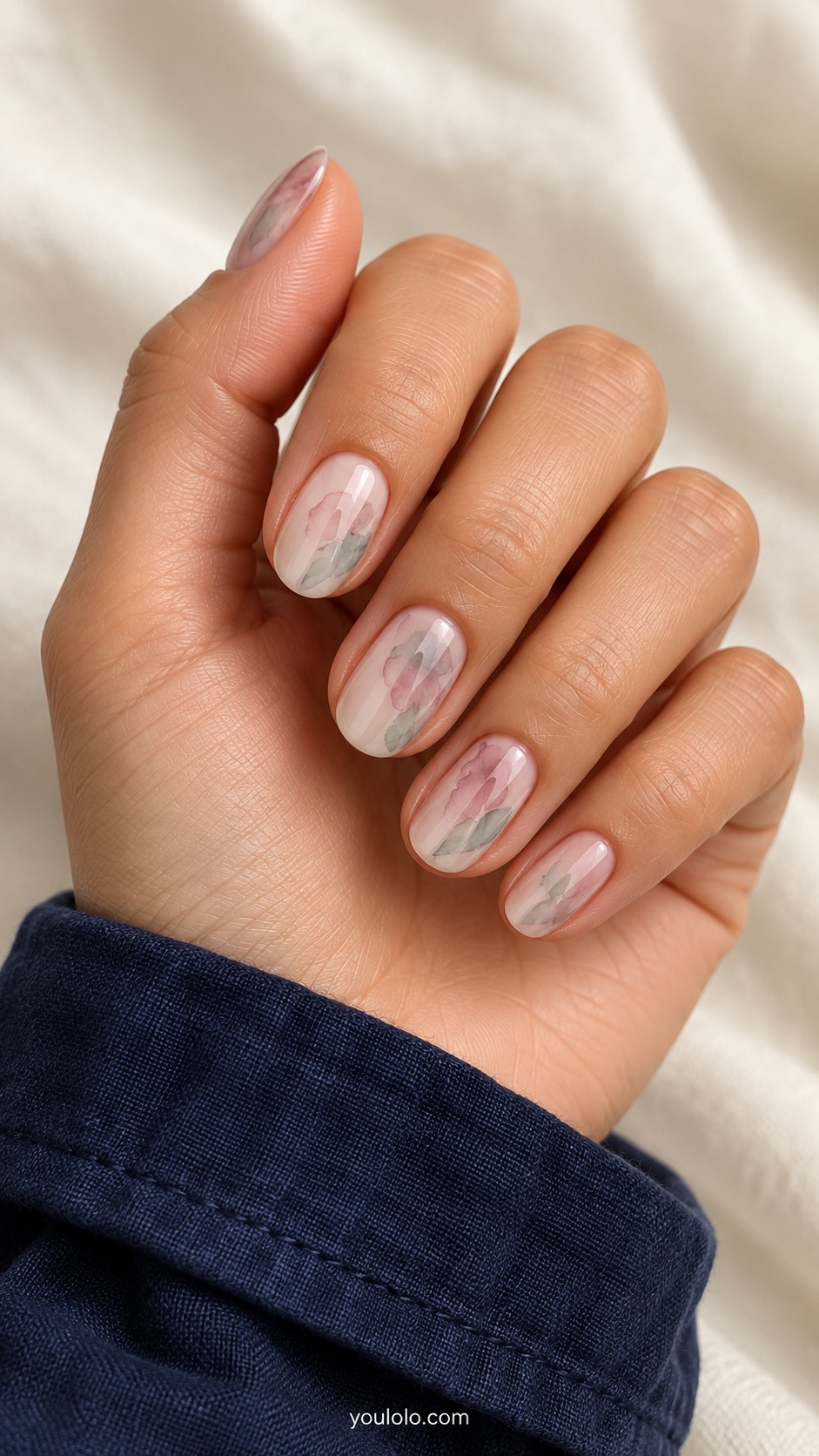
Loose watercolor patches give white nails a gentle artistic detail. Let slate, sage, and mauve overlap softly without turning into a uniform blend. Some clear areas help each color remain visible, and the short shape keeps the set easy to wear.
16. Charcoal Linen Check

A sparse windowpane print makes charcoal feel a little softer and more textile-like. Use warm ivory lines on two accents and keep the spacing broad. A satin finish suits the idea, especially when you want pattern without reflective sparkle.
17. Icy Abstract Peacock

A single outlined teardrop suggests a feather without requiring a detailed drawing. Keep the gold line fine and the pale-blue center small. Petrol blue provides enough depth around the accent, so the remaining nails can stay completely plain.
18. Champagne Confetti Orbit

A curved arc of tiny foil squares adds a controlled sparkle to sheer beige. Keep the pieces flat and separate, with visible base between them. Two accents are enough; scattering foil across every nail would lose the neat orbit shape.
19. Blue Gray Terrazzo

Small irregular flecks create a terrazzo detail on pale gray. Use just a few related blues and white, keeping the pieces different in shape. The plain supporting nails help the accents read as a deliberate pattern instead of random glitter.
20. Faded Ink Florals

A faint plum flower drawing gives smoky nude a slightly moody botanical accent. Keep the lines soft but clear enough to identify the petals. One silver dot can mark the center, while the other nails repeat the quiet base color.
21. Moonlit Snow Horizon

A narrow snowy curve and small crescent create a winter-night scene with very little artwork. Keep both details on one teal accent. The empty space between the horizon and moon is important, so resist filling it with extra stars or glitter.
What to Show Your Nail Artist
Save your favorite design together with a second image that shows your preferred length and shape. Explain which details matter most: the base color, placement, finish, or amount of decoration. Ask to see the color against your hand before the artwork begins. If the original design feels too busy, keep one accent nail and repeat a single supporting color on the others.
You can also compare these looks with our more winter nail designs for another direction at your next appointment.
For another visual perspective, browse Green Wedding Shoes’ winter nail inspiration. Compare the color, shape, and finish separately when choosing a reference for your appointment.
Frequently Asked Questions
How do I choose between several winter nail references?
Identify what you like in each: color, shape, finish, or artwork. Pick one main design and use the others only to clarify those individual choices.
Can detailed winter nail art work on short nails?
Yes, if it is simplified thoughtfully. Keep one clear motif or panel and leave plain base around it. A smaller version of every detail is not always the clearest solution.
Should all the nails match exactly?
They can, but they do not need to. Repeating a palette or a small line detail can connect different accents while leaving some fingers plain.
How can I make a winter manicure feel different?
Try changing the composition rather than adding more sparkle. A landscape edge, an off-center motif, or a textile panel can give familiar colors a new purpose.
What should I bring to the appointment?
Bring one main artwork reference and a separate image for your preferred length and shape. Point out which details are essential and which you are happy to simplify.
Save Your Favorite Idea
Save the idea that feels new to you, then adapt its scale to the nails you actually wear. One clear creative detail can make a winter manicure memorable.