The Best Fluffy Pancakes recipe you will fall in love with. Full of tips and tricks to help you make the best pancakes.


16 Winter Ombre Nails with Soft Fades and Beautiful Icy Details
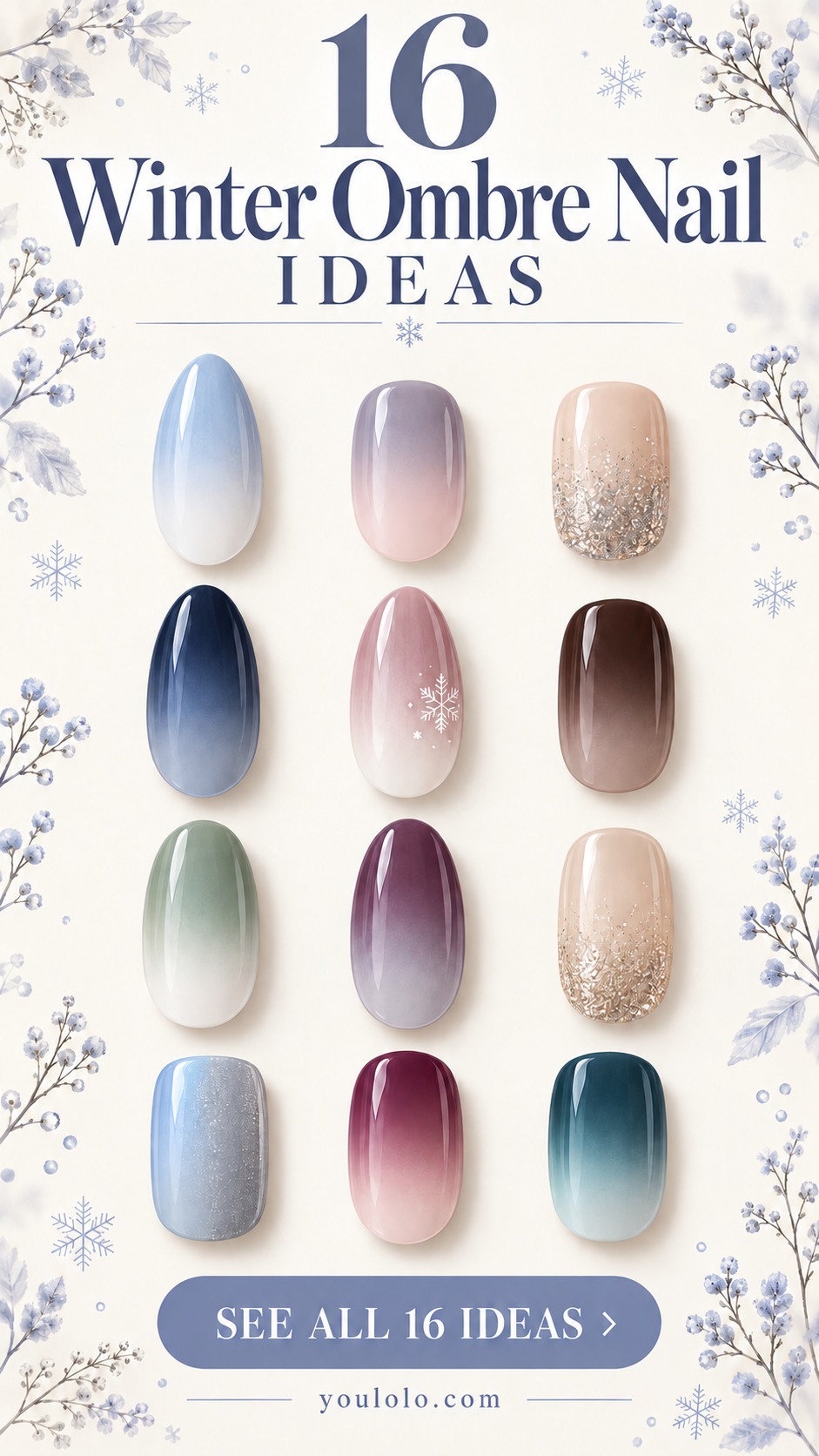
Winter ombre nails are all about the space between two colors. A pale blue that gradually becomes milky white feels very different from a dark plum fading into gray-lilac, even when both use the same shape. For this collection, I wanted the blends themselves to be worth saving, with only a few small accents around them.
The sixteen ideas below move through icy blues, soft neutrals, muted greens, and deeper winter shades. Some use two colors; others create a fade by changing the density of shimmer or glitter. That distinction helps when you show a reference at the salon. A silver sparkle fade does not need the same approach as a smooth navy-to-slate gradient, and a pearly finish should still allow the colors underneath to show.
There are short rounded and squoval options alongside medium almonds and ovals. Longer nails give a blend more room, but short nails can look just as considered when the transition is soft and the colors are chosen carefully. Start with the palette you love, then decide how much contrast you want. If you usually wear a plain nude, try ivory or champagne. If you prefer a darker manicure, the graphite, plum, and midnight versions give you depth without needing a holiday motif. Save your favorite color combination and take a separate reference for the length you actually wear.
Choosing a Winter Ombre Nail Design
Decide whether you want a color fade, a glitter fade, or a pearly fade. For a smooth color transition, leave enough space for the middle shade to appear. For glitter, let the particles become gradually sparser. Closely related colors feel softer, while a dark-to-light pair creates a stronger statement. Keep extra art to one accent finger when the blend already has plenty of contrast.
1. Blue Snowmelt

The blue should dissolve into white without a visible dividing line. Keep the finish glossy and leave the surface undecorated so the fade remains the main detail. Ask for a long, soft transition rather than a white French band. On shorter nails, start the blend closer to the cuticle.
2. Lilac Fog

Gray-lilac has a quieter mood than a sweet pastel purple. Let a sheer pink tip show through for a light finish that still feels wintry. Choose a cool lilac swatch with a little gray in it. Keep the oval outline compact and the final coat smooth.
3. Silver Snowdrift

The change here is in sparkle density rather than two solid colors. Tiny silver particles gather at the tips and become scattered toward the center. Request fine glitter with a soft edge, not a sharply defined glitter French. Keep the cuticle area almost clear.
4. Midnight to Slate

Navy and slate create a moody gradient with enough difference to remain visible in ordinary light. Plain nails let the color transition carry the entire set. Ask to compare the two shades before blending. If both are too dark, the fade can disappear away from a bright lamp.
5. Rose Quartz Snow

A dusty rose fade gives one little snowflake a gentle background. The artwork belongs on a single accent finger so the gradient still feels spacious. Keep the snowflake small with clearly separated branches. Use a pale ivory edge instead of an opaque white block.
6. Espresso Mist

This warm-to-muted brown fade is a useful alternative to icy blue. The short square shape makes it feel tidy and everyday rather than dramatic. Keep the taupe noticeably lighter than the espresso. A satin finish can soften the contrast, while gloss adds depth.
7. Iced Pistachio

A touch of sage gives a pale gradient an unexpected color story. The green should remain muted, with plenty of milky white at the tips. Ask for a soft sage rather than bright mint. This design needs no extra leaves or flowers to feel complete.

8. Plum Smoke

Plum fading into gray-lilac feels rich without relying on glitter. The almond outline gives the transition room to stretch along the nail. Keep the darker color near the cuticle and soften its edge gradually. Avoid adding black, which can overwhelm the purple.
9. Champagne Frost Fade
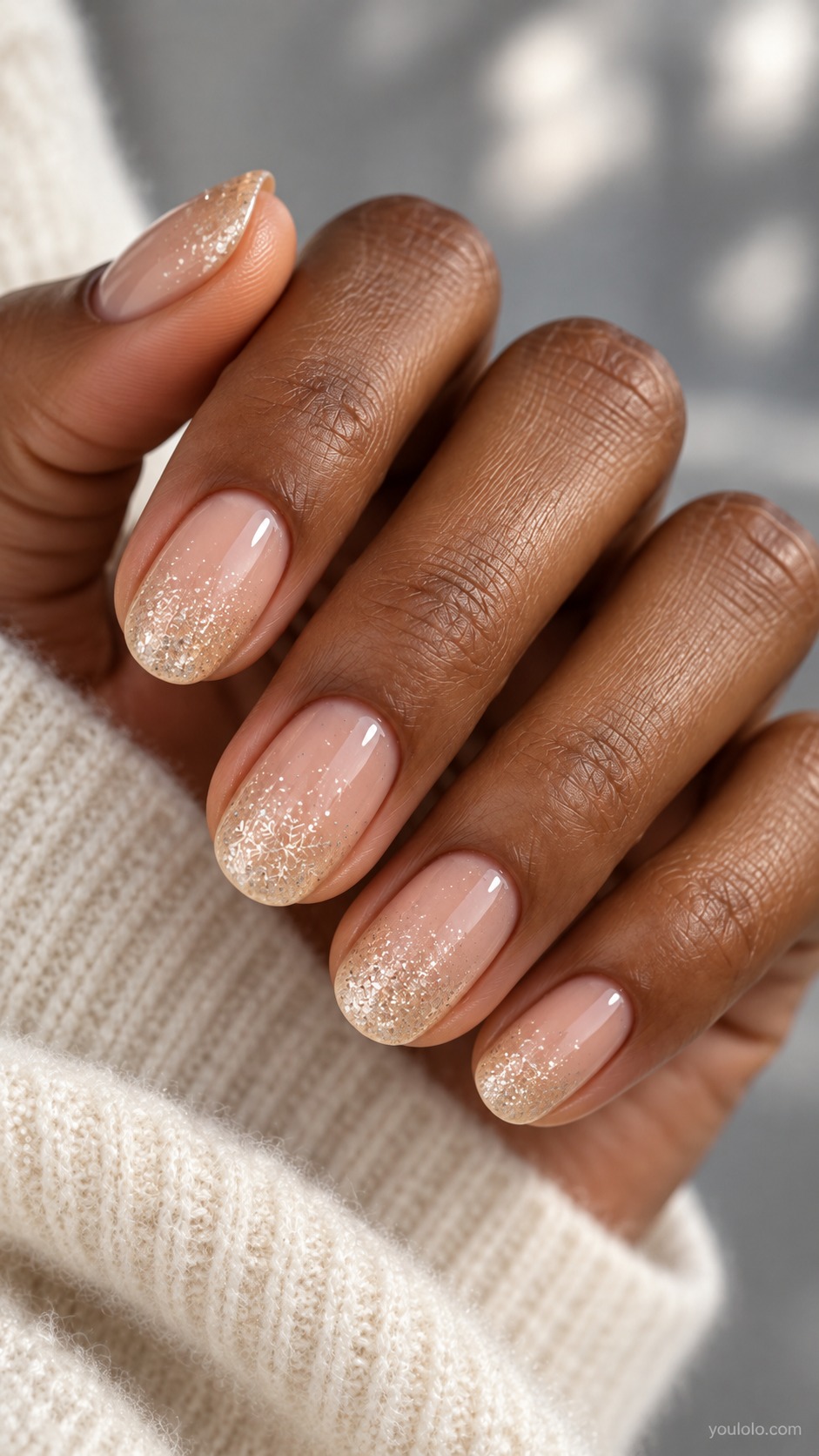
Champagne shimmer warms up the winter palette. A translucent beige base keeps the sparkle light, especially when the particles are very fine. Ask for a scattered shimmer fade sealed smooth. Use a warmer gold only if you want a stronger contrast against the base.
10. Glacier Vertical Blend

A side-to-side blend changes the direction of the gradient. Pale blue meets silver-gray across the width, giving each nail a quiet two-tone effect. Specify a vertical gradient so the colors sit beside each other. Keep the sides soft rather than drawing a straight dividing line.
11. Berry to Blush

A berry-to-blush fade brings a little warmth to the collection. The pale tip lightens the overall manicure and makes the darker root feel less heavy. Ask for a diffused transition without a dark outline. Choose a muted berry if you want the design to work with everyday neutrals.
12. Frozen Teal

Teal creates a stronger color statement than powder blue while keeping the icy mood. A rounded short shape makes the richer shade approachable. Keep the tip light enough to show the blend clearly. Skip chunky glitter so the two colors remain easy to distinguish.
13. Pearl Cloud

A sheer pink base and pearly edge create a soft luminous gradient. The reflection should remain gentle rather than becoming a full metallic mirror. Ask for a light pearl finish over the fade. Check that the underlying pink still shows after the finishing layer.
14. Graphite Haze

Graphite and dove gray make a crisp neutral pairing. The gradient softens the darker color, while the short shape keeps the manicure compact. Choose two grays with similar undertones. A blue-gray paired with a warm brown-gray can look less cohesive.
15. Blue Hour Sparkle

Indigo and periwinkle suggest the changing blue of an evening sky. A few silver points on one finger add interest without hiding the transition. Keep the silver dots tiny and unevenly spaced. Let the other nails show the same gradient without extra decoration.
16. Ivory Veil

A very short nail can still carry a soft fade. This version uses closely related pale shades so there is no cramped stripe at the edge. Ask for a subtle pink-to-ivory blend that begins around the middle. Keep the free edge rounded and the coating visually thin.
What to Show Your Nail Artist
Save your favorite design together with a second image that shows your preferred length and shape. Explain which details matter most: the base color, placement, finish, or amount of decoration. Ask to see the color against your hand before the artwork begins. If the original design feels too busy, keep one accent nail and repeat a single supporting color on the others.
You can also compare these looks with our neutral nail colors for another direction at your next appointment.
For another visual perspective, browse Makeup.com’s ombre nail inspiration. Compare the color, shape, and finish separately when choosing a reference for your appointment.
Frequently Asked Questions
Do winter ombre nails work on short nails?
Yes. Short oval and squoval nails can carry a soft gradient. Closely related shades and a blend that starts around the middle help avoid a narrow, abrupt stripe at the tip.
What colors suit winter ombre nails?
Powder blue and white, plum and lilac-gray, navy and slate, or espresso and taupe all offer different winter moods. Choose the combination by how much contrast you want rather than following one required palette.
Are glitter ombre nails the same as a color gradient?
No. A glitter fade changes the density of particles across the nail. A color gradient blends shades into one another. They can be combined, but each should remain visible.
Can I have ombre without long extensions?
Yes. The soft ivory and silver snowdrift ideas are shown on compact shapes. Ask your nail artist to adapt the blend to your available nail length rather than stretching a long-nail design onto it.
What should I ask for at my appointment?
Show the direction of the fade, the two colors, and your preferred finish. Mention whether you want plain nails or one small accent. A swatch helps clarify how pale or dark the finished blend should be.
Save Your Favorite Idea
Save one light fade and one deeper option before your next appointment. That makes it easier to choose the version that feels right against your hand, while keeping the shape and finish you already know you enjoy.