The Best Fluffy Pancakes recipe you will fall in love with. Full of tips and tricks to help you make the best pancakes.

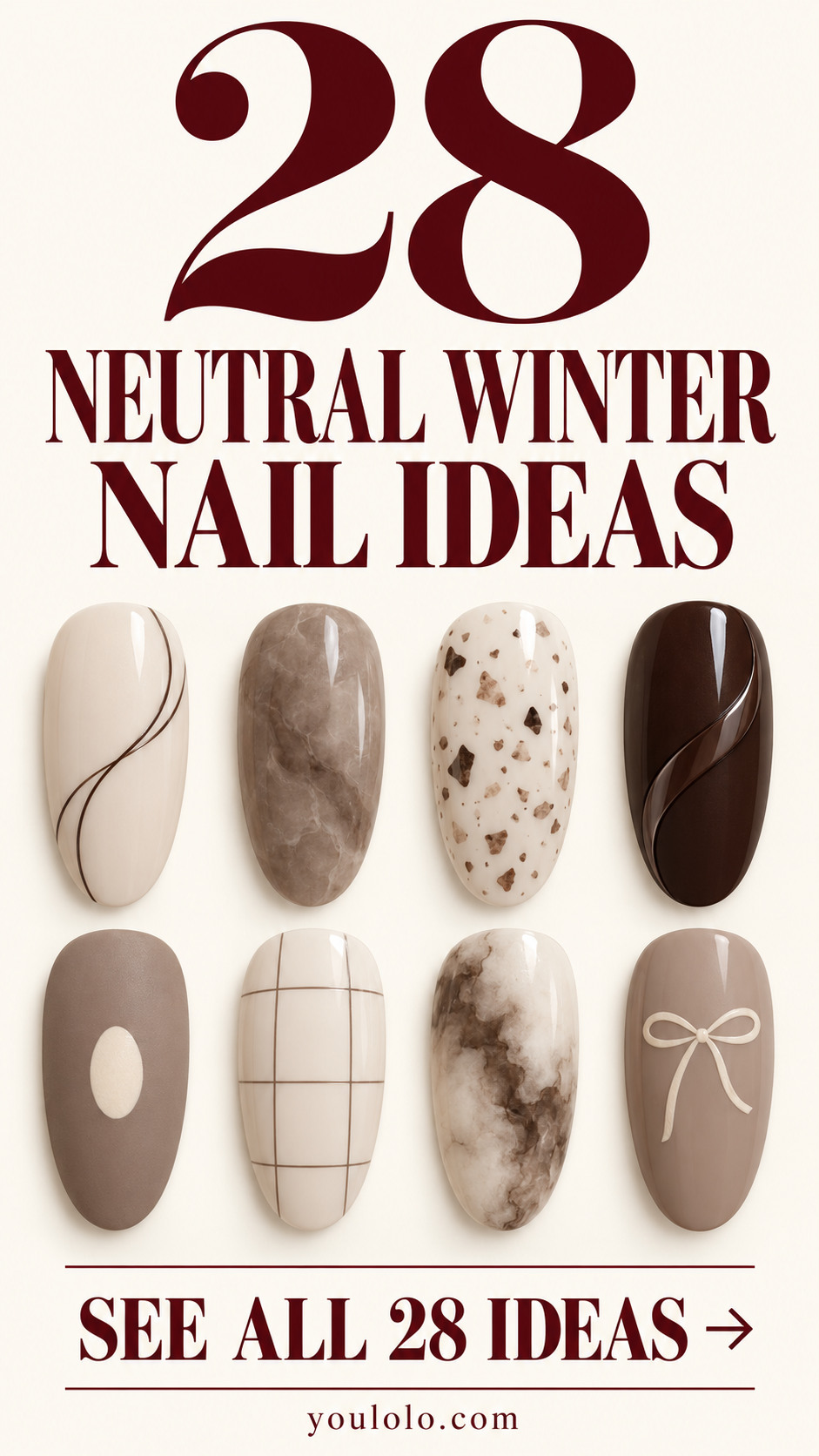
Neutral winter nails do not have to be a row of plain beige shades. A fine contour, a smoky wash or a contrast between matte and gloss can make a quiet palette feel considered. These 28 designs focus on oat, taupe, stone, mocha and espresso, with enough variety to suit short natural nails and modest extensions.
Choose the detail first, then decide how much contrast you want. Some looks keep the artwork on one or two fingers; others use a low-contrast pattern across the whole hand. Each includes a specific salon brief so the placement and finish are easy to explain.
Warm neutrals with subtle painted detail
1. Oat Milk with Espresso Contours
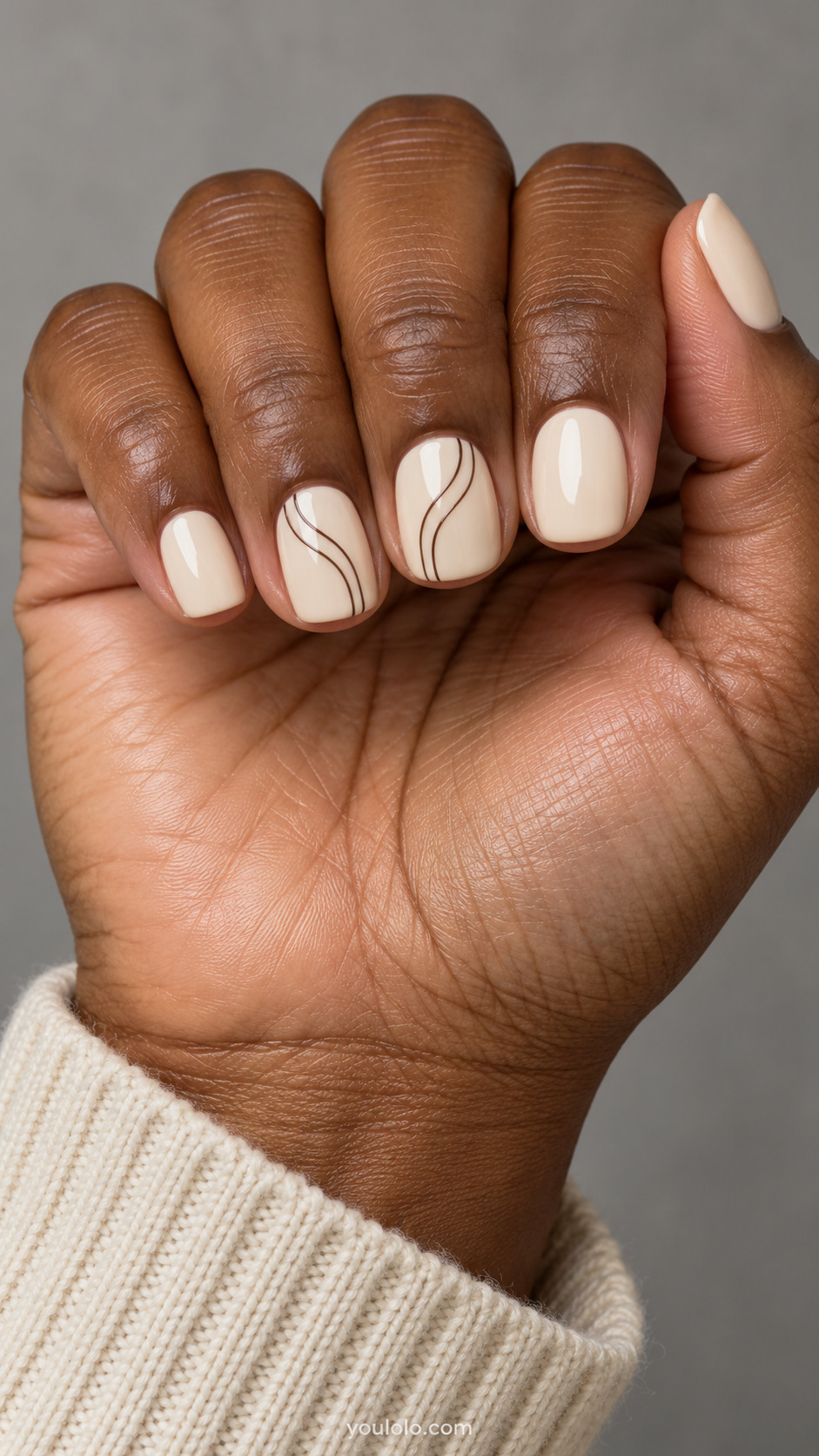
Oat milk gives the fine espresso lines a soft backdrop. The curves look best when they bend differently on each accent nail rather than matching exactly. Keep the plain fingers in the same creamy shade so the drawing feels like part of the set. This is a useful option for short nails because the lines need little space.
Salon brief: Oat milk opaque nails, two extremely fine espresso wavy contour lines on middle and ring only.
2. Smoky Quartz Jelly
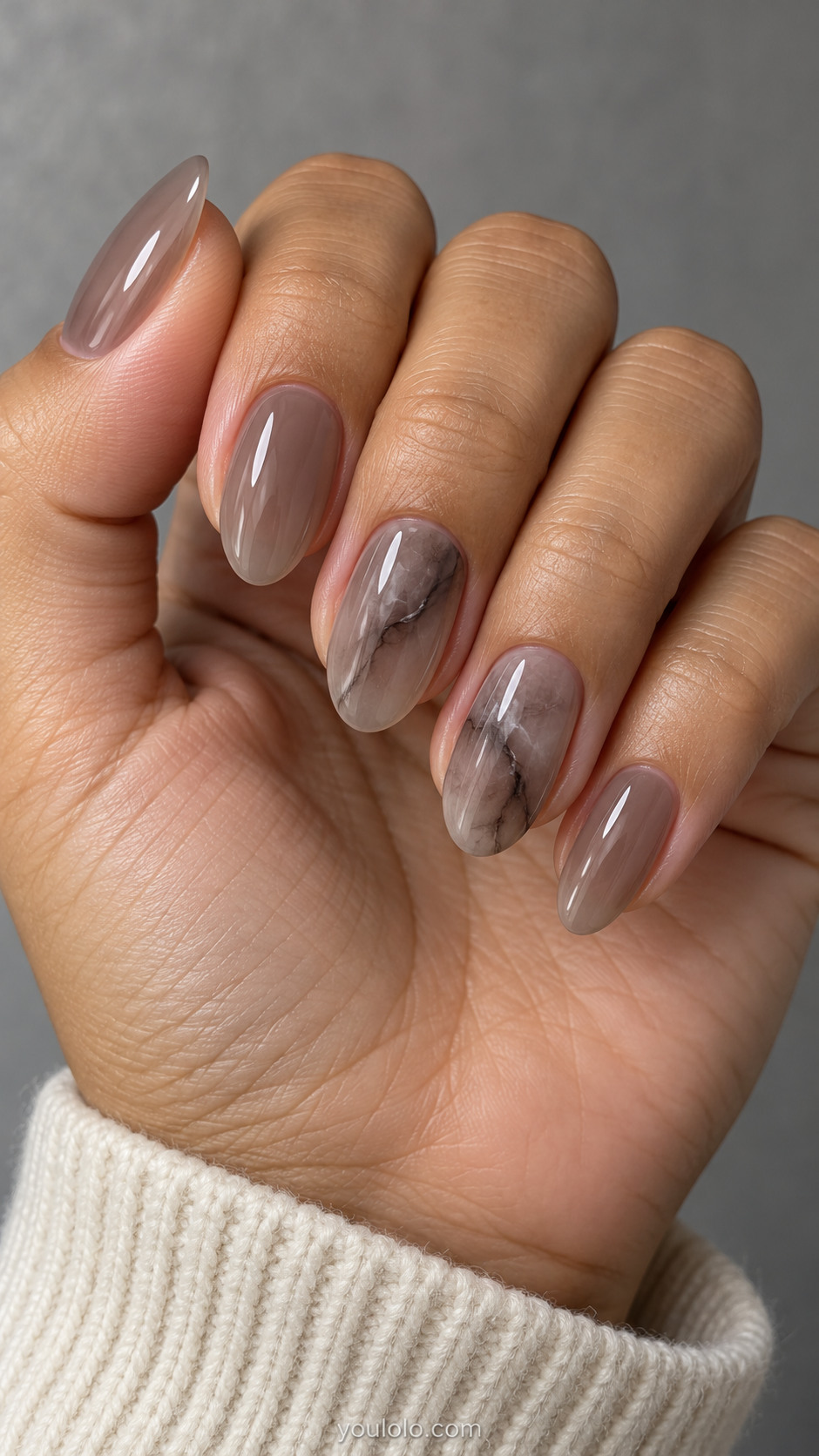
A translucent taupe base gives this stone effect more depth than opaque gray. Wispy charcoal marks should drift through the accent nails instead of forming a dense marble web. Leave some clear areas around them to preserve the jelly quality. The plain companion nails make the mineral pattern easier to see and keep the finish quietly elegant.
Salon brief: Translucent smoky taupe jelly nails with wispy cloudy charcoal quartz veins on two accents, others plain translucent taupe.
3. Sandstone Brush Marks
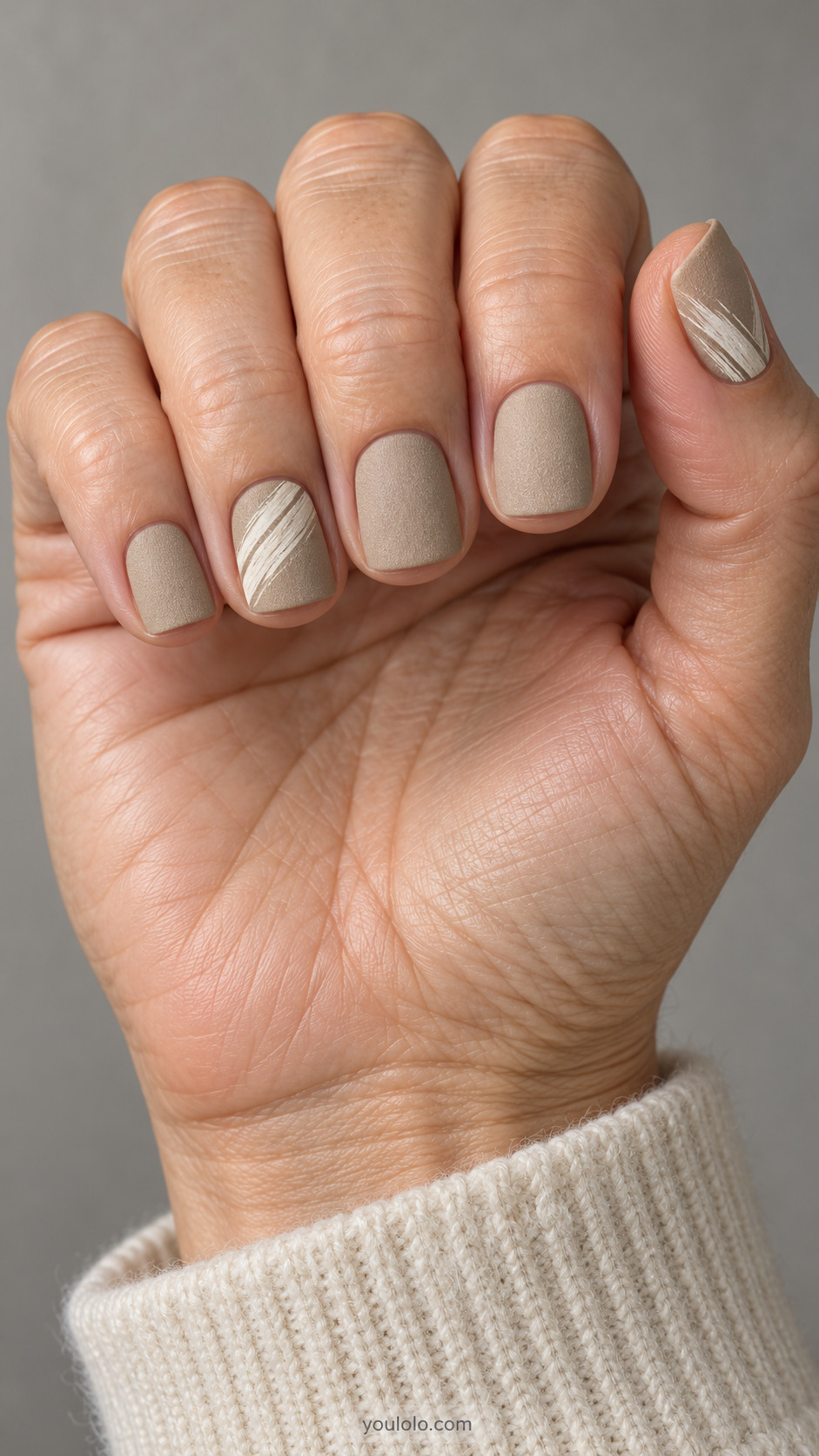
Dry-brush marks introduce texture without adding raised decoration. Ivory over sandstone has enough contrast to show the brush direction, but the colors remain close enough for a calm set. Keep the marks on two fingers and let their edges stay slightly imperfect. A matte finish helps the painted texture read clearly rather than disappearing beneath a strong reflection.
Salon brief: Matte sandstone beige nails with irregular narrow ivory dry-brush marks diagonally across ring and thumb, subtle painted texture.
4. Pearl and Taupe Split
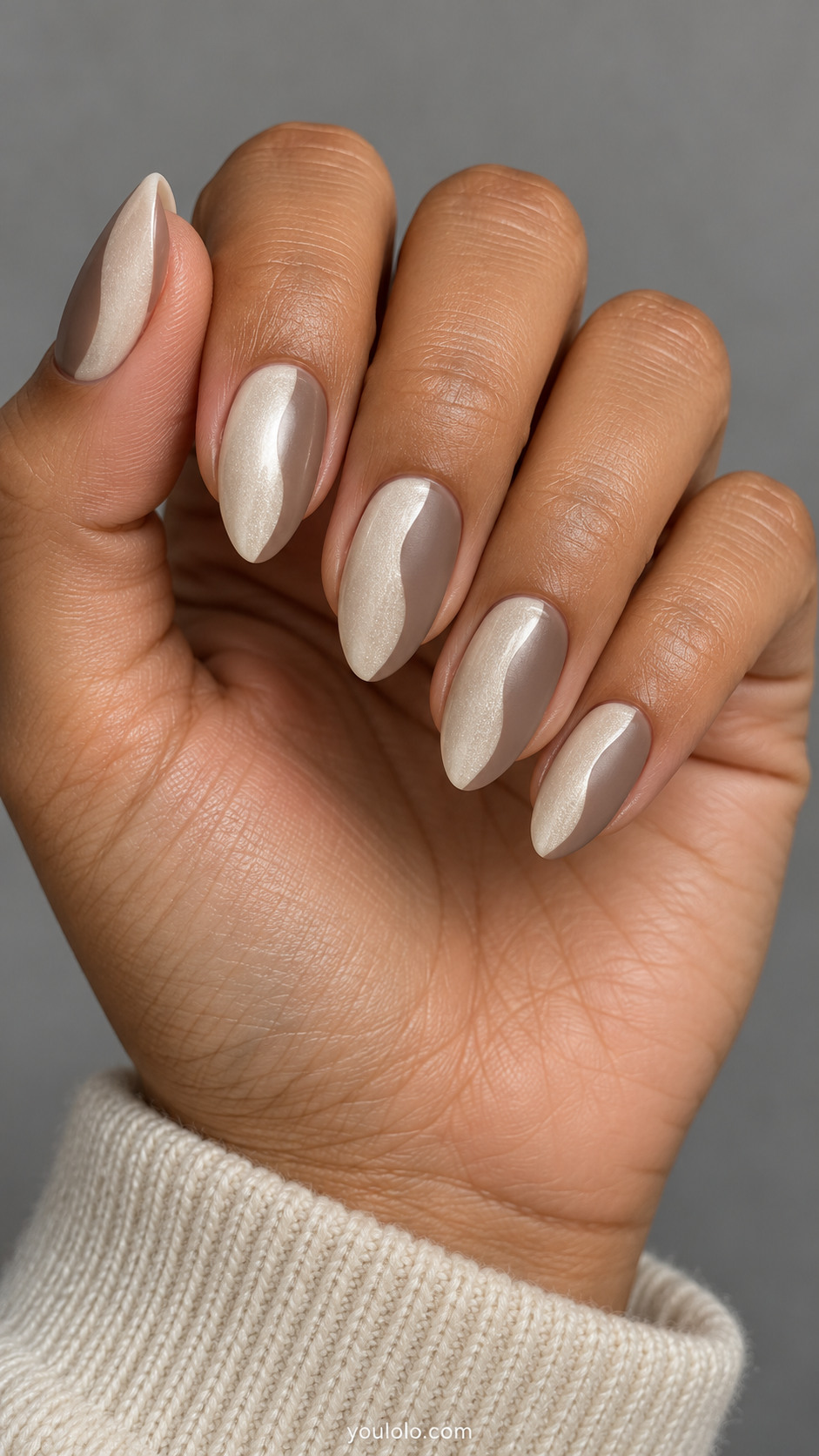
The contrast here comes from finish as much as color. A pearly ivory side catches a little light, while smooth taupe creates a quiet contrast. A curved division makes the split feel less severe than a straight line. Keep both halves broad enough to be visible; a very narrow sliver would lose the balance that makes this design work.
Salon brief: Nails split vertically into pearly ivory and smooth taupe with a gently curved border, no outline.
5. Tiny Cocoa Terrazzo
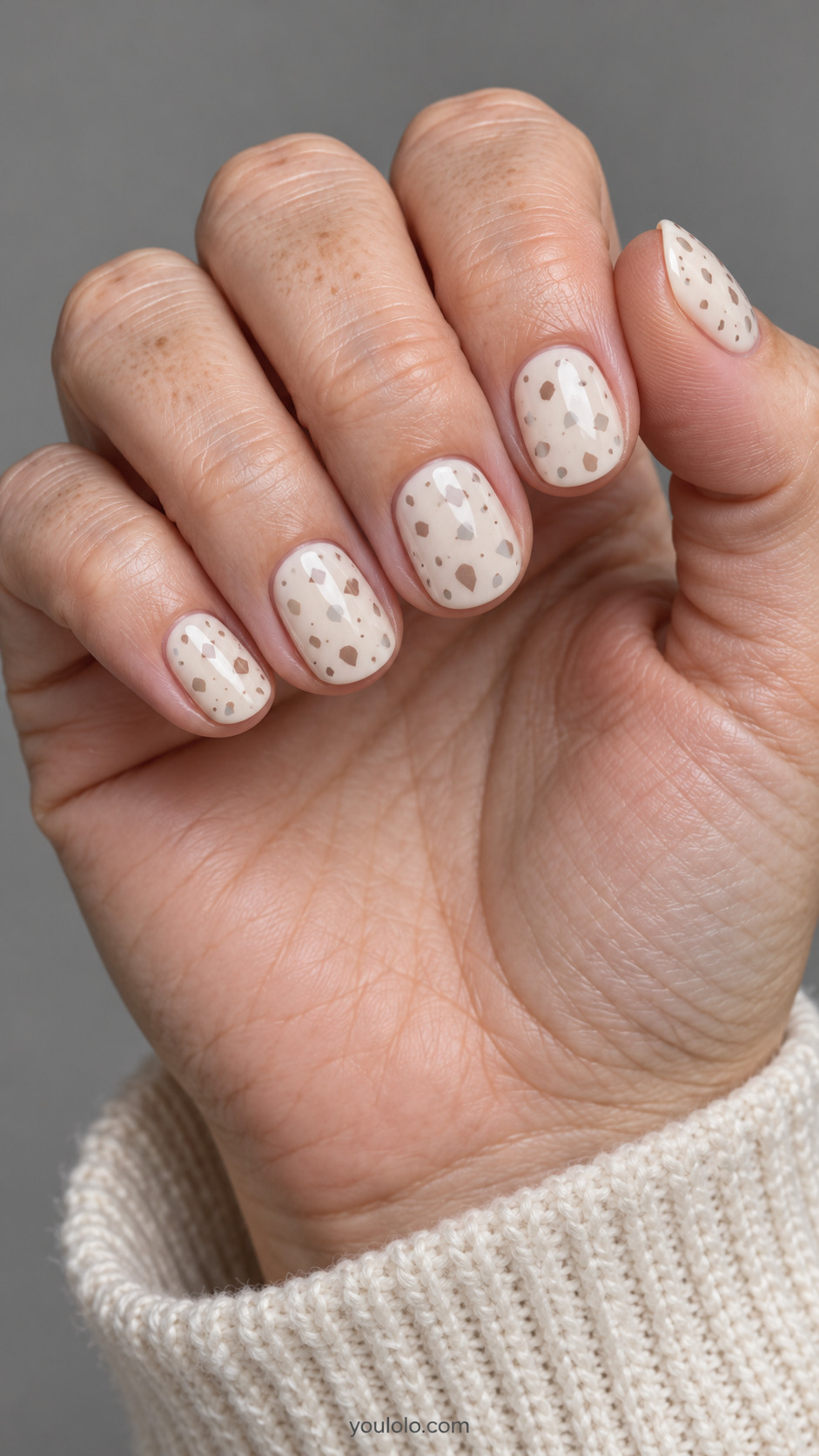
Small irregular chips give ivory nails a ceramic quality. Cocoa, taupe and pale gray keep the pattern neutral, while different sizes prevent it from looking like polka dots. Leave plenty of base showing between the marks. On short round nails, sparse placement makes the texture look deliberate and avoids the heavy effect of a densely filled print.
Salon brief: Warm ivory nails with sparse tiny irregular cocoa taupe and pale gray terrazzo chips painted flat, no glitter.
6. Mushroom Satin Medallions
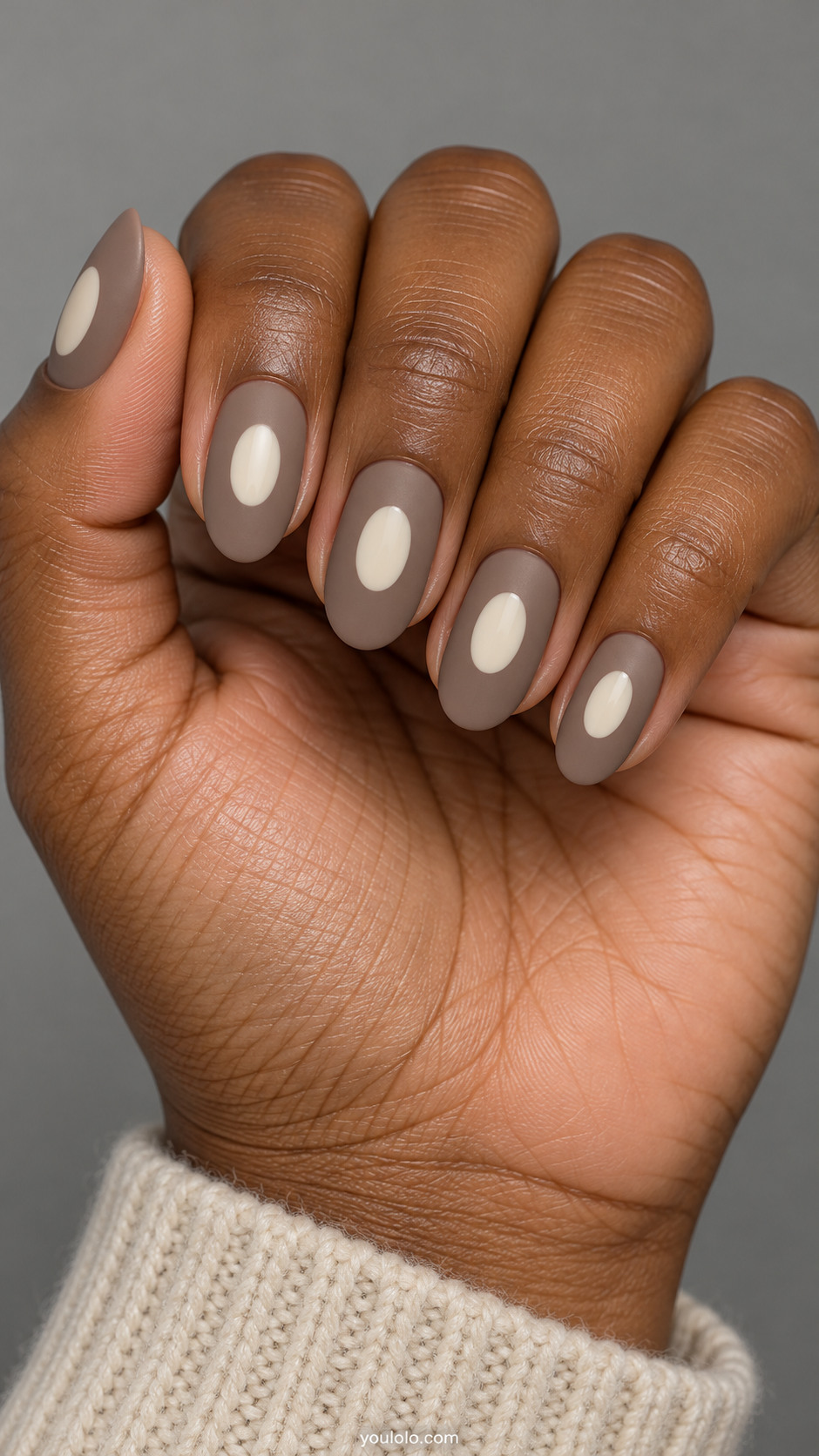
A small ivory oval makes mushroom taupe feel quietly graphic. The clean edge is important: this is a painted medallion rather than a blurred aura. Center the shape with generous space around it, and keep its finish gently glossy against the matte base. The repeated oval works especially well when it echoes the outline of the nail.
Salon brief: Matte mushroom taupe nails with one small glossy ivory oval medallion centered on each nail, clean hard edges, no gradient.
7. Espresso Satin Ribbons
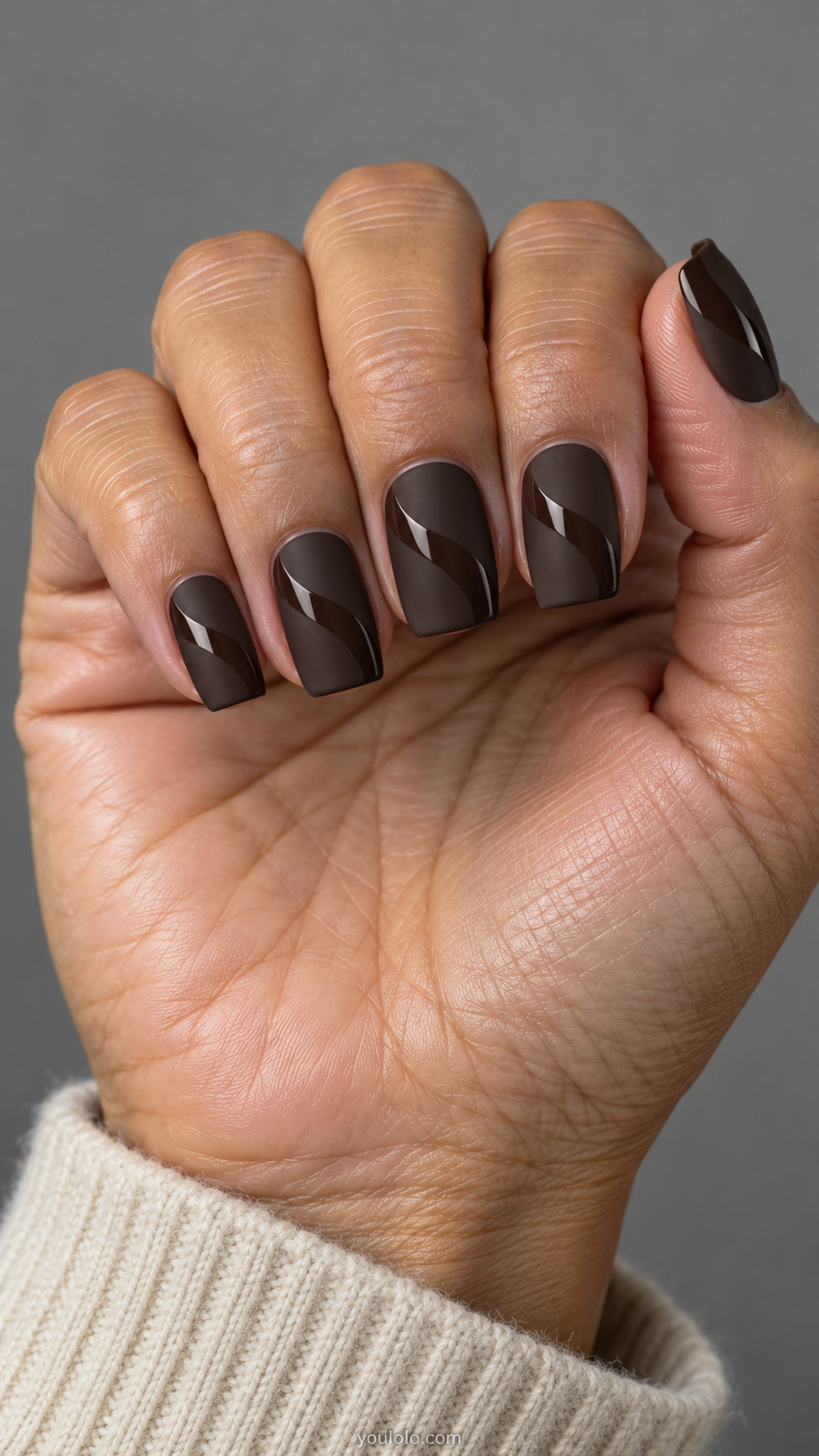
One glossy ribbon across matte espresso creates movement with almost no color contrast. Make the curve broad and unbroken so it reads clearly when the hand moves. A square shape gives the ribbon enough width without needing long extensions. This is a good choice for a dark winter manicure when you want detail that stays understated.
Salon brief: Matte espresso nails with one broad glossy espresso curved ribbon across each nail, same color finish contrast.
Soft winter textures and quiet shimmer
8. Ivory Punctuation
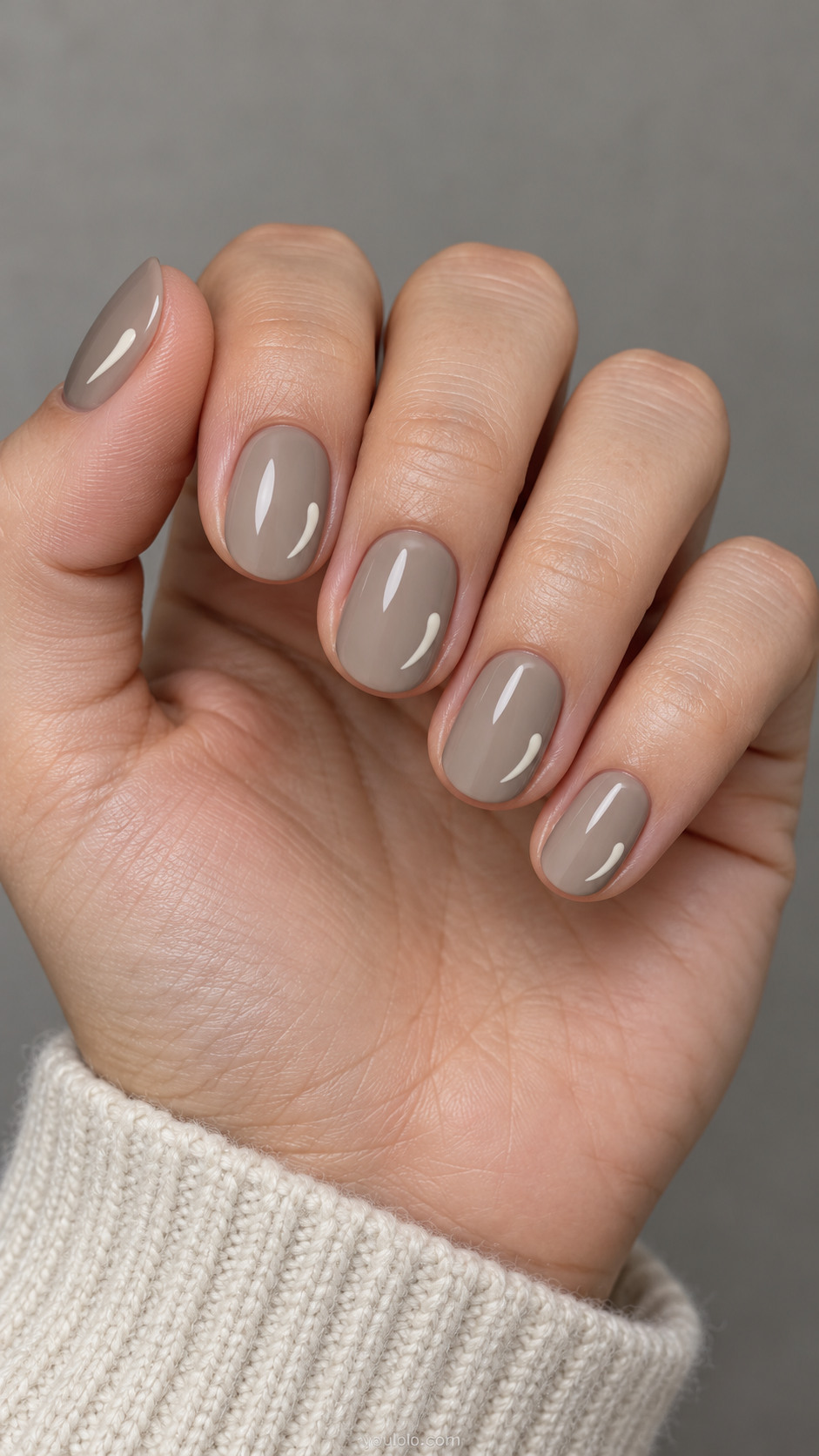
A tiny comma-shaped stroke gives each greige nail a little personality. Placing it near one side leaves the center clean and makes the detail feel lighter than a full abstract pattern. Use opaque ivory so the mark remains visible at this scale. The design is simple, but the spacing and smooth curve are what make it look finished.
Salon brief: Greige nails with a tiny ivory comma shaped brushstroke near one side of each nail, all flat.
9. Stonewashed Gray Cloud
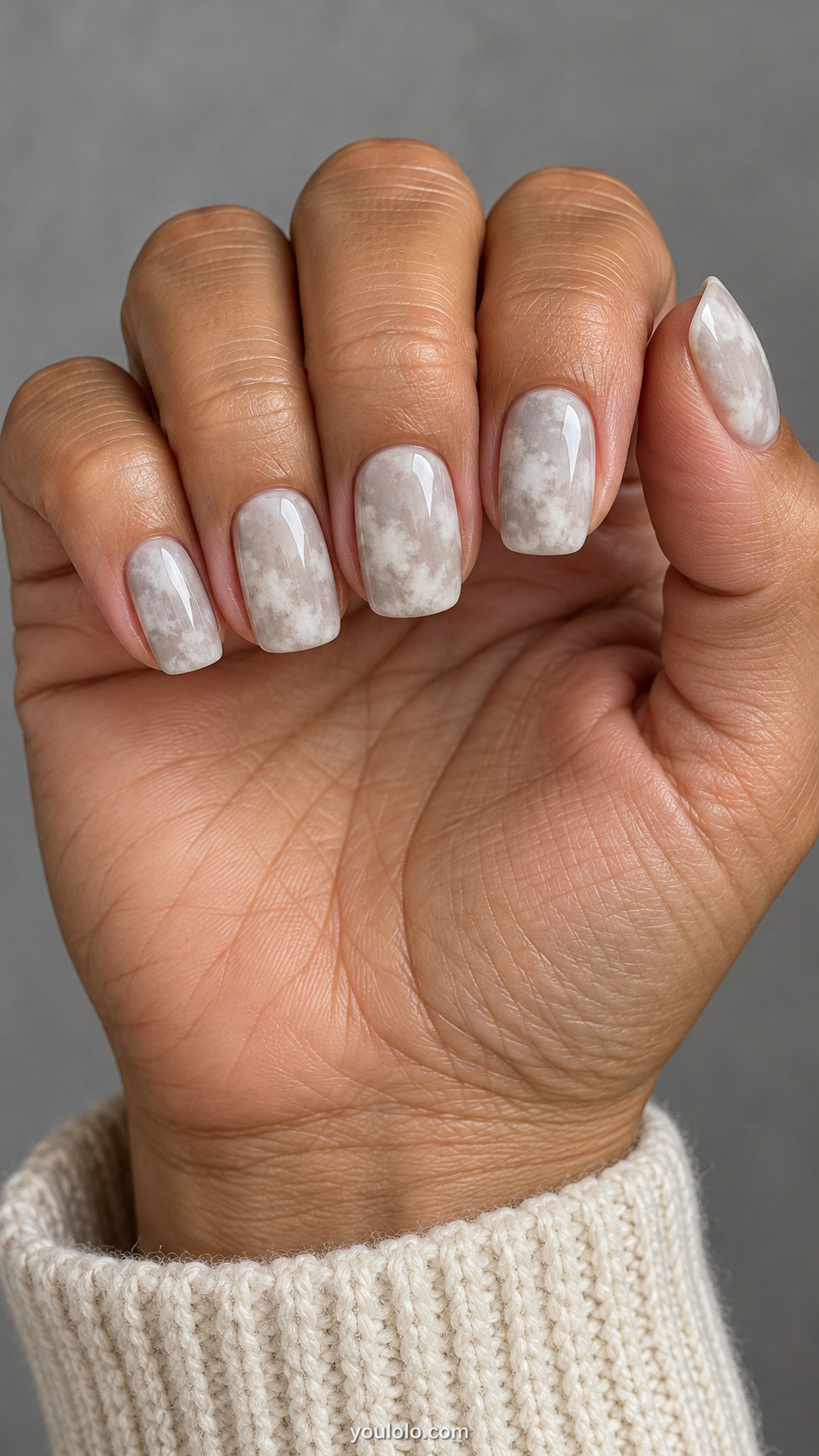
Soft mottling makes this manicure feel like pale stone rather than traditional marble. Off-white patches should merge gently into warm gray, with no harsh black veins or metallic cracks. The effect works across the whole hand because the contrast stays low. Ask for a glossy surface that remains smooth; the texture is painted, not physically rough.
Salon brief: Milky warm gray nails with softly mottled off-white stonewashed cloud patches, no sharp veins.
10. Champagne Dust Cuticle Fade

Fine champagne dust gives a sheer beige base a small amount of sparkle. Concentrating it near the cuticle reverses the usual glitter-tip placement and keeps the free edge light. Choose fine particles rather than chunky pieces if you want a quieter finish. The fade should become barely visible toward the tips, especially on short square nails.
Salon brief: Sheer beige nails with extremely fine champagne shimmer concentrated near cuticles fading toward clear tips, no chunky glitter.
11. Cocoa Windowpane Accent
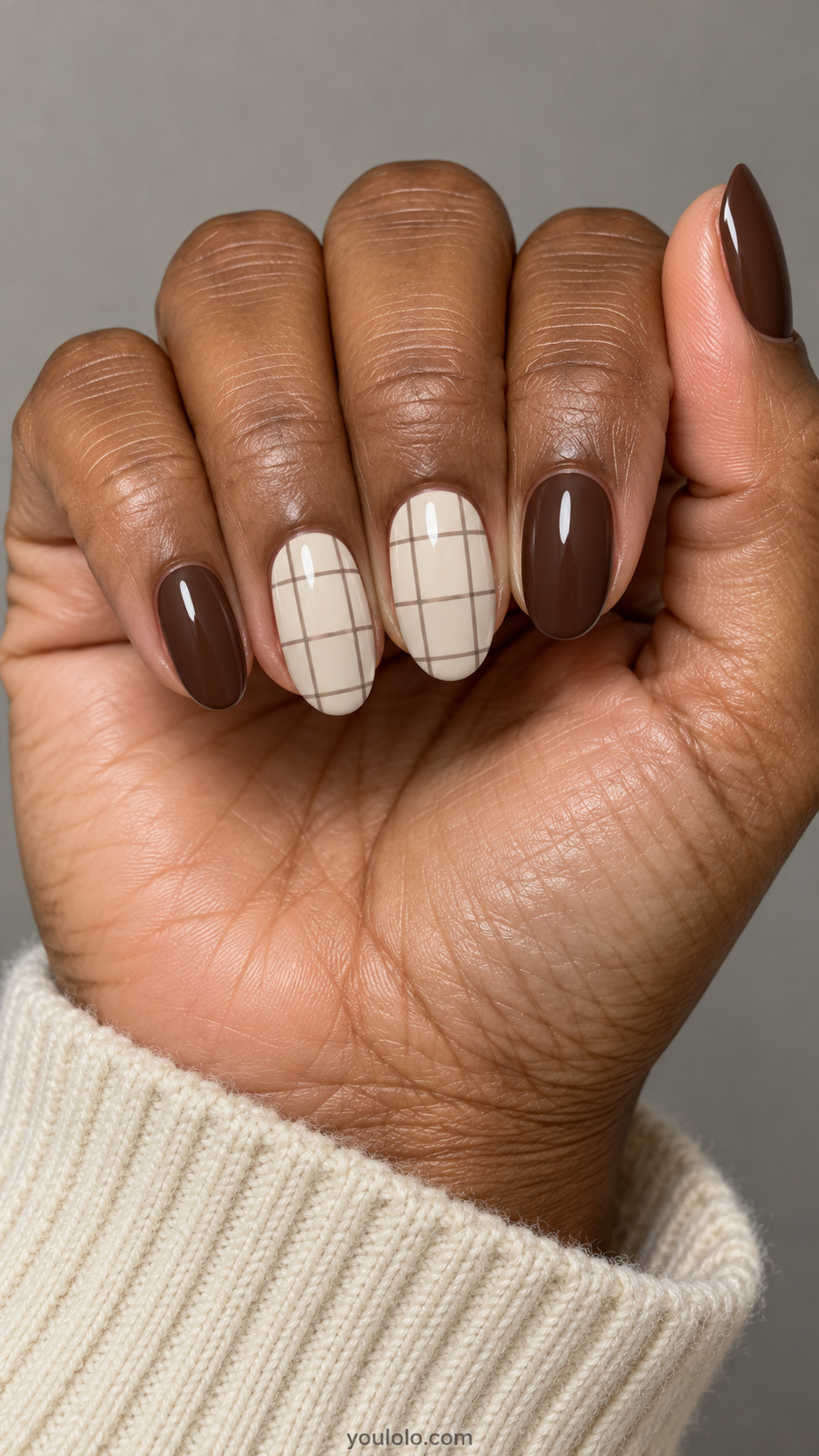
A widely spaced windowpane feels crisp against solid cocoa. Two cream accents are enough to introduce the pattern without covering every finger in checks. Keep the grid lines thin and the spaces generous, particularly on an oval shape. This borrows the calm palette of winter tailoring while staying flat, smooth and separate from raised sweater nail art.
Salon brief: Cocoa nails with two cream accent nails carrying fine widely spaced taupe windowpane grid, flat paint no sweater texture.
12. Frosted Glass Panels

A frosted center panel changes how the light moves across a sheer nail. Glossy side margins give the panel definition without an outline or extra color. Keep the finish transition clean so the effect feels architectural. A long coffin shape offers enough length for the vertical panel while keeping the decoration itself restrained.
Salon brief: Sheer neutral beige nails with one frosted matte translucent vertical panel centered on each nail and glossy clear side margins.
13. Greige and Cream Pebbles
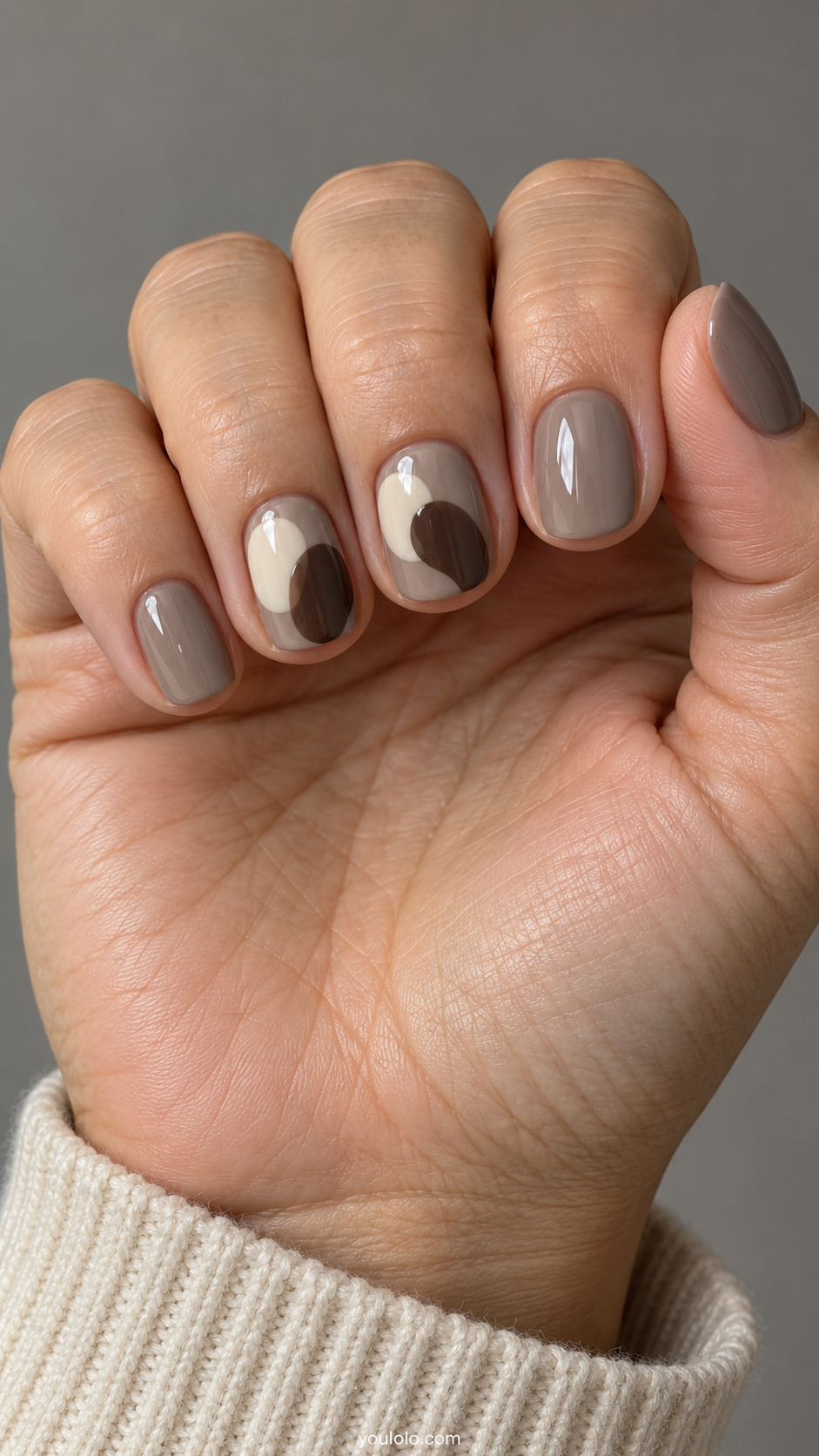
Rounded pebble shapes soften a greige manicure without turning it into a floral design. Cream and espresso overlap on two accent nails, giving the composition a clear light and dark balance. Leave space around the blobs so they remain distinct. Short squoval edges work well here because they echo the gentle geometry without adding another strong shape.
Salon brief: Greige nails with two overlapping irregular cream and espresso pebble blobs on ring and middle, rounded organic shapes.
14. Fine Silver Stitch Line
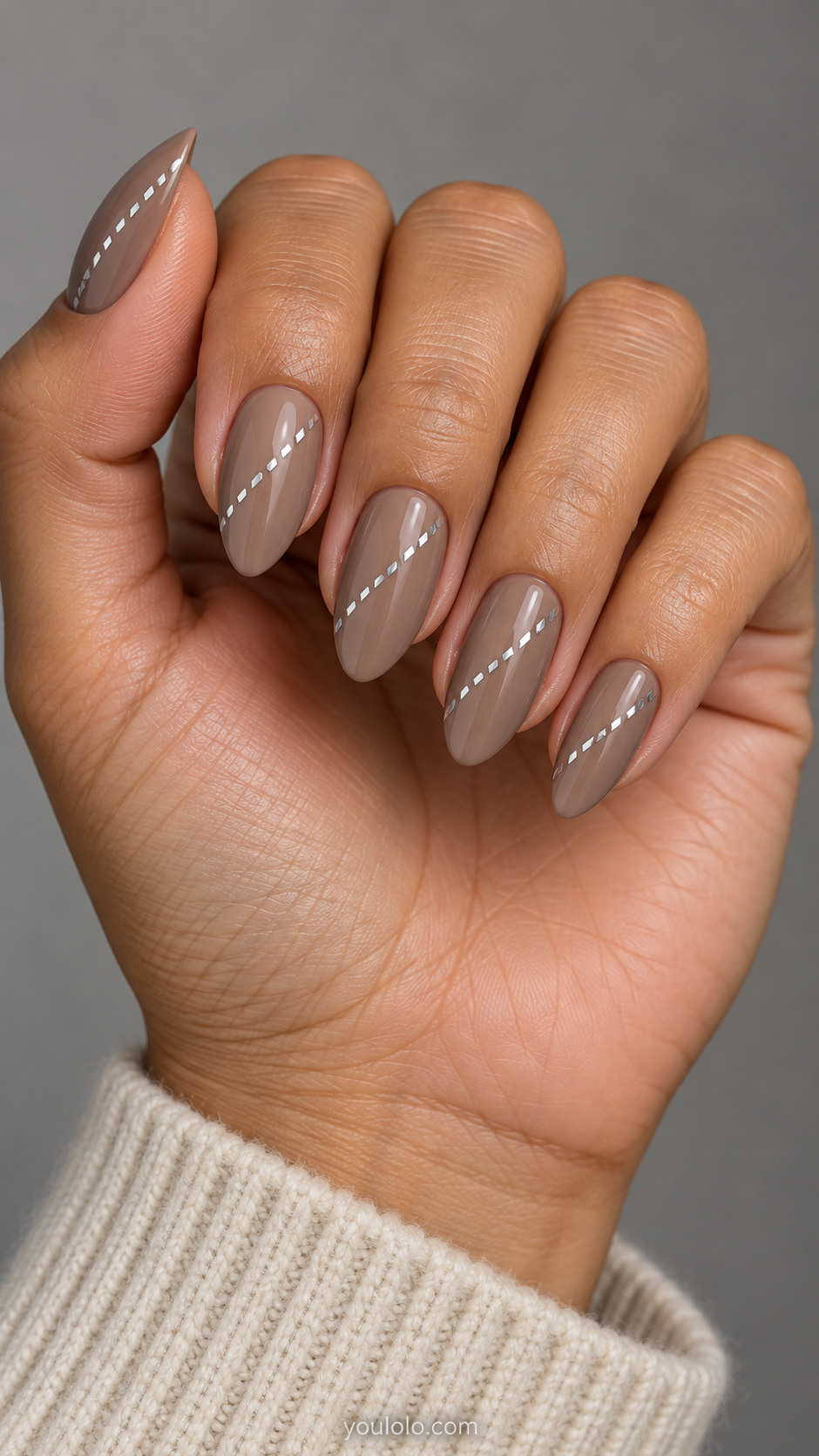
Tiny silver dashes create a delicate broken line across warm taupe. Unlike a continuous stripe, the gaps let the base remain visible and make the metallic detail feel lighter. Keep the dashes flat and evenly sized, with a slight change in angle between fingers. An almond shape gives the diagonal enough room without requiring a busy pattern.
Salon brief: Warm taupe nails with a single diagonal row of tiny flat silver dashes on each nail, sparse minimal no knit.
Gradients, tailoring and small graphic accents
15. Milky Mocha Ombre
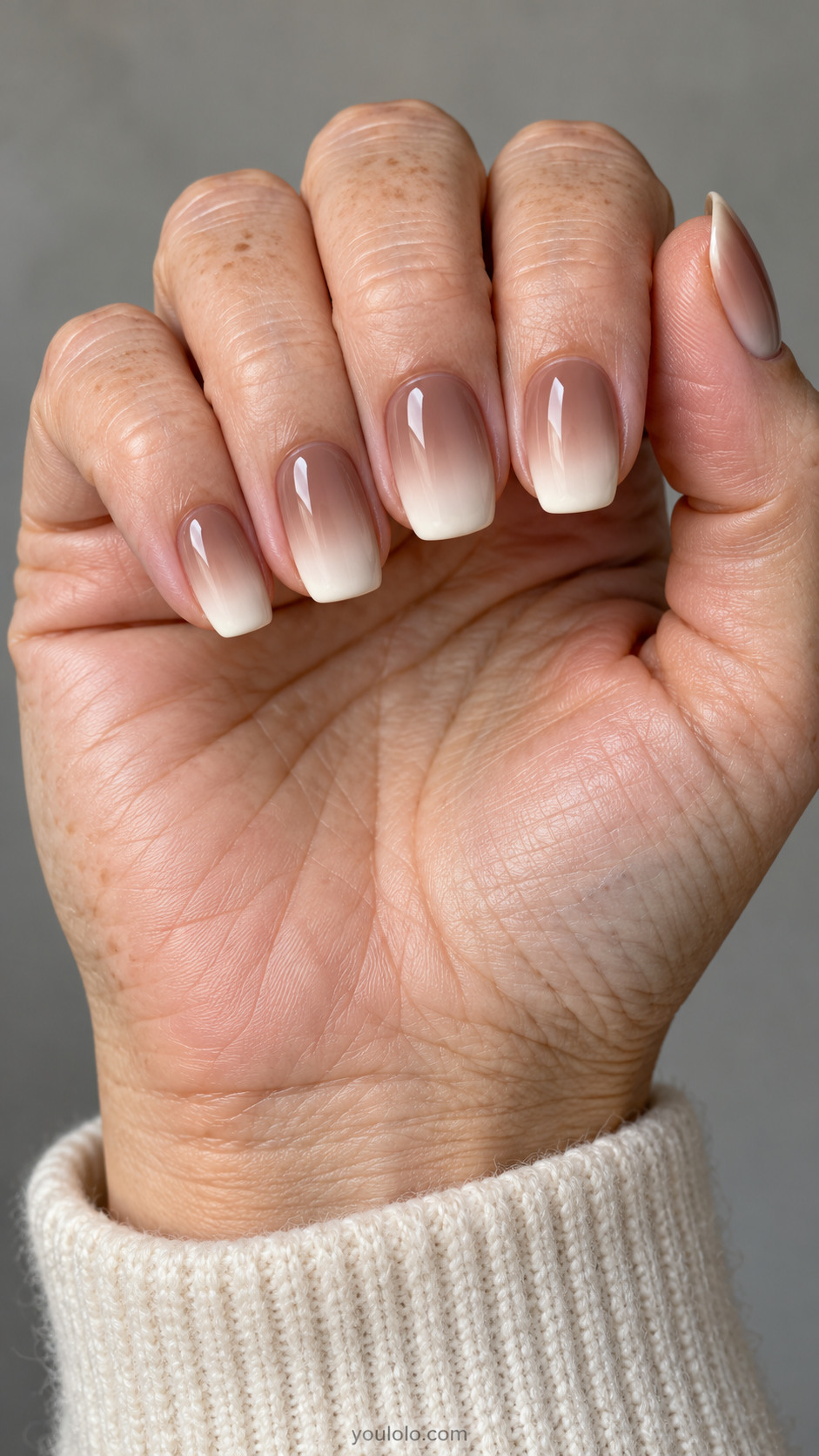
Mocha fading into milky ivory makes a neutral gradient feel warm enough for winter. A long, soft transition is more flattering here than an abrupt band of color. The rounded square shape keeps the pale tips looking clean. If your nails are short, ask for the lighter area to stay shallow so the darker base still has room.
Salon brief: Smooth warm mocha at cuticles fading to milky ivory tips on every nail, creamy gradient no glitter.
16. Minimal Charcoal Crescents

A floating charcoal crescent brings a graphic note to oat beige. Keep it off-center and detached from the nail edge so it reads as an abstract shape. Two accents are enough for the small round canvas. The remaining nails can stay plain; their quiet surface gives the dark shapes the space they need to feel intentional.
Salon brief: Oat beige nails with a small flat charcoal crescent floating off-center on middle and ring, no moon stars theme.
17. Ivory Ink Wash
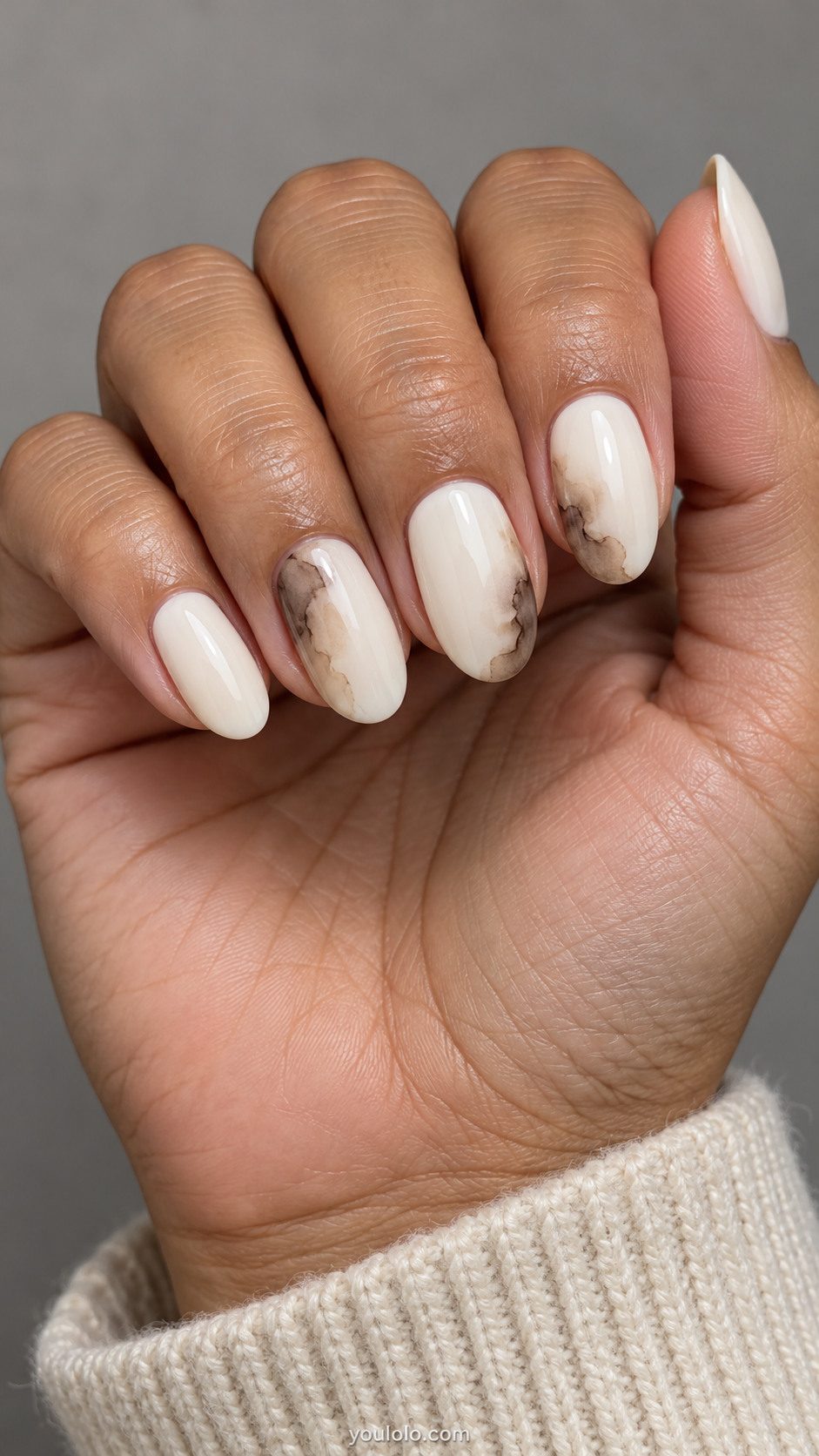
Soft brown pools at the sides give ivory nails an ink-wash effect. The edges should fade rather than stop sharply, with a few deeper patches creating depth inside the wash. Keep the pattern limited to three nails so the set remains light. This is a subtle way to add artwork without relying on metallic details or recognizable motifs.
Salon brief: Ivory nails with translucent smoky brown watercolor pools at random side edges on three accents, delicate soft-edged ink wash.
18. Taupe Micro Houndstooth
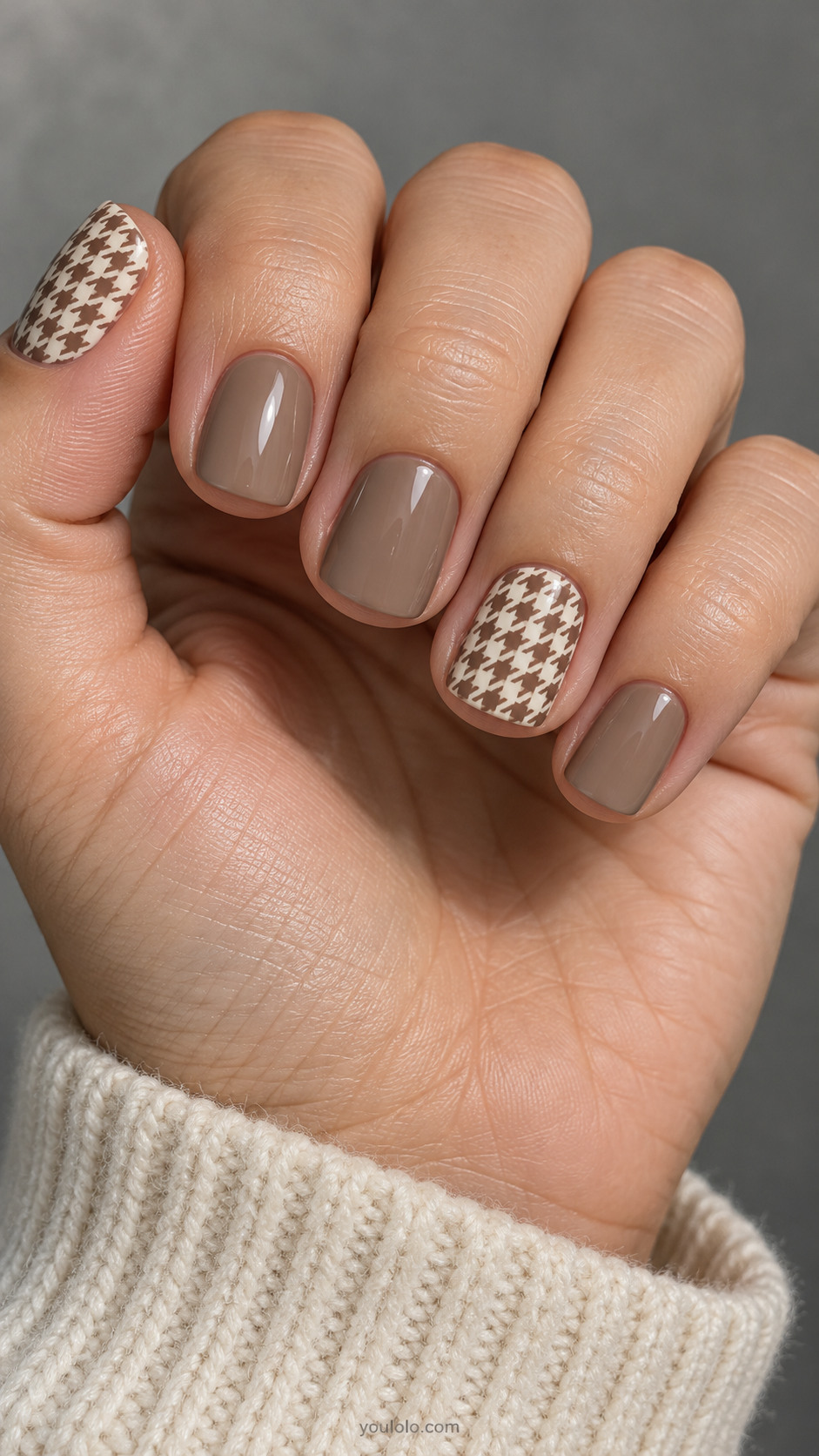
A tiny houndstooth print gives this neutral set a tailored feeling. Cocoa on ivory keeps the contrast softer than black and white, while plain taupe connects the accent nails to the rest. The pattern needs crisp edges to stay recognizable. If the nail is very small, use a slightly larger repeat instead of packing in more miniature shapes.
Salon brief: Taupe nails, ring and thumb ivory base with tiny neat cocoa houndstooth flat printed pattern, others plain taupe.
19. Pearl Pin Trio

Three little pearl-white dots add detail without bulky beads. Keeping them flat makes this a smooth, minimal design, and placing the clusters near a corner leaves most of the milky base untouched. Vary the dot sizes slightly so the grouping looks intentional. A short oval shape suits the gentle detail and keeps the overall appearance very soft.
Salon brief: Milky beige nails with three tiny flat pearl-white dots clustered near one corner of each nail, no actual raised beads.
20. Espresso and Oat Arcs
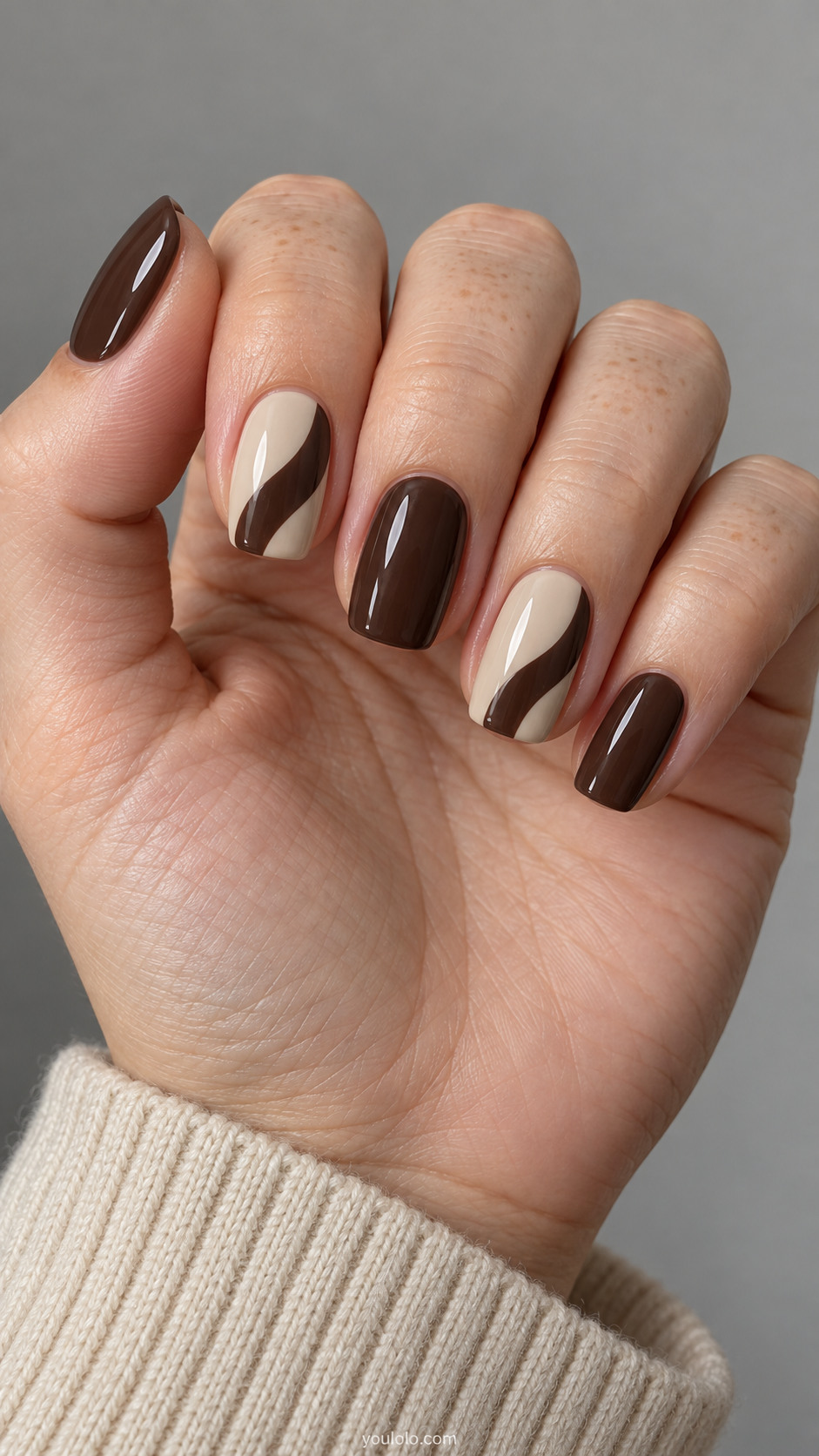
A broad espresso arc gives oat nails a stronger graphic rhythm. The curve enters from the side instead of following the tip, making the composition feel different from a French manicure. Alternate the artwork with solid espresso nails to create a clear pattern across the hand. Keep the arc edge smooth and the lighter space generous.
Salon brief: Oat nails with broad espresso curved arc entering one side on alternate nails, remaining solid espresso, no French tips.
21. Icy Greige Fine Crosshatch
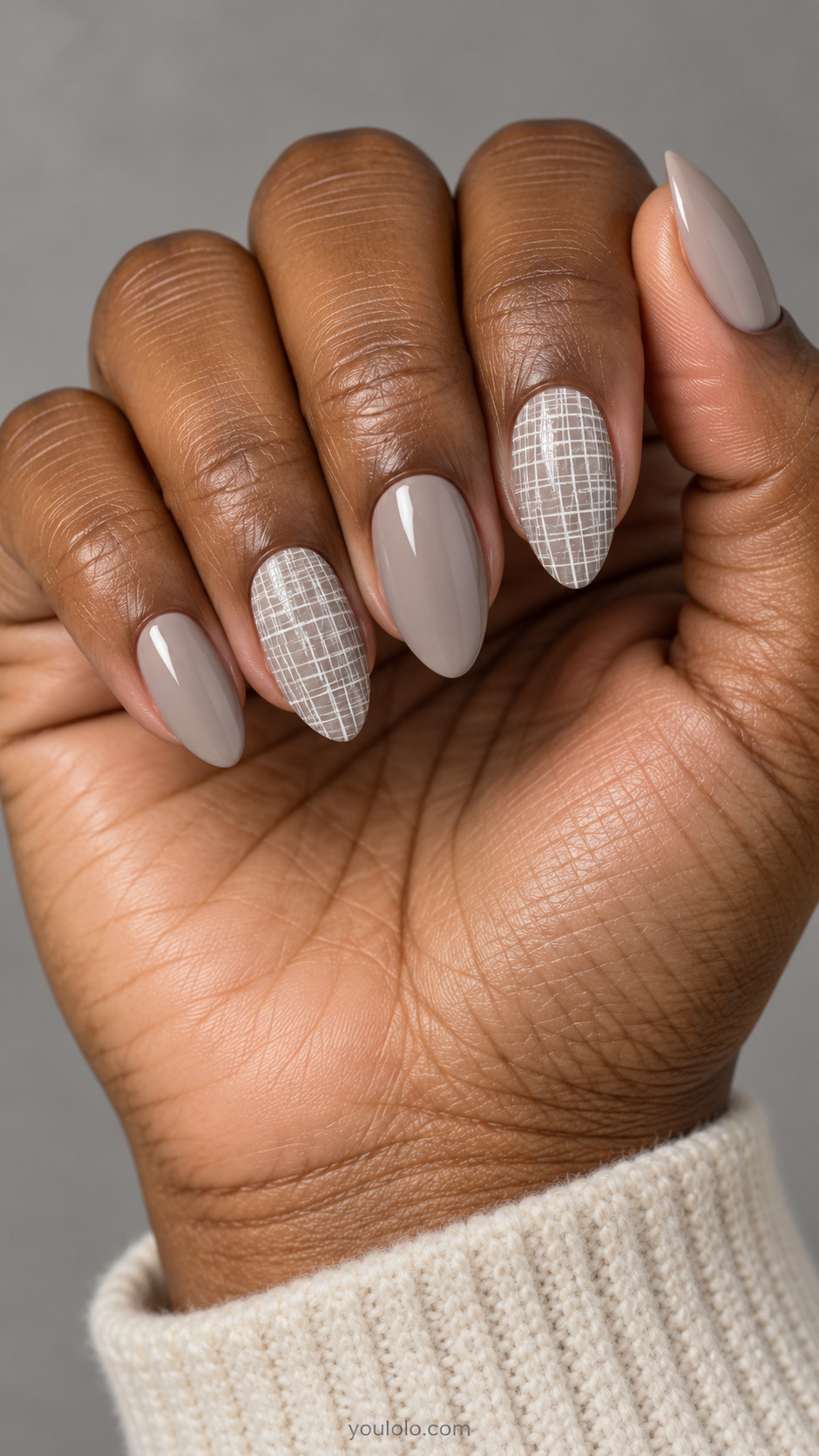
Fine white crosshatching gives cool greige a light, almost woven appearance. Keep the lines thin and irregular enough to feel like brushwork rather than a rigid grid. Two accent nails are enough to show the texture while preserving the quiet base. An almond shape softens the intersecting marks, and a smooth finish keeps the artwork comfortably flat.
Salon brief: Cool greige nails with two accent nails covered in extremely fine irregular white crosshatch brush lines, flat texture no knit no shimmer.
Distinctive neutral patterns to save
22. Oatmeal Speckled Half Panel
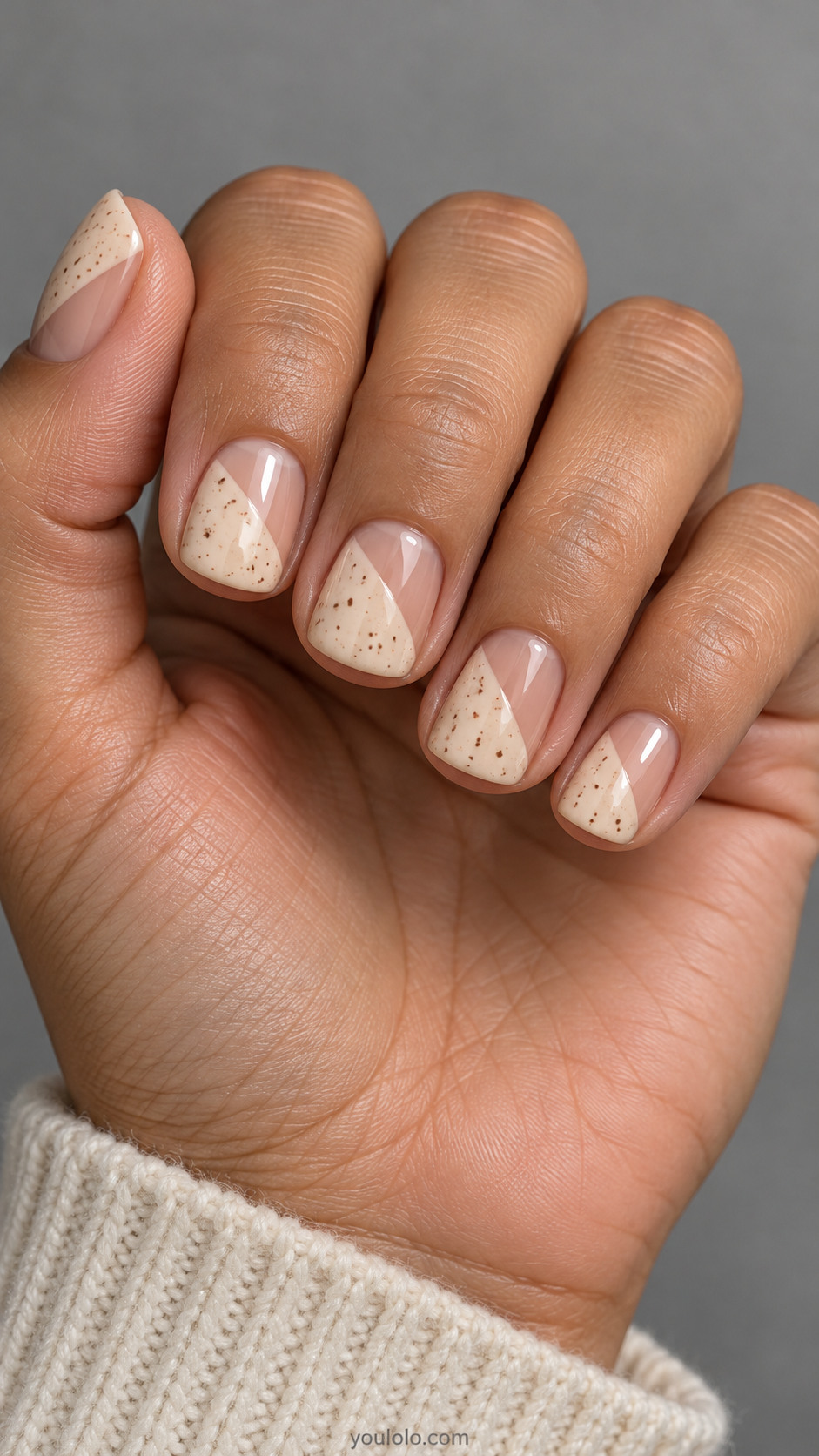
Separating a speckled cream area from sheer beige gives the pattern a clean structure. Tiny cocoa dots stay on the opaque side, leaving the other half quiet. The diagonal division adds movement without another decorative element. Keep the speckles sparse and irregular; a dense scatter would hide the contrast between the two surfaces on short nails.
Salon brief: Each nail half warm cream half sheer beige divided diagonally, tiny sparse cocoa speckles only in cream half.
23. Soft Taupe Ribbon Bow
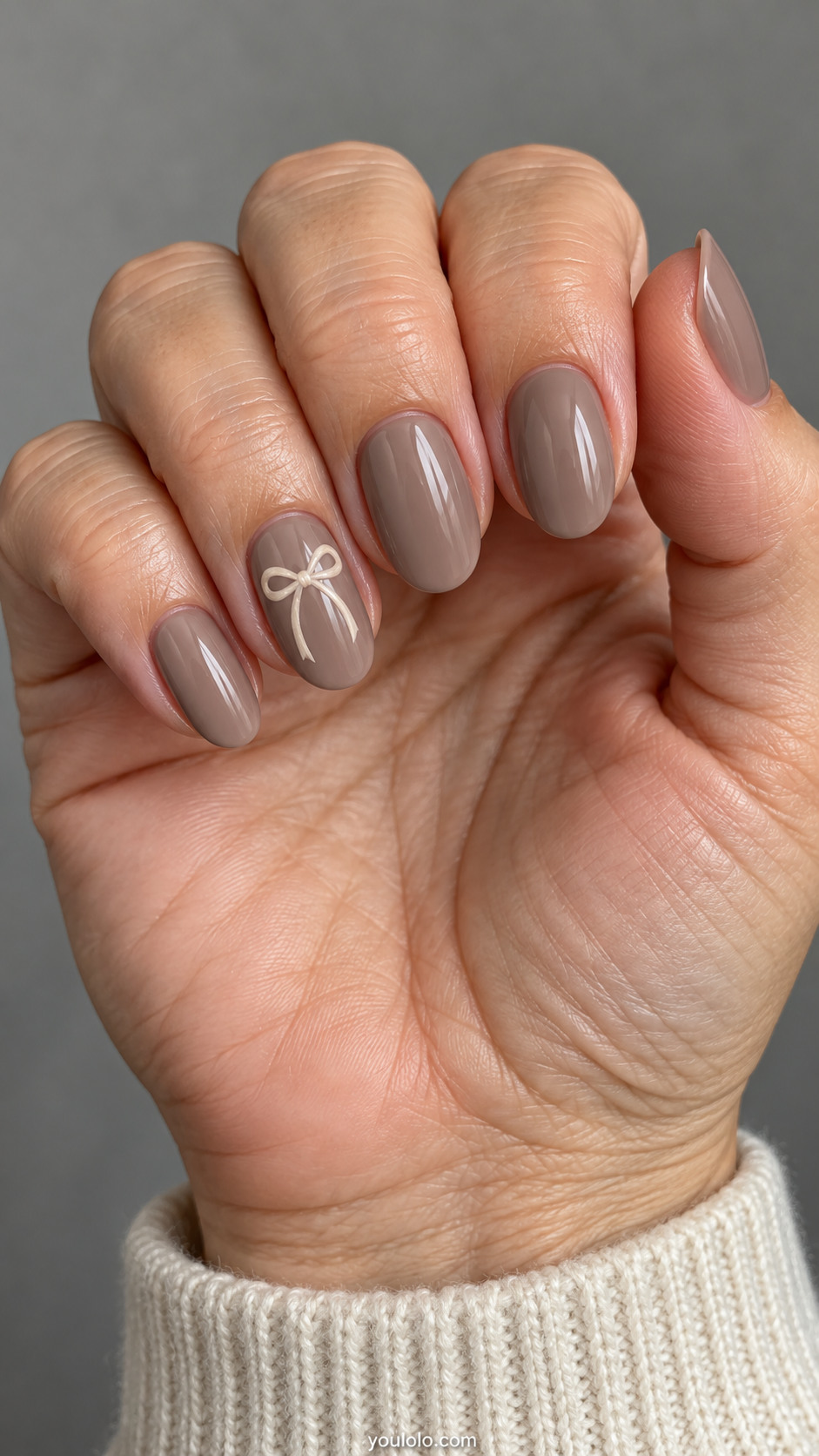
One fine ivory bow makes taupe feel a little more dressed up. A fine gel-painted version adds only a little relief, avoiding the bulk of a large charm. Give the loops enough open space to remain readable, and let the tails taper. Plain companion nails let the tiny detail stand out without making the whole set feel overly sweet.
Salon brief: Taupe nails, ring only small ivory gel-painted ribbon bow with two tapered tails, other nails plain taupe.
24. Stone and Espresso Swoosh
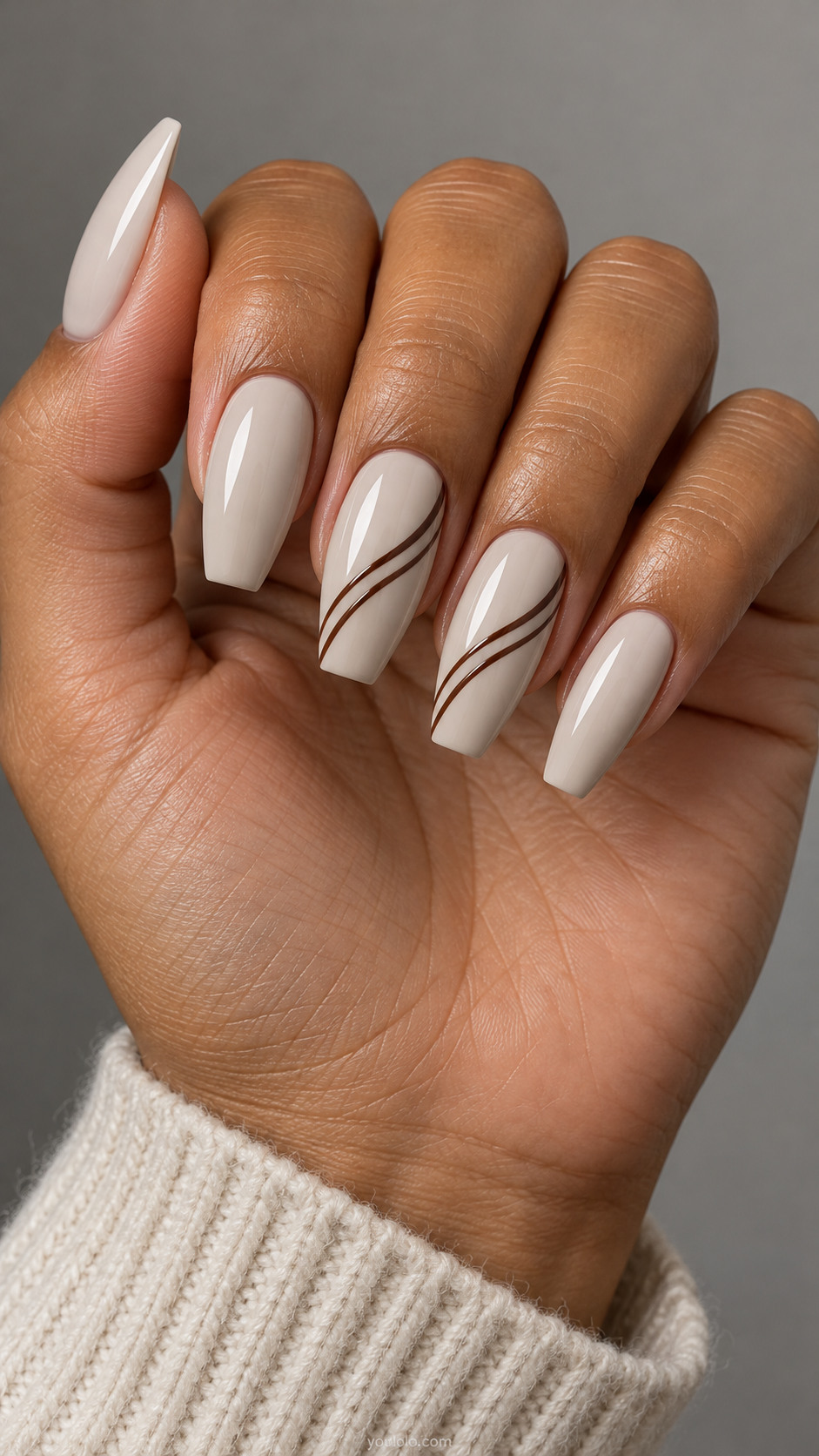
Two parallel swooshes give pale stone nails a deliberate sense of movement. Keep a narrow, even gap between the lines so they read as a pair rather than one thick mark. Limiting the artwork to two fingers preserves the calm base color. A long coffin shape provides a straight-sided canvas that balances the curved drawing.
Salon brief: Pale stone nails with two thin parallel espresso swoosh lines sweeping diagonally across middle and ring, remaining plain stone.
25. Matte Sand with Satin Dots
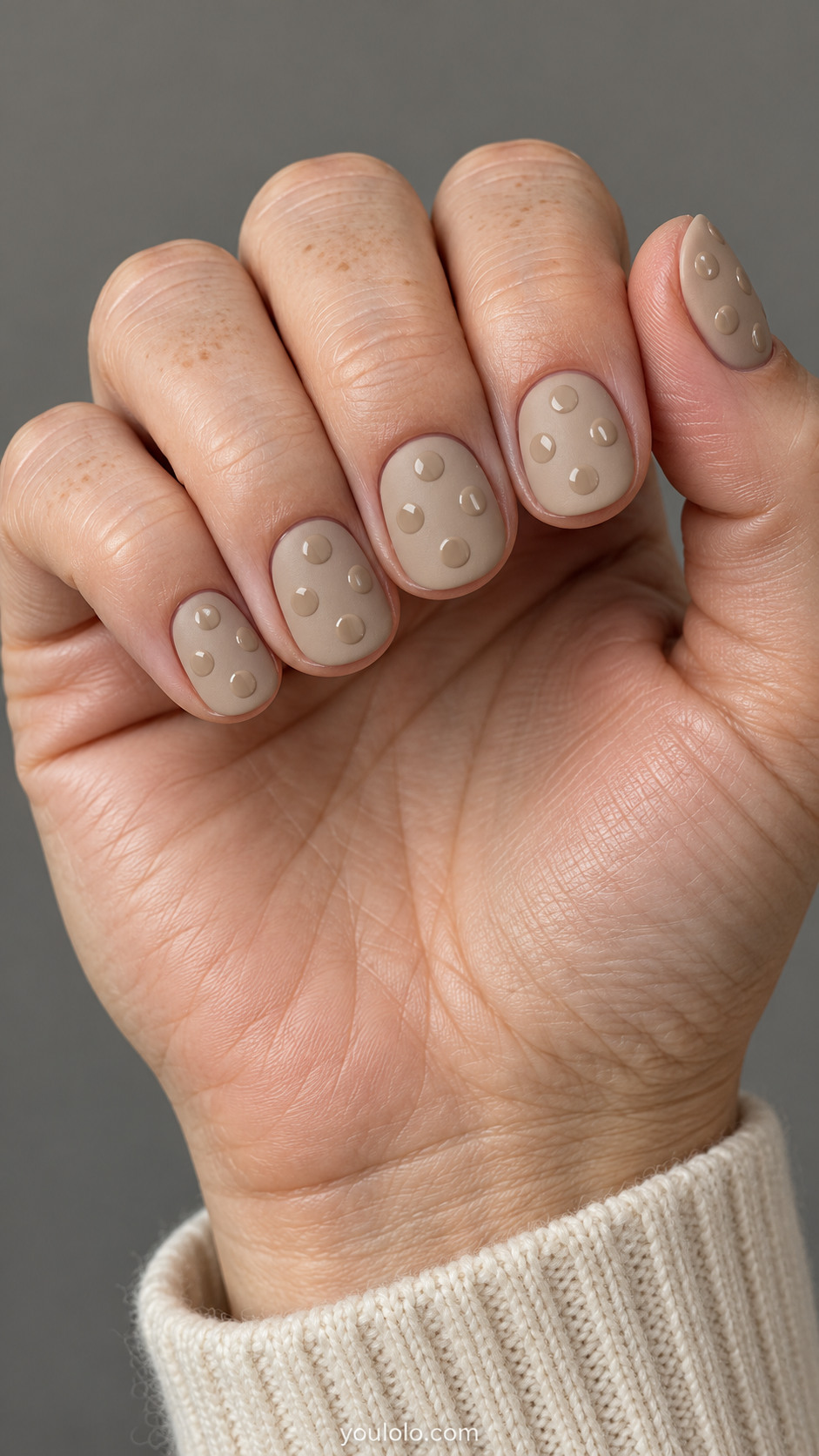
Glossy circles on matte sand create a pattern that appears gradually as the hand moves. The dots can be larger than ordinary polka dots because the contrast comes only from finish. Space them apart so each circle catches light separately. Short round nails keep this playful texture understated, especially when the polish shade stays close to your preferred neutral.
Salon brief: Matte sand beige nails with four large spaced glossy same-color circles on each nail, finish contrast only.
26. Mocha and Ivory Mosaic
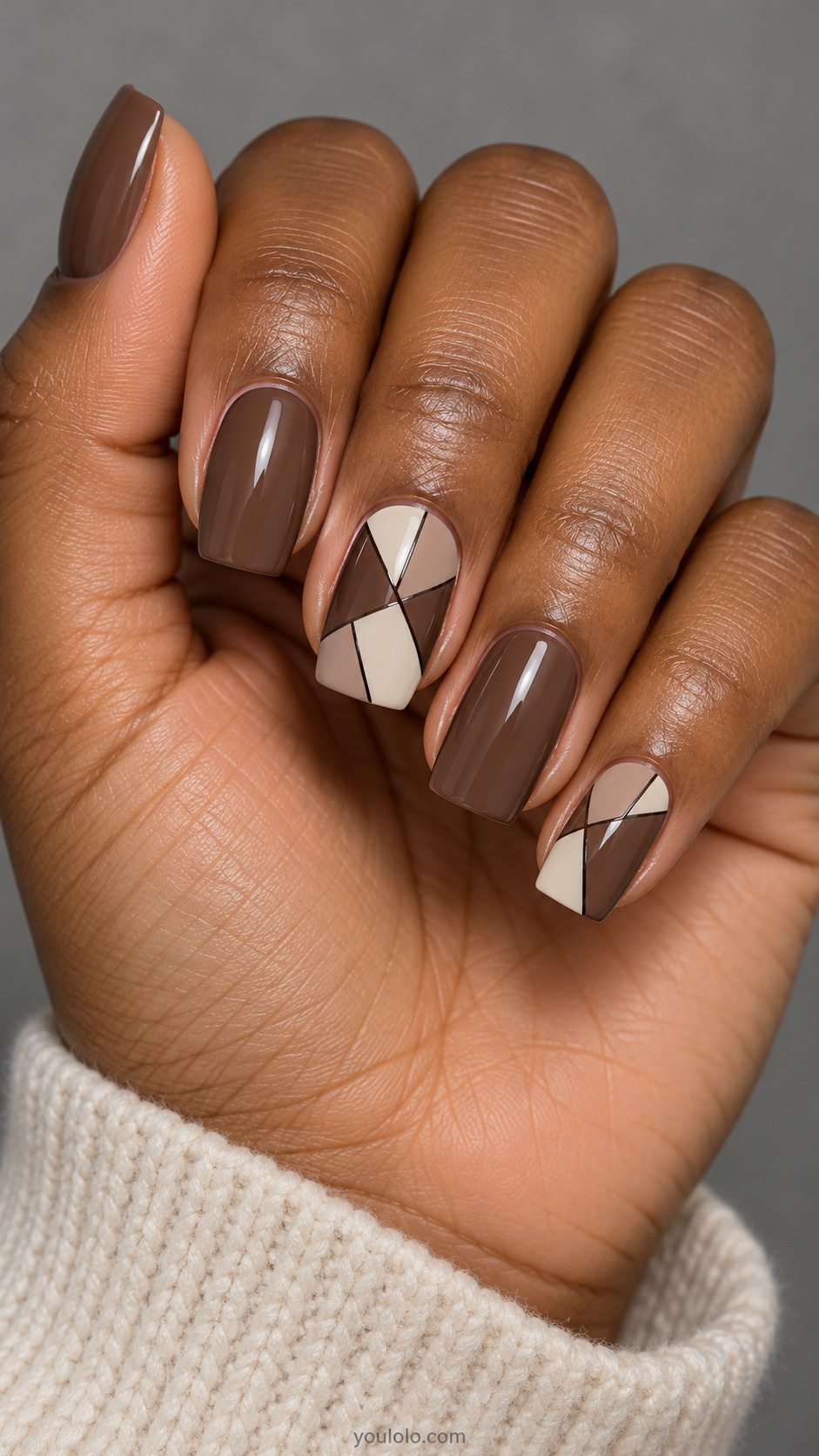
An irregular mosaic adds structure without repeating a standard checkerboard. Ivory, taupe and mocha polygons are separated by fine espresso lines, making the accents feel like small ceramic tiles. Keep the other fingers solid mocha to avoid visual overload. A square nail gives the shapes room, but the individual pieces should remain broad rather than crowded.
Salon brief: Two accent nails geometric mosaic of irregular ivory taupe mocha polygons divided by very fine espresso lines; others plain mocha.
27. Sheer Taupe Feathered Edge
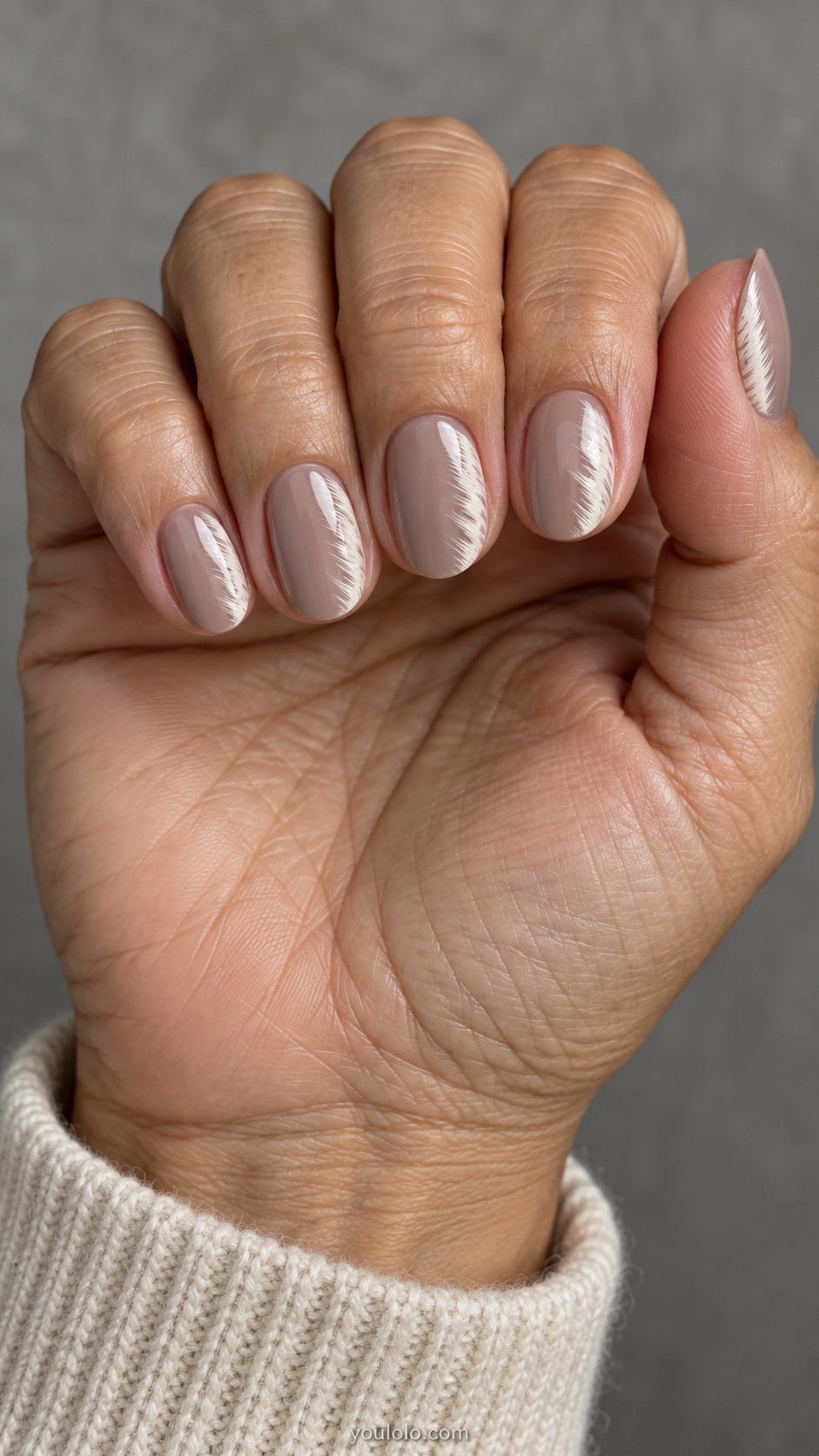
A feathered ivory edge gives sheer taupe a gentle painted texture. The fine strokes should taper into the base instead of forming a solid stripe. Placing the fringe along one side keeps the center clear and makes the effect wearable on short nails. Treat it as abstract brushwork, with no need for a literal feather motif.
Salon brief: Sheer taupe nails with soft ivory feathered brush fringe along one side edge only, abstract fine brush texture no actual feathers.
28. Quiet Bronze Corner

A small brushed-bronze corner gives smoky beige a warm point of light. The triangle should stay compact, leaving most of the matte nail untouched. A brushed effect feels softer than a mirror finish and works well with a neutral winter wardrobe. Repeat the placement across the hand for a clean ending to the set, without adding gems or extra lines.
Salon brief: Matte smoky beige nails with small flat brushed bronze triangular corner accent at one lower side of each nail, no jewels.
How to choose a neutral winter manicure
Compare warm and cool neutrals before deciding on the artwork. Oat, sand and mocha feel warm; mushroom, stone and greige can look cooler. There is no single neutral that suits everyone. Hold a sample near your hand and choose the contrast you like, rather than trying to match your skin exactly.
Keep the pattern in proportion
Short nails usually benefit from a single accent, generous spacing or a simple edge detail. Medium nails have room for a grid, mosaic or longer gradient. If a design looks crowded on your own nail, reduce the number of marks rather than squeezing every part into a smaller area.
Talk about finish as well as color
Matte, satin, glossy and pearlescent surfaces can make the same neutral look very different. Ask to see the finish in normal light. For mixed finishes, confirm which areas should stay matte and which should reflect light; this is essential for the ribbon, panel and dotted designs above.
Neutral winter nails: frequently asked questions
Which neutral nail colors feel right for winter?
Taupe, oat, ivory, espresso, smoky beige and stone gray are useful starting points. A deeper brown adds contrast, while milky and pearly finishes keep a pale manicure from looking flat.
Can neutral winter nails have nail art?
Yes. Fine lines, tiny dots, stone effects and simple geometric shapes can all stay understated when the colors are close together. One or two accent nails offer an easy way to control how detailed the set feels.
Do I need long nails for these designs?
No. Many of these looks use short round or square nails. Larger patterns and extended gradients need more space, but a nail artist can simplify the artwork or choose just one accent for a shorter canvas.
What makes these different from sweater nails?
This collection focuses on color, painted detail and finish rather than raised cable patterns. If you want a tactile knit effect, explore sweater nails as a separate direction.
Can I wear these after winter?
Yes. The designs avoid holiday symbols, so they can work beyond the season. Choose a lighter base for a softer look or keep espresso and bronze when you prefer deeper contrast.
For a cooler palette, compare these looks with our winter nail designs. Save the image and salon brief together so the intended shape, placement and finish stay clear.