The Best Fluffy Pancakes recipe you will fall in love with. Full of tips and tricks to help you make the best pancakes.


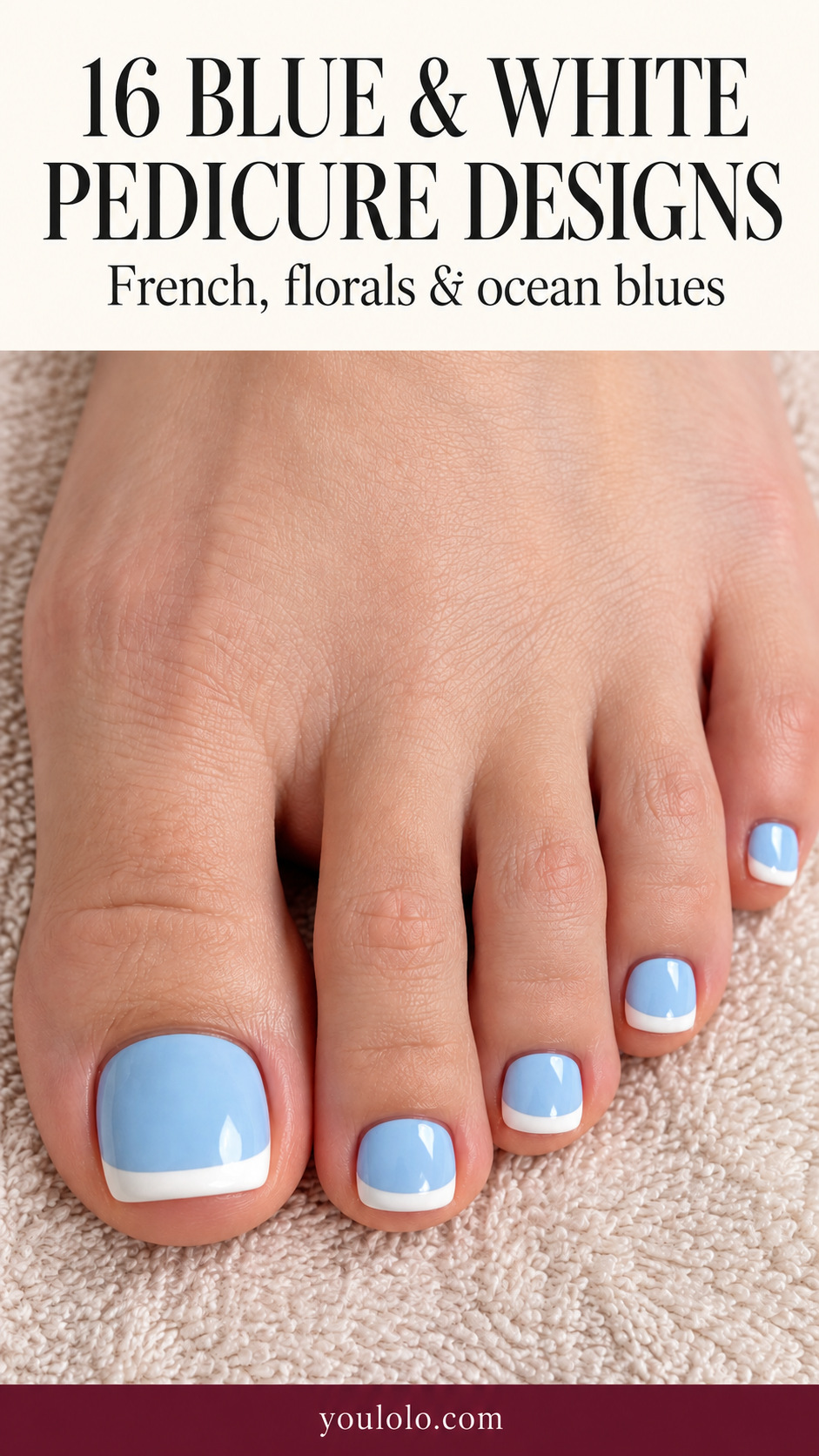
A blue and white pedicure can look crisp and nautical, soft and floral, or airy enough for a simple pair of sandals. The same two colors support very different designs, so choosing a recognizable motif is more useful than asking for a vaguely beachy finish.
The 16 references below keep toenails short and place the detailed artwork where it has room to read. You will find French tips, porcelain flowers, clouds, checks and waves. Each design includes a practical note about which part of the reference to preserve when adapting it to your own nails.
Visual note: the original AI-generated manicure and pedicure concepts are inspiration images, not salon photographs or product tests. Ask your artist to adapt the design and materials.
Find Your Blue: Powder, Cobalt or Navy
Powder blue and white create a gentle contrast. Cobalt makes daisies and dots stand out, while navy gives stripes a stronger nautical character. Periwinkle has a violet cast; it is a different color choice from a cool sky blue even when both are light.
Look at the complete foot before concentrating on the big toe. The smaller toenails establish the overall color, while the big toe carries most of the drawing. A detailed floral accent with plain smaller nails can look more coherent than five different miniature pictures.
View a saved reference at a smaller size to judge the motif. If fine details disappear, ask for fewer petals, broader stripes or a simpler wave. Keep the toenail shape and visible free edge realistic for the result you intend to wear.
French Tips and Floral Blues
1. Baby Blue with White French Tips
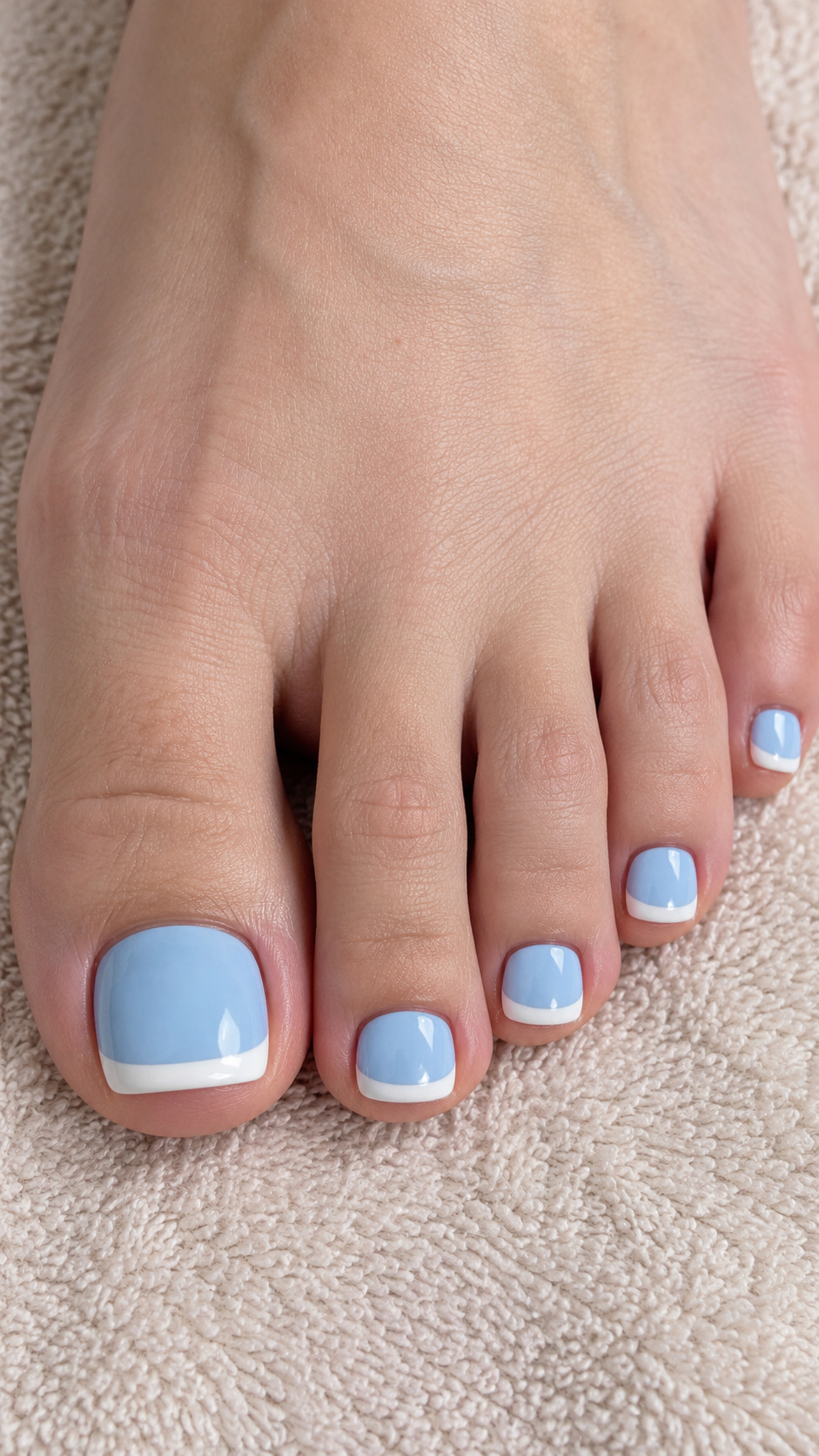
The blue base makes a white French pedicure feel fresh while preserving its familiar outline. A narrow tip stays proportionate on short toenails. Ask the artist to follow each nail's width rather than paint the same thick stripe across every toe. This is the cleanest two-color option before moving into patterned accents.
Pedicure note: Use pale blue bases with slim white tips.
2. Cobalt Blue with White Daisies
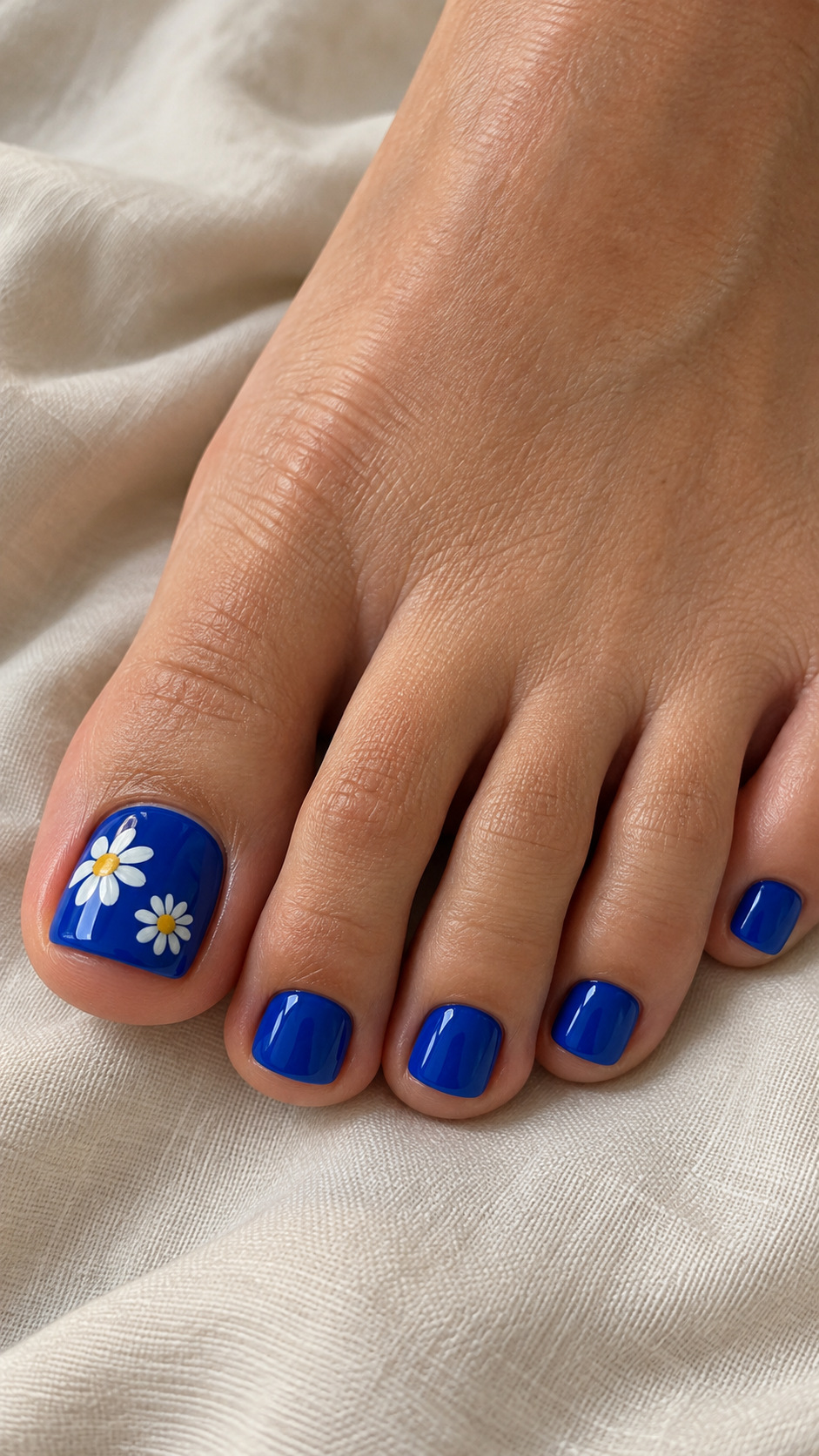
White daisies stand out against cobalt. Keeping the flowers on the big toe gives them space for recognizable petals while the smaller toes stay simple. The bright contrast pairs visually with white sandals or denim. Yellow centers add a small warm detail without changing the blue-and-white character of the pedicure.
Pedicure note: Paint the daisies on the big toenail and keep the others cobalt.
3. White with Blue Porcelain Florals
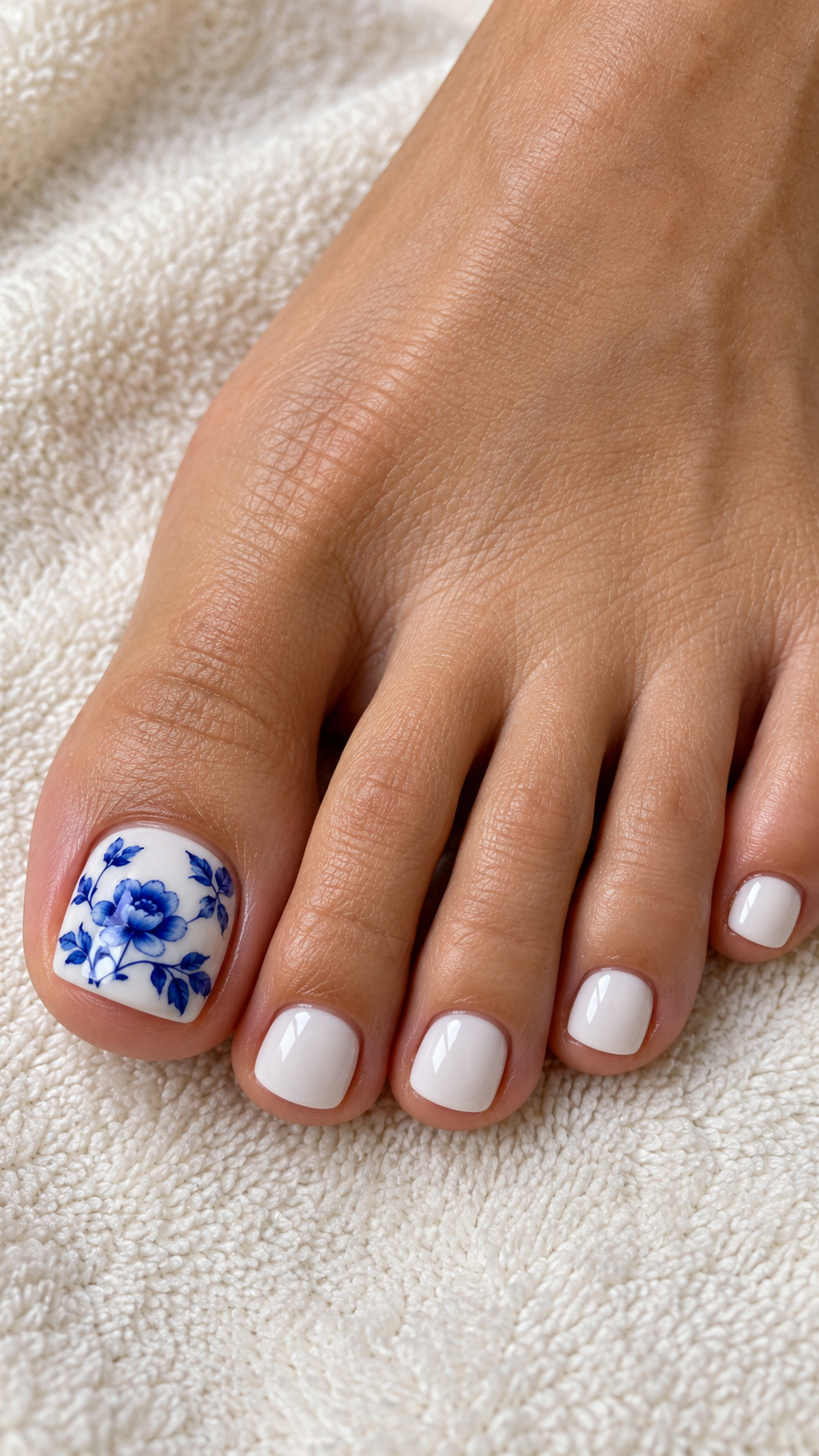
Blue flowers on white bring a porcelain-like detail to the pedicure. A small cluster is enough; the white background should remain visible between the stems. Fine lines and a limited blue palette help the motif look deliberate. Keep the other toenails white so the floral illustration has a quiet setting.
Pedicure note: Request a small blue floral pattern on the white big toenail.
4. Blue and White Marble
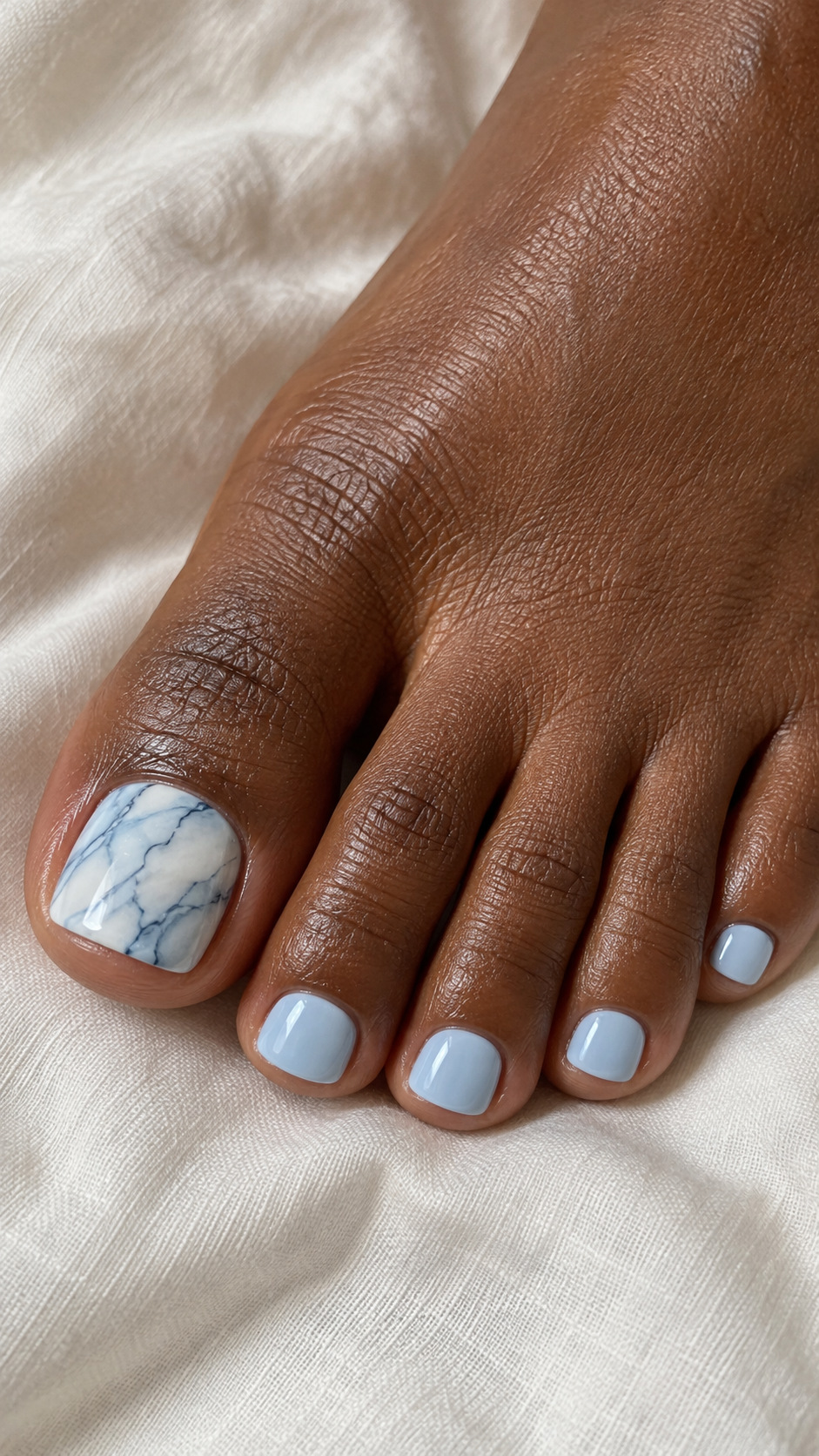
The big toe carries the marble texture while the smaller nails repeat its pale blue. Keep veins irregular and spaced apart so the white areas remain visible. Choose this if you prefer a flowing pattern to flowers or a defined French tip. The accent can be simplified without changing the overall color combination.
Pedicure note: Use a marble accent and match smaller toes to its light blue.
Nautical Patterns and Playful Details
5. Navy with White Stripes
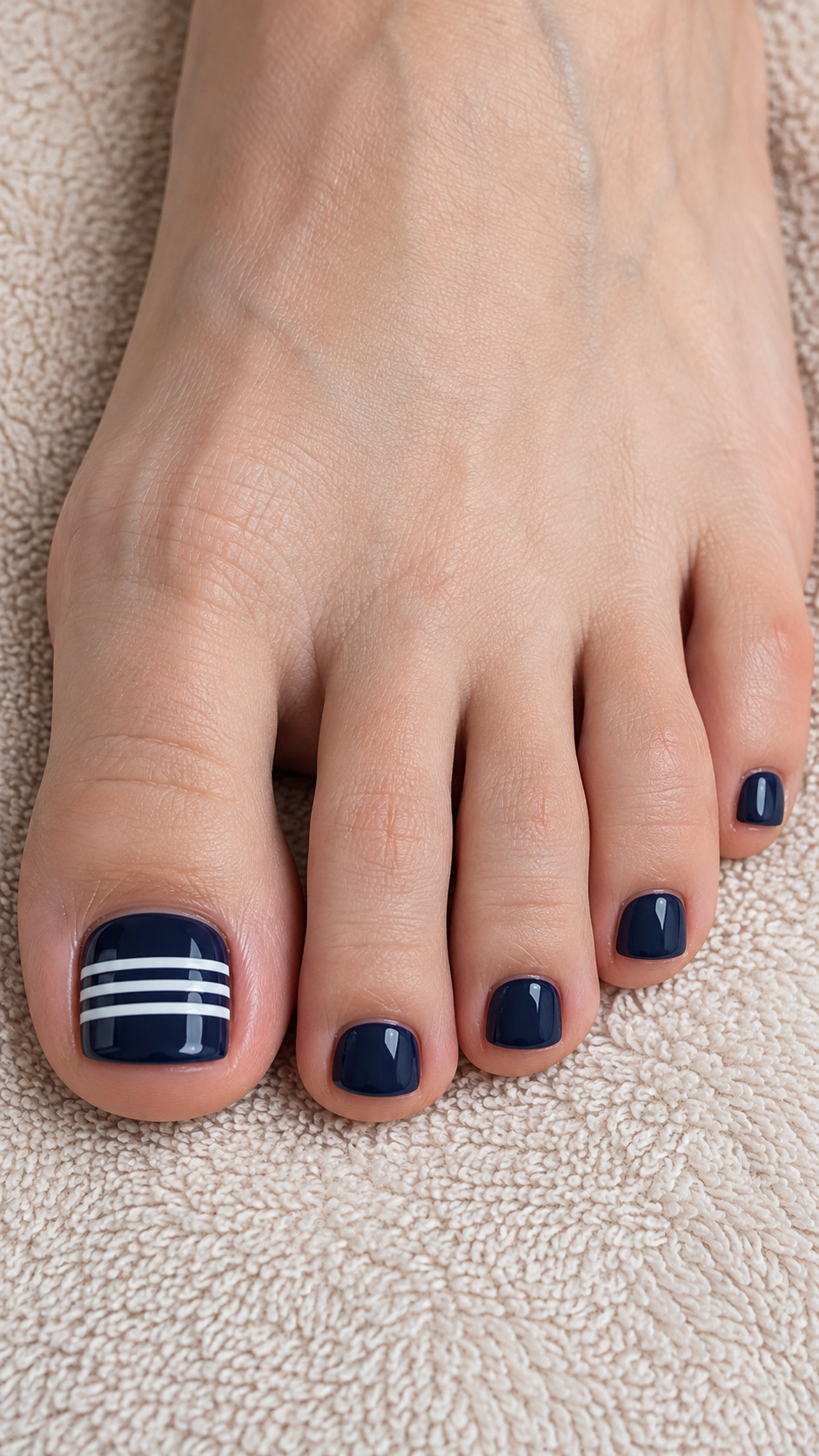
Navy-and-white stripes give the pedicure a nautical character without extra symbols. A few readable lines on the big toe create the effect. Keep them flat and even, with navy between each stripe. A plain sandal is an easy pairing because its straps do not compete visually with the horizontal pattern.
Pedicure note: Limit the white stripes to the big toenail.
6. Sky Blue with White Clouds
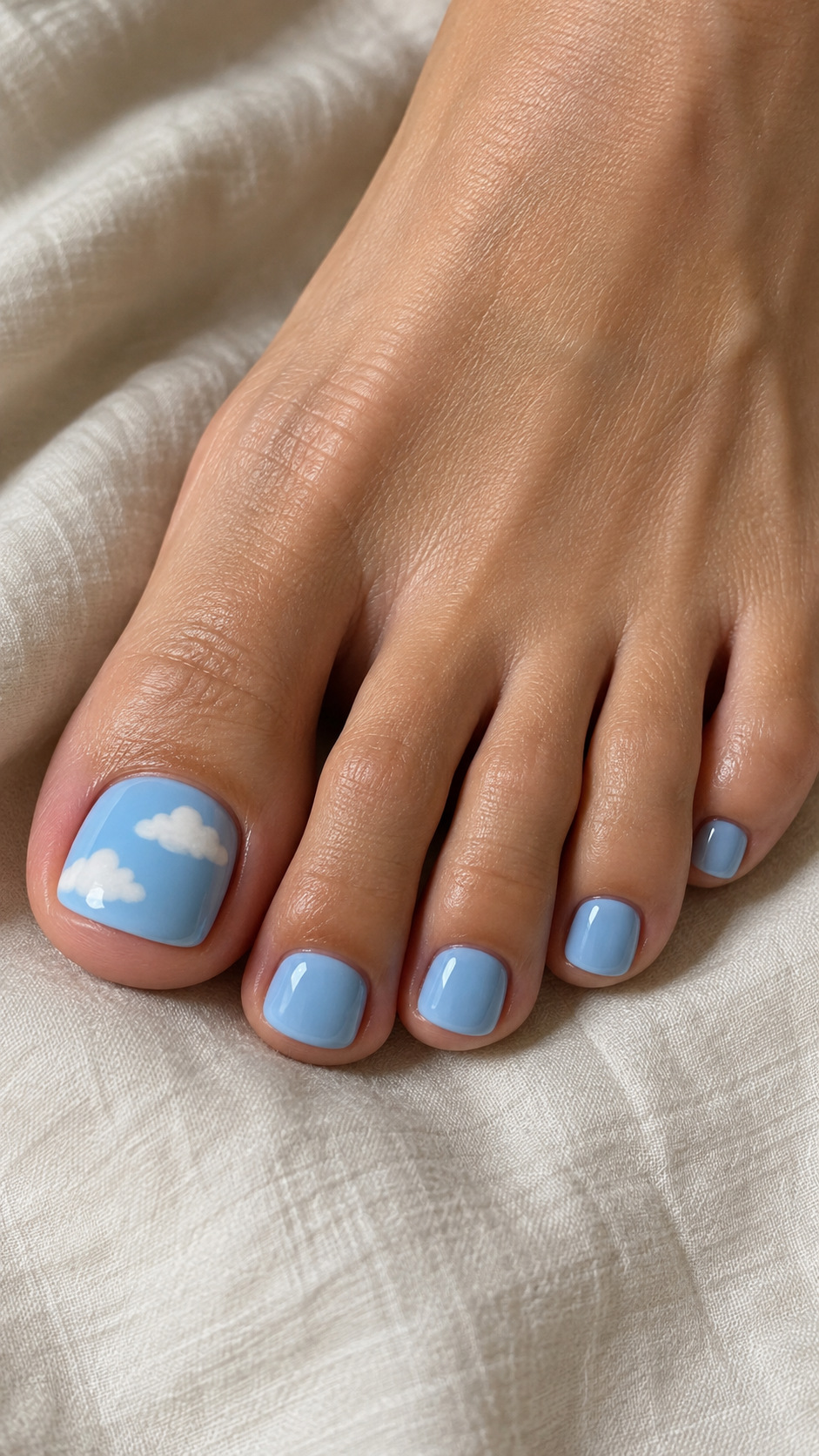
Soft clouds make this the playful choice in the blue group. Rounded, slightly uneven edges suit the motif better than identical circles. Leave blue between the clouds and keep smaller nails plain. The pattern should read as a little sky scene from normal viewing distance, without needing extra stars or other decorations.
Pedicure note: Place small clouds on a sky-blue big toenail.
7. Blue French with White Flowers
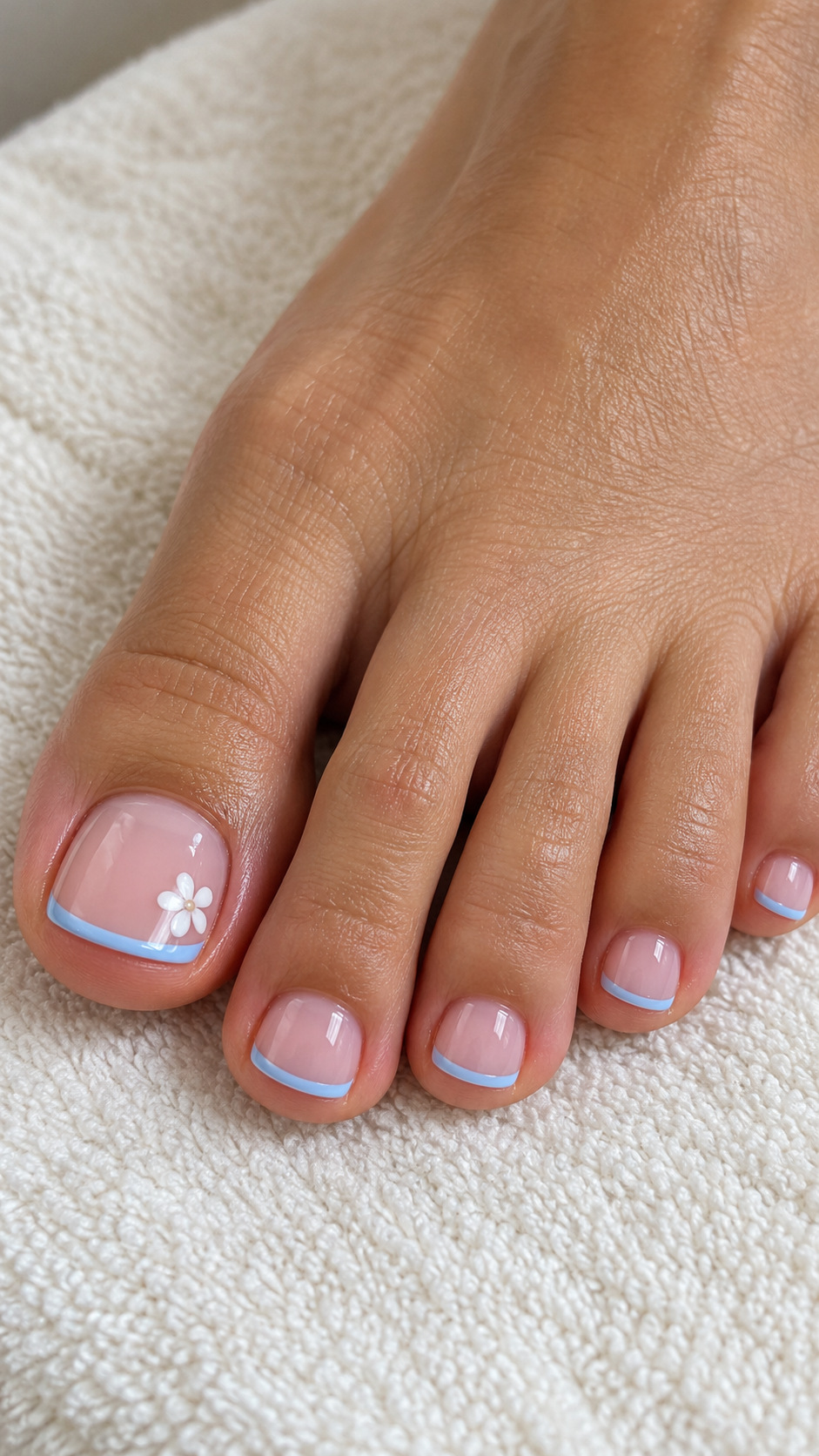
A blue French edge introduces color without covering the whole nail. A white flower on the big toe connects the two shades. Keep the flower to one side so the translucent base remains visible. The smaller nails need only the narrow tip, which gives the pedicure continuity without repeating miniature flowers.
Pedicure note: Add one white flower beside a slim blue French tip.
8. White with a Blue Butterfly
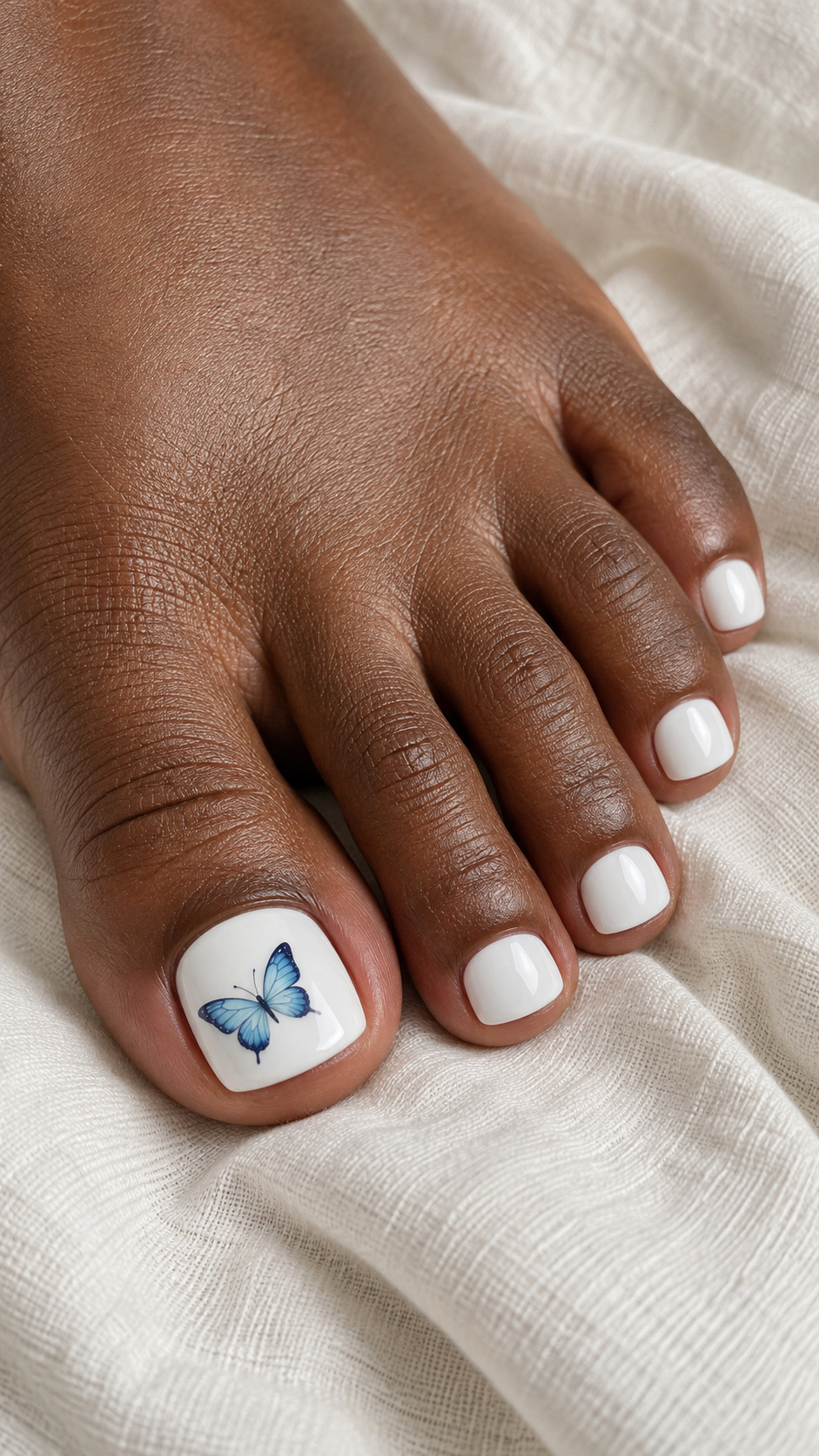
A butterfly becomes the focal point against white. Its outline needs to be clear, but the wings should fit inside the big toenail. A decal is worth discussing if you want a detailed symmetrical butterfly without a long hand-painting session. Keep the remaining toes white to give the blue motif room.
Pedicure note: Choose one blue butterfly sized to the big toenail.
9. Blue and White Ombre
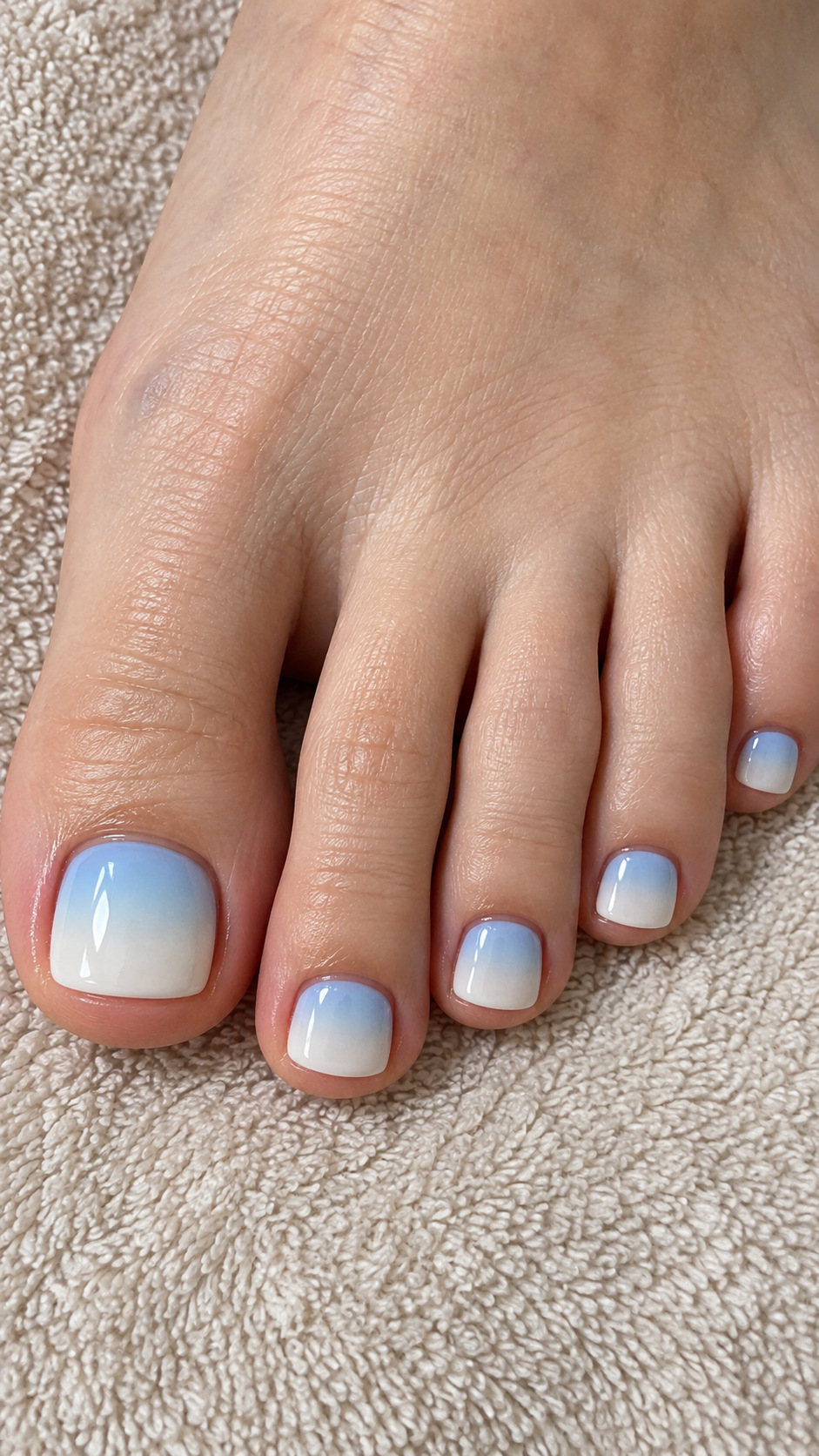
The blended transition gives both colors importance without a drawn pattern. On a short toenail, the fade needs to be soft rather than divided into obvious bands. This option suits someone who likes the palette but wants a quiet surface. Compare the fade on a sample so the blue remains visible after blending.
Pedicure note: Request a soft blue-to-white blend without a hard line.
10. Cobalt with White Polka Dots
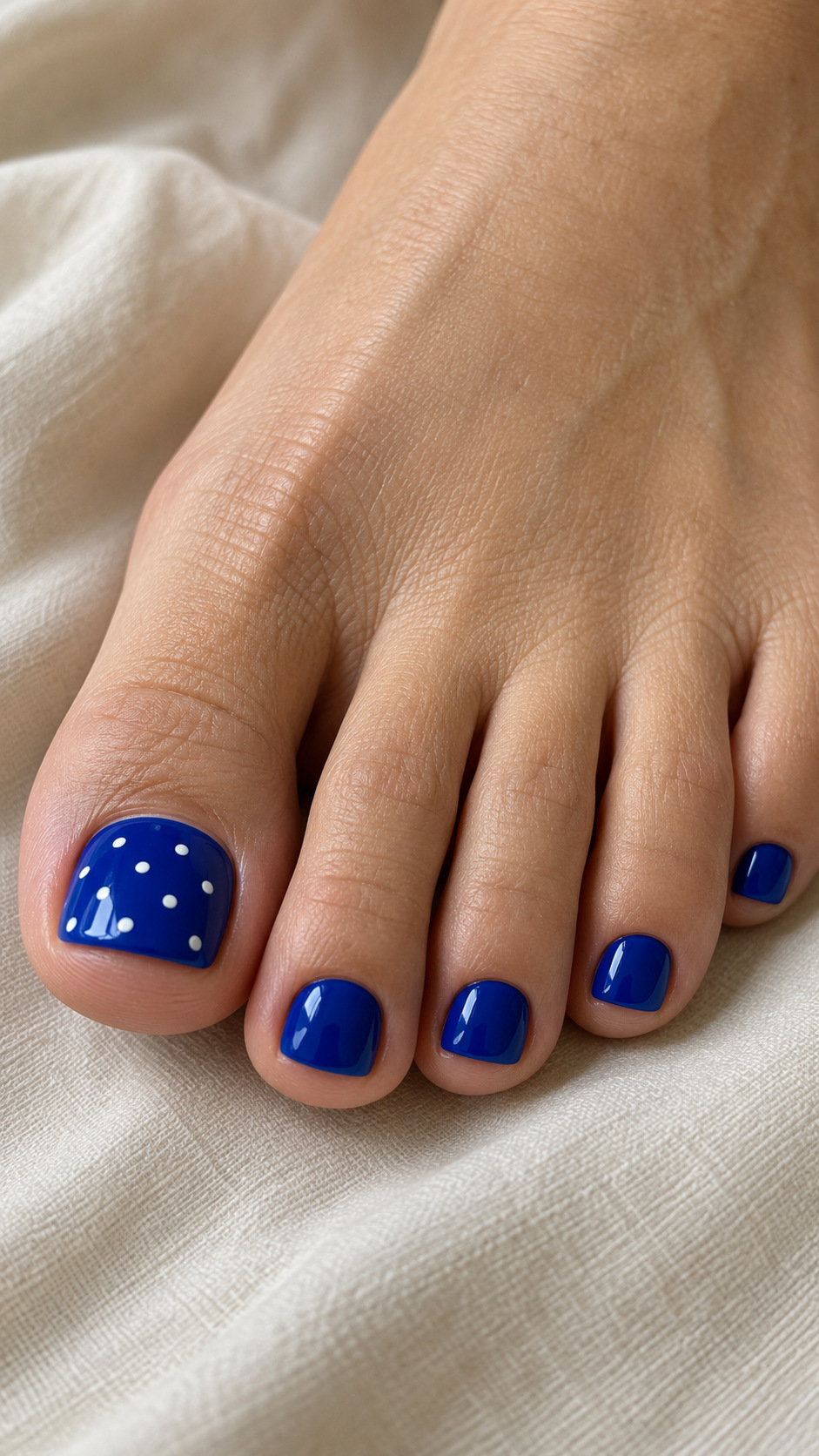
White dots give cobalt a simple retro accent. Let the big toenail hold the pattern and leave the tiny nails solid. Spacing matters more than an exact dot count: crowded edges can look heavier than the reference. Keep enough uninterrupted blue between dots for the pattern to remain clear at a distance.
Pedicure note: Use an open dot pattern on the big toenail only.
Checks, Waves and Softer Finishes
11. White with Blue Gingham
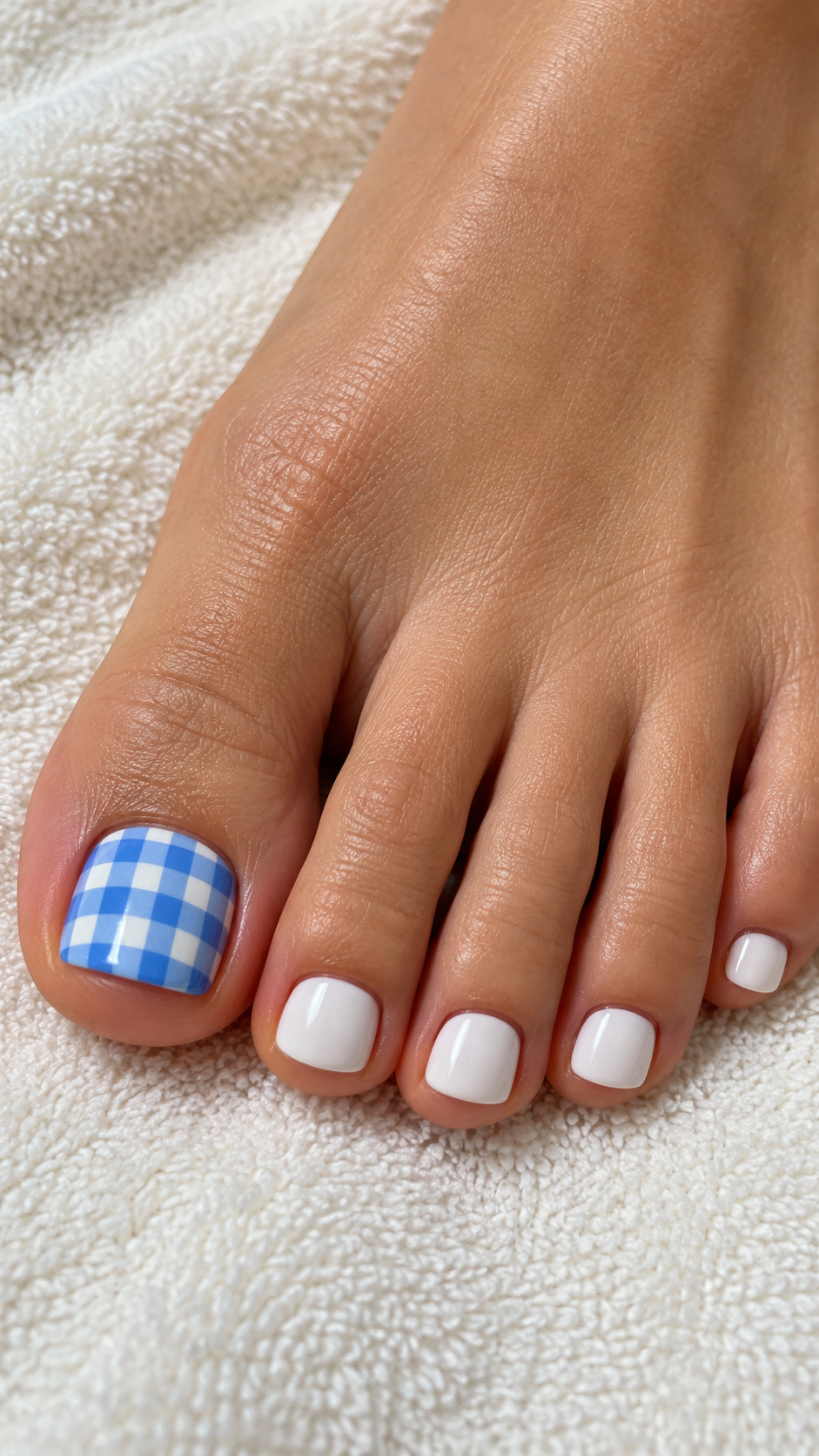
Gingham brings a textile pattern to a white pedicure. A few broad checks are easier to read than a miniature grid with many lines. Keeping the smaller toes white gives the pattern a clean setting. The blue intersections can be slightly darker, but avoid so much contrast that they overpower the pale squares.
Pedicure note: Ask for a clearly scaled gingham big toenail.
12. Ocean Blue with White Wave Art
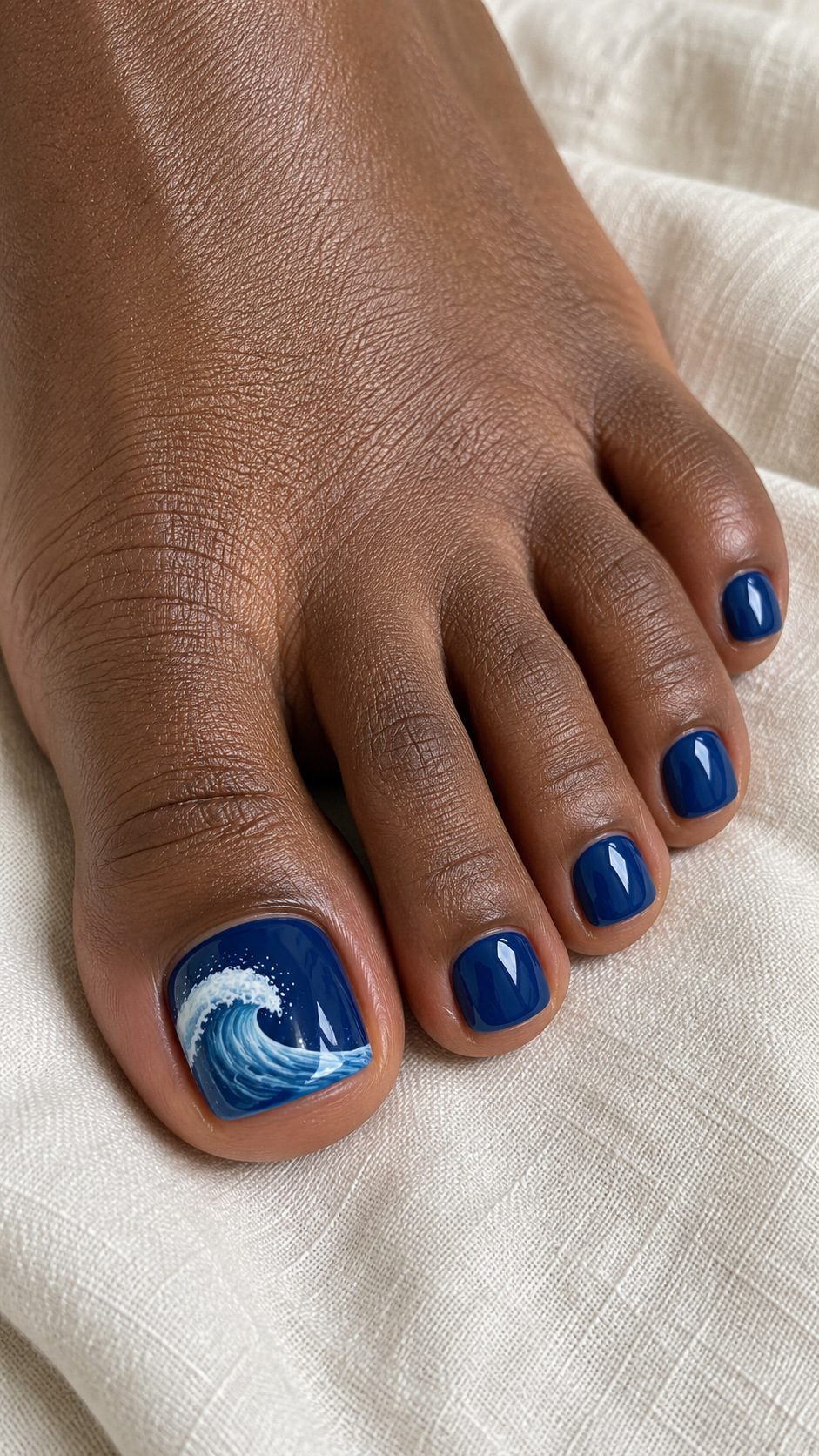
One curling wave gives ocean blue a beach reference. Keep the foam detail light so the wave remains a shape rather than a dense white patch. Solid blue on the smaller toes makes the artwork easier to appreciate. A flatter, simpler version can preserve the same idea when the nail surface is smaller.
Pedicure note: Use one painted wave rather than raised shell decorations.
13. Periwinkle with White Blossoms
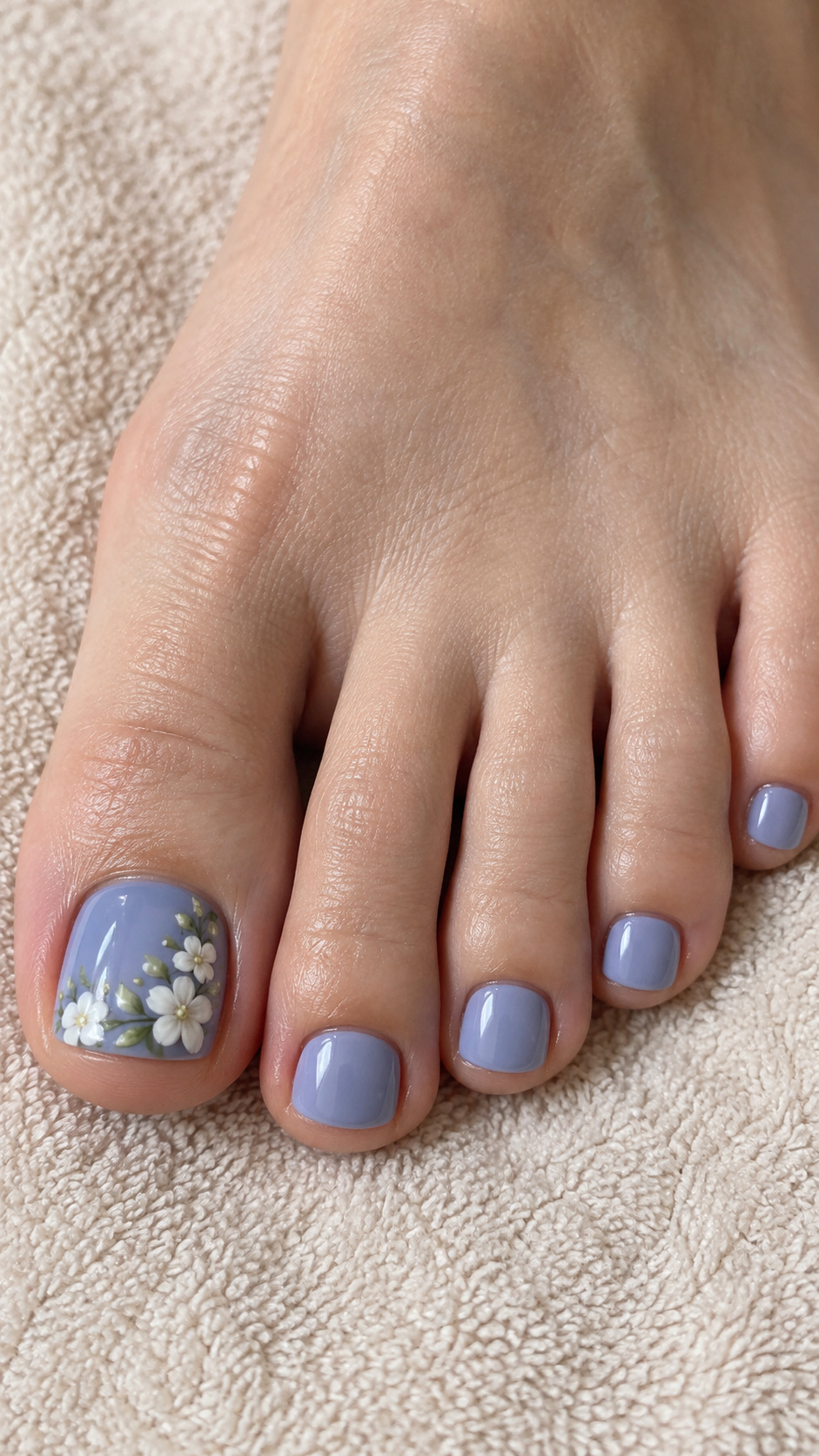
Periwinkle gives the floral option a softer mood than cobalt. White petals should stay clear against the lavender-blue base, with only a little leaf detail. Choose a compact cluster for a narrow big toenail and leave blue visible around it. The smaller toes repeat the base color rather than the artwork.
Pedicure note: Keep the flowers white and the foliage minimal.
14. White with Blue Swirls
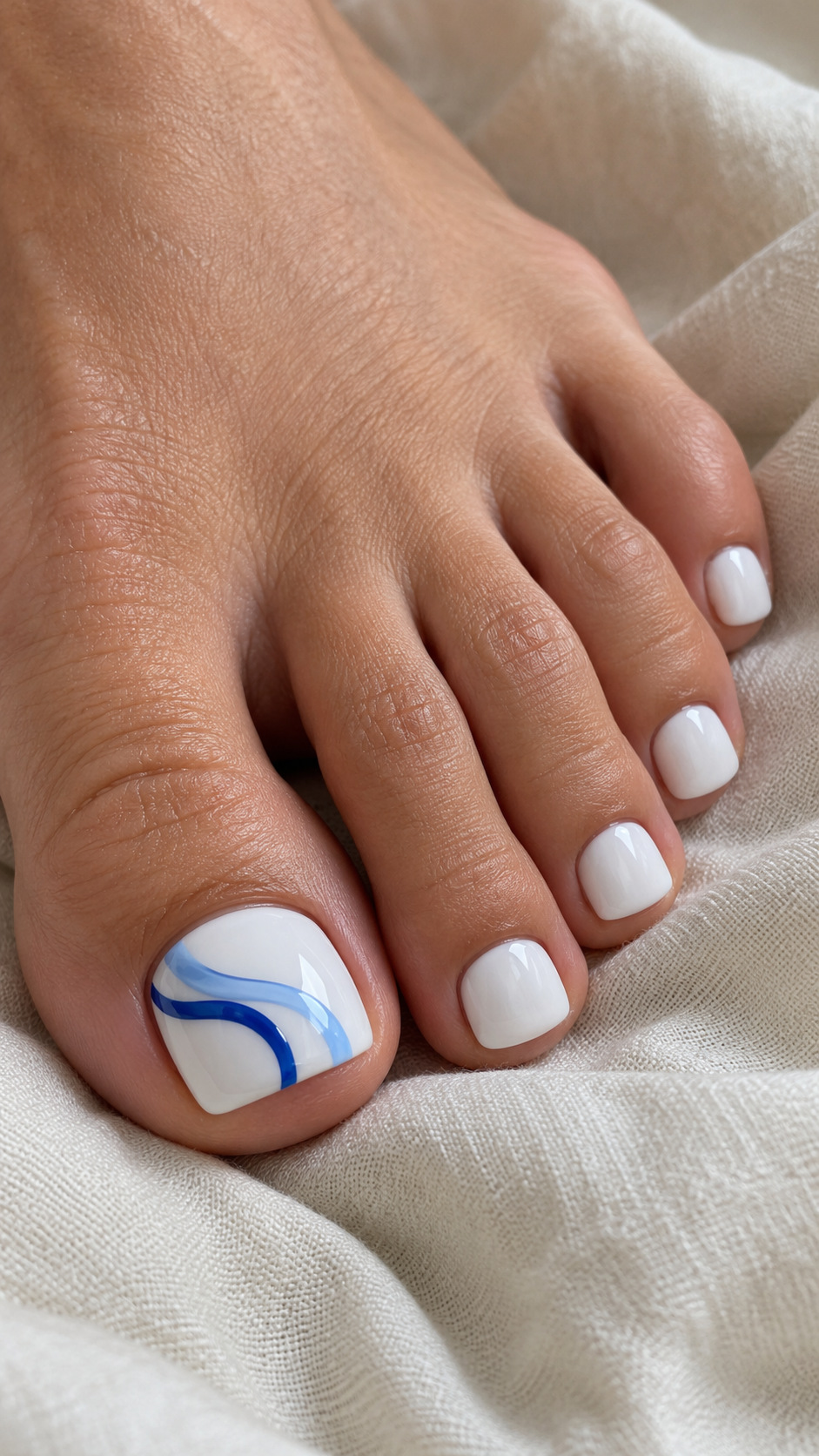
Two blue tones add depth to a swirl accent. Their curves should leave a clear area of white instead of covering the whole nail. This suits someone who wants a flowing abstract pattern with a limited palette. Keep the edges smooth and distinguish the lighter ribbon from the deeper blue line.
Pedicure note: Use flowing blue curves on a white big toenail.
15. Blue Shimmer with a White French Edge
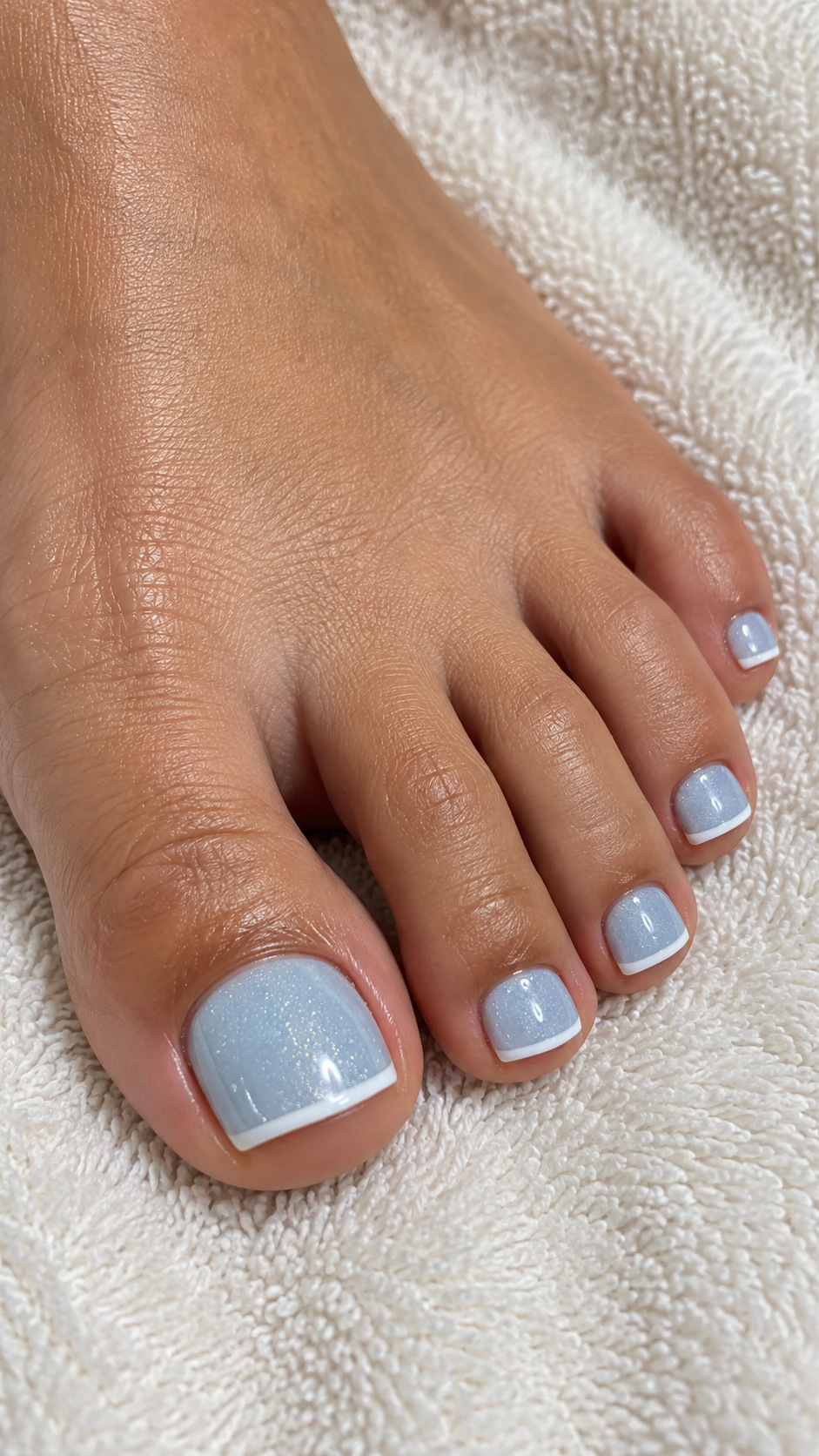
Fine blue shimmer changes the finish while a white edge keeps the outline neat. The particles should be small enough for the nail to read as blue at a glance. A thick glitter mix would obscure the French line. This is the reflective option for someone who wants detail without a separate illustrated motif.
Pedicure note: Ask for fine shimmer and a thin white edge.
16. White French with a Blue Floral Corner
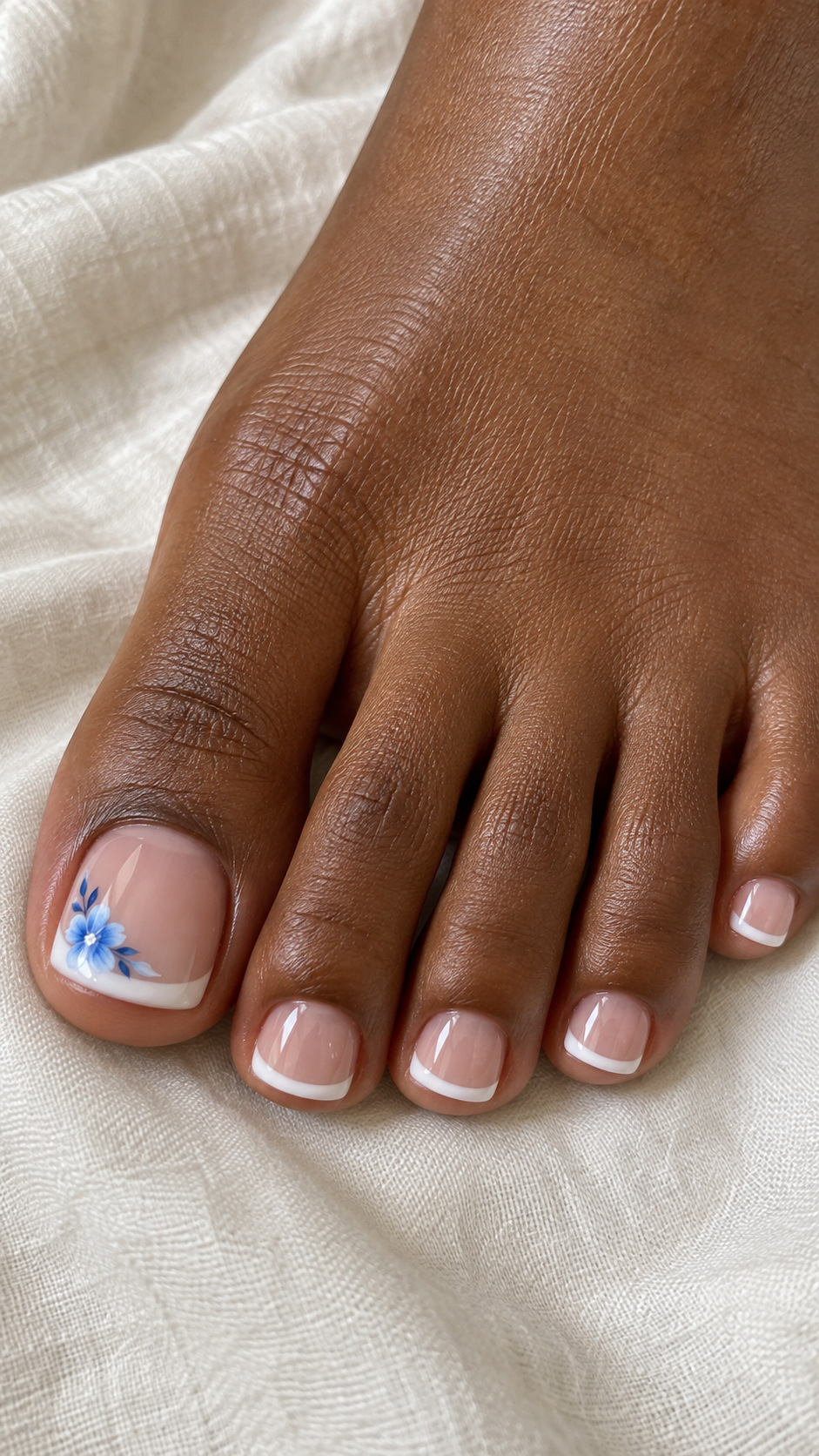
This begins with a conventional white French pedicure and adds blue in one corner. The flower is the only colored motif, so the result remains mostly neutral. Keep it below or beside the white edge instead of letting it swallow the whole tip. A small amount of leaf detail completes the accent.
Pedicure note: Add a small blue floral corner to the big toe.
Compare Your Favorite Directions
| Direction | Reference | Detail to preserve |
|---|---|---|
| Soft and classic | Baby Blue with White French Tips | Baby blue with white tips |
| Decorative floral | White with Blue Porcelain Florals | Blue porcelain drawing on white |
| Nautical | Navy with White Stripes | Navy with readable white stripes |
| Beach-inspired | Ocean Blue with White Wave Art | One clear white wave |
Choose the Detail for the Way You Will Wear It
Compare the pedicure with the sandals you reach for most often. White tips remain visible as a narrow edge; a cobalt base reads as a solid color from farther away. Neither requires matching shoes, but this comparison helps you choose the amount of contrast you enjoy.
For the salon brief, name the blue, the white and the decorated toe. For example: cobalt on the smaller toes, with a blue big toe and a few clearly separated white daisies. Ask to preserve space between the flowers instead of shrinking a crowded drawing.
A coordinated manicure can repeat one color without copying every pedicure detail. Plain milky white hands with blue-and-white toes, or a blue French manicure with a simpler pedicure, can share a palette while remaining visually distinct.
Blue and White Pedicure Questions, Answered
Which blue works with a white French edge?
Baby blue creates a soft contrast, while a deeper blue makes the edge stand out more. Choose the blue first, then compare a narrow tip with a broader one.
Should every toenail have a pattern?
It does not need to. Most references concentrate the motif on the big toe and use the smaller nails to repeat the main color. This keeps the pedicure readable from a normal distance.
Can blue and white pedicure designs suit short toenails?
Yes. These concepts use short shapes. Keep lines and flowers proportionate, and simplify dense artwork when the available surface is smaller.
How do I avoid a busy nautical design?
Pick one element, such as stripes or a wave, and use plain color elsewhere. You do not need anchors, shells and several different patterns in the same set.