The Best Fluffy Pancakes recipe you will fall in love with. Full of tips and tricks to help you make the best pancakes.

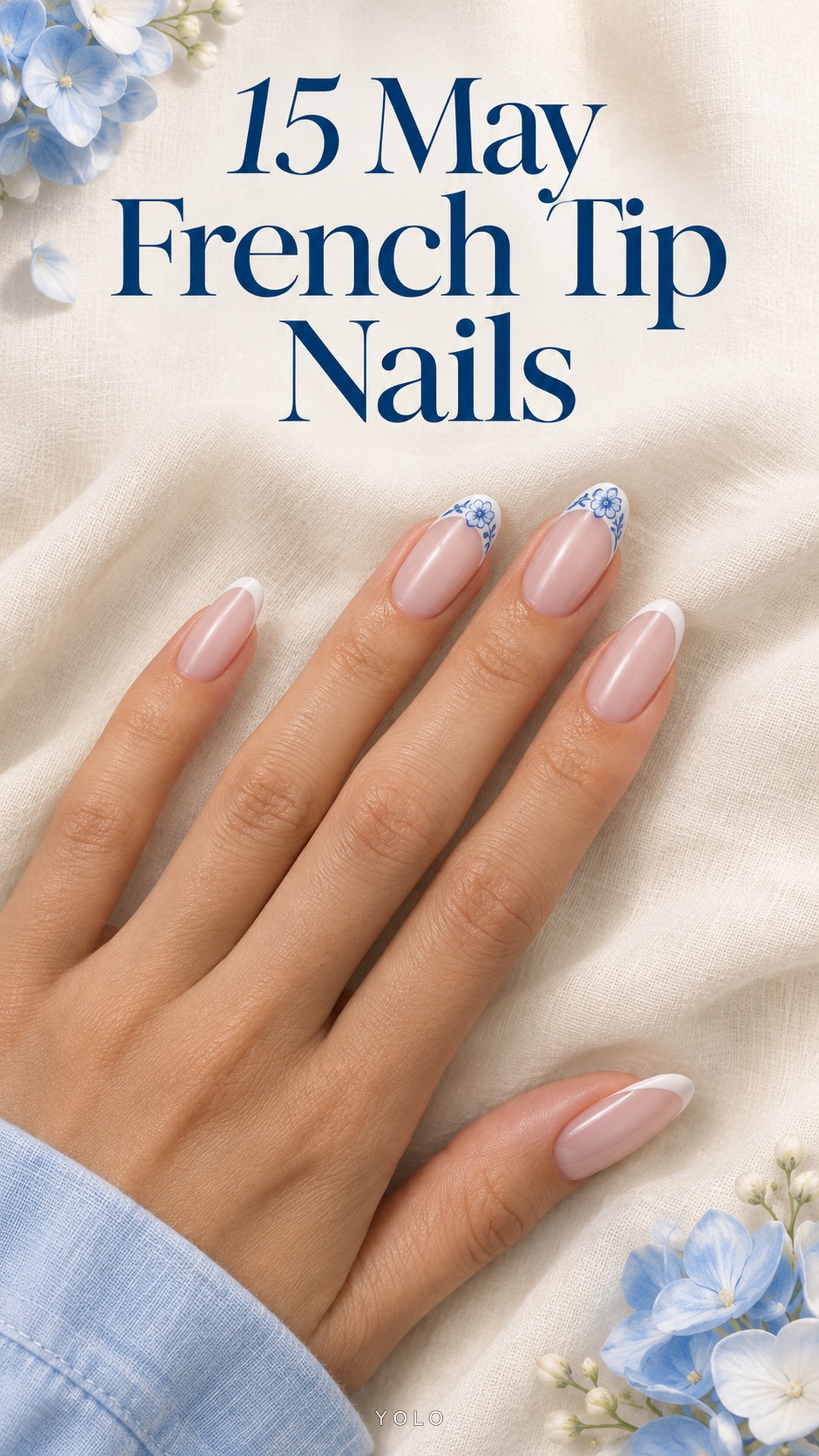
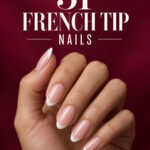
May French tip nails offer plenty of room for color while keeping the open, polished look of a classic French manicure. The difference can be as small as an apricot outline or as decorative as a porcelain-inspired border. These fifteen designs focus on the edge of the nail: how wide it is, where it curves and which details belong beside it. Use the collection to find a clear direction before choosing your exact shade and length.
How to choose May French tip nails
Look at the balance between the colored edge and the visible base. A narrow edge leaves more space and often suits a quieter manicure. A deeper curve gives patterns more room, but changes the proportions of the nail. Ask your artist to adapt the line to your actual shape rather than copying its depth from a longer reference.
A micro French, a side sweep and a double arc are three different compositions. The micro version emphasizes the free edge; the side sweep moves the color toward one corner; the double arc adds a second line below the tip. Decide which structure you like before choosing embellishments.
Base color matters as much as the tip. A milky pink base softens contrast, while a more transparent nude makes the colored edge appear lighter. Compare the base on your own nails if possible. A polish that looks nearly invisible in one reference may look much more opaque against another skin tone.
For related ideas, browse our milky French manicure collection. If the patterned borders appeal to you, explore these lace nail ideas for more delicate linework.
1. Sage Scalloped Edges
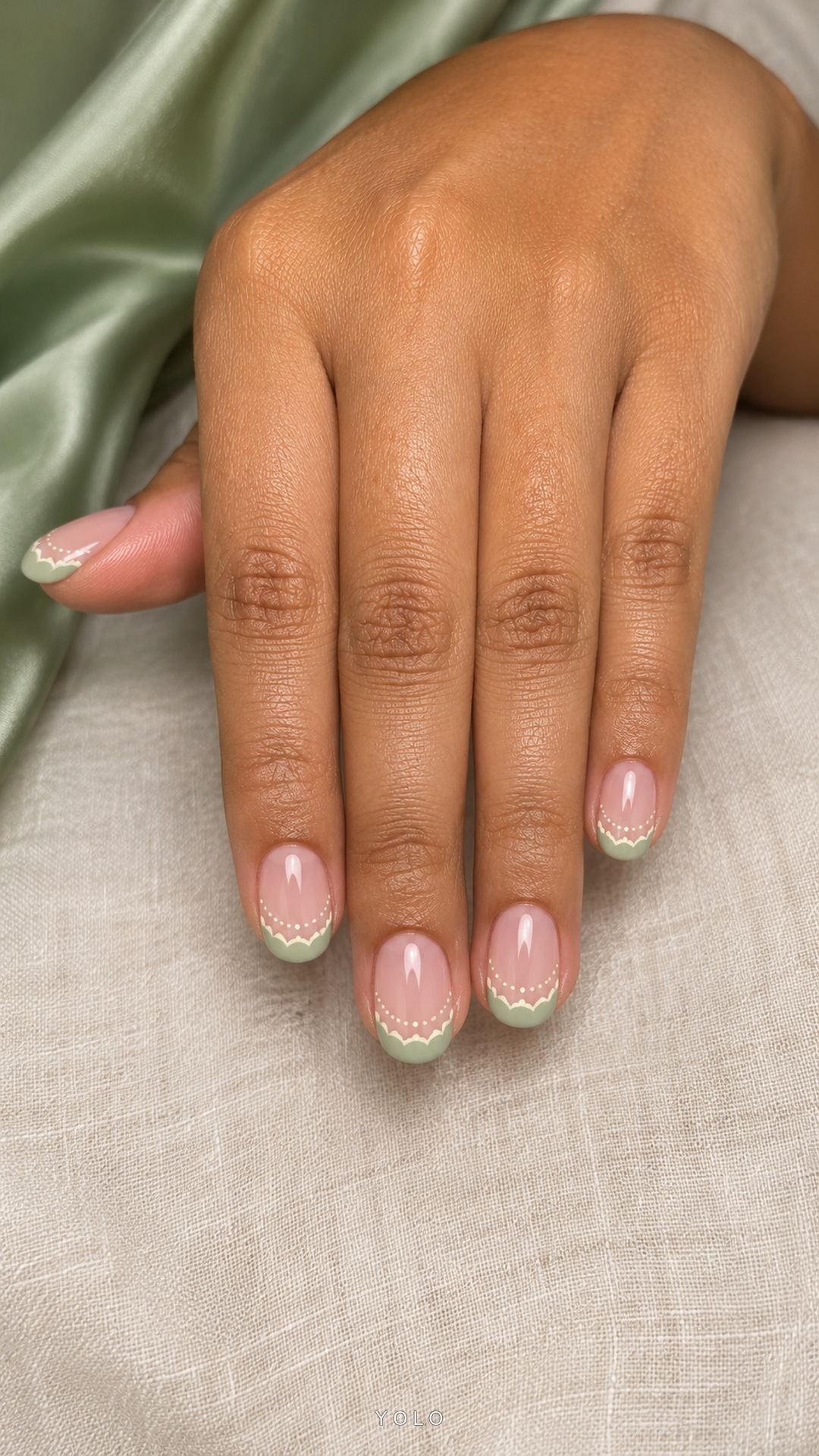
A scalloped edge gives sage French tips a softer outline than a conventional smile line. The blush base stays translucent, while tiny ivory dots trace the curved green border for a detail that resembles delicate stitching. Short oval nails leave enough space for the pattern without needing a wide tip. The muted palette also helps the decorative edge remain subtle. With the linen and sage fabric around the hand, this manicure feels particularly suited to relaxed spring outfits and softly textured accessories.
Make it yours: Sketch a shallow scalloped border before filling the tips with sage. Use a small dotting tool for the ivory points and keep the spacing relaxed but even. A narrow border is easier to balance on shorter nails than a deep colored tip.
2. Rose Pearl Micro French
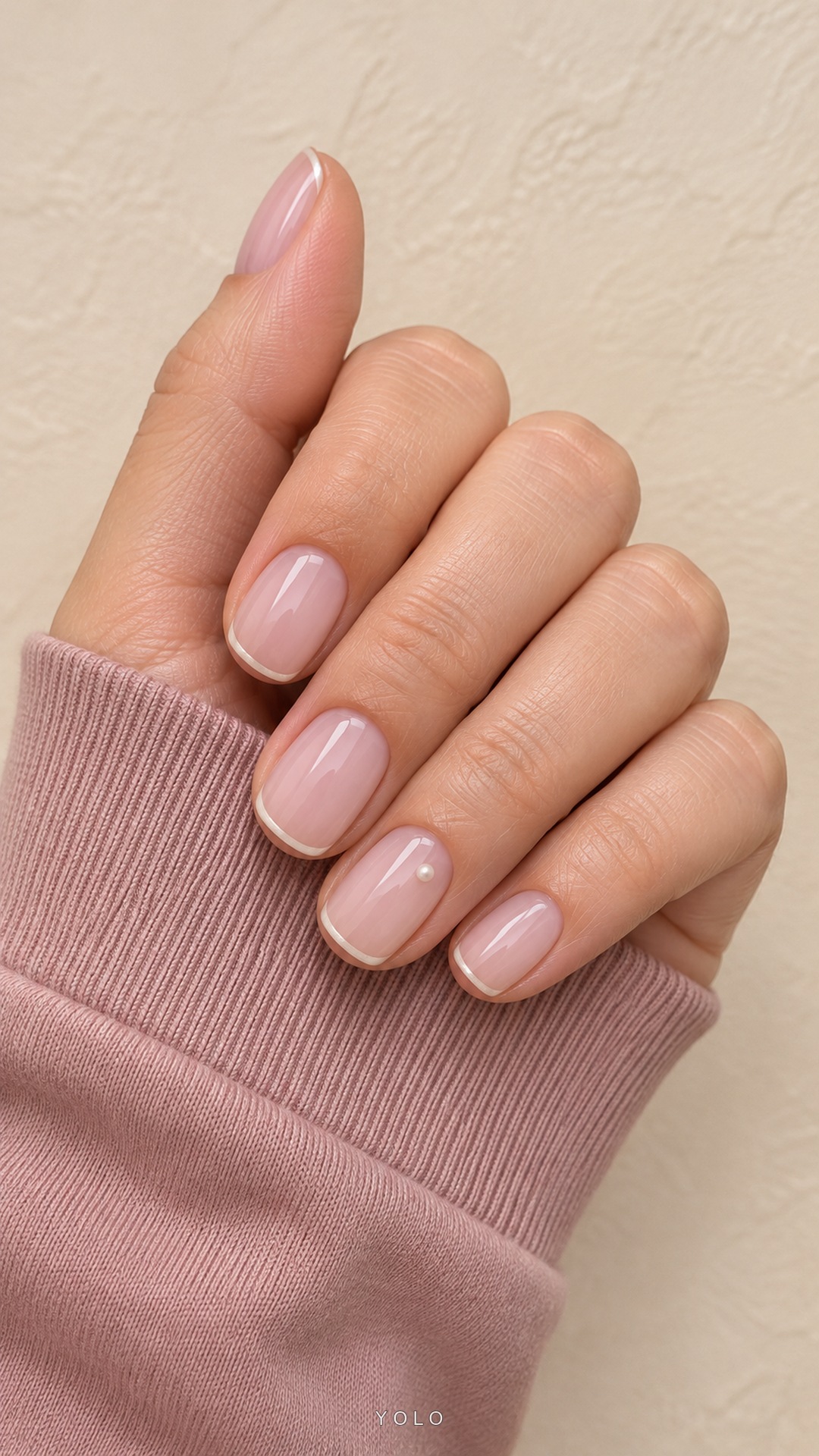
This micro French keeps the contrast gentle: a milky rose base meets an exceptionally slim pearly white edge. The short squoval shape creates a tidy outline, and a tiny pale dot adds a small accent without interrupting the simplicity. Most of the effect comes from clean proportions and a smooth glossy surface. It is a useful reference for anyone who likes a classic French manicure but wants the tip to feel lighter. The dusty rose cuff echoes the base without drawing attention away from the nails.
Make it yours: Choose the sheer rose base after checking it against your natural nail color. Paint the white edge as thinly as the nail length allows, then tidy both corners. Keep the pearl detail small enough that it reads as a pinpoint accent.
3. Lilac Petal Corners

Lilac corner tips give this French manicure an asymmetrical shape while leaving plenty of nude space. The color sweeps diagonally across each almond nail rather than forming a deep central smile. Small white petal marks decorate two of the tips, introducing a floral detail without filling the nail bed. The glossy transparent base keeps the effect light. Against the lavender background, the slightly stronger tip color is easy to see, making this a gentle way to add purple to a spring manicure.
Make it yours: Decide which corner the lilac should rise toward before painting, and repeat that direction for a coordinated result. Add the white petals only after the tip shape is neat. Keep them inside the colored area so the clear base stays open.
4. Apricot Double Arc
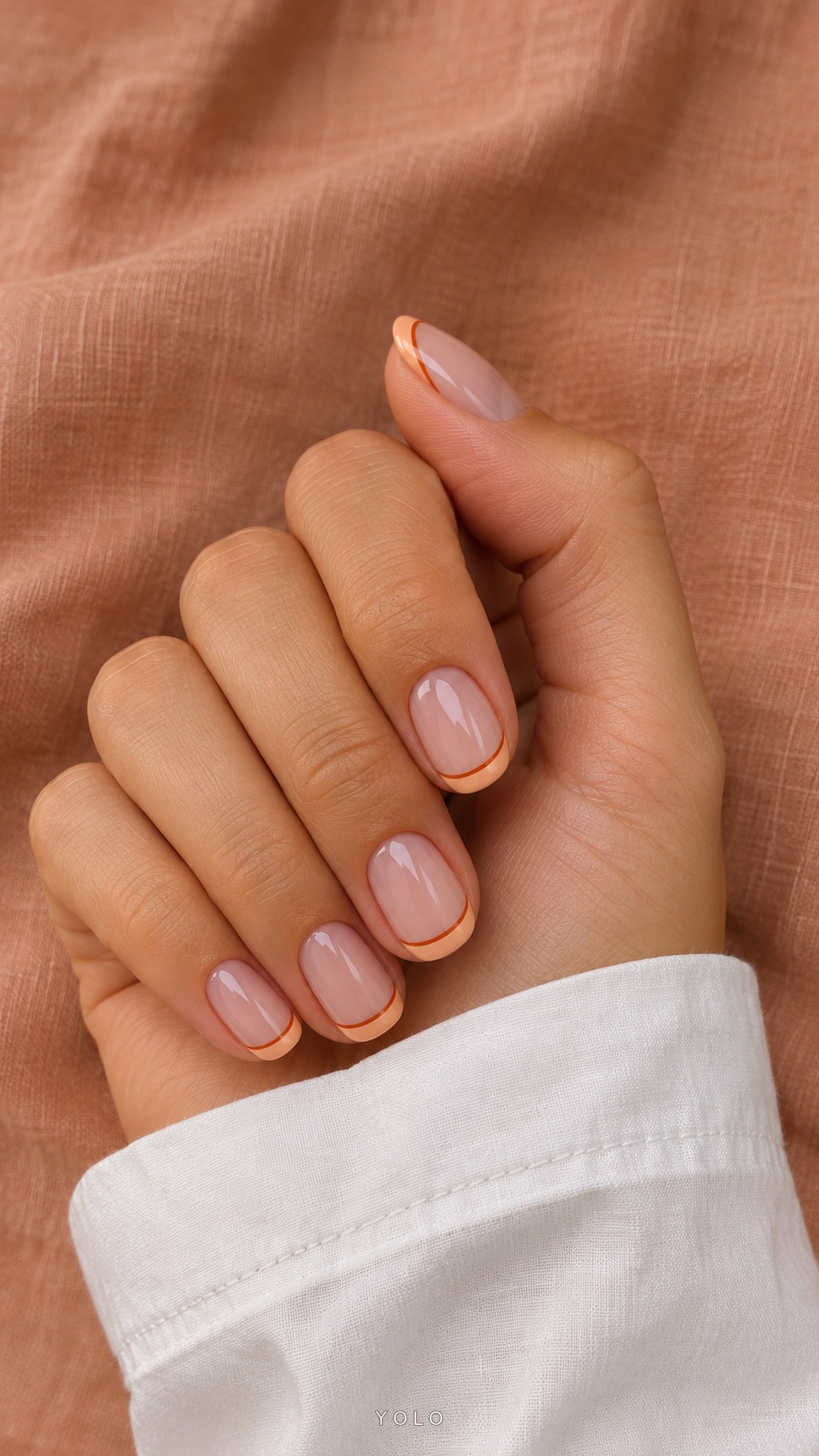
A thin apricot tip brings warmth to these short rounded nails, while a second rust-orange curve gives the familiar French shape a little more definition. The pink nude base remains visible between the fine lines and across most of the nail, so the result stays light. Warm shades make this a gentle alternative to bright coral, especially with neutral spring clothing. The compact length also shows how a double French design can work without relying on a long extension or a deep smile line.
Make it yours: Paint the apricot edge first, then add the finer rust curve with a liner brush. Keep a small clean gap between the two colors where possible; if your nails are very short, make both lines thinner rather than widening the tip.
5. Blue Porcelain Borders

Tiny cobalt scrolls turn two ivory French tips into little porcelain-inspired details. The remaining edges stay plain, giving the patterned thumb and ring nail space to stand out. A sheer warm nude base keeps the blue and white combination from looking heavy, while the oval shape follows the rounded border of each tip. This design suits someone who likes classic French nails but wants a subtle decorative twist. The miniature botanical marks are concentrated at the ends, leaving the nail beds clean.
Make it yours: Ask for the blue pattern on two tips only and bring a close view of the scrollwork. A narrow ivory border needs very small marks, so prioritize a few neat leaves and curves over a crowded miniature illustration.
6. Butter and Gold Outline
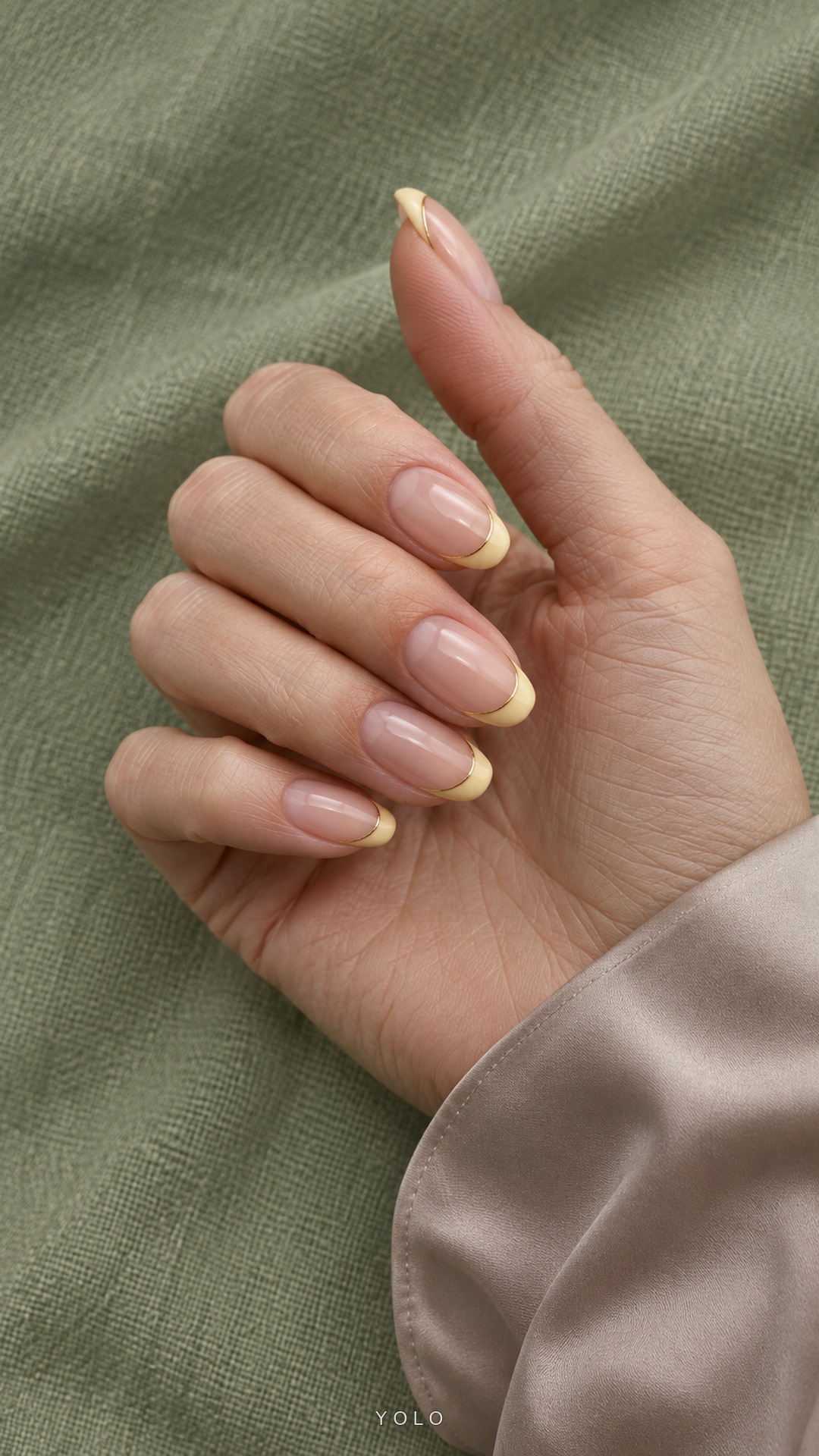
Butter yellow gives this French manicure a soft spring glow, and a fine gold border adds a little definition where the tips meet the peach nude base. The design stays simple across all five nails, with the same restrained color placement repeated on each almond shape. Most of the nail remains translucent and neutral, which helps the yellow feel delicate rather than dominant. It is an elegant way to introduce a pastel shade while keeping the familiar proportions of a traditional French manicure.
Make it yours: Choose a pale yellow that still reads clearly against your nude base. Keep the gold border finer than the yellow section, and follow the same smile curve on every nail so the metallic detail looks tidy and intentional.
7. Dusty Rose Lace Tips
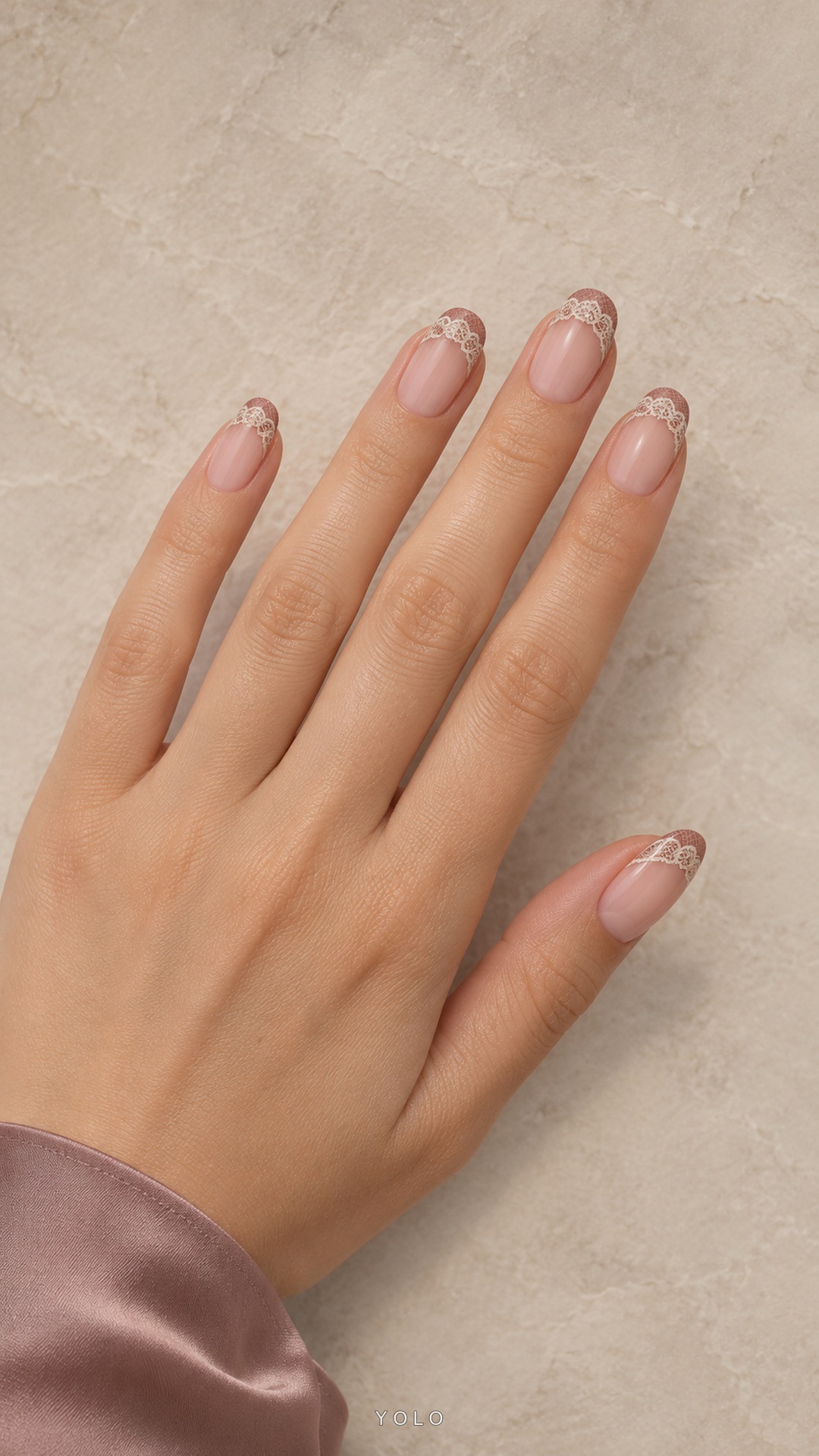
These lace tips soften the familiar French outline with tiny ivory loops and a dusty rose edge. The decoration stays close to the free edge, leaving most of the blush nail bed clear. That balance matters: the fine pattern feels delicate because it has plenty of plain polish around it. Medium oval nails offer enough room for the scallops without making them oversized. This would pair beautifully with simple fabrics when you want the manicure to supply the finer detail.
Make it yours: Map out a few larger scallops first, then connect them with the smallest mesh strokes. Keep the ivory paint thin and the dusty rose base visible between lines; a solid white band would lose the lace effect.
8. Emerald Side Sweep
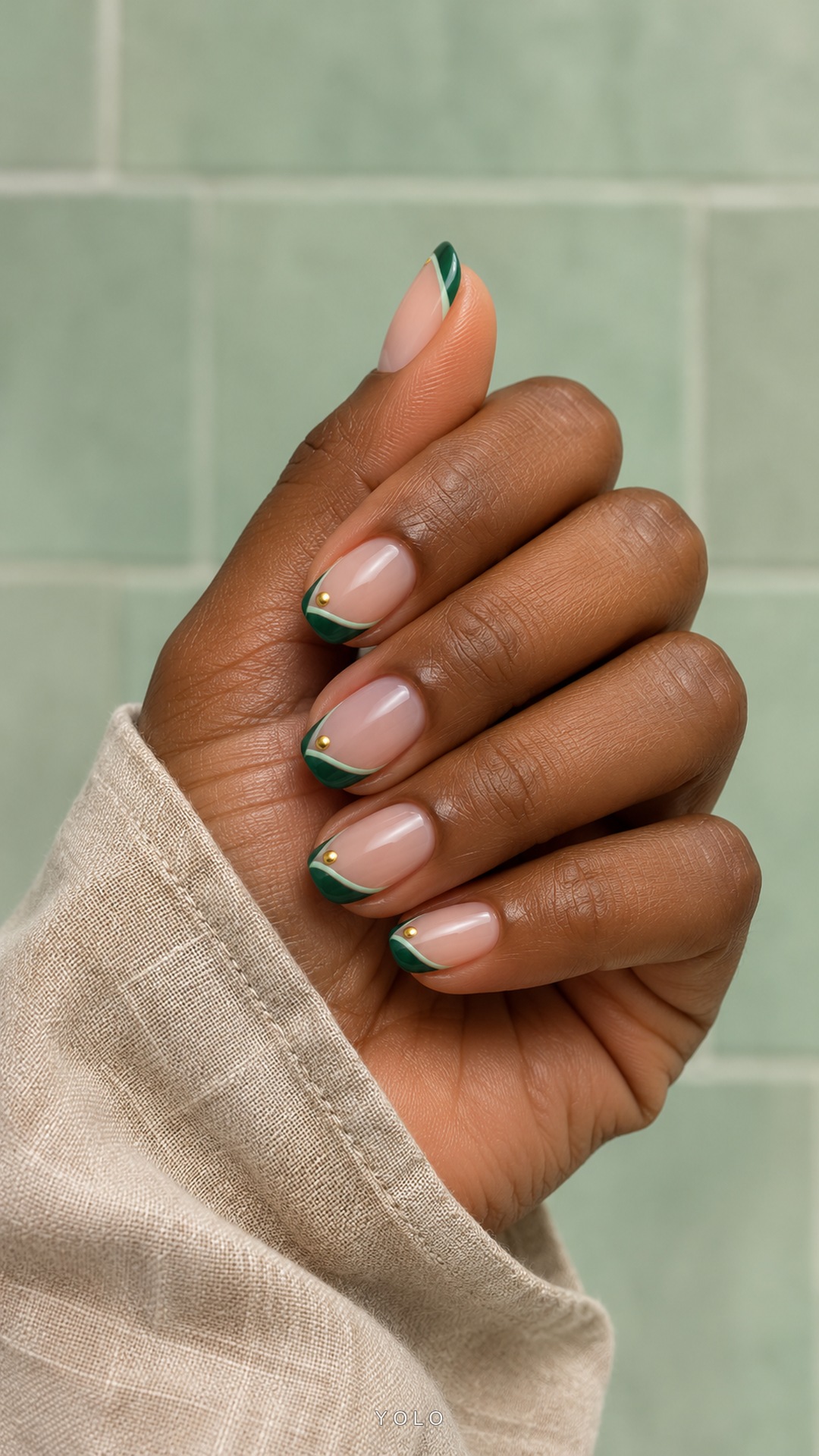
Deep emerald gives this French manicure a clean, graphic edge. Instead of a symmetrical smile line, the color sweeps across each tip on a slant, with a slim mint contour tracing its inner curve. Tiny gold dots introduce a warm accent against the cool greens. The short shape keeps the design compact, while the clear nude centers prevent the darker polish from dominating. It is a useful way to wear a strong color when you still want much of the natural-looking nail base to show.
Make it yours: Choose the direction of the side sweep before painting so the set feels intentional. Keep the mint contour narrower than the emerald band, and use a small dotting tool for a restrained gold accent beside the curve.
9. Soft Silver Cloud Fade
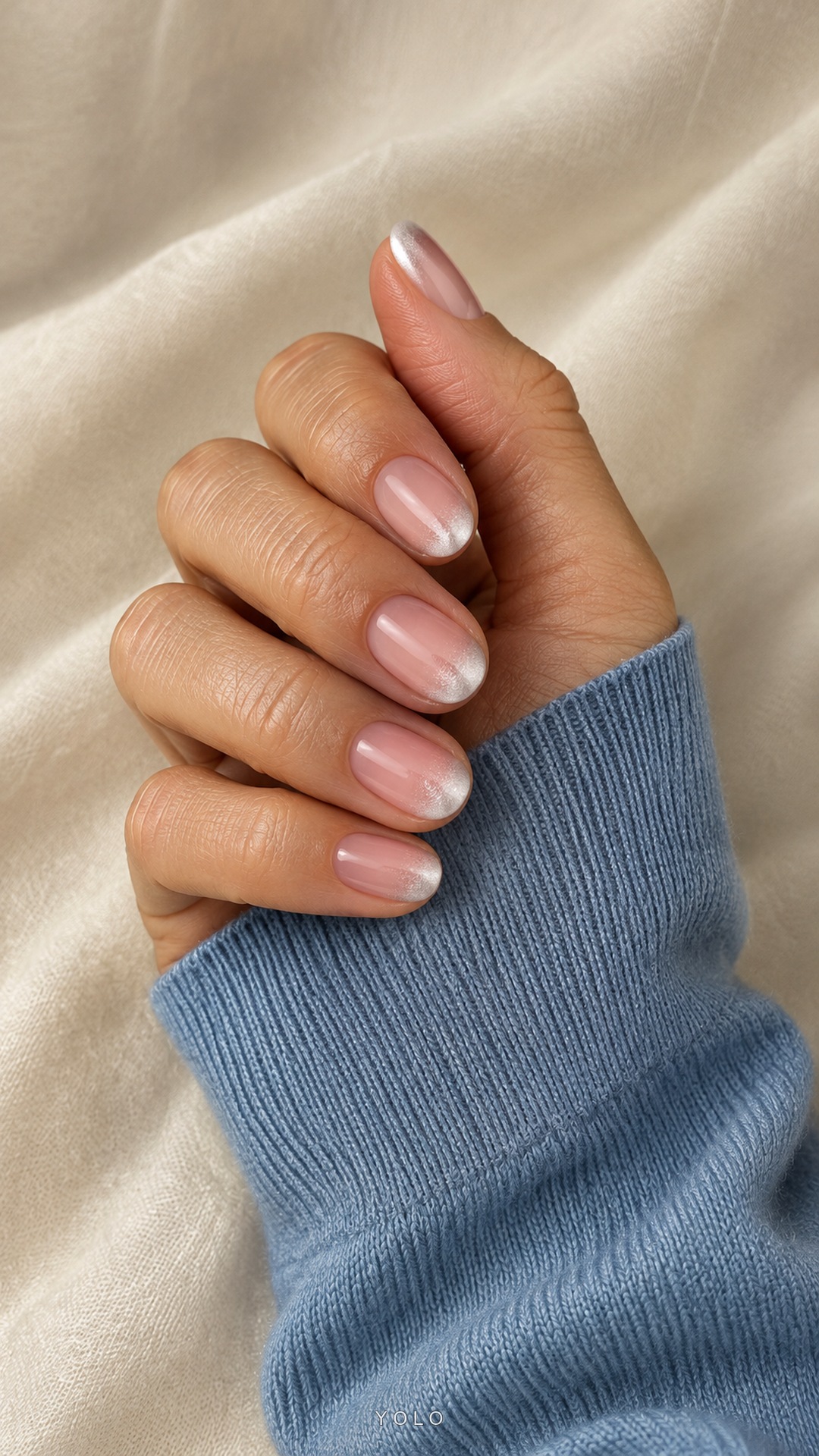
A softly blurred silver-white edge gives these rounded nails a quieter finish than an opaque white French tip. The rose nude base remains visible through the transition, creating a luminous band without a hard boundary. Fine reflective particles catch the light across the tips while the rest of the nail stays understated. This design works especially well on a shorter length because it does not rely on a large free edge. The appeal is in the gentle shift from warm pink to cool pearly silver.
Make it yours: Ask for a gradual shimmer fade concentrated at the tips, with fewer particles toward the center of each nail. Avoid a sharply painted smile line if you want to preserve the soft, cloudlike transition shown here.
10. Coral Cherry Edge

Muted coral tips bring warmth to a milky nude base, while a tiny pair of burgundy cherries adds a playful finishing detail. The medium almond shape gives each slim French edge an elegant curve without making the fruit accent feel crowded. Placing the cherries near the tip keeps the nail bed open and lets the manicure read as a French set first. It is a sweet May option for anyone who likes fruit nail art but prefers a single, carefully placed motif.
Make it yours: Keep the cherry pair small enough to sit beside the French edge without covering it. Paint two burgundy dots, then connect them with fine green stems; leave the other nails simple so the accent stays easy to notice.
11. Pastel Ribbon Tips

Three slim pastel bands turn a classic French tip into a curved ribbon of periwinkle, butter yellow, and rose. The clear pink base leaves most of each oval nail open, making the color combination feel light even with several shades in play. Slight changes in the band order give the set a relaxed rhythm rather than a rigid repeat. It is a cheerful way to bring a spring palette into a manicure while keeping the overall shape tidy and familiar.
Make it yours: Map the outer curve first, then add the inner bands with a fine liner. Keep all three stripes narrow and roughly equal in width; on shorter nails, reduce the entire colored area rather than widening the individual bands.
12. Rose Quartz French
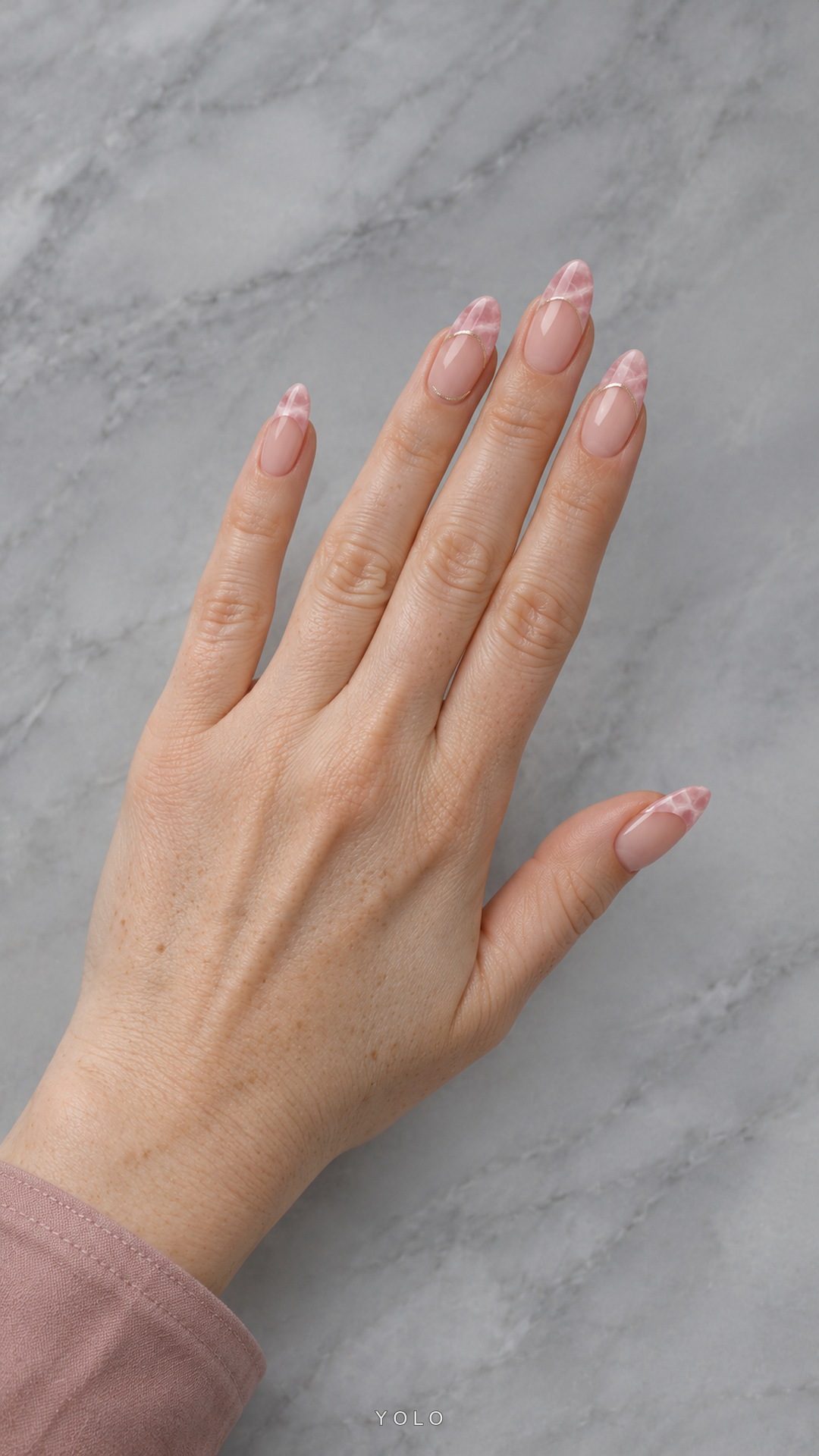
Translucent rose tips and delicate white marbling give this French manicure a soft quartz effect. The neutral pink nail beds stay clear, while fine champagne seams add a quiet metallic detail near selected edges. Medium almond shapes make the marbled sections feel graceful without needing an exaggerated point. Because the veins vary from nail to nail, the set has the irregular character of stone while remaining coordinated. It is a gentle choice for a spring celebration or an understated occasion manicure.
Make it yours: Keep the white marble veins fine and uneven instead of drawing matching zigzags. Use only a few wisps per tip, then add the champagne seam sparingly so the translucent rose finish remains the main feature.
13. Lavender Crocus Border

A slim lilac edge gives this French manicure its soft spring color. Tiny purple crocus petals gather along the smile lines, adding a floral border while leaving most of the sheer beige-pink nail bed clear. The short squoval shape helps the micro tips feel neat and wearable, with just enough surface for the little painted accents. Keeping the flowers at the edge makes the design feel cohesive rather than scattered. It is a delicate option for adding garden detail to a familiar French shape.
Make it yours: Ask for the lilac tips to stay very thin, especially on the shortest nails. Place only a few petals along each edge and leave the center bare so the French line remains easy to read.
14. Cream Espresso Contour

Creamy vanilla tips look warmer than a bright white French edge, especially against a softly nude base. An extremely fine espresso contour defines the smile line, giving this neutral set a little more structure. A small white blossom tucked beside one edge adds a spring detail without changing the overall restrained look. Medium oval nails give the curves room to flow naturally. The balance comes from keeping the brown line delicate and the flower small, so the creamy tips remain the main feature.
Make it yours: Choose a very fine brown outline rather than a broad band. Before adding the blossom, check that the vanilla tips look balanced across all five nails; their widths should suit each nail instead of matching by measurement alone.
15. Mint Glass Double French
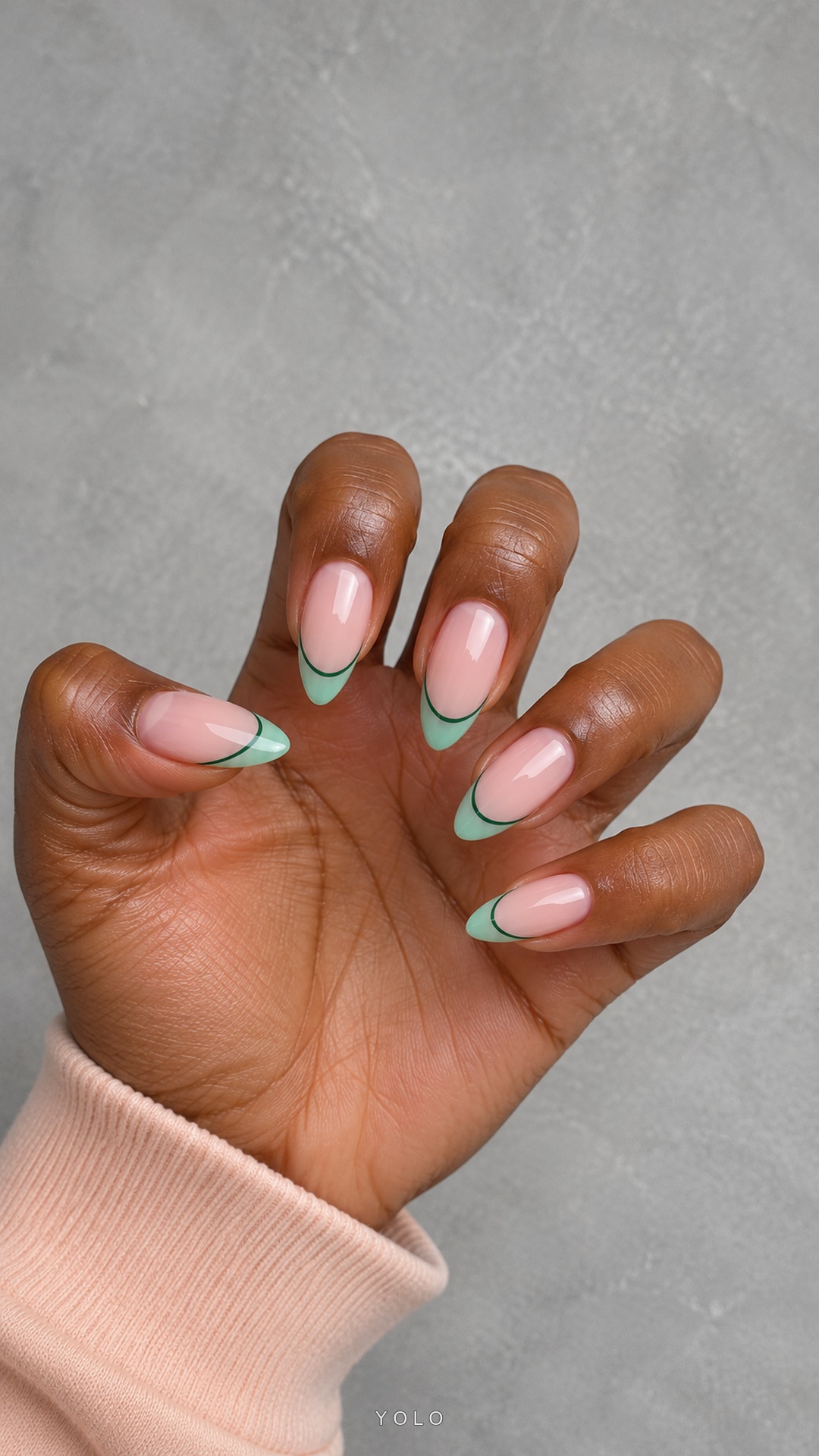
Translucent mint tips give this double French manicure a light, glassy finish. A second forest-green arc traces the curve beneath each edge, adding definition without filling the sheer pink nail bed. The soft pearly glow is subtle enough to let those two lines remain clear. Medium almond shaping complements the curved artwork and keeps the overall effect fluid. This design suits a preference for green nails when a full coat of color feels too strong, while still offering a distinct decorative finish.
Make it yours: Keep a narrow clear gap between the mint tip and the darker arc so the double French effect stays visible. Ask for a light pearly finish; an opaque chrome layer could hide the translucent mint and blur the fine line.
A mini-guide to a balanced French manicure
Match the smile line to the shape
The smile line is the curved boundary between the base and the colored tip. On a rounded nail, a gentle curve can echo the outline. On a squoval shape, a flatter curve may feel more natural. These are visual choices rather than rules: compare a few examples at a similar length to yours.
Leave room for a patterned edge
A lace or botanical border needs enough space for its individual marks to remain visible. If you prefer very short nails, reduce the number of leaves or loops instead of widening every tip. One detailed accent can sit alongside several plain tips in the same palette.
Keep double lines separate
Two arcs create their effect through the gap between them. A very small gap can disappear from a distance, particularly when both shades are pale. Test the line thickness on a practice tip and check it at normal viewing distance, not only in a close-up photo.
Choose a smooth or textured finish
Pearl effects and tiny ornaments can be interpreted as flat painted details or raised decorations. Specify the feel you prefer. For an everyday smooth manicure, a painted dot or metallic line can provide a similar visual accent without building up a larger ornament.
Practice the simplest element first
If you are trying the design yourself, begin with one thin edge on a practice tip. Add the second line or small motif only once you are happy with the shape. Follow the instructions for your polish system, including any drying or curing requirements, instead of using a universal timing rule.
Frequently asked questions
Can May French tip nails work on short nails?
Yes. Try a micro edge, a side sweep or a small patterned accent. Adapt the width of the colored area so the base remains visible.
What is a double French manicure?
It uses a tip or curved edge with a second line below it. The open gap between the lines is part of the design and helps distinguish it from one thick band.
Should every French tip have the same pattern?
No. Repeating the same base and tip color can connect the set while one or two nails carry the detailed pattern. This is useful for lace and botanical accents.
How do I make a colorful French manicure feel subtle?
Use a narrow edge, a softened color and a translucent base. Keep extra artwork small, or choose a single accent nail.
Can I replace a raised pearl with a painted detail?
Yes. Ask for a flat dot or a small pearly mark in the same position. It will have a different texture but can preserve the placement and color balance.
For another take on this theme, explore BeautyCoded’s May French tip collection.