The Best Fluffy Pancakes recipe you will fall in love with. Full of tips and tricks to help you make the best pancakes.


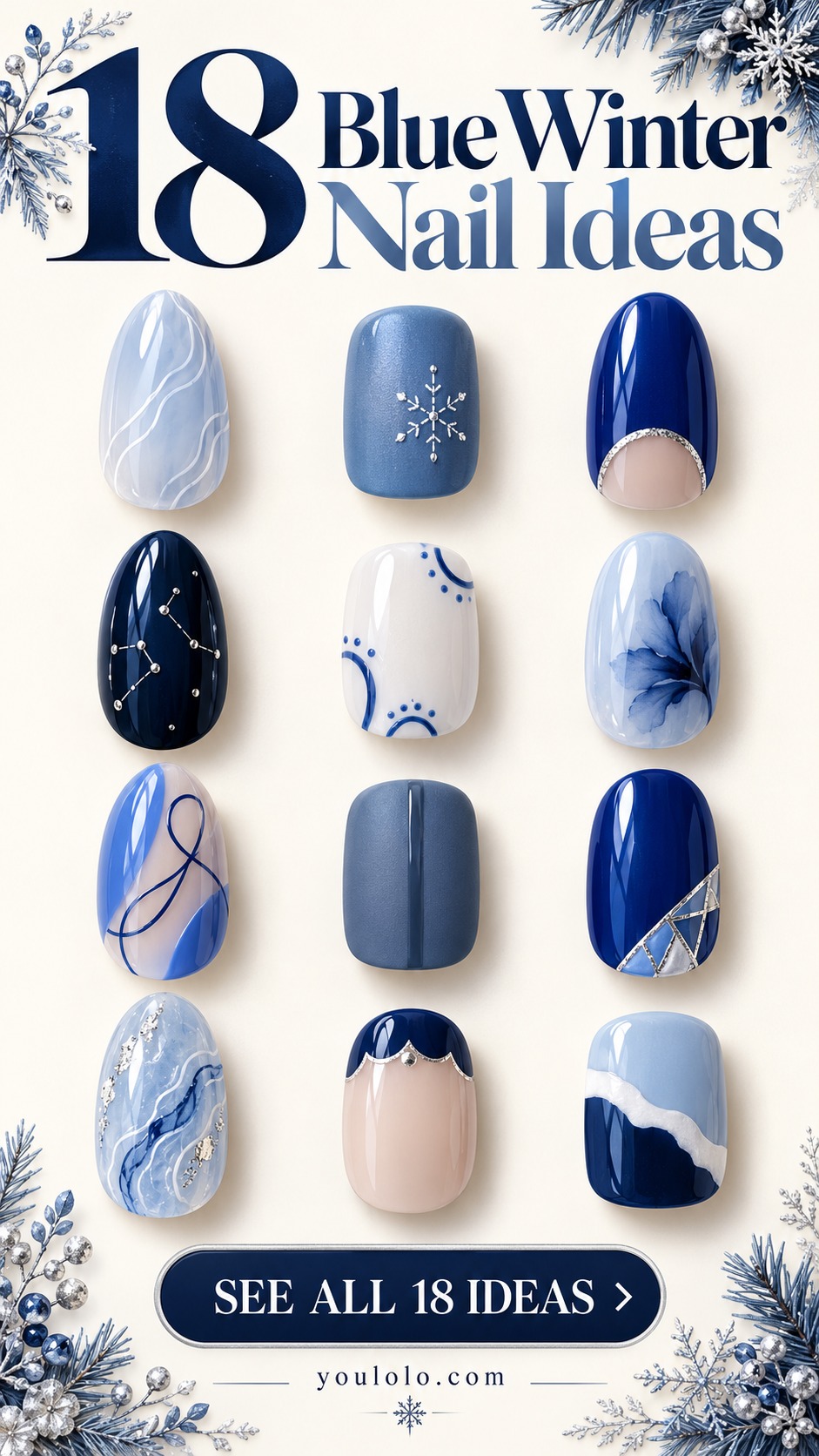
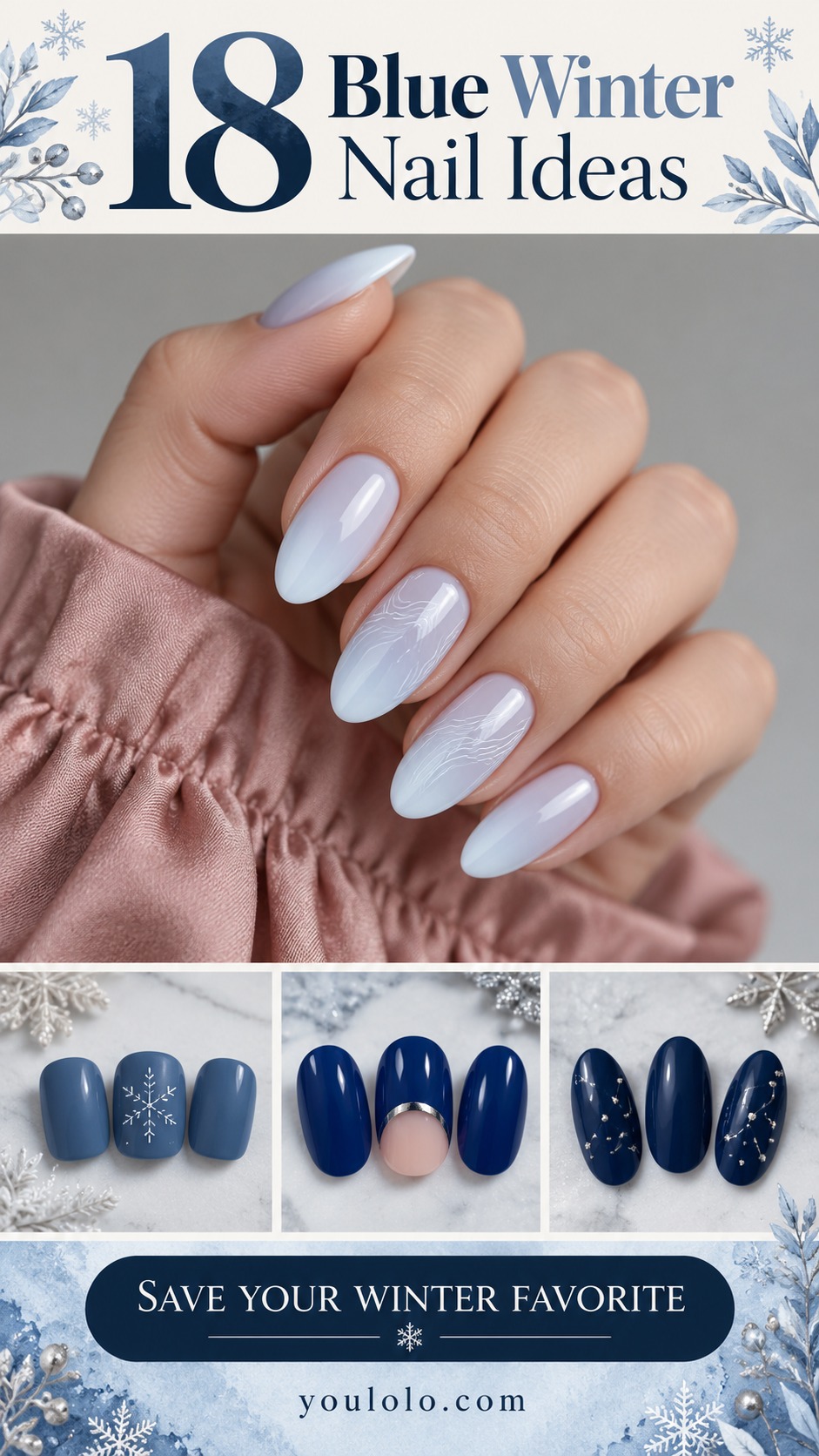
Blue winter nails can be pale and glassy, dark and graphic, or somewhere in between. I wanted this collection to show how much can change while staying within one color family. A soft denim finish, a small porcelain-style accent, and a deep navy constellation each give the manicure a different reason to save it.
The eighteen ideas below move through icy blue, cornflower, cobalt, slate, and midnight shades. Some use detailed painting, while others rely on shape or the contrast between matte and gloss. There are short rounded options alongside medium ovals and almonds, so you can choose the artwork separately from the length. You do not need long extensions to wear a small, clear winter detail.
When choosing your favorite, look at the proportion of plain color to decoration. Two detailed accents can be more readable than the same pattern repeated on every finger. If you love a dark blue but want a softer result, keep one nude or pale accent within the set. If you prefer pastels, a thin white or silver line can add enough definition without making the manicure feel busy. Save the design that catches your eye, then tell your artist which elements matter most: the shade, the surface finish, the shape, or the tiny painted detail. That makes the reference much easier to adapt to your own hands.
How to Choose Blue Winter Nails
Choose the depth of blue before the decoration. Pale shades make white artwork subtle, while navy gives it stronger contrast. Cobalt is more graphic, and denim feels muted. Then decide whether the finish should be translucent, creamy, satin, or reflective; those choices can change the result as much as the color itself.
1. Glacier Contour
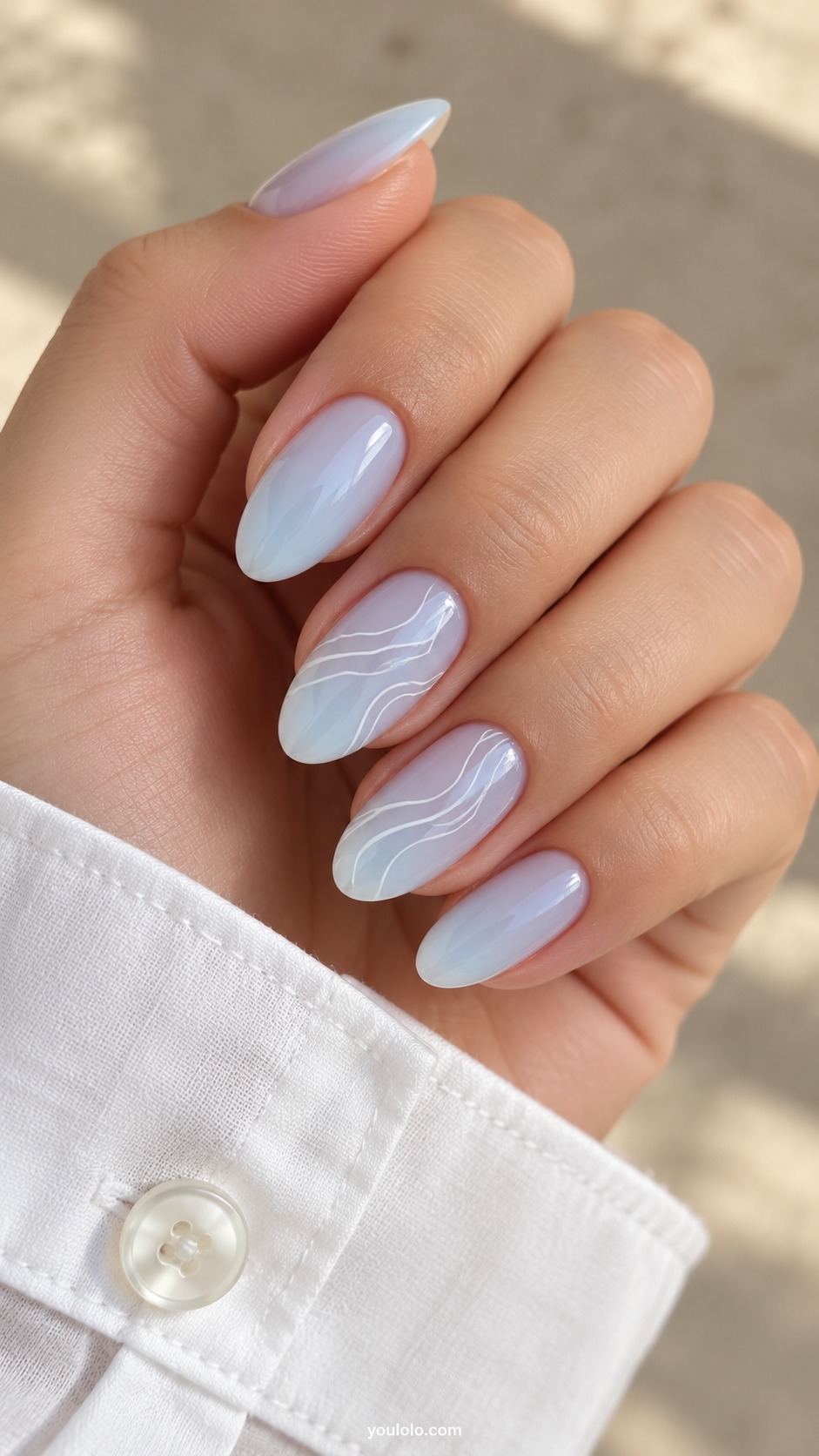
Thin contour lines give pale blue a little movement without hiding the base. Keep the white strokes widely spaced and let them follow the curve of the nail. Two accents are enough; the plain nails make the pattern easier to appreciate.
2. Denim Snow Stitch
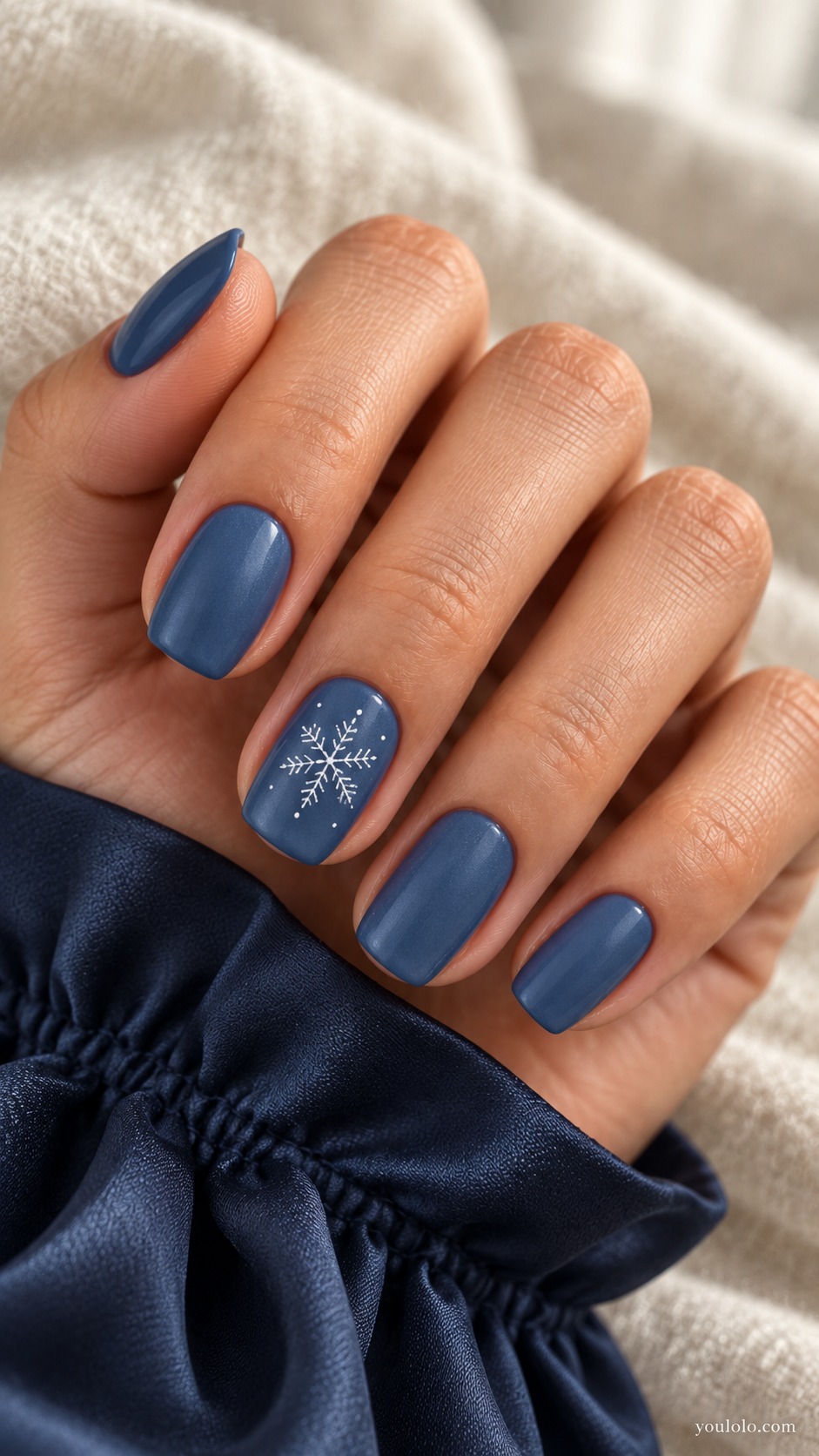
Dashed stitches turn a familiar snowflake into a textile-inspired detail. The denim shade should stay muted, with a smooth satin surface. Ask for a small motif on one finger so the short shape still has visible blue around the artwork.
3. Cobalt Crescent Cutouts

A nude crescent makes cobalt feel lighter and more graphic. Keep the curve clean and consistent from finger to finger. A single silver outline can finish the ring nail, but the remaining crescents look best with no extra decoration.
4. Midnight Constellation Map

Tiny connected dots create a night-sky detail without a large star on every nail. Leave the constellations sparse and place them differently on the two accents. The deep navy background should remain the strongest part of this manicure.
5. Blue Porcelain Arches

Small arches and dots give blue-and-white nails a porcelain-inspired rhythm. Keep the painted elements compact rather than repeating them over the entire surface. Powder blue supporting nails soften the contrast and make the white accents feel intentional.
6. Arctic Ink Bloom

One flowing ink bloom adds an organic shape to a glassy blue set. The dark pigment should spread softly at its edges while remaining readable as one accent. Keep the other nails translucent and plain so the bloom has room to stand out.
7. Cornflower Ribbon Loops
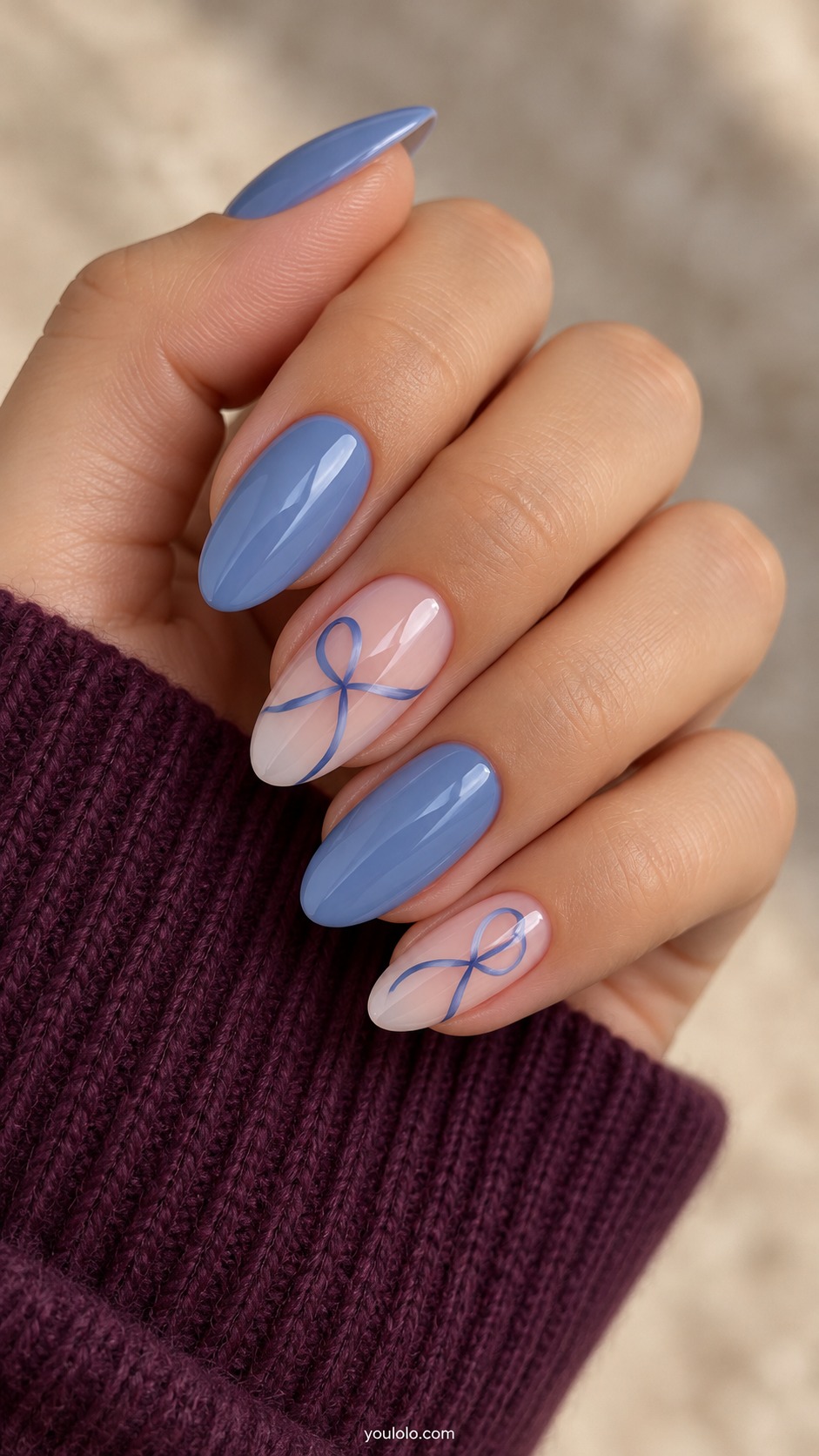
Painted loops offer the sweetness of a ribbon without a bulky bow. Let the lines cross loosely on the nude accents, keeping the strokes narrow. Cornflower on the other nails provides enough color; there is no need to add glitter.
8. Slate Suede Gloss Stripe

Matte and gloss can create a pattern even when the color stays the same. A narrow shiny stripe gives slate blue a subtle vertical detail. Keep its edges crisp. This is a useful reference for someone who prefers texture contrast to painted motifs.
9. Sapphire Mosaic Corner

A small mosaic corner adds a crisp detail to sapphire nails. Use just a few pale pieces and keep the silver divisions fine. The artwork should occupy one corner rather than the entire accent, leaving the saturated blue clearly visible.
10. Frozen Lake Marble

Fine white swirls suggest movement beneath a frozen surface. Keep the blue veins irregular and allow some nails to stay quieter than others. Silver flakes should be very sparse; the translucent layers are what make this design interesting.
11. Navy Scalloped Edge

A scalloped navy edge feels softer than a straight geometric tip. Keep each curve small enough to suit the short oval shape. One silver dot is plenty. A generous nude center prevents the decorated edge from making the nails look crowded.
12. Blue Snowcap Blocks
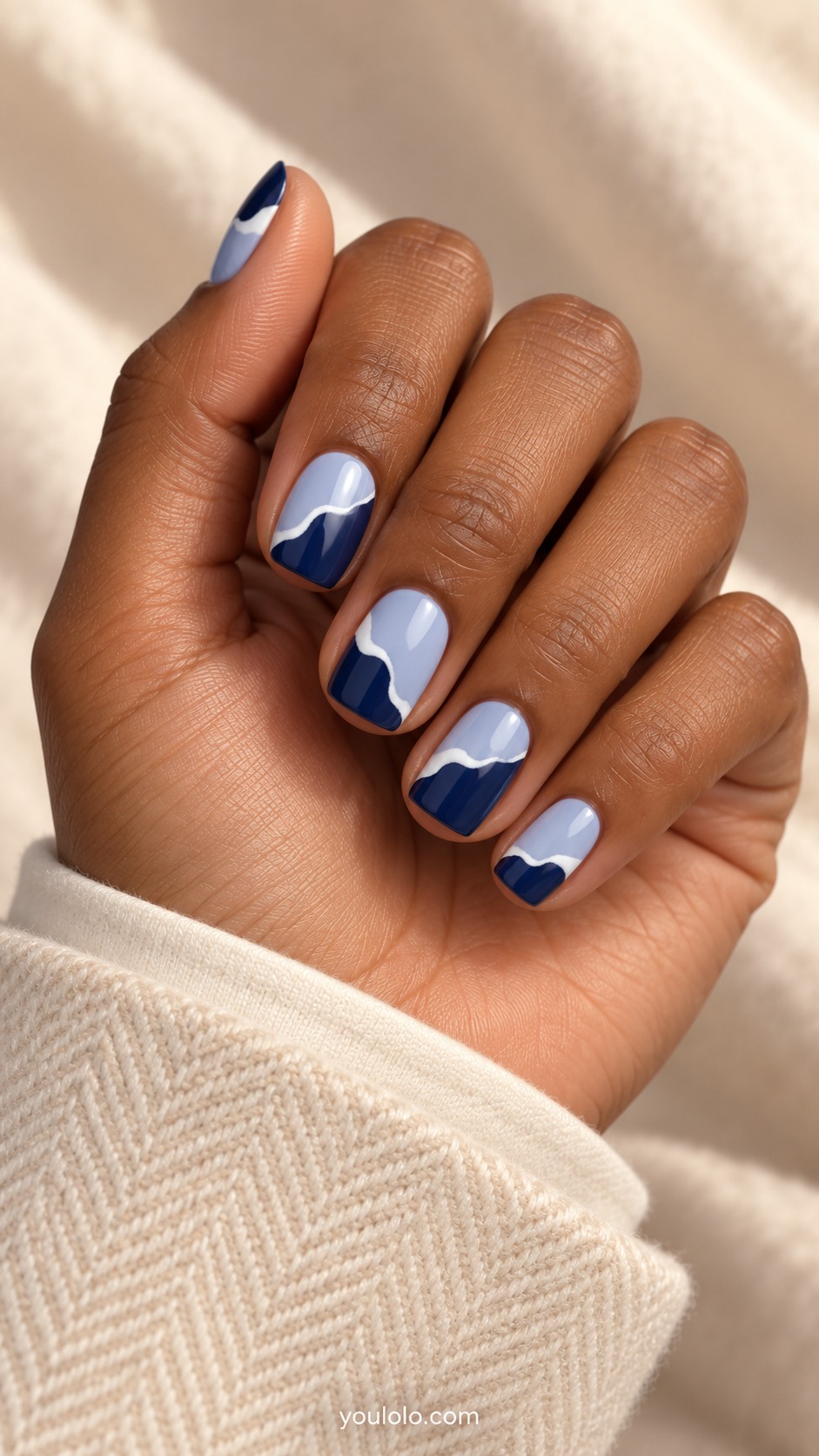
An uneven white curve separates two blue blocks like a little snow bank. Let the placement vary across the hand while keeping the palette consistent. The design works best with broad simple shapes instead of adding a separate winter motif.
13. Periwinkle Crystal Chain
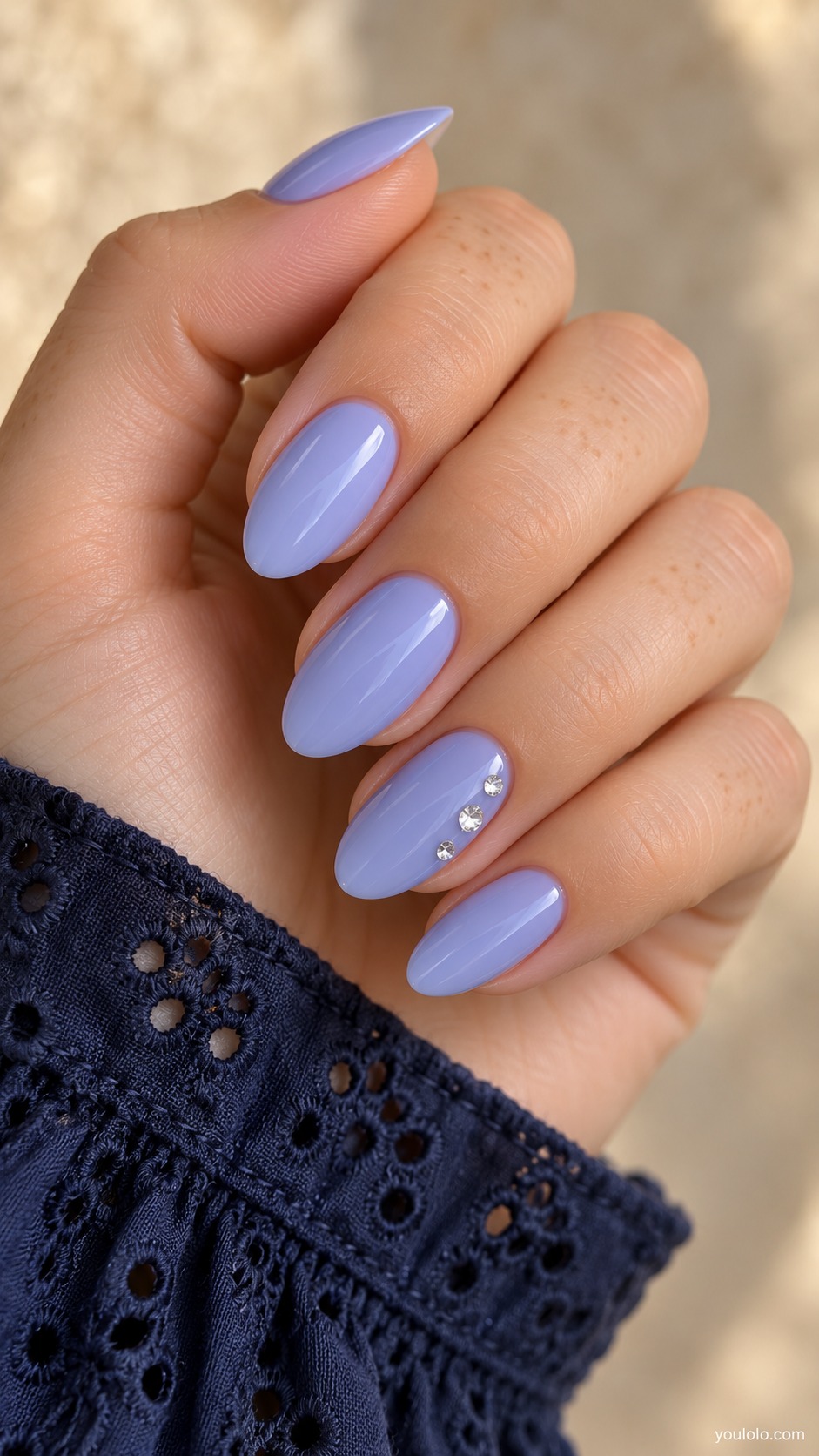
Three tiny crystals give periwinkle a clear focal point. Place them along one side of the ring nail, leaving the center open. Small flat accents suit the clean shape better than a large gem, particularly if you want an everyday set.
14. Ink Blue Tulip Outline

A white tulip outline brings a botanical detail into a dark blue manicure. Keep the stem and petals fine, with the navy showing through them. Use two accents and leave the others plain so the flowers stay delicate rather than decorative wallpaper.
15. Icy Blue Fishnet Panel

A single lattice panel introduces a little structure to pale blue. The silver lines need enough space between them to remain readable. On a shorter nail, use fewer diamonds instead of making the whole pattern extremely tiny.
16. Cobalt Jelly Pebbles

Translucent cobalt gives small pale marks a glass-like setting. Keep the irregular dots scattered rather than evenly arranged. The depth of the blue is the main detail, so choose a few flat painted shapes rather than raised embellishments.
17. Storm Blue Half Frame
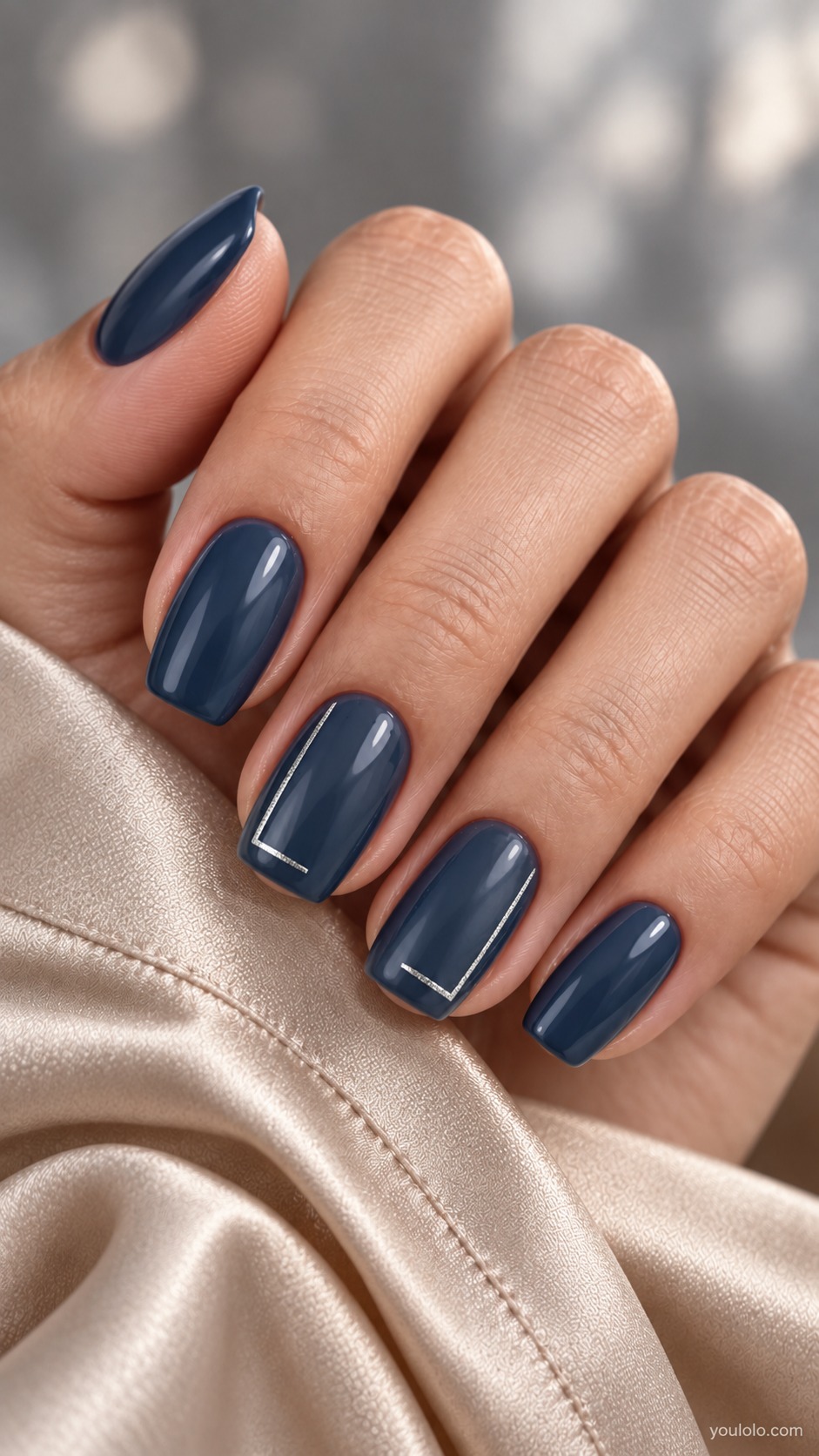
Two small brackets can make smoky blue feel sharply finished. Put them in opposite corners and leave the middle untouched. The silver lines should be fine enough to complement the base rather than turn the accent into a heavy frame.
18. Blue Hour Moonrise

A pale semicircle at the base gives indigo nails an understated moonrise detail. Keep the edge soft but recognizable, with plenty of dark blue above it. One small white dot completes the idea without covering the rest of the nail.
What to Show Your Nail Artist
Save your favorite design together with a second image that shows your preferred length and shape. Explain which details matter most: the base color, placement, finish, or amount of decoration. Ask to see the color against your hand before the artwork begins. If the original design feels too busy, keep one accent nail and repeat a single supporting color on the others.
You can also compare these looks with our blue Christmas nail ideas for another direction at your next appointment.
For another visual perspective, browse InStyle’s winter nail inspiration. Compare the color, shape, and finish separately when choosing a reference for your appointment.
Frequently Asked Questions
Which blue shades work for winter nails?
Icy blue, dusty denim, slate, cobalt, and navy each create a different mood. Pick the depth and undertone you enjoy against your hand, then choose the artwork around that shade.
Can blue winter nails be subtle?
Yes. Muted blue, a short shape, and one small accent can keep the set restrained. A satin finish or a fine tone-on-tone stripe also adds detail without strong contrast.
Do blue winter nails need snowflakes?
No. This collection includes contour lines, mosaics, botanical outlines, and simple finish contrasts. The palette can suggest winter without a literal snow motif.
Which blue designs suit short nails?
Denim stitches, scalloped edges, small color blocks, and one tiny accent work well on compact shapes. Keep the artwork small enough to leave visible base around it.
What should I ask my nail artist to match?
Show the blue shade in the reference and explain whether you want an opaque or translucent finish. Point out the accent placement separately from the length and shape.
Save Your Favorite Idea
Save one pale blue idea and one deeper version. Comparing them side by side makes it easier to choose the mood you want before adding the small details.