The Best Fluffy Pancakes recipe you will fall in love with. Full of tips and tricks to help you make the best pancakes.


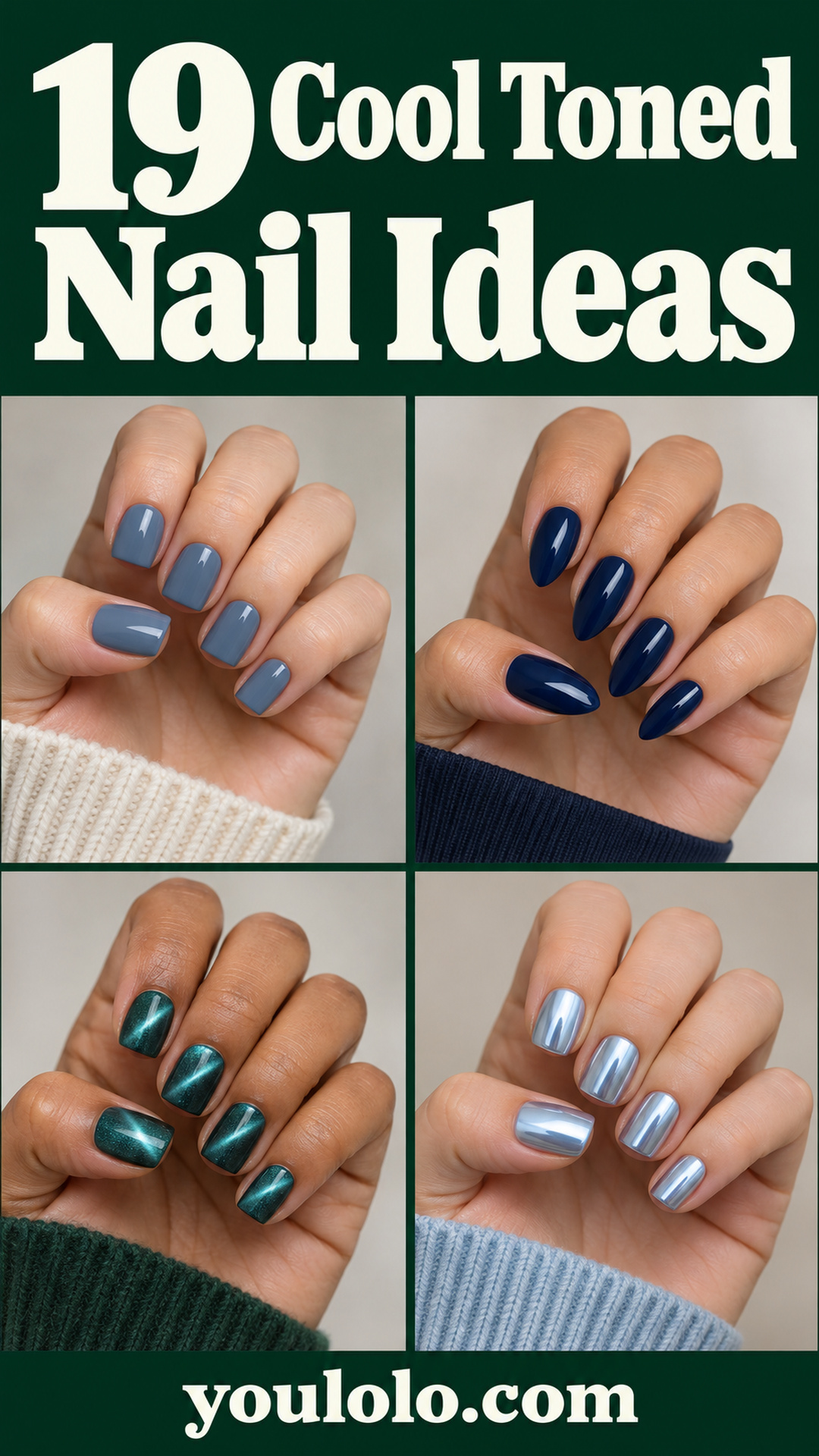
Cool toned nail ideas can be soft and muted or deep and striking. A dusty blue with fine white lines feels very different from glossy navy, even though both belong in the same broad color family. I like comparing them side by side before deciding whether I want the shade or the finish to attract attention first.
This collection focuses on blue and green references with a mix of plain color, glitter, abstract lines and pale accents. The shapes range from short squares to longer almonds. Some sets use one color across most of the hand, while others break it up with a nude section or a single patterned nail. That gives you several ways to wear a cool palette without tying it to a seasonal motif.
When choosing a reference, look at the balance between dark and light areas. A pale speckled accent can make deep navy feel less dense, while matte polish gives a strong blue a quieter surface. You can adapt the same palette to a different shape or reduce the number of decorated nails. Every photograph includes a Pinterest credit so you can save the original image. For the closest color choice, compare actual polish swatches too, because blue and green can shift noticeably with lighting and screen settings.
1. Forest Green with a Glitter Accent

Glossy green nails are paired with one sparkling green-gold accent, creating a rich color story without complicated artwork. The short rounded-square shape makes the set feel tidy. I would keep the main polish and the glitter close in depth so the accent looks connected to the rest. This is an easy reference for adding variety to a mostly solid-color manicure.
2. Slate Blue with Tiny Dot Edges

Glossy blue-gray nails are decorated with small pale dots gathered near the ends. The curved placement adds a little detail without a full French stripe. I like how the pattern follows the rounded shape of each nail. Keep the dots small and loosely spaced if you want to preserve the smooth blue surface as the main feature.
3. Matte Blue with Fine White Curves

Matte-looking blue sections sit beside nude areas separated by thin white curves. The short square shape gives the abstract pattern a compact frame. This is a good reference for using a strong color in smaller sections instead of painting every nail fully blue. Repeat the same white line thickness across the set to keep the different shapes coordinated.
4. Blue Matte, Glitter and Tiny Studs
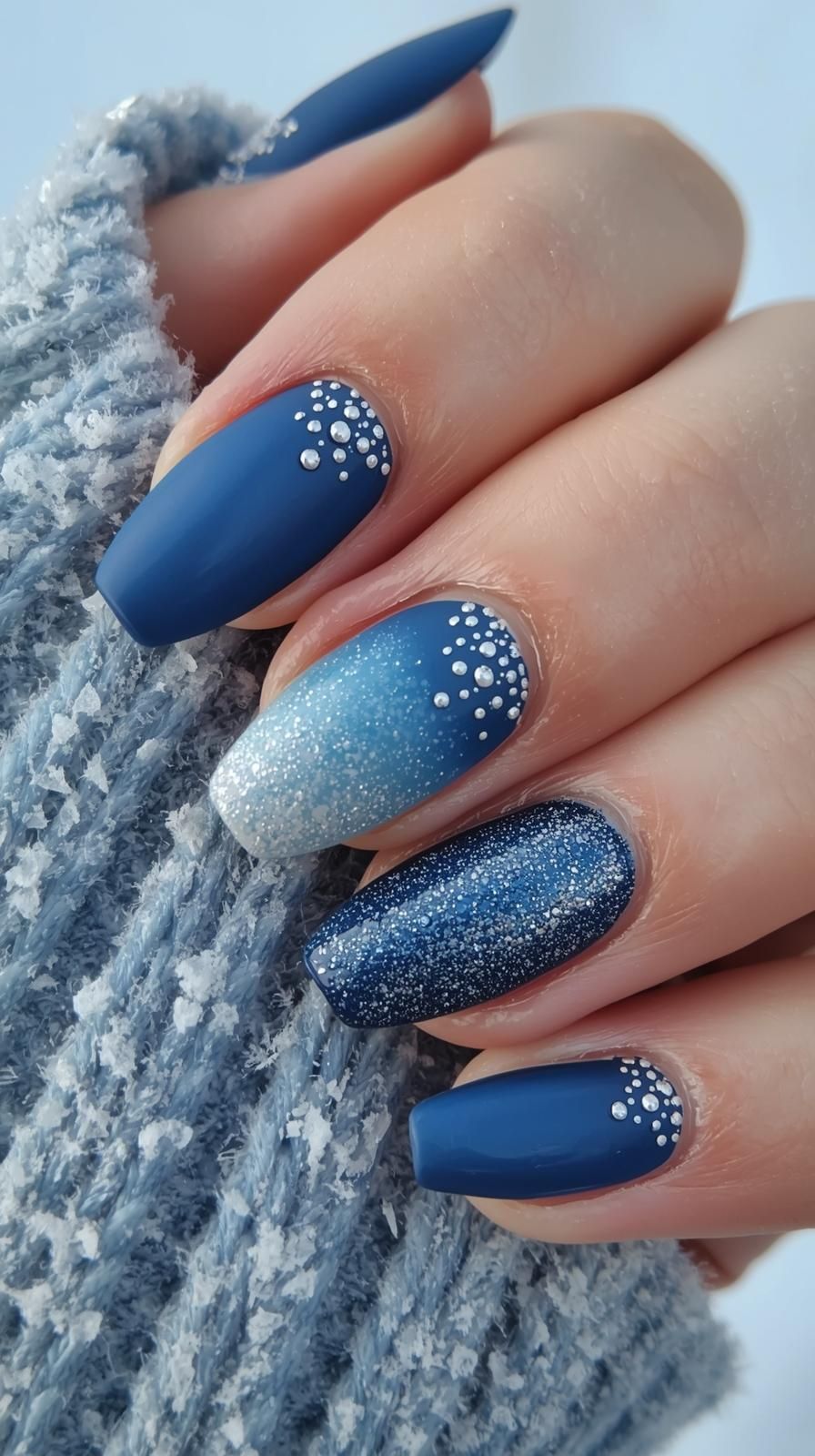
Deep blue nails mix a soft-looking finish with glitter and small reflective dots near the base. The related shades keep the different textures from competing. I would choose one main blue first, then add a lighter or sparkling accent within the same family. The result feels detailed without needing a large illustration or an extra contrasting color.
5. Deep Blue Shimmer Squares
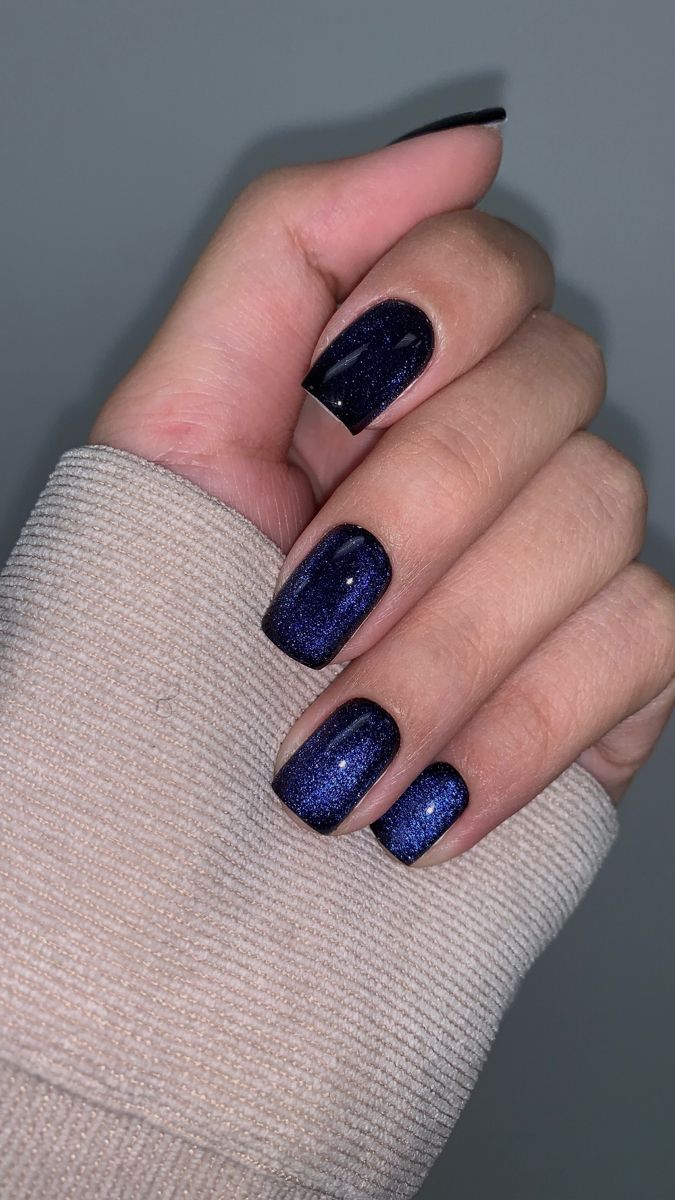
A dark blue base contains a concentrated, fine shimmer that catches the light across short square nails. The plain layout gives the finish room to stand out. This is a useful reference if you prefer a richer color but still want a simple manicure. A neat outline and even length are enough to complete the look without adding separate accents.
For another way to compare these details, browse our blue almond nail ideas and save the feature you would most like to keep.
6. Dusty Blue with White Waves
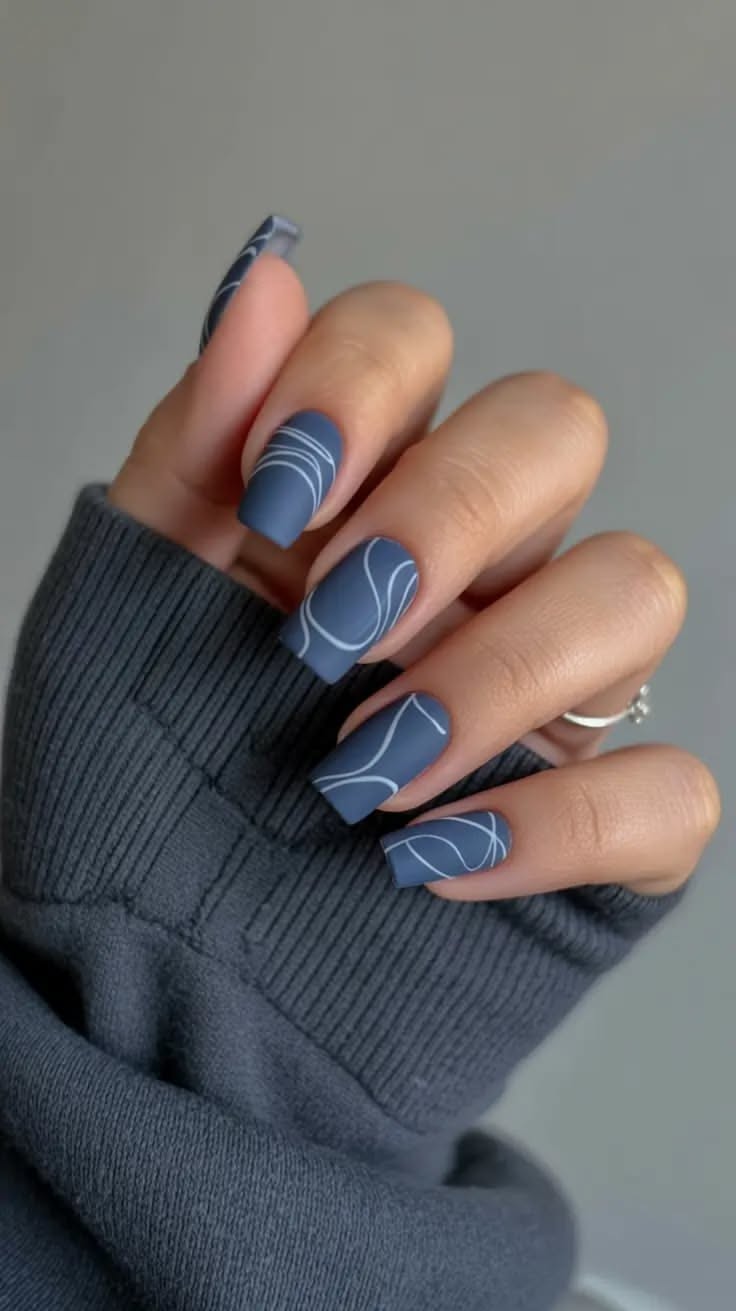
Fine white lines flow over a muted blue base, creating a gentle abstract pattern on longer square nails. The pale strokes stand out clearly without covering much of the color. I like the variation from nail to nail, especially because the line weight stays consistent. Leave some open blue space between the curves to keep the design airy.
7. Cobalt with Pale Abstract Marks

A saturated cobalt base is interrupted by lighter blue shapes that run down the nails. The graphic contrast gives a short square manicure more movement. I would keep the supporting shade within the blue family so the pattern feels connected rather than patchwork. This reference is useful for comparing how much lighter color you want over a darker base.
8. Matte Blue with a Marbled Accent

Muted dark blue covers most of the almond nails, while one accent combines pale gold and blue in flowing marbled lines. The matte-looking solids make the patterned nail feel more prominent. I like the balance of one detailed accent against a quiet background. Keep the marble colors related to the main polish if you want the same cohesive effect.
9. Glossy Navy with Speckled Nude
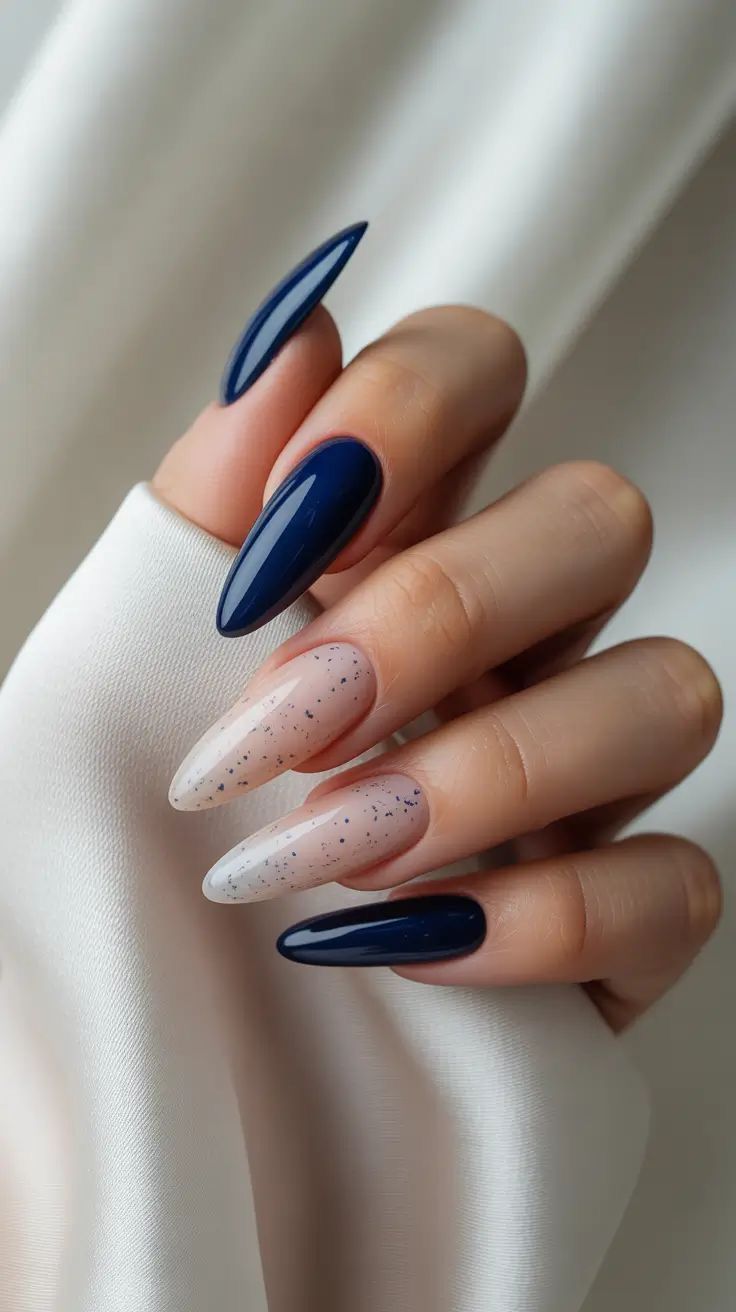
Rich navy nails frame two pale speckled accents, giving the long almond shape a clear color contrast. The tiny dark flecks connect the lighter nails to the navy without repeating a full pattern. This is a lovely reference for mixing opaque and sheer-looking finishes. I would keep the speckles fine so the pale sections remain visibly light.
Save this collection for your next manicure appointment.

10. Pearlescent Pale Blue Squares

A pearly sheen adds dimension to this very pale blue without introducing a separate pattern. The short square tips keep the reflective surface tidy and easy to compare with a plain glossy finish. I would save this reference for the way the light moves across the polish, then choose the exact blue from a swatch.
11. Clean Powder Blue Square Nails

Powder blue covers the nails evenly, creating a fresh block of color against the straight square shape. There is no accent nail to interrupt the palette, so the outline and gloss do all the work. This is a useful starting point if you want a cool color but do not want glitter or detailed artwork.
12. Slate Blue on Short Squares

This deeper slate shade has a gray undertone that makes the blue feel restrained. The short square shape and plain glossy finish keep the manicure uncomplicated. Compare it with the brighter powder blue reference if you are deciding between a softer, airy color and a more muted shade with a little extra depth.
13. Deep Teal Shimmer Squares

A darker teal base and a lighter reflective area give these squares more movement than a flat green polish. The effect is strongest where the light catches the center of the nail. Keep additional art minimal if you choose a similar finish; the shifting highlight already provides a clear focal point on each finger.
14. Blue Marble and a Speckled Accent

Plain blue nails frame one marbled accent and one pale nail with scattered reflective flecks. Repeating the same blue through the different treatments keeps the set connected. If you prefer fewer details, keep just the marble nail and use solid blue elsewhere. The mix is easy to simplify without losing the original color story.
15. Navy Almonds with Pale Split Accents

Glossy navy sits beside pale accent areas, including a divided nail and a scattered glitter detail. The almond outline gives the dark blue a smooth, flowing shape. I like how the lighter sections break up the depth of the navy; keep them limited so the manicure still feels centered on that rich main color.
16. Cobalt Blue with Diagonal Gold Details

Strong cobalt covers several nails while diagonal blue sections and small gold accents decorate the others. The nude areas give the brighter color room to stand out. This is a useful reference if you like bold blue but want some variation in coverage. Keep the gold concentrated around the diagonal border for a clear focal line.
17. Short Blue Nails with a Reflective Finish

These short rounded squares show how much character a single reflective blue can have without an accent pattern. Lighter streaks shift across the surface while the edges stay deeper. The compact shape is part of the appeal: you get a strong color statement without needing extra length or several different decorations.
18. Pale Nails with Fine Silver Blue Tips
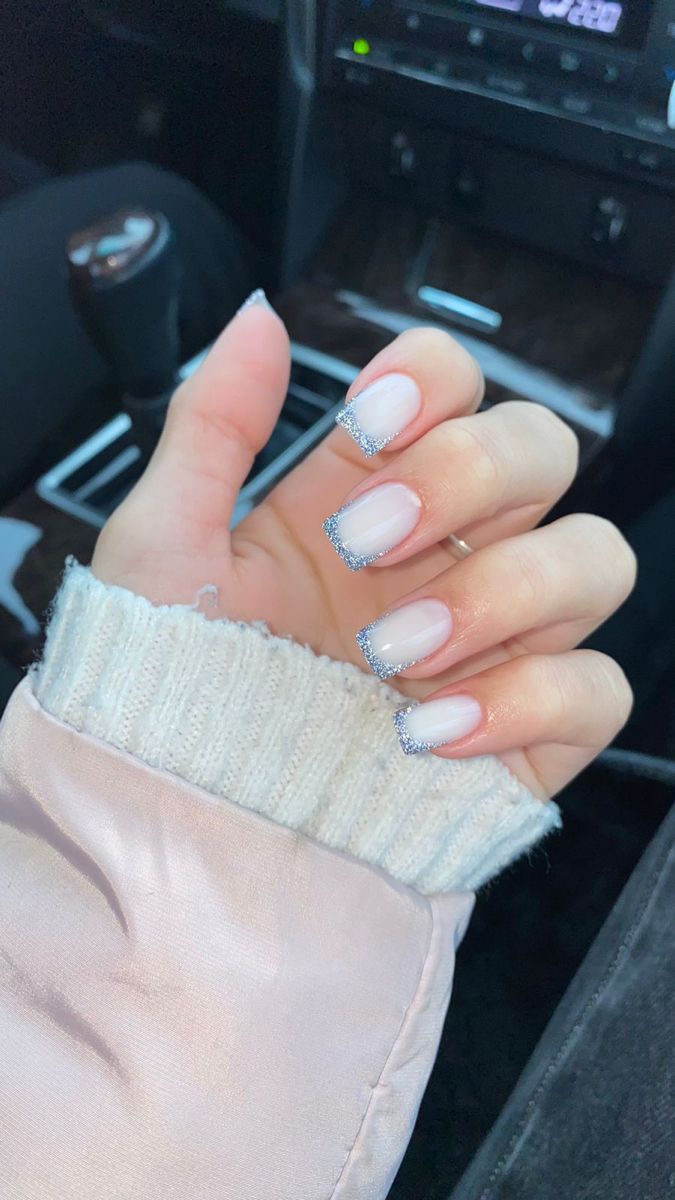
A cool pale base meets a narrow sparkling edge in this understated French variation. The fine silver-blue line gives the manicure a cooler direction without covering much of the nail. If full blue polish feels too strong, this is a small detail to borrow while keeping the rest of the set soft and light.
19. Muted Blue Almonds with a Silver Accent

The smooth muted blue is interrupted by a single pale nail with a concentrated silver detail. Long almonds give the palette a more elongated shape than the short square references. Keep the accent limited to one area if you want the blue to remain the main impression; the contrast is already enough to make it noticeable.
How to Choose Your Favorite Look
Pick the depth of color first: light and dusty, medium and saturated, or dark and rich. Then decide whether you want a smooth gloss, a matte-looking surface or a reflective accent. If you mix finishes, repeat one main shade to hold the set together. A single pale nail or a fine white line can provide contrast without introducing a completely different palette.
Bring one clear reference to your appointment and point out the specific part you like. Shape, color and finish are separate choices, so you can adapt them instead of copying the photograph exactly. If the design has several details, choose the one that matters most and give it enough space on your own nails.
Frequently Asked Questions
Which colors are included in this cool-toned collection?
The references center on blue and green, including slate blue, cobalt, navy and forest green. Some add nude, white or a small warm accent to balance the main shade.
Can blue nails look understated?
Yes. A muted blue, a short shape or a matte-looking finish can make the color feel quieter. You can also use blue only in a small section beside a pale base.
How do I mix matte and glitter finishes?
Keep them within a related color family and choose where the strongest sparkle should sit. A few glitter accents are enough when the main color already has depth.
What is a simple way to add detail to a plain blue manicure?
Try a fine white curve, a few small dots or one pale speckled accent. Leave enough of the main blue visible so the design still reads as a coordinated color story.
Where can I save the original manicure photo?
Use the Credit link directly below the photograph. It opens the corresponding Pinterest pin so you can save the reference and return to it later.
Can I combine elements from two references?
Yes. Choose one main palette and one focal detail, then simplify the supporting elements. Keeping a shared color or finish helps the result feel coordinated.