The Best Fluffy Pancakes recipe you will fall in love with. Full of tips and tricks to help you make the best pancakes.

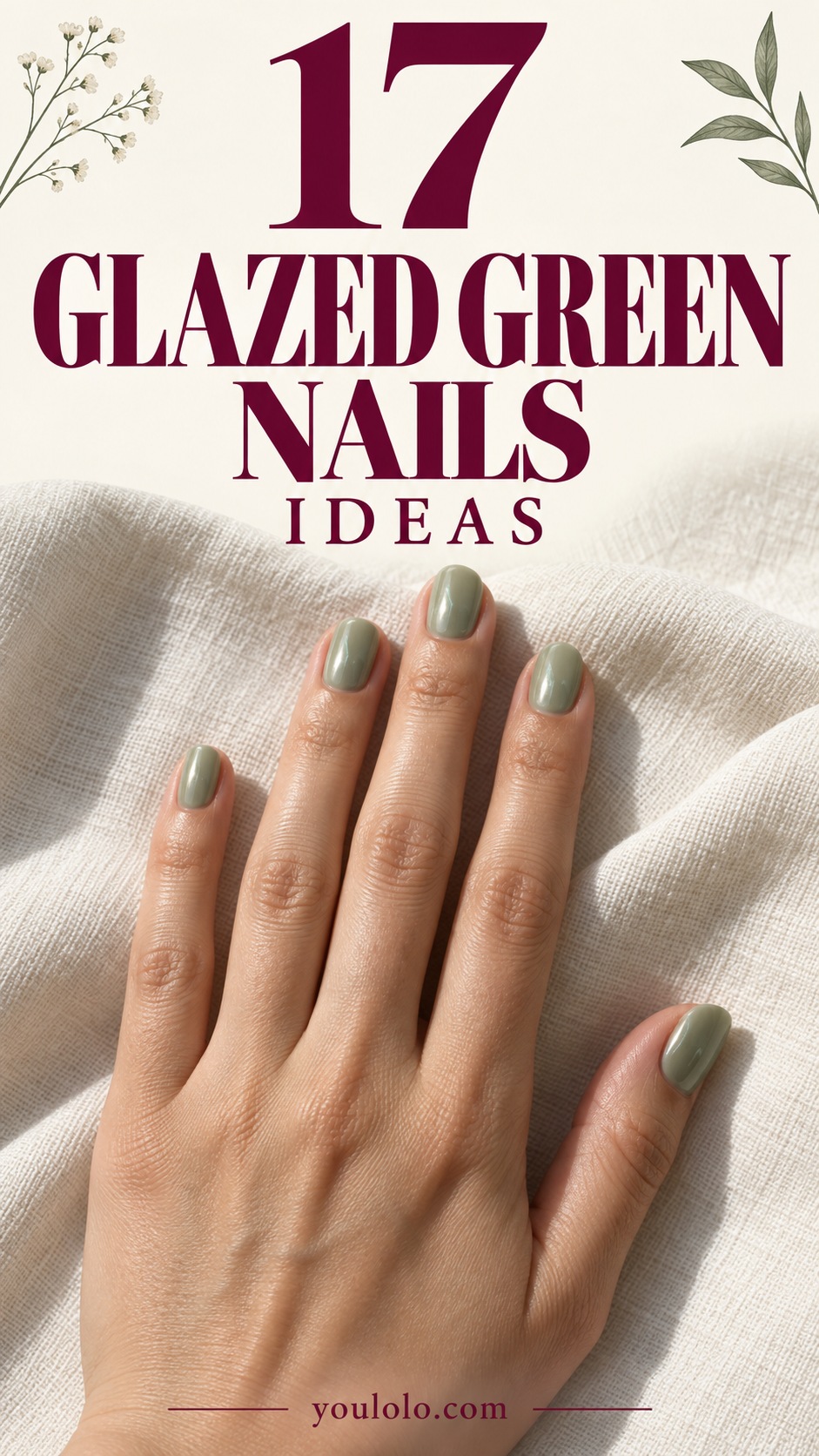
Green is where a glaze can change the whole mood of a color. A white pearl veil makes sage feel milky, while a warmer reflection brings out the earthiness in olive. On a dark forest base, even a delicate layer of light becomes noticeable. Glazed green nails give you a wide palette before you add a single motif.
This collection moves from pale and muted shades into deeper greens, with a few French, negative-space and painted-accent options along the way. I would decide whether I wanted a yellow-green, a blue-green, or a gray-green first. That choice matters more than picking the most dramatic saved photo.
Find the undertone for your glazed green nails
| Color direction | Examples in this guide | What to compare |
|---|---|---|
| Muted and gray-green | Sage, eucalyptus | How cool or dusty the base looks |
| Warm and earthy | Olive, moss, matcha | How much yellow or brown appears |
| Light and fresh | Mint, pistachio, seafoam | Whether the glaze leaves enough color visible |
| Deep and shaded | Forest, emerald, pine | Whether the green stays visible away from direct light |
The finish is a separate decision from the color. Ask for a soft pearl veil if that is what attracts you; a strong metallic reflection can change the result substantially. A magnetic band is another distinct effect and is not required for any design here.
Images are individually AI-generated design references, not salon photographs or exact product swatches. Colors and reflections will vary with the actual products, base and lighting.
1. Sage Milk Glaze
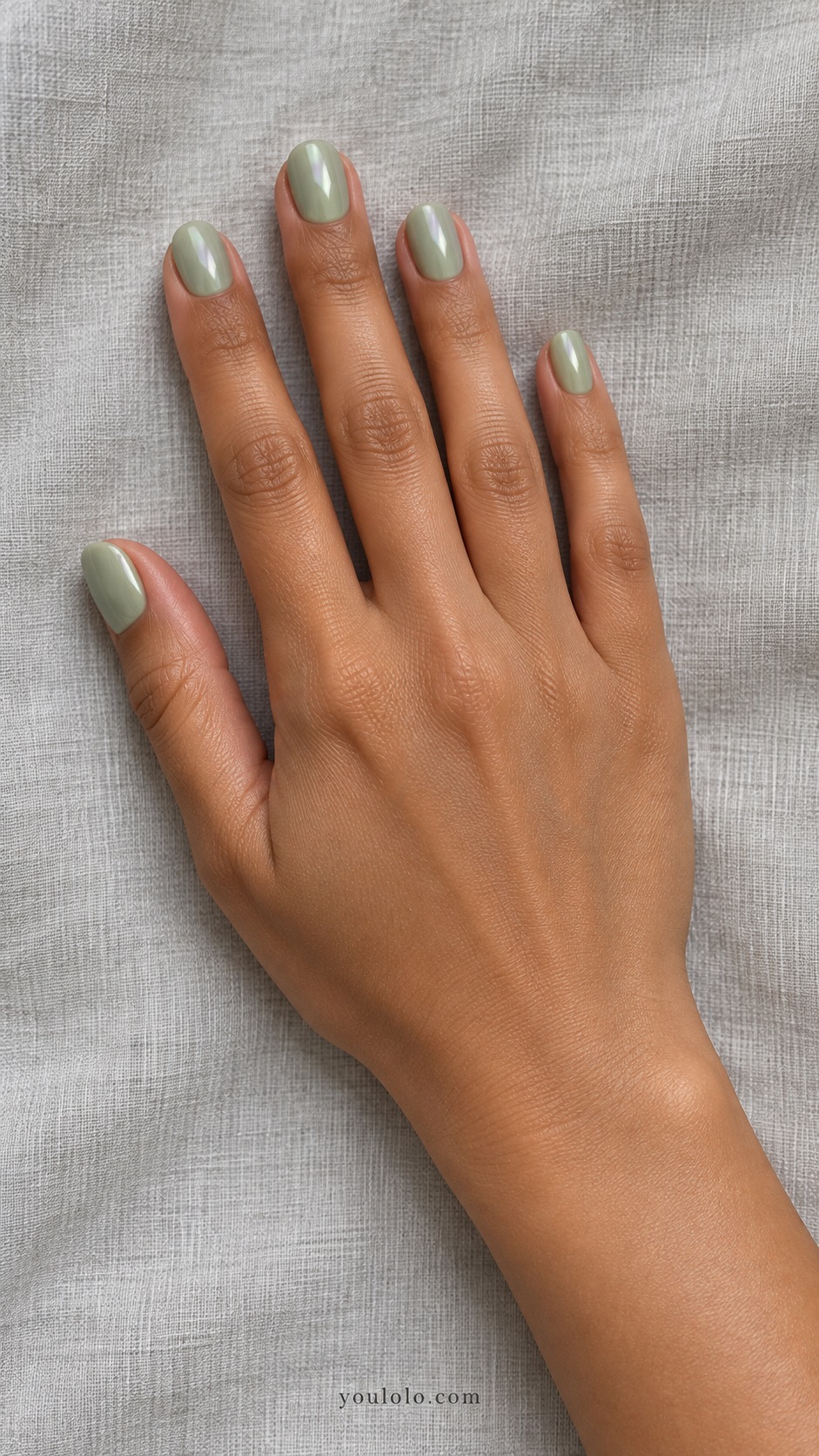
Milky sage is a gentle entry point into glazed green nails. The gray in the base keeps the green muted, and a white pearl veil gives it light without a metallic surface. Short ovals make the result feel compact and easy to wear with everyday clothes.
I would compare sage with a more blue-toned eucalyptus before choosing. Beside a warm cream sweater, the difference becomes easier to see. Keep the glaze delicate so the muted green remains visible instead of turning into a pale silver set.
2. Olive Pearl Almonds
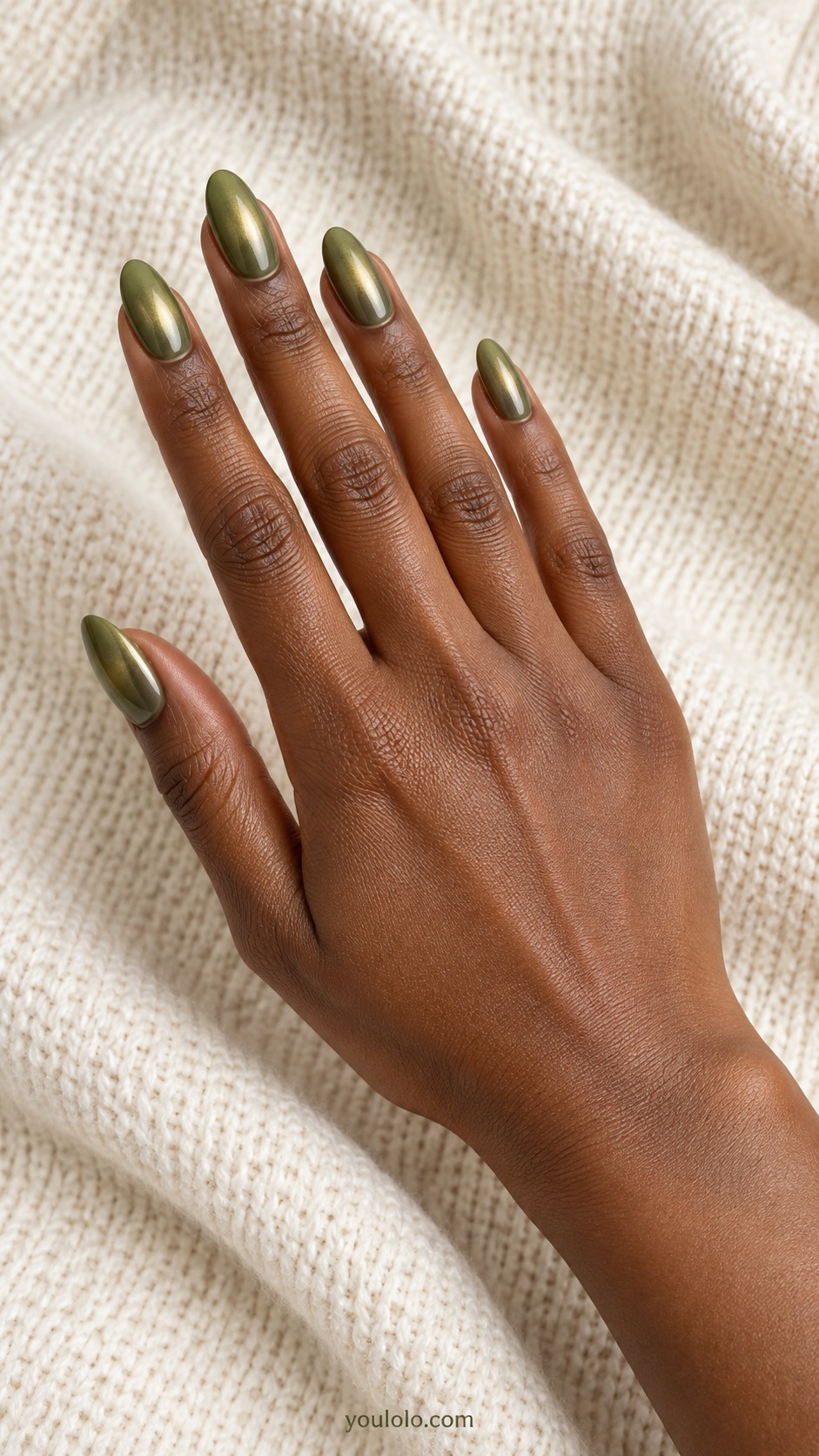
Olive becomes warmer when a fine golden pearl reflection passes over it. The almond shape gives the light a longer surface, while the green-brown base keeps the manicure earthy. This feels very different from a bright emerald even though both belong to the same color family.
Ask for a golden veil rather than bronze mirror chrome. I would check the sample next to camel and black fabrics, then choose the combination I prefer. Additional foil would compete with the subtle warm reflection, so I would leave the set plain.
3. Mint Glazed French
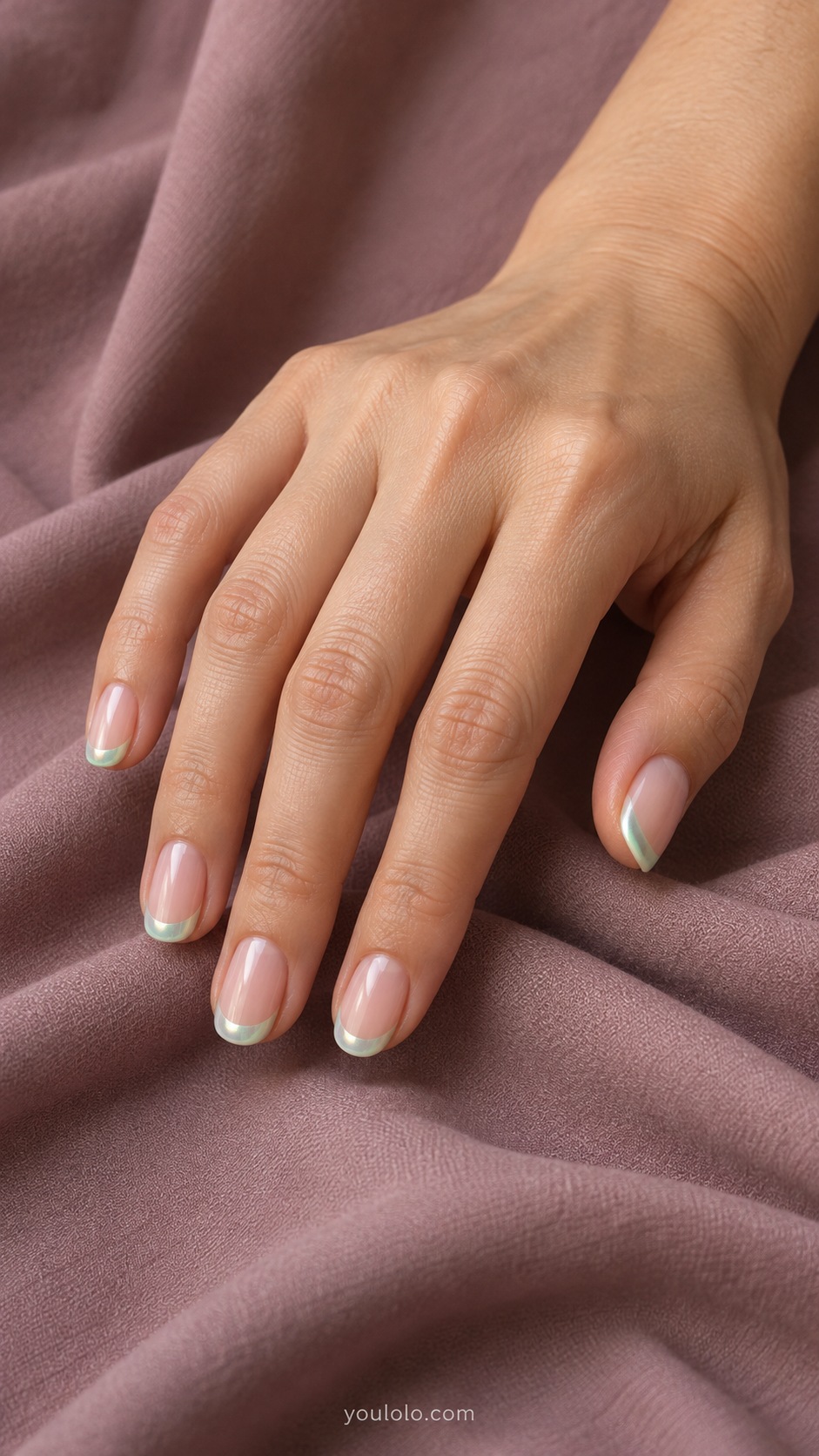
Mint pearl tips bring a cool accent to a sheer neutral base. The short oval shape keeps the French border light, and the green stays concentrated at the edge. It is a useful choice when you like mint but do not want it covering the entire nail.
Keep the tip proportionate to the available length. I would choose a milky mint for a softer contrast and a clearer green for a sharper one. A white shirt or pale denim gives the small colored edge enough space to show.
4. Forest Pearl Oval
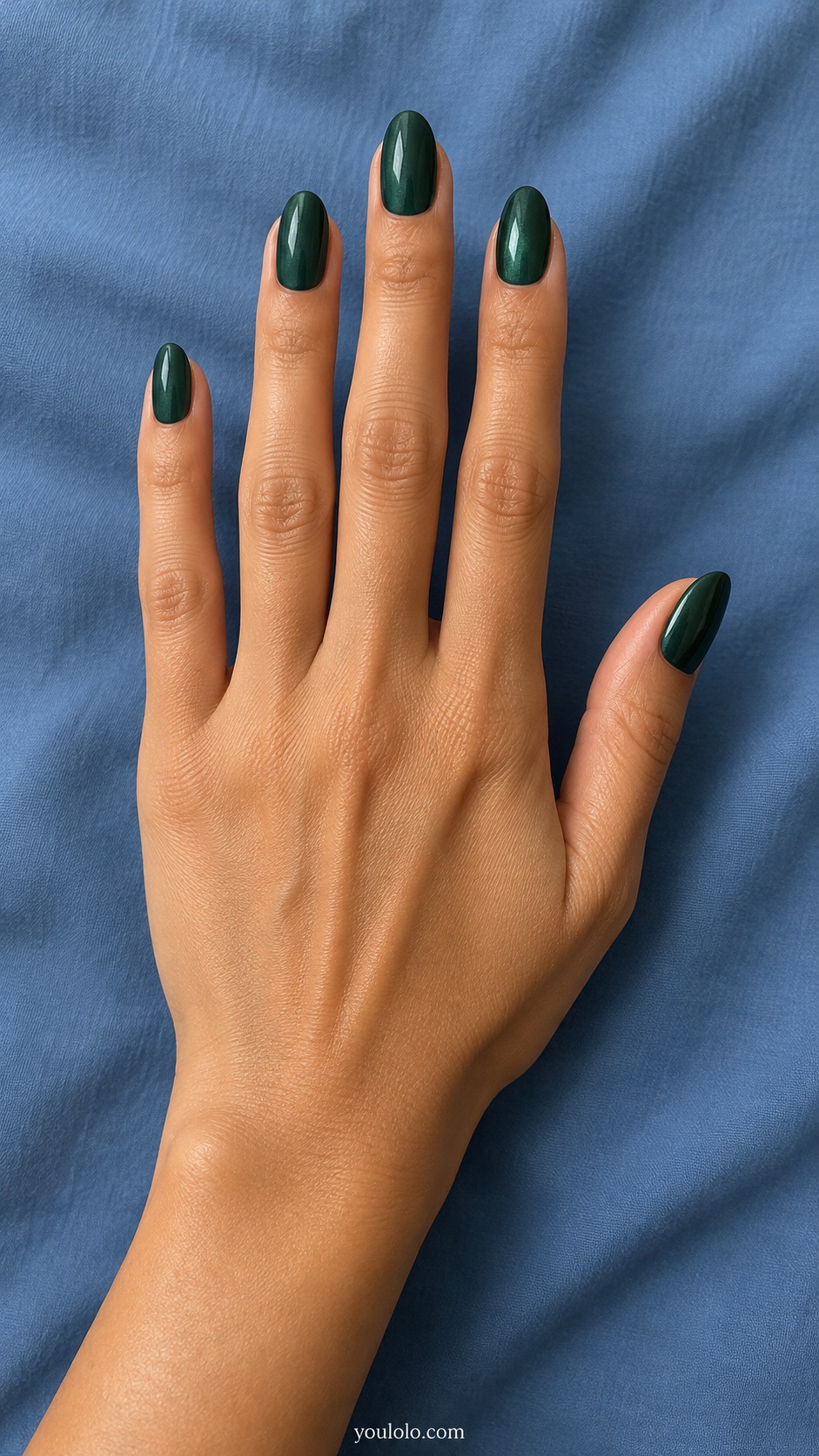
Deep forest under a cool pearl glaze has a shaded, almost inky quality. The oval nails remain visibly green, with a soft reflection spread across the surface. I prefer this to a mirror finish when the goal is depth rather than a strong metallic statement.
Check the sample away from a bright lamp so you can see whether the base still looks green. If it reads nearly black, compare a lighter forest shade. A gray or ivory sleeve would give the darker manicure a clear visual boundary.
5. Pistachio Cream Fade
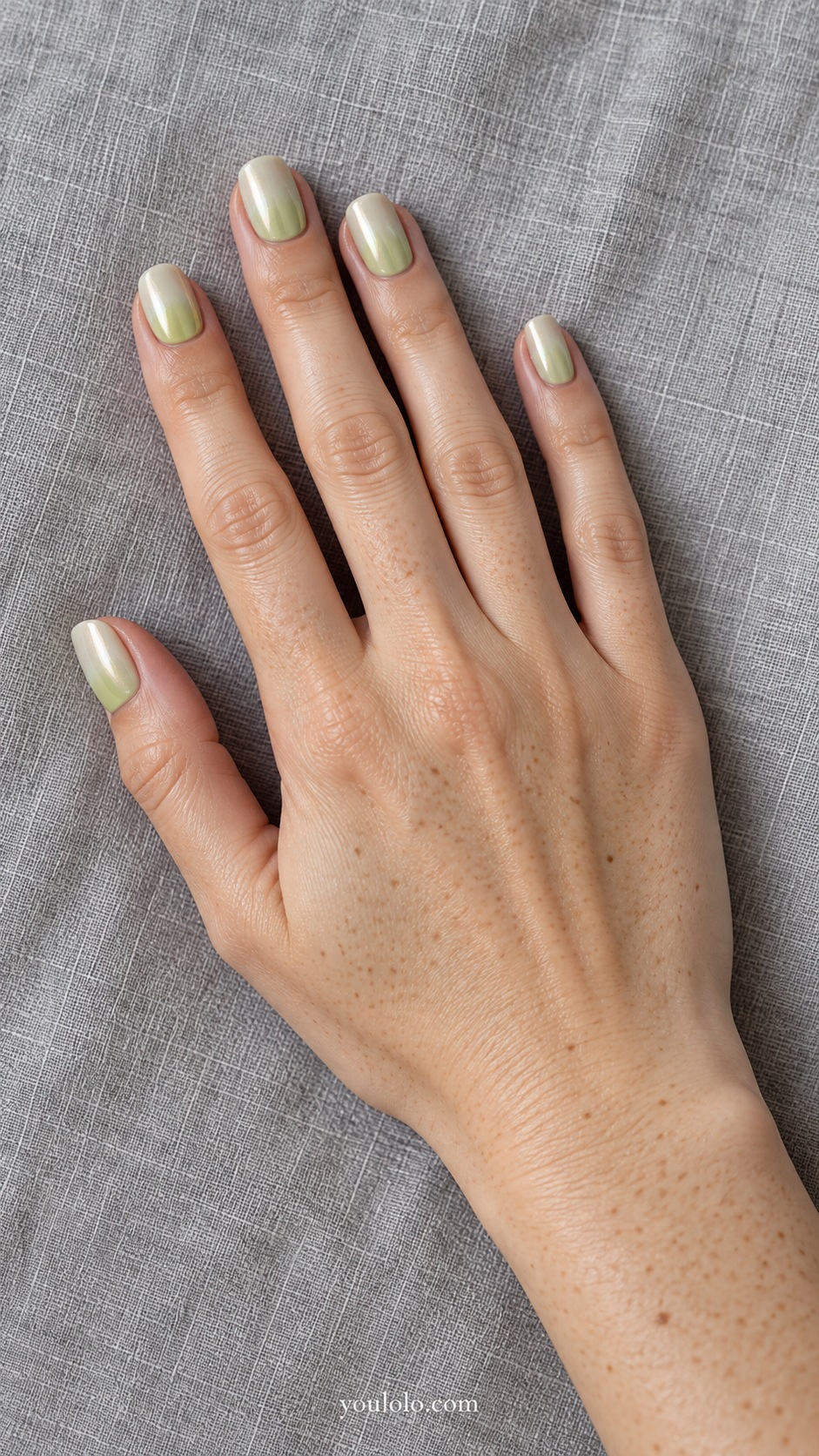
Pistachio fades into creamy pearl at the tips, making the green softer as it reaches the edge. A short squoval keeps the gradient compact and gives the pale finish a tidy outline. This is my choice for a lighter green manicure that still has an obvious design.
Ask for a gradual transition without a white stripe across the tip. On a very short nail, closer shades will leave more room for a believable fade. I would pair it with pale cotton or linen and let the delicate color change do the work.
6. Jade Glazed Side Sweep

A jade side sweep leaves a large area of glazed beige open. The green crescent follows one edge of the almond shape rather than forming a full French tip, giving the manicure a sense of movement. The contrast comes from placement as much as color.
Choose how far the sweep should reach before repeating it across the hand. I would keep the center mostly neutral and use one green throughout. A stronger second outline would change the mood from soft glaze to graphic nail art.
YOU MAY ALSO LIKE
For a deeper green palette with several other finishes, our emerald collection offers a useful comparison.
19 Emerald Green Nails Ideas That Catch the Light Beautifully
7. Eucalyptus Half Moons
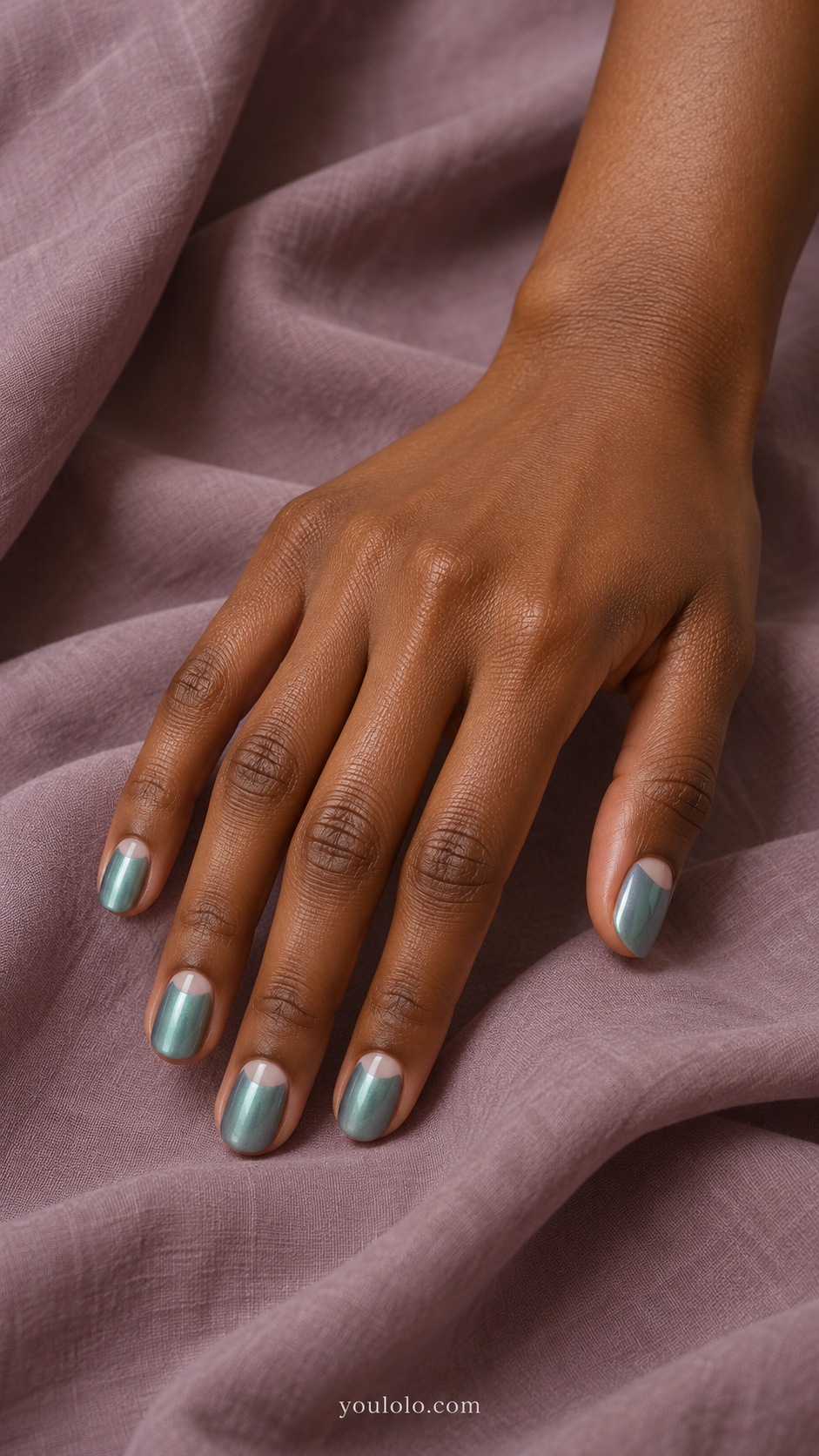
Small clear half moons interrupt muted eucalyptus pearl at the base. The blue-green shade feels cooler than olive, while the open area adds a detail that does not require another painted color. Short rounds keep the composition quiet and balanced.
Ask the artist to keep the half moons shallow and consistent with each nail's width. I would wear this with gray, navy, or washed blue clothing. The negative space should look intentional, so it helps to show a reference for the exact curve you like.
8. Emerald and Ivory Seam
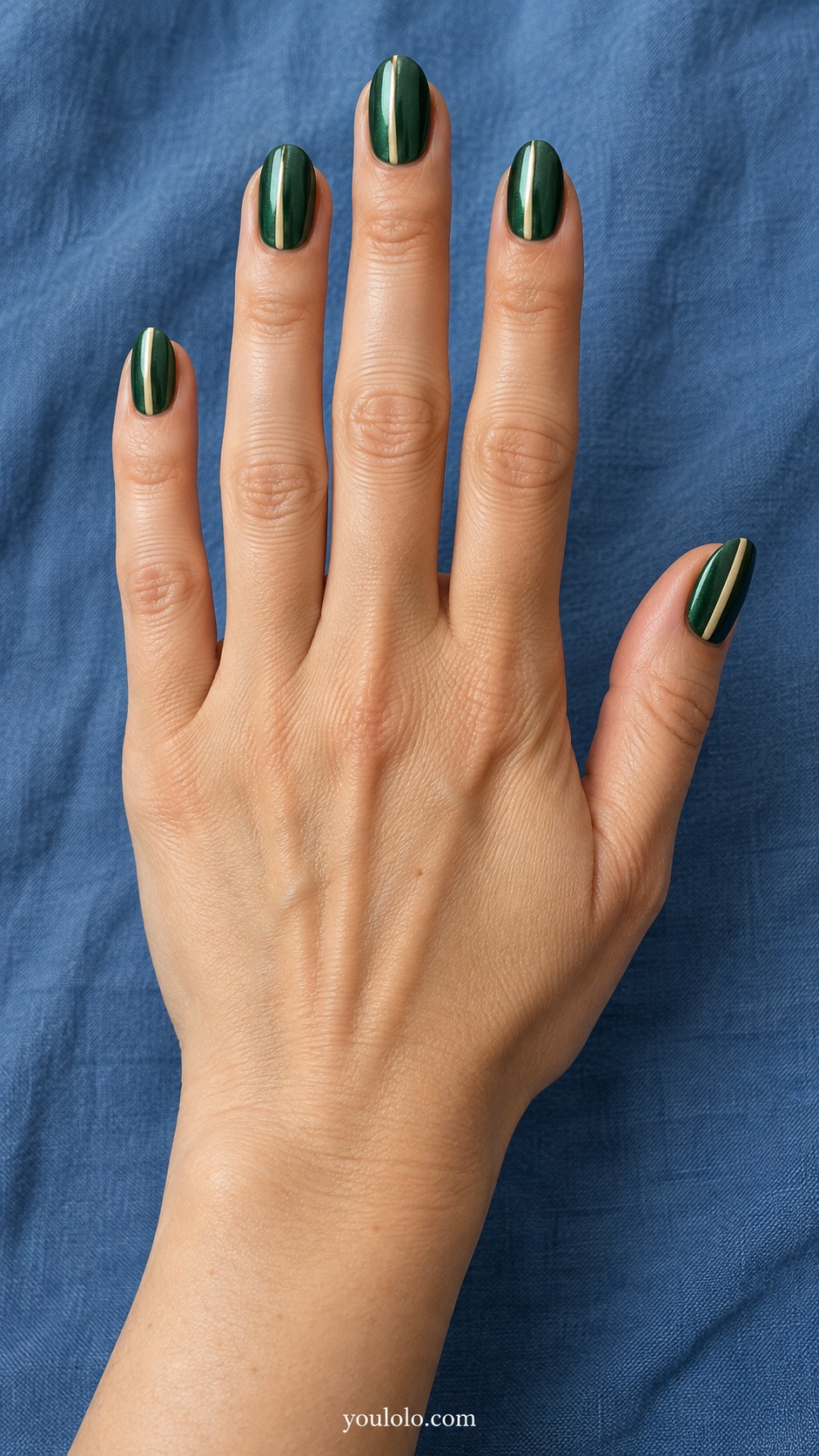
One ivory seam gives emerald pearl a fine vertical detail. The line sits away from the center, leaving one green area wider than the other. On an oval nail, that slight imbalance feels more interesting to me than dividing every nail into equal halves.
Keep the seam thin and flat. An opaque white stripe would create much stronger contrast than this soft ivory version. I would choose cream clothing or a simple black sleeve and avoid additional rings of color around the nail.
9. Lime Milk Micro Edge

A deeper lime edge outlines a pale lime-milk square. The two greens stay in the same family, so the French detail feels more tonal than a white tip. The pearl finish connects the base and border while the straight edge makes their difference clear.
Ask for a narrow band and compare the shades together. If they are too close, the border disappears; if the edge is much brighter, it becomes the whole design. I would aim for one step of contrast rather than a neon outline.
10. Moss Pearl Leaf Accent
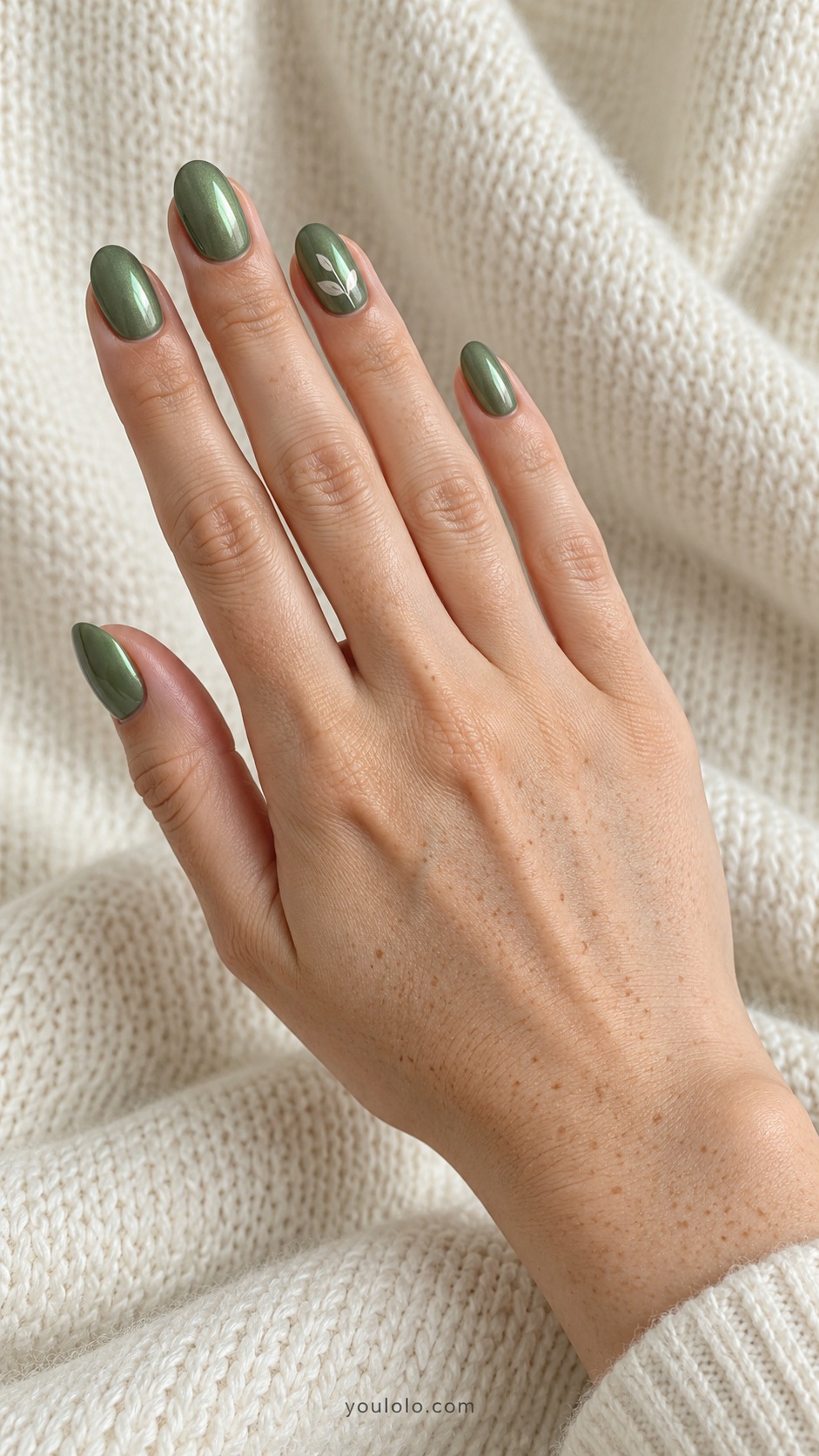
A tiny ivory twig adds a botanical note to moss pearl. The small leaves sit on one accent nail, with the remaining ovals left plain. I like how the restrained drawing supports the earthy green without turning the set into a full floral manicure.
Use fine flat paint and leave space around the leaf tips. A very short nail may need only one leaf instead of two. A textured cream sleeve would suit the soft palette, while a patterned outfit might make the little drawing less noticeable.
11. Matcha Glazed Ribbon
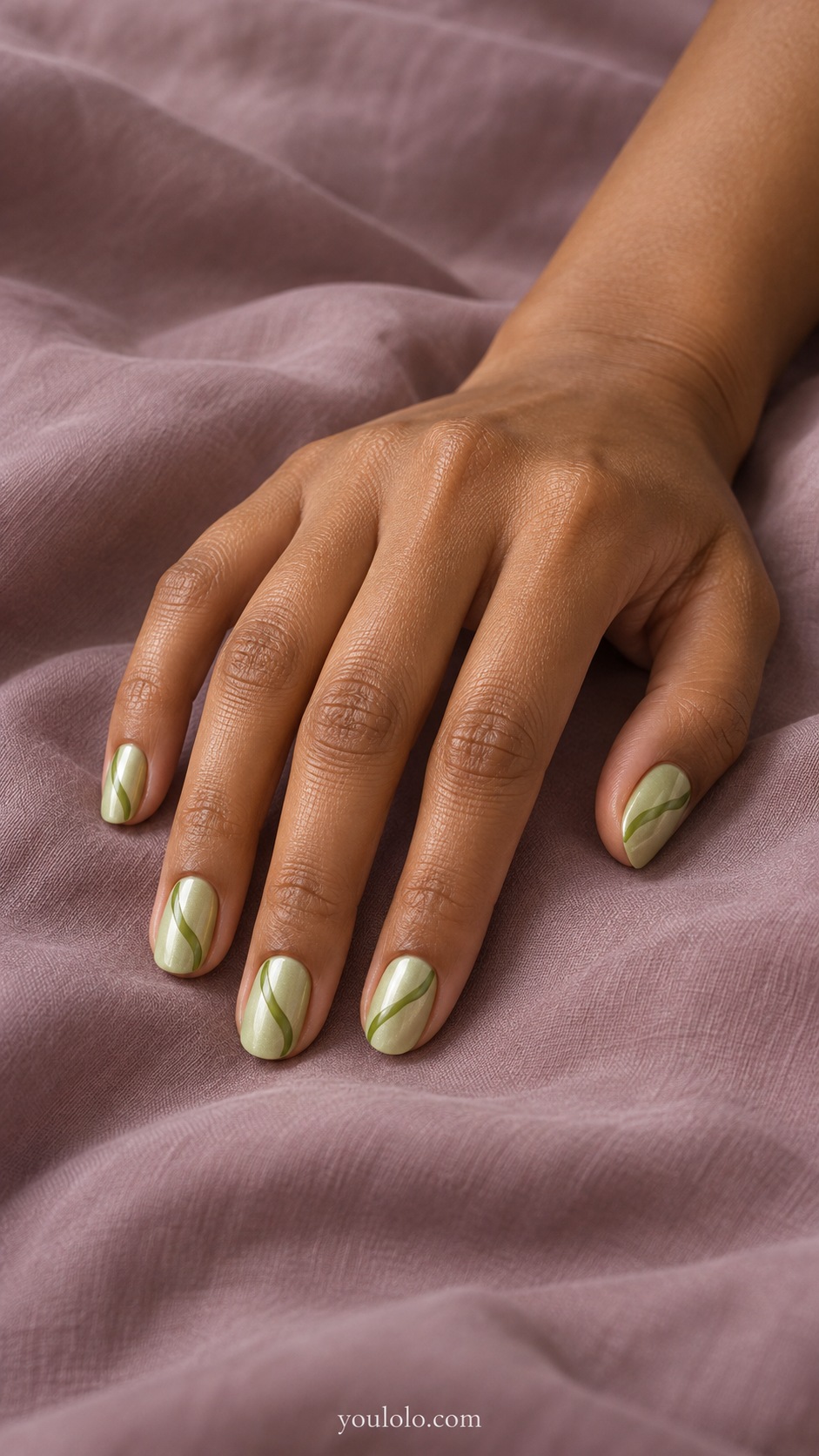
A darker matcha ribbon curves across a pale green pearl base. The colors are related, so the flowing line gives definition without a sharp black or white contrast. Short ovals make this a small, wearable pattern rather than a broad swirl covering the whole nail.
Choose the line width on one nail before continuing. I would keep plenty of pale green visible between the curve and the sidewalls. If the two shades merge under the glaze, use a slightly deeper ribbon rather than making it much wider.
12. Teal Pearl Cuticle Arc
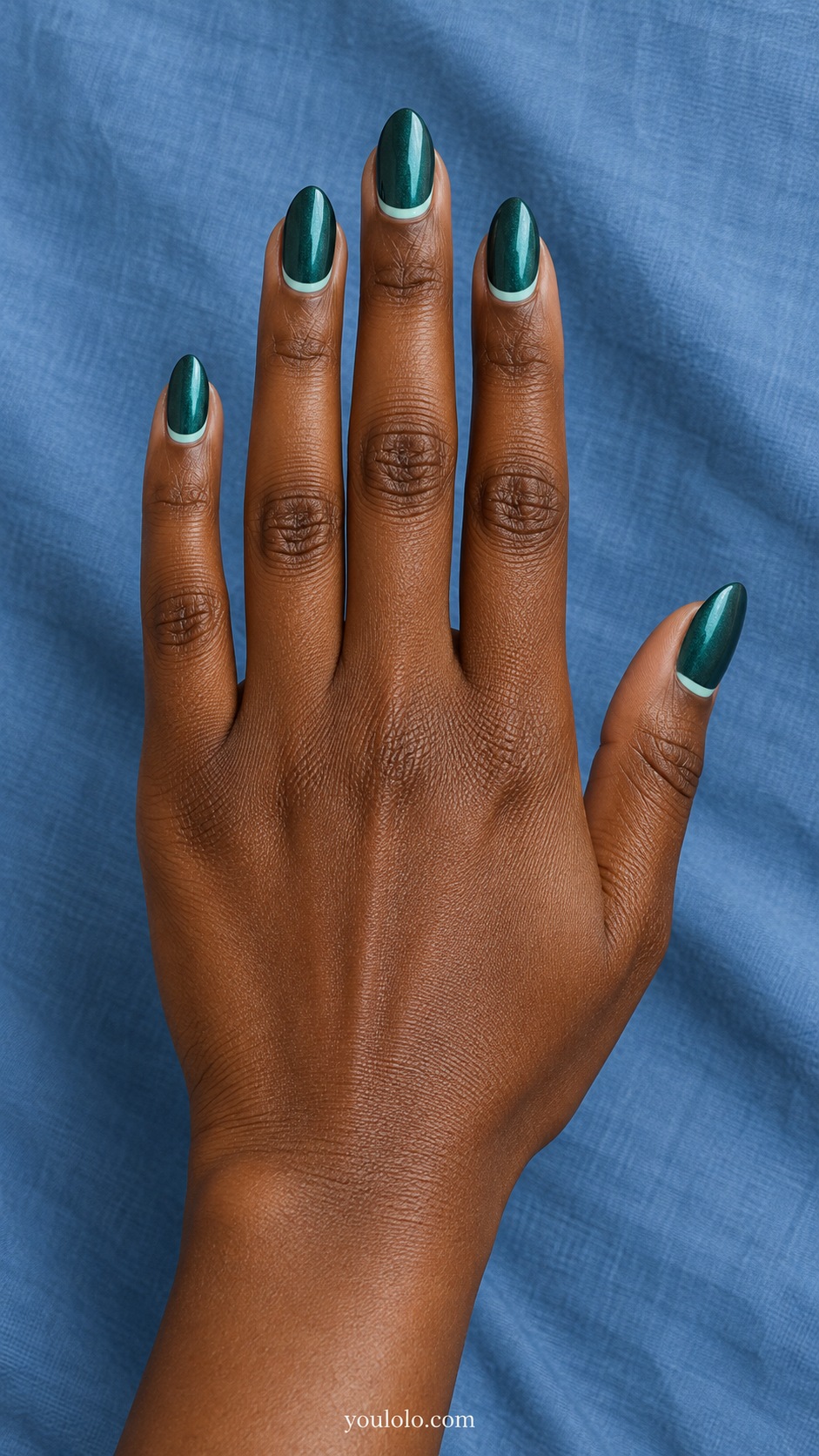
A pale mint arc traces the cuticle area of deep teal-green pearl. The light line gives the darker manicure a deliberate detail while leaving the tip uninterrupted. Almonds provide room for the arc to curve naturally without becoming a large half-moon block.
Keep the mint opaque enough to remain visible and the pearl reflection soft enough that teal still leads. I would wear this with a plain navy or charcoal outfit. Another French edge would add a second focal point, so I would stop at the cuticle line.
13. Green Opal Mosaic
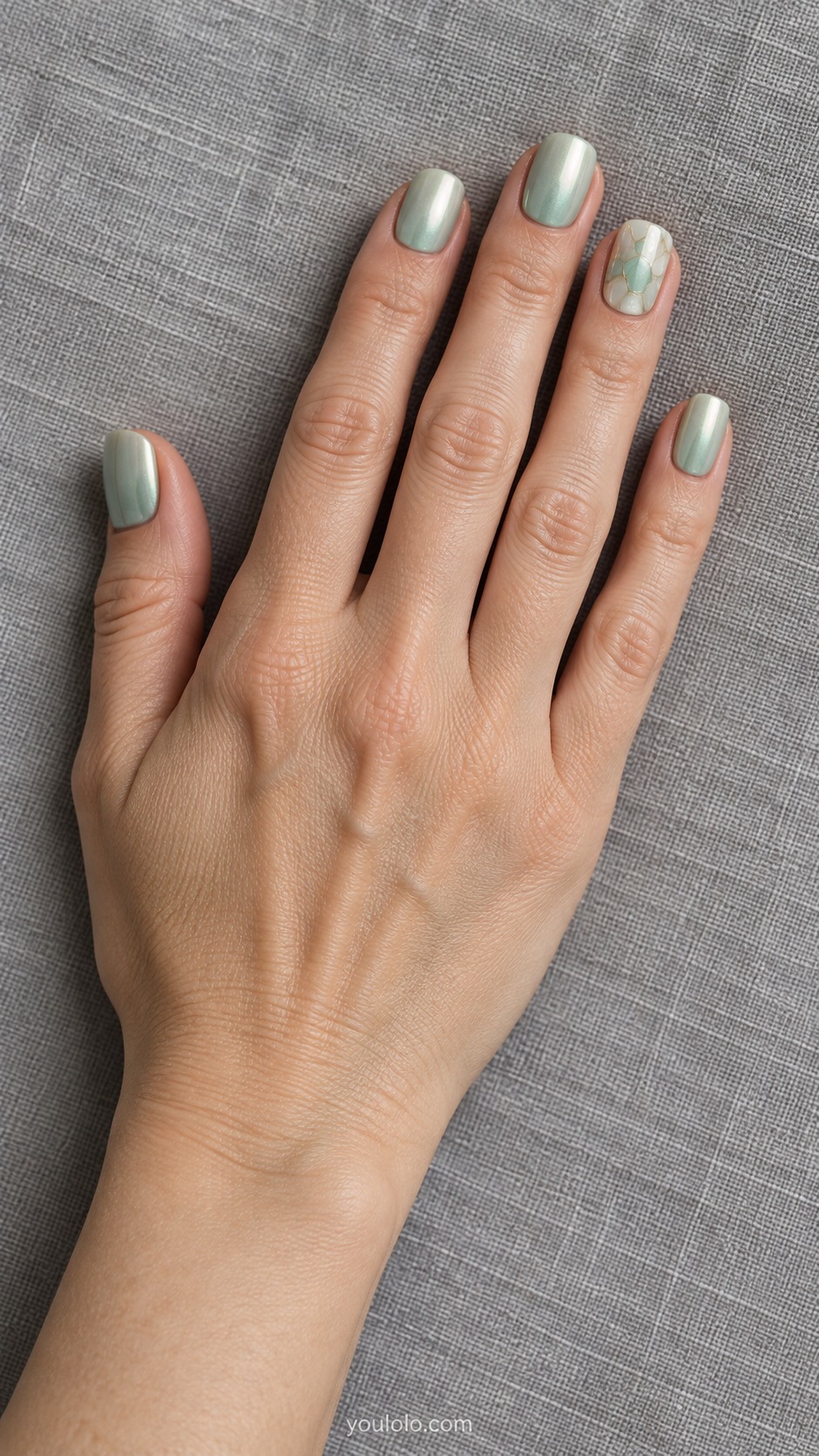
Jade, mint, and ivory panels make one nail look like a small green opal mosaic. The other short squovals stay pale and pearly, allowing the irregular pieces to stand out. The design is about flat color divisions and subtle reflection, not a thick shell texture.
Ask for a few readable panels rather than many tiny fragments. I would keep the surface smooth and the colors close enough to feel related. A neutral sleeve works well here because the accent already introduces several variations within the green palette.
14. Pine Glaze Negative Stripe
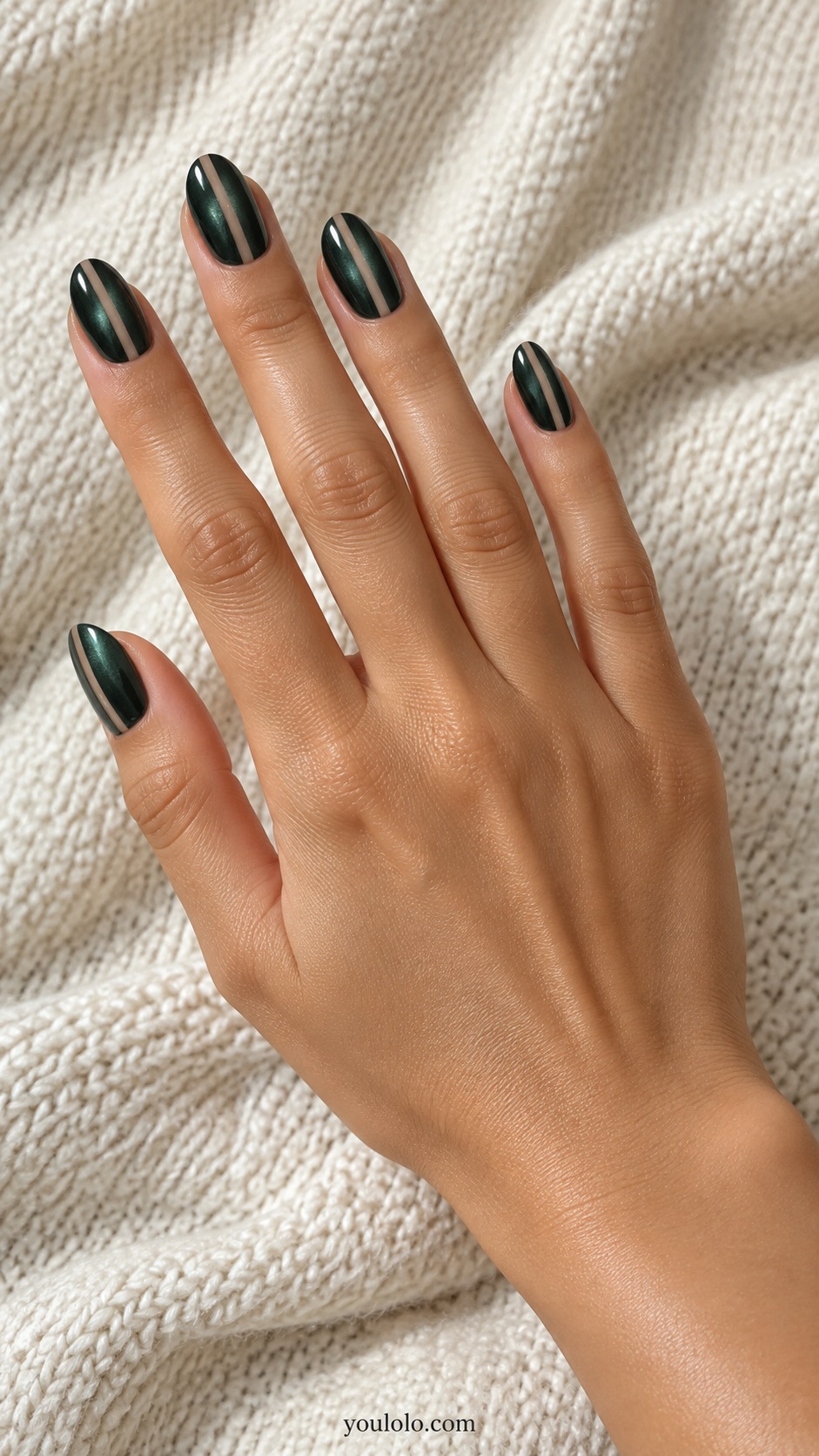
A narrow sheer stripe breaks up dark pine pearl. It leaves a small glimpse of neutral color through an otherwise deep manicure, creating a graphic detail without adding a bright painted line. The stripe sits slightly off-center, which keeps the composition from feeling rigid.
The opening needs to stay distinct after the glaze is added. Ask the artist how they would preserve that separation in their chosen system. I would keep the stripe slim and pair the set with a simple ivory cuff for a clear contrast.
YOU MAY ALSO LIKE
If you prefer stone-like patterns to a uniform glaze, explore the jade designs and their softer veins and color shifts.
15. Sea Glass Pearl Skittle
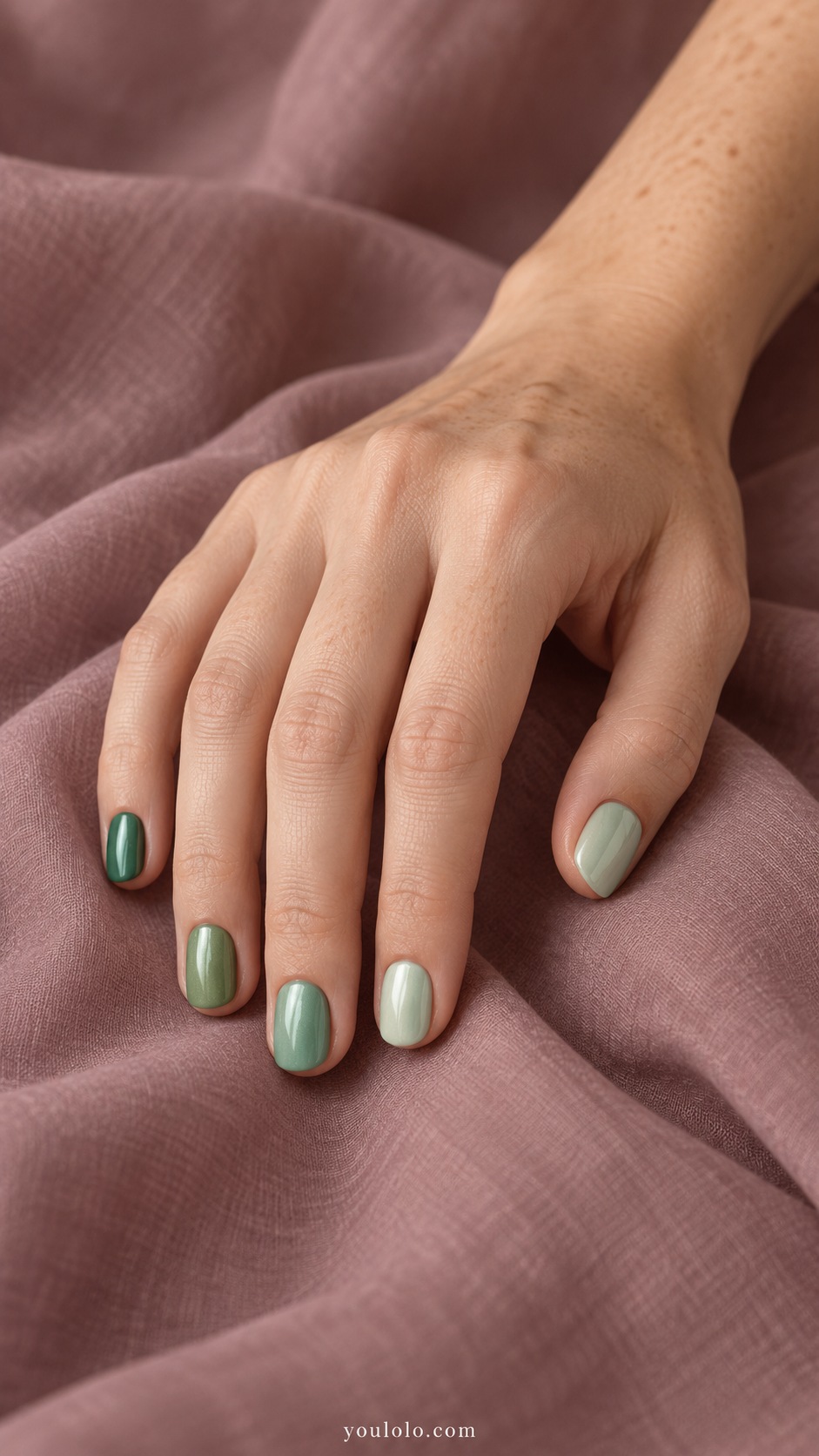
Five sea-glass shades move from pale seafoam to muted eucalyptus. Each nail carries one color and the same soft pearl finish, so the variety comes from the palette rather than a separate pattern. Short rounds make the tonal sequence feel casual and cohesive.
Lay out the samples in order before the appointment begins. I would avoid one unexpectedly bright or yellow-green shade in the middle. The goal is a gradual family of colors, not a rainbow, and a plain gray sleeve lets that relationship remain visible.
16. Sage and Cream Offset French
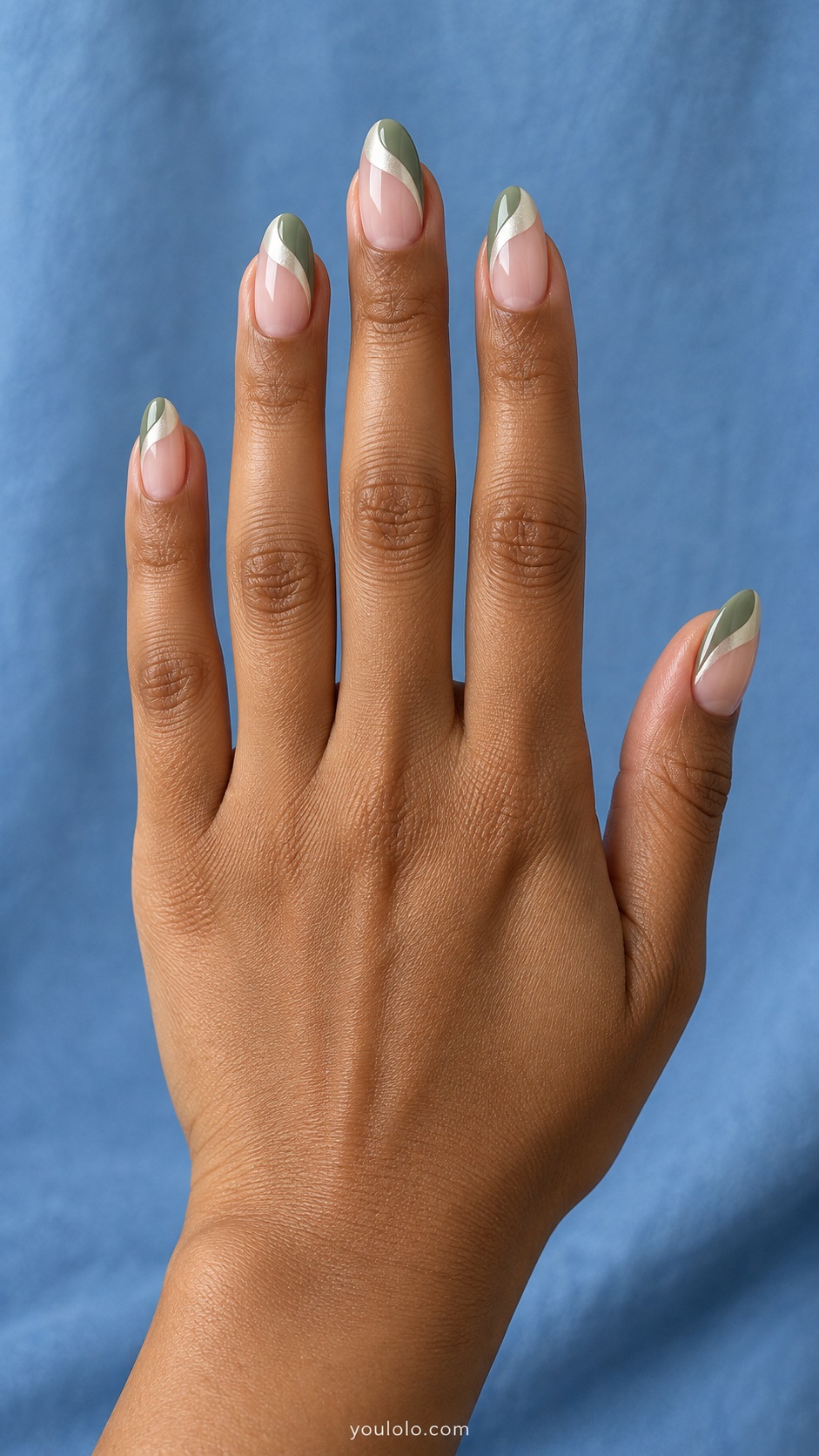
Sage and ivory share an offset French tip over a glazed nude base. Their curved sections are deliberately unequal, giving the almond edge a small asymmetry. The pale colors keep it gentle while the divided tip makes it more detailed than a standard green French manicure.
Decide which color should occupy the larger area. I would let sage lead and use ivory as a narrow companion. On shorter nails, simplify the meeting point rather than squeezing several curves into a small free edge.
17. Deep Green Pearl Halo
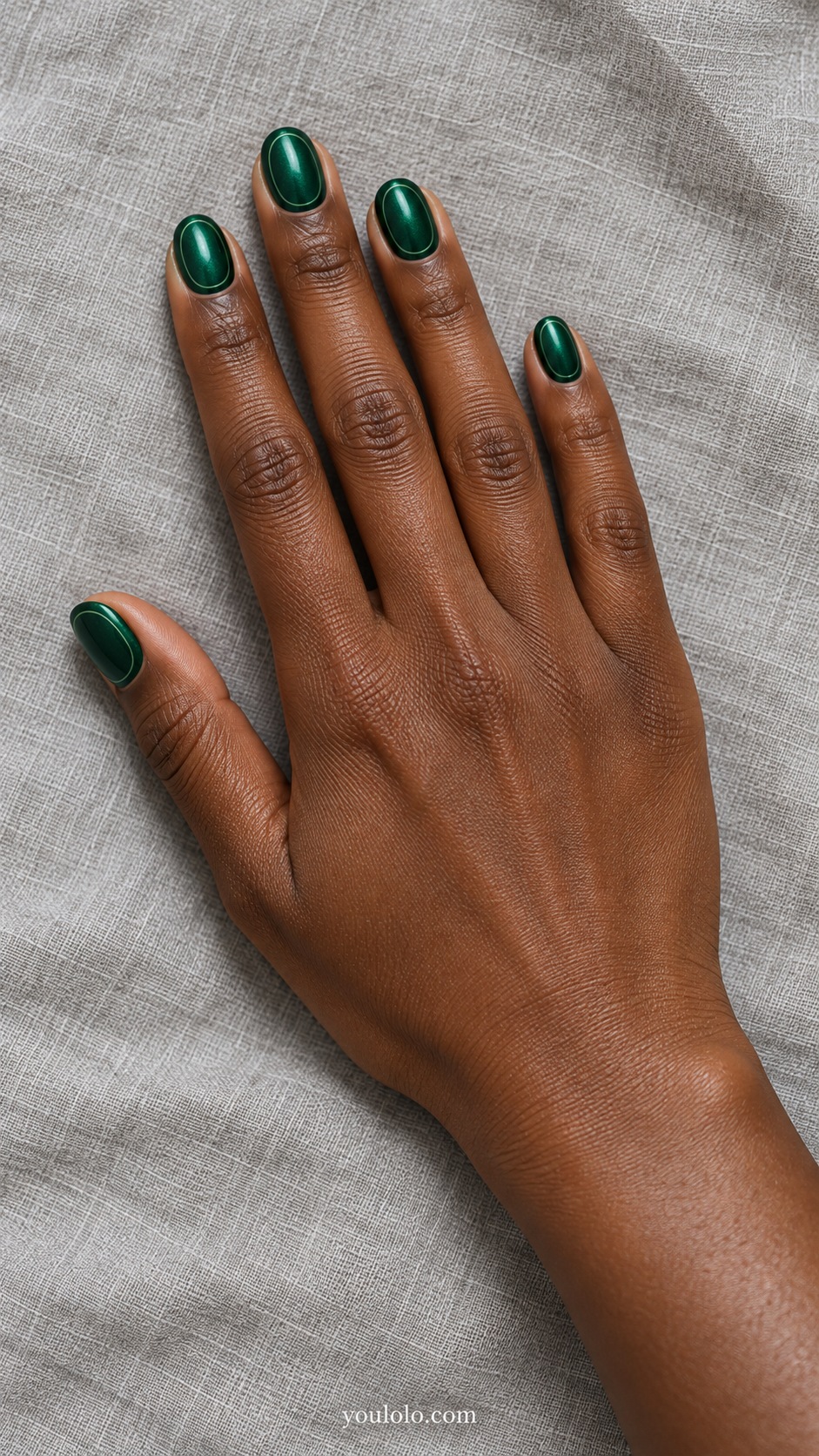
A lighter green outline sits inside deep emerald pearl, creating a tonal halo around the nail. The center remains dark and open, so the border feels like a fine frame rather than another full color layer. Short ovals keep the shape neat.
Choose a line color that is visibly lighter but still green. I would avoid a heavy silver outline here because it would change the design into a metallic frame. Turn the sample in normal light to check that both the base and border remain readable.
Which green would I choose with my clothes?
With cream and camel, I would first compare olive and moss. With gray or navy, I would try eucalyptus or a cooler forest. These are styling starting points rather than rules about skin tone. Hold samples beside a sleeve you often wear and choose the combination you enjoy.
If your outfit is already patterned, a plain sage or emerald glaze gives the nails their own clear color. If your clothes are simple, a fine line or a small leaf accent adds detail without needing several colors on every finger.
For a finish comparison before choosing the green, see the pearl-glaze nail guide.
Ask for a visible base beneath the glaze
Bring one color reference and one finish reference if a single image does not show both clearly. Try: “Muted sage, short oval, a fine white pearl reflection, no glitter.” For a darker option, add that you still want the base to read as green in ordinary light.
OPI presents both glaze toppers and chrome powders. The product route and its application instructions depend on the system, so use the image as a visual brief.
My three picks would be sage milk for a quiet start, olive pearl for warmth, and forest pearl for depth. The mint French is the easiest way to keep most of the nail neutral while trying the color.
Glazed Green Nails FAQ
Are glazed green nails the same as green chrome nails?
The terms can overlap, but references vary from soft pearl to a stronger metallic finish. Specify the amount and color of the reflection instead of assuming the names mean exactly the same thing.
Which green looks softer: sage or emerald?
In this collection, sage is a lighter muted gray-green and emerald is deeper and more saturated. Compare actual samples because shade names vary between polish ranges.
Can I wear green glaze on short nails?
Yes. Plain pearl, a fine French edge, and small accents can all be scaled to short nails. More elaborate panels or frames may need simplifying so the base stays visible.
Will a gold glaze make olive look brown?
A warm reflective layer can change how the base reads. Ask to compare the finished sample with the unglazed color, and choose a lighter reflection if too much green disappears.
What should I ask for if I dislike glitter?
Describe a smooth pearl reflection without obvious individual glitter pieces. Show the surface you mean and compare it with a sample under ordinary light.
Can all five nails be different greens?
Yes. A tonal set can feel connected when the shades share a similar mood and finish. Lay them out together first and remove any color that feels much brighter or warmer than the others.