The Best Fluffy Pancakes recipe you will fall in love with. Full of tips and tricks to help you make the best pancakes.

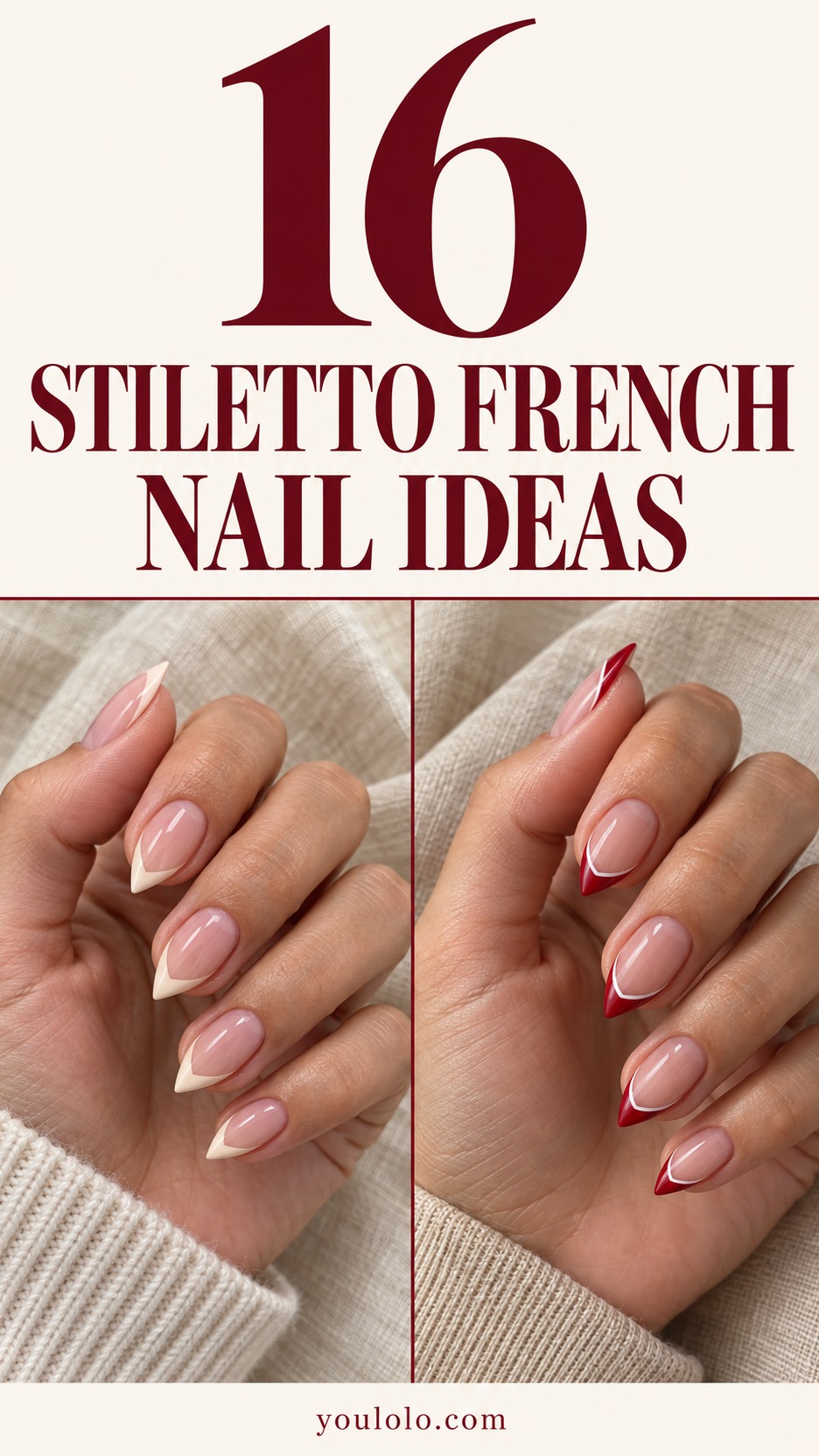
Short stiletto French nails are a very specific request: a compact pointed shape with the color concentrated at the edge. If you love sharp tips but do not want a long dagger manicure, the proportions matter as much as the polish. These 16 ideas explore V tips, side French lines and soft fades that keep the point visible.
There is an important distinction here. Short is relative within the stiletto family. A true pointed tip still needs enough length to taper; it is not a nearly flush natural nail. The images show compact pointed extensions, and your artist should help you decide whether that outline suits the length you are comfortable wearing.
I have kept this collection focused on French placement rather than repeating the site’s broader stiletto roundup. You will find quiet ivory, warm chocolate, reflective metal edges and a few richer colors, with practical notes about line width and how much nude base to leave visible.
For a broader selection beyond French tips, the existing short-stiletto collection covers other graphic and dark finishes.
17 Short Stiletto Nails Ideas With a Sharp, Wearable Edge
Choose the French geometry before the color
A V French follows the two sides toward the point. A side French leaves one edge more open and feels less symmetrical. A fade softens the color boundary while keeping the physical point. Decide which of those layouts you like first; the same wine or blue polish will look quite different in each one.
Be clear about the maximum length. Show a side view if possible, and explain whether you want an extension or are hoping to use your existing nails. A reference image cannot establish what is suitable for your individual nail structure. Do not file away the sides of a very short nail simply to imitate a pointed photo.
For the smallest nails, simplify the artwork. One narrow line can be clearer than a double border, and a single solid tip may work better than several tiny accents. The compact shape is already expressive, so the design does not need to use every available millimeter.
OPI notes that a true stiletto requires length to create its point. That is why short here means a compact pointed extension, not a flush natural nail. OPI shaping guide.
16 Short Stiletto French Nails to Save
V tips and clean outlines
1. Ivory V Tips
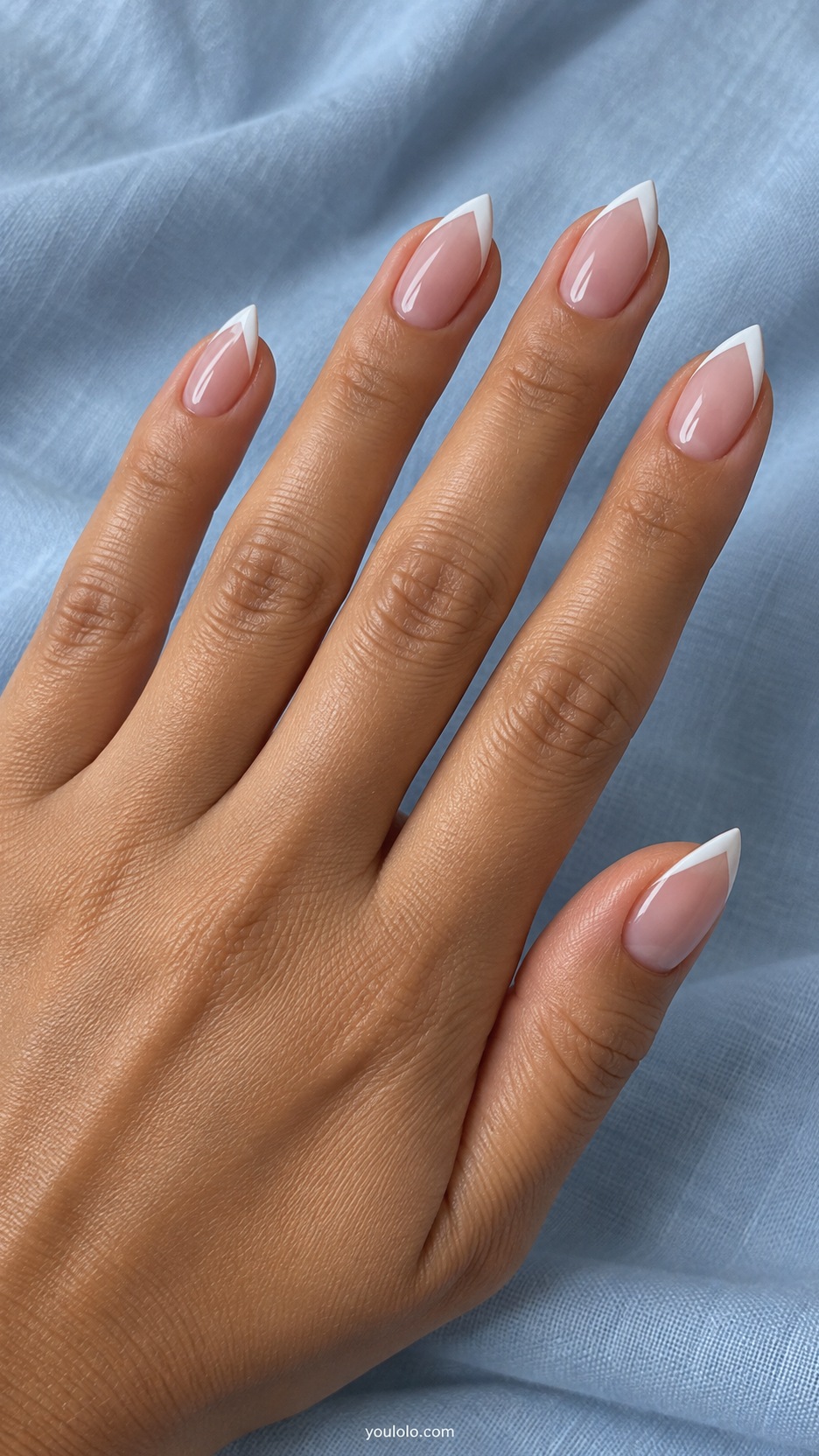
Ivory V tips are the clearest introduction to this shape. The two sides meet at the point, so the French design follows the actual outline instead of pretending the nail is rounded. I would wear this with a cream shirt or a simple black dress. The pale tip feels classic, while the geometry gives it a sharper personality.
Keep the ivory section narrow enough for the nude base to remain visible. Ask your artist to check the point from above and from the side before painting. A short stiletto still needs some extension beyond the fingertip; filing a nearly flush natural nail cannot create the same silhouette.
2. Wine Side French
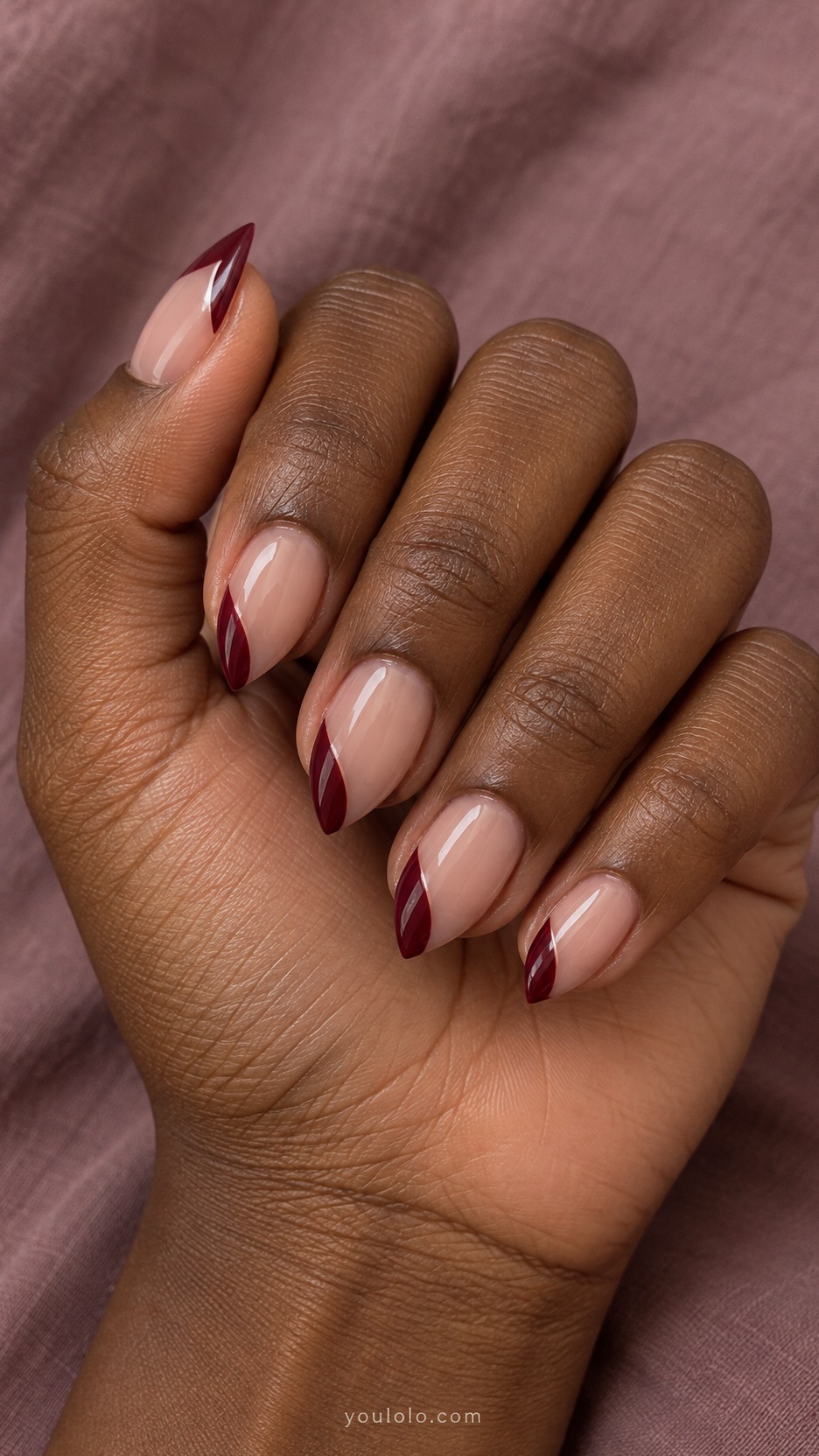
Wine-colored side French is a little less symmetrical and a little more relaxed than a full V. The dark edge sweeps along one side, giving the point definition without filling the whole tip. I like this with charcoal, camel or a soft blush blouse. It feels especially cohesive when the base stays sheer and warm.
Ask for a smooth curved boundary that narrows toward the base. The design should not make one side of the nail look structurally wider. A small adjustment on each finger is sensible because the nail beds differ; the goal is a balanced hand, not identical painted measurements.
3. Gold Outline French
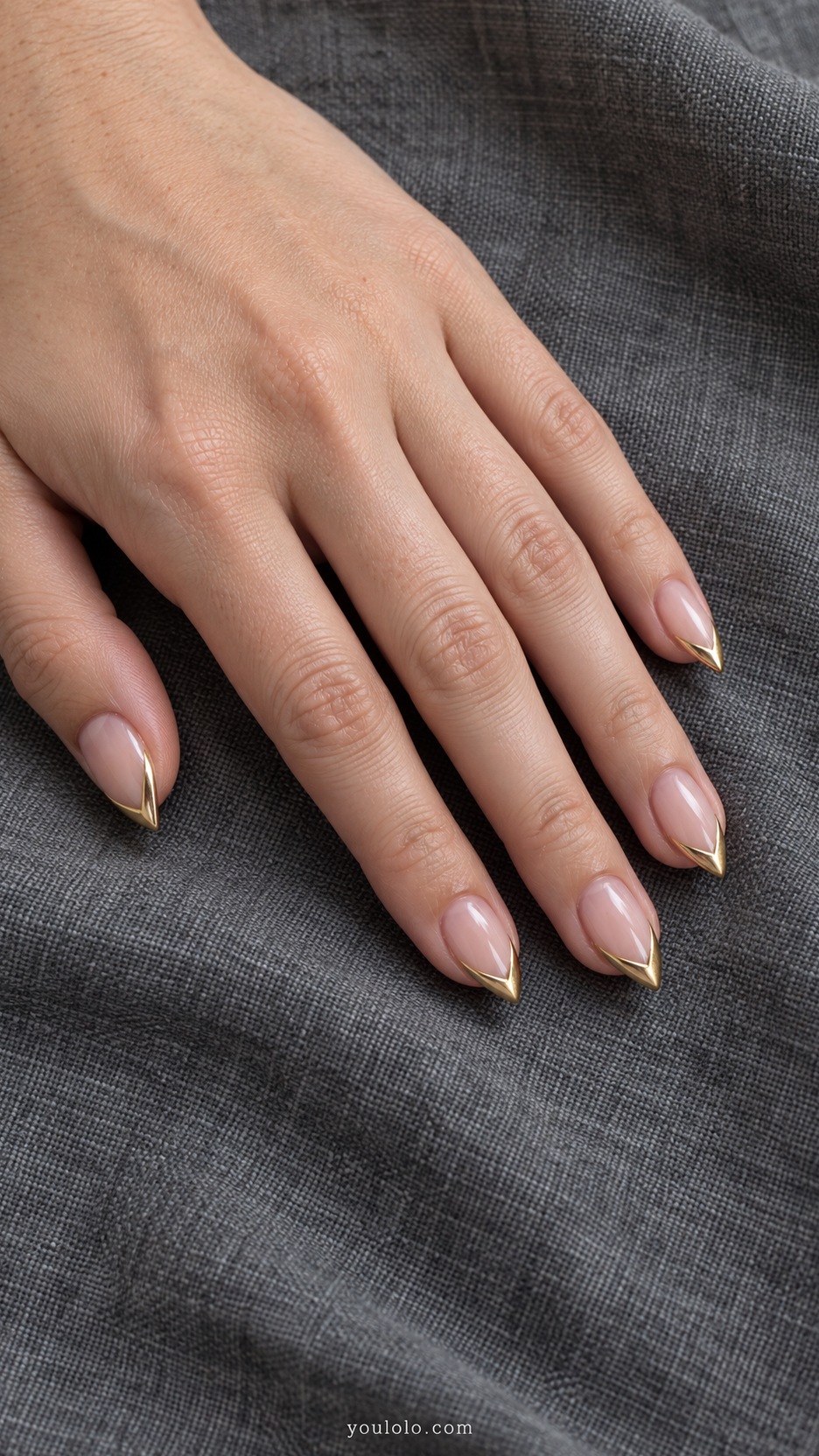
A gold outline French gives you the shape of a tip without the weight of a filled metallic section. The nude area inside the V is part of the design. I would pair it with fine gold jewelry and a plain cream or black outfit, keeping the rest of the manicure free of stones.
The metallic line needs to be thin and continuous. A thick outline can overwhelm a compact point and make the tip feel bulky. Ask for a flat painted finish, and compare the gold with your accessories if you care about matching a warm yellow tone or a softer champagne shade.
4. Chocolate Double V
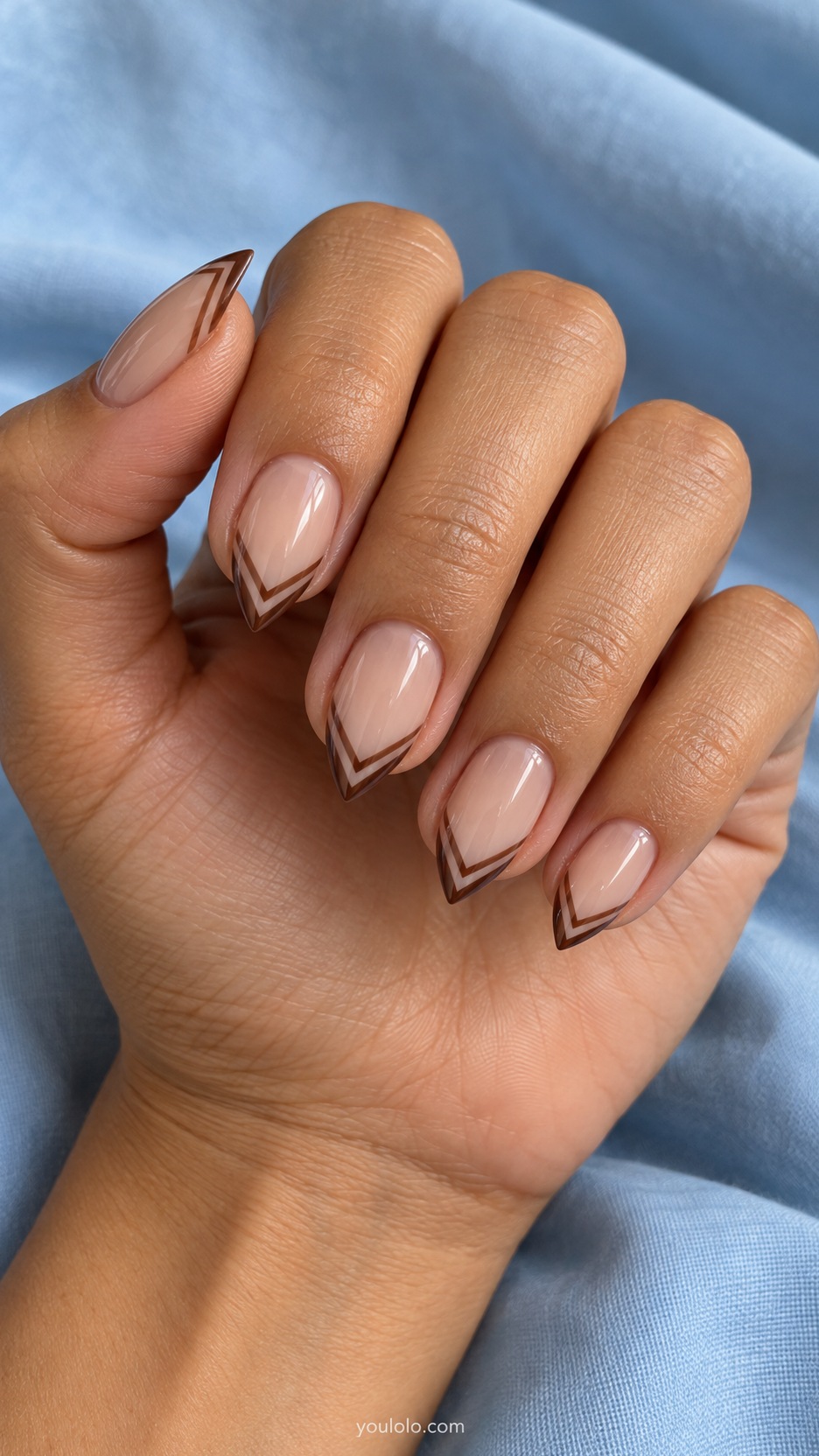
Chocolate double V lines make a simple neutral palette feel architectural. The small nude gap between the lines is what distinguishes this from an ordinary brown French. I would wear it with a camel jacket or a cream knit. It is a good option if you enjoy precision more than sparkle.
Leave enough separation for both lines to remain visible at normal viewing distance. On the little finger, your artist may need to simplify the spacing. Do not ask for extra lines just because the thumb has more room; a consistent visual rhythm will look calmer across the whole set.
5. Sapphire Velvet Tips
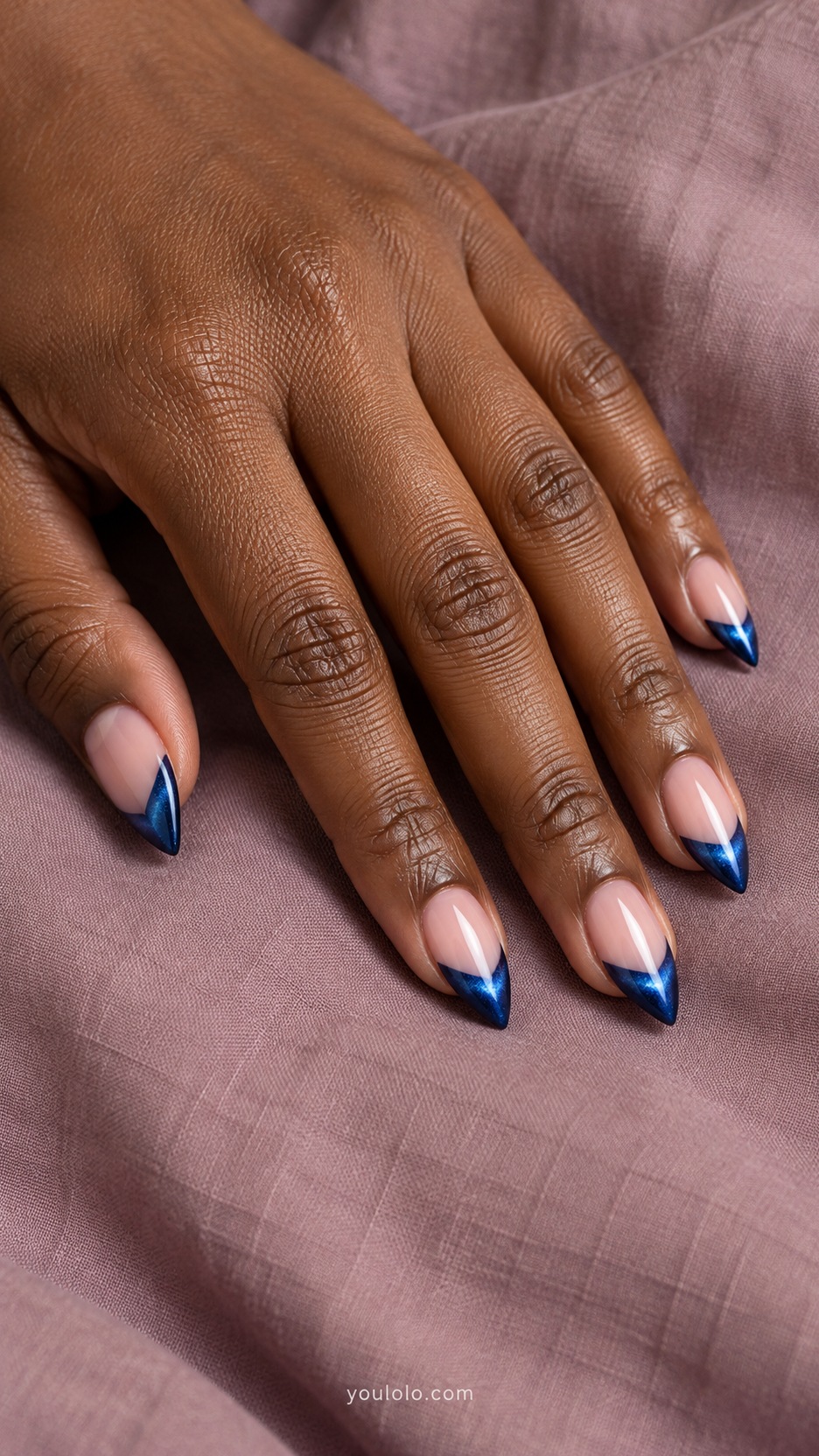
Sapphire velvet tips bring light to the pointed edge. The blue feels vivid against a blush base, while the magnetic reflection makes the French section change as the hand moves. I would choose it with white, navy or charcoal clothing. The open nude base keeps the rich color from covering the entire nail.
Ask for the magnetic effect to stay inside the French area. Show your artist the width of the blue section you want, then compare a sample in ordinary light. The exact glow depends on the product, so focus on the placement and mood rather than demanding the same frozen highlight.
Color and metal at the edge
6. Black Negative-Space V
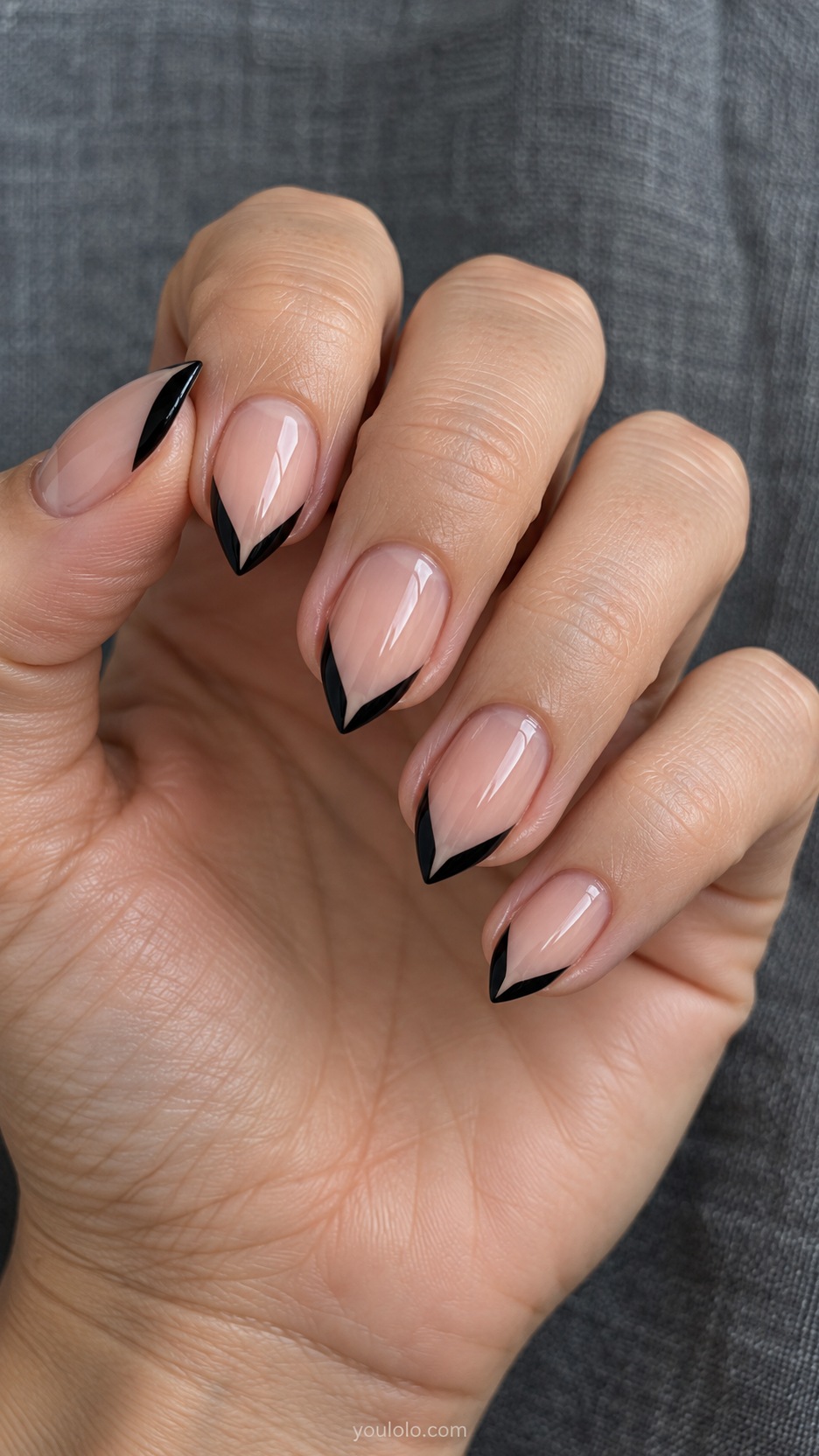
Black V tips with a tiny nude opening feel graphic and controlled. The negative space breaks up the dark edge, making the point the main feature. I would wear this with a white shirt, a simple black jacket or a clean monochrome outfit. It does not need another color to make an impression.
Keep the gap intentional and easy to read. If it becomes too narrow, it may look like a missed patch; if it is too wide, the tip can feel disconnected. Ask your artist to show the proportion on one nail before repeating it across the set.
7. Rose Chrome Edges
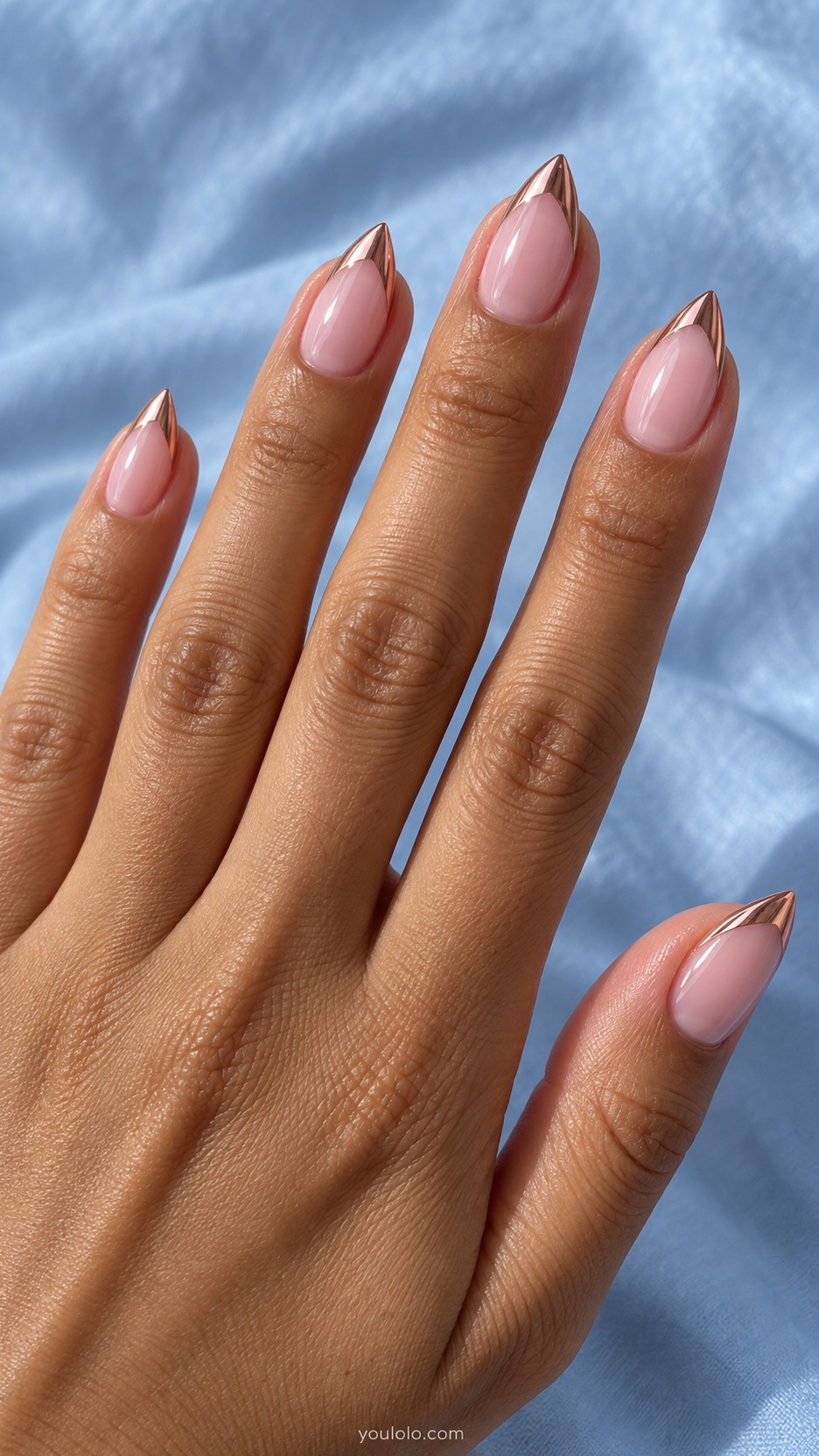
Rose chrome edges are a softer metallic choice than bright silver. The pink base and warm reflective tip work together, so the result feels polished rather than harsh. I like this with cream satin, a taupe knit or rose-toned jewelry. A thin edge gives enough reflection without turning the whole nail into a mirror.
Check the base and chrome together. Some rose gold finishes lean copper, while others look pinker. Ask for a narrow French section that follows the point cleanly, and keep the surface smooth so the reflected light does not distract from the neat outline.
8. Forest Green Split Tips
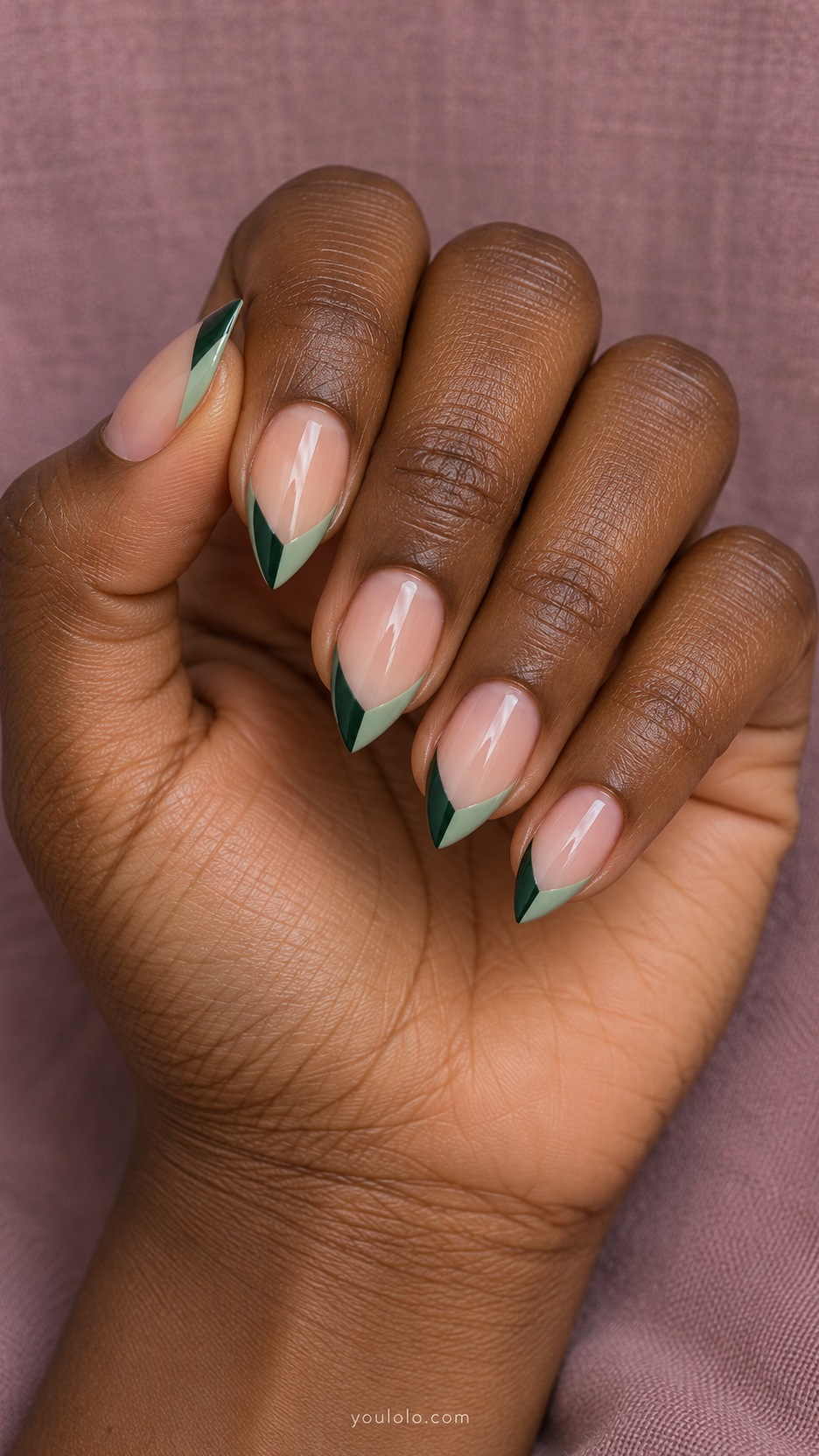
A forest-and-sage split gives the two sides of the point different tones. It is a simple way to make the geometry visible without adding a separate motif. I would choose it with beige, olive or dark denim. The lighter green stops the design from feeling too heavy beside the deeper forest shade.
Ask for the colors to meet neatly at the tip, with a visible nude base above the French boundary. Choose greens that share a similar undertone. If one is very yellow and the other very blue, the contrast can be stronger than the calm reference suggests.
9. Cherry Pinstripe French
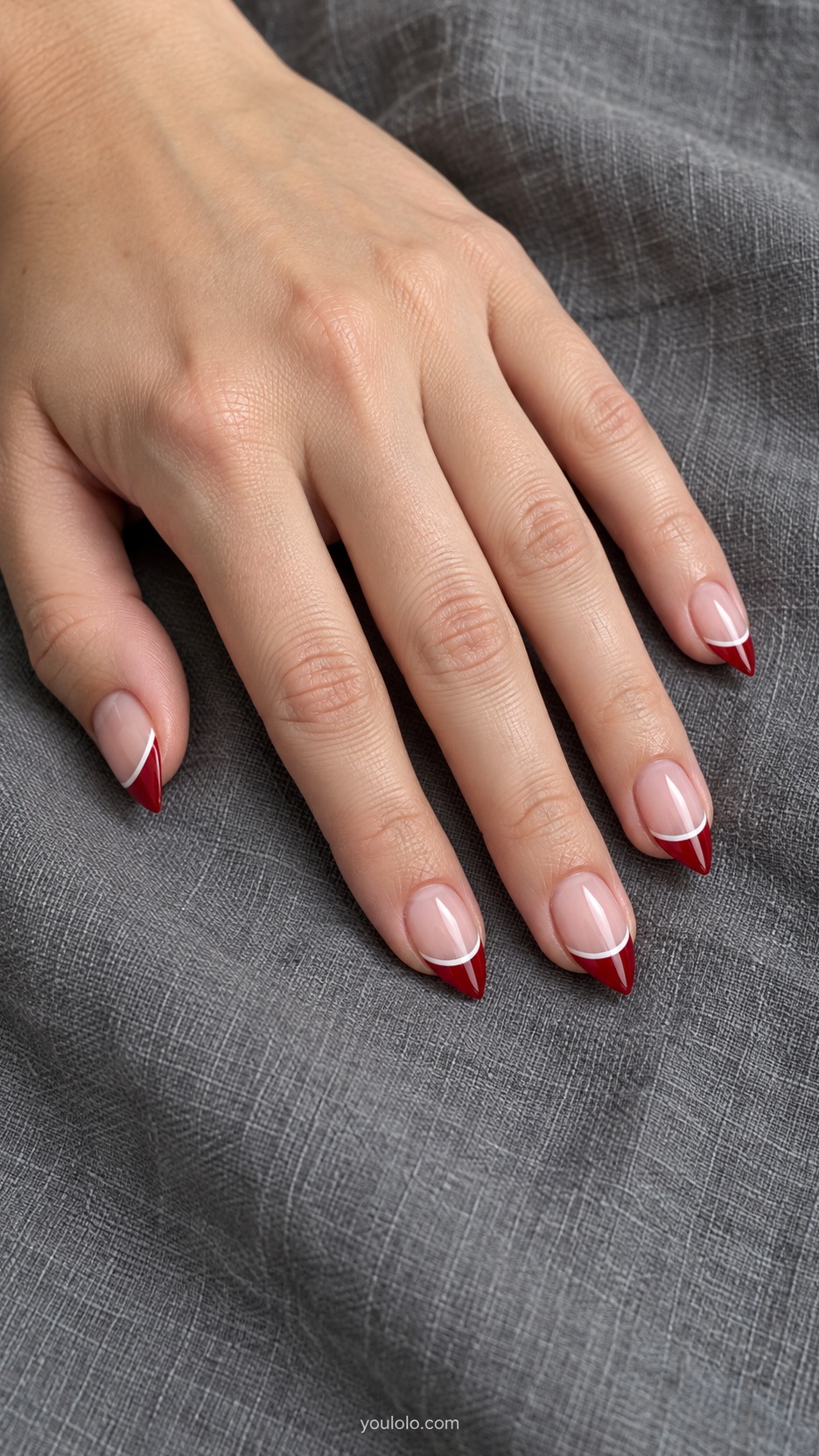
Cherry French with a fine white pinstripe feels crisp and lively. The red supplies the color, while the little pale line makes the boundary look deliberate. I would pair it with navy, a white shirt or a simple striped top. Keep the rest of the set clean so the small detail remains the focus.
The white line should be noticeably finer than the red section. If both have equal width, the tip can start to look like a striped pattern rather than a French accent. Ask for the stripe to follow the smile line, adapting smoothly as it approaches the pointed edge.
10. Lilac Ice French
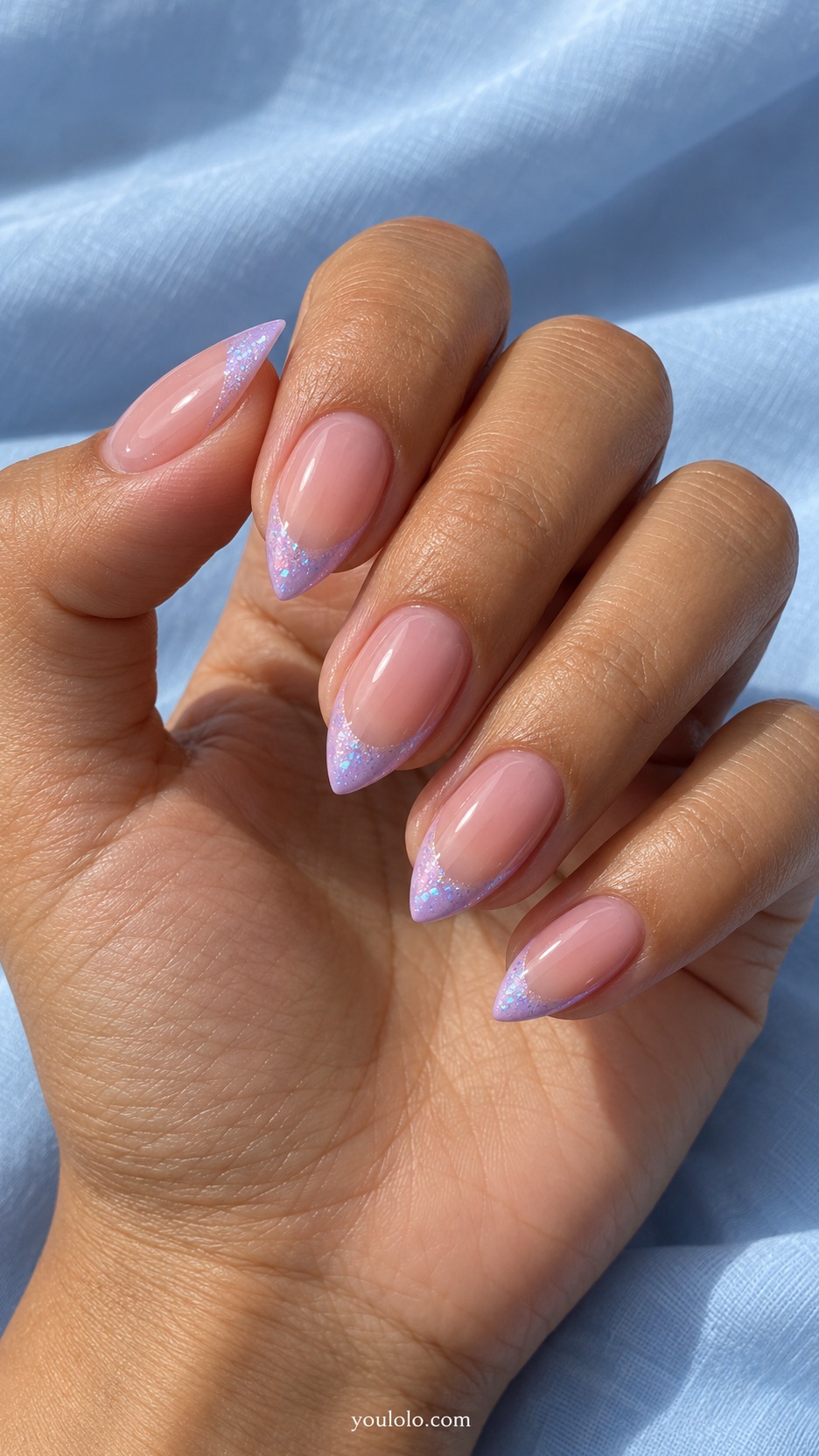
Lilac ice tips offer a softer version of a sharp shape. The pale color and fine shimmer feel light, which I would wear with gray, white or a muted lavender outfit. It is an interesting contrast: a clearly pointed outline with a delicate finish. There is no need for large glitter pieces to make it sparkle.
Ask for a subtle iridescent effect rather than opaque silver glitter. The lilac should still be visible when the nail is not directly under the light. Keep the French section modest, so the pale tip does not visually merge with the whole base and hide the design.
11. Copper Side Contour
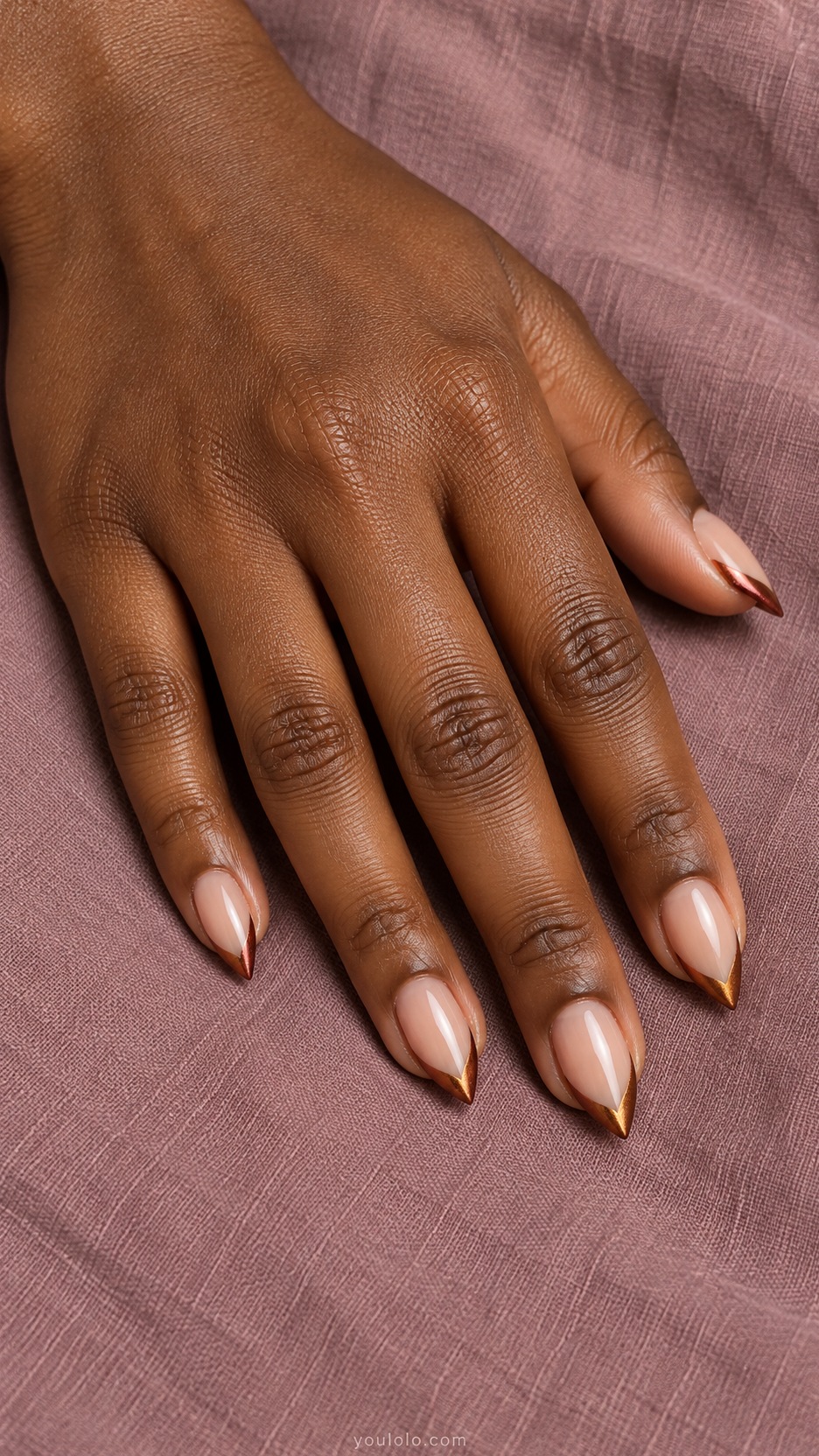
Copper side contour is a warm metallic alternative to a full French tip. The slim sweep follows one edge toward the point, leaving most of the nail sheer. I would wear this with cream, rust or chocolate clothing. It feels especially tidy when the copper line stays narrow and the base remains simple.
Show your artist where the metallic section should begin and end. A side contour can easily grow wider during painting, changing the balance of the nail. Ask to keep the thickest area near the tip, and avoid adding another metallic border around the cuticle.
Softer finishes and tiny accents
12. Pearl White Fade Tips
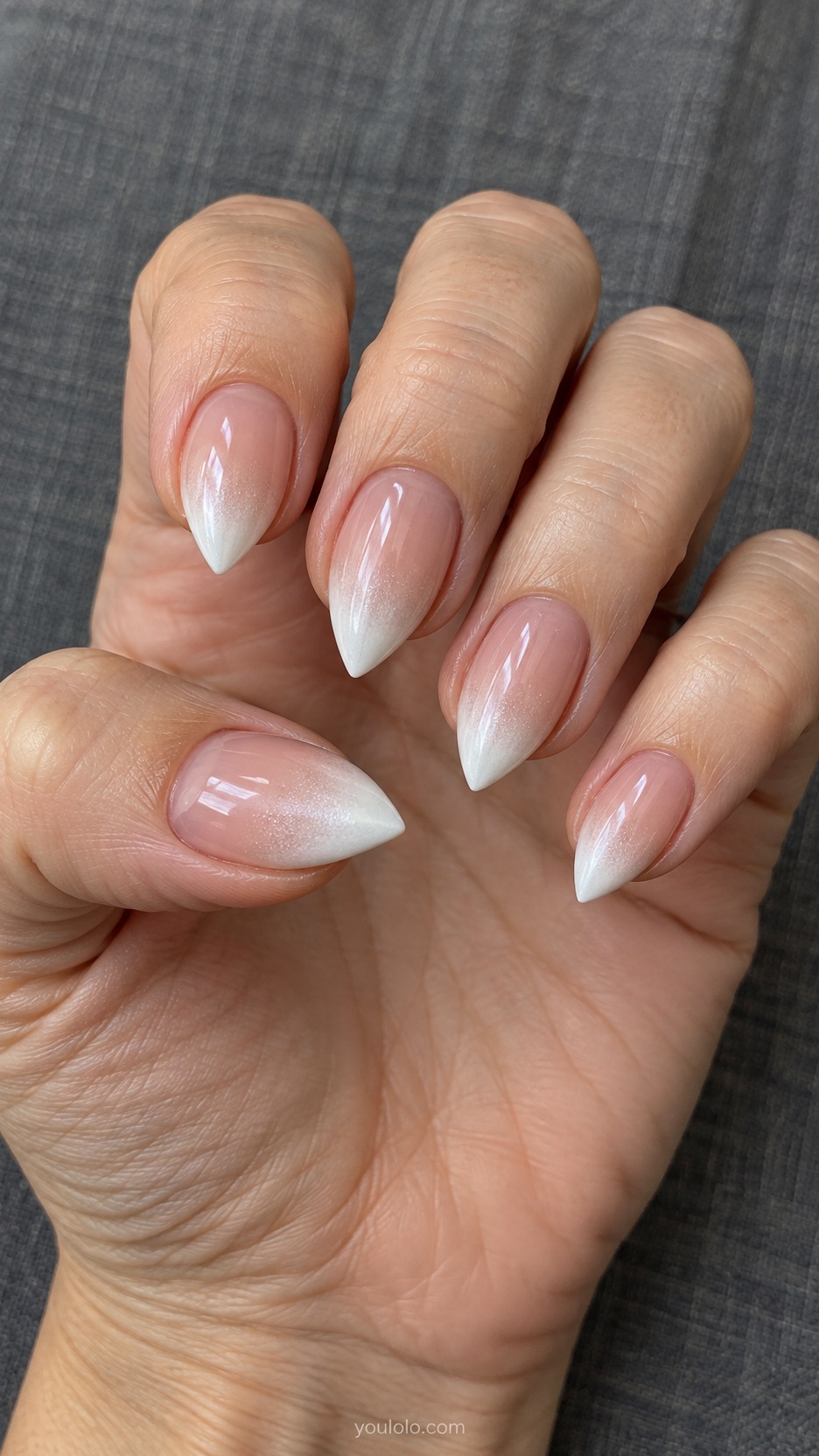
Pearl white fading toward the tip is the gentlest French interpretation here. There is no hard smile line, just a gradual shift into a luminous edge. I would pair it with soft tailoring or a pale satin blouse. It is a good choice if you like the pointed shape but do not want strong color contrast.
Describe the fade separately from the shape. The tip still needs to be visibly pointed, even though the color boundary is soft. Ask for a fine pearl sheen rather than a dense frosted finish, and check that the nude base remains distinguishable near the cuticle.
13. Burgundy Lace Edge
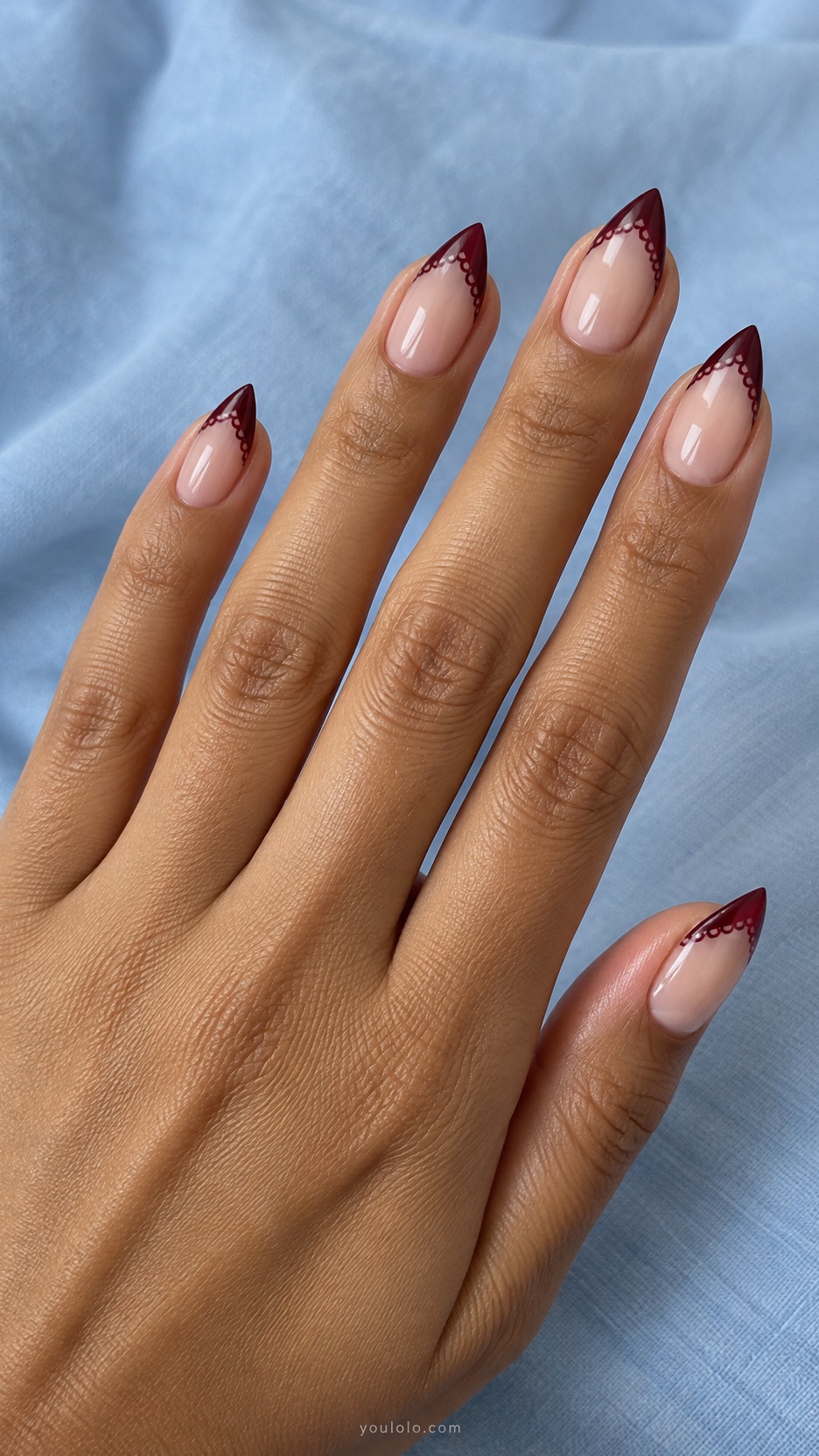
Burgundy with a tiny scalloped inner edge adds a lace-like detail without covering the nail in a complicated pattern. I like it with a plain black outfit or a cream blouse. The dark tip feels dramatic, but the nude base keeps the overall look lighter than a full burgundy manicure.
The scallops need to be small and evenly spaced, with enough contrast to read as a deliberate border. Avoid asking for a full lace drawing inside a narrow tip. A simple edge will look cleaner on a compact stiletto and leave the actual point easy to see.
14. Midnight Silver Double
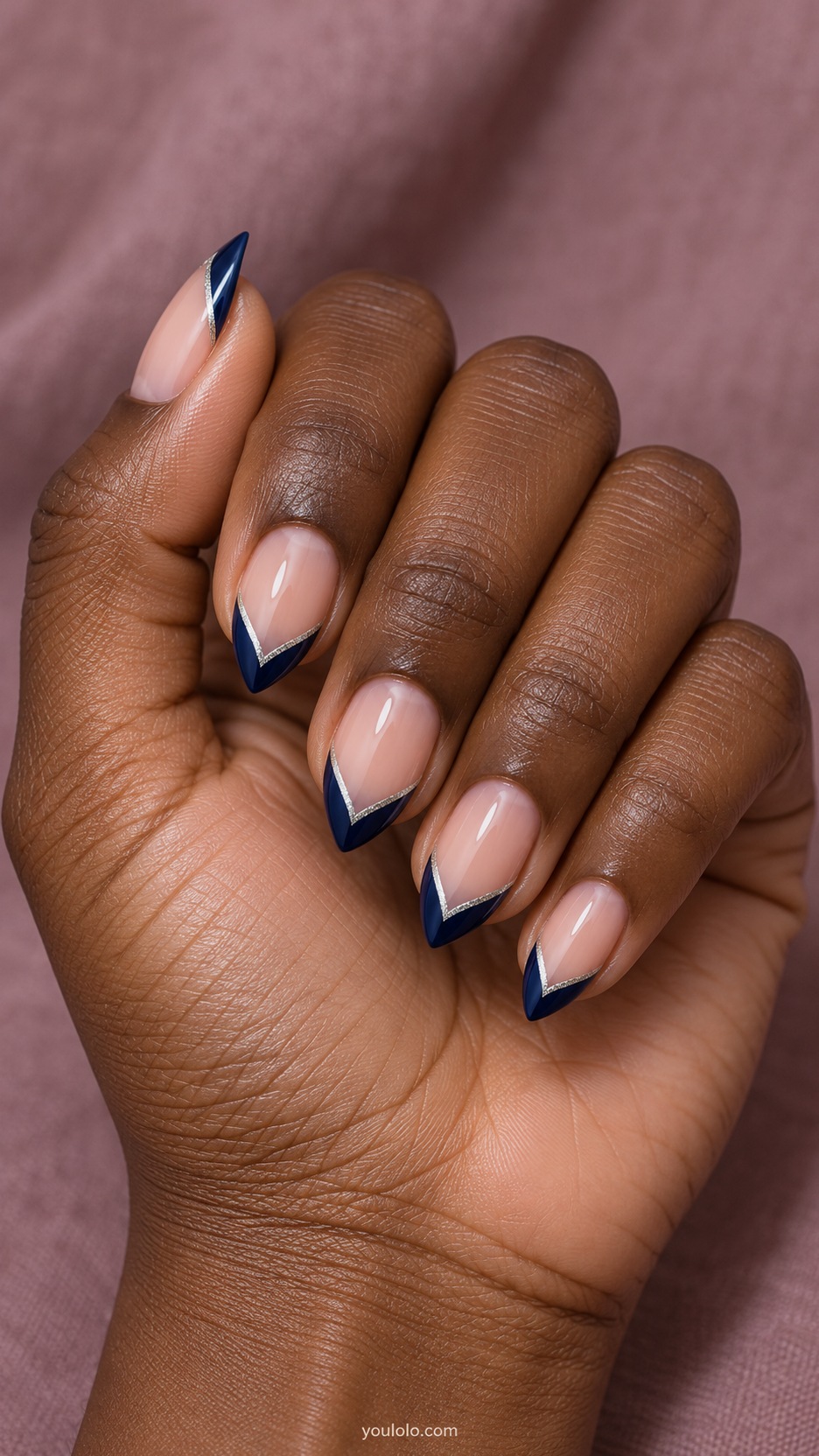
Midnight navy and a hairline silver V feel cool and precise. The silver separates the dark French tip from the nude base, so the shape reads clearly even in a restrained palette. I would wear it with gray, black or a white shirt. It is a polished option for an evening look without heavy embellishment.
Keep the silver line fine and close to the navy boundary. Too much space between them turns the design into a different double-tip pattern. Ask to inspect the point and side edges together, since a clean transition matters more here than adding extra shine.
15. Olive Diagonal French
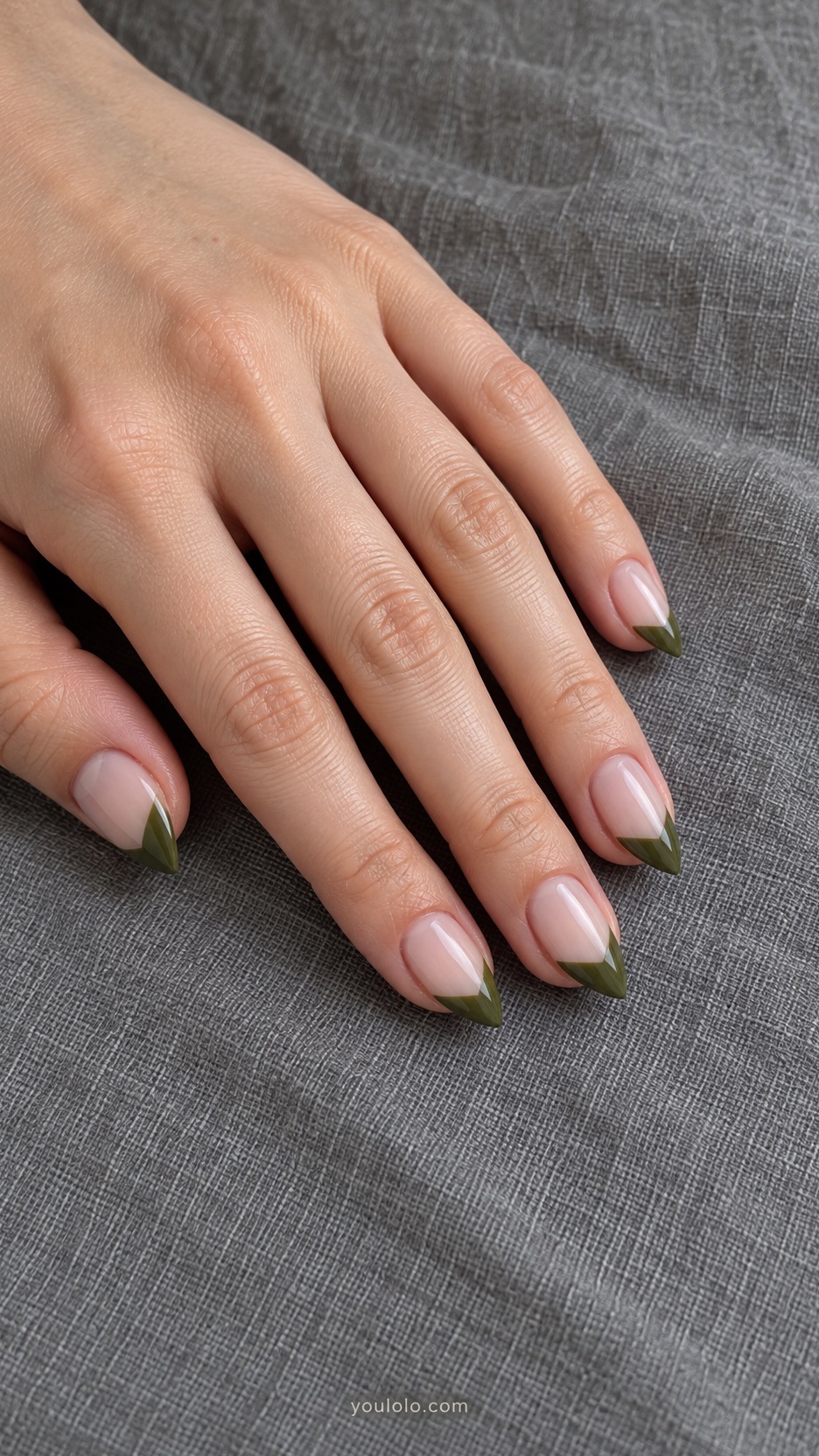
Olive diagonal French is a quieter color choice with a strong direction. The slanted boundary gives the short point a little movement, and the sheer base makes the green easy to wear. I would pair it with cream, brown or a muted blue shirt. It is simple enough to let the shape remain the main attraction.
Ask for a diagonal that looks balanced across the hand rather than a rigid identical angle on every nail. The thumb and little finger have different proportions. Keep the green section relatively narrow if you want the result to feel light instead of like a nearly full-color manicure.
16. Ruby Micro Heart Tip
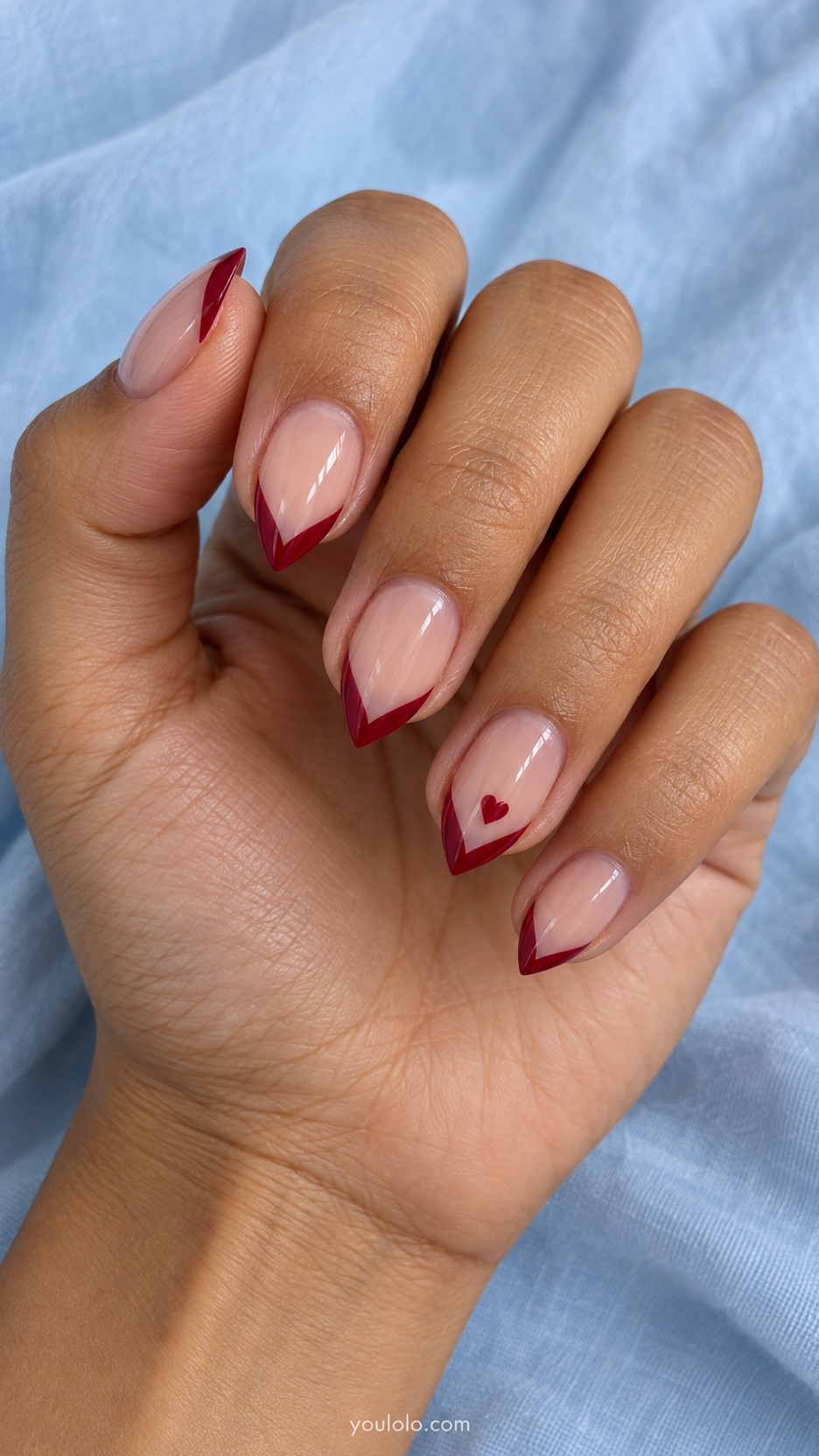
A tiny heart makes ruby V tips feel playful without turning the whole set into themed nail art. The ring finger carries the extra detail, while the other nails keep the sharp French outline. I would wear this with a plain white top or a dark red accessory. The restrained placement is what makes it easy to enjoy beyond one occasion.
Keep the heart small and give it clear nude space around it. It should sit above the French boundary rather than merge into the red tip. A flat painted heart is enough; a raised charm would add a different level of texture and attention.
A clear brief for a compact pointed manicure
I would begin with the length and outline, then choose the French boundary. Ask the artist to show the point before color is added. It should be a real part of the nail shape, not just a triangle painted onto a rounded tip. If the outline feels too sharp for your preferences, a pointed almond is a different option worth discussing.
Next, explain the balance of color and base. For a light result, leave most of the nail nude and keep the colored section narrow. For a bolder look, make the tip slightly deeper while preserving a clear boundary. Do not use an exact millimeter measurement from someone else’s nail as the only guide.
With metallic or magnetic tips, check a sample. A chrome line, a glitter edge and a cat-eye reflection are different finishes. The words shiny or sparkly are not precise enough to distinguish them. Point to the effect you like and ask how the salon’s available products can interpret it.
I would also think about clothing texture before choosing raised details. A flat painted heart or lace edge gives the design interest without changing its profile. The references here favor flat art and slim tips; they are intended as salon conversation starters, not instructions for building extensions at home.
My quieter picks are ivory V, chocolate double V and olive diagonal French. For a dressier mood, I would save gold outline or sapphire velvet. Choose one direction that you genuinely enjoy rather than combining every favorite into the same set. The strong silhouette works best when the decoration has a clear focus.
Further Reading and Image Notes
For a visual comparison of pointed and rounded outlines, use OPI’s shape reference alongside your design inspiration. OPI nail-shape comparison.
Images are original AI-generated manicure concepts created individually for Youlolo. They are not photographs of completed salon services, product listings or exact polish swatches. A nail artist can adapt the artwork and proportions to your nails. Sources and published internal links were checked on October 10, 2026.
Short Stiletto French Nails: Your Questions Answered
Are short stiletto nails really short?
They are short relative to longer stiletto extensions, but they still project beyond the fingertip enough to form a point. A nearly flush nail generally cannot show that same outline. Compare the actual shape and side profile rather than relying on a product or photo label alone.
Can I create this shape on very short natural nails?
A pointed shape needs enough length and an appropriate structure. Ask a qualified nail professional what can be achieved with your nails. You may prefer a short oval or almond interpretation of the same French design instead of trying to force a sharp point into insufficient length.
Is a V French the same as stiletto?
No. V French describes the painted design, while stiletto describes the physical nail shape. You can paint a V on a square or almond nail. In this collection the French design is paired with a genuinely pointed outline, so both parts of the reference matter.
Which design is the simplest starting point?
Ivory V or a single-color side French gives you a clear layout without several layers of detail. It lets you judge the shape and tip width first. You can choose a different color while keeping the same geometry if you prefer something warmer or darker.
Can I make the designs softer?
Yes. Use a lower-contrast base and tip, a fine line or a pearl fade. You can also choose a rounded almond outline, but that changes the shape category. Tell your artist which element you want to soften rather than asking for stiletto and expecting a rounded tip.
Do these references show specific press-on products?
No. They are original AI-created design concepts, not product listings. A salon may adapt the artwork to an appropriate extension, or you may find a similar ready-made style. Check the actual product’s dimensions and instructions rather than assuming the pictured shape is available in one universal size.
What should I save before an appointment?
Save one shape reference, one design reference and a note about the length you want. Explain whether the color, finish or tip placement is the priority. That gives the artist room to adapt the idea to your own nail proportions while preserving the detail you liked.