The Best Fluffy Pancakes recipe you will fall in love with. Full of tips and tricks to help you make the best pancakes.


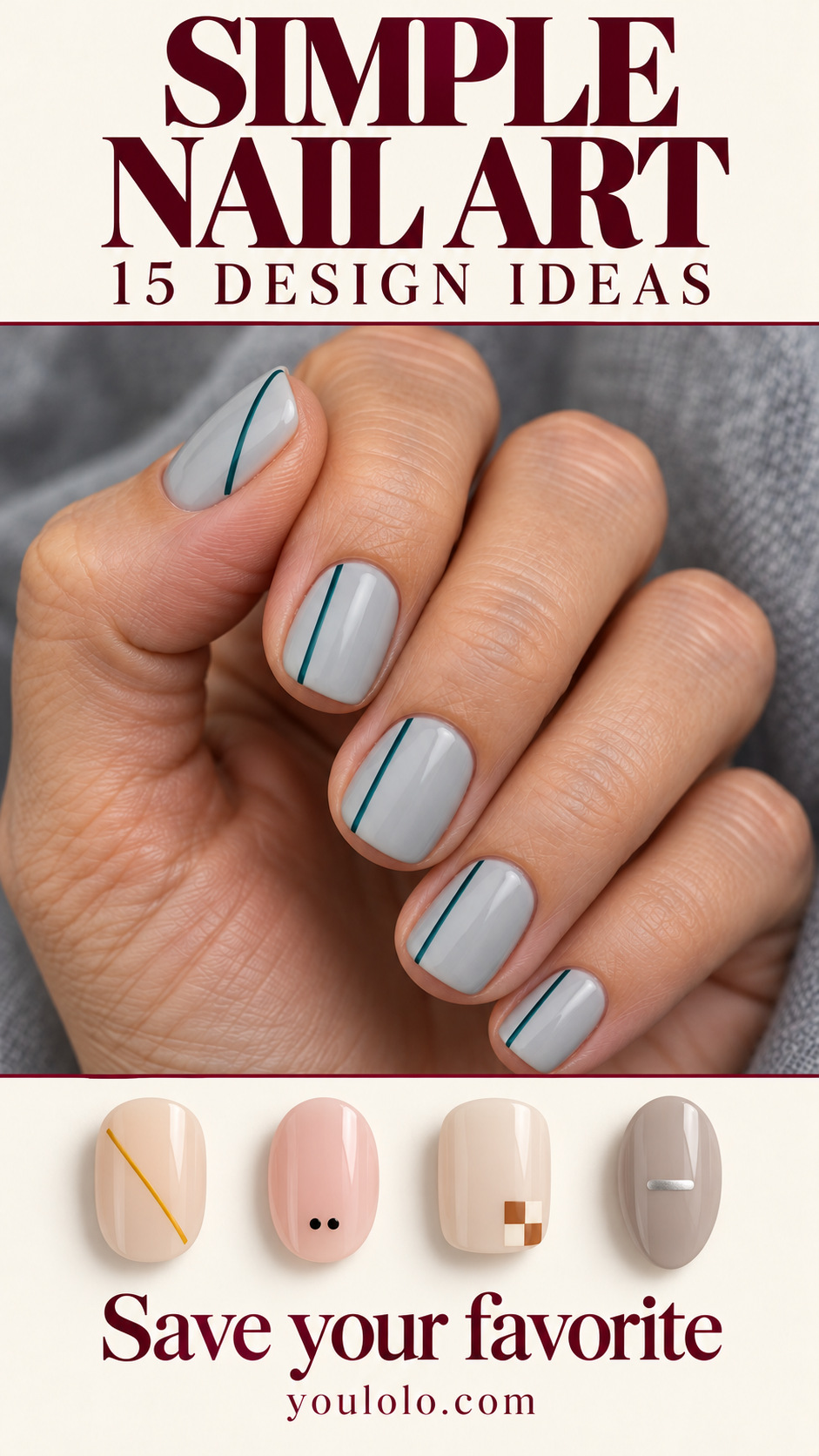
Simple nail art starts with a small decision: where should the eye go? A single diagonal, two ink dots or a slim curve can change a manicure without covering the whole surface. This collection concentrates on clear, compact artwork that leaves the base color visible.
These 15 designs use different compositions, rather than repeating a tiny flower in another shade. Some are useful references for a first attempt at easy nail art; others need a steadier line and are better shown to an artist. A minimal appearance does not always mean an effortless technique.
The short nails in the images keep the scale easy to judge. Choose the detail before choosing a longer shape: an open arch, a dot ladder and an offset triangle each use space differently. Keep the one that catches your attention at normal viewing distance, not only in a close-up.
Visual note: these original AI-generated manicure concepts are inspiration images, not salon photographs or product tests. Ask your artist to adapt the design, shape and materials.
How to Choose a Detail You Can Actually See
Dots and filled corners read clearly at a small scale. Fine rails and open arches depend more on even spacing. If you are choosing a first DIY design, compare those demands before trying to recreate the most delicate picture.
For a compact nail, leave enough clear base around the artwork. A small detail loses its lightness when it grows to fill every available space. For a stronger look, increase contrast before adding a second motif.
Our short square nail designs offer a separate way to compare shapes. Here, the artwork is the main decision.
| Detail | Visual demand | Where I would begin |
|---|---|---|
| Dots | Clean size and spacing | Double Ink Dots |
| Filled shape | A neat boundary | Mustard Diagonal |
| Open curve | Even arc and a clear center | Lilac Open Arch |
| Fine straight line | Consistent width | Teal Pencil Line |
15 Simple Nail Art Looks to Compare
1. Mustard Diagonal
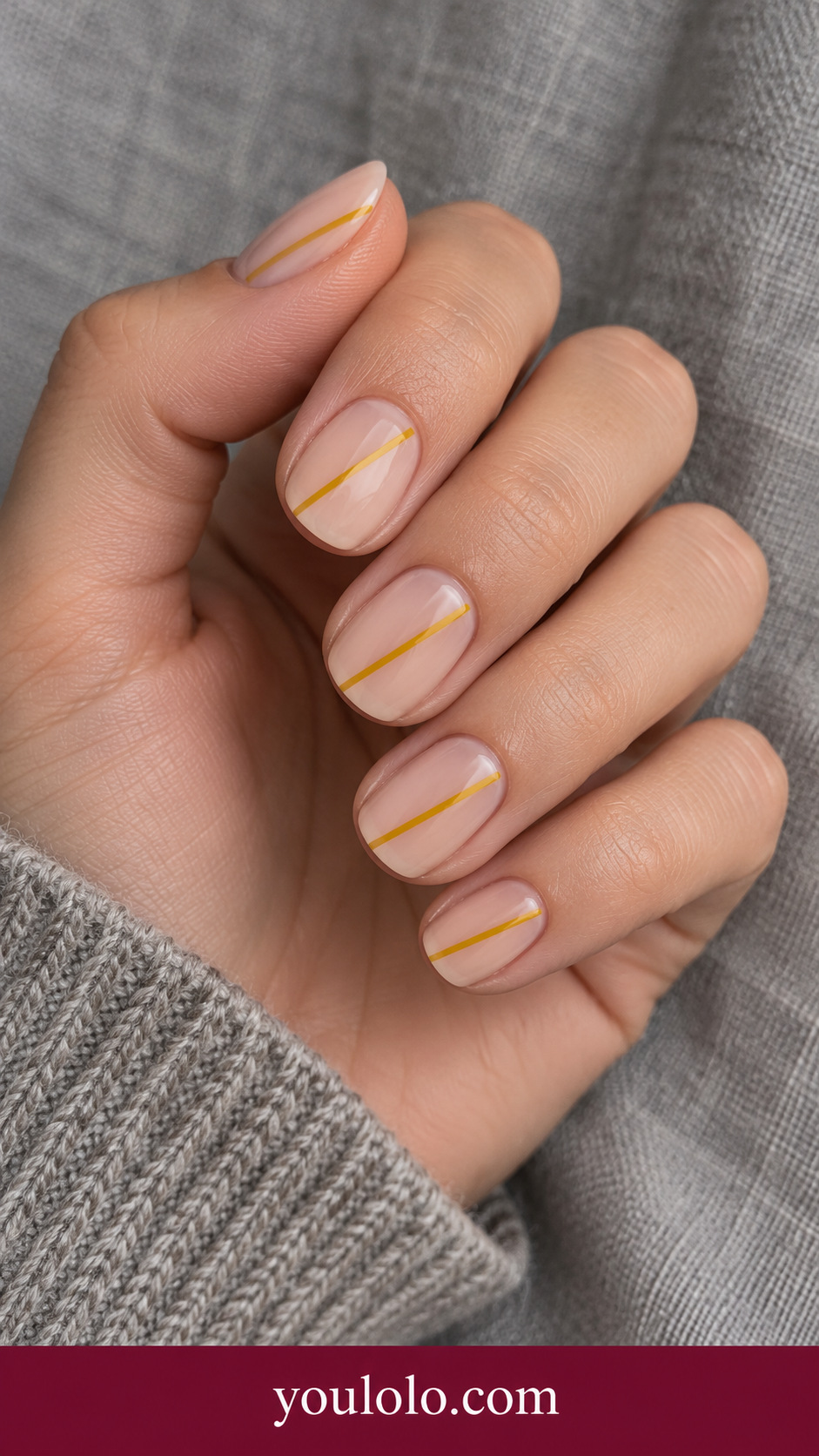
A mustard diagonal brings warmth to a quiet nude set without filling the nail. I would wear it with denim or a cream shirt. Keep the stripe fine and let its angle repeat across the hand; the simple rhythm is what makes the design feel deliberate.
2. Lilac Open Arch
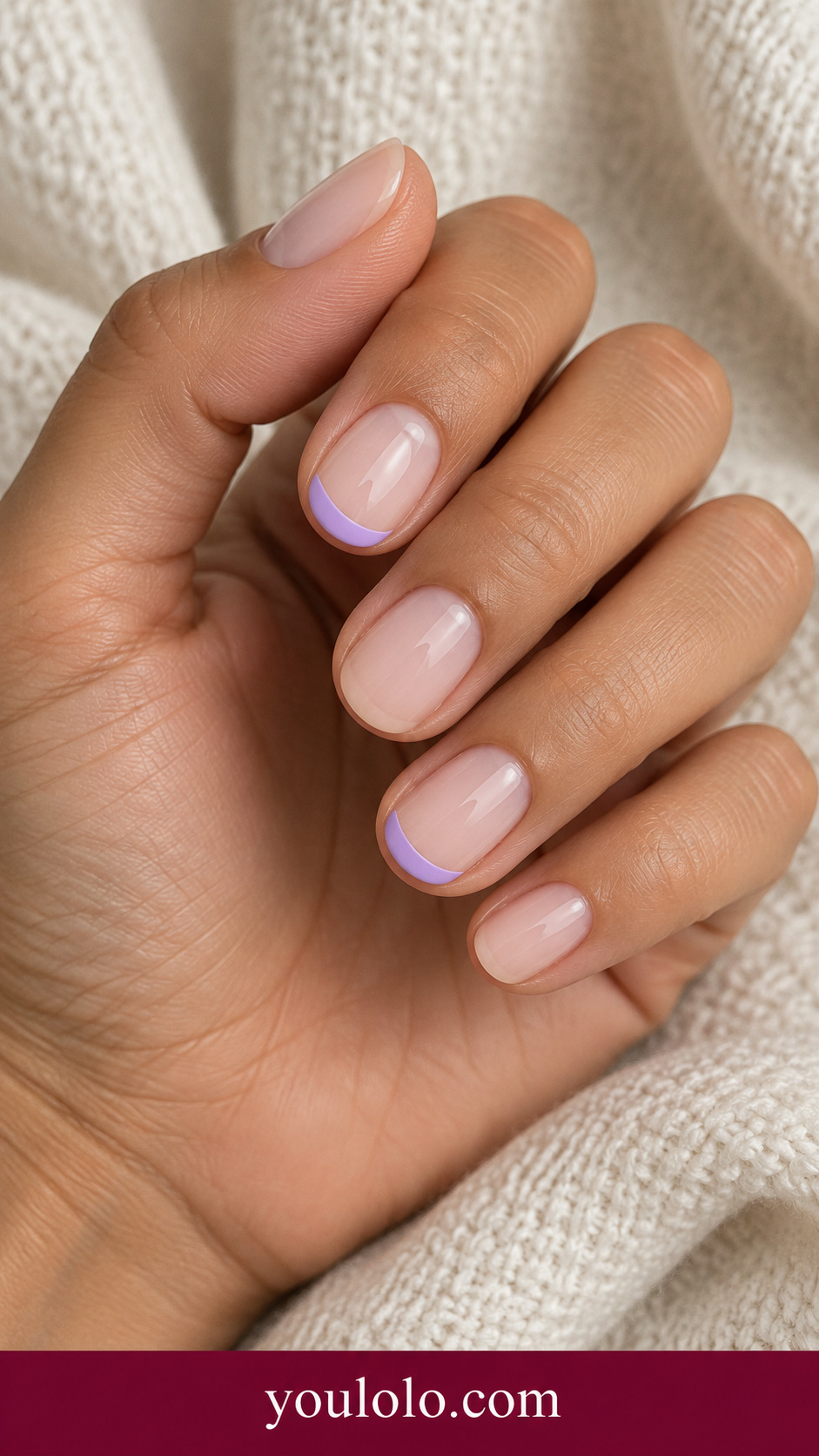
An open lilac arch feels softer than a full colored tip. Two accents leave plenty of plain space, which is useful beside a printed blouse. Ask for a clean curve with no filled center so the motif stays light rather than turning into a purple block.
3. Double Ink Dots
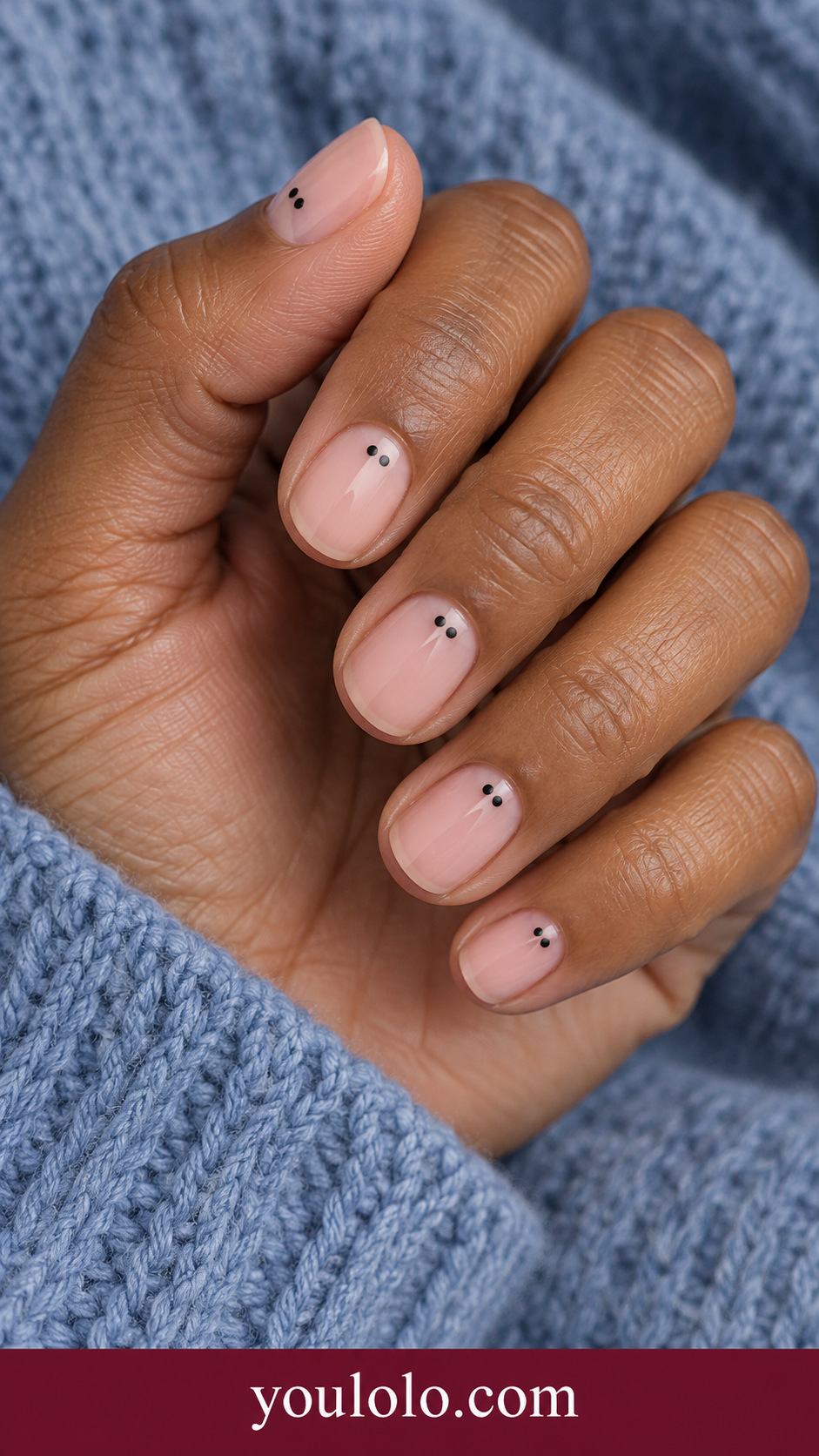
Two small black dots make a neat little signature on a sheer base. The spacing matters more than adding extra decoration. I would choose this with simple silver jewelry and ask for the dots to stay away from the skin, leaving a clear margin at the base.
4. Coral Side Outline
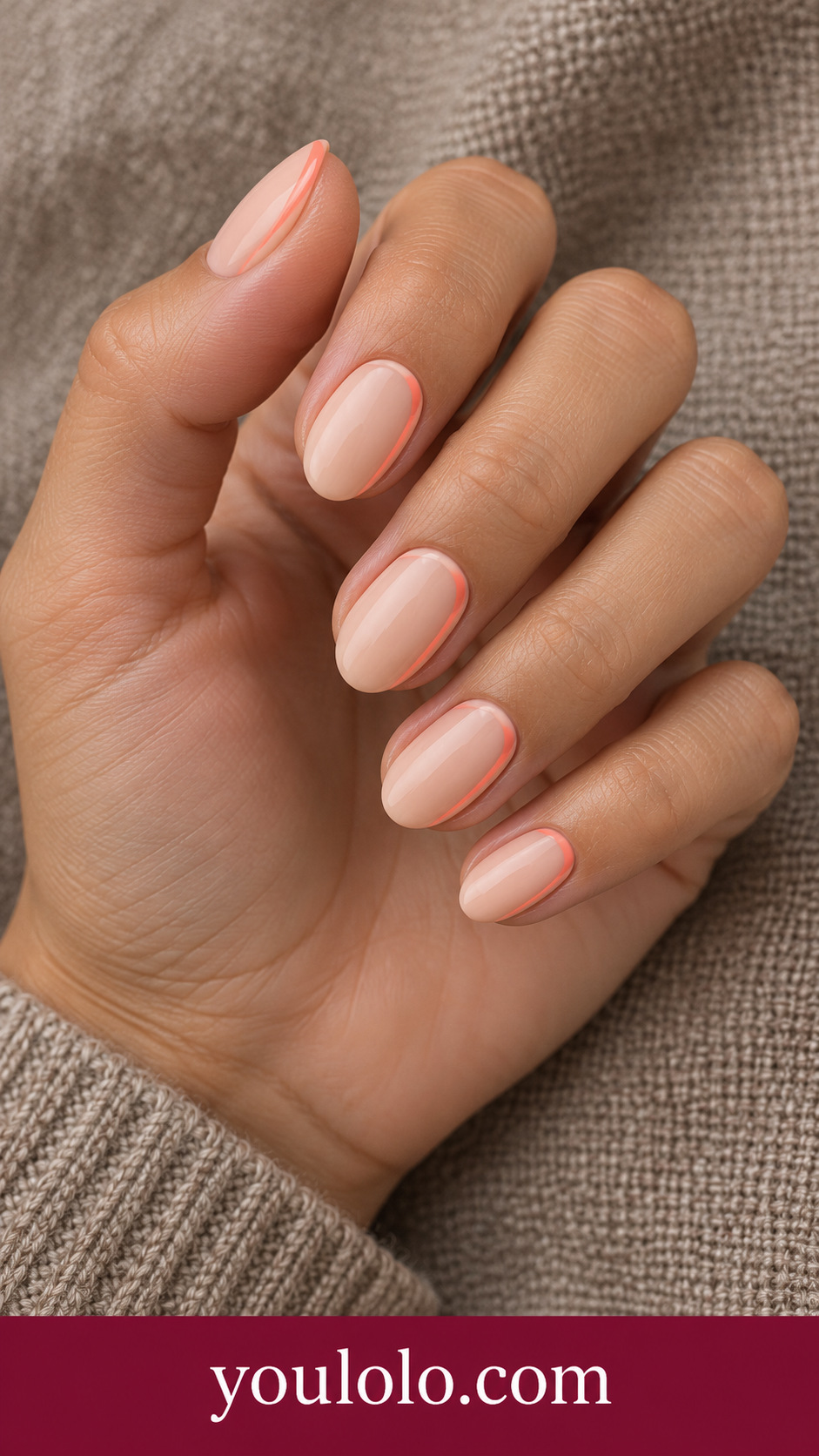
A coral line along one side gives peach a bright edge while the center stays calm. It is a useful choice when you like color but do not want an entire red manicure. Keep the line even and stop it cleanly before the cuticle area.
5. Teal Pencil Line
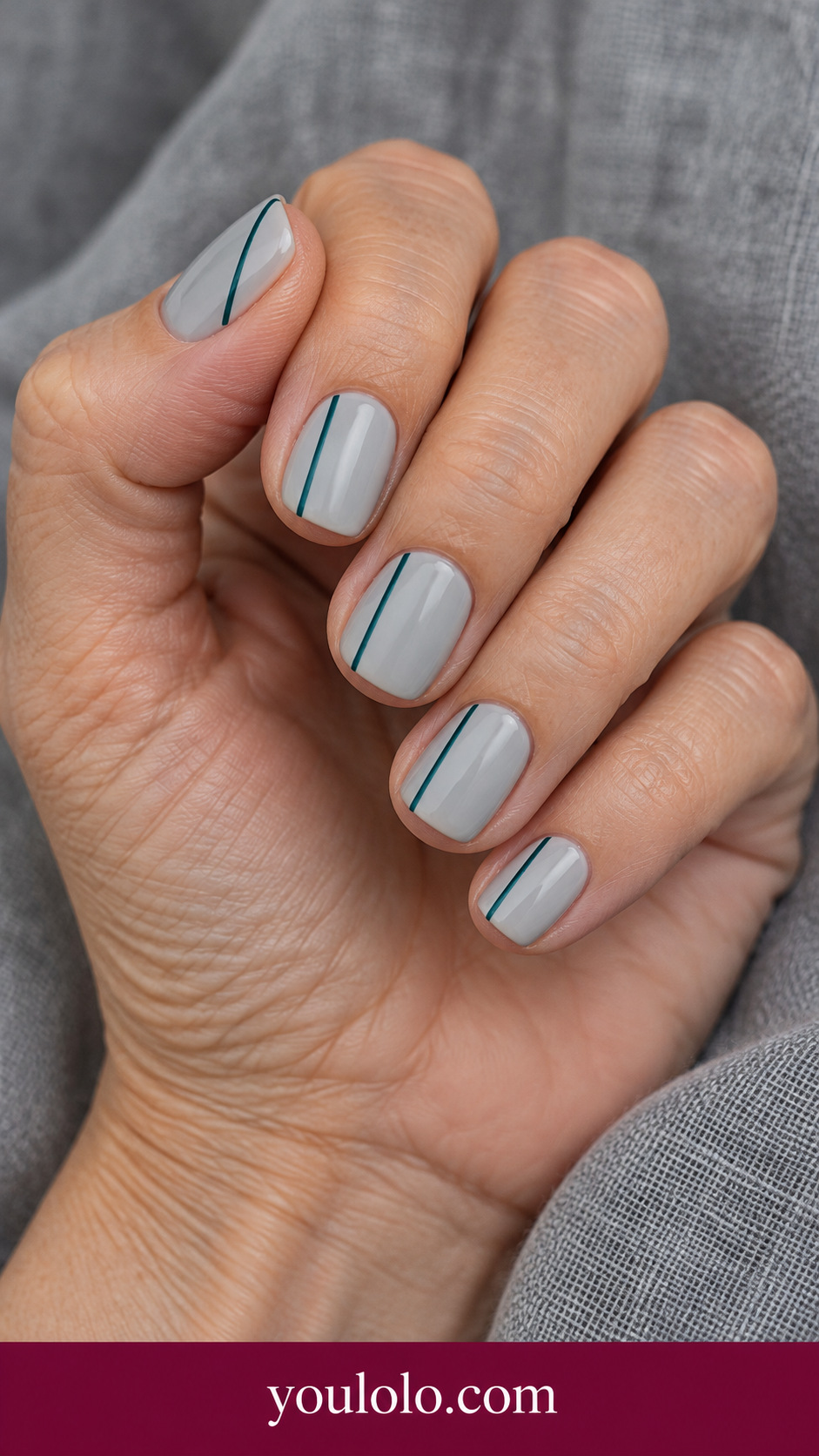
An offset teal line makes a pale-gray manicure feel graphic. The soft square gives it a clear frame, and the color works beautifully beside a white shirt. Ask for one continuous stroke with visible gray on both sides rather than a thick central stripe.
6. Navy Comma

A single navy comma has the charm of a small handwritten mark. It adds an interesting shape without committing to a recognizable seasonal motif. I would wear it with a blue-striped sleeve and keep the other nails ivory so the little accent remains the focus.
7. Caramel Checker Corner
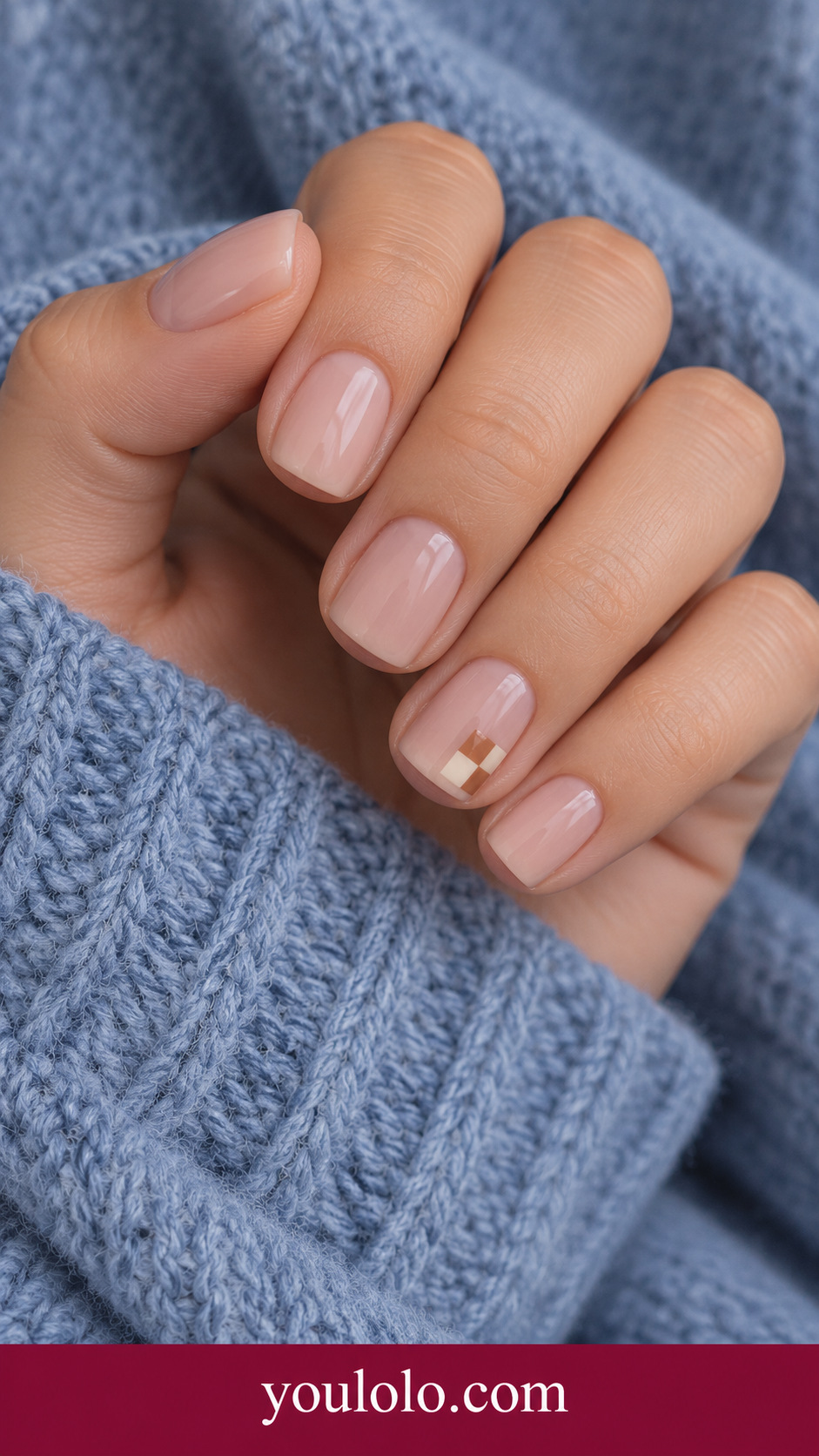
A tiny checker corner brings a pattern into a compact set without covering the whole nail. Caramel and cream keep the contrast warm. Ask for just a few clear squares with straight edges; a crowded miniature grid would be harder to read from a normal viewing distance.
Keep One Visual Job per Nail
A line provides direction; a dot creates a point; a corner adds weight to an edge. Combining all three on the same short nail can make a simple composition harder to read. The next designs show different ways to use that space without making every surface equally busy.
8. Olive Triangle Tip
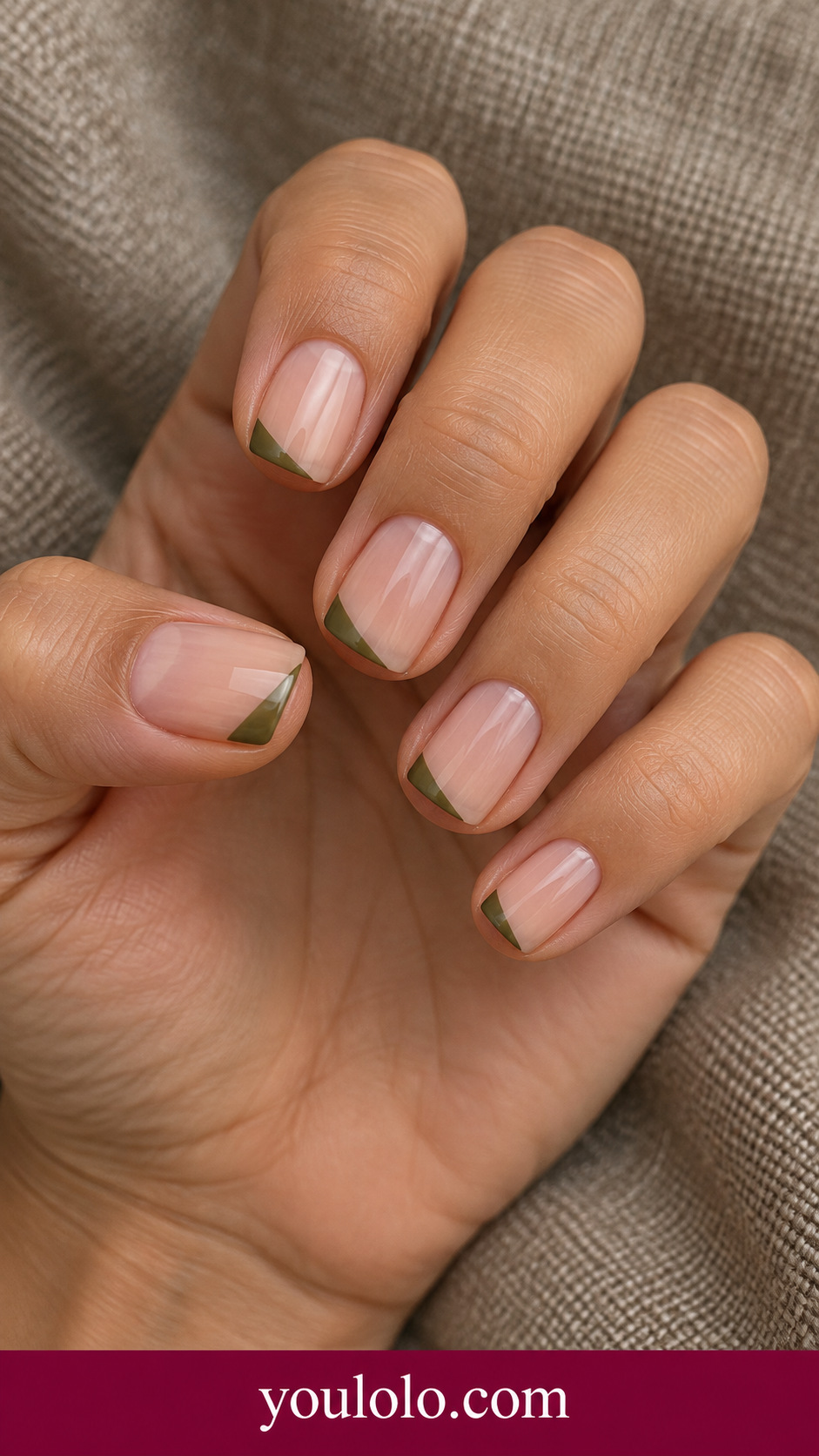
An olive corner gives a familiar nude manicure a geometric change. The small triangle can stay compact even on short nails. I would pair it with tan clothing and ask for the same proportion across the sizes, rather than forcing every corner to have an identical width.
9. White Twin Rails
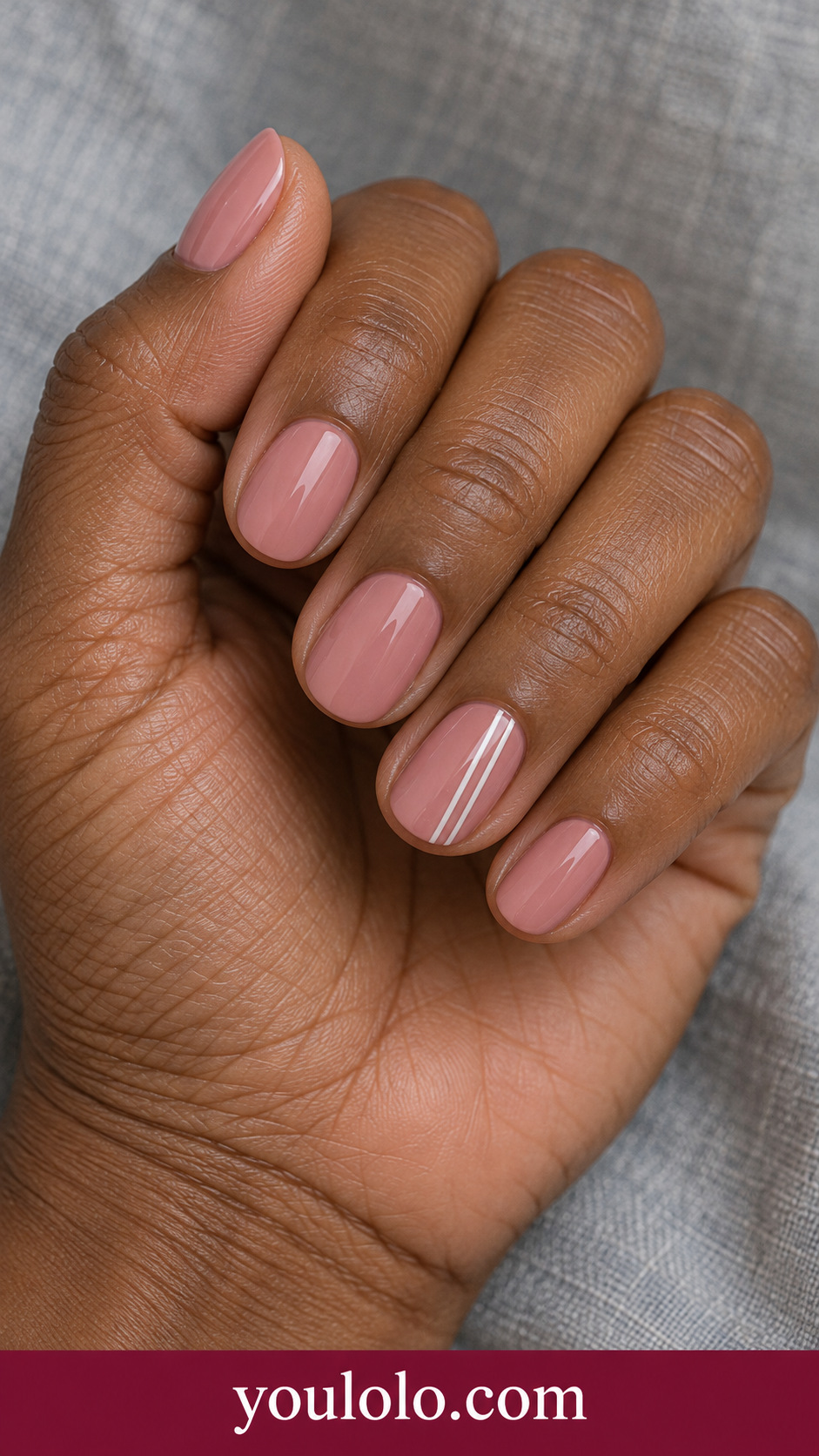
Twin white lines create a clean accent against dusty rose. They feel more structured than a swirl but less bold than a full stripe. Leave a visible gap between them and keep the surrounding nails plain; the pale lines should look precise instead of merging into one band.
10. Red Corner Tile
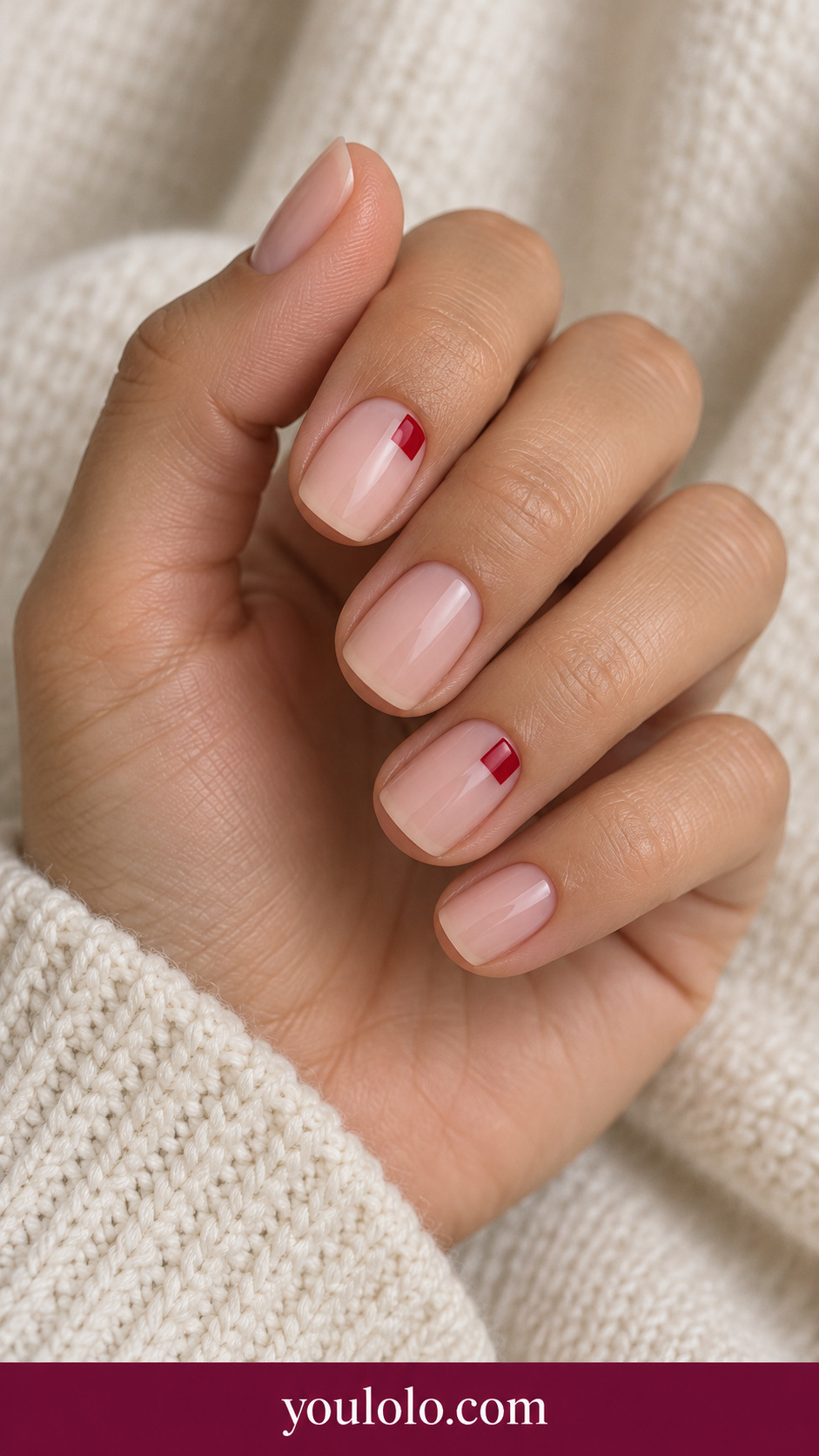
A small red tile gives sheer pink a bright focal point. I like this with a plain tee or a crisp blouse because the tiny block has enough contrast to carry the set. Ask for sharp corners and clear pink around the shape, especially on narrower nails.
11. Silver Short Dash
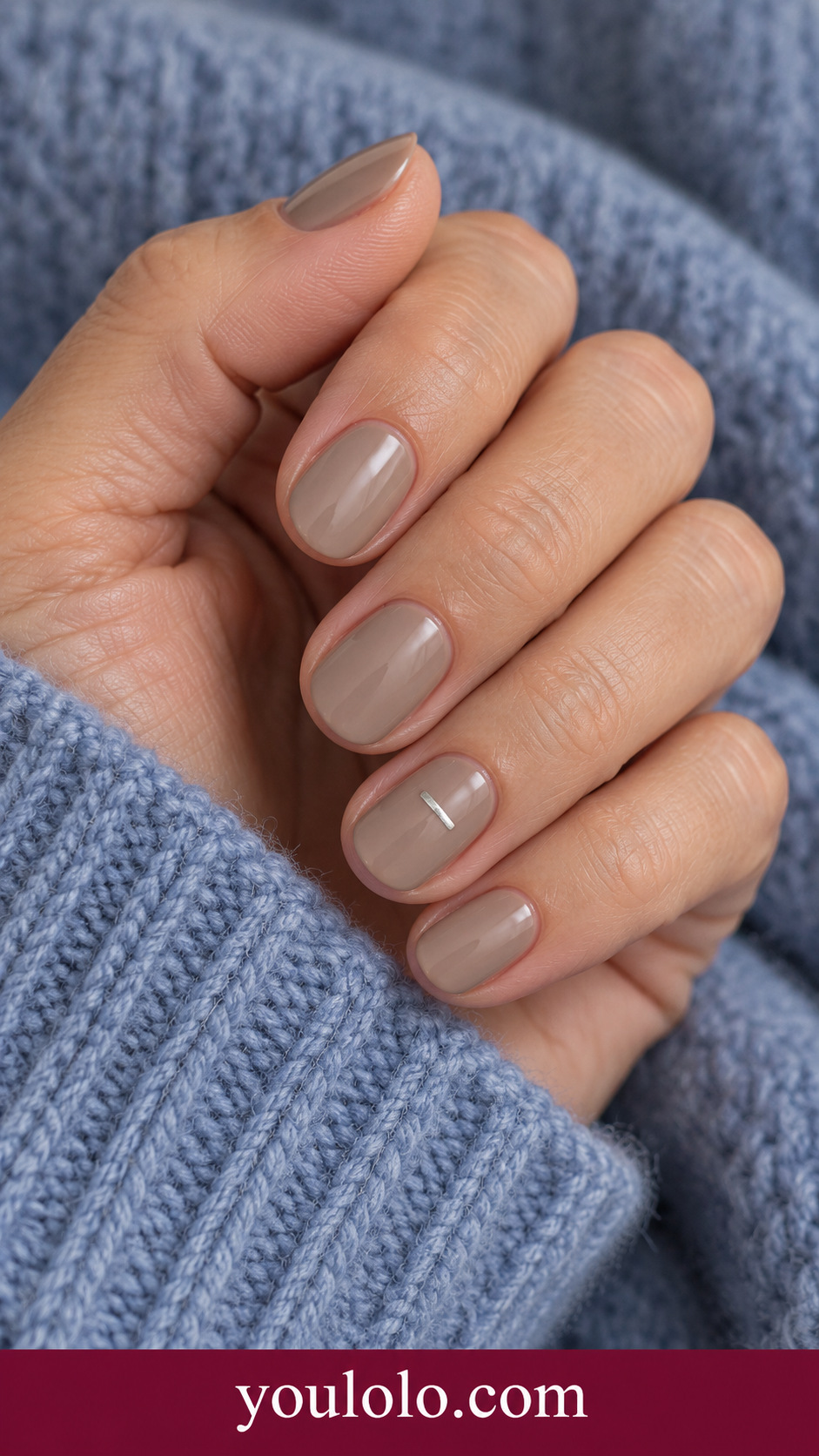
A silver dash makes taupe feel slightly more dressed up without becoming a metallic manicure. The mark should stay short, with space at both ends. I would choose it beside gray tailoring and keep the surface smooth rather than using an attached metal piece.
12. Cobalt Dot Ladder
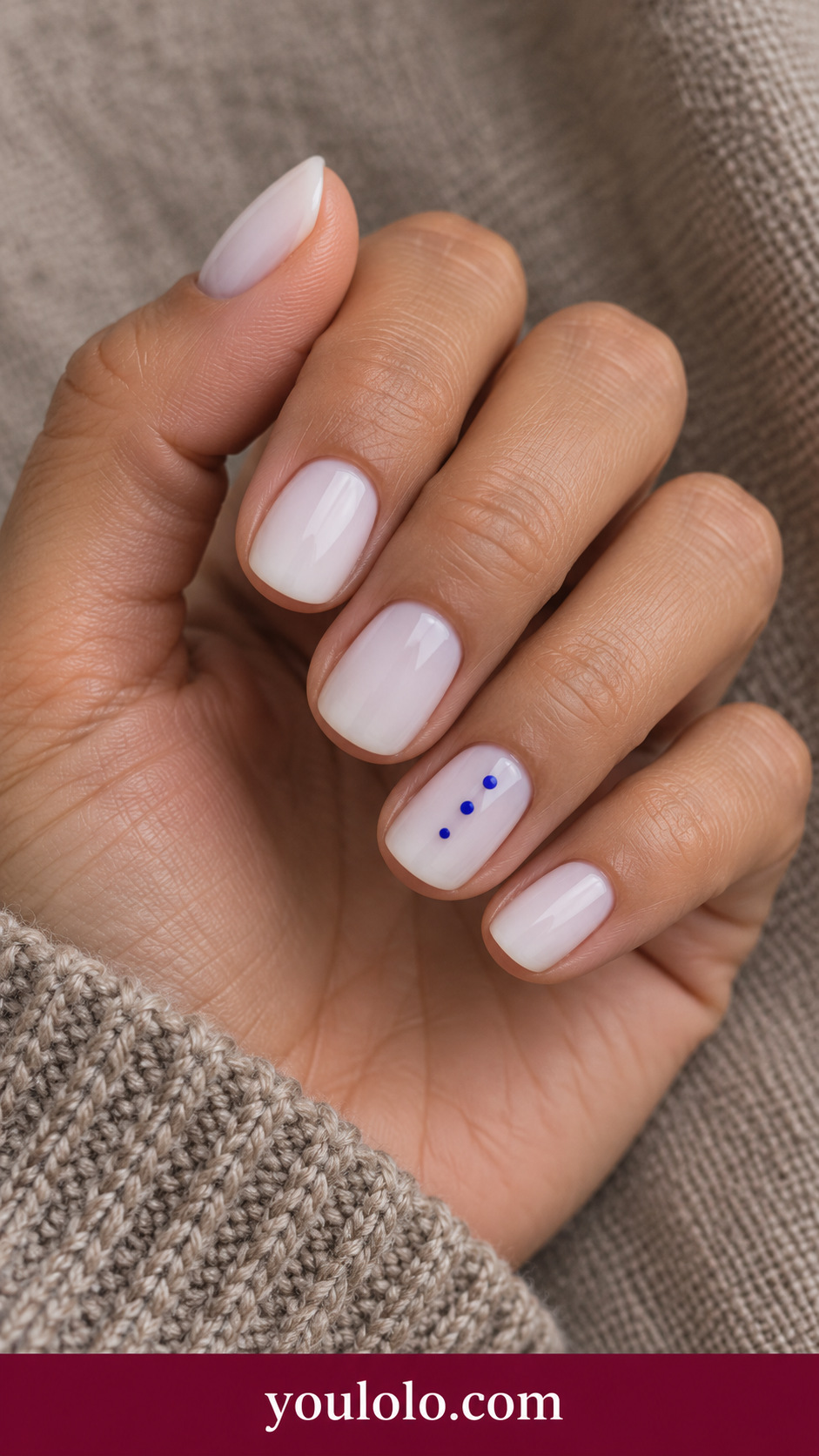
Three cobalt dots create a small vertical rhythm on white. The design works best when their spacing feels airy. I would wear it with a blue accessory and ask for a small scale; larger dots would turn the accent into a much bolder pop-art pattern.
13. Mauve Cuticle Arc
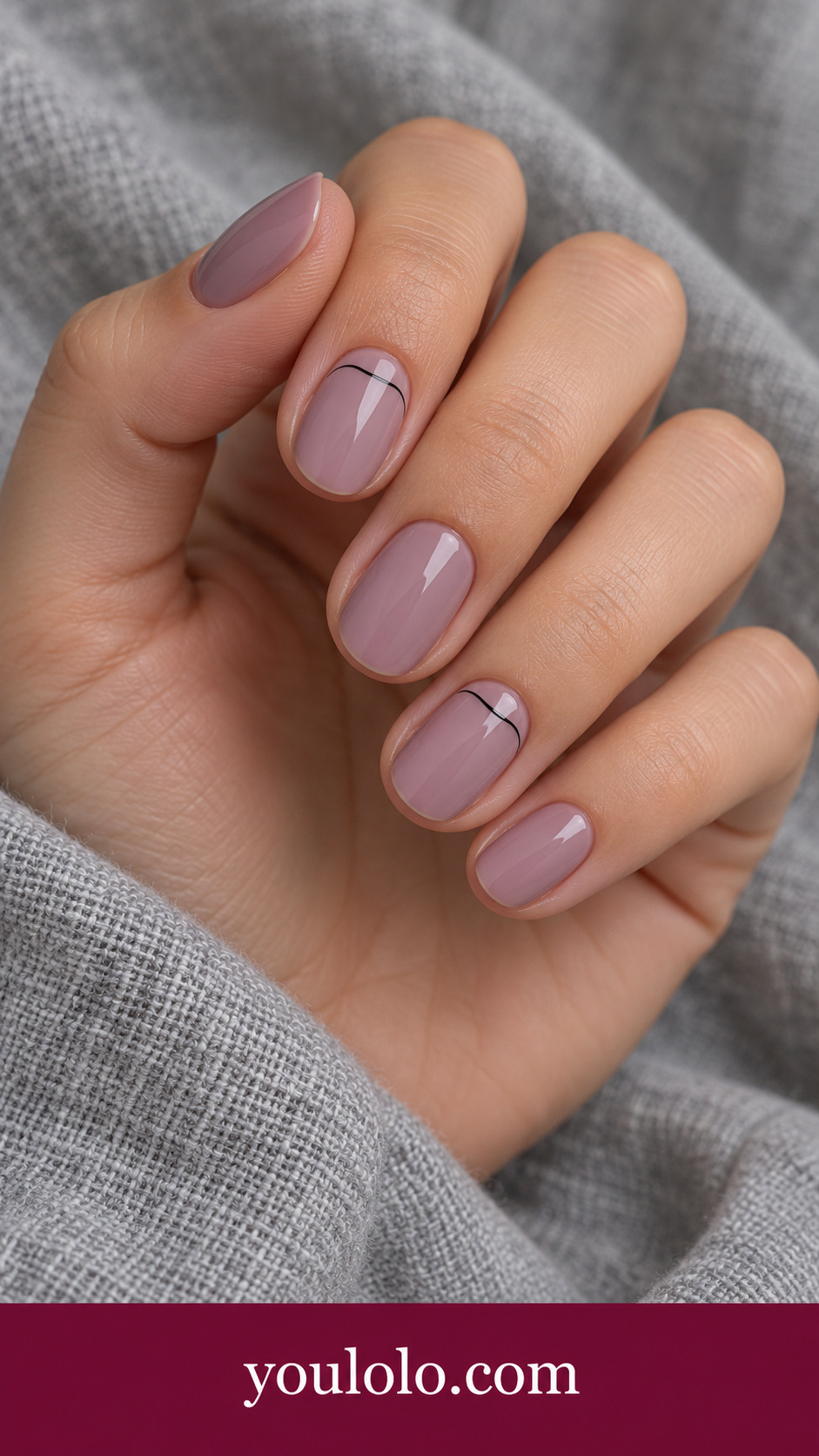
A fine black arc gives mauve a little definition near the base. It is a useful way to add contrast while leaving the rest of the nail untouched. Ask for a small gap between the line and the skin so the curve looks like artwork rather than an uneven edge.
14. Peach Stacked Curves
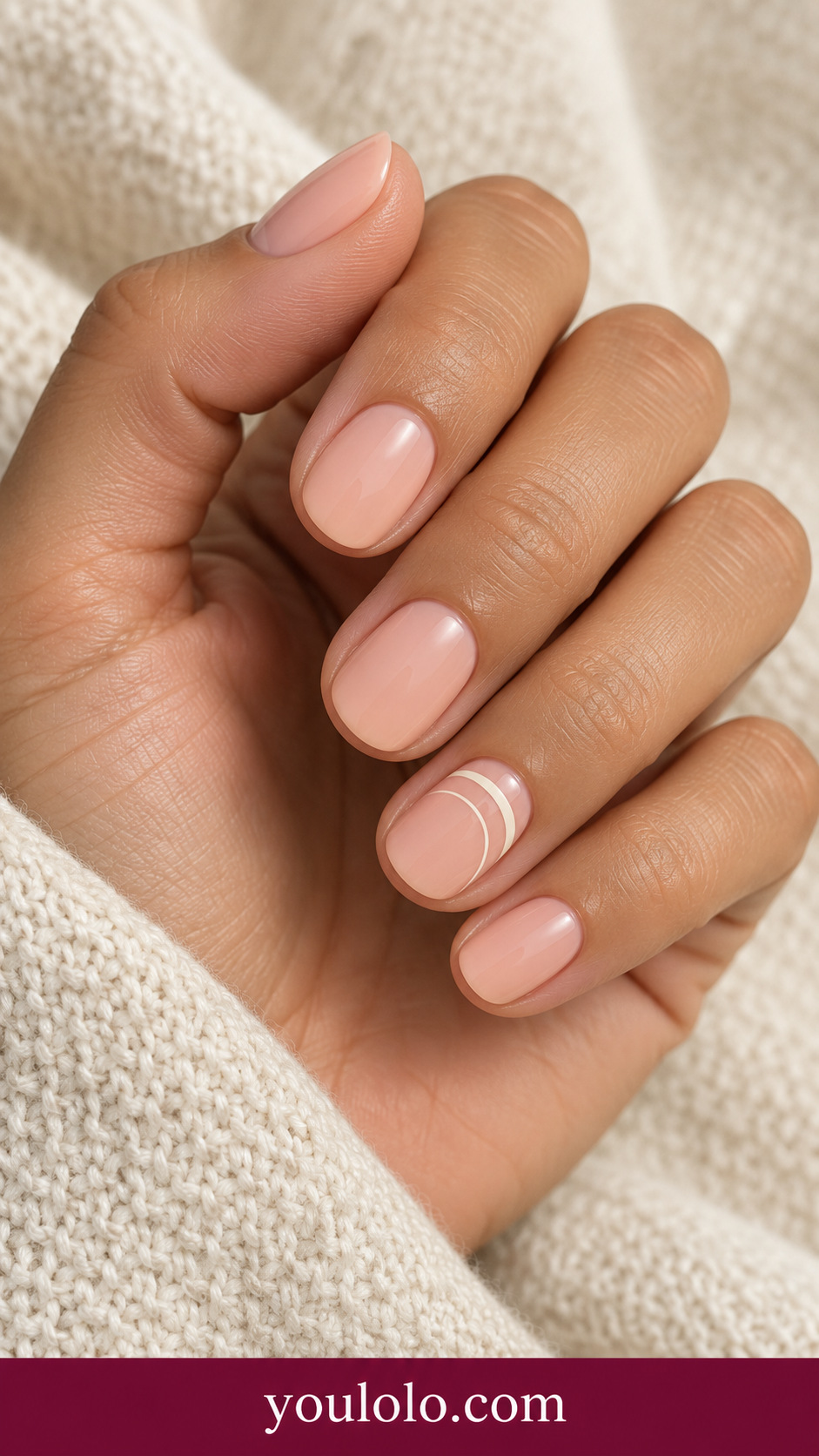
Nested cream curves soften a peach manicure with a little movement. I would choose this with a quiet warm-toned outfit. Keep the two curves separate and small enough to leave a generous plain area; the drawing should feel like a detail rather than a full pattern.
15. Chocolate Fine Squiggle
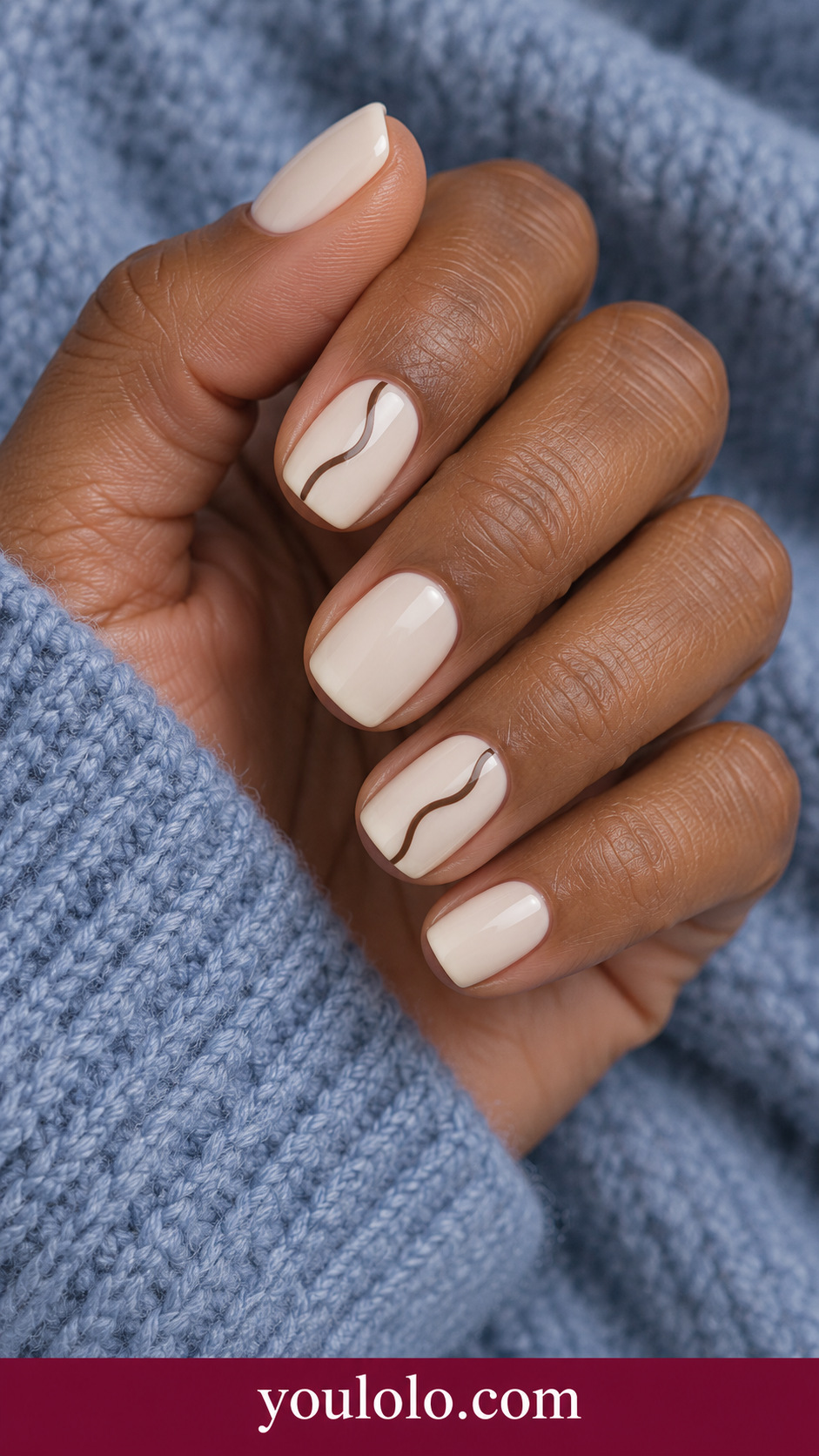
A chocolate squiggle gives ivory a relaxed, drawn-by-hand quality. The uneven curve is intentional, but the line itself should remain fine and clean. I would pair it with tan or brown clothing and keep the two accents slightly different instead of demanding mirror-image shapes.
A Useful Brief for Simple Nail Art
Name the base, the one main detail and its placement. For example: short squoval nails, a pale gray base and one fine teal line offset to the side. That is more useful than asking for something simple without showing what simple means to you.
For DIY, choose a dot or a small filled corner if fine lines feel difficult. A tape guide, a dotting tool or an appropriate nail-art sticker can help with particular shapes, but the result still depends on the material and a neat boundary. Practice on a sample tip before deciding the design is easy for you.
If you prefer a softer edge than a square, compare our squoval nail shapes. Length and corner shape can change the same small drawing without requiring a new theme.
Simple Nail Art Questions, Answered
Which simple nail art is a good starting point for beginners?
A few dots or a small filled corner are useful starting points because they do not require a long continuous fine line. Try the motif on a sample tip first. A design that looks minimal can still demand careful control.
Can simple nail art work on very short nails?
Yes. Reduce the motif to fit the visible surface and leave a clear margin around it. The dot, corner and offset-line references in this collection show compact compositions rather than shrinking a detailed full-nail picture.
How do I make a minimal manicure feel distinctive?
Change one intentional feature: placement, contrast or line direction. An off-center teal line gives a different mood from a centered ink-dot pair. You do not need several motifs to create that difference.
Do I need gel for these simple designs?
The appearance can often be interpreted with different appropriate nail-art materials. Ask the artist which system suits the detail, or choose products designed for your DIY method. These images do not document a specific product application.