The Best Fluffy Pancakes recipe you will fall in love with. Full of tips and tricks to help you make the best pancakes.


There is something lovely about a manicure that borrows a small detail from your favorite knitwear. A narrow cable, a row of tiny stitches or a creamy ribbed accent can make a familiar nail color feel different without covering every finger in artwork. These winter cable knit nail ideas explore that softer side of seasonal nails, from oatmeal and blush to navy, cranberry and sage.
I like this kind of design most when there is a little breathing room. One patterned nail beside a plain glossy shade can be just as satisfying as a full knitted set. The interesting choice is often the contrast: matte beside gloss, a raised braid beside a smooth surface, or a cool blue paired with a warmer cream. You can decide how much texture you want before adding more decoration.
The collection starts with easy neutral combinations, moves through richer colors and checks, then finishes with lighter details and a few more graphic variations. Each idea includes a close-up, a note about why the arrangement works and a short brief you can take to your nail artist. You do not need the exact length shown to use the idea. Save the color relationship or one stitch pattern you enjoy, then adapt the layout to your own nails. I would rather keep one beautiful, readable cable than squeeze three tiny ones into a space that does not suit them.
Decide Whether You Want Texture or Just the Pattern
A cable can be suggested with flat painted lines or built as a low raised detail. Those versions may look related in a photograph, but they feel different. Start by choosing which surface you prefer. If you want a smooth manicure, keep the woven drawing and skip the raised relief. If texture is the attraction, let a small number of carefully spaced braids do the work.
Soft Neutrals and Everyday Knit Details
1. Oatmeal Cable and Cocoa
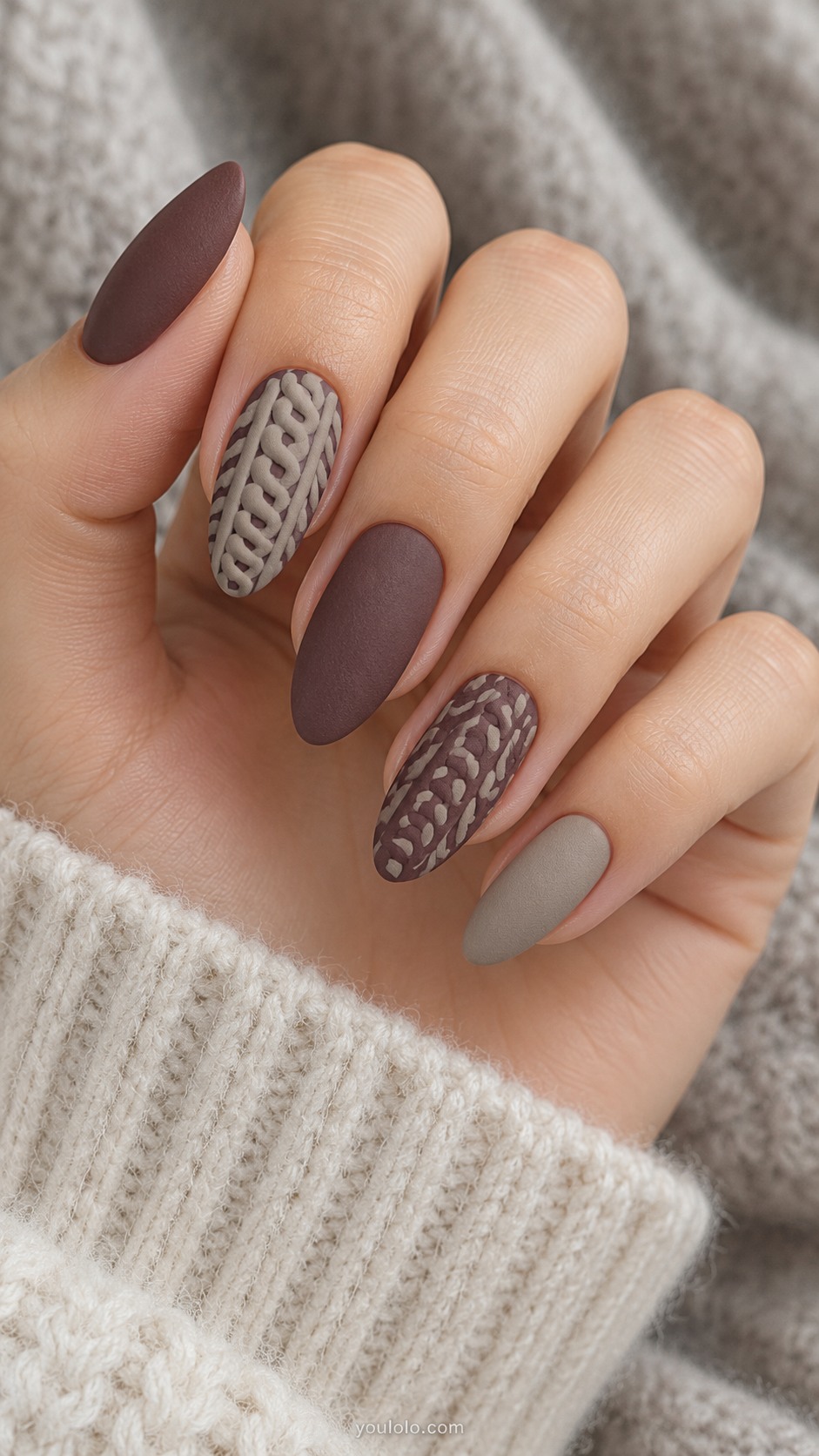
This is the set I would choose when I want the knit pattern to be the interesting part. Oatmeal makes the little crossed stitches easy to see, while cocoa gives the hand a richer outline. Two patterned nails are plenty; the plain brown keeps everything from feeling crowded.
Keep the cables narrow, with a little clear space between each crossing. A very thick braid changes the character from fine knitwear to chunky decoration.
For your nail artist: Two oatmeal cable accents with plain cocoa supporting nails; keep the texture low.
2. Soft Beige Knit Skittles

A small range of beige shades can be surprisingly satisfying. Cream, biscuit and taupe look related without making every finger identical, and the short oval shape keeps the whole set soft. I like having the knit appear on only two fingers, almost as a detail you notice after the colors.
Choose the shades together before deciding which nails receive the pattern. The palest one gives the stitching the clearest definition.
For your nail artist: A warm neutral palette, short ovals and two fine cable accents.
3. Rosewood Knit and Fine Shimmer
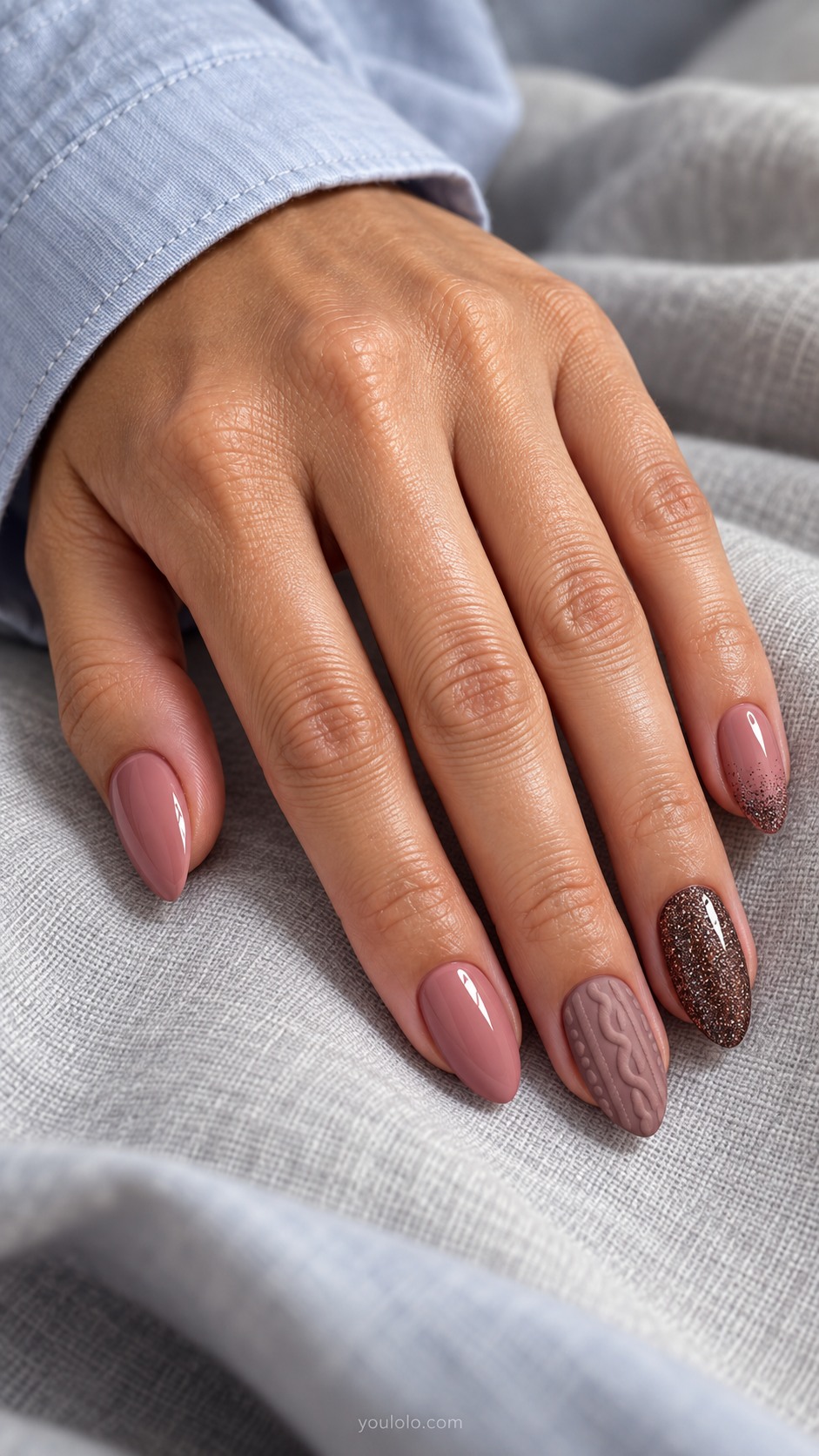
Dusty rose has enough warmth to make this feel cozy without turning it sugary. The matte cable nail breaks up the glossy rose, while the brown shimmer adds a different kind of detail. It is the contrast between surfaces that makes the set interesting, rather than a complicated illustration.
I would keep the shimmer fine and the knit in the same rose family. Large glitter pieces would compete with those small woven lines.
For your nail artist: Rosewood gloss, one matching matte cable nail and one fine brown shimmer accent.
4. Midnight Navy Braids
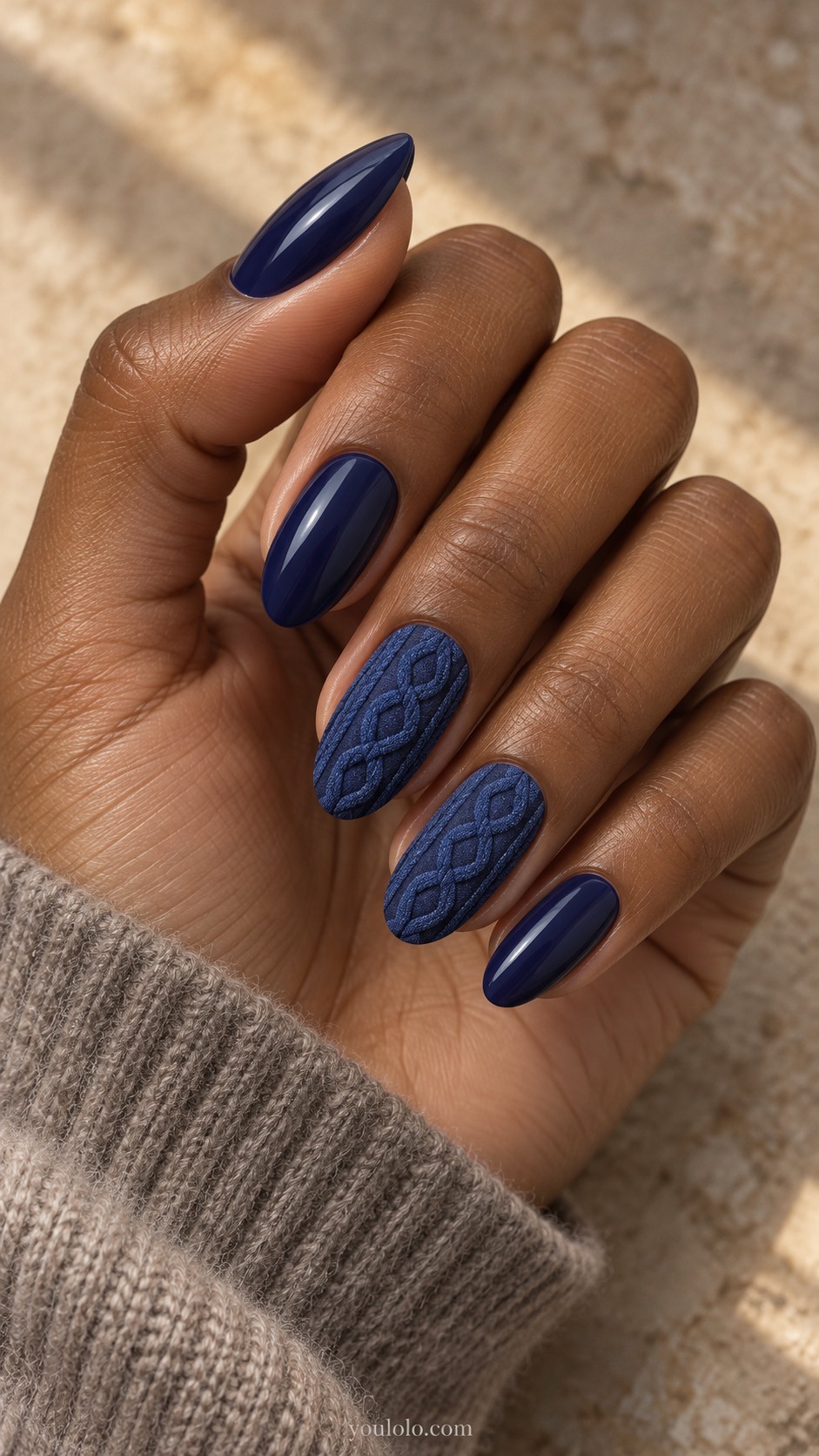
Navy gives sweater nails a more tailored mood. The glossy fingers look almost inky, then the matte cable accents reveal their pattern when the light catches the raised lines. This is a lovely choice if pale winter nails never quite feel like you.
Ask to see the cable detail in normal light. If the navy is too close to black, a slightly lighter blue braid can make the design easier to read.
For your nail artist: Deep navy with two matte cable panels; keep the supporting nails glossy.
5. Caramel Knit with Ivory Stitching

Caramel and ivory are such an easy pair to build around. Here, the creamy accent gives the fine brown stitching room to stand out, while the caramel nails carry the color across the hand. There is no need to add leaves or seasonal symbols for this to feel right in colder weather.
For a quieter version, make the knit lines taupe rather than dark brown. The layout stays the same, but the contrast becomes gentler.
For your nail artist: Short caramel nails with one ivory accent and fine warm-brown stitching.
6. Denim Stitch on Dark Blue

These little painted cables offer the look of knitwear with a smooth surface. Muted denim sits between the dark navy and pale stitching, so the colors feel layered rather than sharply divided. I would save this one if I loved the pattern but preferred flat nail art.
Keep the painted loops open. Tiny solid blocks of blue can lose the woven effect, especially on a short oval nail.
For your nail artist: Flat pale-blue cable linework on two navy accents, with muted denim supporting nails.
Deeper Colors and Mixed Winter Patterns
7. White Cables on a Blush Set

Blush makes a soft background for the brighter ivory knit nails. The contrast is gentle, but the change from a plain pink surface to a white cable is still clear. I like this as an introduction to sweater art because it does not need glitter or a dark color to look finished.
On a very short nail, one central braid and two fine side lines can be enough. Leave space at the cuticle so the pattern does not look squeezed in.
For your nail artist: Short blush ovals and two ivory cable nails with slim vertical spacing.
8. Cranberry and Cream Cuffs
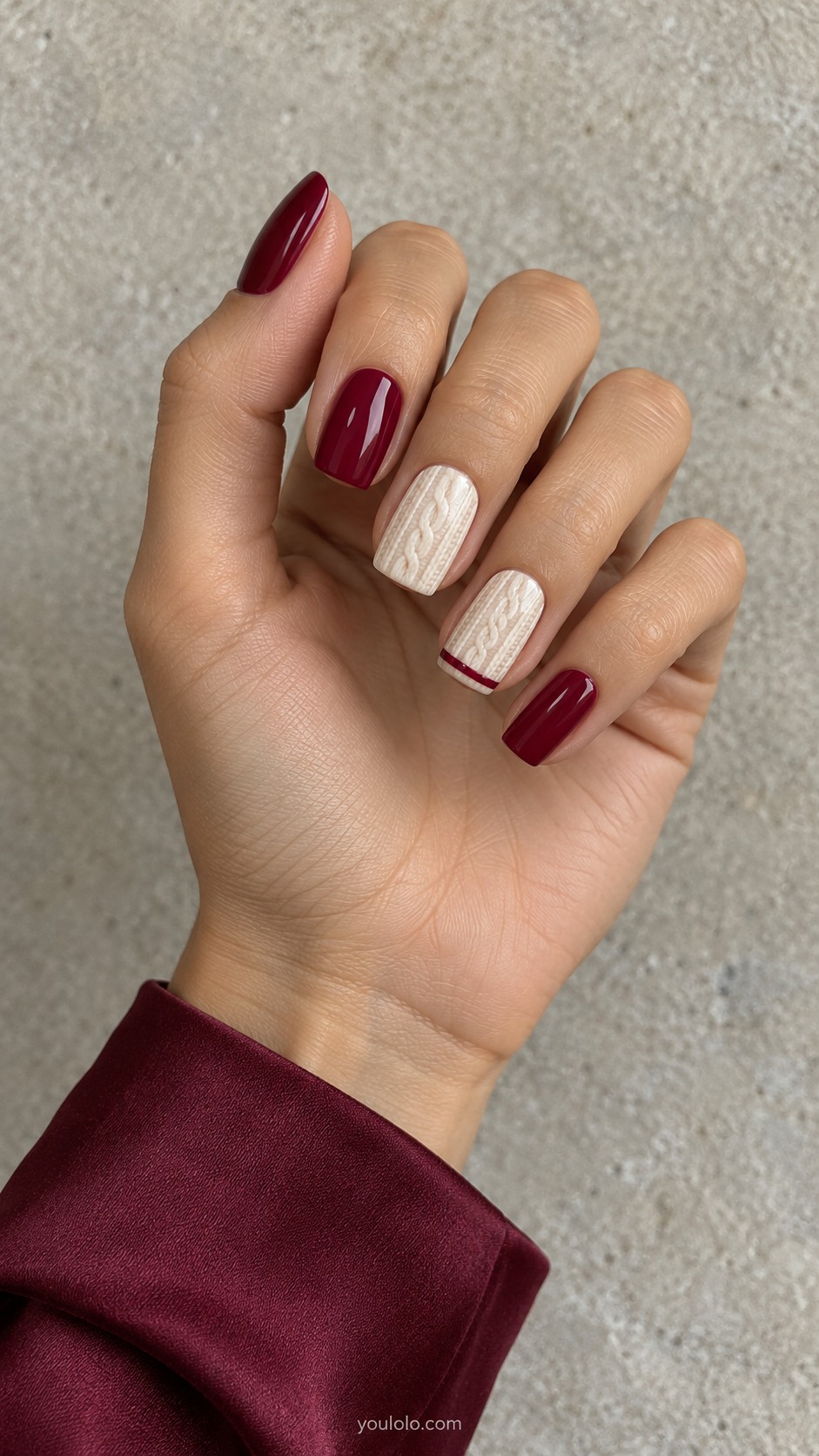
A cranberry manicure can feel festive without becoming a full Christmas scene. The cream cables make this version softer, and the tiny red edge repeats the main color in a quieter way. I would leave the cream accents free of extra dots, bows or snowflakes.
The tip stripe should stay much thinner than a conventional French band. It is a connecting detail, not a second focal point.
For your nail artist: Cranberry gloss, two cream cable accents and a hairline cranberry edge.
9. Mauve Knit with a Silver Dusting
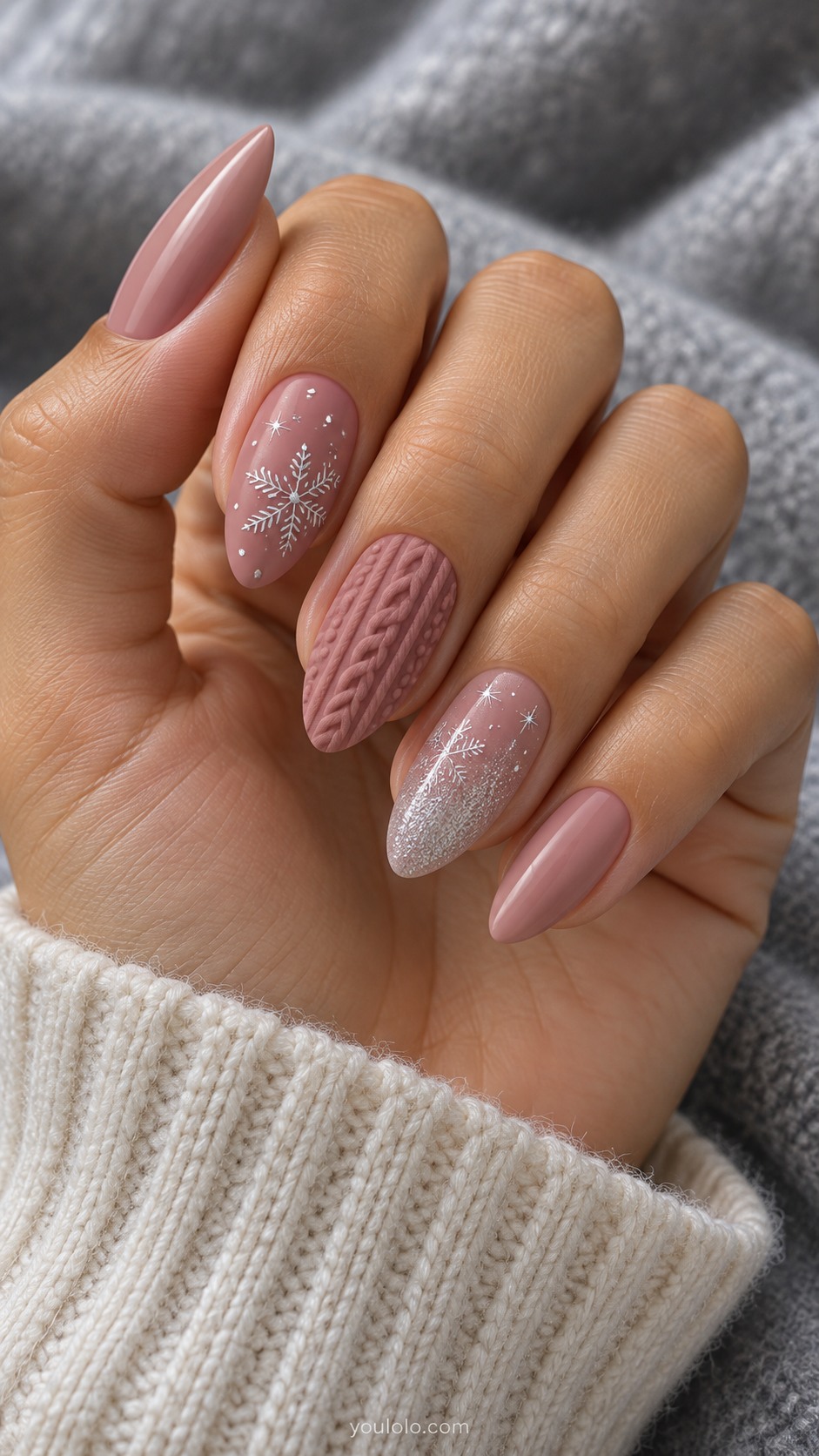
Mauve is especially pretty beside a little silver. The cable gives one nail a fabric-like surface, while the shimmer fades away on another rather than stopping at a hard line. That difference lets the two accents belong together without looking like copies.
Keep the brightest silver close to the free edge. A lighter dusting toward the center allows the mauve to remain visible beneath it.
For your nail artist: Mauve nails with one cable accent and one restrained silver shimmer fade.
10. Blue Knit and Tiny Beige Checks
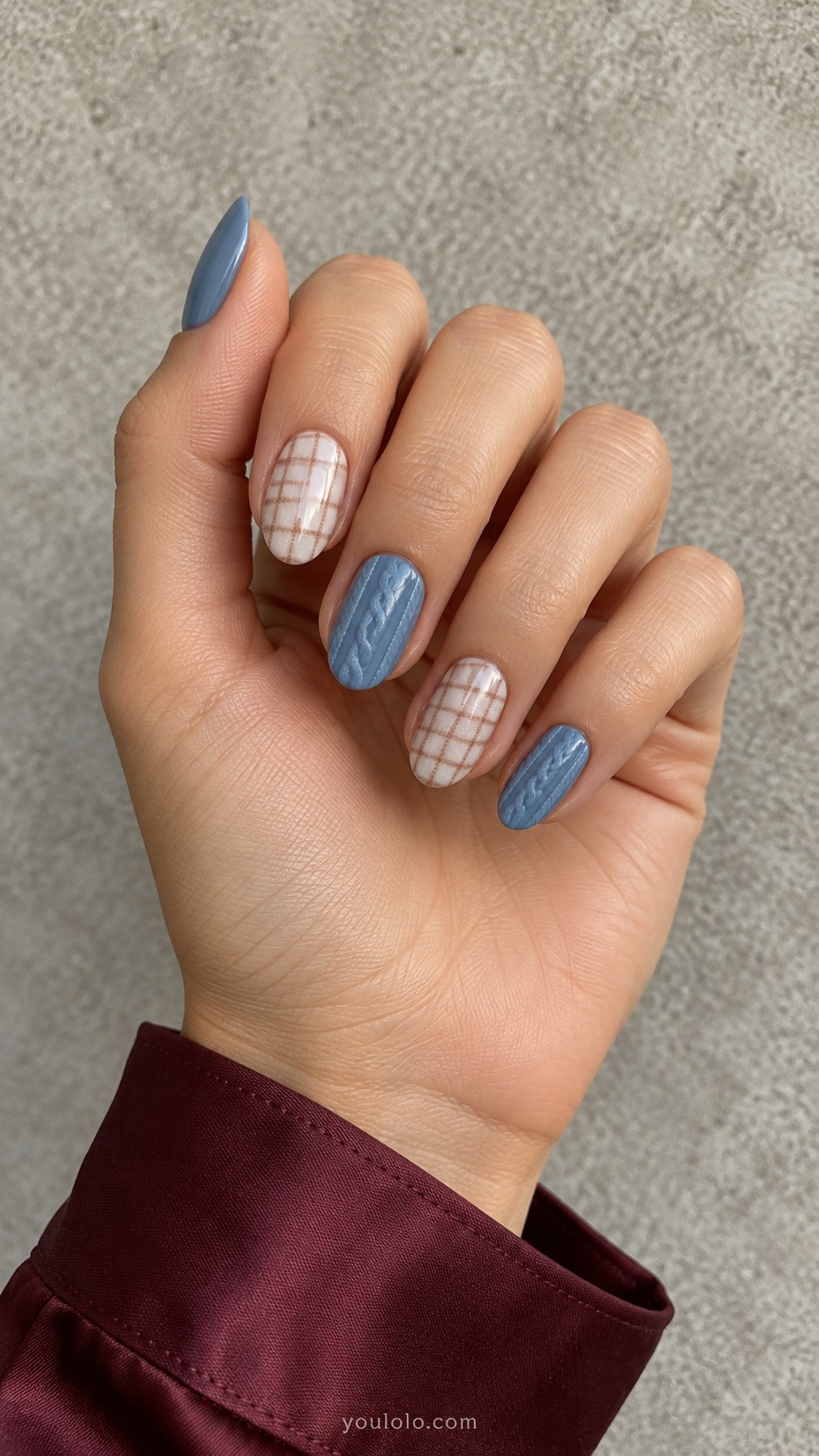
Checks and cables can share a manicure when their scale is different. I like a broad blue braid beside tiny beige checks: one reads as texture, the other as a fine drawing. The warm neutral stops the blue from feeling too cold.
Use fewer check lines than you would on fabric. A small nail only needs enough crossing lines to suggest the pattern, not reproduce a whole scarf.
For your nail artist: Dusty blue cables beside small beige checks, with simple supporting nails.

11. Sage and Stone Cables

Sage and stone give this set an earthy, quiet character. The cable appears in both colors, making it the link between them, while the plain blush nail brings a little warmth. It is a useful alternative when you want winter detail without red, white or glitter.
A satin or matte finish makes the tone changes easier to appreciate. Keep the knit relief delicate so the colors remain the main impression.
For your nail artist: Sage and stone-gray nails with low cable texture and one plain blush nail.
12. Blush and Cool Gray Stitchwork
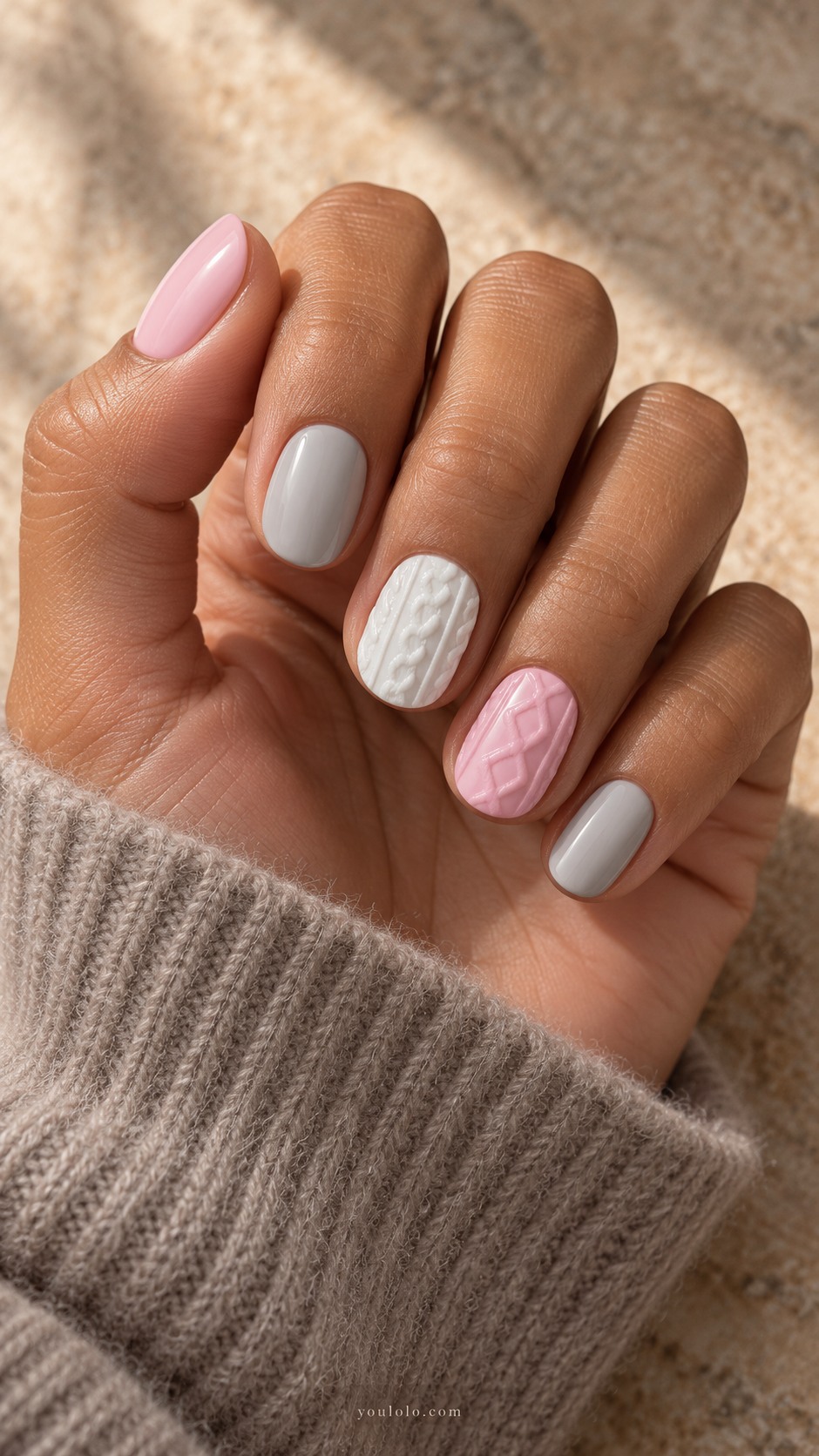
Pink and gray are a familiar pairing, but the white stitching gives them a fresher rhythm. The short rounded shape keeps the manicure light, and the two patterned nails provide enough detail to feel considered. I would let the remaining fingers stay completely plain.
White lines need a little space between them to remain readable. Ask for a narrow panel rather than a cable that covers the entire nail.
For your nail artist: Alternating blush and cool gray with two slim white knitted panels.
Pale Shades, Fine Stitching and New Variations
13. A Muted Winter Knit Palette

This is the playful option in the group. Lilac, eucalyptus, slate, cream and rose give every finger a different shade, yet the muted colors keep the set connected. Repeating a narrow knitted panel ties the whole hand together more effectively than adding another motif.
Check the five colors side by side. If one looks much brighter than the others, soften it so the palette feels deliberate.
For your nail artist: Five muted winter shades, each with a small distinct knit panel.
14. Powder Blue with One Ivory Cable

Sometimes one textured nail is exactly enough. Powder blue gives the hand a clean wash of color, and the ivory cable sits like a small warm detail within it. This is the design I would suggest to someone who likes simple nails but wants a seasonal change.
Keep the blue fingers plain and glossy or softly satin. Adding more patterns would change the easy balance that makes this version appealing.
For your nail artist: Short powder-blue squares with one ivory cable-knit ring nail.
15. Cream Knit with a Fine Gold Tip

A fine gold edge adds a dressier note to cream knitwear. The blush nails leave plenty of open space, so the gold stays delicate rather than turning into a heavy metallic band. I like the way the two finishes meet without being layered on top of one another.
Ask for the gold to remain a tiny line. A wide gold French tip would become the first thing you notice and make the knit feel secondary.
For your nail artist: Cream cable accents, blush supporting nails and very slim gold tips.
16. All-Ivory Fine Ribbing
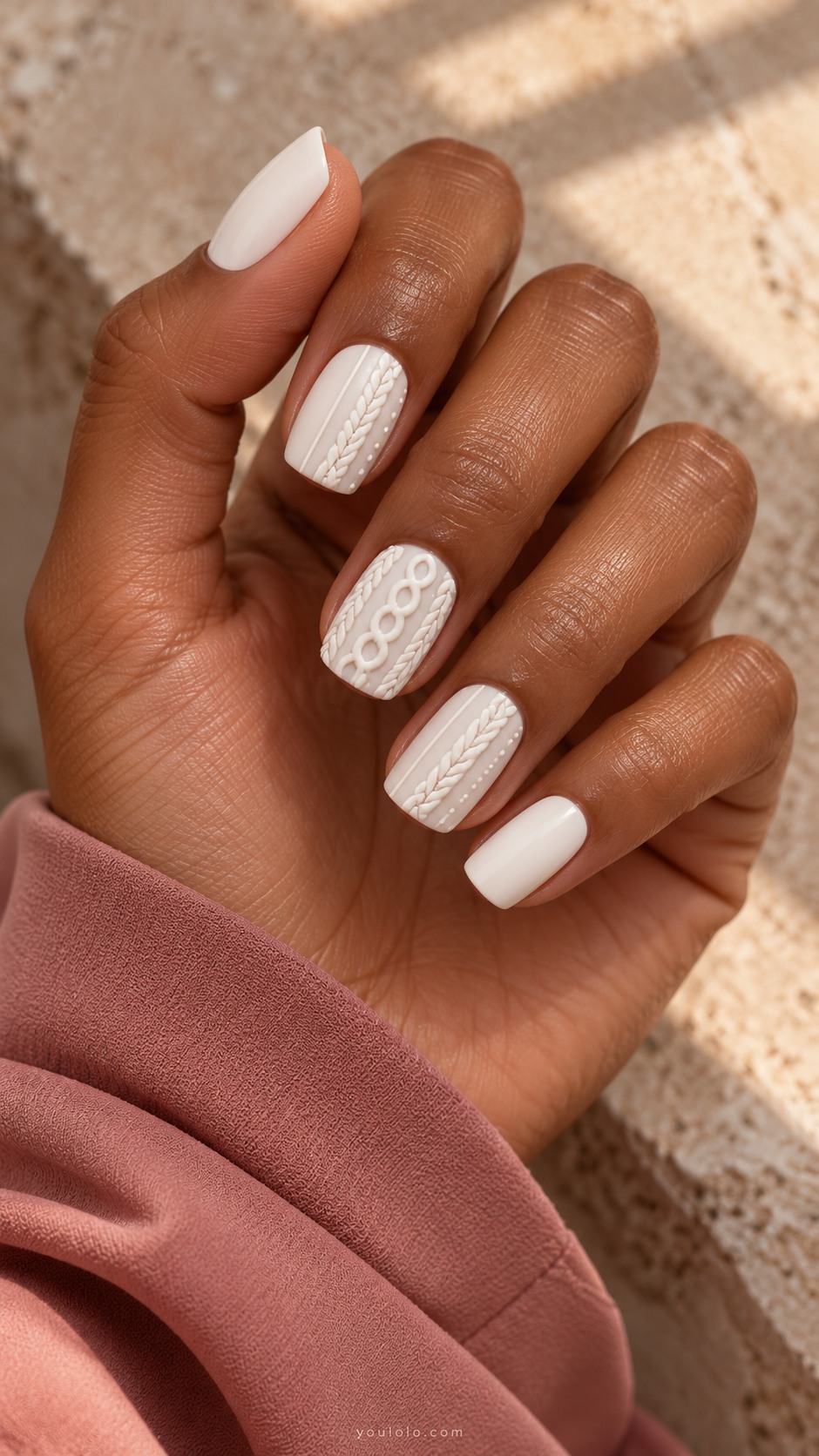
An all-ivory set is about the pattern rather than the palette. Alternating braids with straight ribbing gives the eye somewhere to move, even though the color never changes. Short square tips provide a neat ending to those vertical lines.
The surface should look like fine stitching, not thick ropes. Ask your artist to simplify any panel that becomes too dense for your nail width.
For your nail artist: Ivory throughout, with alternating fine cable and ribbed panels.
17. Burgundy Knit Half-Moons

This variation uses the cable almost like a cuff. The lower part of two burgundy nails carries the matte pattern, while the glossy upper section stays open. Keeping everything in one shade makes the change in texture feel intentional and a little unexpected.
Draw the curved boundary first when discussing the layout. It should follow the shape of the nail rather than cut across it like an accidental patch.
For your nail artist: Glossy burgundy with low matte cable panels on the lower halves of two nails.
18. Navy and Cream Nordic Stitch

A narrow Nordic-style border gives the last set a more graphic finish. Tiny navy diamonds sit neatly against cream, while one cable accent carries the knitted idea across the hand. It feels wintery without needing an illustrated snow scene.
On short nails, use one row of diamonds and small linking marks. More rows can turn a crisp border into a dark block.
For your nail artist: Cream nails with a flat navy knitted border and one navy cable accent.
Make the Pattern Fit the Nail
On a short nail, use one central braid or a narrow border instead of shrinking a long-nail design unchanged. Leave visible space between the loops, and let the pattern end cleanly near the free edge. A simple cable should still look like a cable from a normal viewing distance. If you need to zoom in to understand it, the design may need fewer marks.
Use Plain Nails to Connect the Set
Choose the supporting color from the knitted accent itself. Cream lines on a sage nail can connect to a plain cream finger; a navy cable can sit beside glossy navy. This gives the hand variety without adding unrelated shades. When mixing checks and knitwear, change the scale: tiny checks beside one broader braid are easier to read than two equally dense patterns.
A More Useful Salon Brief
Bring one image and identify what you want to preserve: the color, the stitch shape or the finish contrast. Then state your preferred length and whether you want a smooth surface. A request such as 'short navy nails with two matte cable accents' is much clearer than 'something cozy.' Ask the artist to simplify the pattern if the available nail space is smaller than the reference.
Choose a Finish Before Adding Sparkle
Matte and satin surfaces make the shadows around raised stitching easier to notice. Gloss adds a different kind of reflection and can work beautifully on the plain nails. If you include shimmer, give it a separate accent or a restrained edge. Covering the cable in several competing finishes can hide the small lines that made you choose it.
For more ways to approach seasonal detail, browse essie’s nail art library. Its snowfall sparkle guide also offers a winter example to compare with the amount of decoration you prefer.
Winter Cable Knit Nail Ideas FAQ
Can sweater nail art work on short nails?
Yes. A single narrow cable, a fine ribbed panel or a small knitted border can suit short nails. Reduce the number of stitches rather than packing the same long-nail pattern into less space.
Do cable knit nails have to be raised?
No. Flat painted loops and crossing lines can suggest the same woven pattern. Ask for flat knit nail art if you prefer a smooth surface.
Should sweater nails be matte or glossy?
Either can work. Matte or satin gives the knit a softer appearance, while glossy supporting nails create contrast. Choose the finish you enjoy rather than treating matte as a requirement.
Can I combine knit and plaid nail art?
Yes. Keep a shared palette and use different pattern scales. One broader cable beside small checks is easier to read than dense artwork on every nail.
Do I need Christmas colors for sweater nails?
No. Oatmeal, taupe, navy, sage, blush and gray all work without holiday symbols. A knitted pattern can belong to the whole cold-weather season.
How much raised texture should I ask for?
Discuss the amount of relief with your artist before the design begins. A low, fine cable feels different from a thick sculpted braid. If a smooth finish matters to you, choose a painted version instead.
The Designs I Would Save First
My first saves would be the powder-blue set with one ivory cable, the navy matte-and-gloss combination and the cream knit with a fine gold edge. They each let one detail lead. Choose the one you keep noticing, then leave enough plain space around it to make that detail count.