The Best Fluffy Pancakes recipe you will fall in love with. Full of tips and tricks to help you make the best pancakes.


Everyday nail art ideas do not have to follow a holiday or a particular season. A little bow, a scattered dot or a flowing line can be enough to make a manicure feel personal. I like designs where you can point to one detail and immediately understand what makes the set interesting.
These nine references range from small accents on nude polish to brighter hearts and more intricate marbled lines. They are intentionally different in color and shape, so the collection gives you several ways to think about detail rather than nine versions of the same manicure. Some use one accent nail; others repeat a simple element across the whole hand.
Before choosing, decide how much attention you want the artwork to attract. A silver stud near the tip is quiet, while pink hearts on blue make a stronger statement. You can borrow the placement from one reference and use a softer color, or keep a favorite palette and reduce the number of patterned nails. Each photograph has a Pinterest credit underneath for saving the original design. Look closely at the space around the artwork as well as the artwork itself: those plain areas often make a small detail feel deliberate instead of crowded.
1. A Tiny White Bow on Nude

One small white bow gives an otherwise plain nude manicure a sweet focal point. The long square shape leaves plenty of room around the linework, which helps it stay delicate. I would keep the bow on a single nail rather than repeating it everywhere. The contrast between the quiet base and the small drawn detail is what makes this reference feel so balanced.
2. Pink Nails with Silver Studs
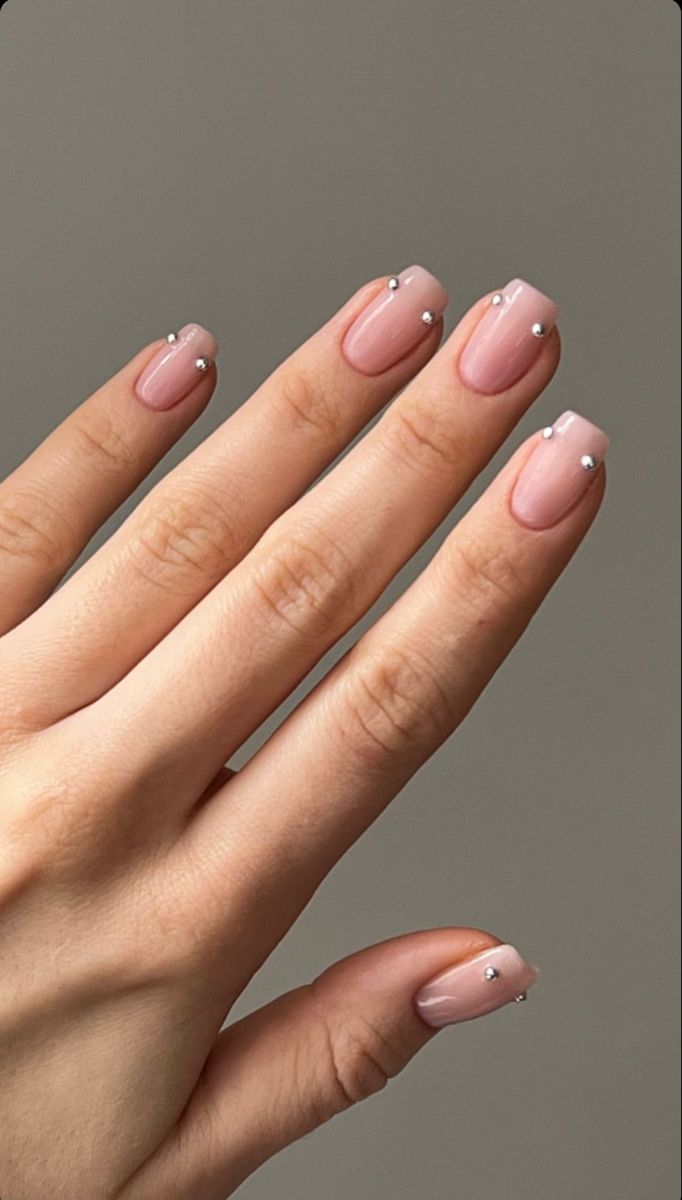
Small silver dots sit near the ends of glossy pink nails, creating a jewelry-like accent without covering the base. Their slightly varied placement keeps the design from feeling rigid. This is a lovely reference if you want detail that remains subtle at a normal viewing distance. Keep the embellishments small and spaced apart so the pink polish still does most of the work.
3. Soft Glitter Tips and a Fine Bow

A delicate bow is paired with softly scattered glitter at the tips of rounded pink nails. The sparkle is light enough to leave the base visible. I like the combination of a drawn line and a textured finish here: neither needs to be large to be noticeable. Use a narrow, simple bow if adapting the idea to a shorter nail.
4. Pink and Blue Hearts
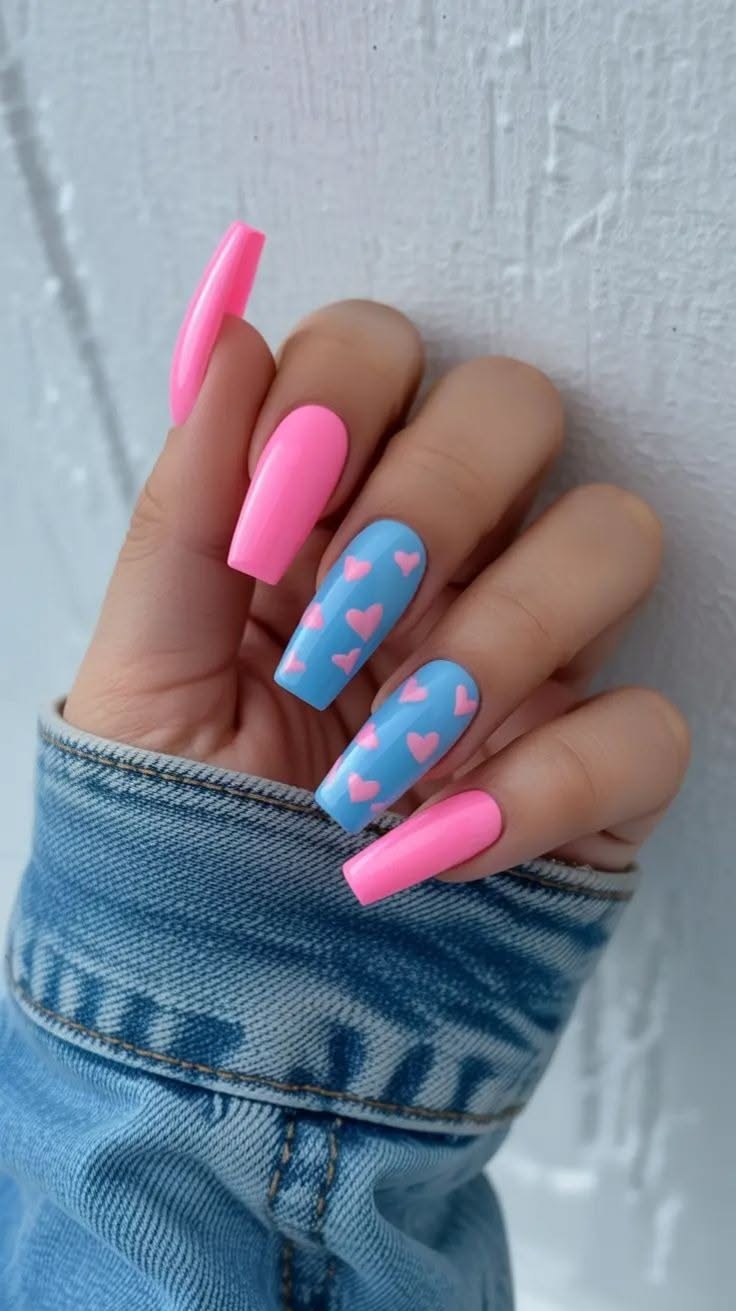
Bright pink nails frame blue accents covered in little pink hearts. The two-color palette makes the playful pattern feel coordinated even on a long square shape. If you prefer a quieter version, keep one heart accent and leave the remaining nails pink. The useful detail to borrow is the clear color contrast, which makes the small hearts easy to see.
5. Fine Dark Waves on Rose

Thin dark lines curve across a muted rose base, creating movement without a dense pattern. The lines are different on each nail but share the same color and weight. I would keep the strokes fine and leave plenty of plain polish around them. That open space is what makes this abstract design feel easy to wear rather than visually crowded.
For another way to compare these details, browse our more simple nail art ideas and save the feature you would most like to keep.
6. Burgundy with a Small Bow Accent
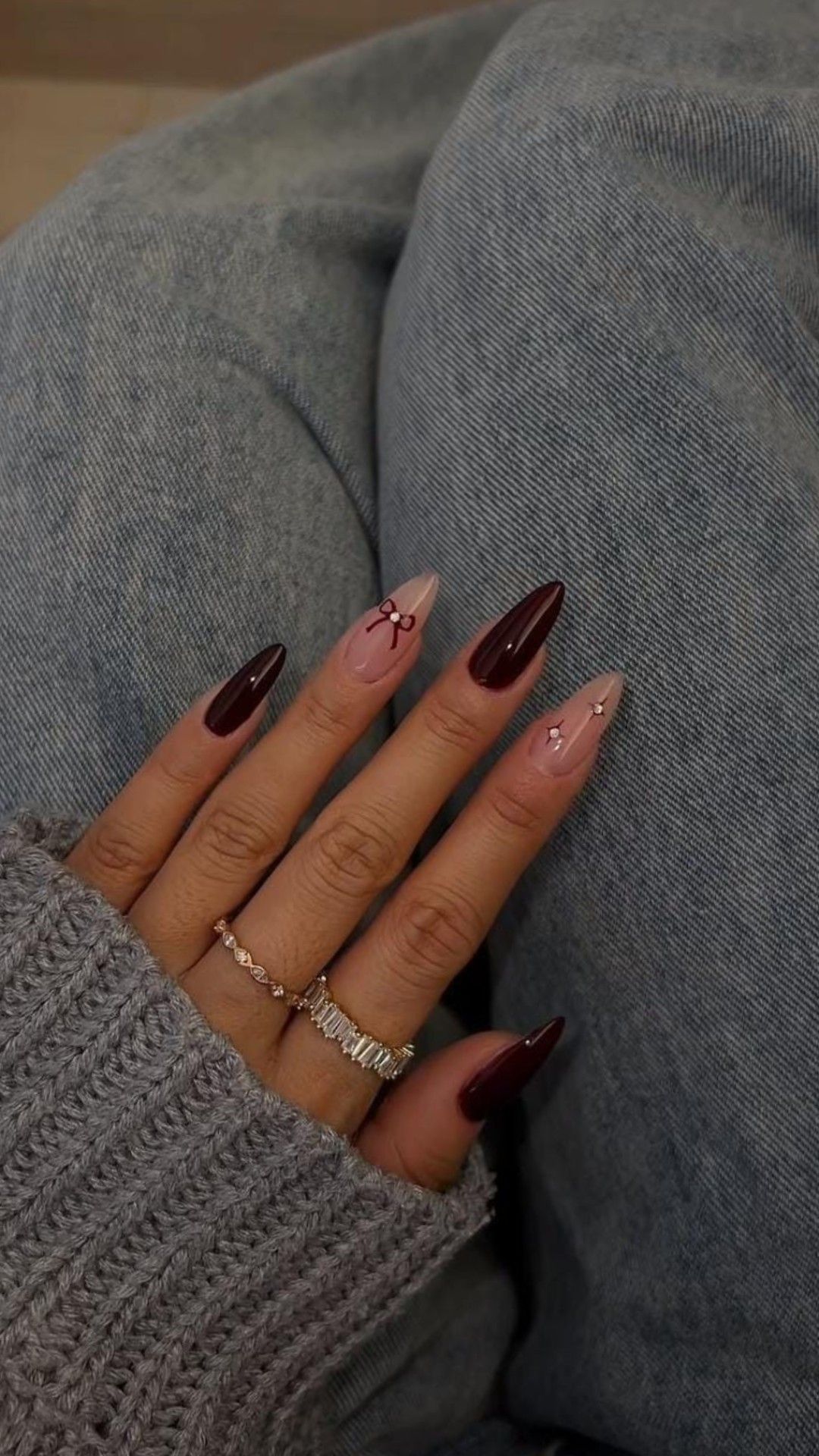
Deep burgundy nails sit beside a nude accent with a fine bow and another with tiny reflective details. The darker solids give the lighter nails a clear frame. This reference is useful if you want a decorative set that still feels rich and restrained. Keep the nude base consistent across the accents, then let the burgundy provide the strongest contrast.
7. Tiny Black Dots on Milky White
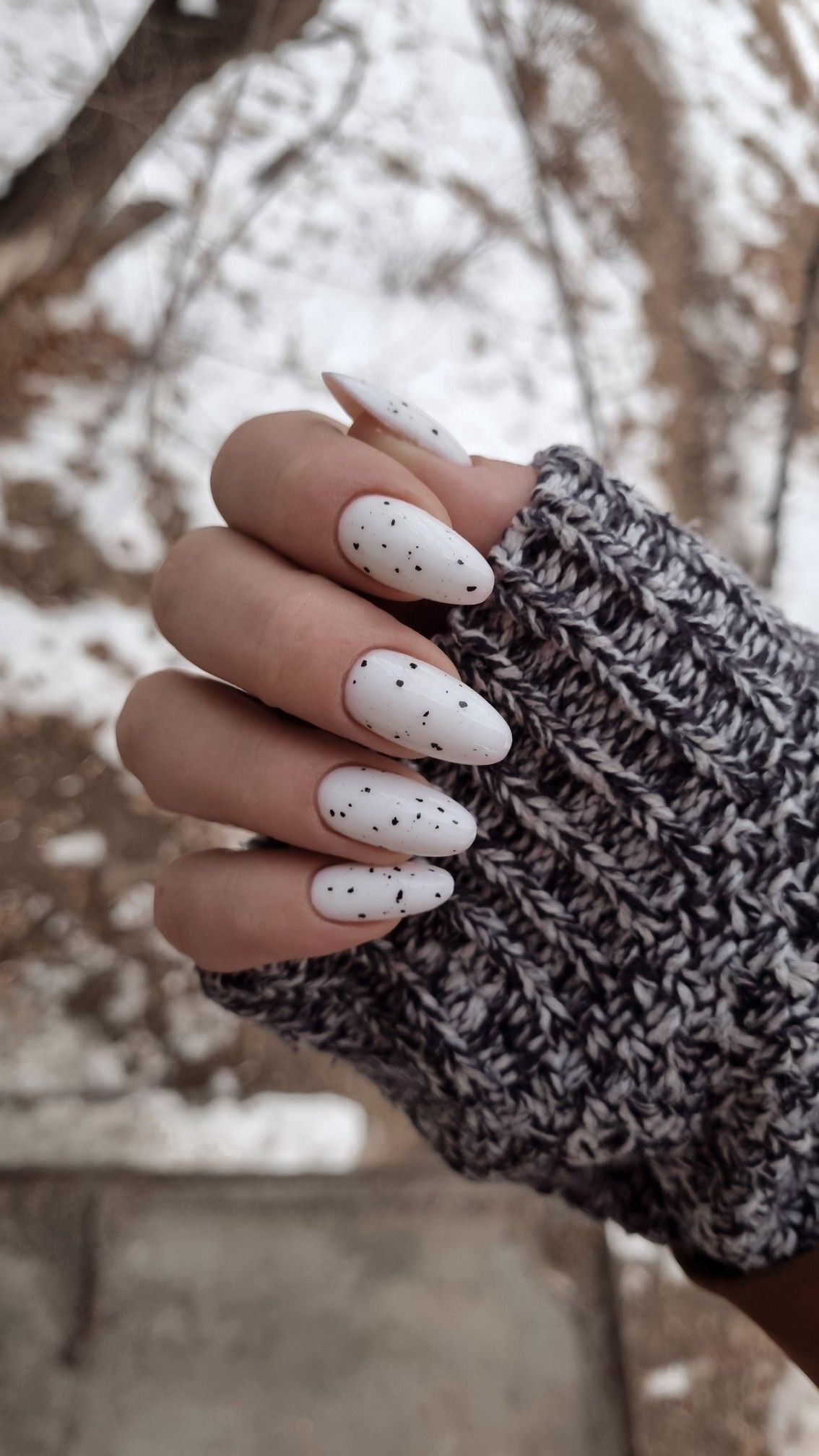
Small black dots are scattered across a milky white base, giving this rounded manicure a light graphic pattern. The spacing is uneven enough to feel relaxed rather than like a strict grid. I like how the dark marks stay small compared with the nail. If you want the same effect on a shorter shape, reduce the number of dots instead of packing them closer.
8. Chocolate Marble Swirls
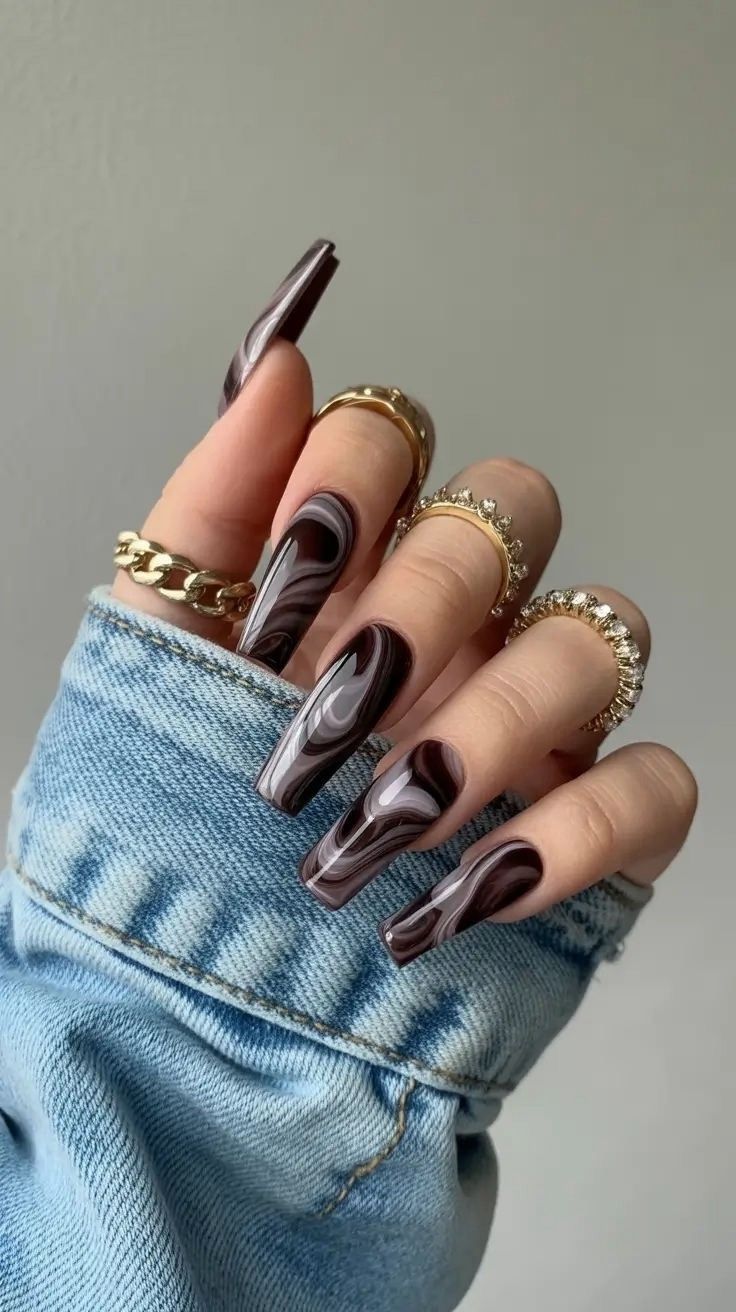
Long pointed nails carry layered brown and pale swirls that create a marbled appearance. The related colors keep the intricate lines coordinated. This is the boldest reference in the collection, so I would borrow either its shape or its pattern if you want a calmer version. Keeping the palette close in tone helps the flowing lines remain the main attraction.
9. Mauve, Ivory and Glitter Curves
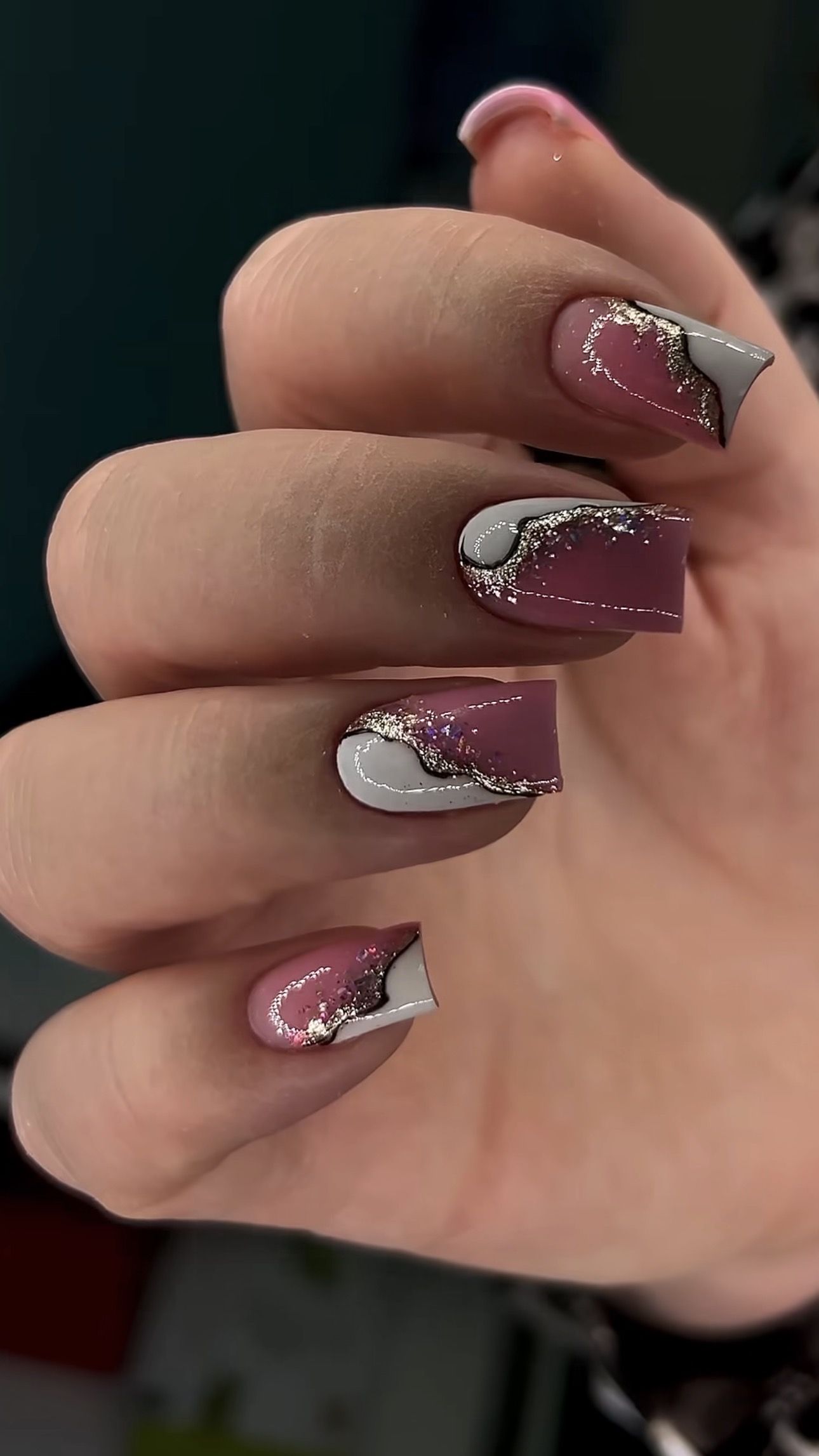
Curved ivory sections and fine sparkling borders break up a muted mauve base. The square tips give the flowing artwork a neat outer frame. I like the way each nail varies slightly while using the same three elements. Choose one width for the glitter line and repeat it across the set if you want a similarly connected result.
How to Choose Your Favorite Look
Choose one main feature first: a bow, a dotted pattern, a curved line or a heart. Then select a base that gives it enough contrast. If you want several different accents, repeat the same colors or line weight to connect them. For a calmer result, keep one or two nails plain rather than reducing every detail until it becomes too small to read.
Bring one clear reference to your appointment and point out the specific part you like. Shape, color and finish are separate choices, so you can adapt them instead of copying the photograph exactly. If the design has several details, choose the one that matters most and give it enough space on your own nails.
Frequently Asked Questions
How can I make nail art feel suitable for everyday wear?
Choose a palette you already enjoy and keep the amount of detail comfortable for you. One small accent on a plain base is a useful starting point, but a brighter pattern can also be an everyday choice if it suits your style.
Can I combine bows and glitter?
Yes. Keep the bow line simple and use a light scattering of glitter so both details remain visible. The rounded pink reference shows one way to balance them.
What helps an abstract manicure look coordinated?
Repeat a color, line thickness or shape across the nails. The pattern does not need to be identical on every finger if those shared details connect the set.
How do I adapt a pattern to shorter nails?
Use fewer dots, a smaller bow or one curve instead of several. Preserve the main idea and the open space around it rather than squeezing in every part of a longer reference.
Where can I save the original manicure photo?
Use the Credit link directly below the photograph. It opens the corresponding Pinterest pin so you can save the reference and return to it later.
Can I combine elements from two references?
Yes. Choose one main palette and one focal detail, then simplify the supporting elements. Keeping a shared color or finish helps the result feel coordinated.