
The Best Fluffy Pancakes recipe you will fall in love with. Full of tips and tricks to help you make the best pancakes.


Botanical fall almond nails do not have to repeat the same brown French tip. This collection focuses on leaves, seed heads, branches, and the muted colors of an autumn garden. The tapered outline provides space for a stem to travel up the nail, while one botanical accent can sit beside simple solid color.
The starting inspiration combines a warm brown palette, floral details, and gold accents. Here, the designs move into separate botanical directions rather than repeating that set sixteen times. Think delicate fern outlines, a single maple leaf, or a tiny wheat stem. These are original visual interpretations of established nail-art techniques, with practical changes for a wearable manicure.
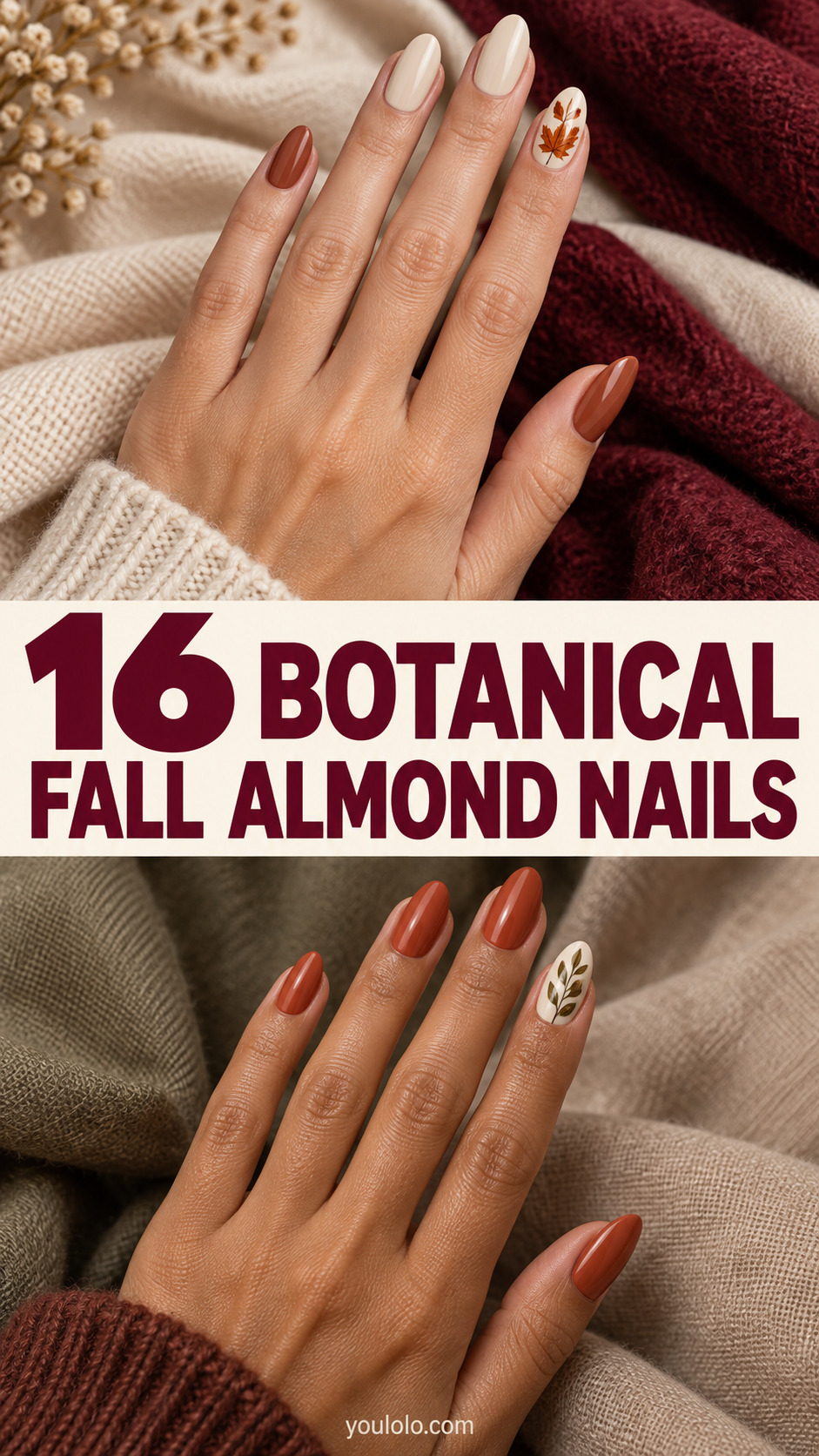
Images are original AI-created design illustrations, not photographs of completed salon services. They are intended as visual briefs; a nail artist can adapt the details to your chosen shape and length.
Choosing botanical fall almond nails by leaf shape
Find a recognizable botanical silhouette
The quickest way to make botanical nail art feel intentional is to choose one plant shape. Ferns are narrow and feathery, ginkgo leaves are broad fans, and maple leaves have a recognizable pointed outline. These differences give the designs their identity. Changing a leaf from orange to brown is less meaningful than changing its shape and placement.
An almond outline narrows toward a softly rounded point. It needs enough free edge to create that taper. If you wear your nails very short, a soft oval interpretation may be more realistic. Bring a photo of your preferred length, not only a long extension reference, so the artist can adapt the drawing before starting.
Choose the accent placement and palette
A botanical accent does not need to occupy every nail. A single leaf on the ring nail can sit beside solid taupe or olive. Two narrow stems on the middle and ring create a little more movement. Decide on that distribution first, then choose a finish. Adding a new motif to every nail changes the collection from restrained botanical art to a mixed set.
Autumn colors can be cool as well as warm. Mushroom taupe, dusty blue-grey, and muted mauve give the leaves a different backdrop from cinnamon or terracotta. Keep enough contrast between the drawing and the base to see the shape. Pale beige grass on a pale nude nail may need a cream accent area or a slightly darker stem.
Metallic detail and painted petal effects
Metallic accents should support the drawing. A fine copper fern or bronze border has a clear botanical role. Scattered foil over every nail can compete with delicate stems. If you like both ideas, put the metal on the botanical accent and leave the remaining nails a simple cream finish.
The images in this collection represent painted or sculpted design concepts, not botanical preservation techniques. A pressed-petal effect can be painted to look papery and flat. If you want real dried material incorporated into a service, discuss that separately with a qualified nail professional rather than assuming the illustrated look specifies a product system.
16 botanical fall almond nails ideas to compare
1. Copper Fern Silhouette
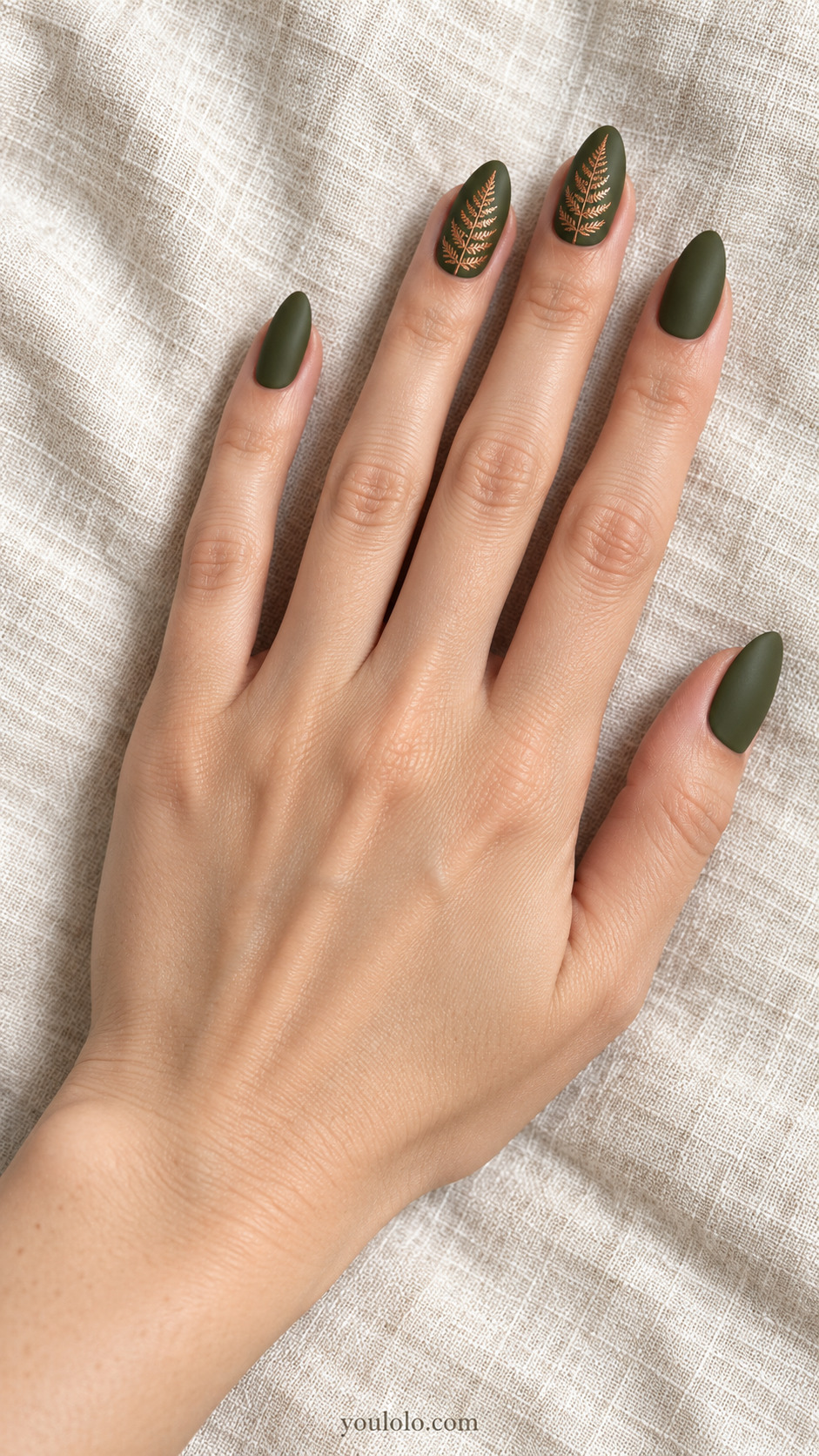
The narrow fern leaves suit an almond outline because they taper toward the tip. Keep the copper lines fine and spaced apart. This design has enough contrast to work without glitter, gemstones, or an additional floral accent.
2. Maple Leaf on Oat Milk
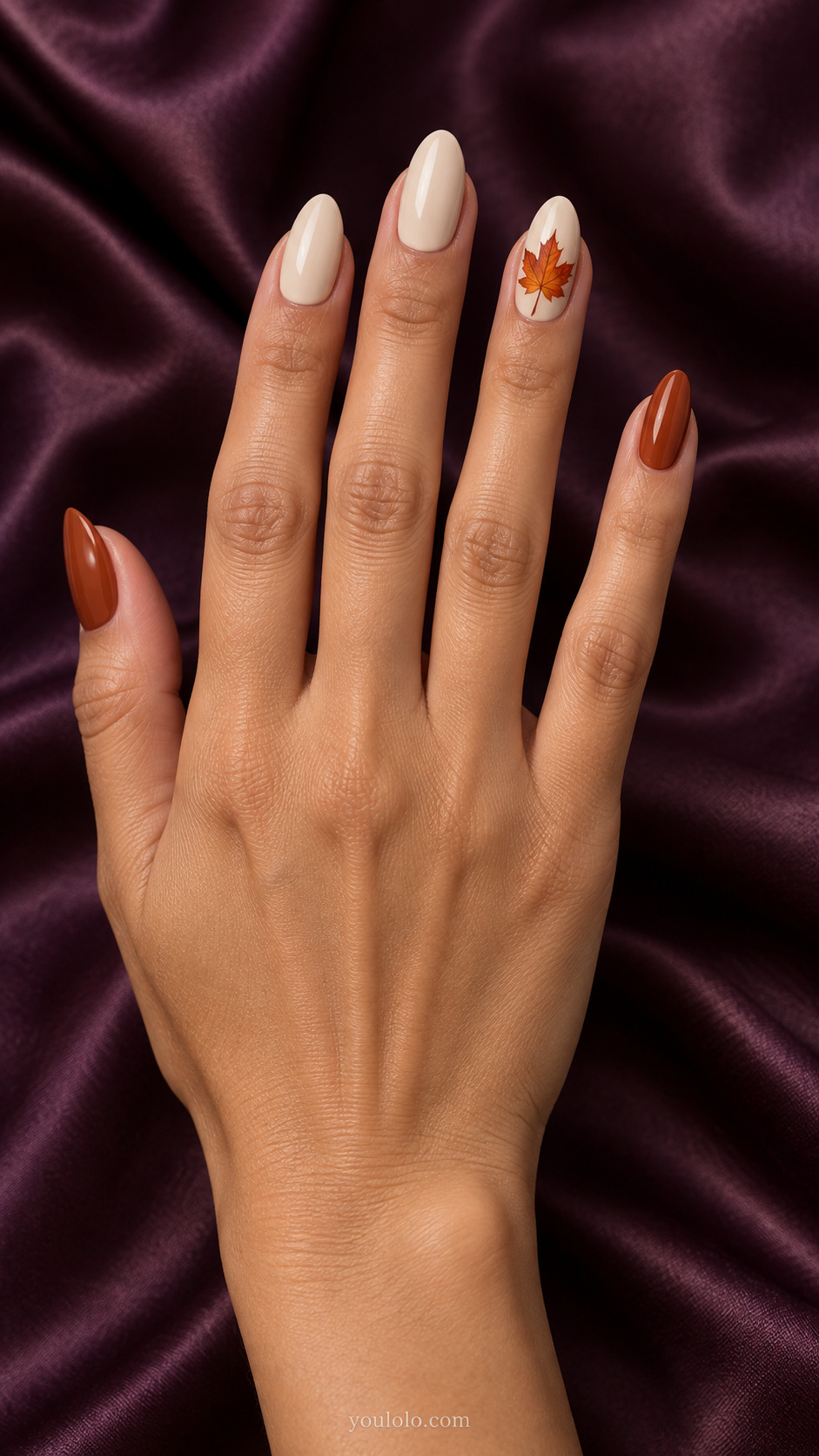
One recognizable leaf is stronger than a cluster of tiny indistinct shapes. Let the outline occupy the center of the accent nail and keep the surrounding area clear. The cinnamon solids connect the motif to the rest of the hand.
3. Espresso Wheat Stems
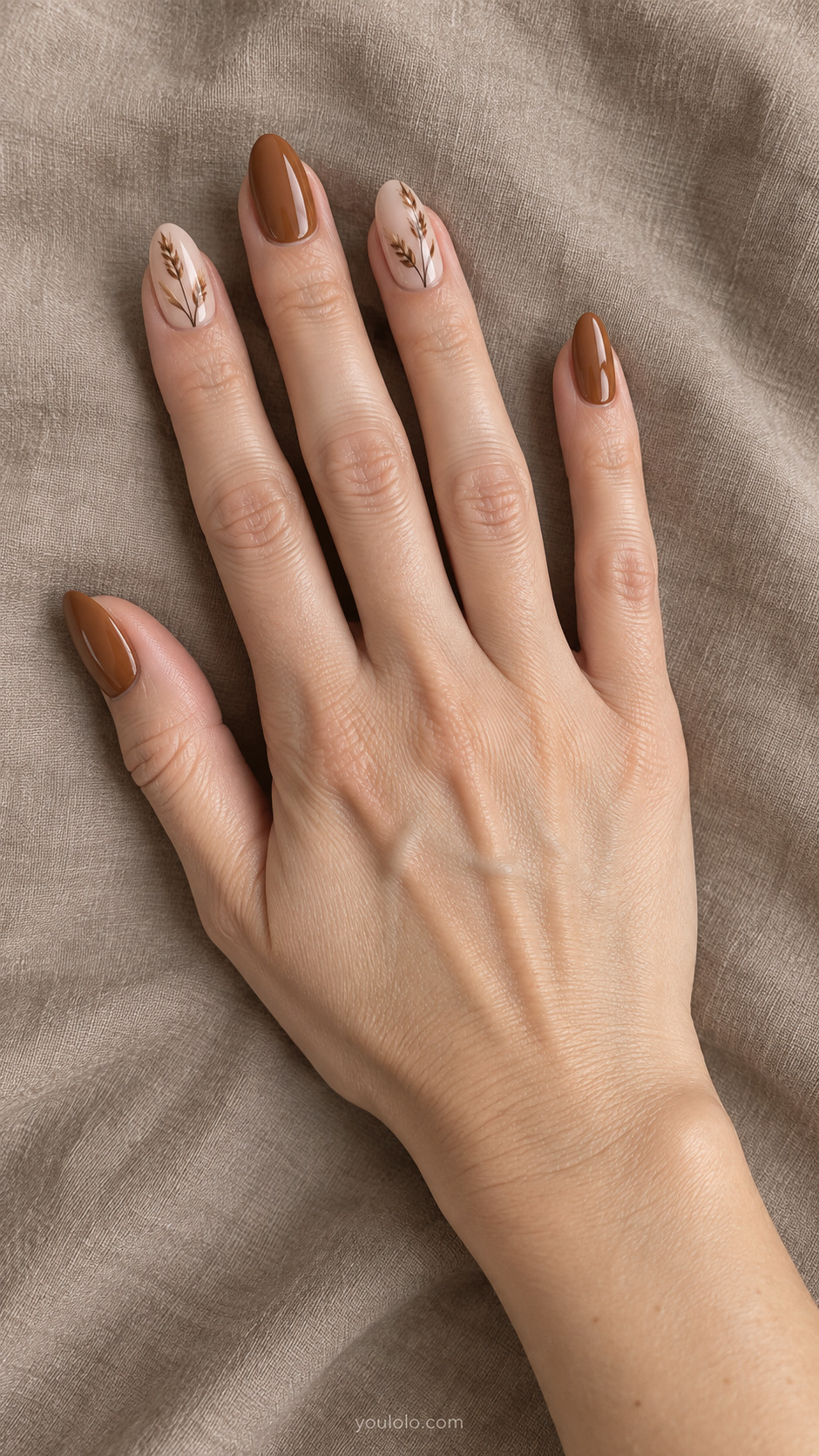
Wheat is a slender alternative to broad leaves. Ask for fine tapered grains on a single stem, with enough space between them to avoid a heavy brushstroke. A sheer base makes the drawing feel lighter than an opaque cream background.
4. Terracotta Olive Branch
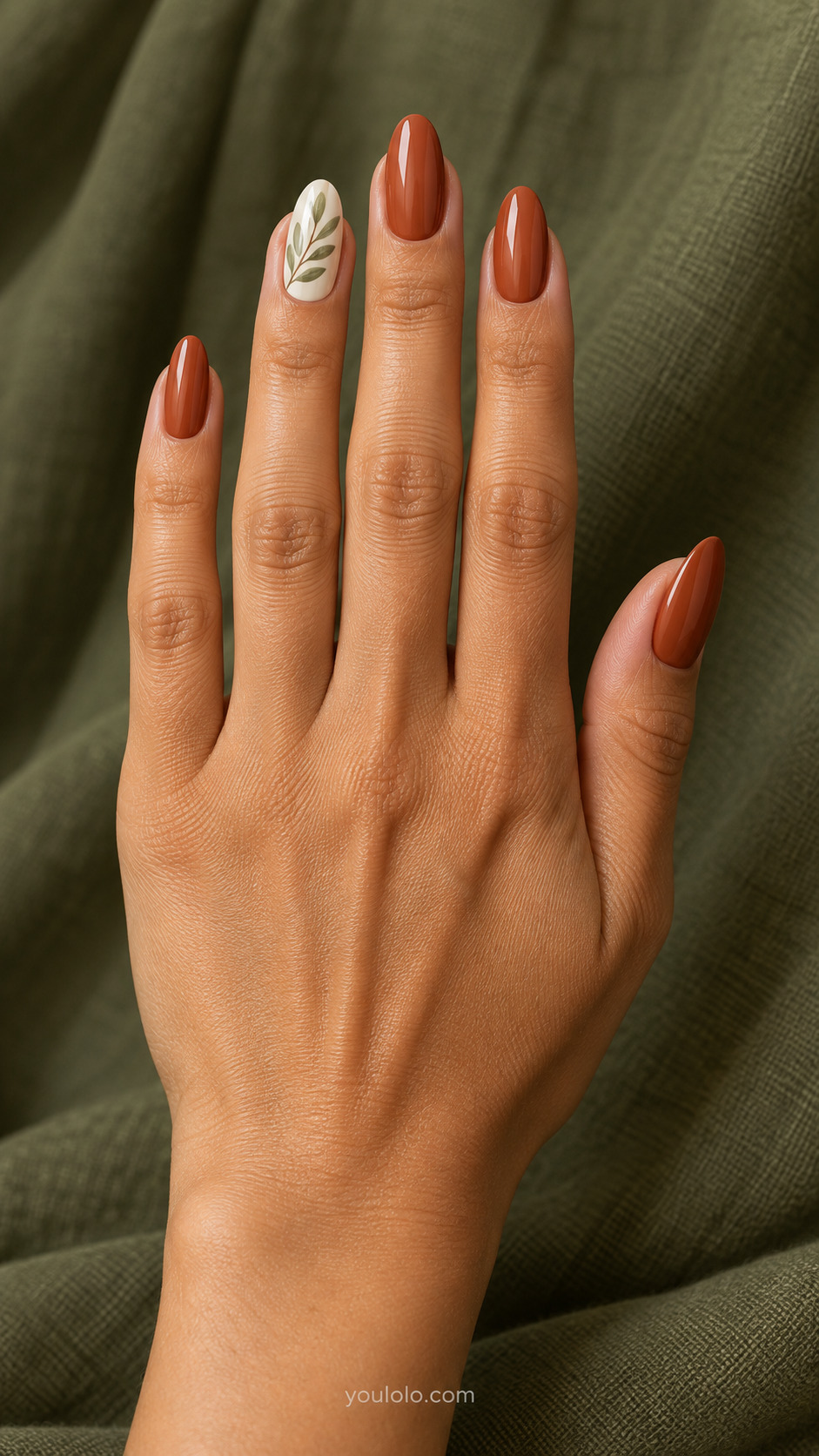
A little sage changes the warm palette without making it bright. The branch should curve with the nail rather than cut straight across it. One ivory accent is enough to make the leaf shapes legible beside the terracotta solids.
5. Golden Ginkgo Fan

The broad fan shape gives this design a clear focal point. Ask for a few fine veins rather than a solid metallic blob. A dark accent base increases the contrast, while the taupe nails keep the overall set wearable.
6. Sage Eucalyptus Trail

A side trail leaves the center of each nail open. Keep the leaves rounded and separated to distinguish eucalyptus from a generic vine. On shorter nails, three or four leaf pairs communicate the idea more clearly than a crowded stem.
7. Rust Oak Leaf
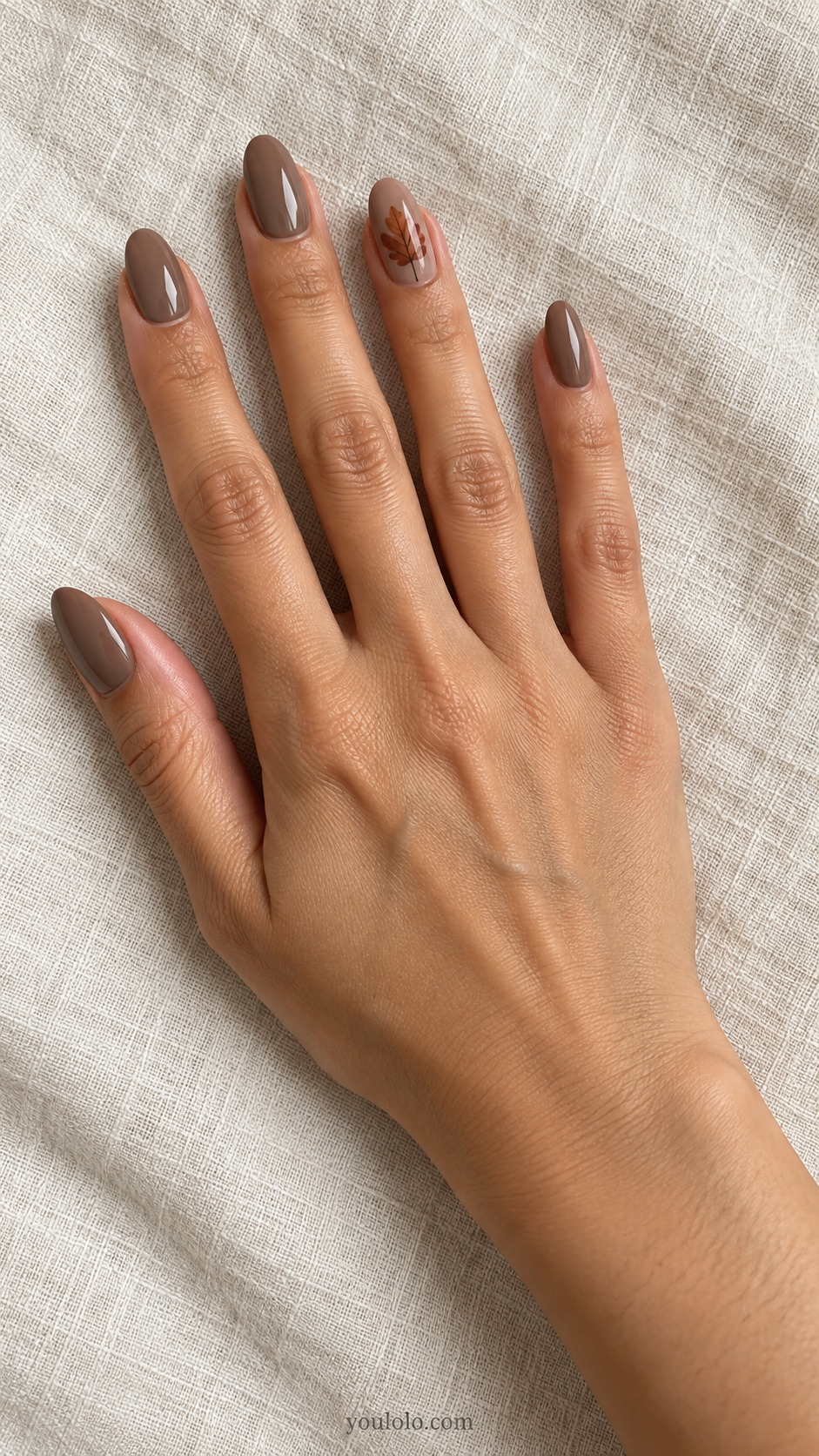
The lobed oak outline gives a different silhouette from the maple design. Position it slightly diagonally to fit the nail comfortably. The mushroom base makes the warm rust noticeable without a stark white accent.
8. Pressed Botanical Illustration

Delicate ochre fragments give the accents a pressed-botanical look. This is a painted interpretation, not a claim that real flowers are sealed inside the nail. Keep space between the small forms and use soft brown companion nails to frame the detail.
9. Fine Black Seed Heads
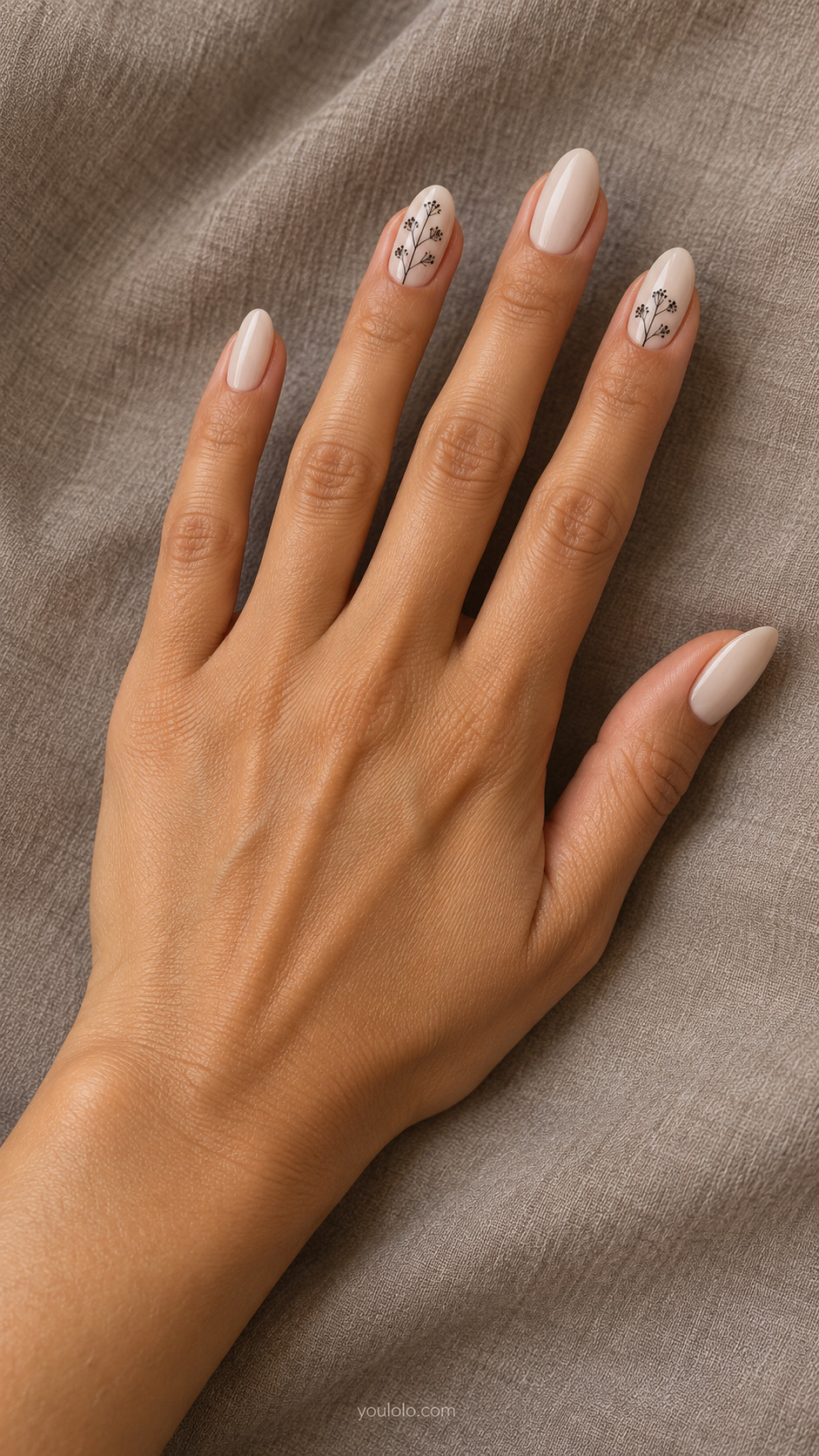
Seed heads give the manicure a spare, sketchbook feeling. Keep the stems very thin and place tiny terminal dots only at their ends. The remaining nails need no decoration; their plain finish makes the drawing easier to appreciate.
10. Amber Leaf Veins

Instead of painting a full leaf, this design borrows its branching structure. Keep the center vein visible and taper the smaller lines toward the edge. The amber base should remain translucent, clearly different from a tortoiseshell pattern.
11. Dusty Mauve Thistle
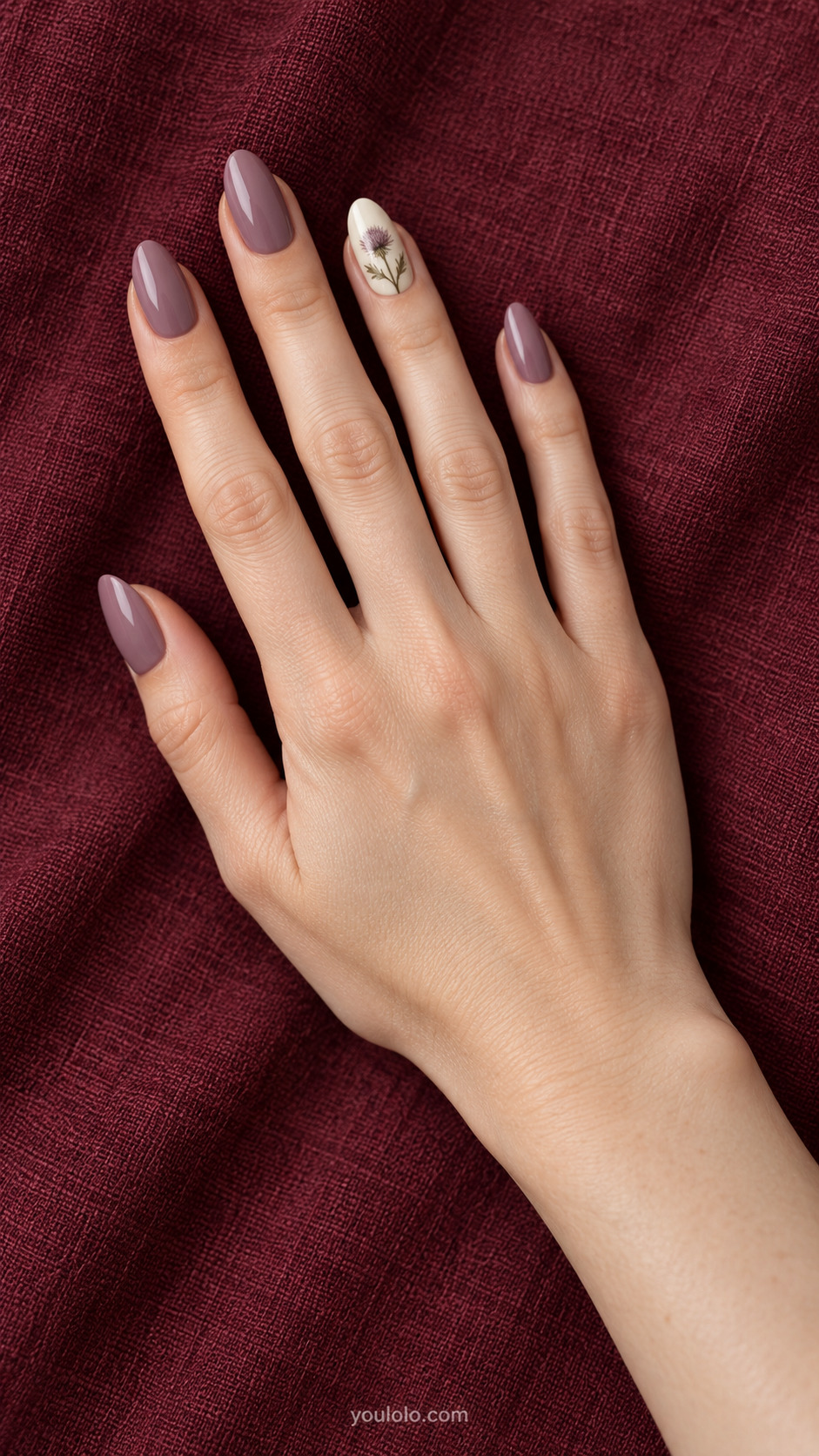
A thistle brings a spikier botanical shape into an otherwise soft palette. Keep it to one accent so the fine strokes have space. Ask for muted colors; a vivid violet flower would make the manicure feel quite different.
12. Olive and Gold Branch Arc

A curved branch follows the outline of the nail without forming a full frame. The negative space is part of the design, so resist filling it with more leaves. One small gold branch pairs neatly with the deeper olive nails.
13. Autumn Berry Twig
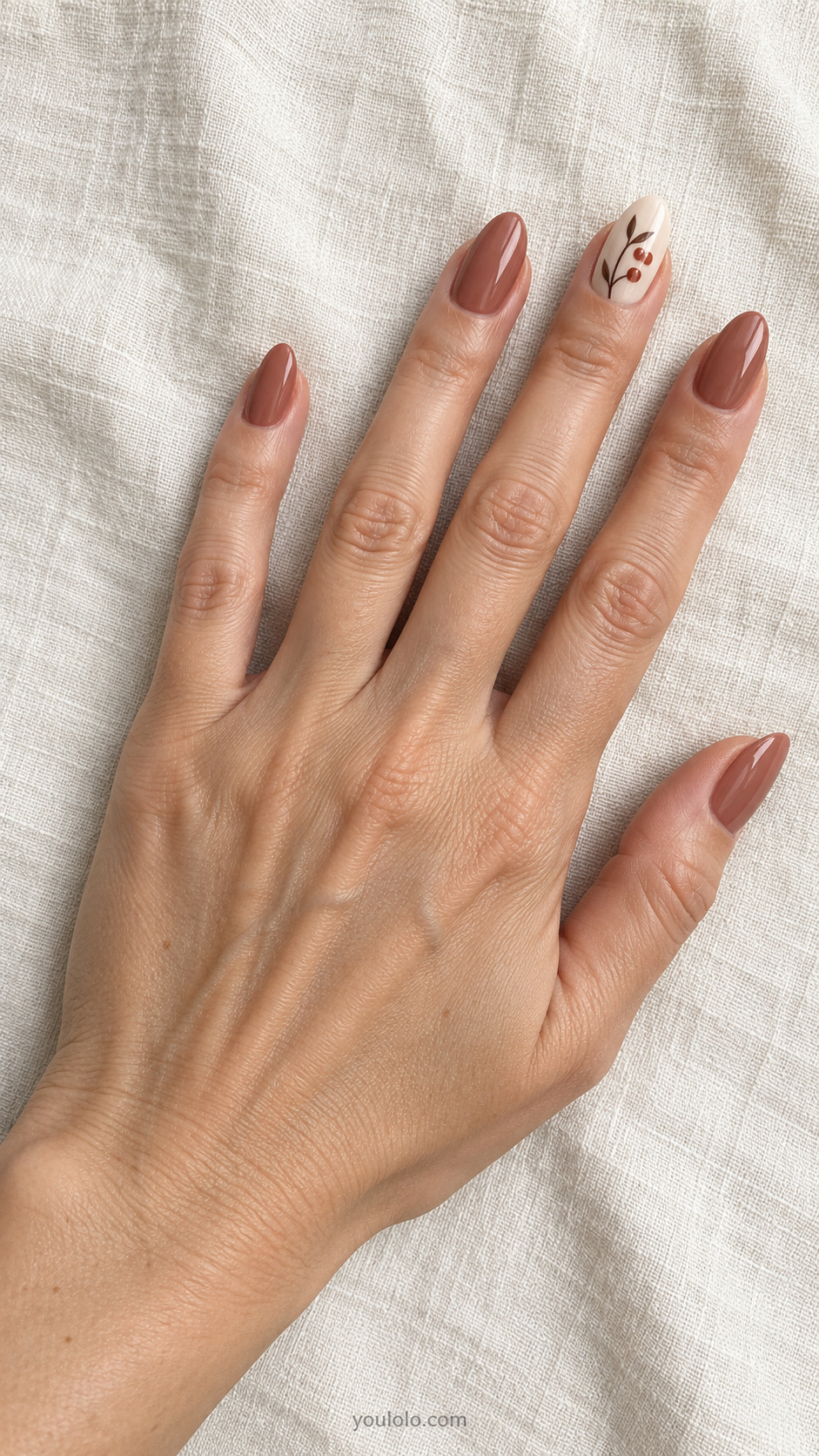
Keep the berries grouped on the branch rather than scattered like polka dots. Three small circles are enough to establish the motif. The warm ivory background separates the dark twig from the surrounding clay color.
14. Two-Tone Botanical Outline
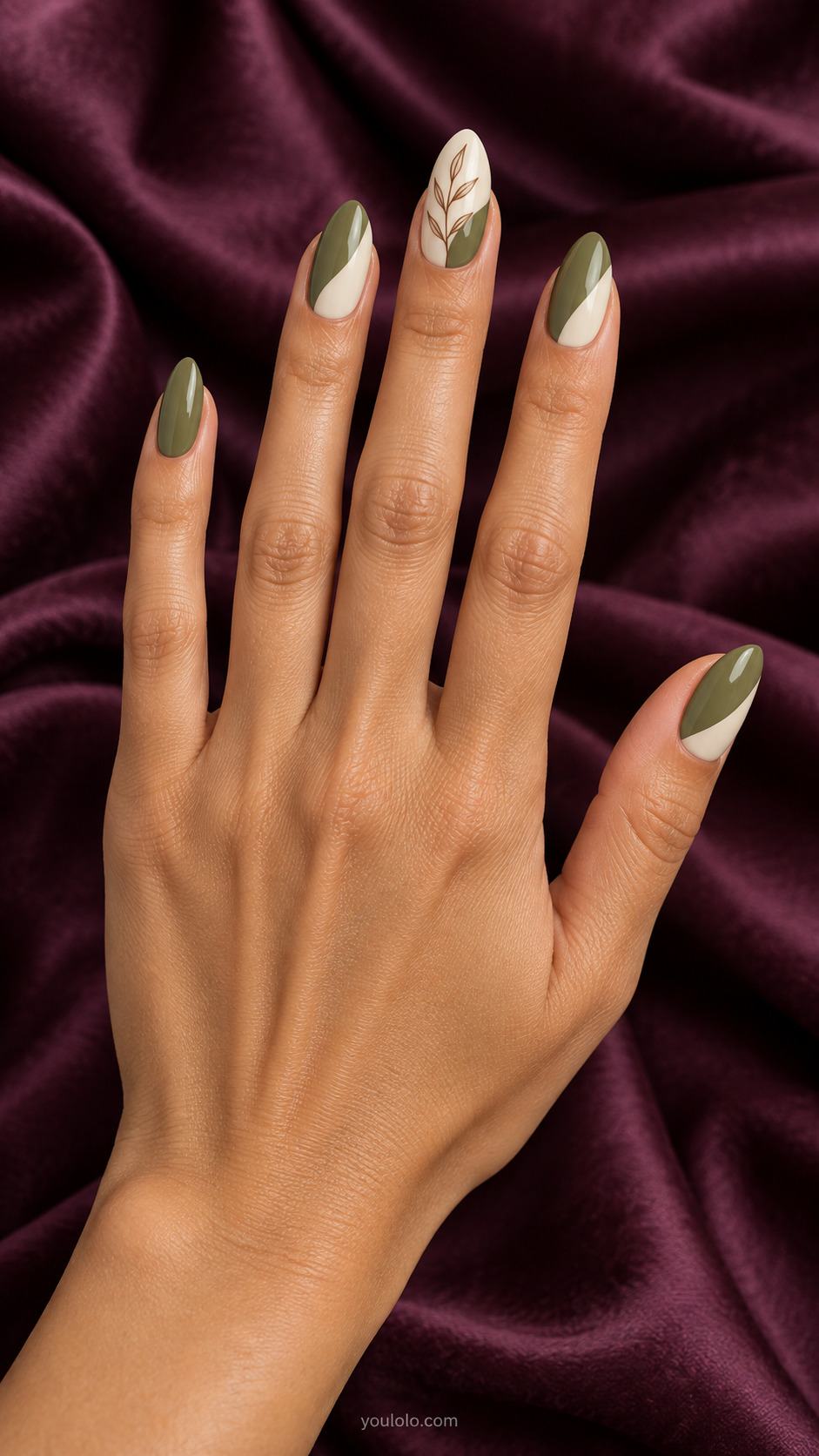
The line drawing connects two flat blocks of color. Choose a large, simple leaf outline so it stays visible on both halves. This is more graphic than the delicate sprigs elsewhere in the collection and works without metallic additions.
15. Dusty Blue Dried Grass
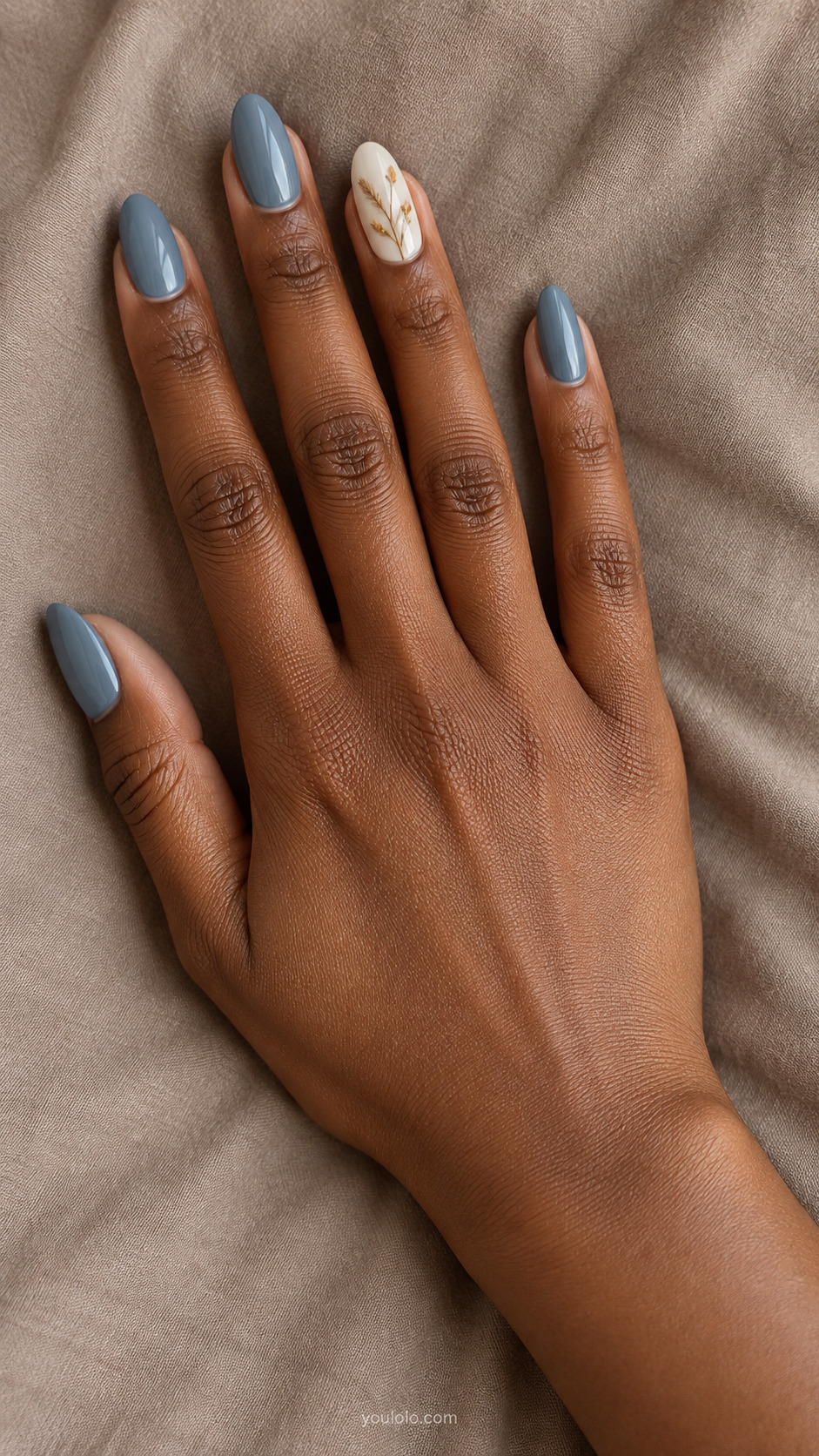
The cool background is an alternative to an entirely warm autumn palette. Place the grass only on the cream accent, where its pale strands remain visible. Keep the blue muted rather than bright to preserve the quiet botanical mood.
16. Bronze Botanical Border
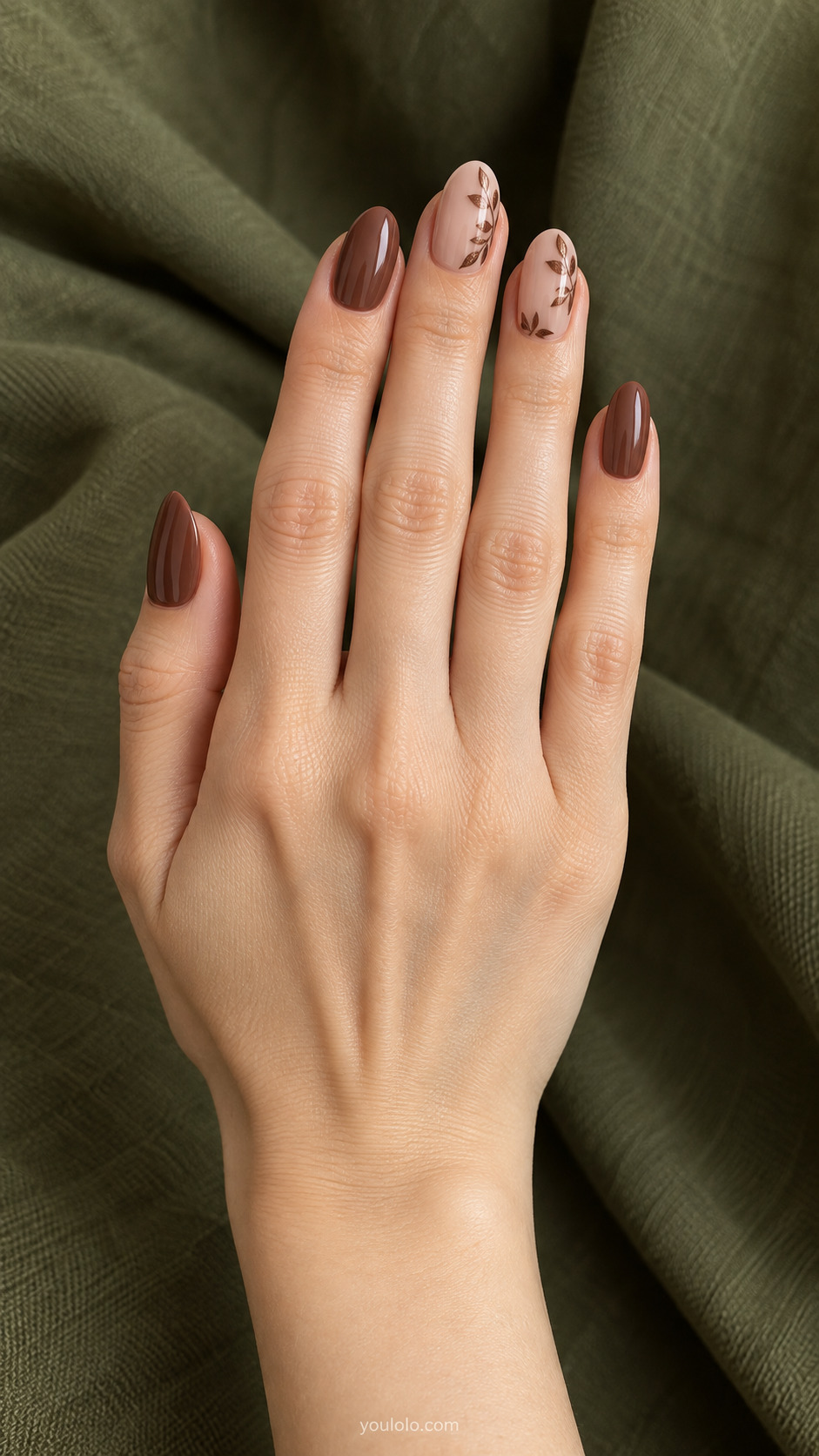
The border should stop before it becomes a full wreath. Leaving one side open keeps the detail light and suits the taper of an almond nail. A thin bronze line will look more refined than a thick metallic outline.
A salon brief for botanical fall almond nails
Choose a simple silhouette if you want the motif to be readable without close inspection. The maple leaf, ginkgo fan, and single oak leaf do that well. Choose fine stems or a partial border for a quieter effect. Both approaches can work with fall almond nails; the difference is how much of the nail becomes an illustration.
For an appointment brief, write down the base shade, plant motif, accent fingers, and finish. A useful example is: medium almond shape, mushroom taupe, one rust oak leaf, and a glossy finish. That gives the artist a concrete plan while leaving room to adjust the proportions to your nails.
For another direction, explore our burgundy and tortoiseshell manicure ideas and compare the amount of pattern before choosing your next manicure.
Botanical fall almond nails: frequently asked questions
What colors suit fall almond nails?
Olive, terracotta, mushroom taupe, muted mauve, cinnamon, and deep brown all fit this botanical collection. Dusty blue-grey is a cooler alternative. The best pairing is the one that gives your chosen leaf or stem enough contrast.
Can short nails have an almond shape?
A tapered almond shape requires some free edge. At very short lengths, a soft oval may be a more practical interpretation. Ask your artist what outline is possible with your current length.
Should every nail have a leaf design?
It does not need to. One or two botanical accents can make the idea clear while the other nails repeat the palette. More painted nails create a busier result, which is a style choice rather than a requirement.
Are the pressed flowers in these images real?
The collection uses AI-created illustrations, including a painted pressed-petal effect. The pictures do not prove that real dried flowers were used or specify a particular salon application method.
References and design notes
The sources below document relevant patterns, colors, or techniques. The illustrations and individual combinations in this article are original interpretations; the sources do not establish that every pictured combination was recreated or wear-tested.

[…] another autumn direction, explore our botanical fall almond nails […]
[…] another autumn direction, explore our botanical fall almond nails […]