
The Best Fluffy Pancakes recipe you will fall in love with. Full of tips and tricks to help you make the best pancakes.

Burgundy floral nails combine a rich wine shade with the softness of petals. In a balanced mixed set, some nails are solid burgundy, one carries a French tip, and another has dark flowers on pink. That mix keeps the manicure from becoming a wall of tiny blossoms.
This collection explores eighteen floral compositions with different flower shapes, placements, and finishes. A simple five-petal accent is not the same as a rose outline or a dahlia. Pick the flower first, then decide whether it should be painted in burgundy, placed over burgundy, or paired with a few wine-colored nails. The aim is a clear focal point, not maximum decoration.
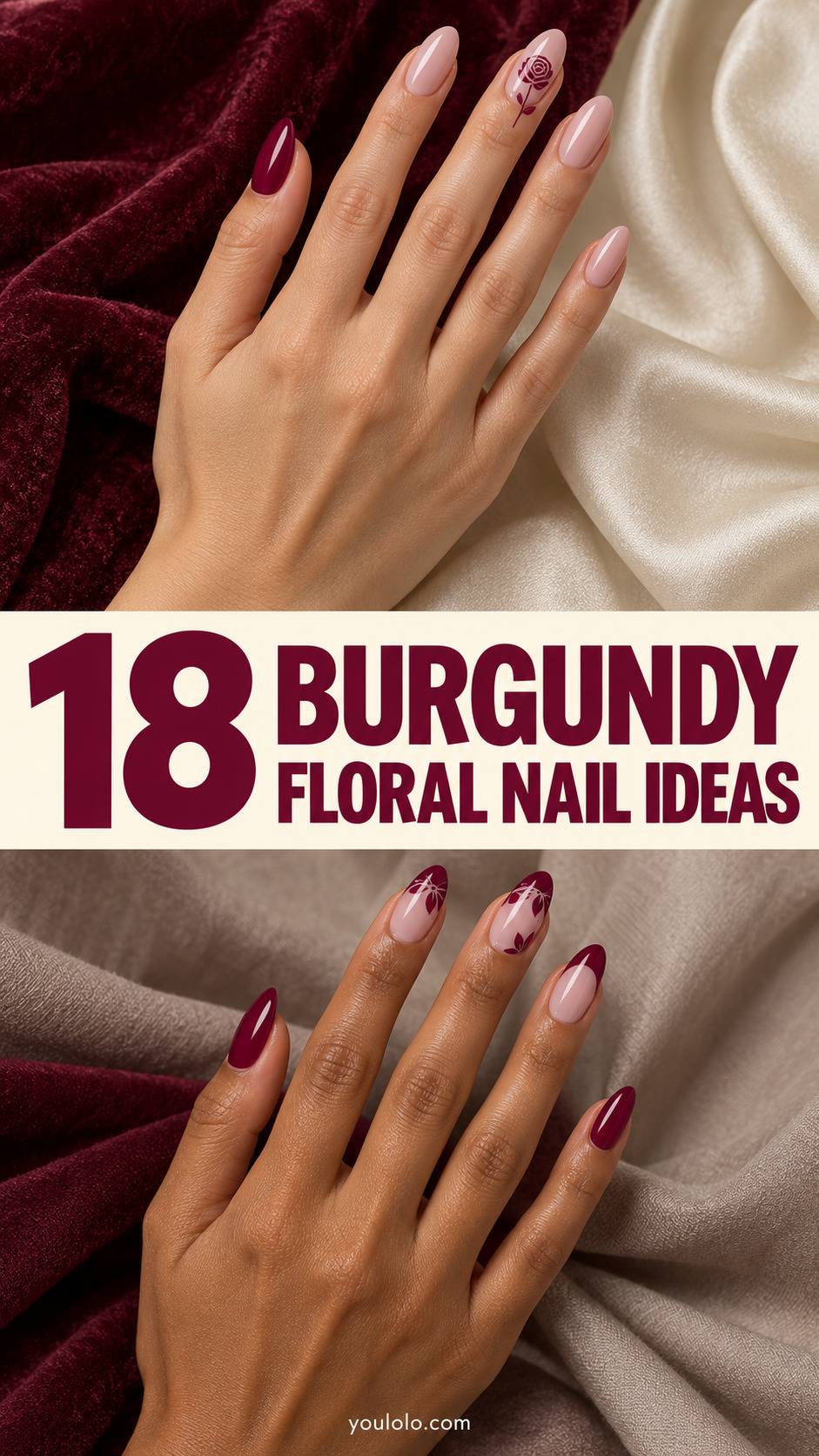
Images are original AI-created design illustrations, not photographs of completed salon services. They are intended as visual briefs; a nail artist can adapt the details to your chosen shape and length.
Choose the flower before the finish
Pick a flower silhouette
A floral manicure starts with the silhouette of the flower. Daisies are compact and rounded. Tulips sit upright on narrow stems. A rose outline creates a spiral, while a dahlia needs several petal layers. These choices matter more than simply changing the same five-petal motif from one nail to another.
For burgundy floral nails, the deep color can play three different roles. It can be the flower on a pale base, the background behind a cream flower, or a solid shade on the nails next to the artwork. Decide which role you like before choosing the exact red. A mixed set can combine two of those approaches without using all three on every finger.
Plan the palette and placement
Burgundy itself ranges from red wine to plum-leaning tones. Pair your chosen shade with the pink or cream base in the same light. A cool pink and a warm brick red create a different mood from blush and deep merlot. The illustrations are color references, not a reliable way to identify a specific polish brand or shade name.
Flower placement changes the result. A centered blossom feels balanced and direct. A flower entering from the corner feels more like part of a larger illustration. Petals at the tip create a French-like border. Pick one of these arrangements rather than telling the artist to add flowers wherever there is space.
Simplify the detail for your length
Short nails benefit from fewer clear petals and more open background. That does not mean the flower must be extremely tiny. A single larger bloom can be easier to recognize than a cluster of miniature blossoms. For a layered flower such as a dahlia, ask the artist to simplify the number of petals instead of compressing every detail.
Raised florals, metallic outlines, and matte-versus-gloss petals are separate finish choices. A sculpted flower adds physical height. A flat gold outline changes the color contrast. Gloss petals on a matte base depend on angled light. Describe the effect you want clearly, because these finishes are not interchangeable even when the flower shape is the same.
18 burgundy floral nails ideas to compare
1. Wine Daisies on Blush
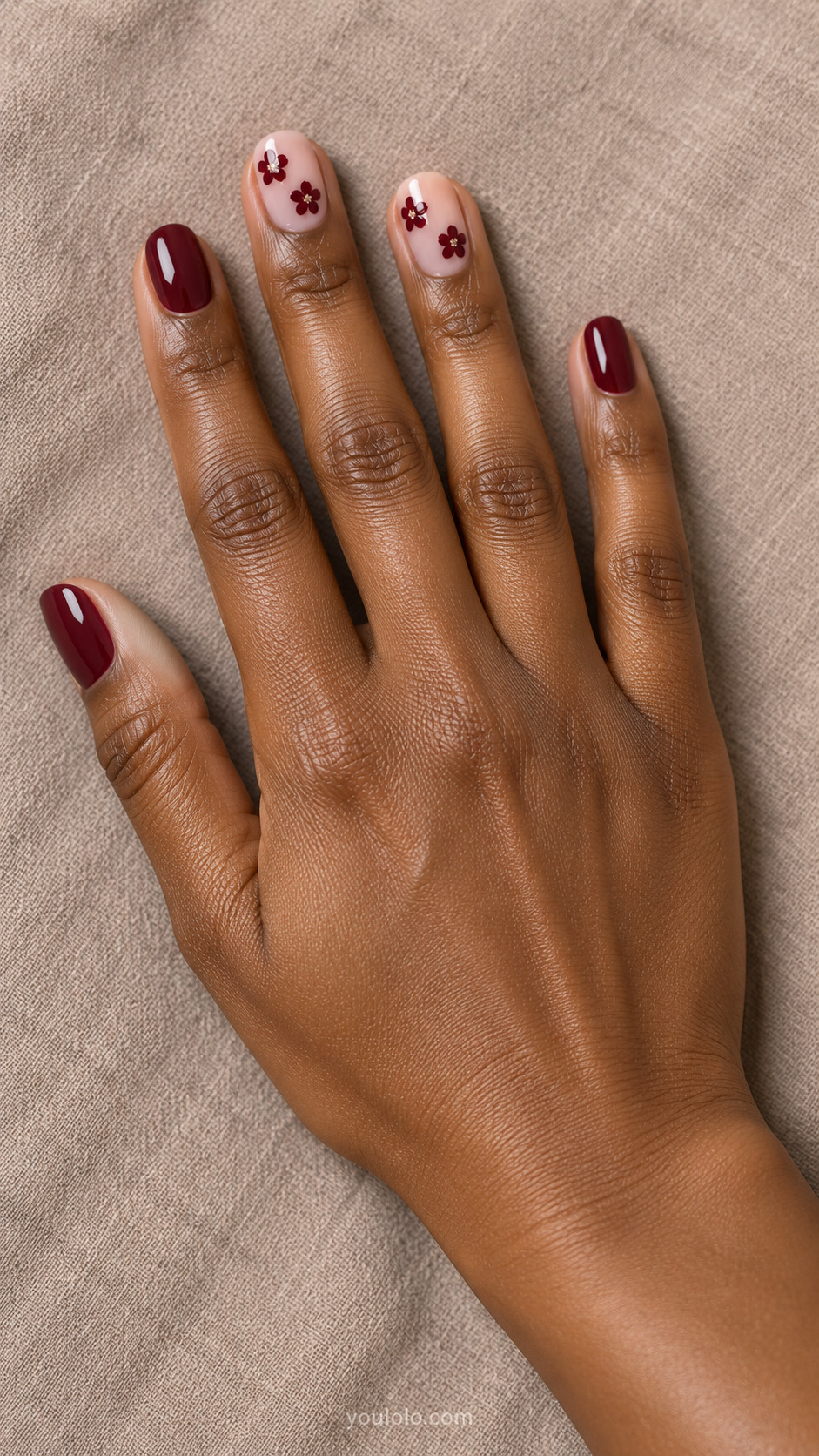
Round petals make these flowers easy to recognize at a small scale. Leave gaps between the blossoms instead of turning them into an all-over print. The solid wine nails link the accents without repeating a flower on every finger.
2. Single Burgundy Rose Outline
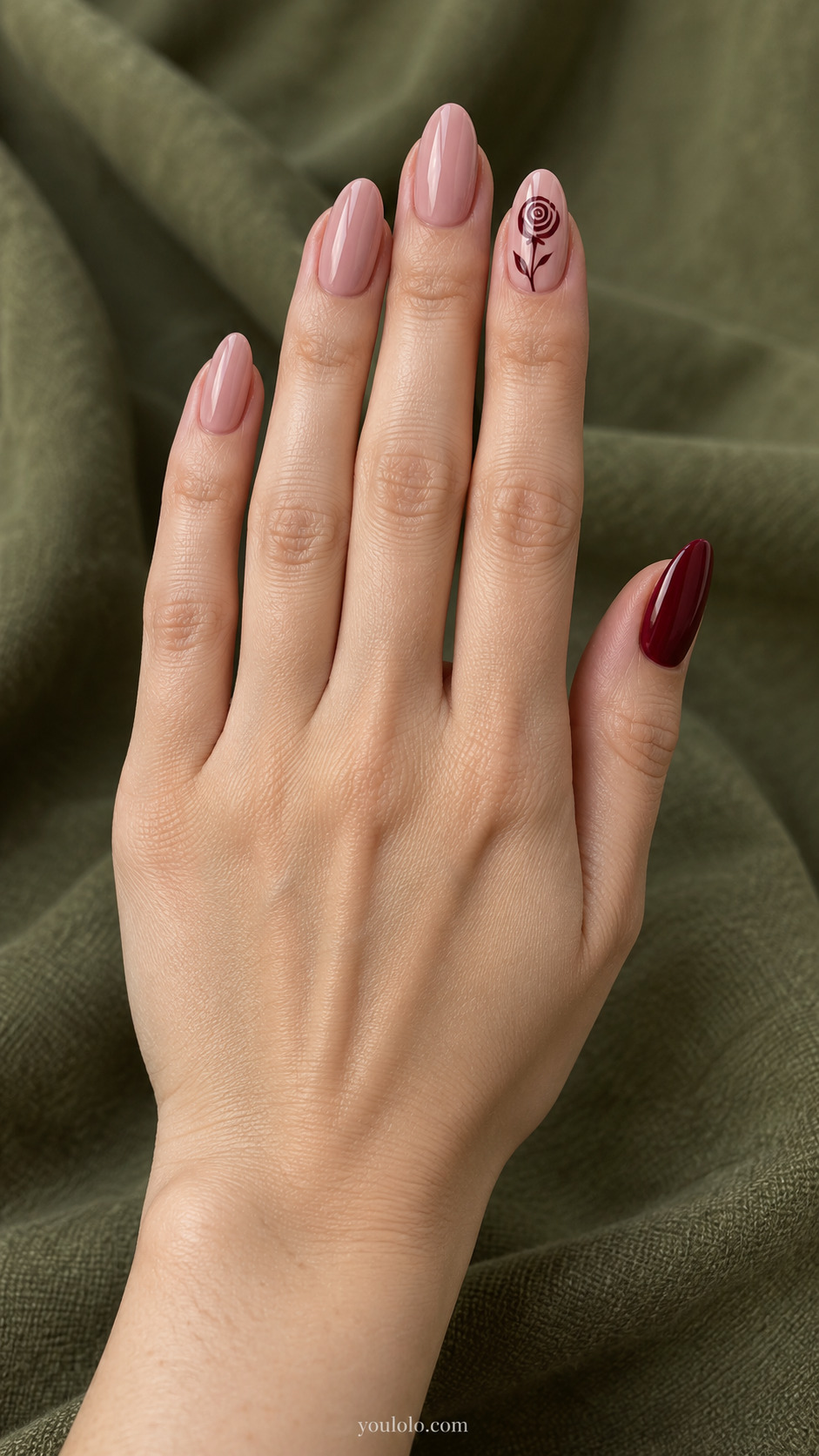
An outlined rose feels lighter than a fully filled flower. Ask for a loose spiral with a few outer petal curves, not a dense circular scribble. One accent nail is enough to carry the romantic detail.
3. Cream Blossoms on Wine
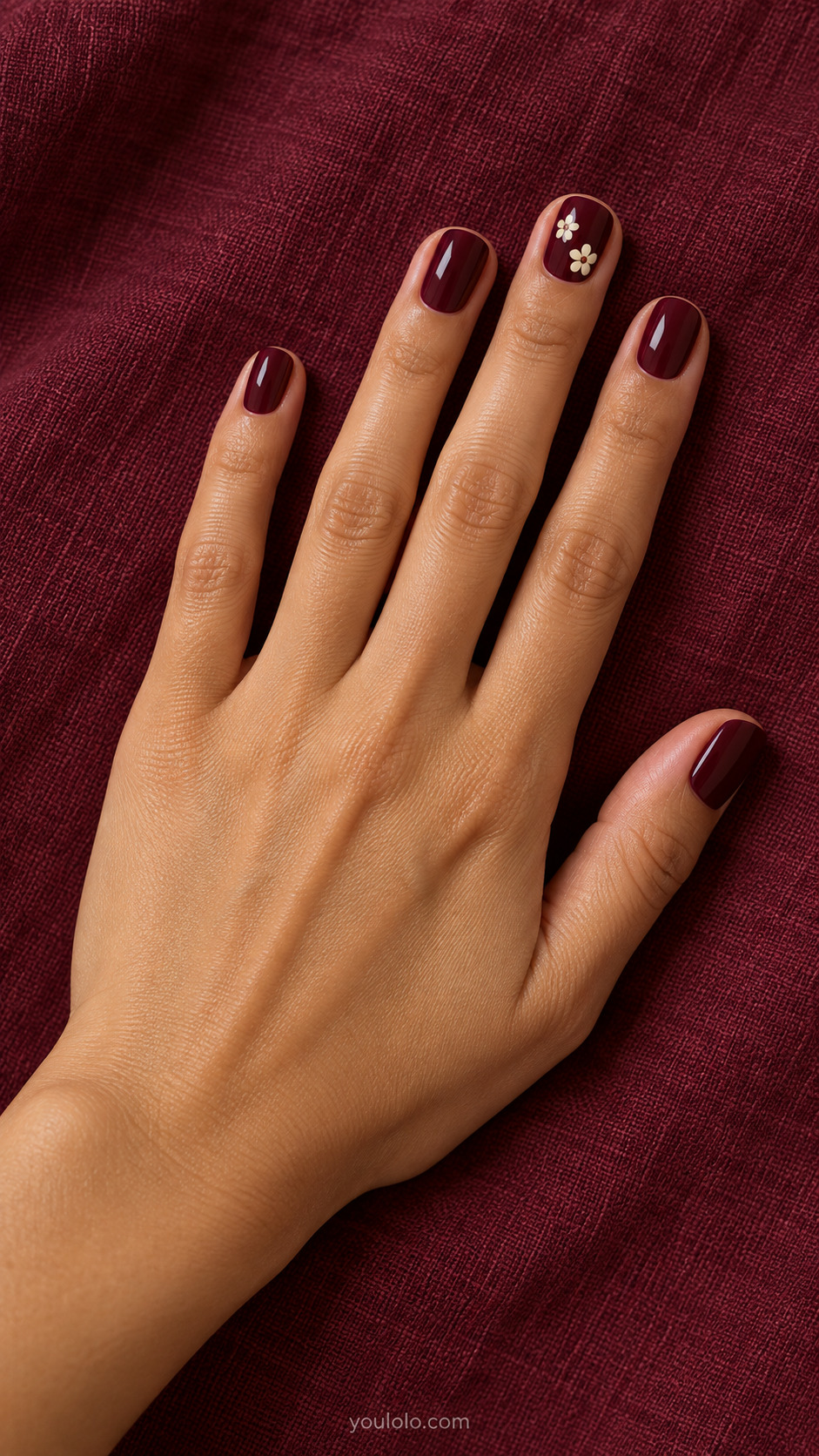
Reversing the colors makes the flower stand out strongly. Keep the pale blossoms on one nail and choose a warm cream rather than stark white for a softer contrast. The remaining glossy wine nails give the design a polished frame.
4. Petal French Edge
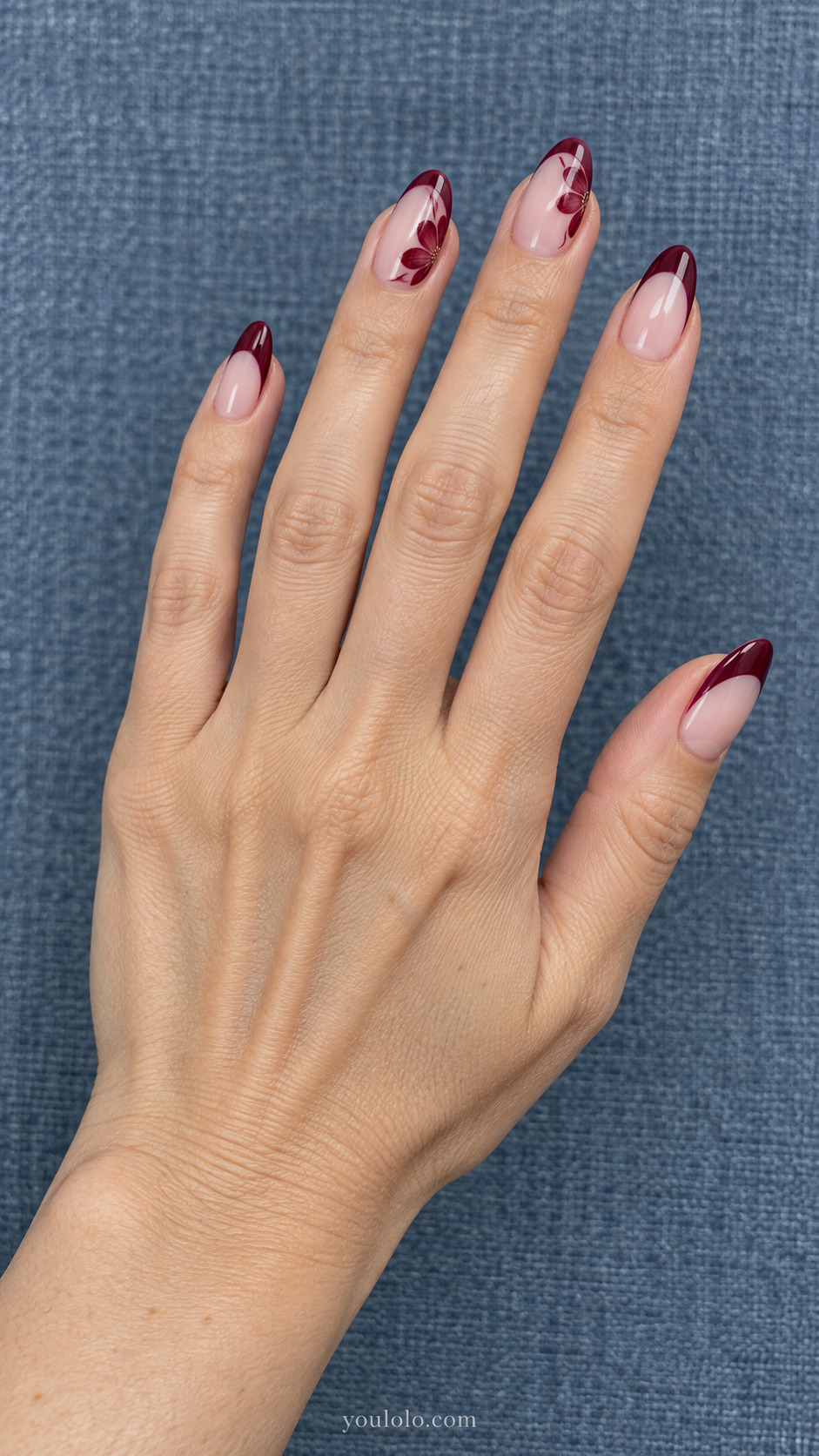
The flower shapes create the edge instead of sitting in the middle. Leave enough pale base exposed to keep the French effect readable. On shorter nails, reduce the number of petals rather than shrinking them beyond recognition.
5. Corner Bloom Accent
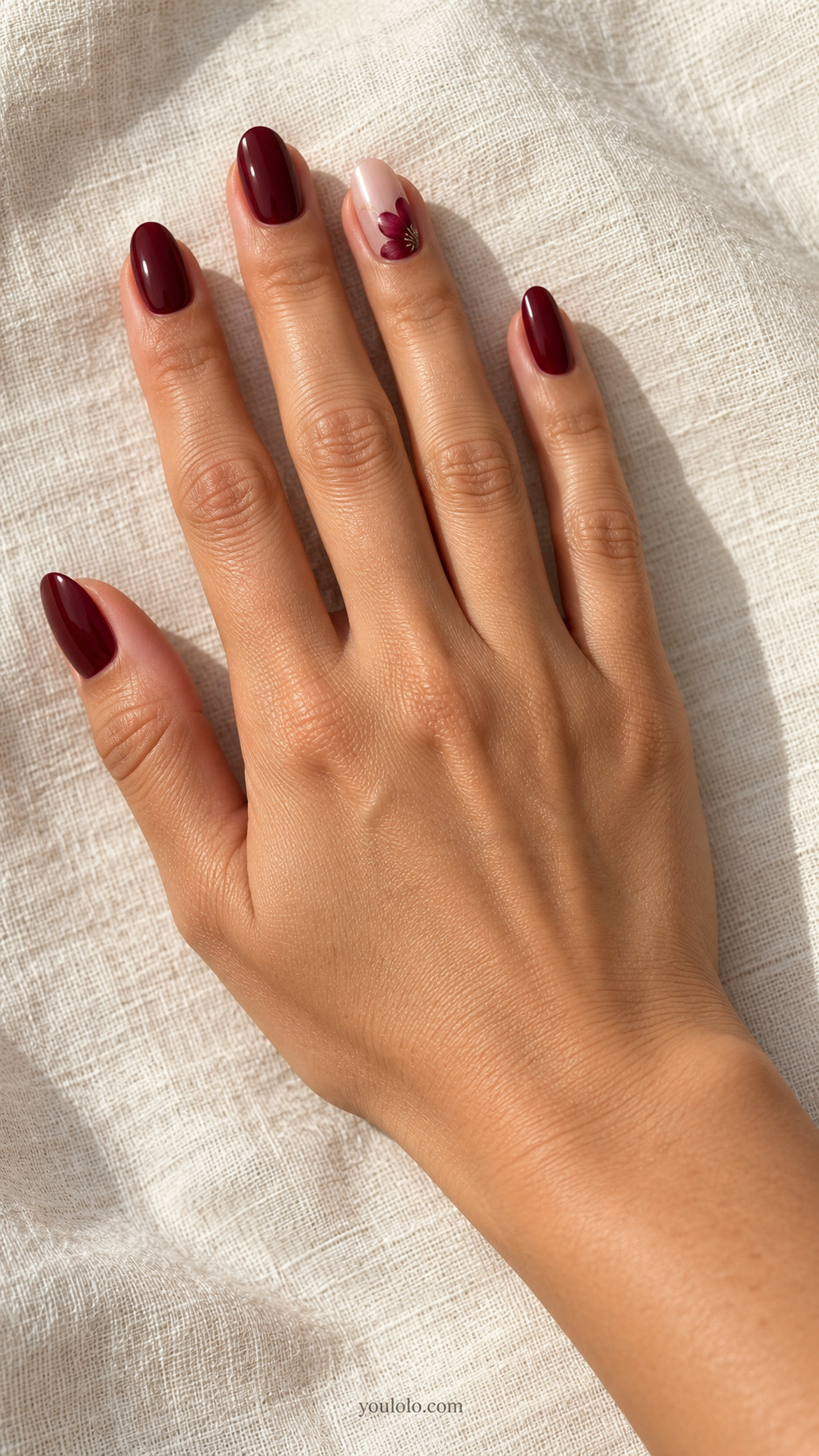
A flower entering from the side makes the accent feel like a cropped botanical illustration. Leave much of the blush base open so the large petals have room to stand out. Solid wine nails keep the rest of the hand simple.
6. Gold Outline Wildflower
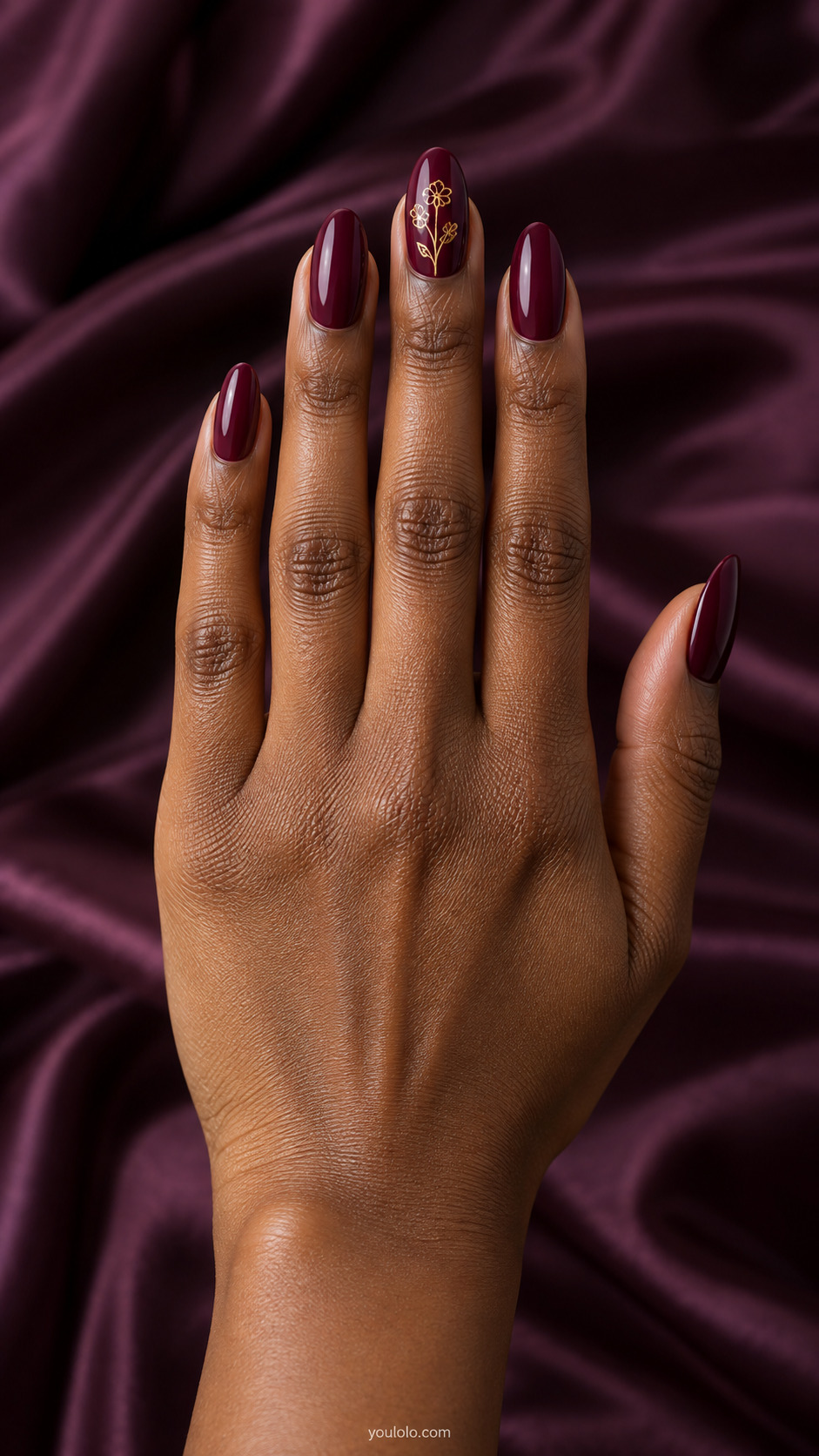
Fine metallic lines brighten the deep base without adding another opaque color. Use a simple flower shape with open petals. A thick gold silhouette would feel much heavier and hide the linework that makes this version delicate.
7. Burgundy Tulip Stems
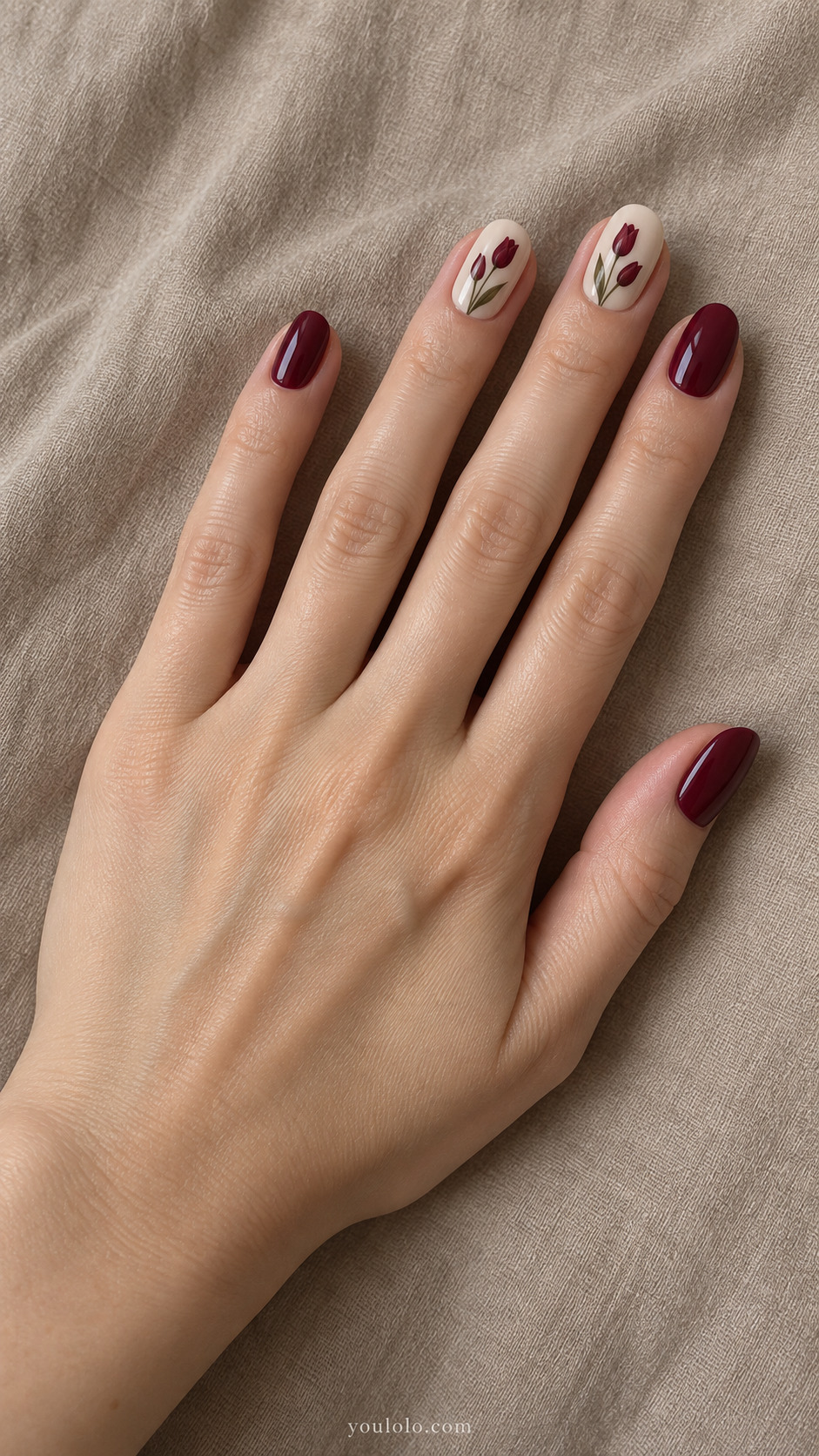
Tulips create a more upright silhouette than daisies. Let the stems travel along the nail and keep the flower heads small. Two blooms are usually enough for the accent area; extra leaves can make the short layout crowded.
8. Dried Rose Watercolor Effect
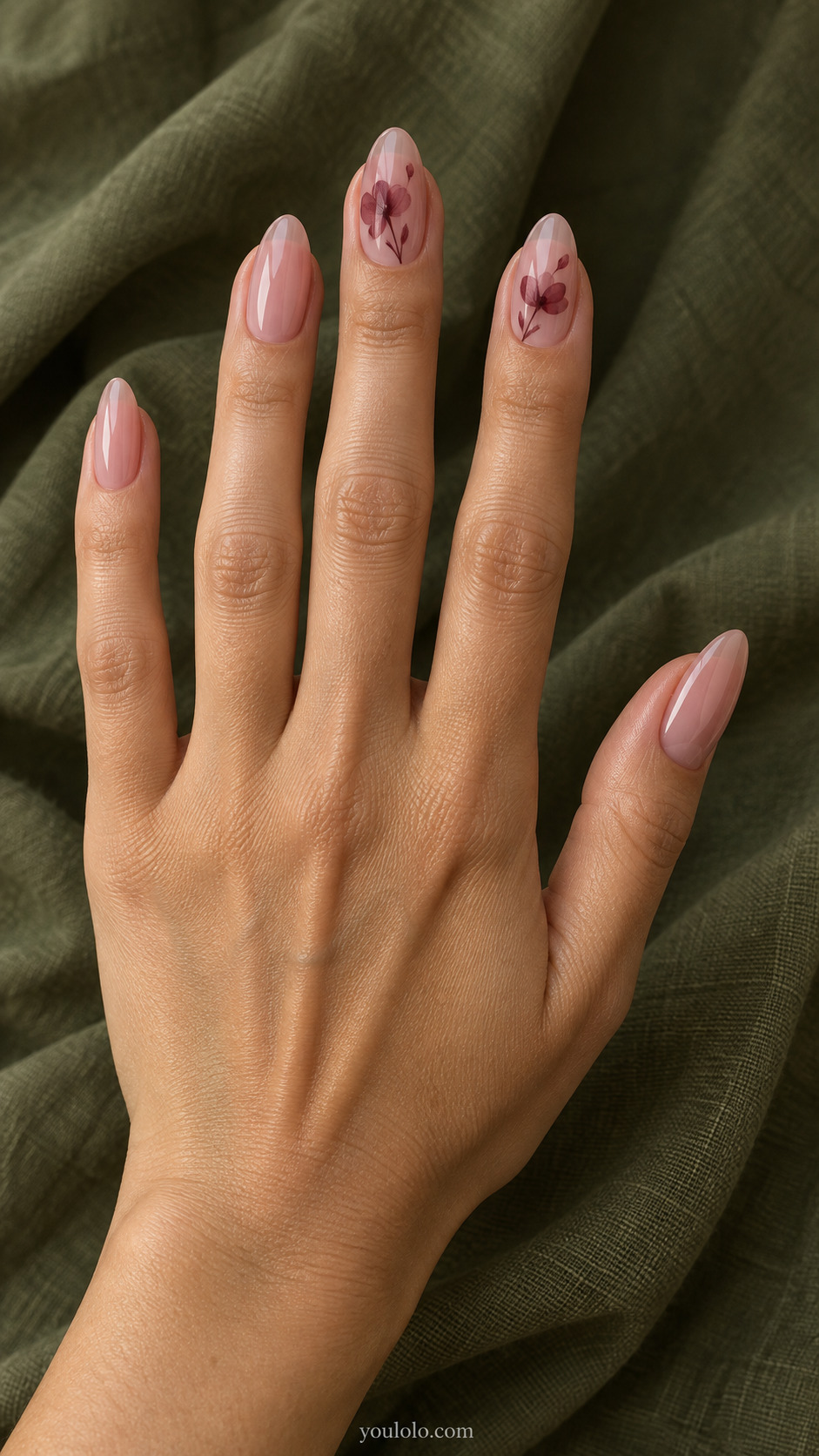
The edges should look softly diffused, with some pale base showing through the petals. This is a painted effect rather than actual watercolor product instructions. Skip dark outlines so the flowers retain their gentle, washed appearance.
9. Burgundy Anemone Accent
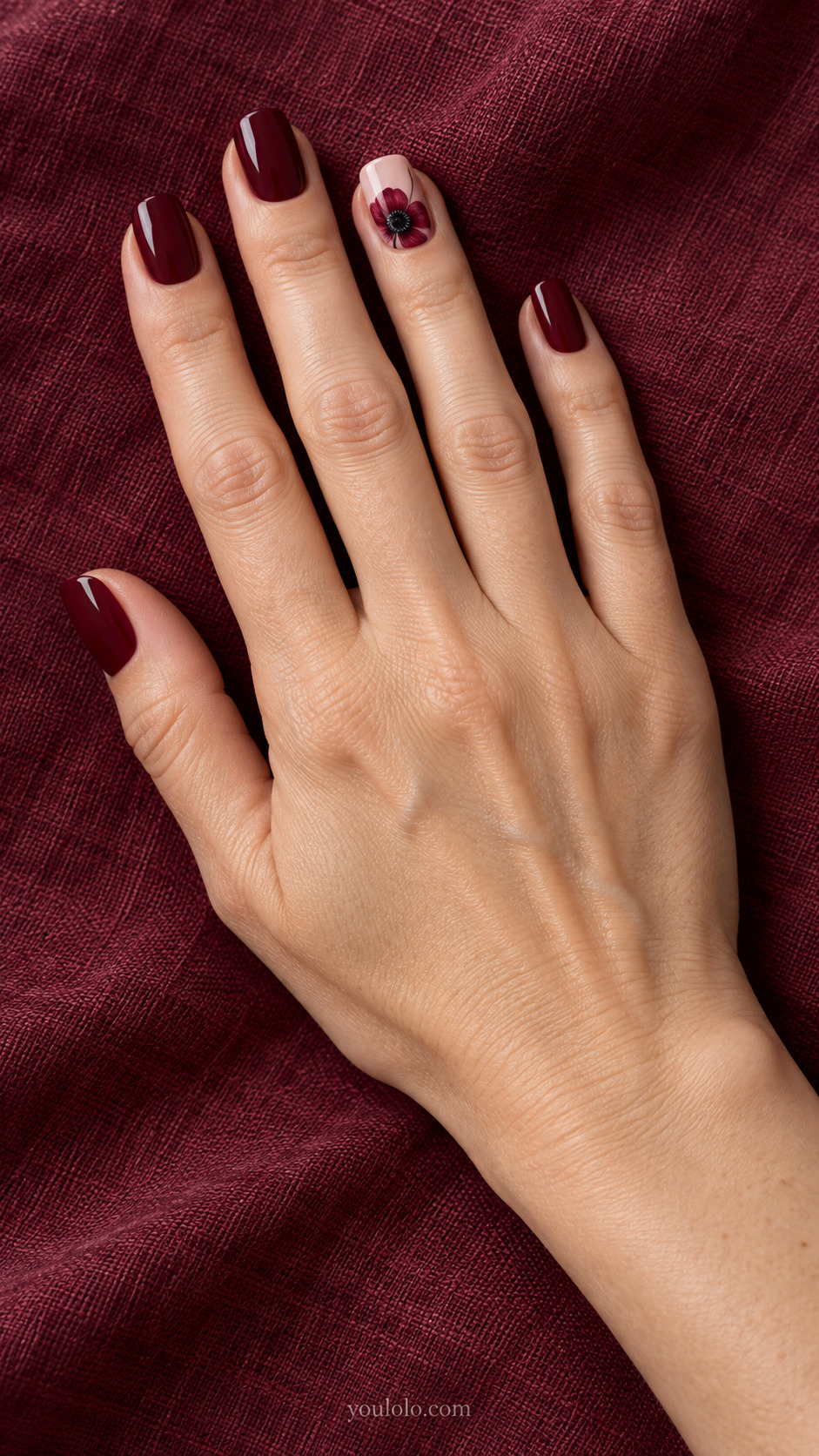
The dark center differentiates the anemone from a simple daisy. Make the petals broad enough to read around it. One flower creates a stronger composition than several miniature versions competing on the same nail.
10. Negative Space Floral Frame
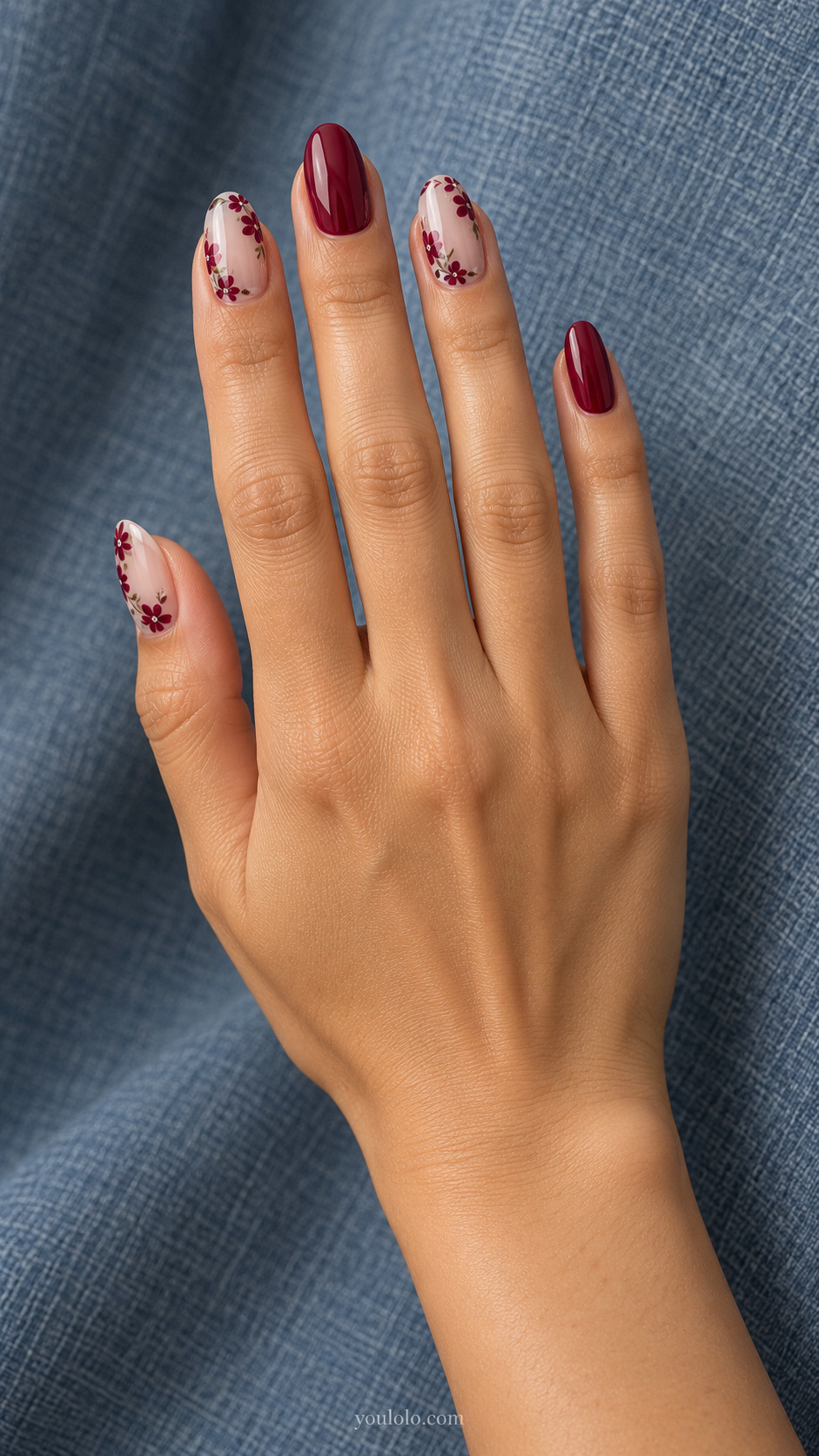
The open center is part of the design. Ask for the flowers to touch the side edges while leaving clear space through the middle. A full floral border would be a different, busier interpretation.
11. Tiny Burgundy Bud Trail
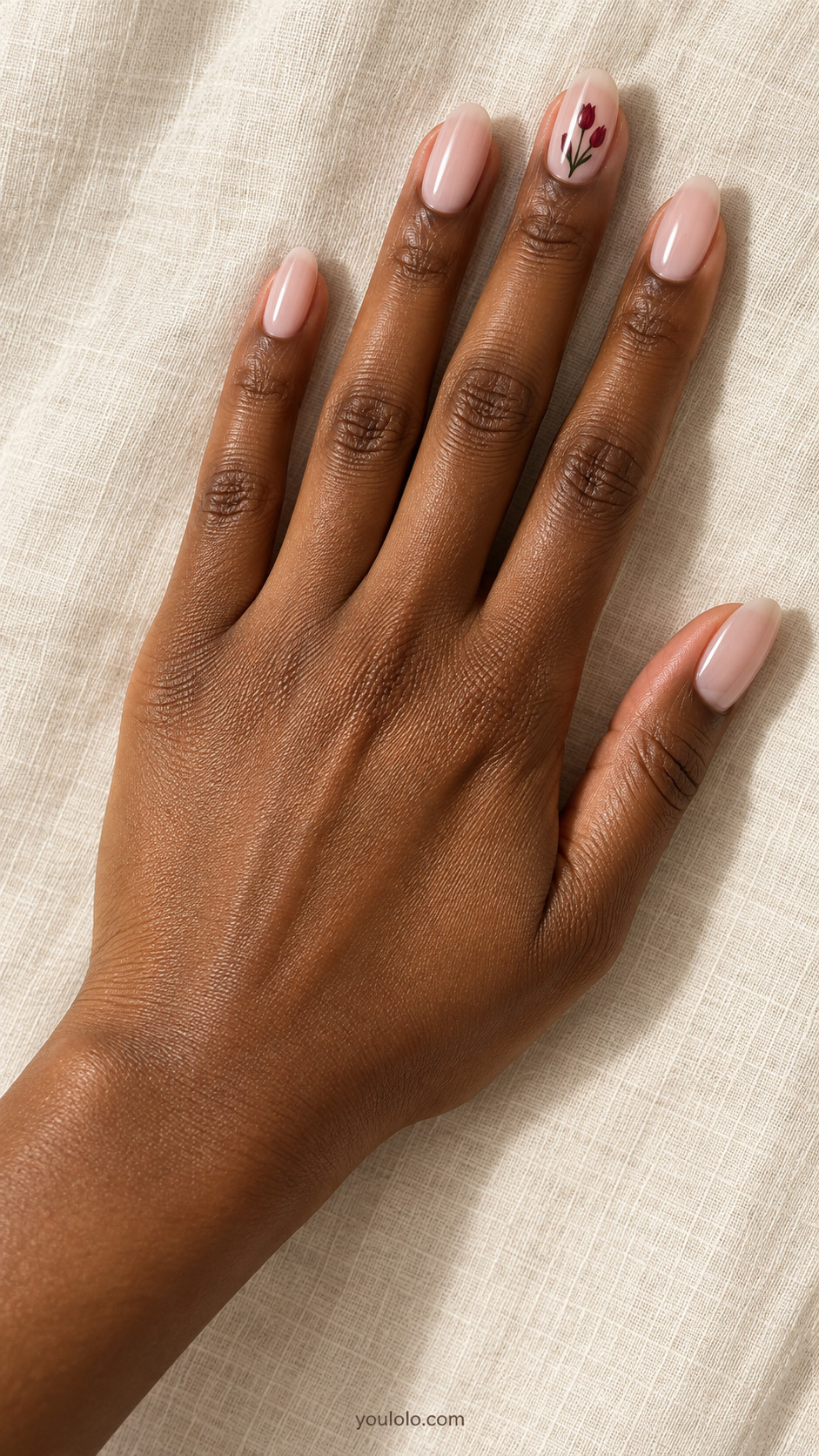
Closed buds offer a quieter floral motif than open blossoms. Keep the stem thin and the buds slightly different in size. The curve should follow the nail rather than zigzag across it, leaving the rest of the base plain.
12. Sculpted Single Flower
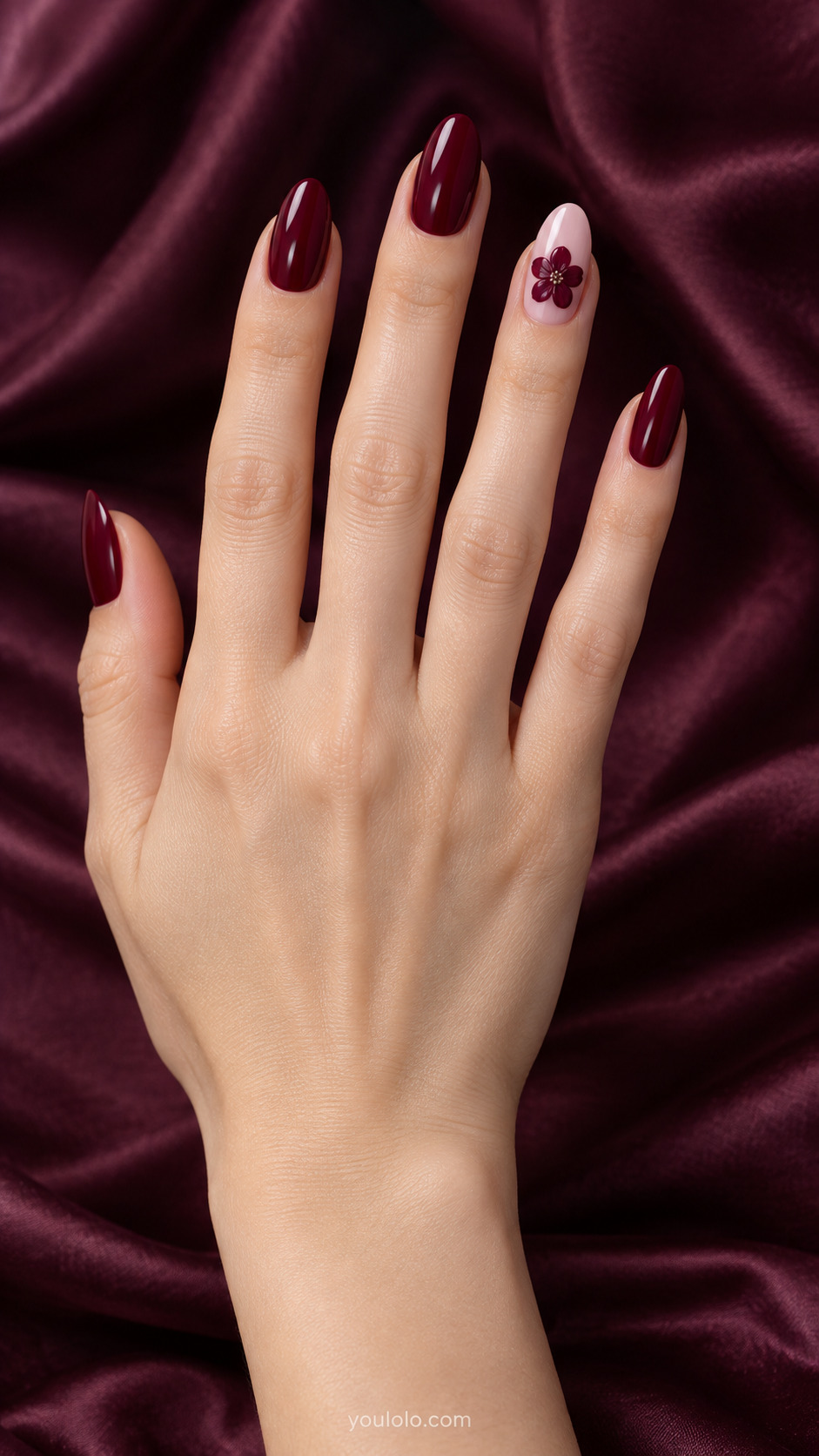
The raised flower adds texture, so keep the surrounding design simple. Agree on its height and placement before the service. This interpretation should be described as sculpted floral art, not as a flat painted design.
13. Dahlia Centerpiece
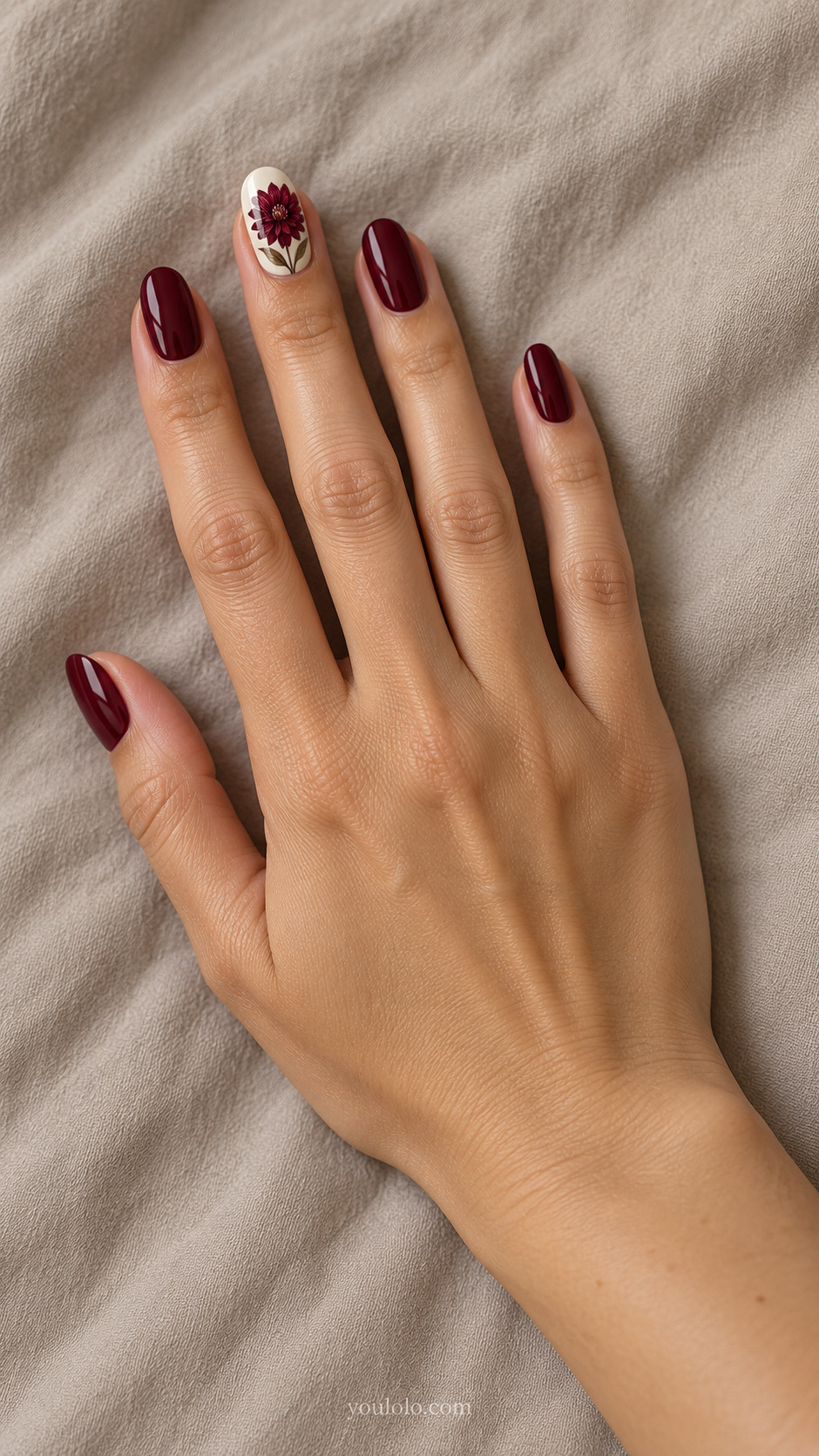
A dahlia needs more room than a tiny daisy because its layered petals create the identity. Reserve the widest accent nail for it. Ask for a simplified version if your chosen nail is too short to show distinct petal layers.
14. Two-Tone Petal Cluster
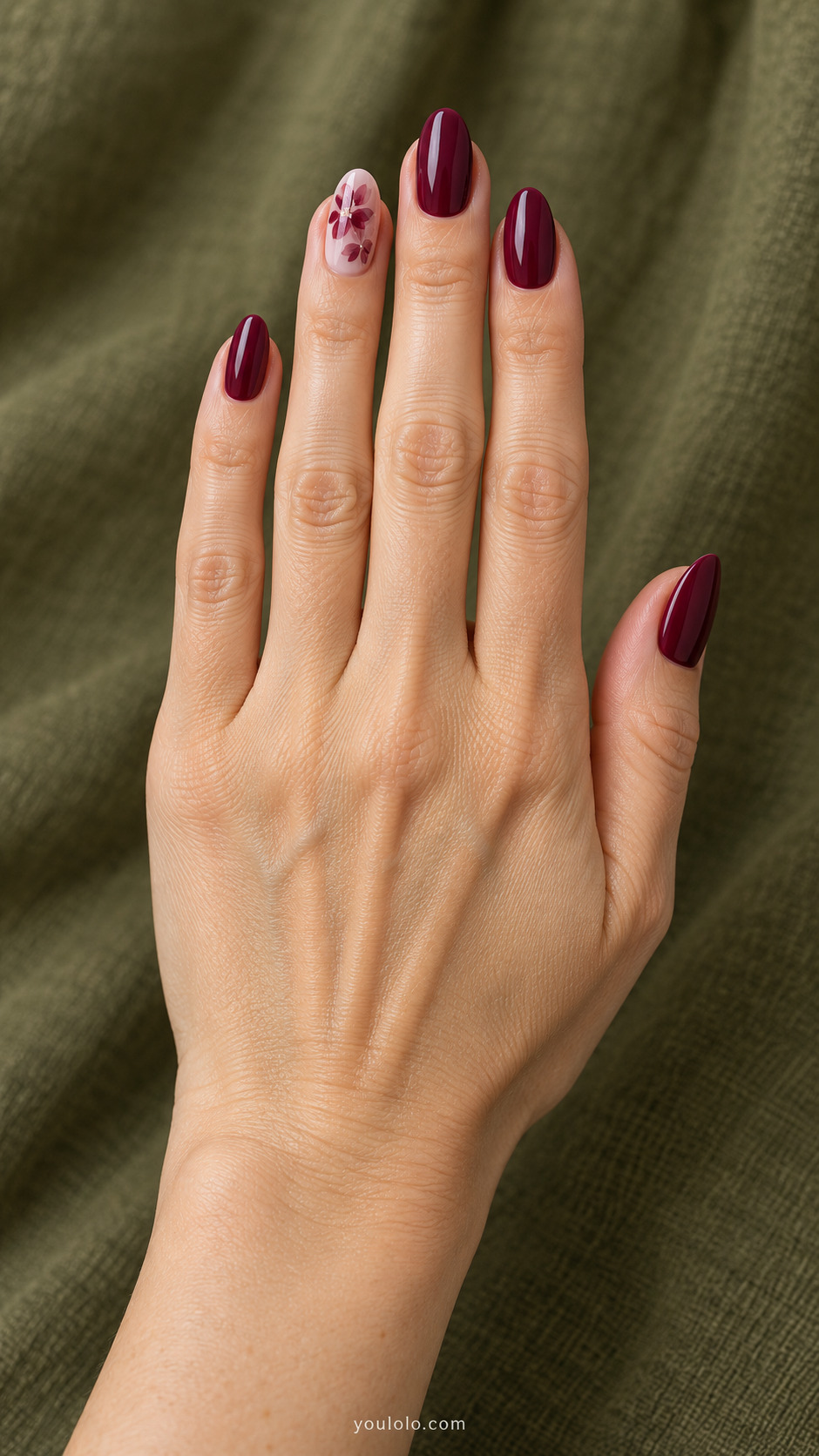
Two related reds give the cluster depth without introducing a rainbow. Keep the petals gathered in one area instead of distributing them evenly like dots. The darker wine should anchor the composition while dusty rose softens it.
15. Burgundy Floral Half Moon

The floral arc should sit above the skin with a neat margin. Use a few distinct blossoms and keep the rest of the nail open. This is a placement change, not a reason to make every petal microscopic.
16. Pressed Flower Silhouette
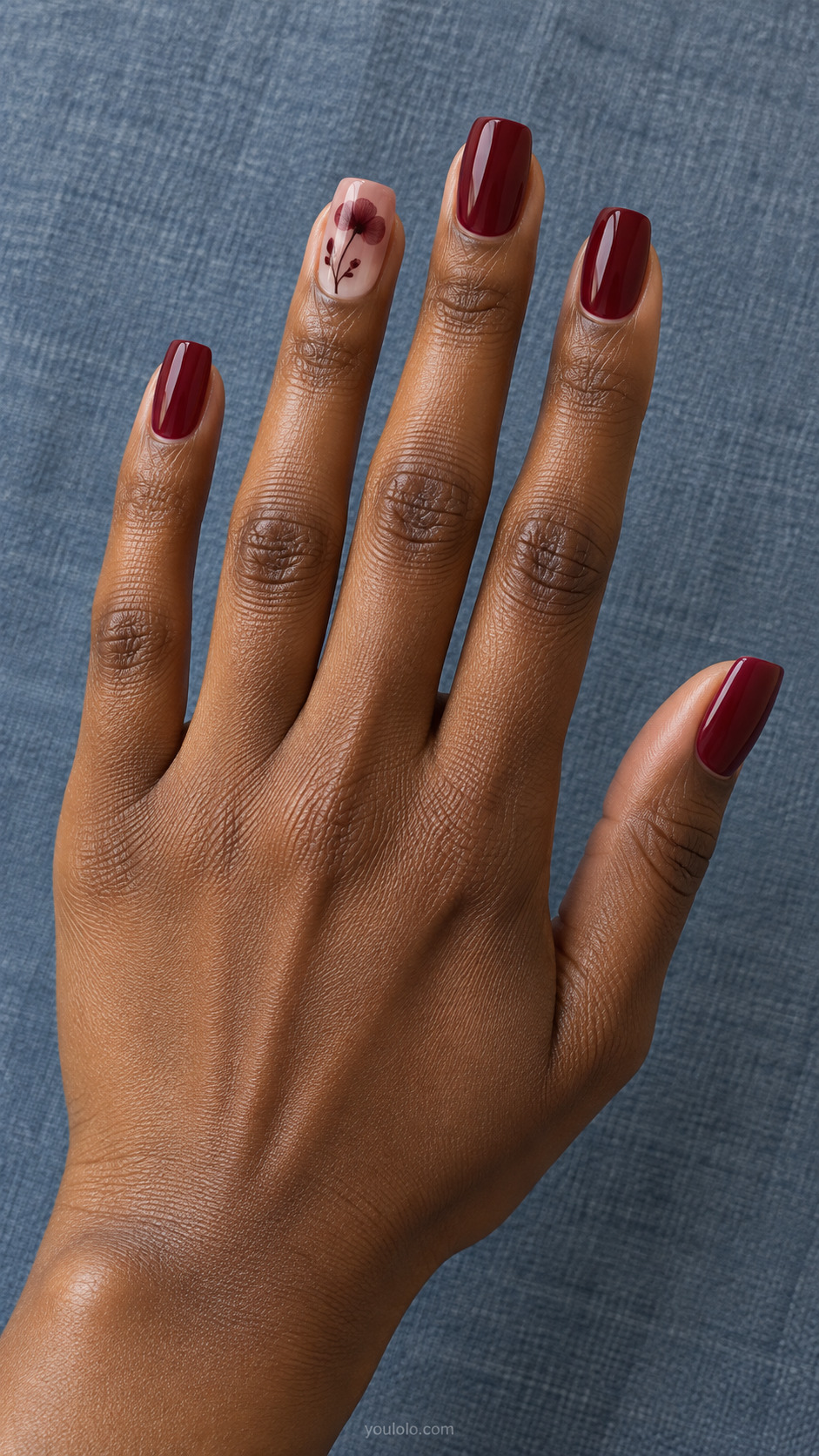
A silhouette concentrates on the outline of the whole flower and stem. Keep it flat and lightly spaced, like an illustration in a botanical notebook. Do not describe it as a real pressed flower unless actual material is used.
17. Burgundy Floral Medallion
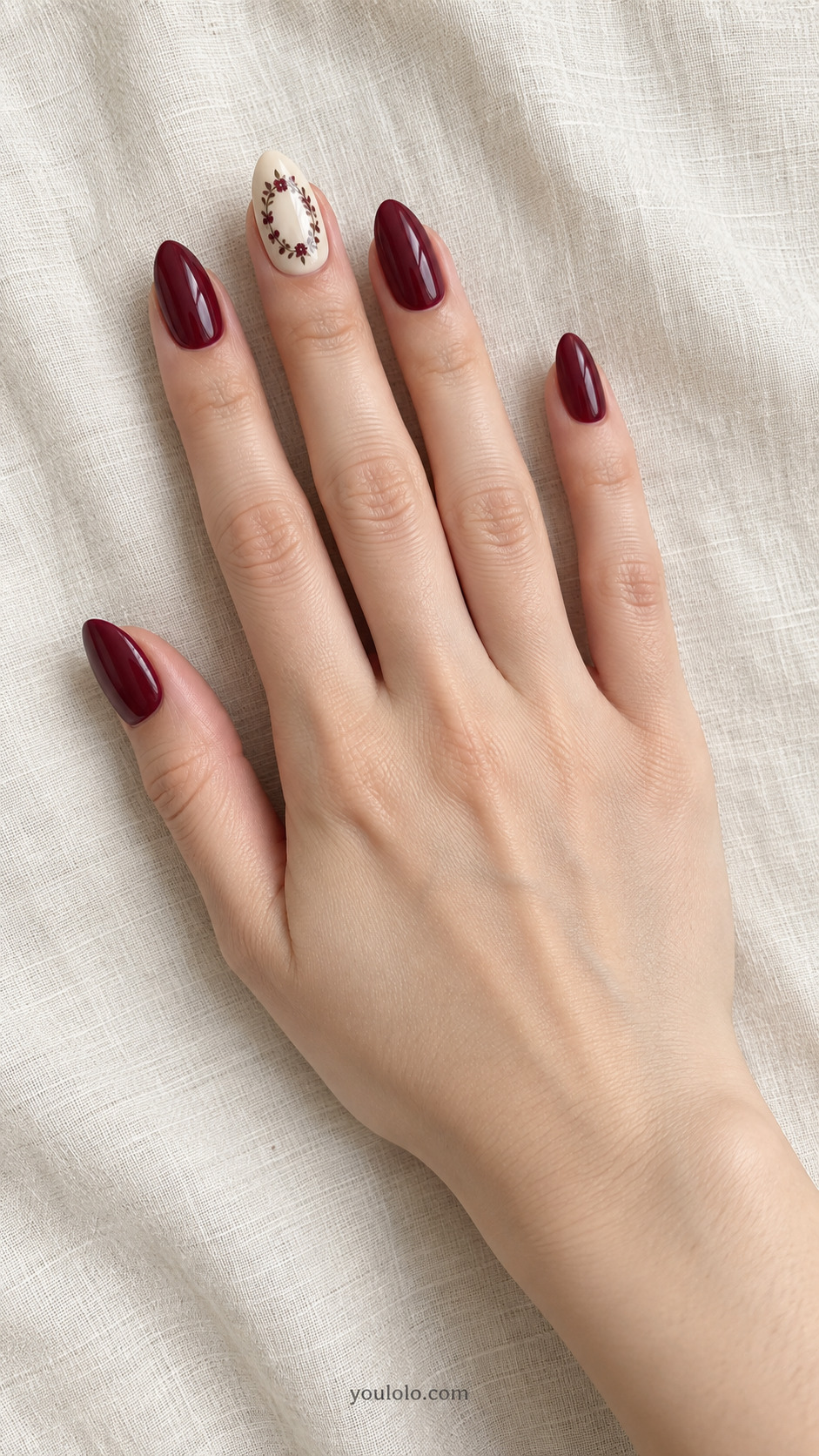
The oval wreath gives the floral detail a cameo-like frame. Leave an open center and keep the surrounding nail plain. A narrow wreath is enough; too many blossoms would turn it into a solid burgundy patch.
18. Matte Wine with Gloss Petals
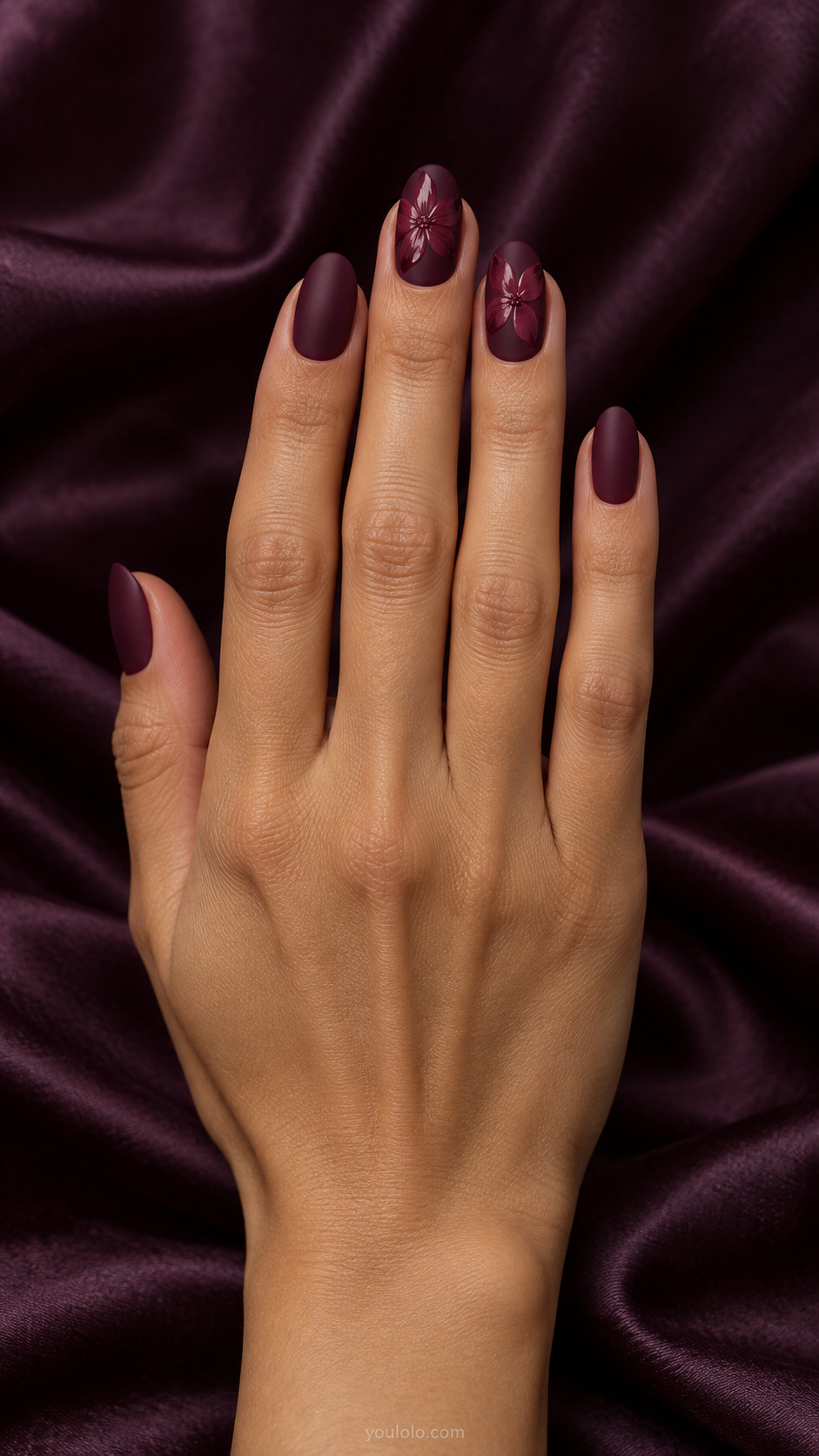
This is the most subtle floral option because the finish carries much of the contrast. Ask to see the design in angled light before deciding it is too faint. The petals should remain visible without needing a bright outline.
A balanced layout for burgundy floral nails
Start with one floral accent and three or four solid nails. If that feels too plain, add a second accent with a related placement, such as a small bud beside a larger bloom. Keeping the flower family consistent gives the set a connection without making every nail identical.
For a romantic version, choose blush with a rose outline. For a bolder contrast, choose cream flowers over deep wine. For a quiet version, try tonal glossy petals on a matte burgundy base. Save the option that matches how much detail you actually like to wear, not only the most elaborate close-up.
For another direction, explore our soft glazed pink almond nails and compare the amount of pattern before choosing your next manicure.
Burgundy floral nails: frequently asked questions
Are burgundy floral nails only for autumn?
No. The wine palette often suits autumn styling, but flowers and burgundy can be worn whenever you like them. A cream or pink base makes the design lighter; a deep wine background creates a moodier version.
Which flowers are easiest to simplify for short nails?
A small daisy, tulip, or closed bud can be reduced to a few clear shapes. Layered roses and dahlias need more space or a simpler interpretation. A single distinct flower is often clearer than a crowded cluster.
Do burgundy floral nails need gold accents?
No. Gold is optional. Burgundy with blush or cream already provides contrast, and a flat painted flower can stand on its own. Add metal only if it supports the look you want.
Can a floral manicure be completely flat?
Yes. Hand-painted flowers and suitable flat decals can create a floral design without a sculpted charm. Tell your artist that you prefer a smooth surface if that matters to you.
References and design notes
The sources below document relevant patterns, colors, or techniques. The illustrations and individual combinations in this article are original interpretations; the sources do not establish that every pictured combination was recreated or wear-tested.

[…] another autumn direction, explore our burgundy floral nails […]
[…] For another direction, explore our burgundy floral nail ideas. […]
[…] 18 Burgundy Floral Nails: Beautiful Designs for Fall […]