
The Best Fluffy Pancakes recipe you will fall in love with. Full of tips and tricks to help you make the best pancakes.

Grey gingham nails bring a soft fabric pattern to a manicure: pale squares, deeper intersections, and little spaces of milky white. The reference that inspired this collection combines cool checks with a bow and gold hearts. What makes it work is the contrast between a tidy grid and one curved detail. You can borrow that balance without putting a charm on every nail.
These fifteen interpretations keep grey checks at the center but change the layout, scale, shape, and decoration. Some feel like a tiny tailored shirt; others lean toward romantic ribbon details. Start with the amount of pattern you enjoy wearing, then choose a bow, a heart, or a simple metallic edge.
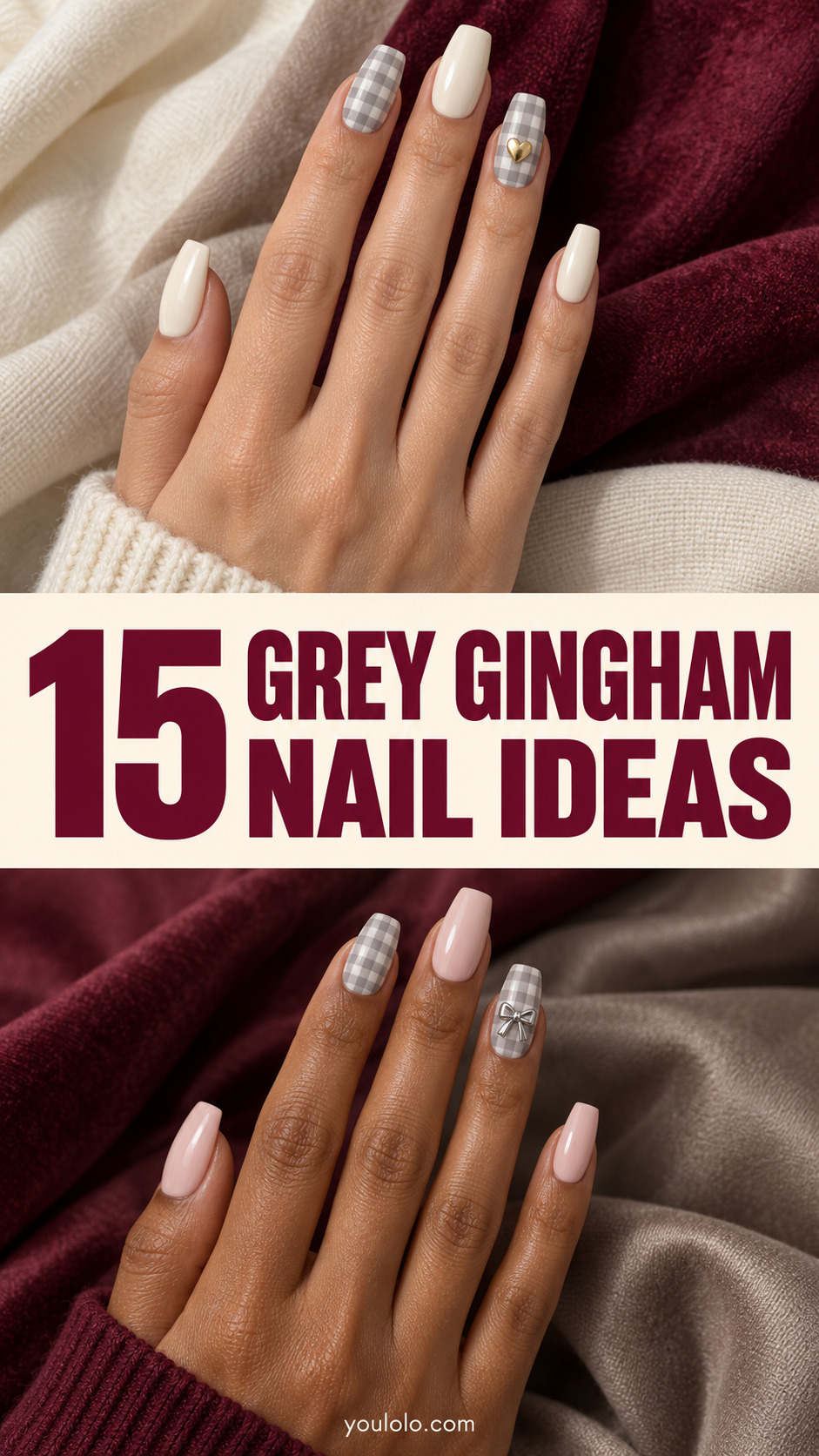
Images are original AI-created design illustrations, not photographs of completed salon services. They are intended as visual briefs; a nail artist can adapt the details to your chosen shape and length.
Choosing grey gingham nails that still look light
Choose the check scale
Start by choosing two greys rather than a whole palette. A pale grey creates the bands and a deeper grey defines the intersections. White or milky cream fills the gaps. If every square has equal darkness, the result starts to look like checkerboard instead of gingham. A small physical sample helps settle that distinction before the artist repeats it across the set.
Scale matters as much as color. A micro grid can look delicate up close but merge into grey from a distance. A larger grid has fewer squares yet reads more clearly in a photograph. For short nails, ask to see both options on a practice tip. There is no need to force the same number of squares onto every nail because the thumb and pinky have different widths.
Bows, hearts, and base colors
For romantic grey gingham nails, choose one curved accent to contrast with the straight lines. A bow, a heart, and a pearl all serve that purpose, but combining them on every finger can hide the pattern. The painted ribbon option keeps the surface visually light. A raised silver bow is more decorative and needs its own open area.
The background polish changes the mood. Cool white makes the grey look crisp; cream makes it softer; milky blush adds a gentle pink cast. Hold the colors together before deciding. An online photo cannot reliably identify the exact polish shade because lighting, camera processing, and your screen affect the result.
Shape and press-on planning
Short squoval and square shapes give the checks a straight boundary. Oval and almond shapes soften them. Neither is automatically better, but a French version needs enough tip depth for the grid to be visible. If you want very short nails, a single full accent nail is often a clearer way to carry the pattern than a tiny checked tip.
When ordering a decorated press-on set, choose the size from the seller's own chart and ask how the artwork is adapted to that shape. A product photograph on long coffin tips does not establish how the same bow will sit on a short oval. Confirm the charm size, the number of patterned nails, and whether the pictured finish is glossy or matte.
15 grey gingham nails ideas to compare
1. Soft Square Checks
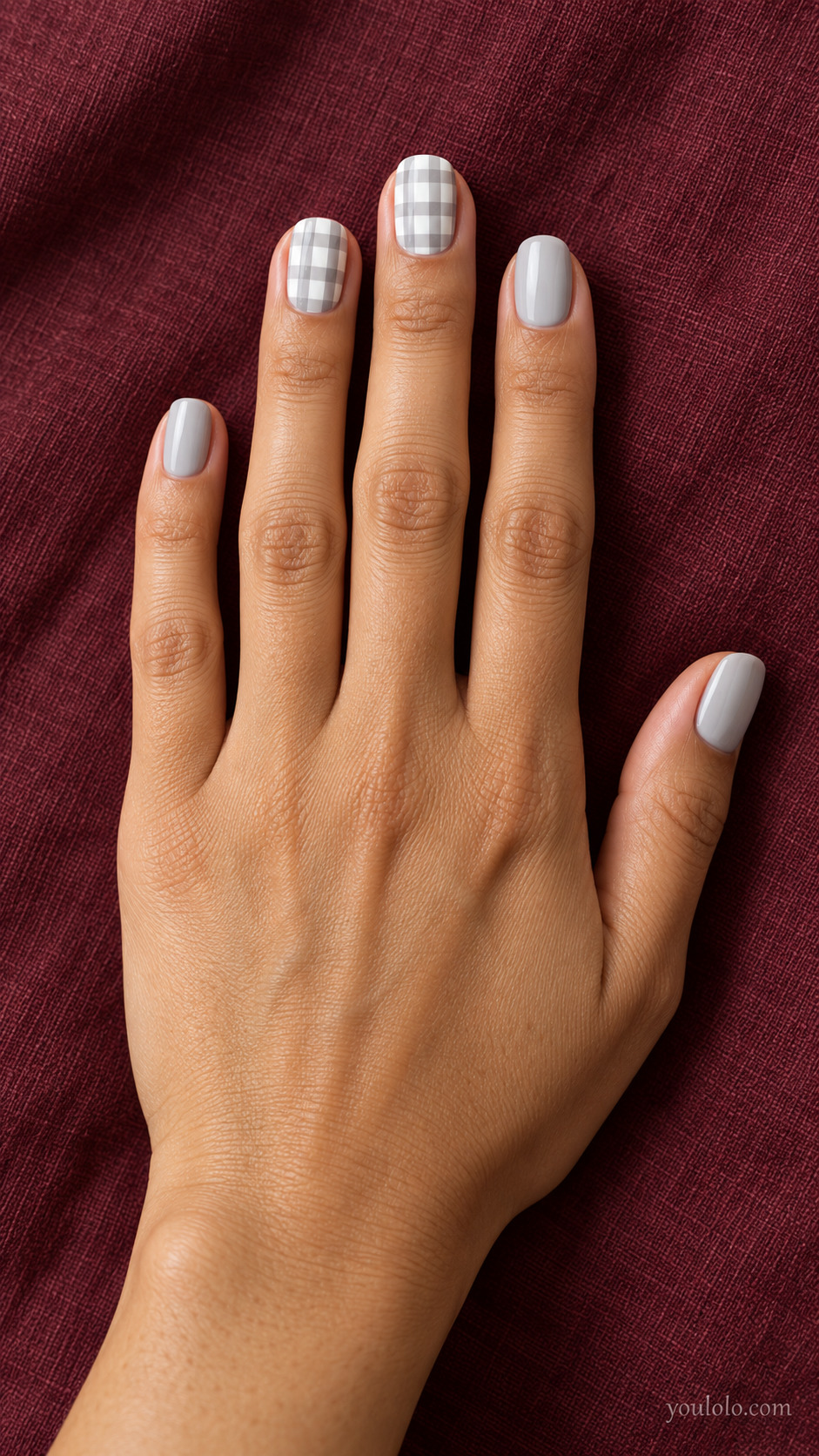
Small squares make this the most understated starting point. Keep the grid equally spaced and leave the thumb plain so the manicure has a quiet area. A soft square shape gives the pattern a neat boundary without requiring long extensions.
2. Gold Heart Accent
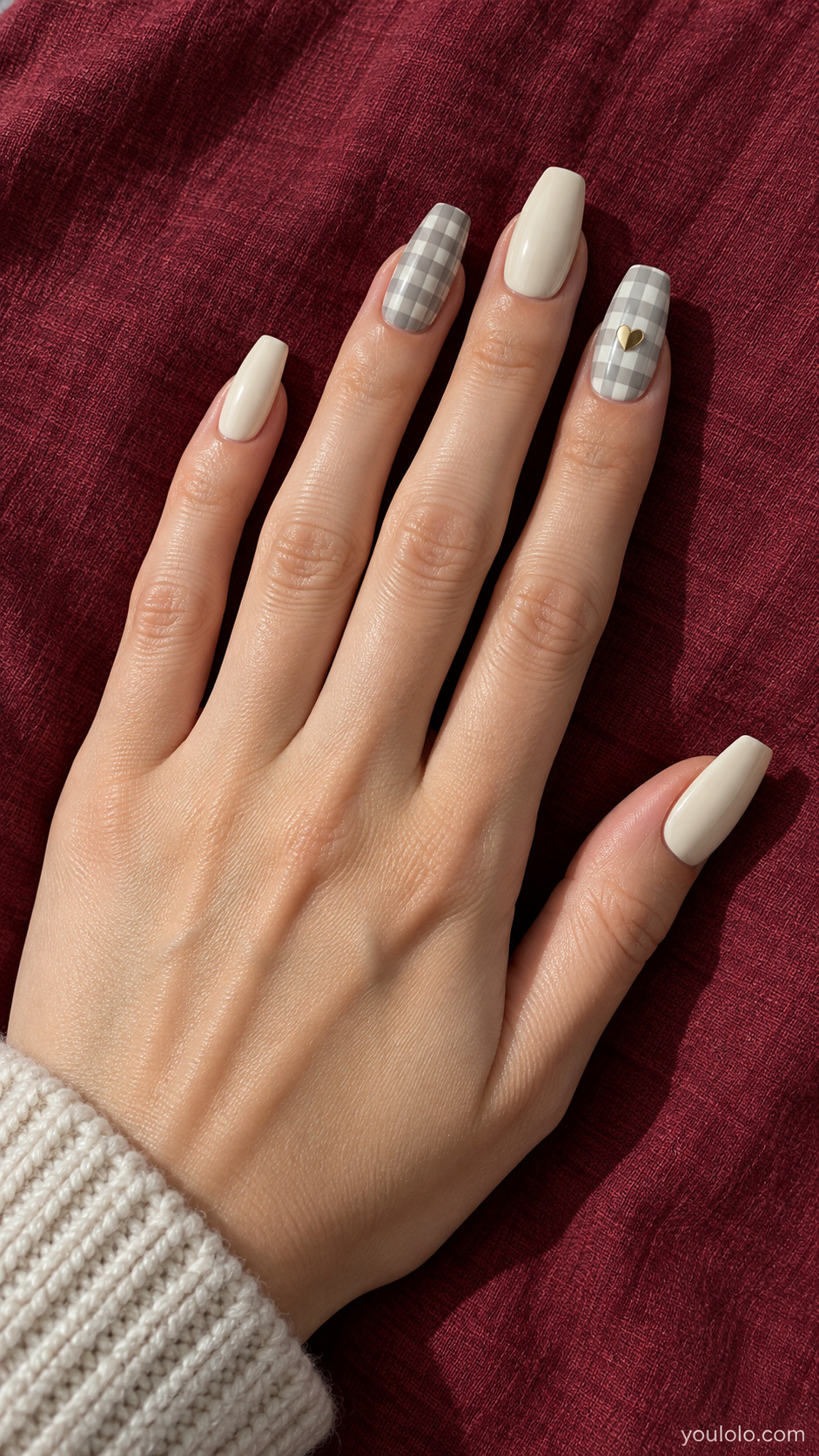
The heart should sit within one open square rather than cover half the grid. Ask for a flat metallic detail if you prefer a smooth surface. Cream on the remaining nails warms up the cool grey without introducing another pattern.
3. Painted Ribbon Bow
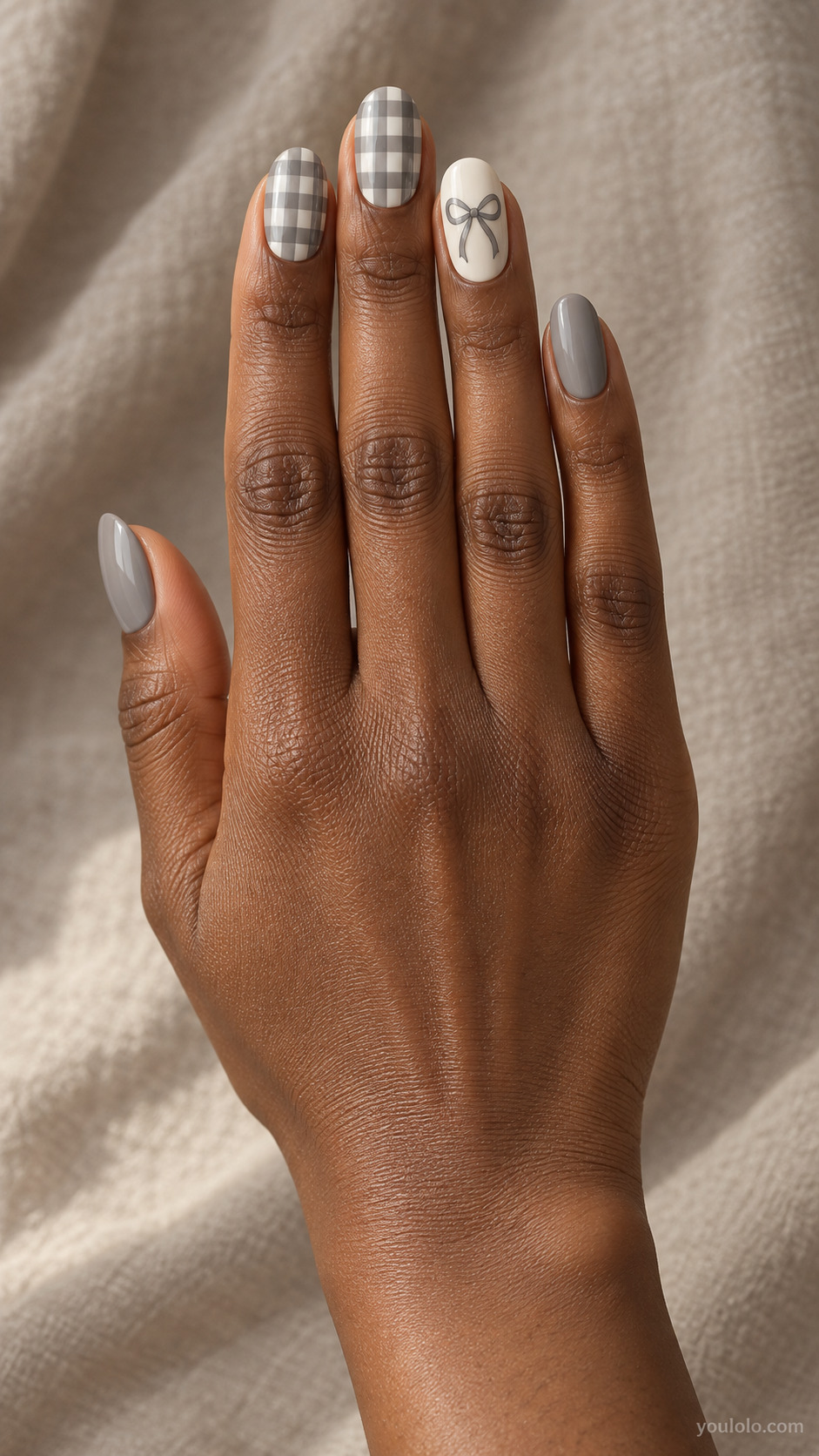
A painted bow gives the romantic reference a practical interpretation. Let its tails curve gently and keep them separate from the checks. This looks most deliberate when the bow is the only dark charcoal element in the set.
4. Silver Bow Charm
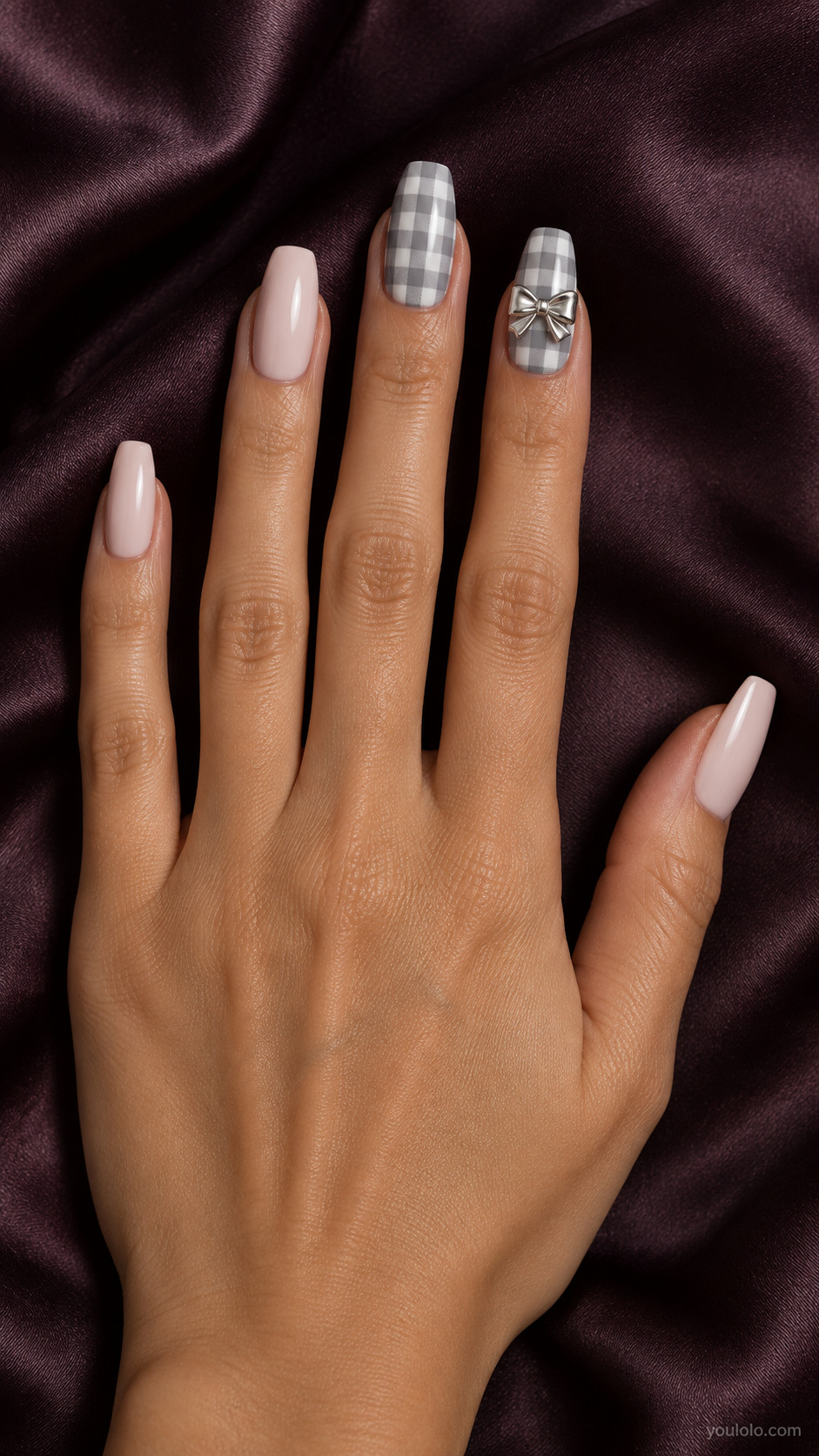
A small silver bow makes the palette cooler and more jewelry-like. Leave clear space around the charm and ask your artist about its height before choosing it. A bulky bow changes the feel of an otherwise delicate manicure.
5. Gingham French Band
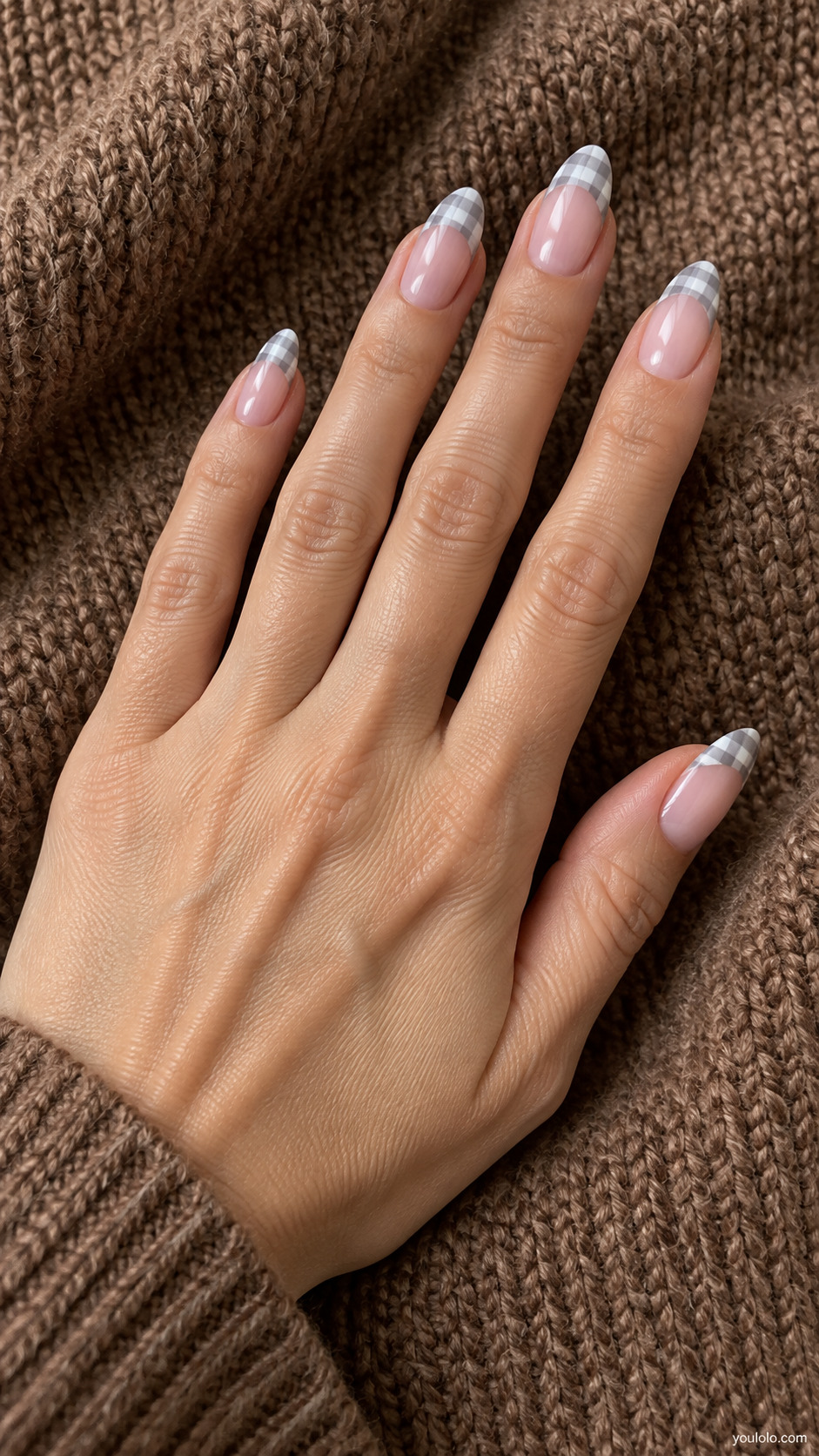
The checks become a border instead of covering the nail. The tip needs enough depth for the pattern to remain readable, so this works better with a little free edge. Avoid squeezing several tiny rows into an extremely narrow French line.
6. Diagonal Check Corner
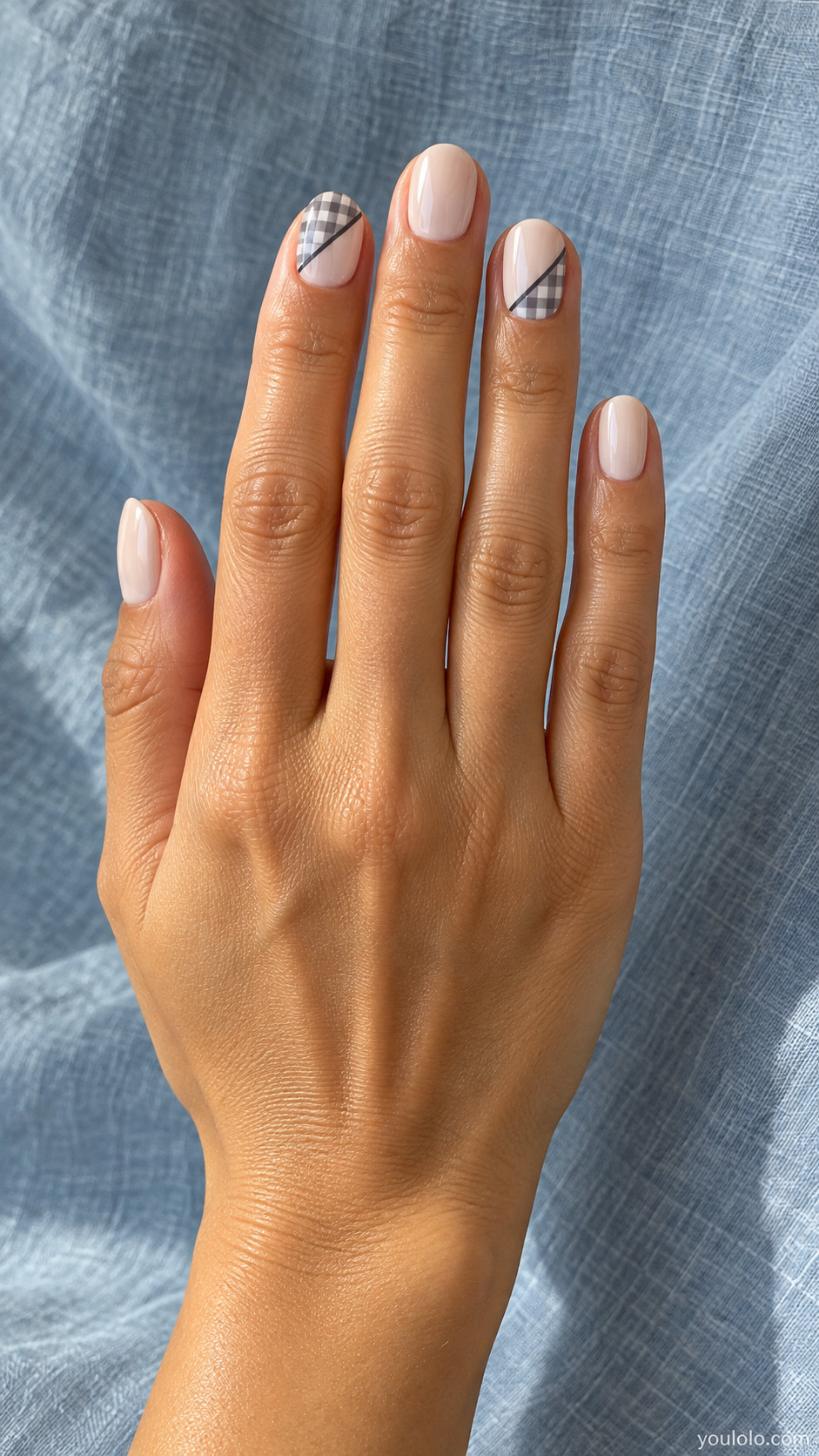
Putting the pattern at a diagonal makes the same palette feel more graphic. Keep the corner on the same side of both accent nails for a coordinated finish. The plain base gives the tiny grid room to stand out.
7. Pearl and Check Pairing
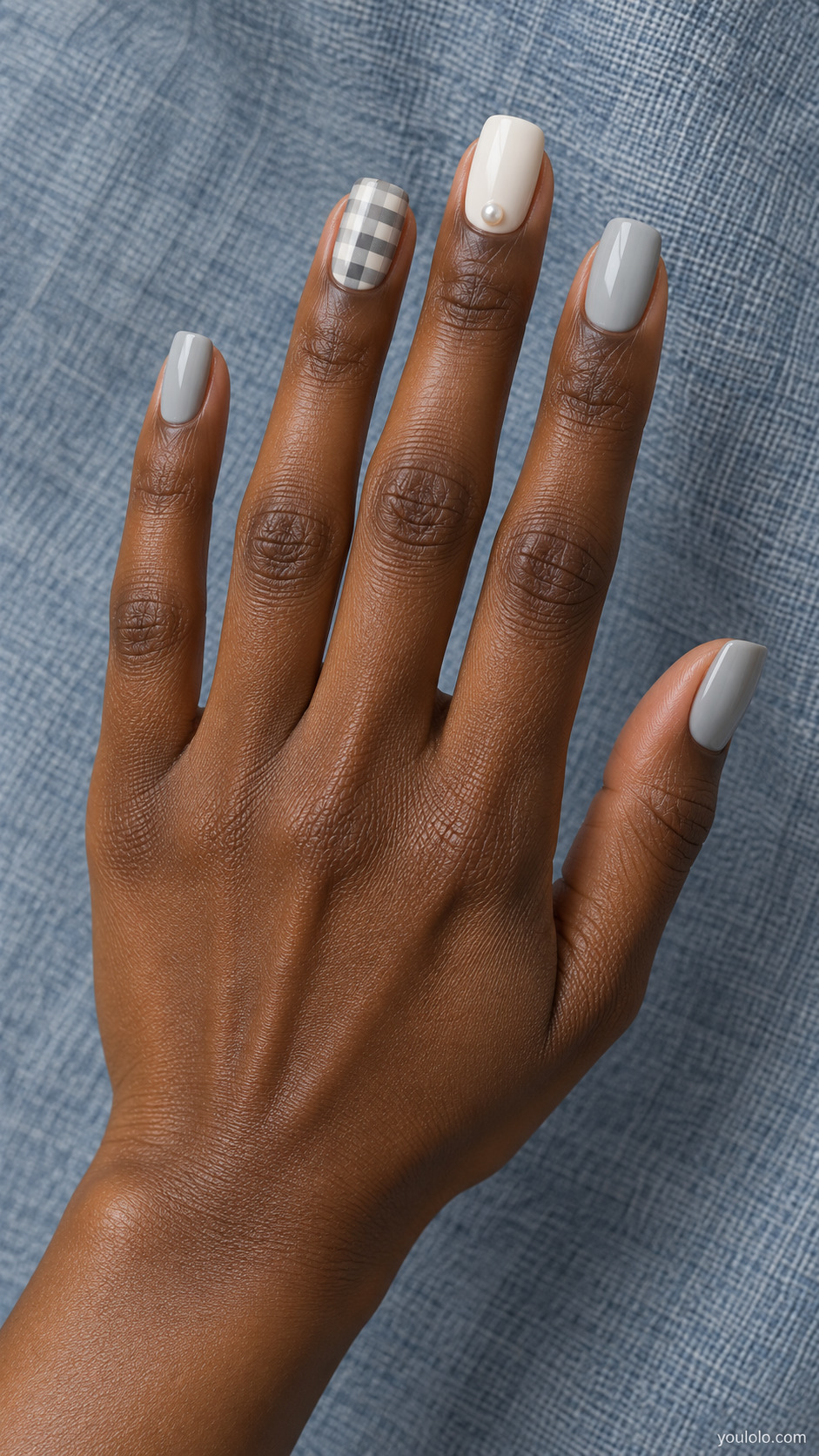
Separate the pearl from the checked nail so neither detail gets lost. One small pearl is enough to suggest the softer coquette mood. If you dislike raised pieces, a painted pearlescent dot can echo the look with less texture.
8. Charcoal Micro Gingham
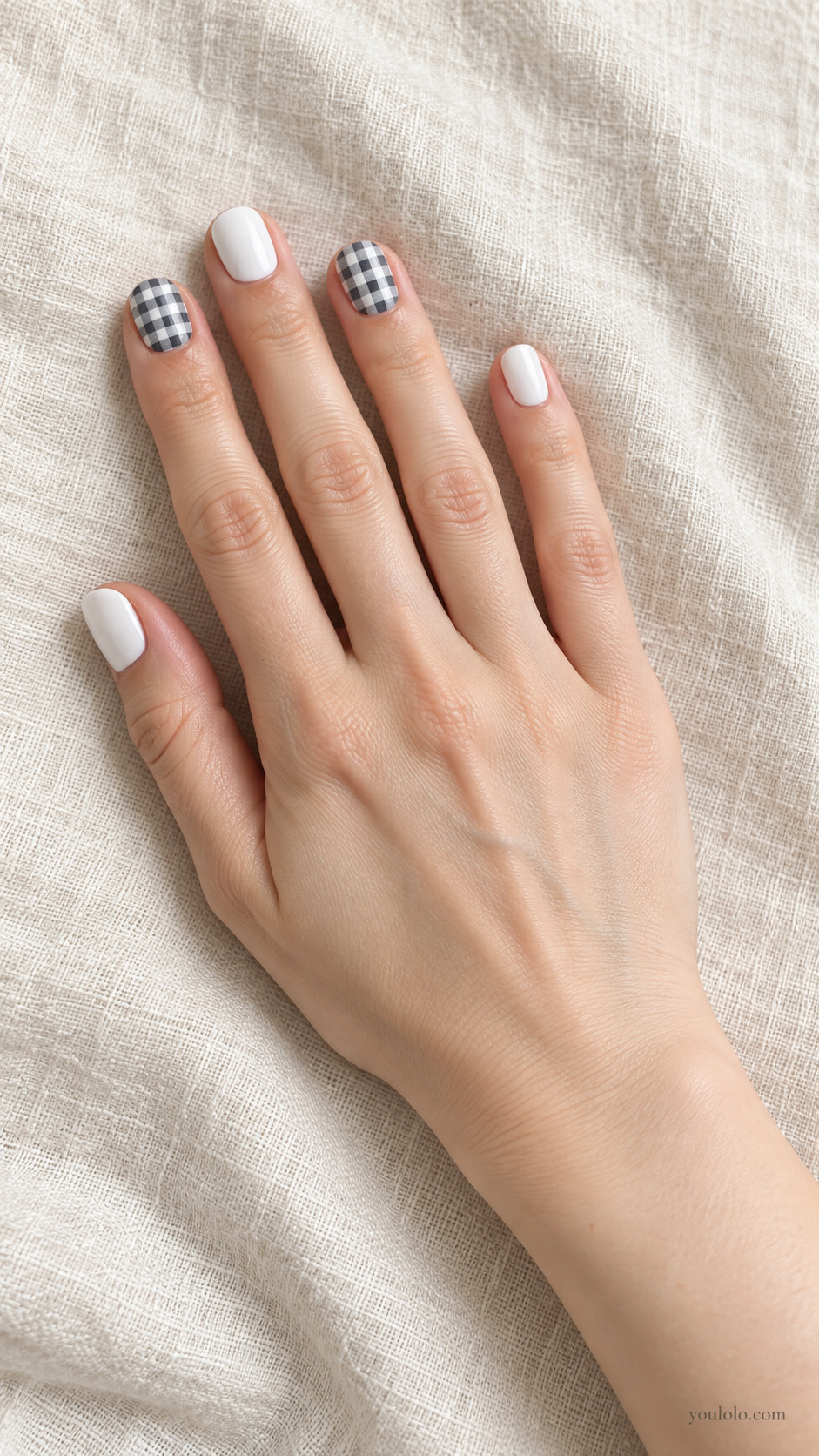
This version relies on sharper contrast rather than extra decoration. Ask for the smallest grid that your artist can paint cleanly at your chosen length. If the checks merge visually, enlarge them instead of adding more rows.
9. Oversized Soft Checks
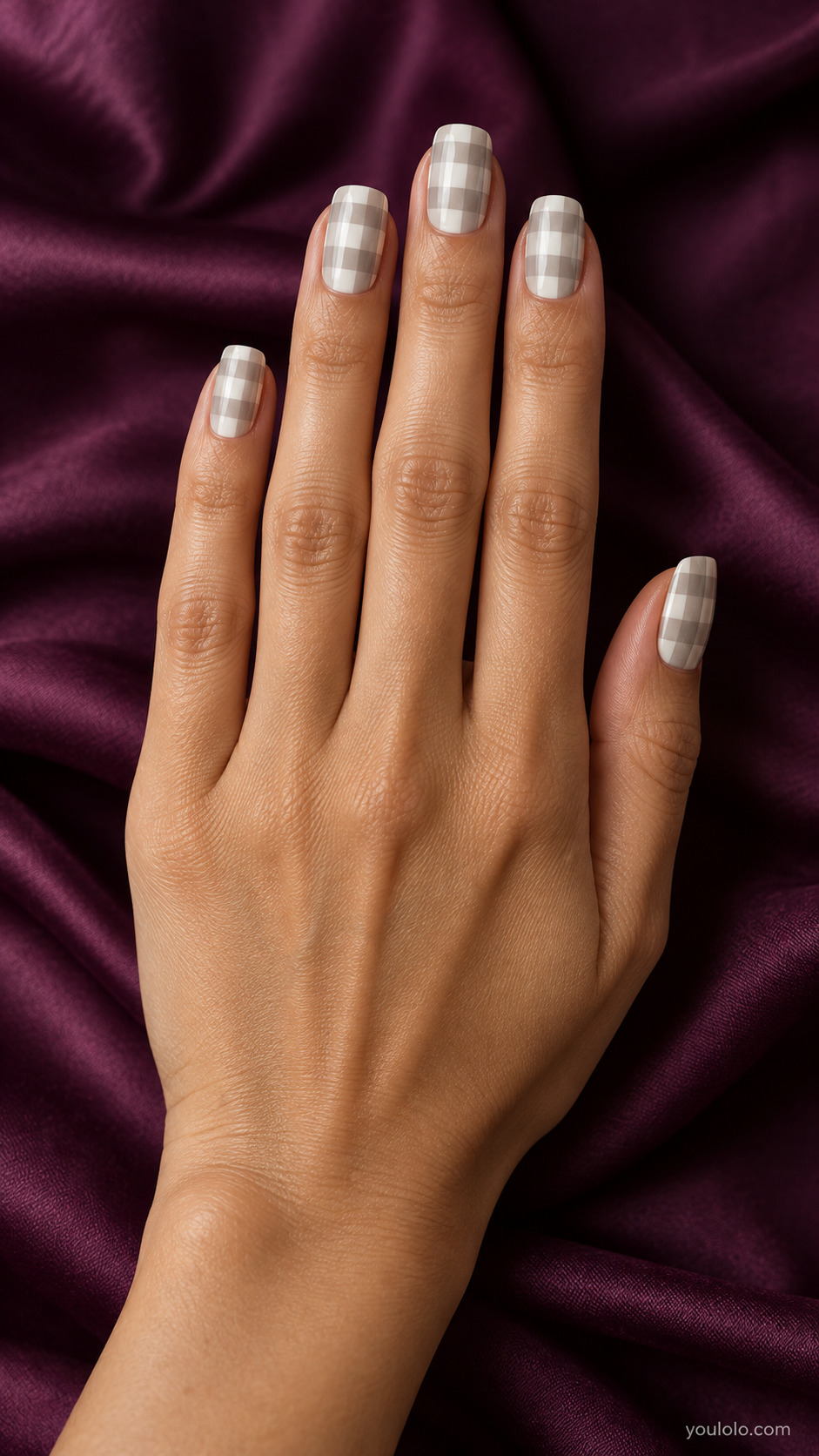
Oversized checks are intentionally softer and easier to read from a distance. The darker overlaps are what distinguish gingham from a plain checkerboard. Keep the bands equal in width so the pattern still feels like woven fabric.
10. Blush and Grey Half Nails
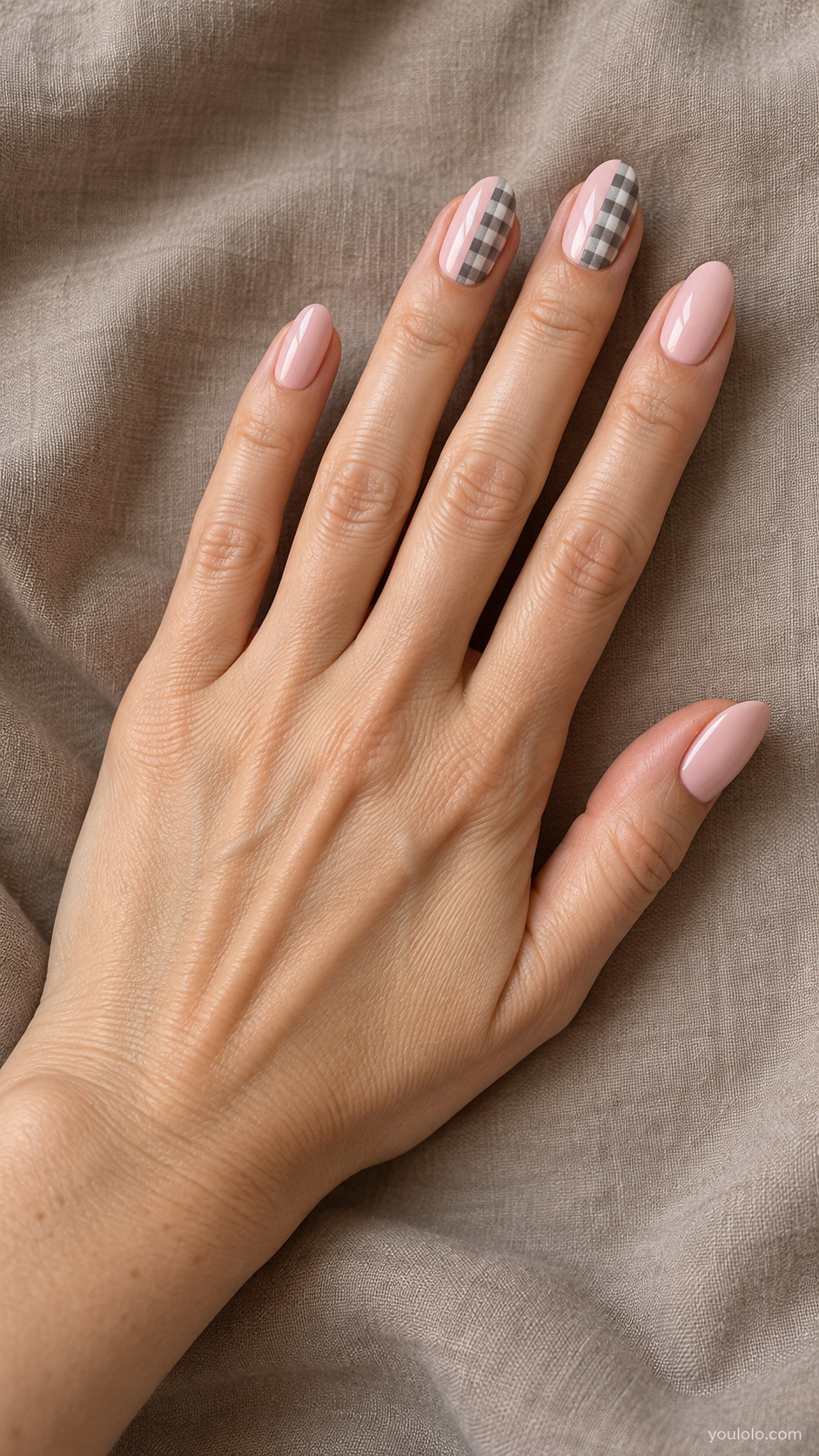
The blush section makes a gentle color block beside the grid. A clean vertical division matters more than metallic trim here. Choose a pale pink with similar lightness to the grey if you want both halves to feel balanced.
11. Scalloped Check Edge
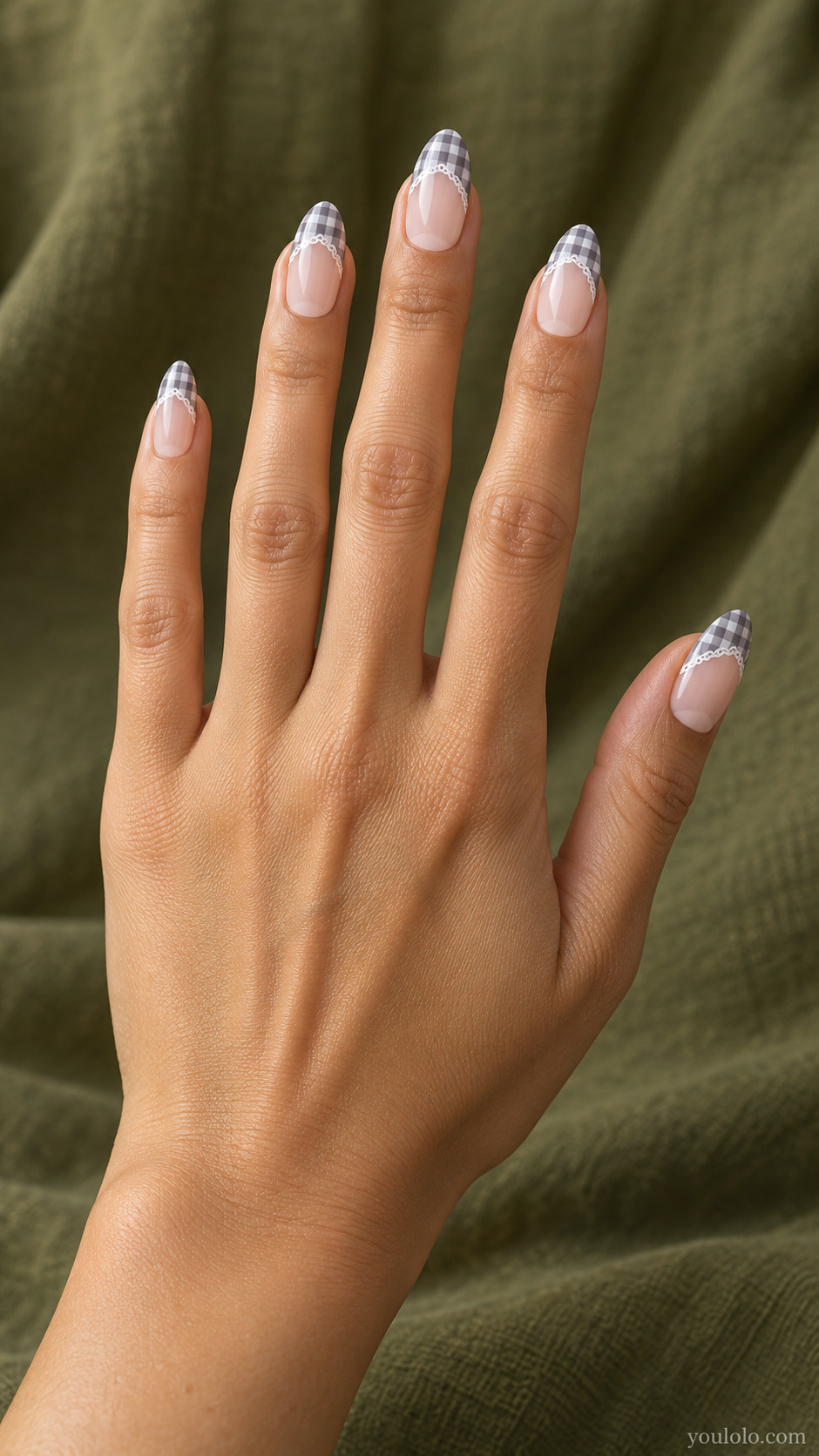
The scalloped edge adds a lace-like finish without drawing full lace. Keep each curve broad enough to remain visible beside the grid. This is a detailed option, so skip bows and hearts and let the edging do the decorative work.
12. Silver-Framed Gingham
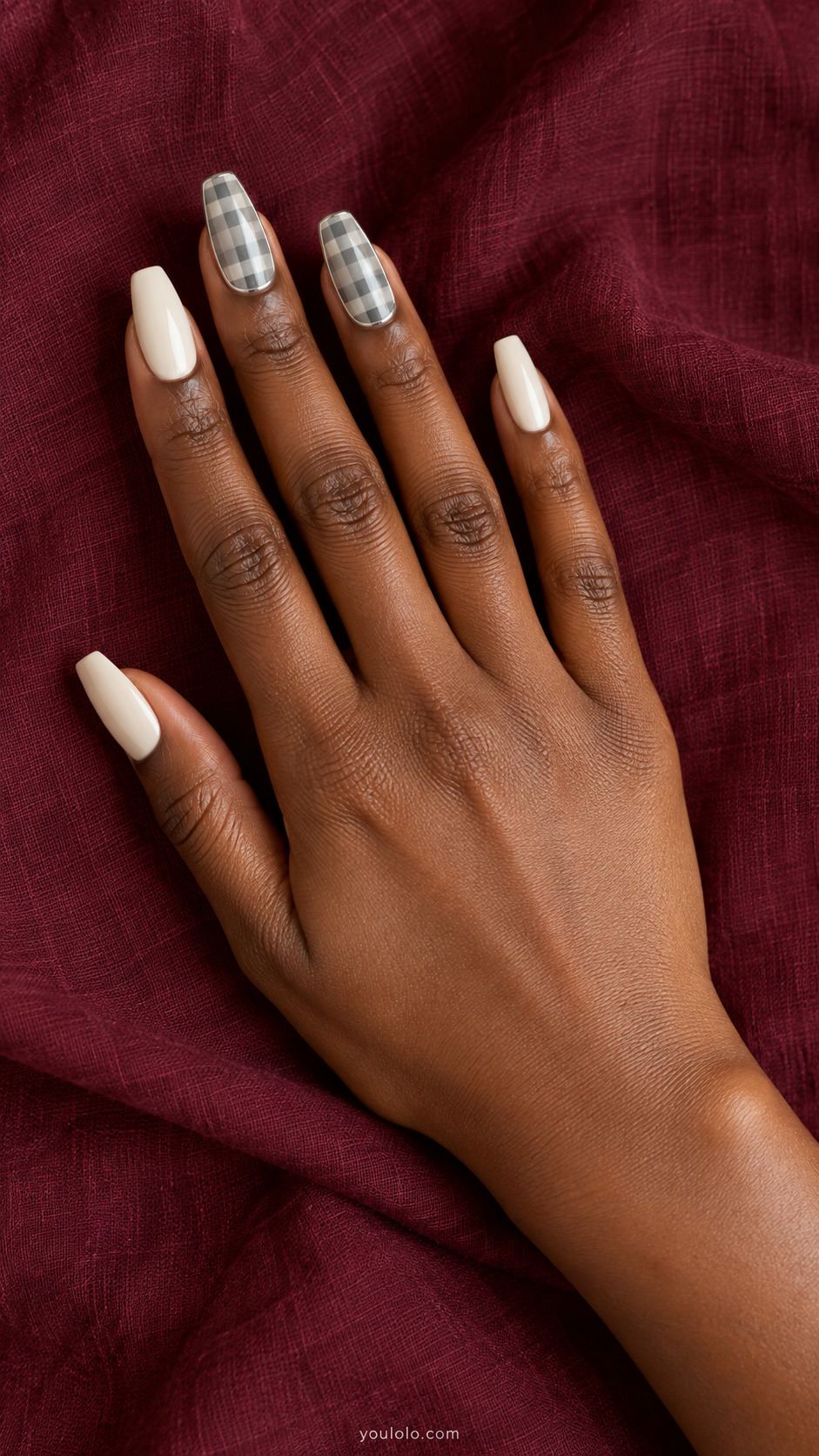
A thin silver border gives the checked accent a more tailored finish. Let the frame follow the nail outline and keep the metallic line narrow so the grid remains visible. Plain cream nails provide a quiet contrast beside the two framed accents.
13. Matte Grey Fabric Effect

The matte finish changes the fabric reference without adding another motif. Ask to see the checked pattern before the final finish so you can approve its contrast. Keep the surrounding nails a solid grey to emphasize the textile effect.
14. Negative Space Check Window
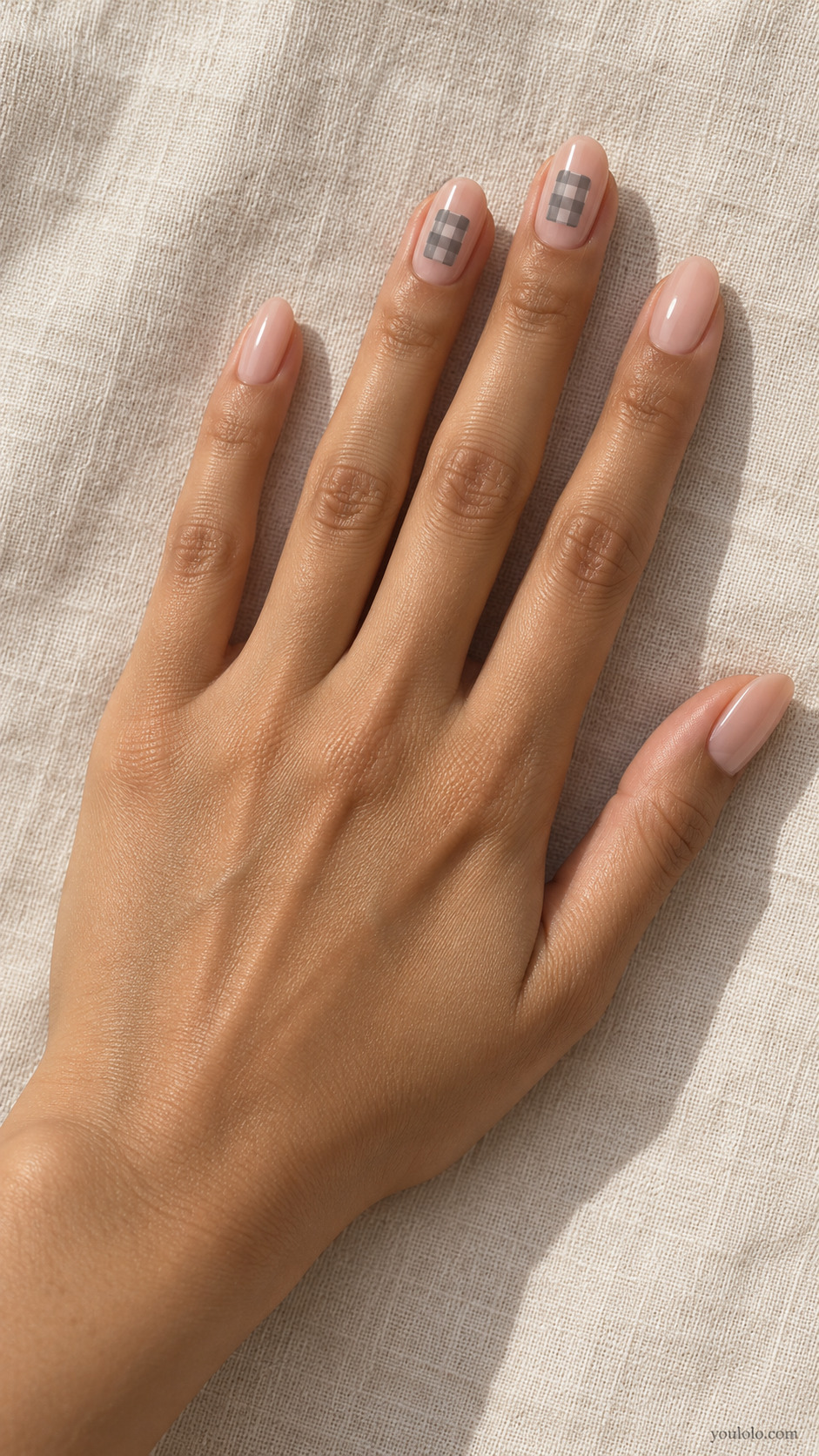
A small window is a good choice when you like the motif but not full coverage. The clear-looking border should be visible all around it. Place the windows at a consistent height rather than stretching them to fill every nail.
15. Grey Gingham Gift Wrap

The ribbon turns the grid into a gift-wrap detail. Use just one crossing ribbon so the design still reads as gingham. A flat painted bow keeps the decorative element integrated with the pattern rather than sitting high above it.
A simple salon brief for grey gingham nails
Save one layout and one color reference. Tell the artist whether you want full checks, a checked tip, or a small panel. Then choose the accent separately: a flat painted bow, a metallic heart, or a raised charm. Naming the layout first prevents the decorative details from taking over.
For the closest match to the soft grey reference, start with a cream base, two checked nails, and one small accent. For a cleaner version, keep the same checked nails and remove the charm. The design still has its identity because the gingham is doing the main work.
For another direction, explore our pink striped manicure ideas and compare the amount of pattern before choosing your next manicure.
Grey gingham nails: frequently asked questions
What is the difference between gingham and checkerboard nails?
Gingham imitates overlapping equal-width bands, with darker intersections and lighter squares between them. Checkerboard alternates two solid square colors. Both are geometric, but they are different patterns and should not be used as interchangeable labels.
Can grey gingham nails work on short nails?
Yes. Use a larger, simplified grid on one or two accent nails. A full checked accent often shows the pattern more clearly than squeezing several rows into a very shallow French tip.
Do bow nails need a raised charm?
No. A bow can be painted with fine lines, applied as a flat decal, or created as a raised decoration. Specify the version you want because they look and feel different.
Which colors go with grey gingham nails?
Milky white, cream, blush, and charcoal keep the palette restrained. Silver makes it cooler, while a small gold detail introduces warmth. Choose one metal if you want the set to feel coordinated.
References and design notes
The sources below document relevant patterns, colors, or techniques. The illustrations and individual combinations in this article are original interpretations; the sources do not establish that every pictured combination was recreated or wear-tested.

[…] another autumn direction, explore our grey gingham nails […]