
The Best Fluffy Pancakes recipe you will fall in love with. Full of tips and tricks to help you make the best pancakes.


The images in this collection are AI-generated visualizations of the described nail designs, not photographs of salon work.
Tortoise nails imitate the mottled amber-and-brown appearance of tortoiseshell accessories. The nail art uses color and pattern rather than real shell: translucent-looking warmth, irregular dark patches, and enough lighter space to keep those patches distinct.
These 21 ideas change where the pattern sits and what surrounds it. You can choose full coverage, an understated French tip, or one patterned accent. Each description includes a practical detail to discuss with your technician so the result stays clear rather than turning into an indistinct brown surface.
What Creates a Convincing Tortoiseshell Pattern?
Professional tutorials build depth with warm translucent-looking color and irregular darker marks. The patches should vary in size and placement instead of forming a repeated grid. Amber areas need to remain visible between them. This differs from leopard print, which commonly uses separate spots and broken outlines. A tortoiseshell design can be created with suitable gel or regular-polish methods; the products determine the application process.
Choosing Tortoise Nails for Your Length
Short nails can carry a full pattern if the dark patches stay proportionate. French tips need enough patterned space for both light and dark areas to show. On longer nails, larger panels and frames become possible. If you want a quieter result, use plain espresso, cream, or a sheer nude beside one tortoise accent rather than reducing every patch to an unreadably small dot.
21 Tortoise Nails Ideas to Save
1. Classic Amber Short Ovals
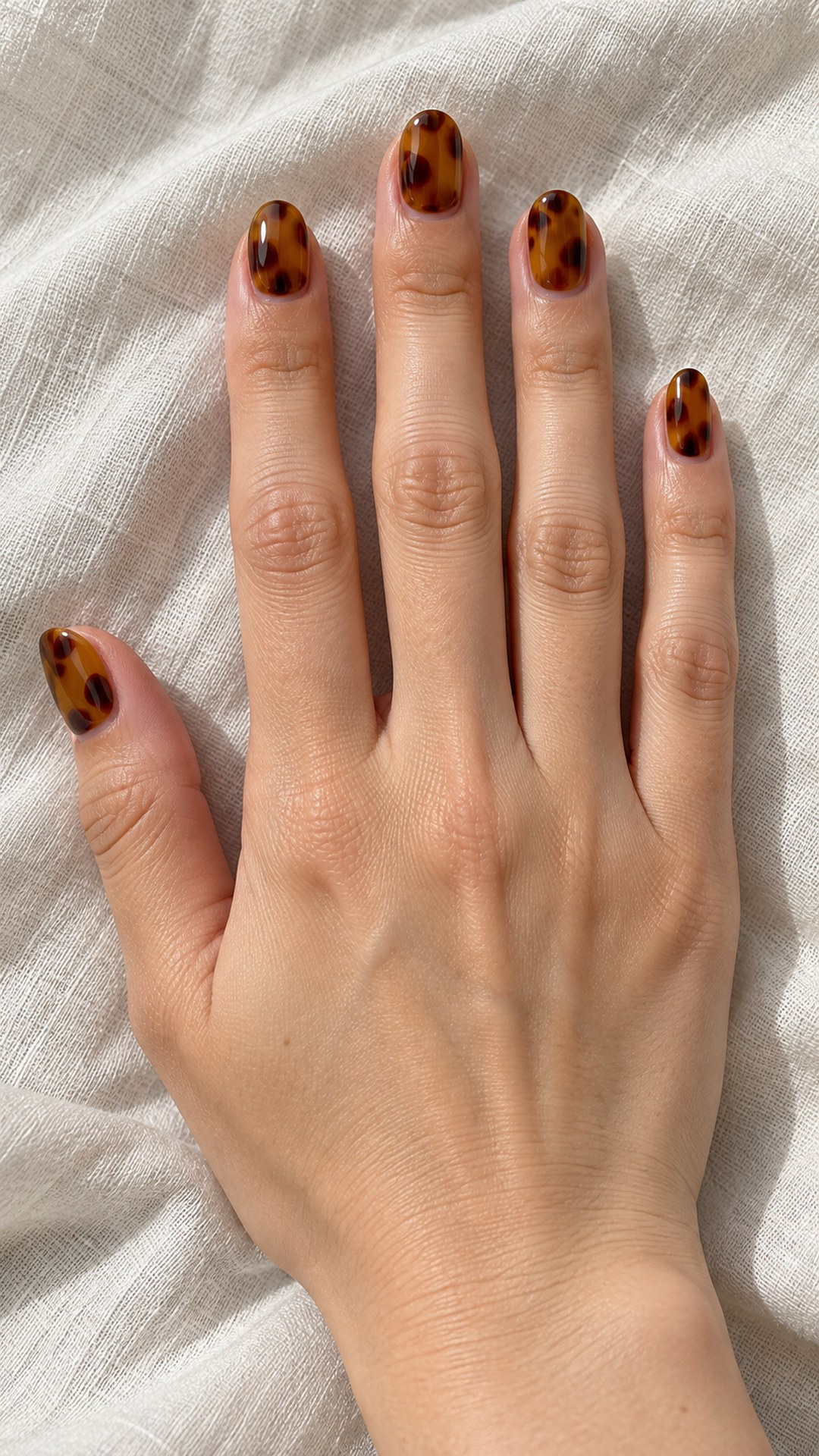
Warm amber and irregular dark-brown patches cover short oval nails. The rounded shape and complete pattern give this version the familiar tortoiseshell appearance without extra decoration.
Ask your nail artist: Keep lighter amber areas visible on every nail. A short surface needs fewer, smaller patches than a long one to avoid becoming an almost solid brown manicure.
2. Deep Espresso Tortoise Almonds
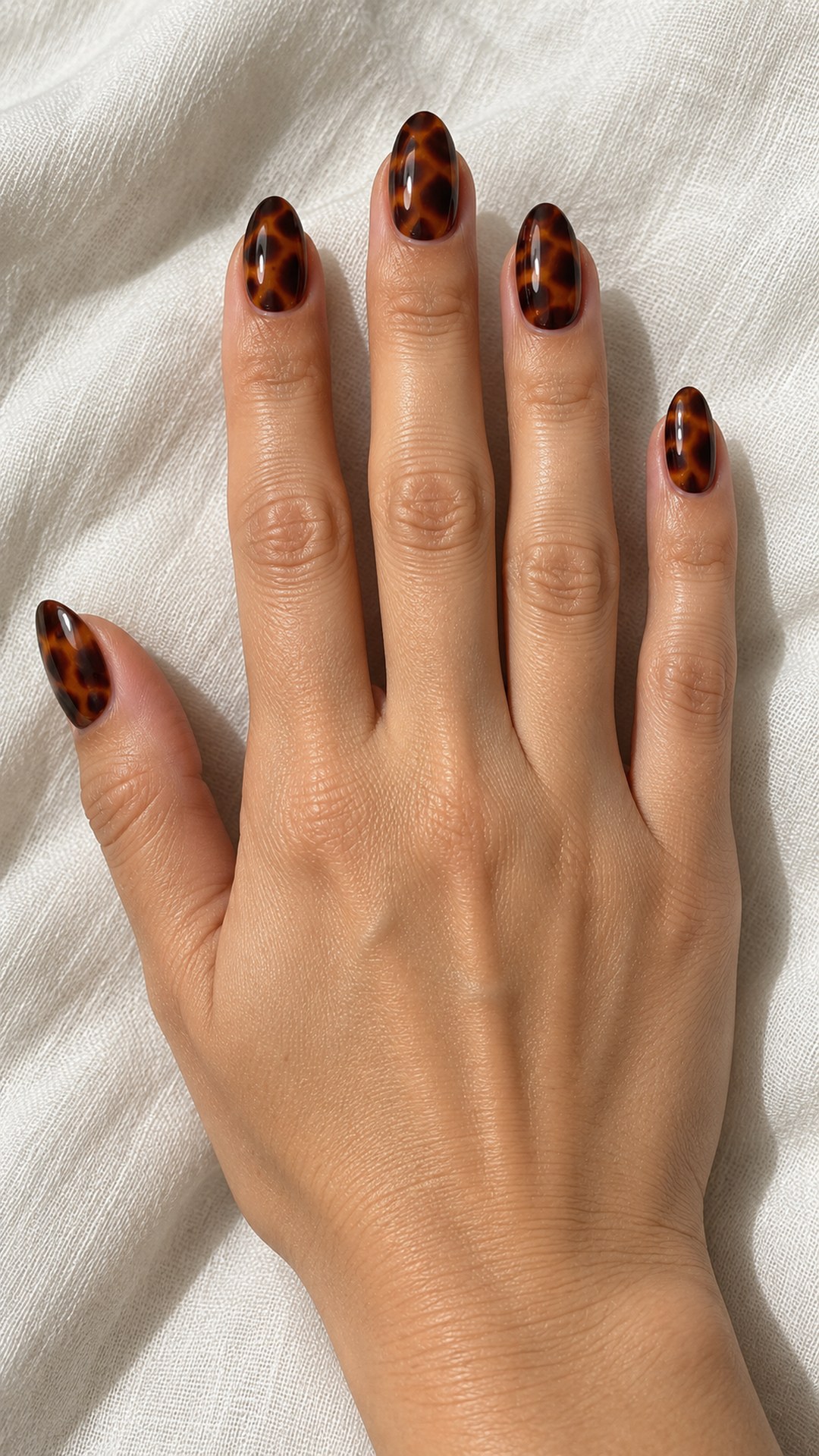
A deeper caramel base and espresso patches cover medium almond nails. The darker palette gives the classic mottling a richer appearance while retaining visible warm spaces.
Ask your nail artist: Ask for a reference swatch that still shows contrast in room light. If both the base and patches are too dark, the pattern can disappear outside bright lighting.
3. Honey Tortoise Squoval Nails
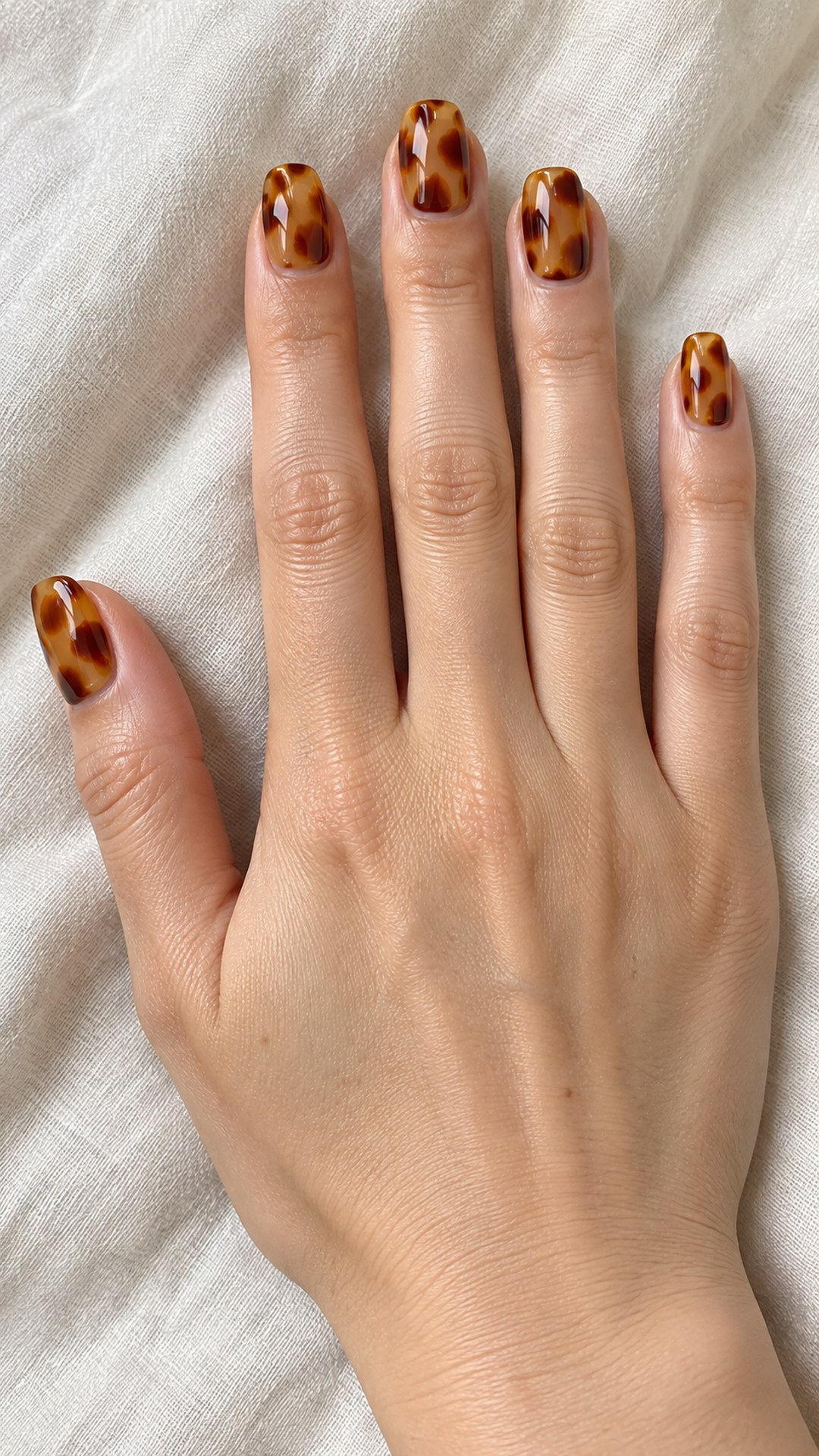
A honey-yellow amber base supports a lighter distribution of brown patches on soft square nails. The extra light space makes the pattern feel brighter than a dark espresso version.
Ask your nail artist: Request irregular marks rather than uniform dots. The defining feature is the warm layered-looking mottling, with enough variation to avoid resembling a polka-dot manicure.
4. Classic Tortoise French Tips
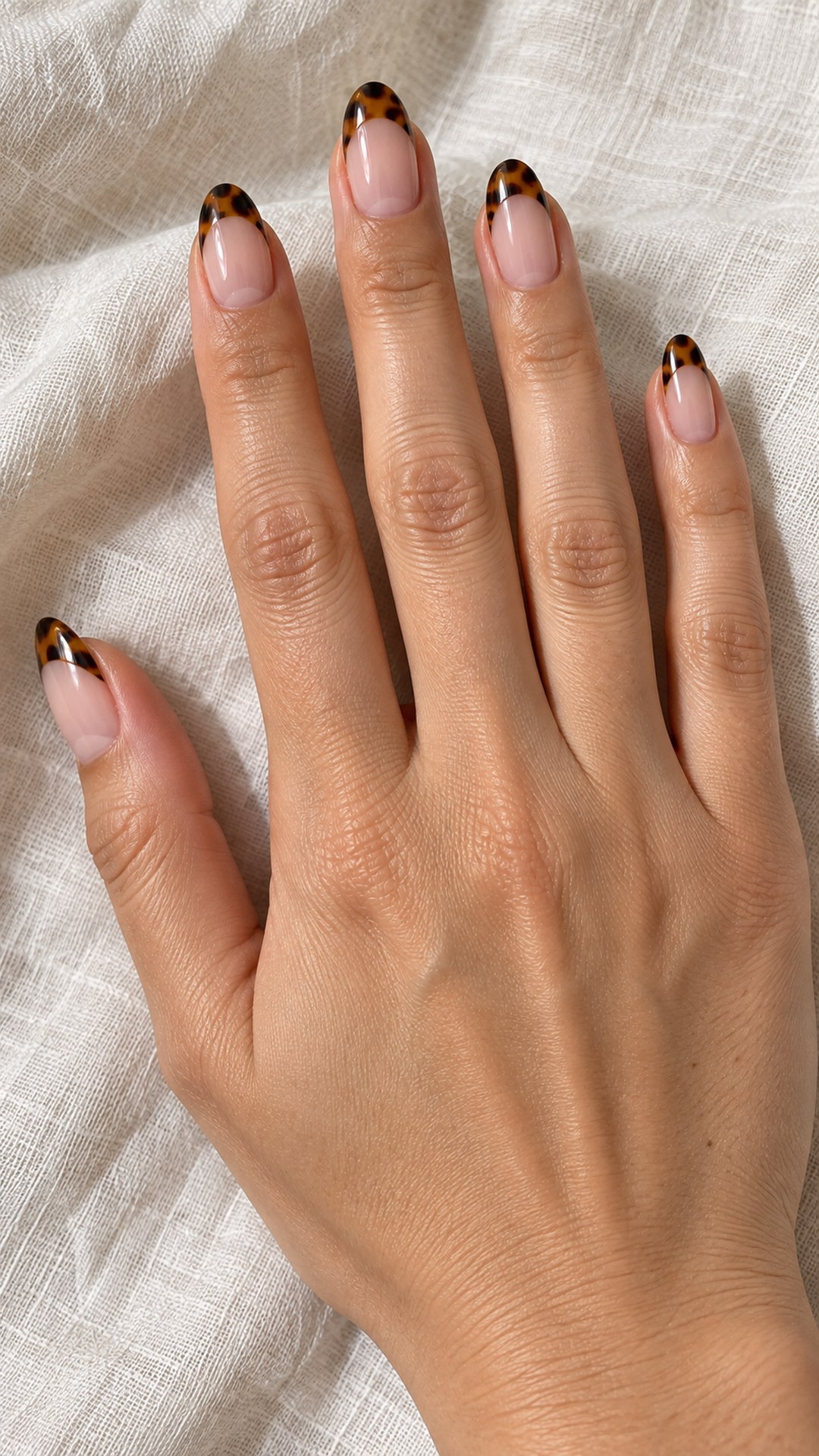
A sheer nude body leads into amber-and-brown French tips. Keeping the pattern at the edge gives a familiar French structure a warmer, more detailed finish.
Ask your nail artist: Use a tip deep enough for several light and dark areas. An extremely narrow edge may show only brown flecks rather than a recognizable tortoiseshell pattern.
5. Deep Tortoise French on Almonds
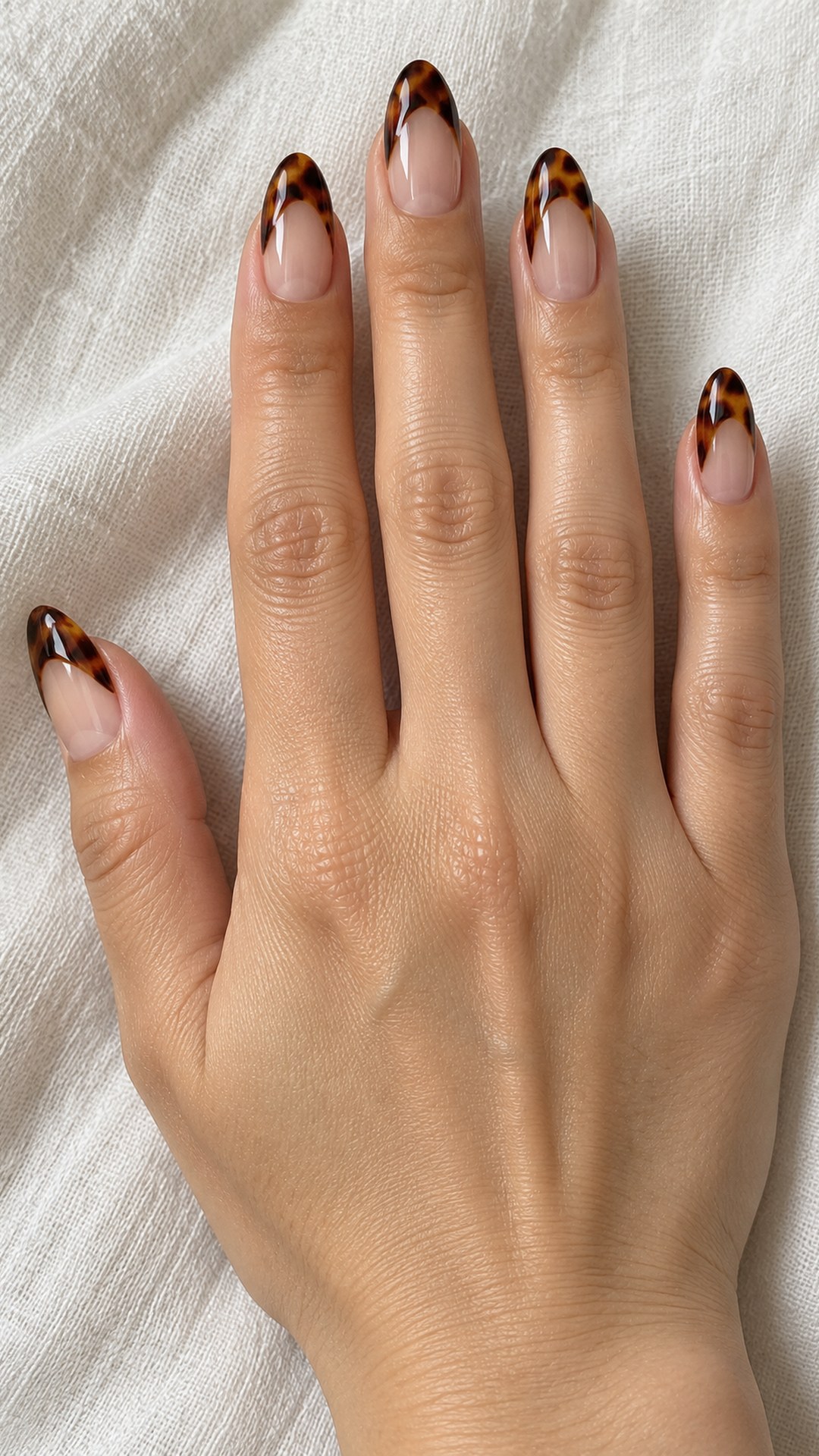
A broad tortoise smile line curves down the sides of medium almond nails. The larger patterned area lets the amber depth show while retaining a sheer center.
Ask your nail artist: Ask for matching visual proportions across the set. The pattern should remain irregular within each tip even when the French borders are neat and consistent.
6. Diagonal Tortoise Tips
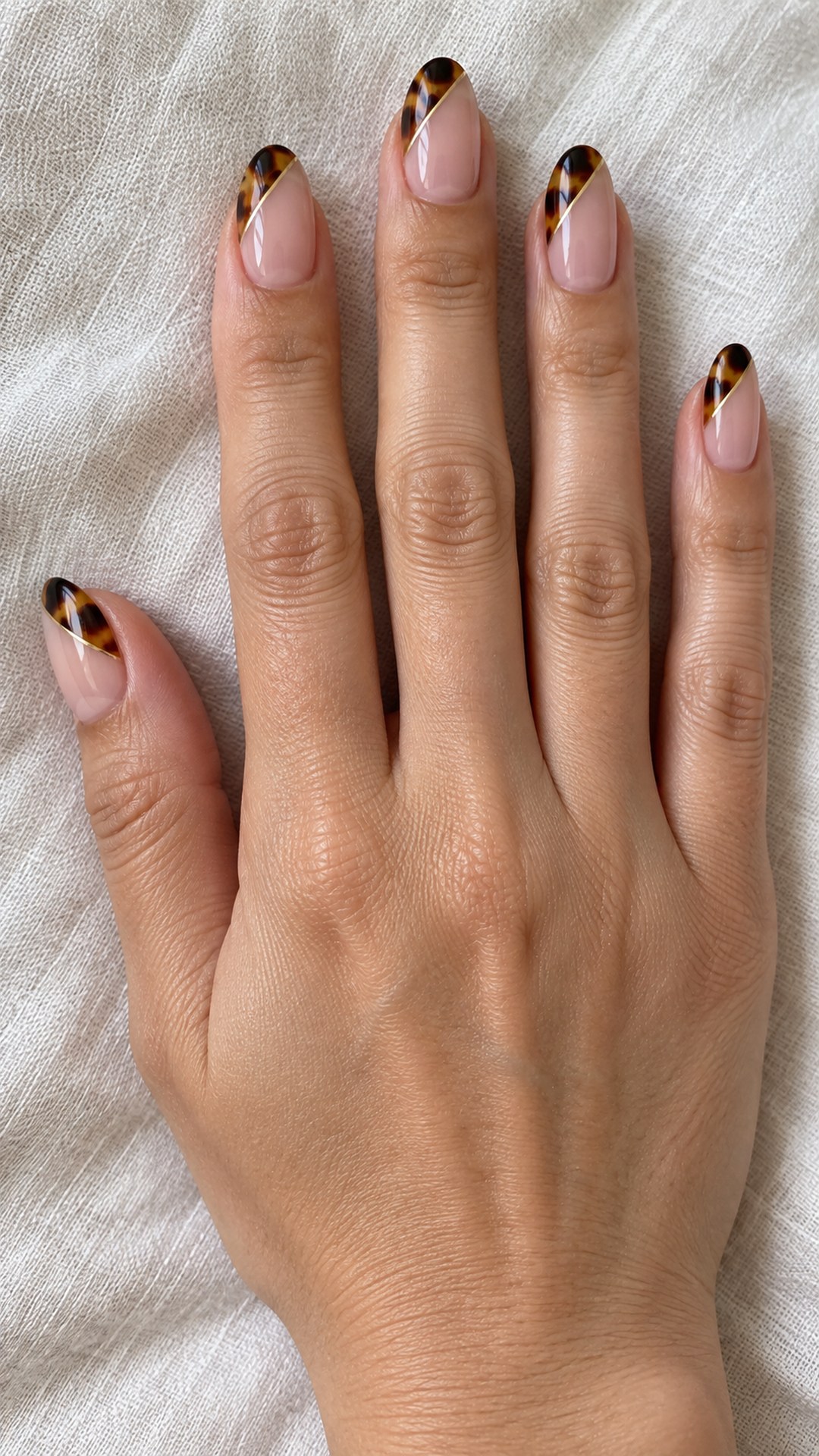
A slanted tortoise section crosses each nude nail tip. The diagonal border creates a more graphic layout than a curved French manicure.
Ask your nail artist: Keep the angle consistent across the hand and leave the rest of the nail simple. This gives the irregular pattern a clear boundary instead of letting it spread everywhere.
7. Tortoise French with a Black Hairline
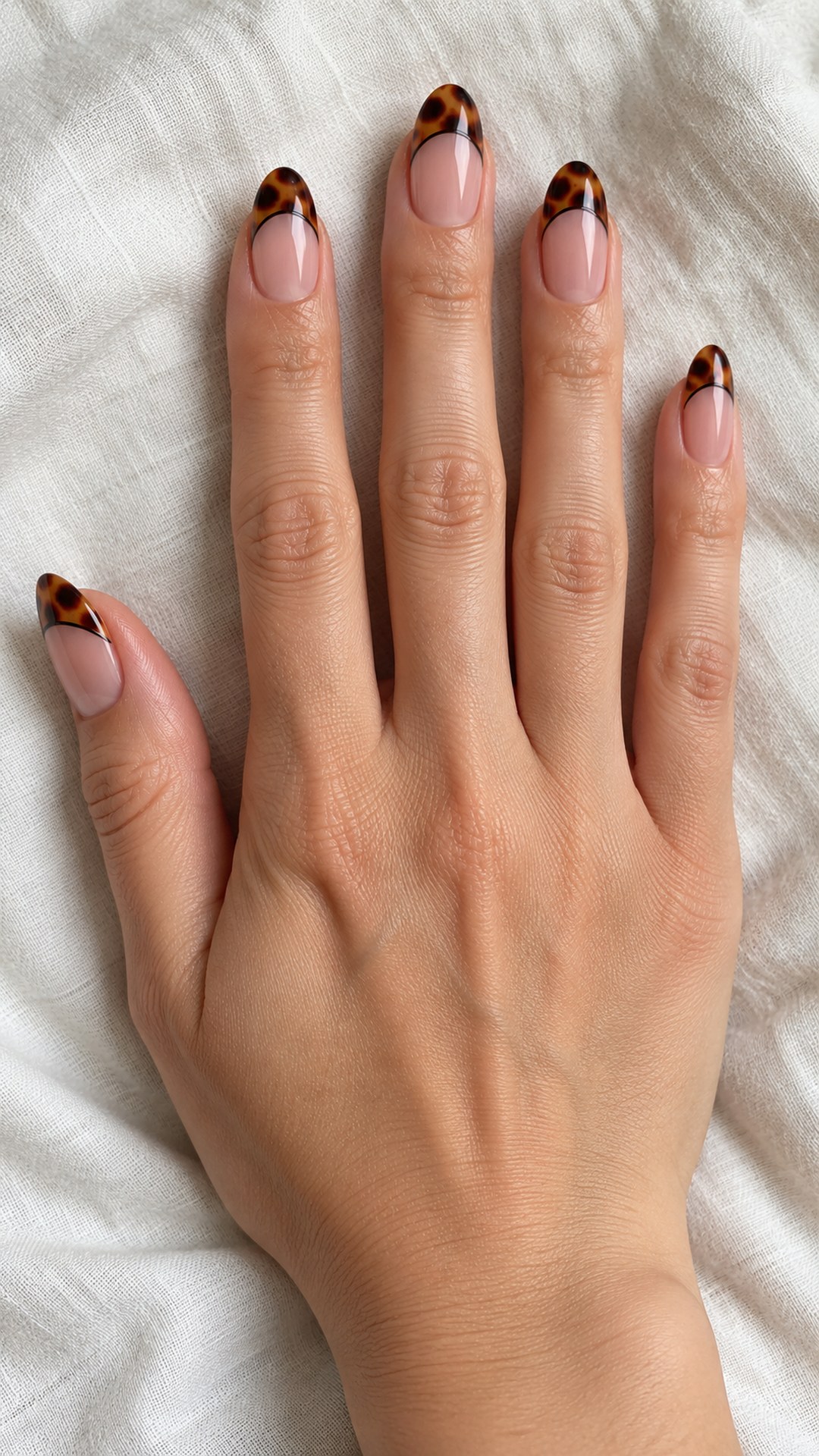
A slim black line separates patterned tortoise tips from a sheer pink base. The fine border gives the mottled color a sharp edge.
Ask your nail artist: Ask for a restrained outline rather than a thick black band. The tortoise area needs to remain large enough to show both its amber base and dark patches.
8. Tortoise Tips with a Gold Border

A fine gold curve traces the inner edge of an amber tortoise French tip. The metallic detail adds a warm accent without filling the patterned area.
Ask your nail artist: Keep the gold narrow and continuous. A delicate line frames the pattern more clearly than scattered foil placed across every dark and light patch.
9. Single Tortoise Accent with Espresso
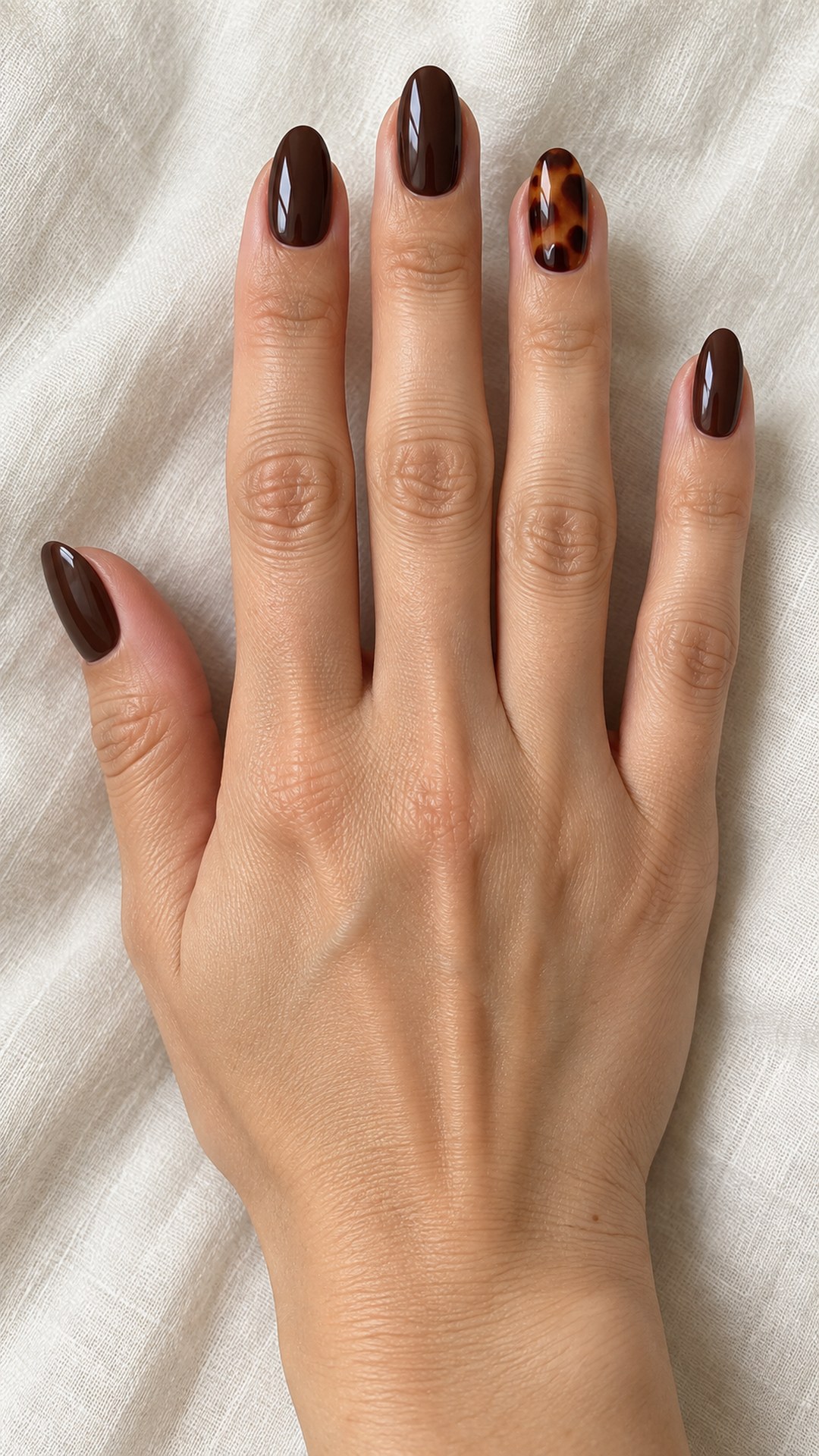
One tortoiseshell nail is paired with glossy espresso nails. The shared brown family makes the patterned accent feel integrated with an otherwise simple manicure.
Ask your nail artist: Choose an espresso shade that relates to the darkest patches. This arrangement works well if you like the tortoise effect but do not want it on every nail.
10. Tortoise and Milky Cream Alternation
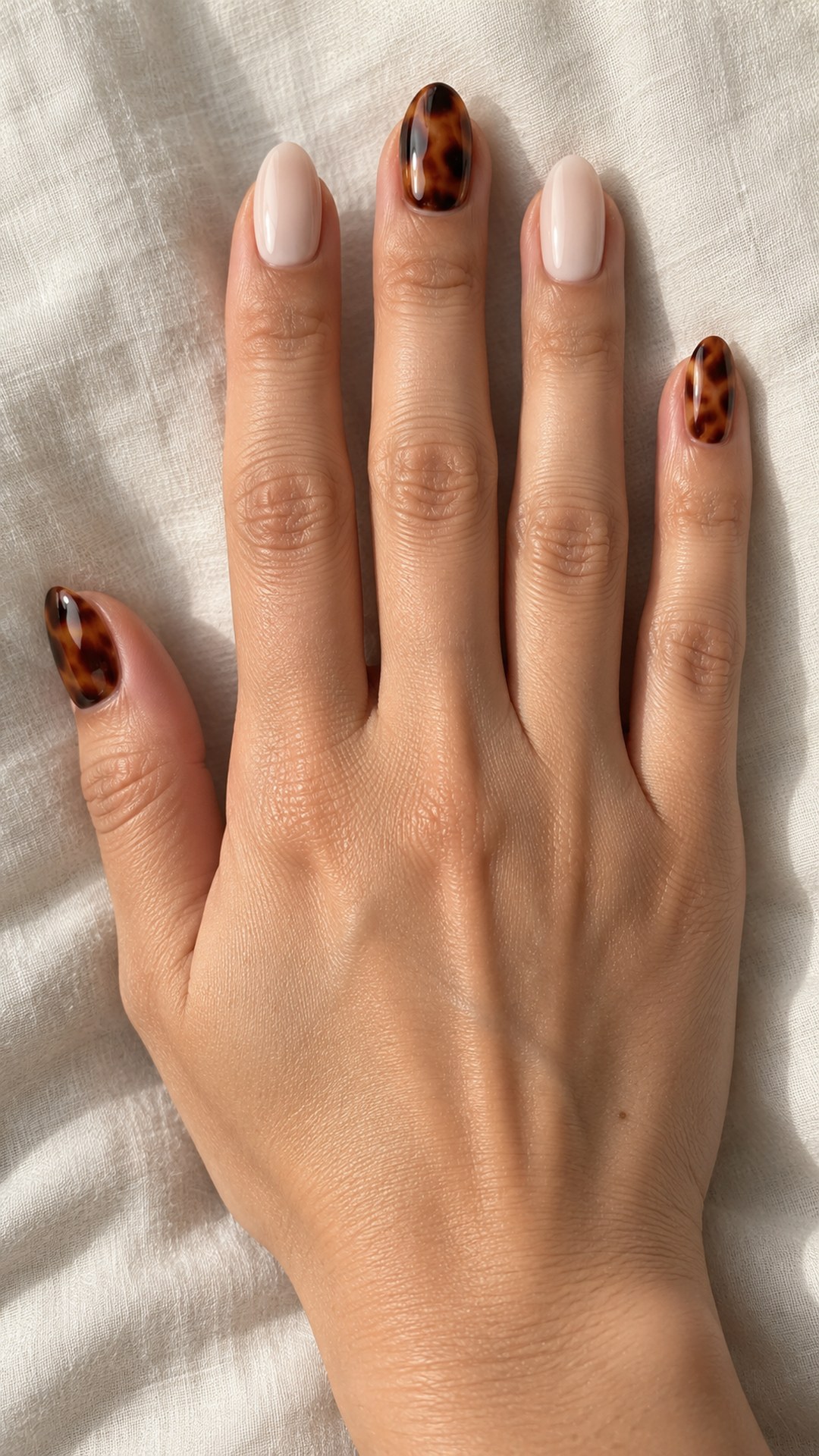
Full tortoise nails alternate with plain milky cream nails. The pale sections give the eye a rest and make the warm pattern stand out.
Ask your nail artist: Keep the cream nails free of extra motifs at first. Repeating only two finishes gives the set a clear rhythm and avoids competing focal points.
11. Olive Nails with Tortoise Accents
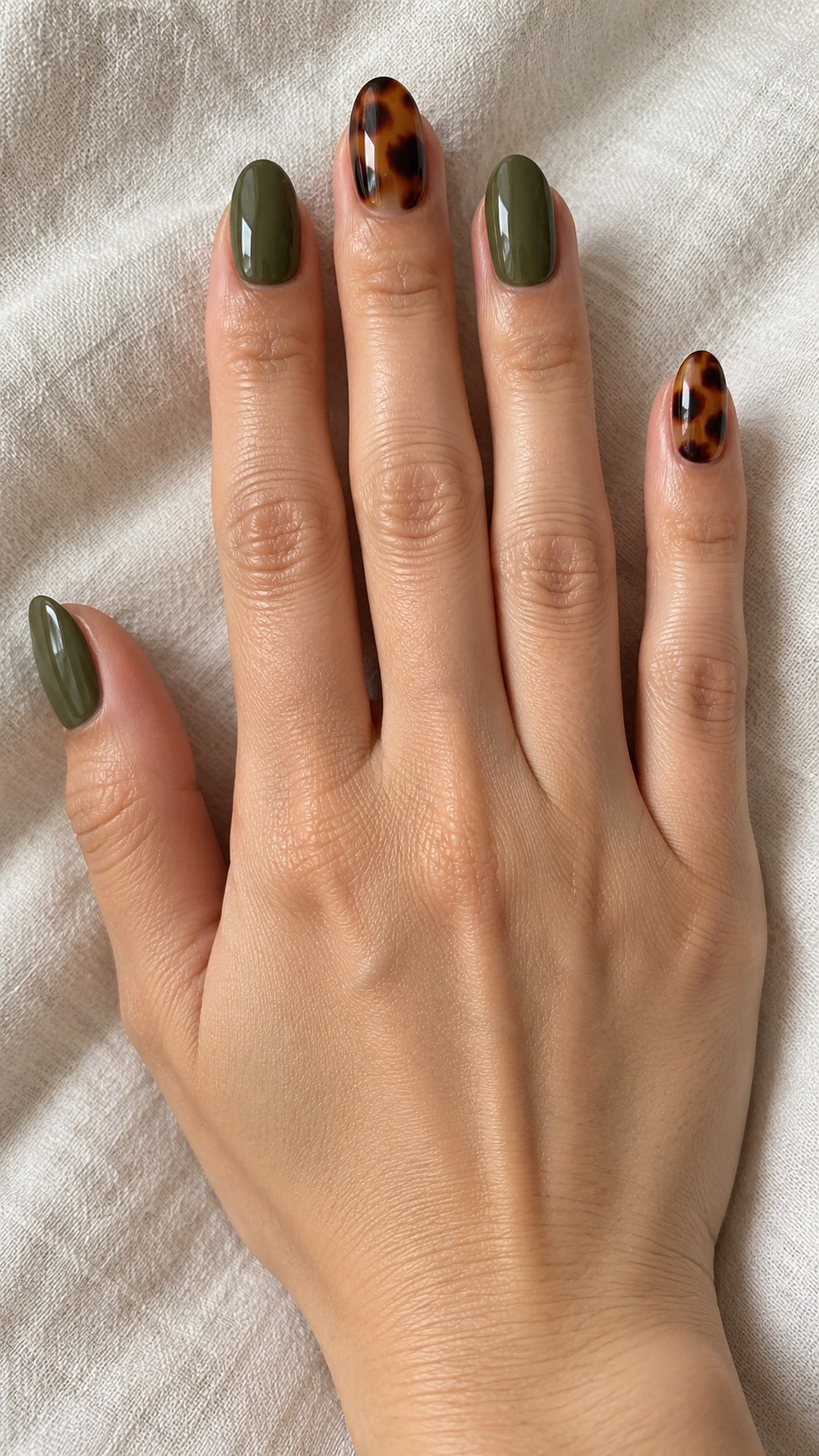
Muted olive nails are paired with two amber tortoise accents. The earthy green introduces a different color while staying compatible with the warm brown pattern.
Ask your nail artist: Select a subdued olive rather than a very bright green if you want a cohesive result. Keep the same nail shape across the set to connect the contrasting sections.
12. Navy and Tortoise Mix
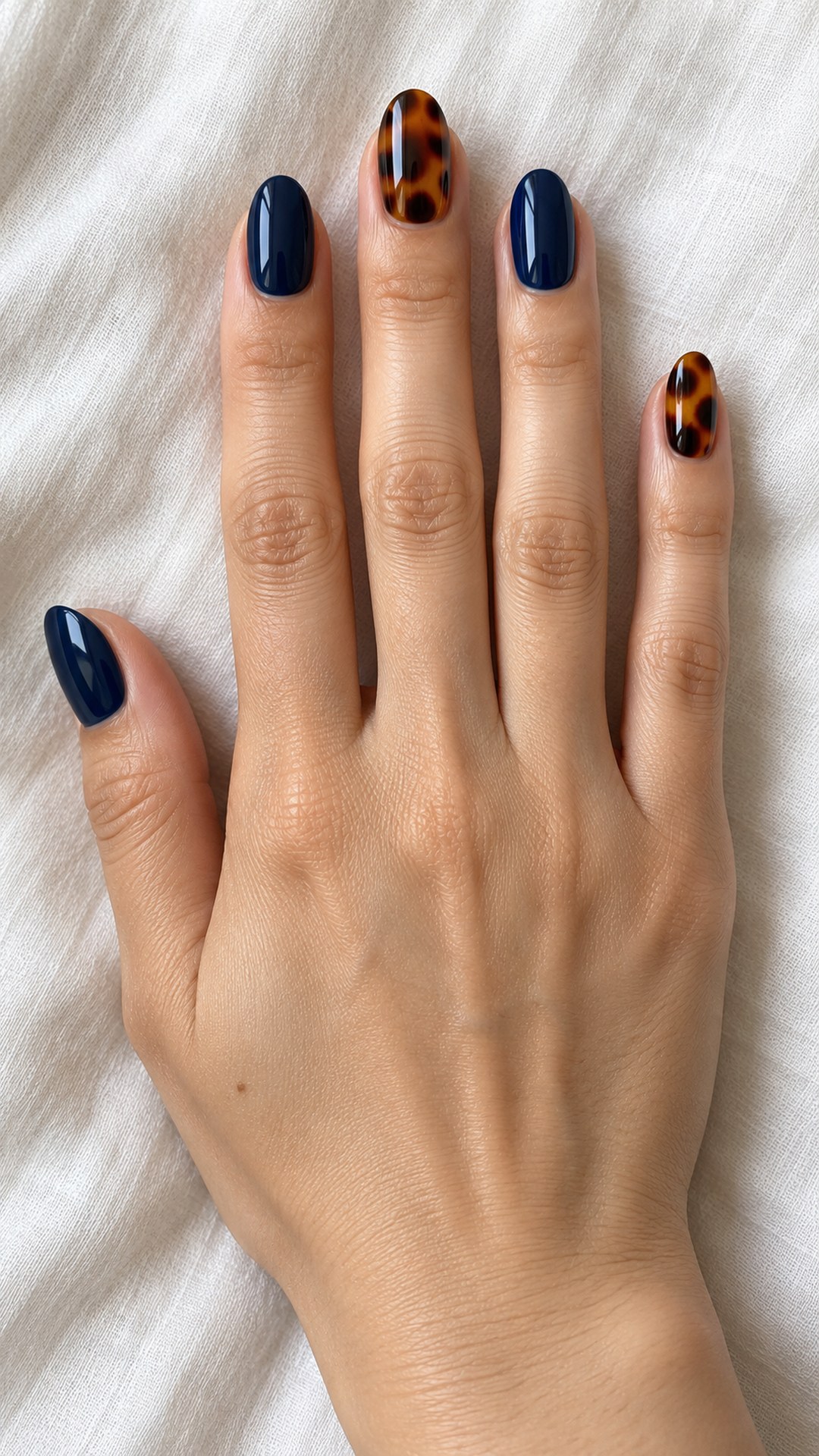
Glossy navy nails sit beside amber tortoiseshell accents. The cool dark blue contrasts with the warm pattern without requiring glitter or extra decoration.
Ask your nail artist: Check the navy beside the amber sample. A visibly blue shade creates more contrast than one that reads black in all but the strongest lighting.
13. Tortoise Half-Moon Detail

A small tortoise crescent sits near the base of a nude nail, paired with one fully patterned accent. The reversed placement gives the classic print a different structure.
Ask your nail artist: Make the crescent broad enough for a few irregular patches. A line that is too narrow may look like a plain brown border instead of a miniature pattern.
14. Tortoise Side Panels
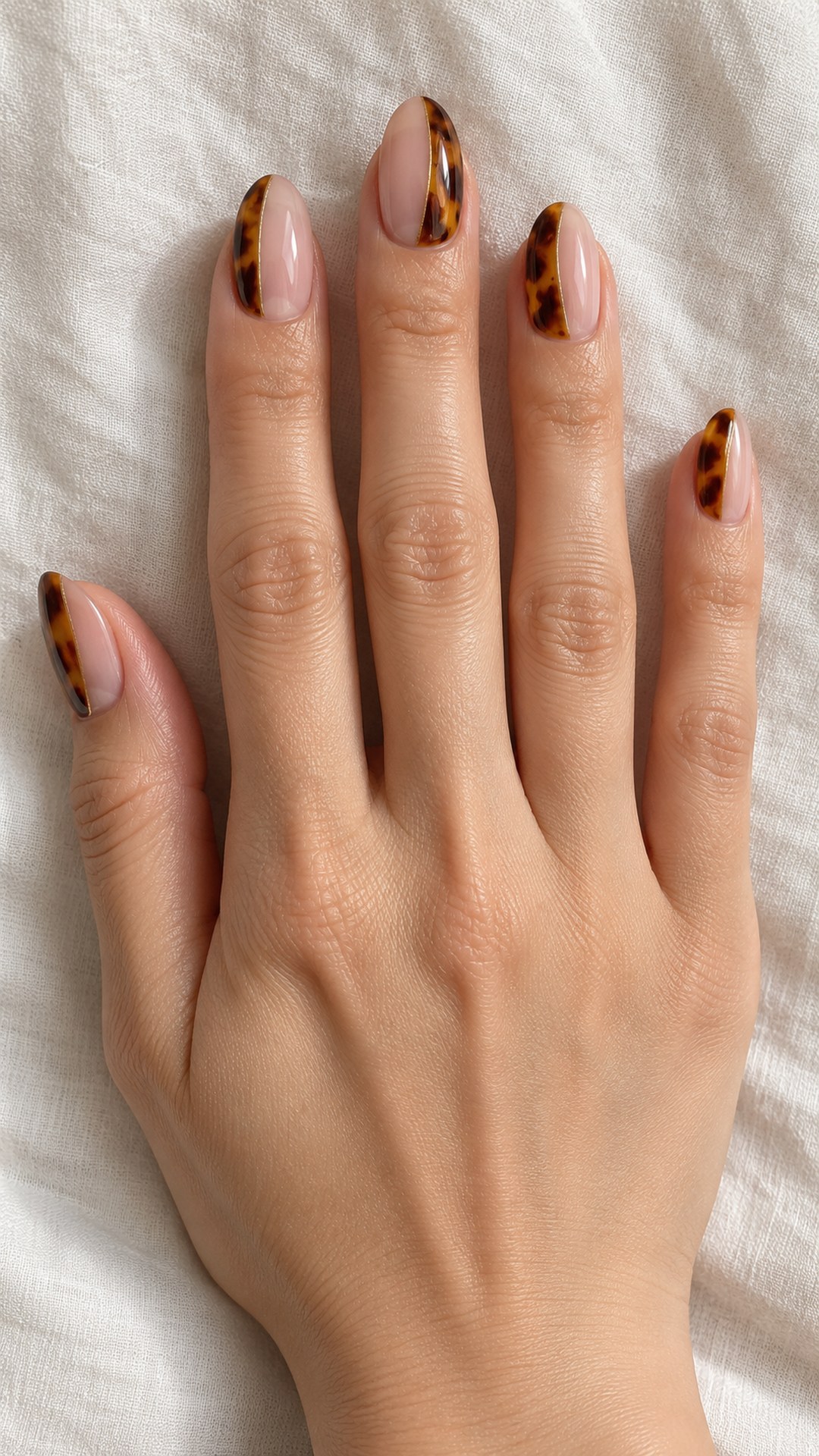
An amber tortoise panel follows one side of each sheer nail. The off-center placement gives the pattern a strong vertical shape while leaving open space beside it.
Ask your nail artist: Ask for a clean outside boundary and varied patches within the panel. The contrast between geometric placement and organic mottling is the point of this design.
15. Central Tortoise Stripe
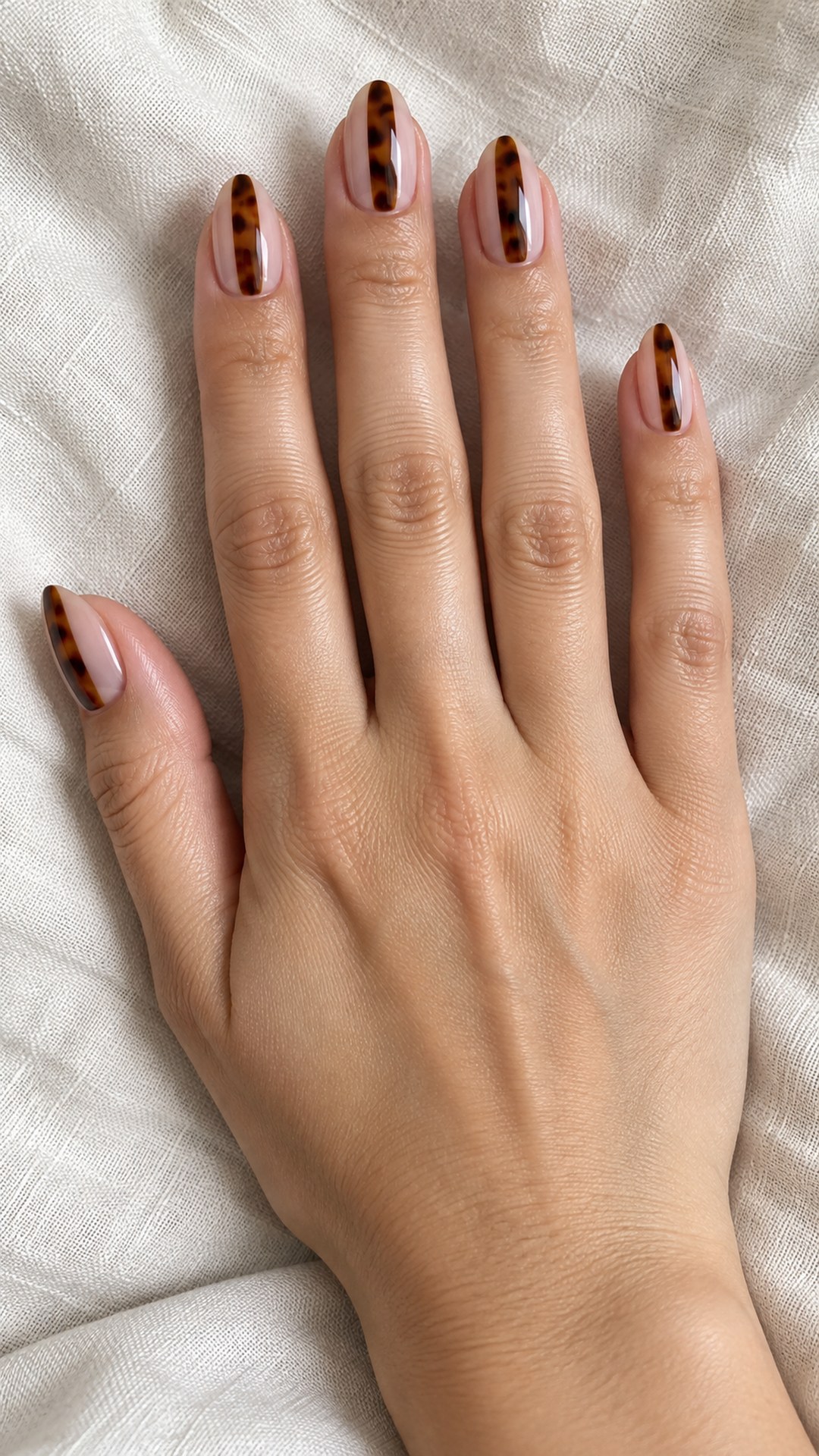
A vertical tortoiseshell stripe runs through the center of a milky nude nail. The surrounding pale area turns the pattern into a contained graphic detail.
Ask your nail artist: Use a stripe wide enough to include both amber and brown. A very thin stripe can lose the mottling and simply read as a dark line.
16. Tortoise Frame with a Sheer Center
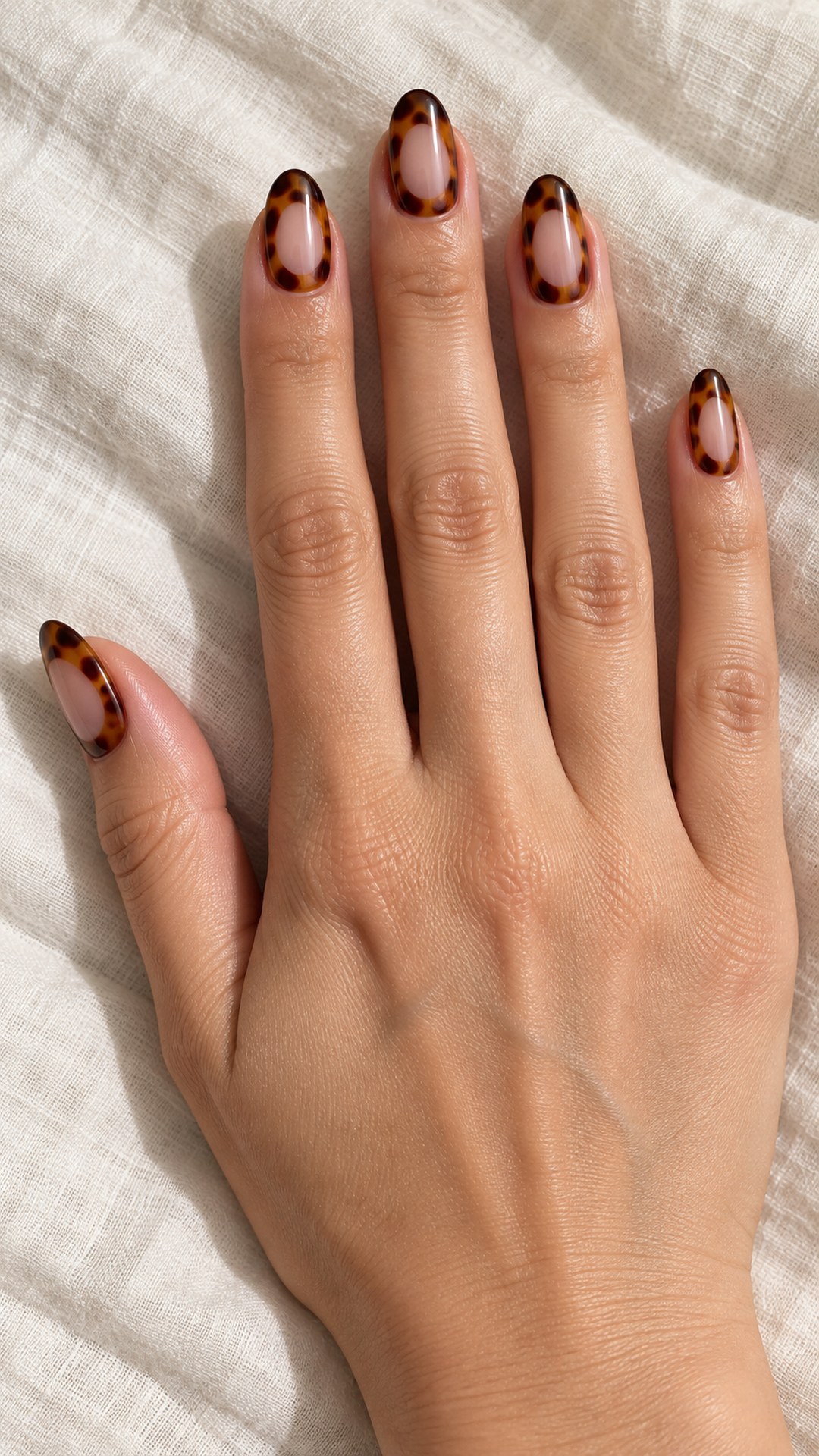
A tortoiseshell border surrounds a clear-looking nude oval in the middle of a medium-length nail. The open center makes the full perimeter pattern feel lighter.
Ask your nail artist: Keep the frame reasonably broad and the central window simple. This design needs more space than a short micro French if the pattern is to remain recognizable.
17. Tortoise Heart Accent
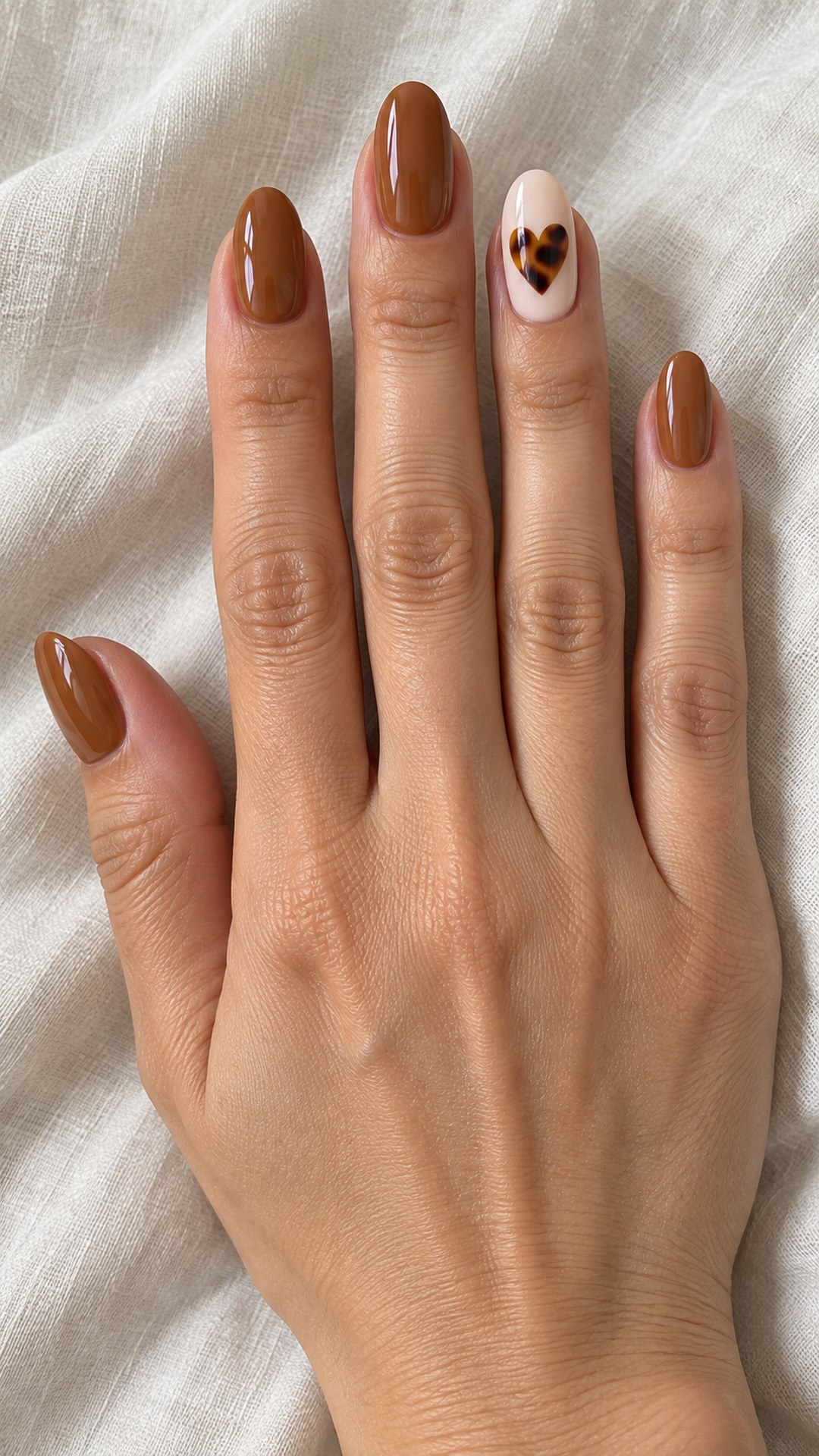
A flat tortoiseshell heart sits on a cream accent nail beside plain caramel nails. The familiar heart silhouette contains the warm mottled print.
Ask your nail artist: Use one medium-sized heart rather than several tiny ones. The shape needs room for amber gaps and darker marks, otherwise the internal pattern becomes hard to distinguish.
18. Tortoise and Black Split Nails
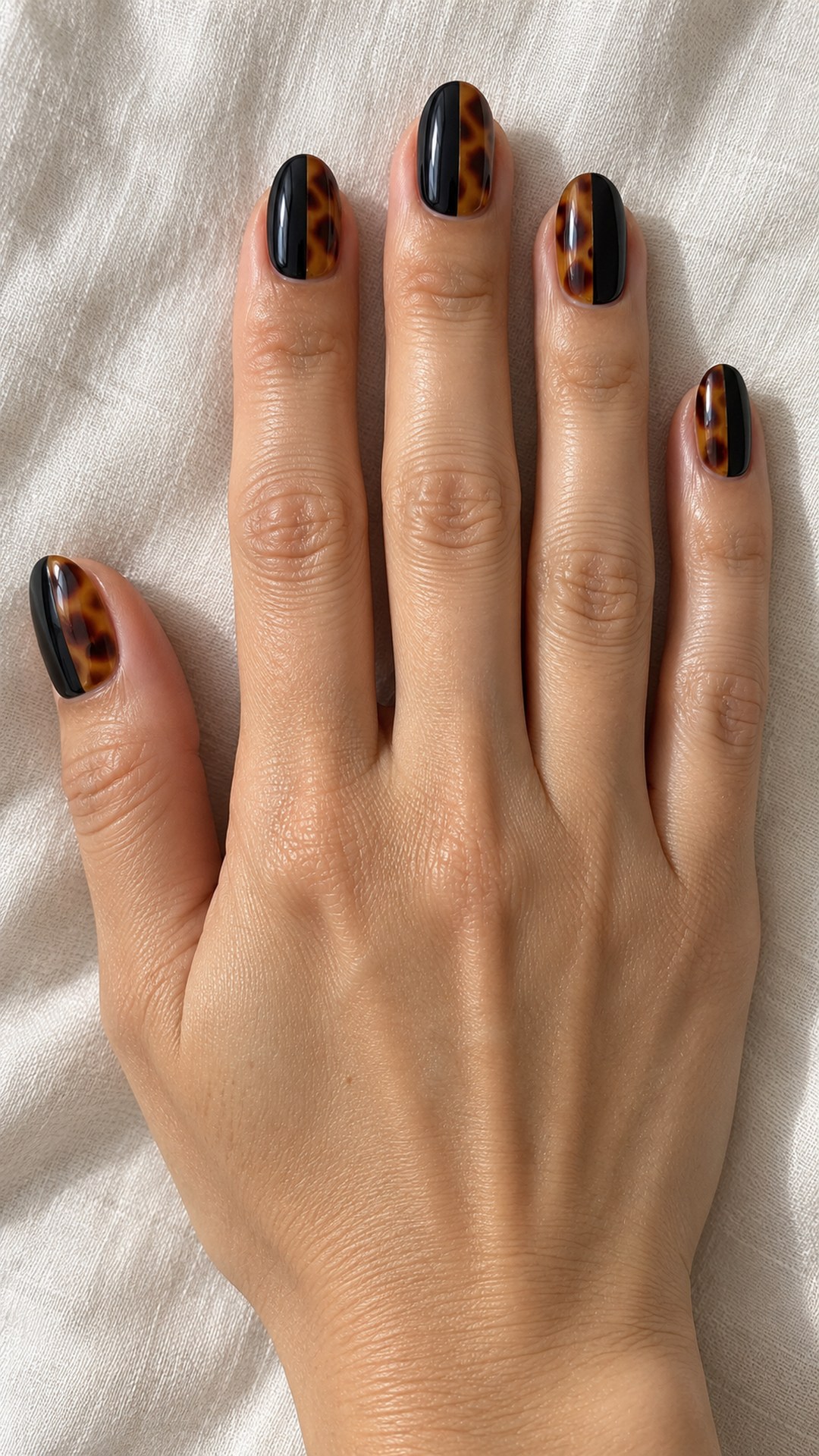
Each nail is divided into a solid black section and a tortoiseshell section. The straight division creates a bold contrast with the irregular print.
Ask your nail artist: Agree on the split placement before application. A consistent vertical or diagonal division keeps the set coherent without requiring the patches themselves to match from nail to nail.
19. Tortoise Tips with Nude Polka-Dot Accents

Most nails have tortoise French tips, while one nude accent carries small espresso dots. The two patterns share a palette but remain clearly separated.
Ask your nail artist: Keep the dotted nail simple and the tortoise tips consistent. Separating the patterns onto different nails is easier to read than layering dots over already mottled sections.
20. Tortoise with Sparse Gold Flecks
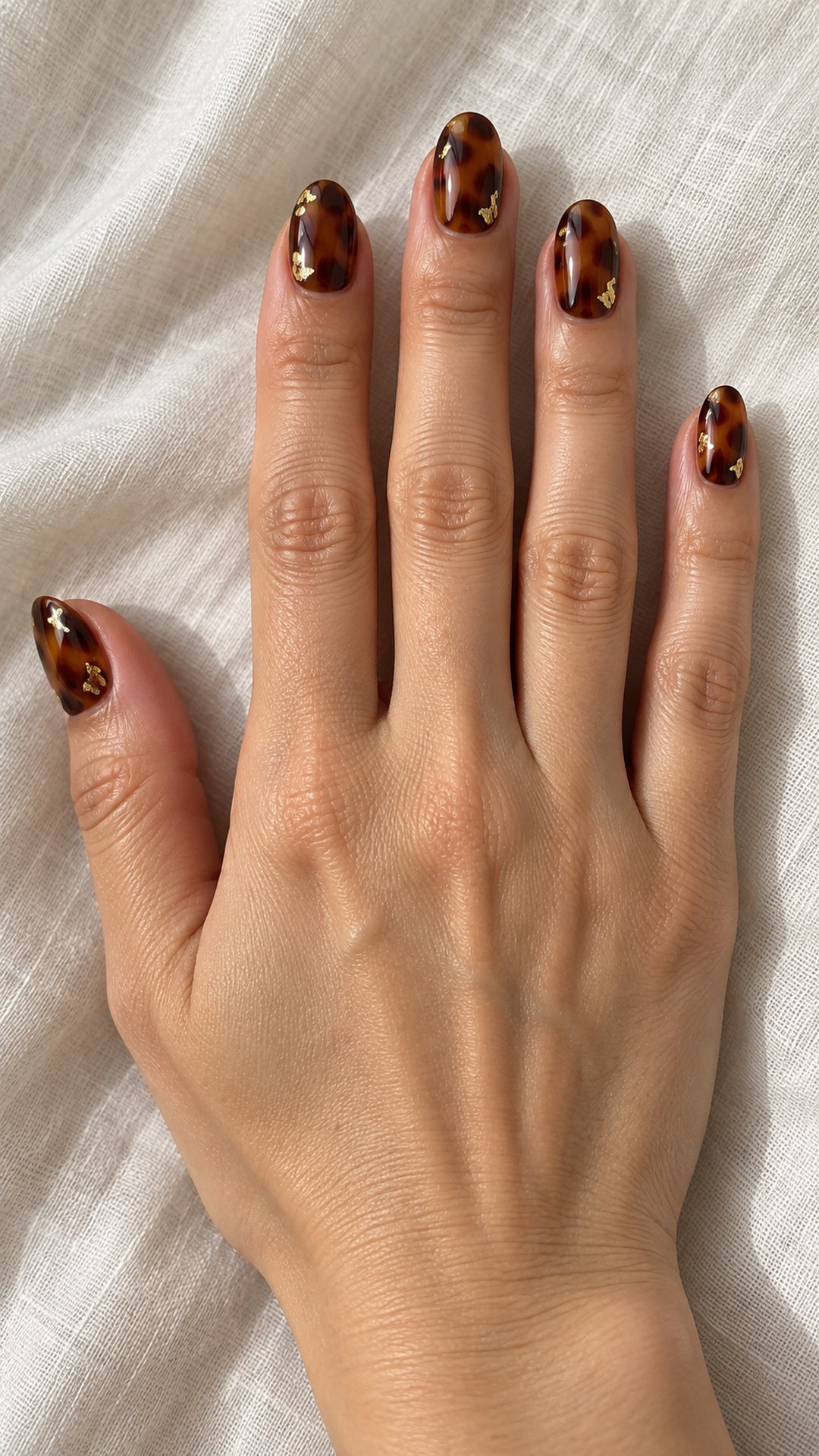
A few tiny gold flecks sit near the edge of full amber tortoise nails. The metallic detail adds a small highlight while leaving the underlying mottling visible.
Ask your nail artist: Use the foil sparingly and ask for a smooth finished surface. Gold should punctuate the pattern rather than cover the light spaces that create its depth.
21. Asymmetric Tortoise Corner Accents
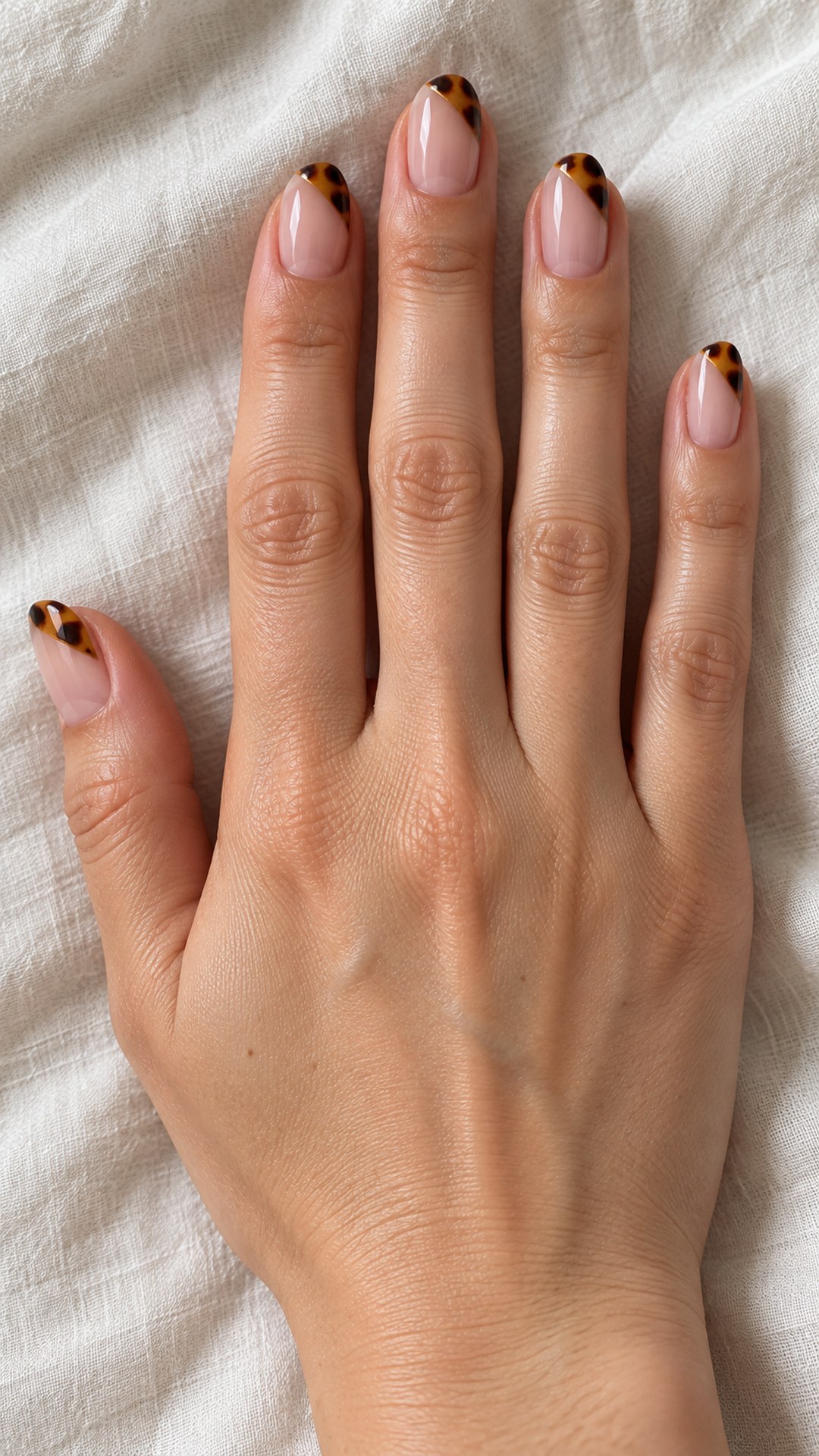
Small tortoise sections occupy one upper corner of each nude nail. The angled patches feel lighter than full French tips and give the hand a playful repeated detail.
Ask your nail artist: Keep the corner sections large enough to show at least a little amber around the dark marks. Consistent placement makes this deliberately minimal version look finished.
Before Your Appointment
Save one main reference and decide which detail matters most: the finish, the shape, or the placement of the pattern. Tell your nail artist your preferred length and whether you want natural nails, extensions, or press-ons. Ask to see a sample when the effect depends on lighting or product layering. The descriptions are design briefs rather than product-specific application instructions.
For another direction, explore our chocolate French tip nail ideas.
References and Design Notes
The sources below document the underlying finishes, colors, or nail-art techniques. The numbered layouts are original editorial suggestions; they are not a claim that every combination was photographed or tested by Youlolo. The images are AI-generated illustrations. Ask your technician to adapt fine details to the products and nail length you choose.
- Glossify: tortoiseshell nail design guide
- Professional Beauty: professional tortoiseshell technique
- deBelle: regular-polish tortoiseshell tutorial
Tortoise Nails: Frequently Asked Questions
What are tortoise nails?
Tortoise nails are nail art inspired by the amber, caramel, and dark-brown mottling associated with tortoiseshell. The effect is painted with nail products; the name describes a pattern, not the use of animal shell.
How do you create a tortoiseshell nail pattern?
The general approach uses a warm translucent-looking base and irregular darker patches arranged in layers. Exact steps depend on the polish or gel system. Preserve lighter gaps and vary the patch shapes rather than painting identical spots everywhere.
Can you do tortoise nails with regular polish?
Yes. Regular-polish tutorials exist, including deBelle’s step-by-step example. Use products and drying steps suitable for that method; gel curing instructions do not apply to ordinary polish.
Do tortoise nails work on short nails?
Yes. Full coverage, one accent nail, and a shallow patterned French can all work. Scale the patches to the nail and retain some amber space, since a crowded dark pattern can lose its tortoiseshell appearance.
What colors go with tortoise nails?
Cream, sheer nude, espresso, black, olive, and navy can complement the warm amber-and-brown pattern. Gold makes a small metallic accent. Choose one supporting shade if you want the tortoise pattern to remain the main feature.
Why do my tortoise nails look muddy?
Too much dark coverage, insufficient contrast, or working colors together more than intended can blur the pattern. Use a reference with visible amber gaps and follow the product-specific layering method. More dark patches do not necessarily create more depth.
Are tortoise nails the same as leopard nails?
No. Tortoiseshell typically uses layered-looking irregular mottling; leopard nail art commonly uses separate spots with broken darker outlines. Both can use brown palettes, but their shapes and placement are different.




[…] For a salon brief, name the base, dot color and approximate scale, then show the artist which areas should remain plain. If you enjoy another classic brown pattern, take a look at our tortoise nail ideas. […]